
Alocasia dark star of the Araceae family is a gorgeous and quite large-sized hybrid of four elephant ear plants. It is an out-and-out indoor plant that does require some effort to raise it to its full potential.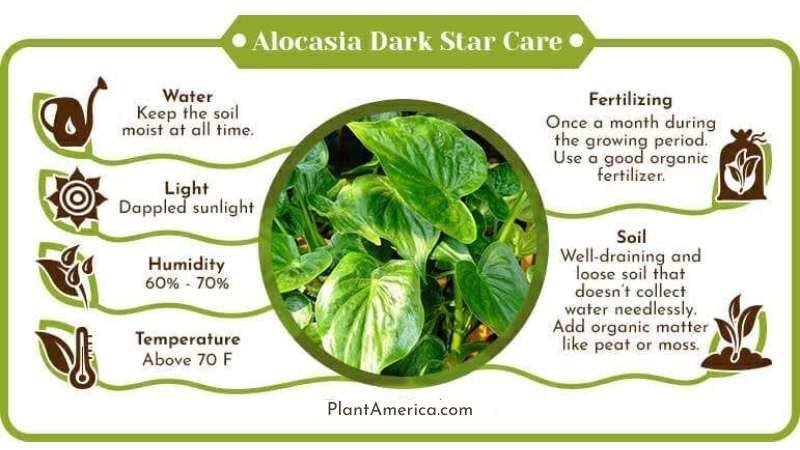
Find out how to take care of this Alocasia genus plant the right way here.
Alocasia Dark Star Care
Care for Alocasia dark star plant by giving it indirect light, keeping the soil moist, and using well-draining soil. Also maintain high temperatures, and high humidity and fertilize once a month. The same approach can be applied to more rare Alocasia varieties.

 Water
Water
Because it belongs to tropical climates, the Alocasia plant needs mostly moist soil at all times to grow properly.
However, keep in mind that there is a major difference between moist and wet soil. You don’t need to water it so much that the soil becomes runny and soggy.
The right way to recreate the tropical environment is to water this plant lightly one time and allow the soil to soak this water up. Then take some more amount of water and pour until it comes out of the drainage hole.
However, during wintertime, this plant will undergo a period of germination, you will need to decrease both the frequency and the amount of water used each time.
 Light Requirements
In nature, the Alocasia plant grows under dappled sunlight.

At home, you must expose it to only bright indirect light. Find out the details below.
– Growing Alocasia Dark Star Indoors
Since dappling sunlight is often difficult to recreate at home, we suggest placing the Alocasia dark star in a bright room with plenty of indirect sunlight. Moreover, it cannot tolerate direct sunlight and tend to get sunburnt easily, so don’t place them directly in front of the window.
If you live somewhere where temperatures are lower than average, then this plant can be placed under mild sunlight for a few hours a day. Choose the eastern or the eastern-facing window for them because they receive direct sunlight of moderate intensity for only a few hours each day.
 Soil Requirements
All Alocasia plants need well-draining and loose soil that doesn’t collect water needlessly. You should always add draining elements such as sand or perlite to this soil.
The soil should also be able to retain moisture as Alocasias like to grow under such conditions. For moisture retention, you can add organic matter like peat or moss. Another trick for improving the moisture content of the soil without compromising on the drainage is to add a layer of mulch to the surface.
 Temperature Requirements
Try to keep your Alocasia dark star plant in a temperature range of at least 70 degrees Fahrenheit. This plant seeks higher temperatures, especially during summertime, so let the temperature go up to 85 degrees Fahrenheit at that time.
Compared to some other Alocasia species, the dark star is relatively tolerant of cold but it is still not frost-hardy. Take care that the temperature doesn’t fall below 65 degrees Fahrenheit for an extended period.
Not only will you need to maintain the right temperatures during winter time but also during summer. This is because many times, indoor plants are subject to air-conditioning which can also stunt their growth and cause a disfigured appearance to its leaves and bulbs.
 Fertilizer Requirements
Your dark star plant should only be fertilized once a month during the growing period. Use a good organic fertilizer. Use a slow-release one as it is safer for the plant. Stop fertilizing when the plant undergoes dormancy during the cold winter months.
 Humidity Requirements
60 to 70 percent humidity is needed for the Alocasia dark star plant. You can use a humidity tray or a humidifier to maintain these high levels.
Propagation
Propagate Alocasia dark star plant using underground rhizomes. Find out more in detail as you read on.
– Propagation
The dark star plant grows horizontally underground in the form of rhizomes. These rhizomes basically comprise the plant’s subterranean stem system. You need these rhizomes in order to propagate this plant.
Of course, you can only do this by taking the whole plant out of its soil. The best time to carry out this whole undertaking is early spring right after the dark star comes out of dormancy.
– Propagating the Dark Star’s Rhizomes
First of all, take the whole plant out of the soil and the pot. Take great care not to damage the roots or the rhizomes in the process. Loosen the soil first prior to lifting the plant out.
Shake the plant gently to remove the soil attached to it. You can also wash it gently. Now examine the roots and the rhizome tubers of the dark star plant carefully.
You will notice that the ginger-like rhizomes appear in clusters with offsets growing from each of them. Use a sharp knife to cut these rhizomes off and gently separate the offsets from one another.
Now take new pots and pour the right type of soil into them. Then make a hole in the center of the soil and gently bury each separated rhizome tuber along with its offset in it. Water lightly and then place your pot in a bright room with indirect light illuminating it.
– Repotting
The best time to repot this plant is early spring when the plant comes out of its hibernation. But you can also repot it in the fall before hibernation starts.

One clear-cut sign that this plant needs repotting is when its roots start to grow out of the top of the pot or from the drainage hole itself.
Problems
The most common problems you might face with this plant are toxicity, drooping leaves, and root rot. Also, pests are a big problem for Alocasias, and especially mealybugs. Learn about all of these problems and how to get around them by reading in detail below.
– It Is Toxic
The Alocasia dark star plant is toxic both upon ingestion and touching. This toxicity is due to calcium oxalate crystals that are produced by this plant. Here are some cautionary precautions you should take when dealing with this plant.
- Always wear gloves and full-sleeved clothes when taking care of this plant. There is always a risk of developing rashes or contact dermatitis after touching this plant.
- Keep away from the reach of children and pets. Accidental ingestion of the dark star plant can cause burning of the mouth followed by nausea and vomiting.
- In severe cases, contact or ingestion of the dark star plant can cause airway congestion. Seek urgent medical care in such an event.
– Leaves Drooping
The large, bright leaves of this plant can droop either due to low light or underwatering.
Find out whether you are committing these mistakes or not here.
– Leaves Drooping Due to Low Light
The beautiful flowers of this plant will begin to droop downwards when it’s not receiving adequate lighting. True, it cannot be put under direct light. But if your plant is placed someplace where it is receiving very low levels of light, then its stems will become long and dangly in search of light, drooping the leaves along with them.
– How To Solve This
Move the plant to a brightly lit room in the house. Don’t place curtains over the windows if you feel like they are blocking all the light. If still, the light remains inadequate, then go for artificial lights.
– Leaves Drooping Due to Underwatering
If the leaves have begun drooping and also have crispy edges, then your dark star plant is definitely suffering from being underwater. You might see some Alocasia’s leaves turn yellow if you overwater it.
– How To Solve This
As we have mentioned above, this plant likes to grow under constantly moist soil. Improve your plant’s watering schedule by watering it as soon as the top three percent of the soil dries up.
– Root Rot
Root rot is a very common fungal infection that afflicts Alocasia plants that are overwatered. Another major cause of root rot is when the soil and the pot have inadequate drainage.
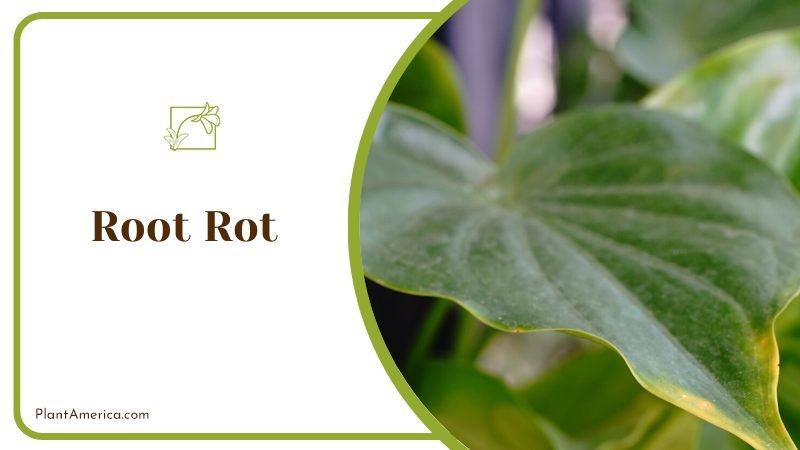
You will begin to notice brown-black spots appearing all over the stem and leaves of the plant. If not treated promptly on time, it can destroy your plant within weeks.
– How To Solve Root Rot
First of all, take the affected plant out of the soil and the pot. Be careful not to damage the already suffering plant in the process, nonetheless, discard the old soil and the pot.
They are infected and must be burned. Now wash the roots of the diseased Alocasia plant, moreover, take gardening shears and carefully chop off all the diseased rotten parts of the plant.
Replant in new sterilized soil in a new pot. You will need to spray them with a fungicide for several weeks afterward as per the instructions written on the fungicide. Additionally, don’t forget to disinfect the gardening shears used for cutting off rotten parts right away.
Otherwise, these shears will transmit the infection to any other plant on which they are used. We usually use isopropyl alcohol for disinfecting our gardening tools.