
Air plants brown tips problem is usually caused by improper watering practices, inadequate sunlight exposure, Bad feeding habits, excessive touching, bad humidity and ventilation, or pests and diseases. The plant turning brown can also happen naturally in winter or due to old age.

Our gardening team will tell you about the various causes that turn air plants brown and how to deal with this problem.
What Causes Brown Tips on Air Plants
Factors like improper plant care practices, like mistakes with watering, sunlight exposure, feeding, humidity, and ventilation, cause brown tips on air plants. This problem can be caused by excessive touching, pests, and diseases and might happen naturally in winter or when you have an old plant.
When Tillandsias have brown edges, this shows that your plant is struggling. These plants are considered easy to maintain, but changes in their care regimen will change their color. This doesn’t mean that your plant is dying, but you should understand the root cause of the issue to save your plant.
– Watering Issues
There are more than 500 varieties of Tillandsias, all requiring regular watering and misting to stay healthy. These plants don’t grow in soil; in their natural habitat, they absorb moisture from the air. These plants receive moisture from the rain and air humidity. These conditions might not be available at home, making your plant suffer.
These plants are prone to drying, which makes the leaves brown. This is a stress sign that shows that the plant is dehydrated. The foliage of an underwatered air plant might feel papery and crispy as the leaves curl, trying to decrease their surface area to limit evaporation. This is why the plant will look unhealthy; you’ll notice the air plant leaves curling and browning.

Overwatering is another issue for Tillandsias. Although these plants love moisture and humidity, overwatering can be problematic. Too much misting makes the plant prone to fungal infections and changes the leaves’ color.
The plant will feel mushy and soft, and you’ll notice a bad smell emitting from your air plant. Mold is one of the signs of overwatering air plants. Seeing an air plant turning black at base is a sign of rot.
The water quality can also make your plant suffer. Tap water is high in minerals like fluoride and chloride, and these chemicals can harm your plant in the long run. They accumulate in the leaves, and their tips become brown because they’re scorched.
– Inadequate Sunlight
Air plants turning brown can be caused by inadequate light. These plants grow in the shade of taller trees, so they thrive in bright, indirect sunlight. This is why these plants thrive as indoor plants, especially in rooms without enough natural light.

Seeing air plants brown tips indoors is usually due to excessive light exposure. Too much sunlight can scorch the leaves. The intense sunlight burns the leaves’ tips, and they change their color to brown.
At the same time, poor sunlight exposure doesn’t allow the plant to dry out adequately. The leaves stay wet, and the plant becomes susceptible to mold growth. You might notice that the foliage has brown spots.
– Improper Feeding
Tillandsias benefit from regular fertilization, especially during the growing season. This plant experiences regular growth in the spring and summer, and monthly feeding will encourage foliage growth and keep the plant healthy.
However, some homeowners overfertilize their plants, especially when they feel that their plants are struggling. Unfortunately, too much feeding will cause the plant to suffer due to the accumulation of salts. Moreover, the wrong application of fertilizer will harm your plant.
At the same time, the brown edges on your air plant might be caused by the lack of nutrients. Air plants need adequate amounts of nitrogen, phosphorus, and potassium. A fertilizer high in copper content can turn the tips brown because this plant is sensitive to copper.
– Bad Humidity and Ventilation
These plants don’t grow in soil, so the excess water doesn’t drain. You should often water and mist the plant to provide enough moisture to survive. At the same time, the plant’s leaves should be allowed to dry between waterings, as excessive moisture on the foliage can lead to the leaves turning brown.
Tillandsias need to be well-ventilated, as the airflow prevents the formation of fungal spores. The lack of proper aeration leads to rot, which causes brown spots on the leaves.
This doesn’t mean that you should place the plant next to an air vent or a radiator. As a matter of fact, cold and hot drafts can harm this plant and affect its foliage.
At the same time, neglecting this plant and not misting it enough will stress its leaves. Without regular moisture, the air plant will be dehydrated and have brown leaves or green leaves with dark tips.

– Excessive Touching
The leaves of this plant are delicate, and over touching and excessive handling can damage them. This usually happens when you keep the plant in a pot where a toddler or a pet can easily access it. Unfortunately, this plant will suffer from too much handling, and you’ll notice the brown leaf tips.
– Diseases and Pets
Air plants are considered resilient. They aren’t susceptible to many diseases or pest attacks. However, with too much neglect, this plant might suffer from diseases and be prone to pests.

Inadequate watering or dryness can weaken this plant so that it will be subject to diseases and pests. Mealybugs suck the sap of the leaves and weaken them, so they can turn yellow or brown. You might also notice the growth of black or brown mold. Scale insects damage the leaves and make them turn yellow and brown before they fall off the plant.
– Seasonal Changes
It’s pretty common for the leaves of some plants to turn brown in winter. The plants become weak in winter, and they don’t experience active growth. As a result, you’ll see the leaves turning yellow or brown. So, you might see some browning on your plant’s leaves when the temperature drops.
– Aging
As plants become older, it’s pretty normal for some of their leaves to change color. Tillandsias gain access to water and nutrients through their leaves. So, they can lose their green color and have brown edges. The leaves can also become yellow or brown before falling off the plant.
How To Fix the Brown Tips On Air Plants
– Adjust Watering
Misting the plant regularly keeps it healthy and protects it from dryness, leading to brown edges forming. Tillandsias thrive in humid and moist environments, so you should mist them at least three or four times weekly to keep them hydrated.
You should often water the plant in hot weather to protect it from dryness. Since this plant doesn’t grow in soil, you should always keep it moist.
It’s also essential to pick the right location for these plants, as they thrive in humid conditions. So, you can keep the plant in the bathroom or kitchen, where it can receive more moisture.
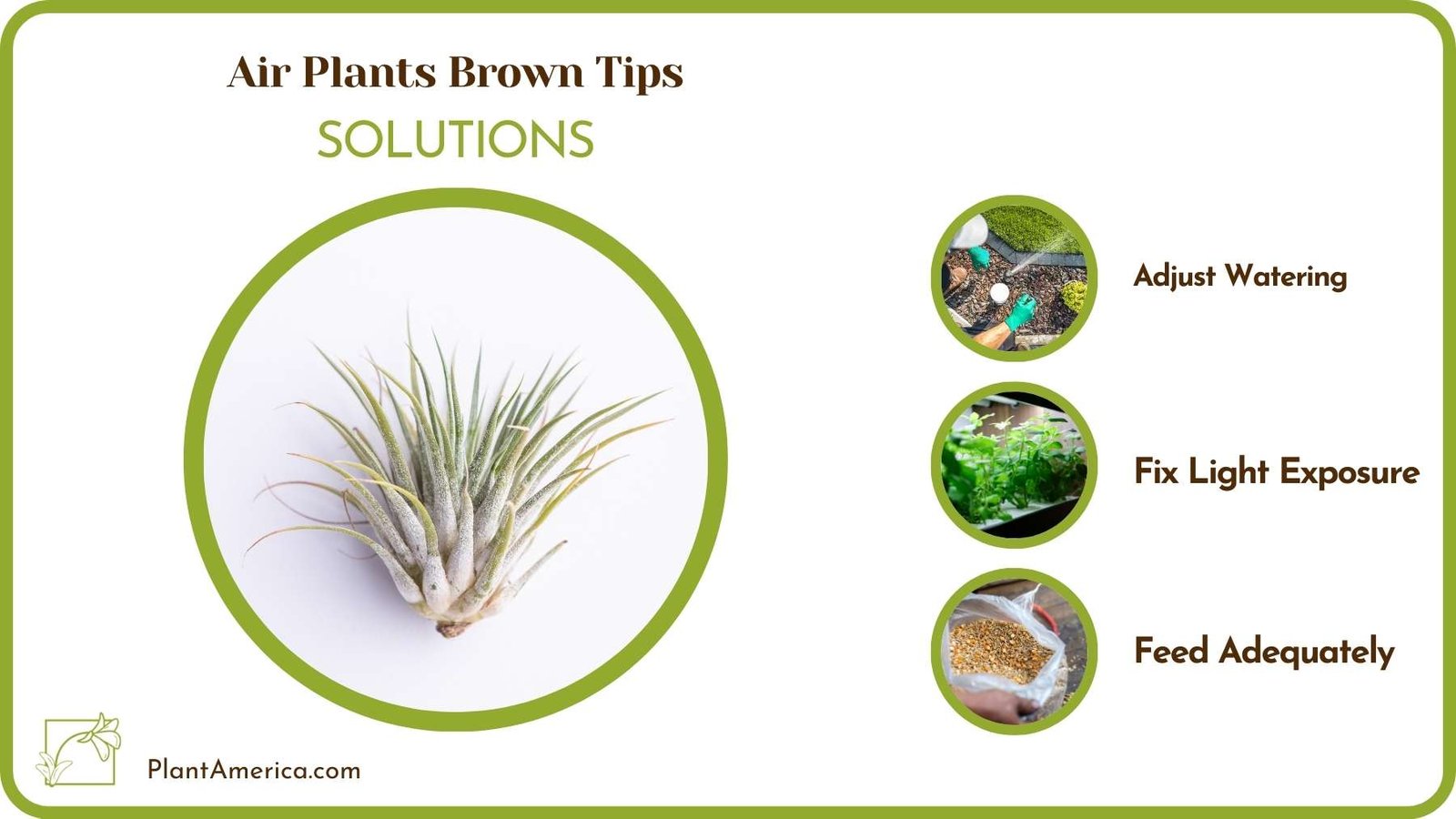
Yet, you should avoid overwatering your air plants. Too much moisture can suffocate the plant and create an environment that boosts the spread of mold and other fungal diseases. To fix an overwatered air plant, you should avoid watering for a few days and keep it in bright, indirect light. Allow for good airflow to help the leaves recover, and the Tillandsia ionantha brown tips disappear.
Pick the right water type to water your plants. Rainwater and distilled water are better for your plant than tap water. If you must use tap water for your plants, let it sit outside for at least one day to let the harmful chemicals evaporate.
– Fix Light Exposure
Tillandsias thrive in bright, indirect light. These plants are considered low-light, but the lack of light will harm your plant because it won’t be able to perform photosynthesis. Without enough light, your plants will have weak brown leaves prone to diseases and pest attacks.
At the same time, you shouldn’t keep this plant in direct sunlight. Intense light will burn the leaves and turn the leaf tips brown. So, if your plant is burned because of the intense light, you should move it away and keep it in a shady location.
Tillandsias thrive indoors, near a west or east-facing window. A south-facing window will burn the leaves. You should keep the plant at least two feet away from the window and use a sheer curtain to protect your air plant.
– Feed Adequately
Air plants don’t grow in the soil and need regular access to nutrients. This is why you should fertilize your air plant regularly to ensure it’s well-nourished.
It’s crucial to mist a diluted balanced fertilizer once a month to nourish the foliage and boost growth. Avoid using a fertilizer in winter when the plant isn’t growing because it can burn the leaves. And don’t overfeed your plant or pour the fertilizer on specific leaves.

If you choose to use a copper-rich fertilizer, you should use it once per season. Too much copper can also make the leaves burn and fall off your plant.
– Improve Humidity and Ventilation
Providing Tillandsias with good air circulation is crucial. Since you water this plant by misting, proper ventilation to allow the excess water to dry is essential. This is why you should avoid overcrowding these plants because poor ventilation can harm them. Moreover, you should keep them where they can receive good airflow to stay healthy.
In winter, these plants can struggle because of dryness. So, if your house isn’t humid enough, you’ll notice that your plants are struggling. So, you can use a humidifier or mist them more often while providing good ventilation.
You need to place these plants away from air vents and radiators. The strong drafts will harm the leaves. Ideally, you should keep them in a bathroom or kitchen, where it’s mostly warm and humid, but keep a window open to provide good airflow.

– Protect The Plant
If you have curious toddlers or pets in the house, you might notice that your air plants are struggling, and you’ll see the leaves turn brown. Excessive touching and handling will damage the leaves and turn them brown or make them fall off.
You can fix this problem by changing the plant’s location and moving it to a spot where it isn’t accessible. With proper air plant care, you’ll notice that it’s thriving and the leaves are turning green again.
– Treat Diseases And Deal With Pests
Plant diseases attack air plants when they’re heavily neglected. So, if you notice brown spots or tips on your plant’s leaves, they might be caused by mold or a fungal disease. Some diseases can be treated by adjusting the watering schedule. You might also have to use a fungicide to treat your sick plant.
Mealybugs should be hosed down or handpicked. You can also rub the leaves with rubbing alcohol to kill scale plants. Afterward, you should water your plant and provide adequate sunlight to prevent future infestation. If the plant is heavily infested, you might have to remove the sick leaves to control the infection.
– Allow The Plant To Recover
Air plants might develop browning on their leaves due to seasonal changes. The plant might show some browning in summer when it’s not properly hydrated or in winter when it’s subjected to dry and cold drafts.
These plants are delicate, so they’ll show stress signs as the temperature and humidity levels change. Maintaining warm and humid conditions around them is crucial to help them thrive. So, depending on the weather, you might need to use a humidifier or dehumidifier.
If the problem is caused by aging, there’s actually nothing to do about it. It’s pretty normal for older leaves to become weak and change color. They might have brown edges or turn yellow and brown.
So, should you cut brown tips off air plants? You can trim off these sick and old leaves to boost the growth of new foliage. This way, you’re helping the plant redirect its energy to grow new foliage instead of trying to save the old dying one.

Conclusion
Seeing some browning on the leaves of your air plant is usually a result of stress. You can do a few things to help your browning plant.
- Mist air plants regularly and provide filtered light to keep them healthy.
- Maintain good ventilation to protect the plant from mold.
- These delicate plants shouldn’t be excessively touched, so keep them protected and feed them regularly.
- The plant will sometimes show browning due to seasonal changes or aging. So, maintain a good care regimen to help it recover.
Air plants are suitable for those who need resilient plants that don’t grow in soil. And following a good care guide will protect their beautiful leaves from browning.