
Mealybugs on Monstera is terrible news, as these pesky little critters are known to wreak havoc on the Monstera genus plants. Don’t worry; the battle against these bugs may seem daunting, but it’s winnable.
Stick around as we explain the key strategies to tackle this menacing issue.
Why Are There Mealybugs on Monstera? Know the Reasons
There are mealybugs on Monstera because of keeping the soil or growing conditions extra humid. Furthermore, plants under stress, due to insufficient light or nutrients, become more susceptible. In addition, bringing infected plants into proximity with healthy ones can spread the bugs.
– Humid Soil: A Breeding Ground for Bugs
Overwatering a Monstera plant can easily lead to a mealybug infestation. The damp soil and increased humidity create the perfect breeding ground for mealybugs. These pests love moisture and the soft, wet environment becomes an attractive place for them to reproduce.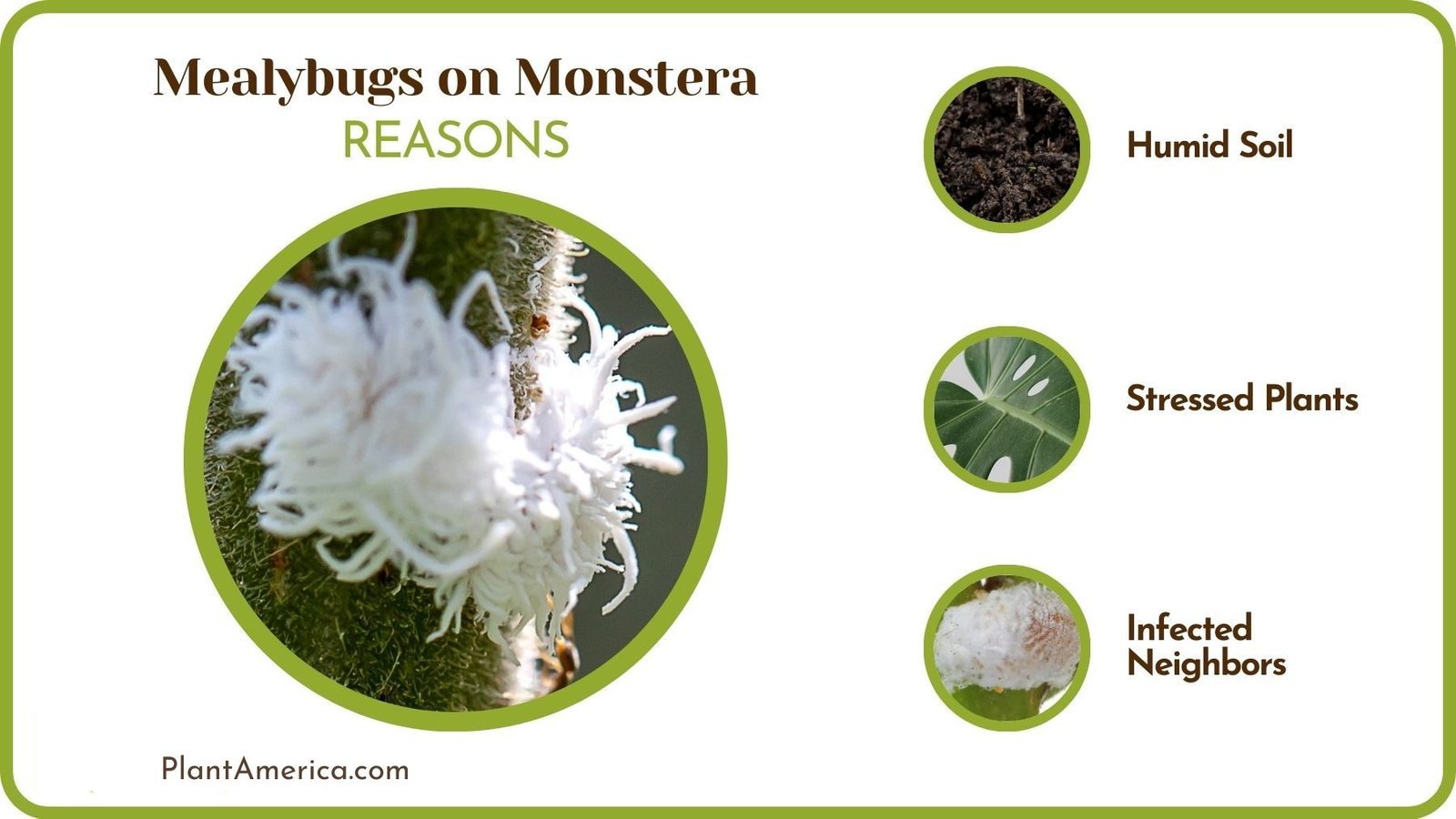
Moreover, overwatered plants are generally weaker, making them an easy target for these bugs. So, while you might think you’re doing your plant a favor by giving it more water, you might just be opening the doors to a mealybug party. Especially if your Monstera suffers from guttation, overwatering will be a big issue.
– Stressed Plants: An Inviting Target
Plants, like any other living being, get stressed. This can be due to insufficient light, improper temperatures, or lack of necessary nutrients. When a Monstera is stressed, its natural defenses weaken, making it a more inviting target for pests like mealybugs.
Note that mealybugs are opportunists. They are always on the lookout for plants that are easier to attack and infest. A plant battling with lack of sunlight or struggling for nutrients sends signals – like yellowing leaves or stunted growth – that mealybugs pick up on!
– Infected Neighbors: The Danger of Proximity
Buying a new plant for your collection is always exciting. However, bringing an infected plant home, even if it’s not a Monstera, can be a ticket to trouble. Remember that mealybugs can easily move from one plant to another, especially if they’re in close proximity.
So, if you unknowingly bring home a plant hosting these pests, they won’t hesitate to jump ship and infest your healthy Monstera.
What To Do When You Spot Mealybugs on Monstera? (10 Ways)
When you spot mealybugs on Monstera, start by isolating the plant and changing its soil to prevent further spread. Then, remove mealybugs manually, spray water, or apply an alcohol-soap solution. Herbal repellents like neem seed oil and hydrogen peroxide solutions can also be effective.
– Isolate the Plant and Change the Soil: First Step
It’s super important to isolate the plant when you spot those pesky bugs. Carefully pick it up and move it to another spot alone. Be gentle; you don’t want to hurt it. This way, it won’t spread the bugs to your other plants.
But you’re not done yet. After shifting the plant, you should change the soil. You see, mealybugs can hide in the soil too. They like to lay their eggs there; if you don’t get rid of them, new mealybugs will hatch.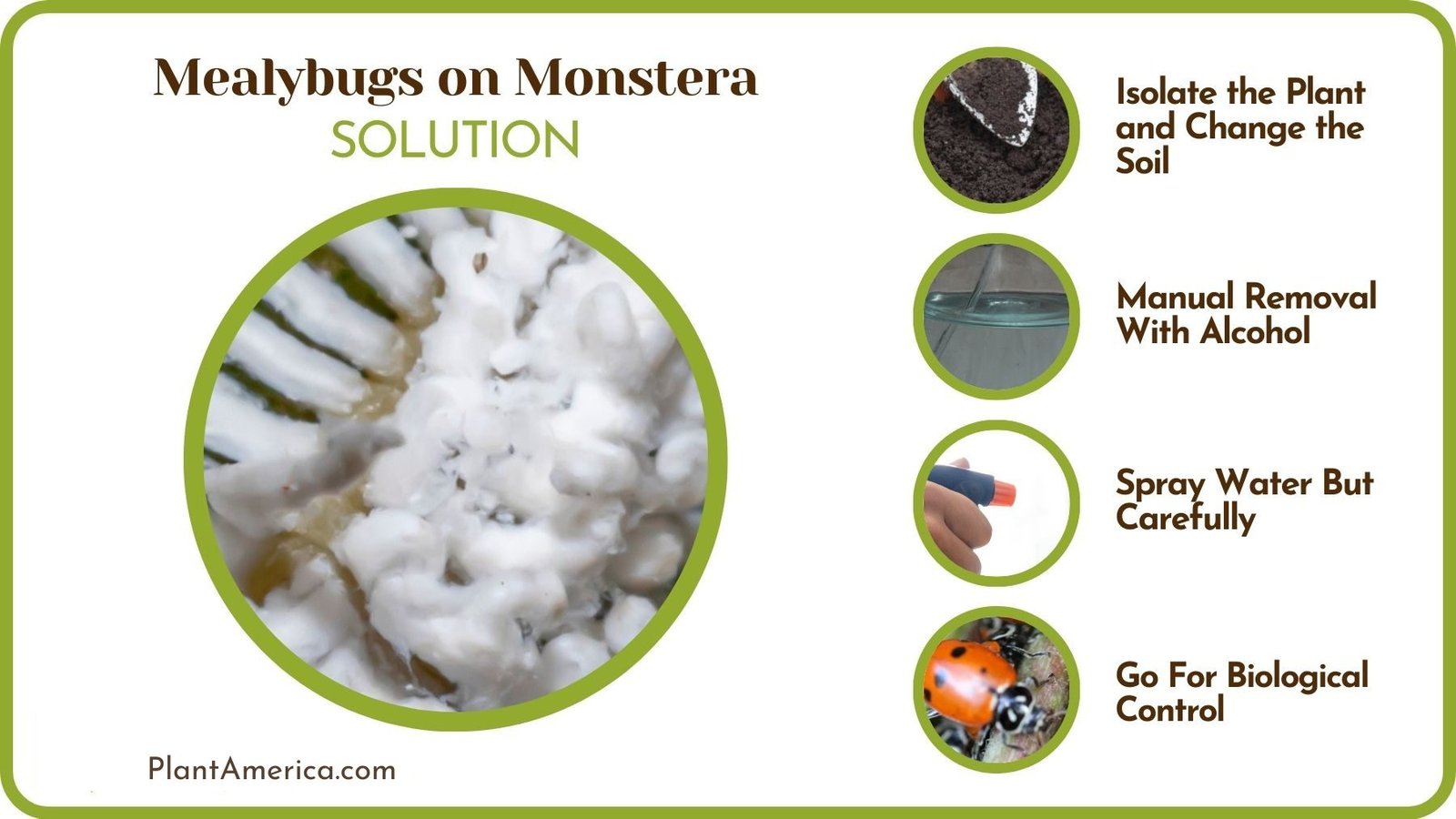
If this happens, you will have to deal with the infestation again. So, grab a new pot and fresh soil and move your Monstera over. Remember to clean the roots to remove any eggs or bugs carefully.
– Manual Removal With Alcohol
After isolating and changing soil, you should consider different treatment options. The first thing most people do is manually remove the bugs. For this, you’ll need a pair of tweezers only.
You’re going to pick off each mealybug you see carefully. Look in all your plant’s small corners and crevices because that’s where they like to hide. Once you’ve done this, the next part involves something you have in your bathroom cabinet: rubbing alcohol.
Here’s what you do:
- Grab a cotton swab.
- Dip it in the rubbing/isopropyl alcohol.
- Gently rub it on the mealybugs.
The alcohol kills the bugs and their eggs when it touches them. Remember, you have to be gentle as you don’t want to hurt the plant leaves while you’re doing this.
– Spray Water But Carefully
Giving your plant a nice shower would wash away all the mealy bugs on plants, but you must do it carefully. Here’s why.
Your Monstera leaves are like an umbrella. They’re big and wide, and they can catch a lot of water. If you spray too much water on your plant, it might not dry out properly. It might seem like a “no big issue,” but moist conditions can lead to root rot, which we want to avoid at all costs.
Root rot is when your plant’s roots get too wet and start to go bad, just like when food goes bad if it’s left out too long.
So, do these steps for proper water spraying:
- You get a spray bottle and fill it with water.
- Then, you gently spray the water on the leaves where you see the mealybugs. The water will wash away the bugs and their eggs as soon as it touches them.
But remember, you have to let the plant dry out after. Put it somewhere warm and bright where it can dry off. And make sure you don’t overwater it afterward. We don’t want to swap one problem (mealybugs) for another (rot).
– Go For Biological Control
Biocontrol is when you use nature to help get rid of pests. And there’s a type of bug that can help us here. They’re called ladybugs (nickname The Mealybug Destroyer) and love eating mealybugs.
So, if you’re wondering how to get rid of mealybugs, one way is to get some ladybugs. You can sometimes buy them from garden stores or online. Then, you release them on your plant, and they start eating the mealybugs.
It’s like having a little army of helpers to protect your plant. And the best part? It’s all-natural, as you’re not using chemicals, just letting nature do its thing.
– Try Sticky Barriers To Keep Pests at Bay
Sticky trapping is another easy way to help prevent mealybugs. In this, you place the trap near your plant. The barrier/ sticky trap is coated with a sticky substance that mealybugs get stuck to when they try to move to another plant.
Don’t worry; the sticky stuff on the trap isn’t harmful to people or pets. It’s just “sticky enough” for tiny bugs. Another reason many people (including seasoned gardeners) prefer traps is that they are a great way to monitor how many mealybugs are around your Monstera plant. If you see a lot of bugs on the trap, you know there’s a problem and can take action to help your plant.
– Spray Alcohol and Soap Solution for Better Plant Protection
If the mealybug problem is still not under control, consider using an alcohol and soap solution. This solution includes insecticidal soap, a special soap designed to deal with insects, including common Monstera insects like scale insects and thrips on Monstera.
Do these steps:
- First, mix equal parts of alcohol and water in a spray bottle.
- Then, add a few drops of insecticidal soap.
- Shake it all up to mix everything, and your solution is ready.
- Mist this solution onto the leaves of your Monstera, making sure to get the undersides of the leaves where bugs like to hide.
Remember to test this solution on a small part of your plant first to ensure it won’t harm the leaves. Then, if everything is okay, you can spray the whole plant.
– Try Herbal Insect Repellants: Natural Deterrent
In addition to mealybugs, if you’re also wondering how to get rid of spider mites on Monstera, neem seed oil could be a good solution.
Do these steps:
- First, you need to make a solution with neem seed oil. For this, mix a small amount of neem oil (quantity mentioned on the oil bottle) with water.
- Then put this solution in a spray bottle.
- Once that’s done, spray it on your plant where you see the bugs.
Neem oil works because it’s unpleasant for the bugs. They don’t like the taste or smell, so they’ll start to avoid your plant. Remember, you should do this a few times to eliminate all the bugs.
– Apply Hydrogen Peroxide Solution for Fast Results
Another tool you can use is a hydrogen peroxide solution. It is beneficial for dealing with pests like fungus gnats or aphids on Monstera. Follow these steps:
- First, mix one-part (one cup) of hydrogen peroxide with four parts (four cups) of water.
- Then put this solution into a spray bottle. Now, you’re ready to spray your plant.
Hydrogen peroxide is excellent for dealing with bugs because it helps to kill the eggs and larvae of pests like gnats. This stops new bugs from growing and helps to protect your plant. You won’t see flying bugs on Monstera if you apply hydrogen peroxide solution. However, always test it on a small part of your plant first. If everything looks fine after a day or two, you can spray the rest of the plant.
– Companion Planting Is a Great Option To Deter Mealybugs
Companion planting is like having a best friend for your Monstera plant. You put another plant close to your Monstera, and the two plants help each other stay healthy.
Let’s explain- Some indoor plants are great at pest control. They can help keep bugs away from your Monstera because of their scent. For example, bugs hate to go near basil, lavender, and mint, so they make great companions for a Monstera.
When you plant these with your Monstera, the bugs will avoid the area, and your Monstera stays safe.
Moreover, companion plants can also help your Monstera stay healthy. Plants are like people – they’re happier and healthier when friends are around. So, go for companion planting if you want to grow healthy plants.
– Manage the Debris Properly (Crucial Aspect of Mealybug Management)
Proper plant care is more than just watering and feeding your plants. You must also keep the area around your plants clean if you want to avoid complications, like Monstera pests and diseases.
Here’s the thing. When leaves fall off your plant or soil gets kicked out of the pot, it can create a mess around your Monstera. This debris is “a dinner invitation” for pests, as they like to feed on organic matter. They love to hide in it and eat it. Not only that, but this debris can also cause bacterial leaf spots– a disease that makes marks appear on your Monstera leaves.
So, to prevent pests and diseases, you need to clean up the area around your Monstera. Get rid of any fallen leaves or spilled soil. Consider repotting your Monstera deliciosa in fresh soil from time to time. It will give your plant a clean, healthy environment to grow in. That’s everything about how to get rid of pests on Monstera.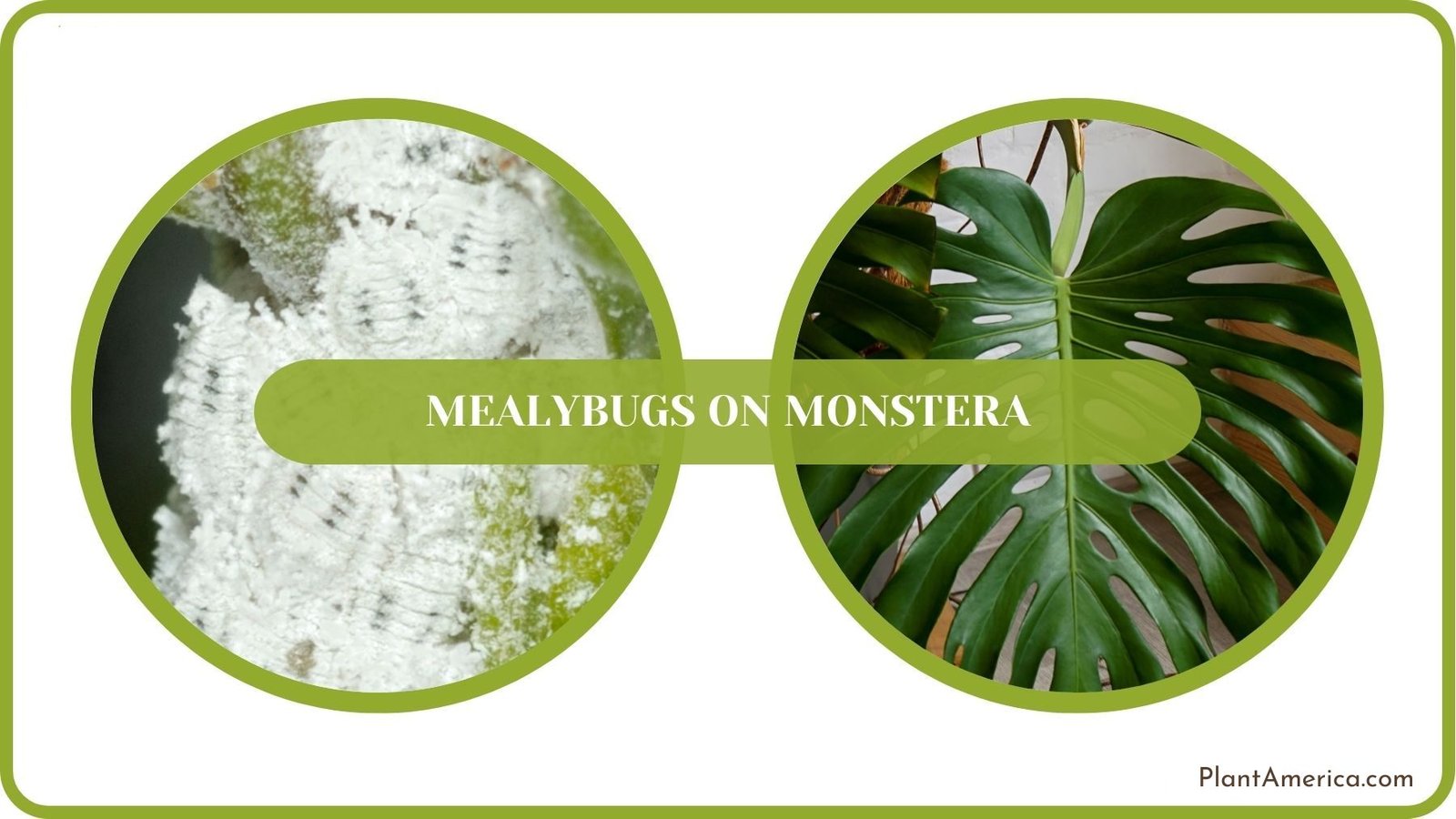
Conclusion
Mealybugs on Monstera can cause severe problems, but you can tackle this issue in many ways. Here’s a quick recap of what we’ve covered and the steps you should take if you notice these pests on your beloved Monstera:
- Isolate your affected plant and change the soil to prevent further infestation.
- Start with manual removal, using a cotton swab dipped in alcohol to clean the leaves.
- Applying water at a high pressure to eliminate mealybugs is also a good choice.
- You can also utilize sticky barriers to capture mealybugs or spray an alcohol and soap solution.
- Try herbal insect repellants like neem oil to combat any pest you see.
Finally, remember to maintain hygiene around your Monstera deliciosa and be on the lookout for any signs of pests. Following these steps, you’ll be well-equipped to handle a mealybug infestation and ensure your Monstera plant stays happy, healthy, and bug-free!