
wing begonia care can look like a challenge at first glance, but with our team to guide you, you’ll have a stunning display in no time!

This Begoniaceae family plant is a tropical houseplant, typically grown for its showy foliage and abundant flower clusters. They are basically a hybrid begonia from a cross between aconitifolia and B. coccinea. Let’s find out more!
Angel Wing Begonia Care Guide
If you find begonias a bit intimidating, the angel wing begonia is an excellent choice to start with. This plant is ideal for those new to the wonderful world of flowering houseplants, and with the right care guide, it will become a veritable centerpiece in your home. It is not considered a rare Begonia variety and it is easy to grow it. Here’s what you need to know about how to care for angel wing begonia.
 Light Requirements
Angel wing begonia needs bright indirect light to grow. Giving the plant enough sunlight is essential if you want it to flower. A begonia growing in partial shade won’t bloom, and it will also develop long, bare stems, which give it a leggy look. However, avoid placing the plant in direct sunlight, as this will result in scorched leaves.
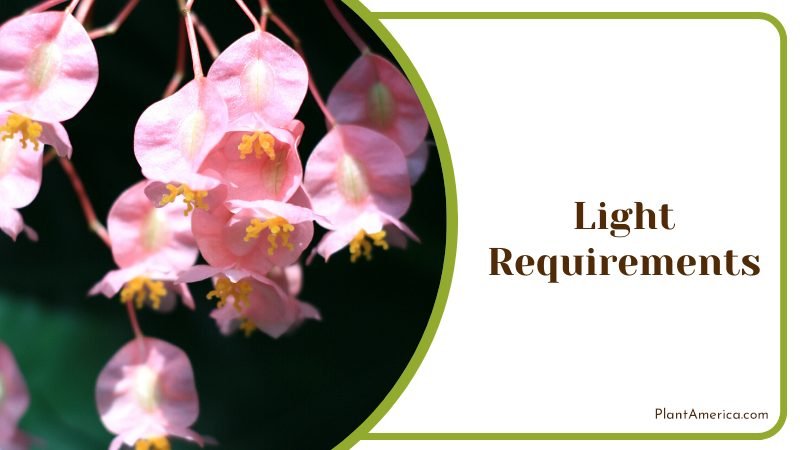
The ideal spot for an angel wing begonia is a room with eastern or western exposure. This will ensure that the plant receives enough light throughout the day. You can also keep it in a room with southern exposure, but place it at least three feet away from the window. Bear in mind that the leaves can easily develop burn marks from too much sun.
 Temperature Requirements
The ideal temperature range for growing angel wing begonia indoors is between 65 and 75 F (18 to 23 C). Most homes fall within this range, and you can even grow your begonia in an office.
Avoid sudden temperature fluctuations and hot or cold drafts. Extreme temperatures can also be harmful to this plant, and you may notice that its growth becomes stunted if the thermometer goes above 86 F (30 C) or below 55 F (13 C).
If you live in USDA zones 8b to 11, you can grow angel wing begonia in the garden, but it’s best if it stays in a pot. This is a tropical plant, and temperatures below 50 F (10 C) will kill it. Once it gets too cold during the night, we recommend bringing the plant indoors. When grown outdoors in the soil, angel wing begonia is an annual plant, which means that it won’t grow back the next year.
 Water Requirements
Water your angel wing begonia when the top inch of the soil feels dry to the touch. This plant enjoys evenly moist soils, but it can be very sensitive to root rot and other types of fungal disease. To keep the plant healthy, we recommend using the finger test to see if the plant needs more water, rather than watering on a schedule. If your begonia leaves are curling, that’s also a sign that the plant is thirsty.
 Humidity Requirements
The angel wing begonia is a tropical plant that enjoys humidity. It is not as sensitive to dry air as Rex begonias, for example, but if you want to avoid crispy leaf edges, a humidity level of at least 50 percent is ideal.
The easiest way to meet its humidity needs is to place it on top of a pebble tray half filled with water.
Angel wing begonia can be very susceptible to powdery mildew. As a result, we don’t recommend misting it unless you have excellent air circulation in your home. A humidifier is our favorite solution when it comes to boosting humidity, but if you’re in a pinch, a pebble tray will also be effective.
 Soil Requirements
Angel wing begonia grows best in a soil mix that’s light, aerated, moisture-retentive, and rich in organic matter. An excellent mix you can try is peat moss, perlite or vermiculite, humus, and a bit of sand.
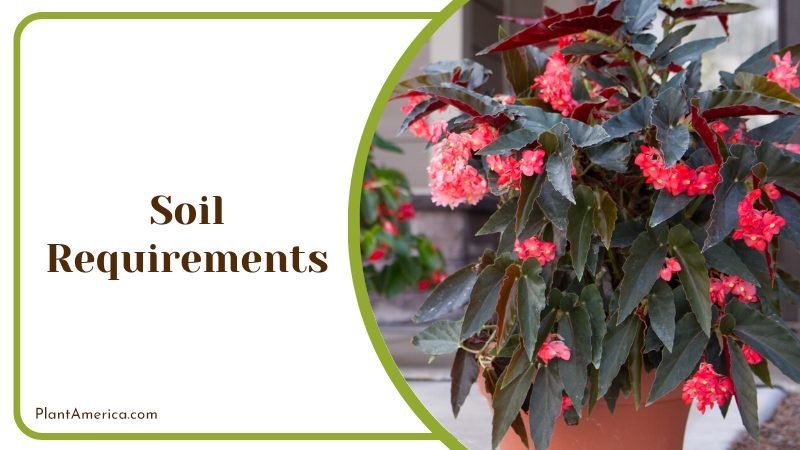
This will provide the plant with a moist substrate, help prevent overwatering issues by allowing good drainage, and also give the plant access to the nutrients it needs to bloom.
 Fertilizer Requirements
Angel wing begonia will need regular fertilizer applications throughout its growing season, from spring until early autumn. We recommend using a liquid, balanced fertilizer with a 10-10-10 nutrient ratio. For weekly applications, dilute the fertilizer to a quarter of the strength recommended on the label or to half-strength if you plan to use it twice a month.
Angel wing begonia typically flowers in summer, sometimes until early autumn. When you notice that the plant is developing blooms, switch to a fertilizer solution that’s higher in phosphorus. This will encourage the blooms to set and allow the begonia to grow large, abundant clusters of flowers.
 Pruning and Maintenance
To keep your angel wing begonia in shape, you will need to prune it regularly. Unlike other varieties, such as wax begonias or Rex begonias, it will grow long, cane-like stems that can look bare and floppy after a few years.
Once the plant reaches one foot (30 cm) in height, it’s a good idea to start pruning it. Use a sharp, sterilized pair of scissors to pinch or trim the tips of the stems, to encourage lateral, bushy growth.
Cane begonias can grow up to five feet (1.5 meters) tall. To prevent the main stem from breaking under the weight of the plant, we recommend providing your angel wing begonia with a stake.
Repotting
All begonias like being a bit pot-bound, so you don’t have to repot them too often. Once a year, preferably in spring, lift the pot of your plant and check the underside. If you see roots coming out through the drainage hole, repot your angel wing begonia in a container that’s one size larger than the previous one. Avoid repotting your begonia if it’s started flowering, as this will shock the plant and cause it to drop its blooms.
Cane begonias have a vast root system, and they can also be top-heavy as they mature. Our recommendation is to plant your angel wing begonia in a clay or unglazed terracotta pot that’s also a bit shallow. The weight of the pot will prevent the plant from falling over, while the porous nature of clay allows air circulation to the roots and wicks out any excess moisture.
Propagation Guide
The easiest and most effective way to propagate your angel wing begonia is through stem cuttings. We recommend using this method in spring when the plant enters its growing season.
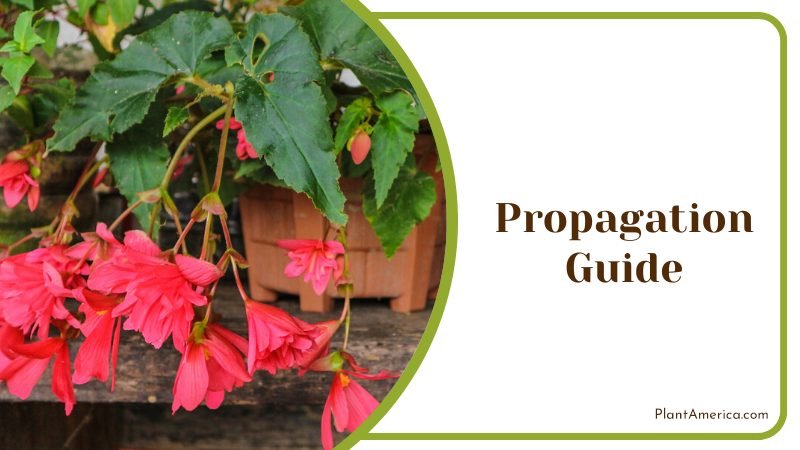
Here’s what you’ll need to do.
- Start by sterilizing a pair of scissors with rubbing alcohol.
- Pick a stem that doesn’t have any flower buds. Flowering stems will use all their energy to bloom rather than produce roots. The stem you pick should have at least a pair of leaves and should be 2 – 3 inches long.
- Cut the stem above the growth node.
- Fill a container with a very well-draining substrate. Begonia cuttings can be very susceptible to stem rot. To avoid that, we suggest using a mixture of two parts sand, one part perlite, and one part peat moss.
- Stick the cutting in the potting mix and water lightly. Cover the pot with a transparent plastic bag to help retain humidity, and keep it in a warm room, away from direct sunlight.
- Water the cutting lightly for the next couple of weeks until it develops a root system. This will also reduce the risk of stem rot.
- Your angel wing begonia cutting should be established after 4 – 6 weeks, and it will most likely bloom the following year.
Common Pests and Problems
Here are some of the pests and problems you might encounter when growing angel wing begonia indoors.
– Powdery Mildew
The most common problem for angel wing begonia is powdery mildew, which is caused by high humidity and poor air circulation. Spraying the leaves with a solution of baking soda and insecticidal soap should get rid of it. If you see white spots on your begonia, this might be the issue.
– Soft, Brown Leaves
Brown leaf spots indicate that your begonia is overwatered and may even be suffering from root rot. Always allow the top inch of the soil to dry out before watering, and use a well-draining potting mix for this plant.
– Pests
Your angel wing begonia can suffer from spider mites and mealybugs infestations. A solution of water and isopropyl alcohol applied once a week will get rid of them after a month or so. There’s no need to use other pesticides.
– Angel Wing Begonia Not Flowering
Angel wing begonia needs three things to flower: light, warmth, and phosphorus-rich fertilizers. Light is the most important factor, and if you notice that your begonia is not blooming, it’s most likely sitting in too much shade. Move the plant to a spot where it will receive a few hours of direct sun, but only in the morning or evening. Also, make sure that your Begonia is deer-resistant because not all types are.
Like all cane begonias, angel wing begonias develop long, thick stems. It’s not uncommon for an angel leaf begonia to grow to a height of 5 feet (1.5 meters), giving it the spectacular look of a flowering shrub.