
Mealybugs on succulents is a severe problem, as these waxy pests threaten the health and vitality of these plants. Measures like repotting, alcohol solutions, and herbal sprays can keep these bugs at bay.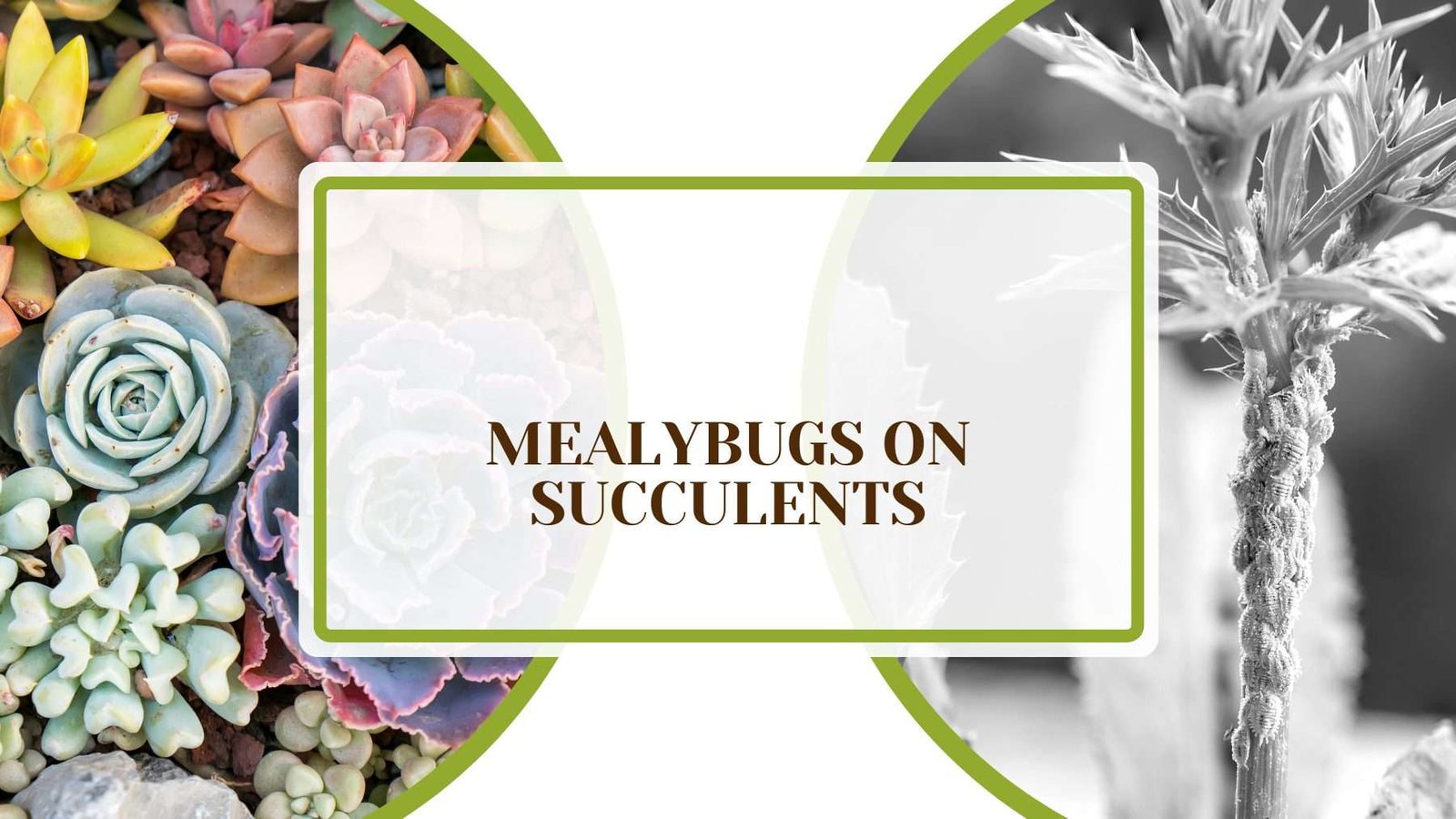
However, you must do these things correctly, which we’ve discussed in this guide. Stay tuned to learn mealybug damage and how to quickly get rid of these pests.
What Damage Do Mealybugs Cause To Succulents?
Mealybugs cause significant damage to succulents by sucking cell sap/juice from the plant tissues. This action causes stunted growth, yellowing leaves, and wilting. In doing so, mealybugs release honeydew, which attracts other pests. In some cases, the mealybug attacks cause virus transmission.
– Physical Damages: A Close Look
Mealybugs’ presence might initially seem harmless, but the damages they inflict on succulents are far from trivial.
Mealybugs suck the sap from succulents, leading to noticeable discoloration. As they continue to feed, leaves may turn yellow and eventually brown. With time, the plant’s growth slows down and ultimately stops.
– Hidden Damages: What’s Not Immediately Visible
Mealybugs don’t only attack the visible parts of the plant. Some species prefer to feed on the roots and organic matter of the soil. Root mealybugs suck the life out of the roots, causing them to rot. When this happens, plants cannot absorb vital nutrients and moisture.
Moreover, mealy bugs can also carry plant viruses. While feeding on the sap, they may introduce viruses into the succulent’s system.
– Economic Damages: Impact Beyond the Plant
Unfortunately, mealybugs can also cause financial loss. These insects can even kill succulents if they keep on feeding them. The remaining ones might not be able to recover.
Commercial growers are not immune to the economic damages caused by mealybugs. Infestations can lead to loss of crops, low yield, and poor foliage quality.
– Aesthetic Damages
Succulents are also loved for their unique shapes. Gardeners admire their vibrant colors and low-maintenance appeal. Mealybug damage can rob enthusiasts of the joy and beauty these plants bring.
How To Remove Mealybugs From Succulents? (10 Ways)
To remove mealybugs from succulents, start by spraying an alcohol solution. You can also use soap and neem seed oil mixture and sticky banding. Homemade sprays such as onion, garlic, or citrus peel spray are also effective. In severe cases, herbicides may be appropriate.
– Spray Alcohol Solution Directly on the Bugs
Another method for dealing with mealybugs is using an alcohol solution. Most people prefer it because it can be easily made by mixing rubbing alcohol/isopropyl alcohol with water.
A 70 percent rubbing or isopropyl alcohol to 30 percent water ratio is commonly used. This solution is strong enough to kill mealybugs without harming the succulent.
We’ve also noticed that adding a few drops of liquid soap enhances the solution’s effectiveness. The soap spray ensures the mixture sticks to the mealybugs and kills them.
Using a spray bottle, carefully apply the alcohol solution to the infested areas of the succulent. Focus on the places where mealybugs are visible. After spraying, keep an eye on the succulent to ensure that the mealybugs have been eradicated.
Note that this spraying method is also effective against other common pests. So, if you were wondering “how to get rid of bugs on succulents,” you now know that the answer is an alcohol solution.
– Use the Power of Soap and Neem Mixture to Treat Mealybugs
Combining insect-killing soap with neem seed oil may seem unconventional, but it works. Many praise it because it is effective against most garden pests, including mealybugs and aphids.
You’ll need:
- One tablespoon of dish or insecticidal soap
- One tablespoon of neem seed oil
- One quart of water.
Combine all these ingredients in a bottle and shake vigorously to ensure everything mixes well.
Remember to get top-quality neem seed oil. We suggest Bonide neem oil concentrate, natural neem oil, dyna-gro pure neem oil, southern ag triple action neem oil, and Harris neem oil, 100% cold pressed and unrefined for plant spray.
Spray the mixture directly on the infested areas of your succulent. The combination of soap and neem oil will break down the protective layer of mealybugs, leading to their demise.
The mealybugs treatment may need to be repeated several times.
Here’s good news- we’ve found that this mixture will be equally effective if you also notice aphids on succulents. Remember to wash off the mix after a few hours to prevent any possible residue buildup.
– Sticky Banding: An Easy Mechanical Method
We suggest sticky banding because it is a straightforward mechanical method to capture and eliminate crawling pests. Its best part is that it does not harm succulents in any way. That’s why whenever new gardeners ask us, “How to get rid of mealybugs on a string of pearls,” we say, “Try stick traps.”
Choose a sticky banding material explicitly designed for pest control. You can also use a product like diatomaceous earth mixed with a sticky substance (which can be petroleum jelly). The band should be at least a couple of inches wide to ensure it can trap the bugs effectively.
Apply the sticky band around the pot or at the base of the plant. Ensure it adheres well, forming a barrier that mealybugs cannot cross.
Inspect the band regularly, and you will notice that it traps mealybugs and many other crawling insects. Remember to replace or clean the band as it becomes filled with bugs.
– Onion and Garlic Spray: Organic Approach
If you want to eradicate mealybugs organically, we have the “onion and garlic spray” for you. Seasoned gardeners prefer it because it works on many pests, like scale insects, mealybugs, etc.
To prepare this spray, you will need:
- One medium onion
- Two garlic cloves
- One quart of water
Chop the onion and garlic and blend them with the water. Strain the mixture into a spray bottle, discarding the solids. Spray the onion and garlic solution directly on the infested areas of the succulent. The smell, intolerable to many pests, will deter them from your plants.
You may need to reapply this spray every few days until the infestation is completely cleared.
– Apply Citrus Peel Spray on the Infested Leaves
Citrus peels are not a waste. They are rich in limonene- a compound that mealybugs and spider mites find toxic.
We recommend this spray to those who don’t want to apply online garlic spray on succulent leaves due to its foul smell.
For this homemade bug spray for succulents, you will need the following:
- Peels from 2 lemons or oranges
- One quart of water
Boil the citrus peels in water for about 15 minutes, then steep the mixture until cool. Strain and pour the liquid into a bottle. Spray the citrus peel solution on the affected areas of the succulent, paying particular attention to the undersides of the leaves where pests might be hiding.
Repeat the application every few days until the pests are eradicated.
Feel free to combine citrus peels from different fruits to create a unique blend. It will be a double victory because the pleasant smell will deter pests and add a fresh fragrance to your garden.
– Vinegar and Essential Oil Spray
Combined with “essential oils, ” vinegar” provides a safe and effective solution for those wondering how to get rid of mealybugs on succulents naturally. Horticulturists use this method because of vinegar’s and oils’ distinct odors. When both fragrances combine, mealybugs can’t survive.
To make vinegar-essential oil spray, you will need the following:
- One cup of white vinegar
- Six drops of essential oil.
- One quart of water
Mix these ingredients in a spray bottle, shaking well to blend the oils thoroughly. Spray the vinegar and essential oil mixture on the affected areas of the succulent. Be sure to cover all infested areas, including the undersides of the leaves.
You may need to apply this spray every three to four days until the infestation is eradicated. We suggest you continue monitoring to decide when the applications can be stopped.
While this mixture is generally safe for plants, it might be best to test it on a small area first, as the vinegar can be too harsh for some succulents.
– Baking Soda Solution Works Too
A baking soda solution offers a gentle yet effective means to deal with a mealybug infestation. It is mild, which means it won’t affect your succulents. Furthermore, it has antifungal properties, so your garden is safe from fungus attacks.
You will need:
- One tablespoon of baking soda
- One quart of water
- Liquid dish soap (optional to help with adherence)
Combine these ingredients in a spray bottle, shaking well to dissolve the baking soda thoroughly. Spray the baking soda solution liberally on the infested areas of the succulent, making sure to reach all nooks and crannies where mealybugs might be hiding. Repeat the application every few days until the infestation is completely cleared.
– Repot the Succulent if Needed
Cracks and crevices in the pot can provide a perfect hiding spot for mealybugs. Luckily, you can eliminate these hidden sanctuaries simply by repotting. In doing so, if you see mealybugs in the soil, you should sterilize them. However, it is better if you throw away the infested soil and get a new one.
Be gentle with the roots to avoid unnecessary damage, and take your time to ensure that all the old, possibly infested soil is removed.
While repotting, it’s also wise to clean the root system thoroughly. A gentle wash with water can help remove any remaining mealybugs and their eggs.
– Use Herbicide for Significant Infestations
If you are dealing with a stubborn infestation, you should apply commercially-manufactured herbicide. Choose a herbicide specifically designed for mealybugs and follow the manufacturer’s instructions for application.
If possible, spray or brush the herbicide directly onto the infested areas, avoiding the rest of the plant. Please keep in mind that herbicides can be harmful to other plants and animals. So, apply them with care and according to the guidelines provided.
After applying the herbicide, monitor the affected areas to ensure the mealybugs are being eradicated.
– Keep the Area Around Succulents Clean
Mealybugs, like many pests, thrive in cluttered or dirty environments. Keeping the area around your succulents clean can prevent mealybugs and ward off other succulent pests and diseases.
We highly emphasize removing dead leaves, debris, and other clutter around your succulent plants whenever you see them. When you do this, your mealybugs won’t have places to hide.
Avoid overwatering, as standing water can attract mealybugs and other insects. Use well-draining soil and get containers with maximum drainage holes to minimize water accumulation.
When you purchase new plants, examine them thoroughly for signs of mealybugs. We also recommend isolating new plants for a few weeks to ensure they are pest-free.
Regularly check the soil’s pH and nutrient levels, and amend as needed to keep your succulents strong and resilient.
Conclusion
Mealybugs are a threat to succulents because they are ferocious feeders. Fortunately, you can eradicate them in easy ways, which are:
- Try natural remedies first when tackling mealybugs. These include vinegar and essential oil sprays, citrus peel solution, and an onion-garlic mixture.
- Regularly clean your garden to ensure mealybugs get no place to reside.
- Whether applying a homemade bug spray or a store-bought herbicide, following the instructions ensures safety and effectiveness.
Stick to these points to ensure your succulents stay healthy and free from mealybugs. In a few days, your succulent collections will start to thrive again!