
Mealybugs on Mandevilla of the Apocynaceae family are more than just a gardener’s irritation; they’re a subtle threat that can undermine the vibrant beauty of your favorite tropical vine. But fear not; there’s a way to turn the tide in this silent battle, ensuring your Mandevilla genus blooms in all its glory. So, without further ado, let’s delve into practical solutions to keep these pests at bay.
Why Are There Mealybugs on Mandevilla? Main Causes
There are mealybugs on Mandevilla due to a combination of environmental, biological, and cultural factors. These tiny, cotton-like pests thrive in humid conditions, lack of natural predators, and adding more fertilizers than needed. Furthermore, lack of air movement can also encourage mealybugs to infest.
– Favorable Environmental Conditions
Mandevilla plants are typically grown in conditions that suit mealybugs well because they too love the warmth and humidity. The overlap in preferred conditions makes the Mandevilla a prime target for these pests.
Note that high humidity aids in the reproductive process of mealybugs. Moisture provides an ideal setting for the bugs to lay their eggs. After hatching, the high humidity can also help the nymphs survive and grow.
– Over-fertilization of Plants
Excessive nitrogen-fertilization can make plants more appealing to pests, including mealybugs and aphids. Over-fertilized plants produce softer, more succulent growth, which is an easier and more nutritious food source for mealybugs.
– Inadequate Natural Predators
In a balanced ecosystem, the population of pests like mealybugs is kept in check by their natural predators, like lacewings. When the garden ecosystem is disturbed, either by the excessive use of pesticides or other factors, these natural predators might be killed off or driven away.
In the absence of these predators, mealybugs face less threat and can multiply more freely.
– Introduction through New Plants
It’s a common practice among gardeners to introduce new plants to their gardens. However, if these plants are infested or come from a source where mealybugs are prevalent, they can introduce these pests to your garden. The Mandevilla, being susceptible to mealybugs, can quickly become their new home.
– Limited Air Circulation
Air circulation plays a significant role in keeping several pests at bay, including mealybugs. So, mandevilla plants placed in areas with limited air movement, like tightly packed gardens or indoor settings, can experience higher humidity levels around their foliage.
Additionally, stagnant air can make it easier for mealybugs to settle, reproduce, and spread to other parts of the plant or neighboring plants (which we don’t want).
How To Deal With Mealybugs on Mandevilla?
To deal with mealybugs on Mandevilla, start with a combination of methods, including physically removing the bugs, using natural remedies like neem oil, and applying systemic pesticides. After this, cultural controls like proper spacing and watering must be done to deter pests.
– Toss Away the Affected Parts
Mealybugs can mess up mandevilla plants, but removing the parts they’ve infested is a great way to fight back. It means checking the plant closely and finding the spots in trouble. Look for the mealybugs under the leaves, around the stems, and near the buds.
Use sharp tools such as scissors or pruning shears to cut off the infected parts. Consider removing more than just the visibly affected areas. Once you’ve cut off the infested parts, dispose of them properly, sealing them in a plastic bag.
Remember to clean your tools to prevent the spread of the infestation. Rubbing alcohol or soap, and water can effectively sanitize your tools.
– Use Bug Blaster
If removing the infested parts doesn’t resolve the issue, using a Bug Blaster can be a potent method. It delivers a targeted jet stream of water to dislodge the mealybugs from the plant. Aim the Bug Blaster at the affected areas, and cover the leaves undersides, where mealybugs often hide. Check out for brown leaves too since they have already been affected b y mealybugs (or maybe some other pest).
The Bug Blaster has a significant advantage: it’s chemical-free, so your plants stay natural, organic, and kind to the environment.
– Put slippery bands of polyethylene around the pot.
With their destructive tendencies, Mealybugs can wreak havoc on your beautiful mandevilla. But there’s a unique approach that you might not have considered: slippery bands of polyethylene around the pot.
This non-toxic solution works because mealybugs find it challenging to traverse the smooth surface of polyethylene. Wrap the band around the pot, and you’ll prevent the bugs from crawling up and reaching the plant.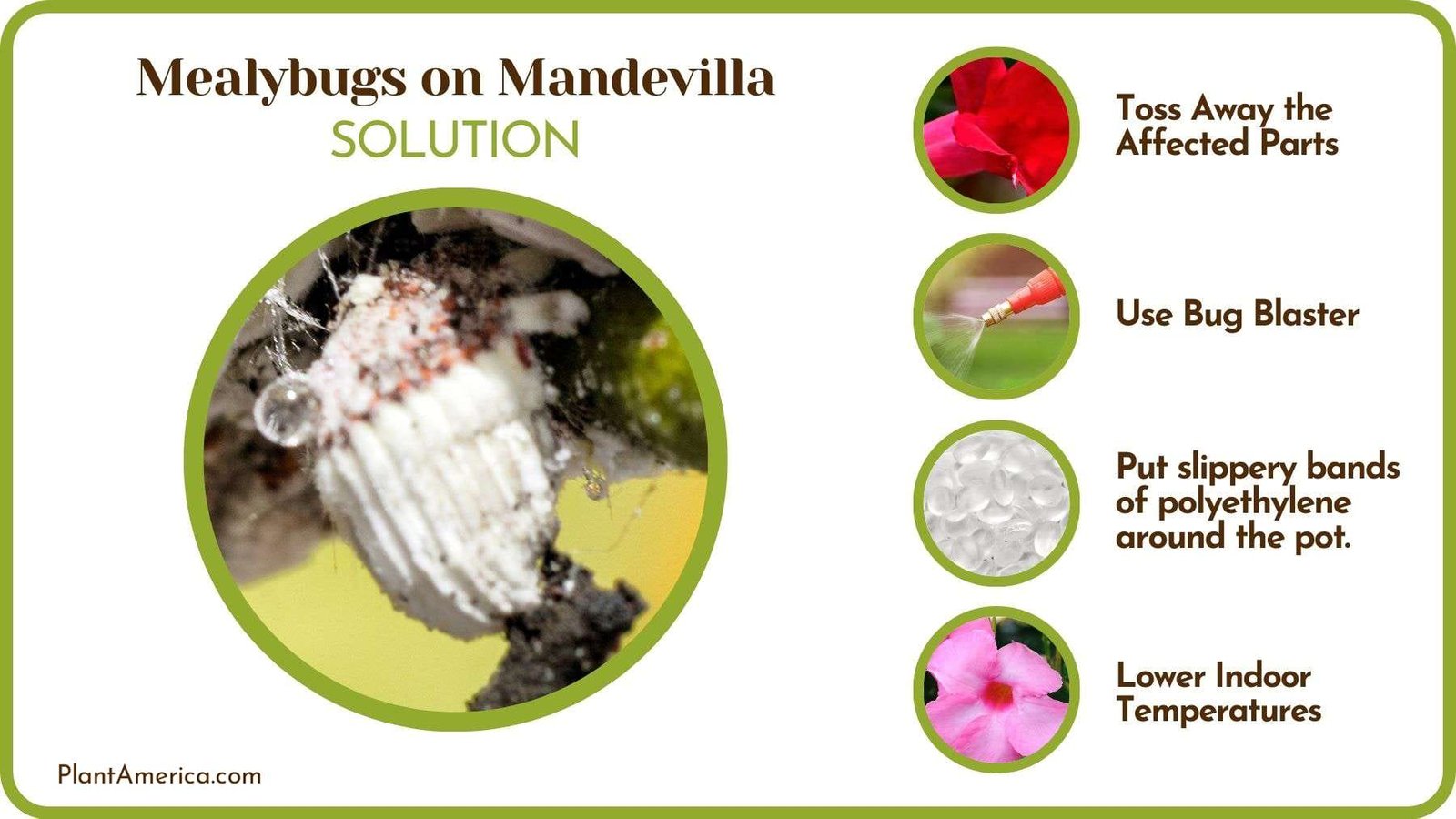
– Lower Indoor Temperatures
Another unexpected yet effective method to combat mealybugs on mandevilla is to play with the temperature. Mealybugs love warm and humid conditions; it’s where they thrive and multiply.
By making the environment a little chillier, you can make it less inviting for them. Mandevillas are tolerant of cooler temperatures, especially during the night. Maintaining a range between 60 to 65 degrees Fahrenheit can be uncomfortable for the mealybugs but safe for the plant. Using fans or air conditioning to cool the space is an option, but it must be done carefully.
You wouldn’t want to unintentionally put the plant in direct cold drafts or reduce its water needs. Also, be mindful of energy consumption if relying on electric appliances to regulate the temperature.
– Essential Oil Soak For Pest Control
Mandevilla plants are stunning, but their attractiveness can attract unwelcome visitors like mealybugs. One effective remedy is using neem oil on mandevilla. The neem seed oil has been long appreciated for its insect-repelling properties. Mixing it with water and gently soaking the affected areas can work wonders.
– Heat Treatment (But Do It Carefully)
Mealybugs and caterpillars on Mandevilla might be the culprits. But don’t worry; heat treatment can save the day. Heat treatment involves exposing the affected parts to controlled heat. The warmth is pleasant for the plant but not so much for the caterpillars and bugs.
You’ll need to ensure the temperature is just right – not too hot to harm the plant but warm enough to discourage the caterpillars. Remember, the heat treatment should be applied cautiously, considering your Mandevilla plant’s specific needs and tolerance levels.
– Using Hydrogen Peroxide to Keep Mealybugs Away
Mealybugs are tiny insects that can harm plants. One way to keep them away is by using hydrogen peroxide, a common household item you might find in your medicine cabinet. Here’s how you can use it:
- Mix the Solution: Combine a small amount of hydrogen peroxide with water. A common ratio might be one part hydrogen peroxide to ten parts water, but it’s a good idea to check the bottle or look online for the best mixture for your plants.
- Spray the Plants: Mist it on the parts of the plants where you see mealybugs. Be gentle, as you don’t want to damage the plants.
- Why It Works: Hydrogen peroxide helps break down into water and oxygen. The oxygen can kill the mealybugs, and the moisture helps clean the plant.
- Be Careful: Hydrogen peroxide can be strong, so don’t use too much, or it might harm the plants. Always follow the instructions or ask someone who knows about plants for advice.
- Repeat if Needed: If the mealybugs return, you can respray the plants. Keep an eye on them to make sure they stay healthy.
Hydrogen peroxide lets you keep your plants free of mealybugs in a simple way that doesn’t use harsh chemicals. It’s a handy trick that many gardeners like to use!
– Go For Reflective Mulch To Deter Pests
Reflective mulch, often made of metallic or plastic materials, is designed to reflect sunlight. This shiny effect messes up and scares off bugs like mealybugs. The light bouncing off the shiny surface confuses them and makes it harder for them to find mandevilla plants.
Installing reflective mulch is relatively straightforward, but attention to detail matters. You’ll need to ensure proper coverage without smothering the plant. Plus, think about how your garden looks – picking a mulch that goes well with the whole design can make a change.
Maintenance is critical here. Regularly checking the mulch for wear and tear, and replacing it as needed, ensures that it continues to provide both beauty and protection. In a way, reflective mulch is like a guardian, quietly watching over your Mandevilla and keeping it safe from harm.
– Beneficial Fungi Can Help You Remove Bugs
We recommend the “Beneficial fungi” approach because it creates a friendly partnership with plants like Mandevilla.
It’s like a friendly neighbor to your Mandevilla, providing protection and support. Introducing these fungi to the soil creates a natural defense system that works subtly but effectively.
Putting beneficial fungi on your plants is a careful job. You need to know about the soil, what the plant wants, and the fungi you use. You must also watch closely to ensure the fungi are doing well and giving you the desired benefits.
– Apply Systemic Pesticide if the Bug Population Increases
Systemic pesticides are unique in their approach. Unlike traditional pesticides that only treat the surface, systemic varieties are absorbed by the plant. When mealybugs or insects like spider mites feed on the treated plant, they ingest the pesticide and are eventually eliminated.
When you’re using systemic pesticides, you have to be careful. Using too much or not using them correctly can cause issues for your Mandevilla, like having stuff left behind or hurting the helpful bugs.
Systemic pesticides are especially handy when growing mandevilla in areas prone to persistent pest infestations. It offers an additional layer of pest protection, allowing your Mandevilla to grow unhindered by the typical nuisances that gardeners often face.
– Do Cultural Control To Grow Mandevilla
Cultural control is an approach that often goes unnoticed but can be pretty effective in dealing with issues like Mandevilla white fungus and other common pests. It’s all about getting how things work together – the surroundings, the plant, and the bugs – and making changes based on that.
For Mandevilla, knowing what they like and adjusting how you care for them can help. Cultural control means giving enough space, trimming, watering right, and keeping things clean to make them not so comfy for pests.
For example, too much water can cause fungi, and having plants too close can bring in bugs. By paying attention to these things and changing how you garden, you create a suitable “mandevilla growth environment” that’s tough for pests to handle.
Cultural control is not about using chemicals or physical barriers. It’s about intelligence, observation, and adaptability. So, consider these factors and create a cultivation strategy that naturally minimizes the risk of mandevilla pests and diseases.
Conclusion
Dealing with mealybugs on Mandevilla needs a mix of different ways. We recommend taking these necessary steps whenever facing challenges with your Mandevilla:
- Understand the Specific Needs of Mandevilla: Know the conditions that help your Mandevilla blooms thrive, and make adjustments accordingly.
- Employ a Mix of Natural and Chemical Solutions: From neem seed oil to systemic pesticides, having various tools at your disposal can be highly effective.
- Regularly Monitor for Signs of Pests and Diseases: Early detection is critical, so always watch your plant for any signs of mandevilla problems like white fungus or spider mites.
- Foster a Healthy Environment with Cultural Controls: Smart gardening practices can prevent issues before they begin, so focus on proper spacing, watering, and cleanliness.
Your mandevilla vines will be free from mealybugs and other pests and flourish in beauty and elegance. Happy gardening!