
Blue perennial flowers can transform your garden into a serene oasis of calm. Adding long-lasting blooms in gorgeous shades of azure, cerulean and indigo brings a soothing sense of continuity to your summer borders year after year.
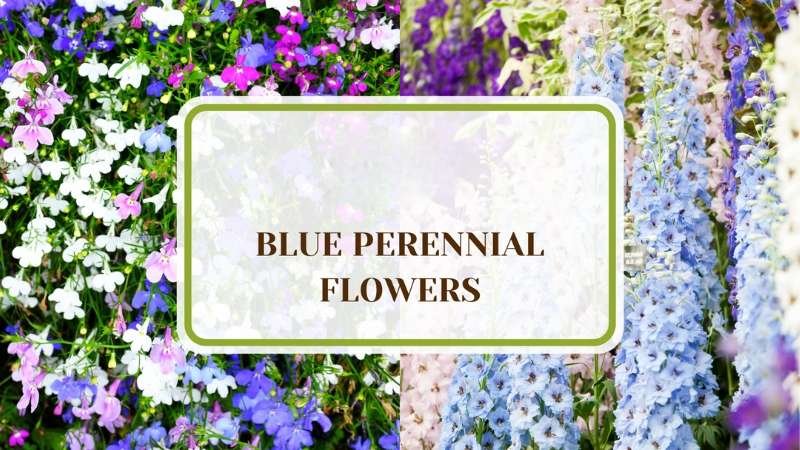
From classic choices like flowering Virginia bluebells and hints of lavender in baptisia to striking new hybrids like the African lily and blue star, read on for an array of enchanting blooms!
Blue Perennial Flowers To Brighten up Your Garden Beds
1. Virginia Bluebells
- Growing season: Spring, Early summer
- Leaf shape: Rounded, Heart-shaped
- Specific needs: Moist, Humus-rich soil
- Common pest: Slugs, Snails
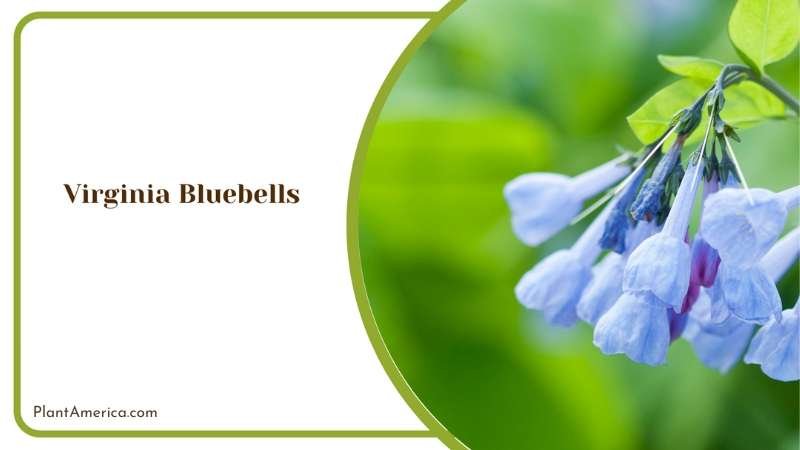
Virginia bluebells (Mertensia virginica) are one of the most beloved early spring blue perennial flowers. Their dense spikes of pale to medium blue, funnel-shaped blooms appear in April and May, brightening up woodland gardens with a cool color. These deer-resistant plants thrive in moist, well-drained, acidic soil rich in organic matter.
They prefer partial shade from trees but will tolerate full sun if the soil retains enough moisture. Divide bluebell clumps every three to four years in fall or early spring to maintain vigor. The attractive foliage emerges later in spring, providing an ornamental backdrop for other perennials. The leaves are oval in shape with a pointed tip and light green in color.
The nodding bell-shaped blooms range from pale lavender-blue to medium blue, providing a soothing contrast to the yellows and whites of other spring flowers. Bloom time can vary depending on climate and the plants often hybridize, creating variations in flower color and plant size.
Virginia bluebells require moderate watering during dry spells, especially while in bloom. Infrequent but deep watering is better than frequent light watering. Mulching helps conserve soil moisture.
2. False Indigo
- Growing season: Late Spring, Fall
- Leaf shape: Trifoliate, Palmate
- Specific needs: Full sun to part shade, Moist, Well-drained soil
- Common pest: Bean leaf, Aphids
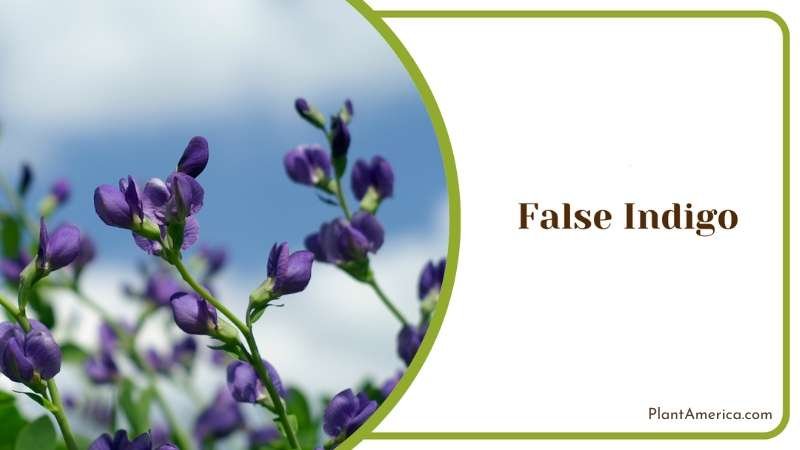
False indigo (Baptisia australis) is a perennial herbaceous plant native to eastern and central North America. It produces pea-like, indigo-blue flowers from late spring through summer.
This deer-resistant plant thrives in moist, well-drained soils and full sun to partial shade. It is also tolerant of clay and somewhat acidic soils. Prune stems to the ground each spring before new growth emerges to maintain an attractive shape and encourage bushier growth.
The pale green leaves emerge in early spring and remain attractive until the first frost. The oval leaves have three leaflets and reach 6 to 12 inches in length. White flowers appear in terminal racemes above the foliage.
The blue to violet flower spikes range from pale lavender to deep blue, depending on the cultivar. Flowering lasts four to eight weeks and brings beauty from mid-spring through summer. Removing faded blooms helps extend bloom time.
False indigo tolerates most conditions once established, but requires little additional water unless during prolonged heat and drought. The root system is shallow so avoid overwatering.
3. Baptisia
- Growing season: Spring, Summer
- Leaf shape: Trifoliate, Ovate
- Specific needs: Well-drained soil, Full sun
- Common pest: Japanese beetles, Caterpillar
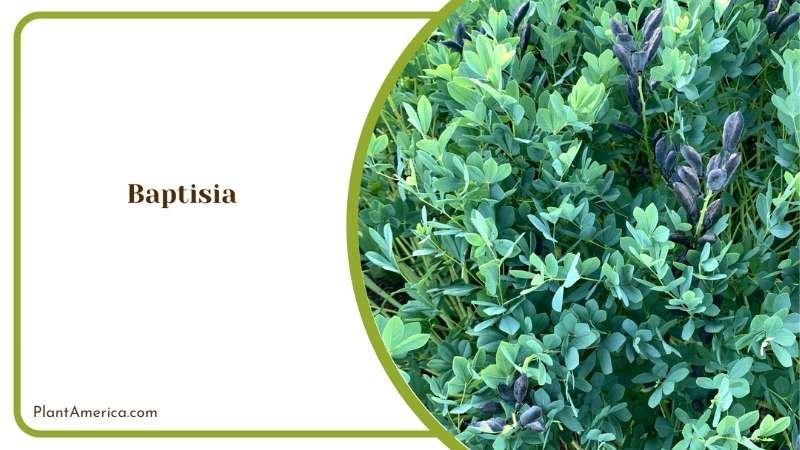
Baptisia (Baptisia australis) is sometimes called false indigo for the indigo-blue color of its flowers, though it is not actually related to the true indigo plant. It is a hardy perennial herbaceous plant native to North America.
These plants that are tolerant to drought thrive in full sun and well-drained soil, though it is somewhat tolerant of clay soil. It is deer-resistant and low maintenance once established. Prune stems to the ground each year in early spring before new growth emerges to promote bushier growth.
Baptisia is long-lived and drought-tolerant once established. It requires little supplemental watering except during extended heat and dry spells. The shallow root system means you should avoid overwatering.
Pests are rarely an issue but baptisia can self-sow, producing unwanted seedlings. Simply pull unwanted seedlings and collect seed pods before they open to prevent self-seeding. The combination of attractive foliage, colorful flowers, and drought tolerance make baptisia an easy-care perennial for gardens. The nectar-rich blooms also attract beneficial insects and hummingbirds to the landscape.
4. African Lily
- Growing season: Summer, Fall
- Leaf shape: Strap shaped, Linear
- Specific needs: Moist, Well-drained soil, Full sun
- Common pest: Spider mites, Aphids
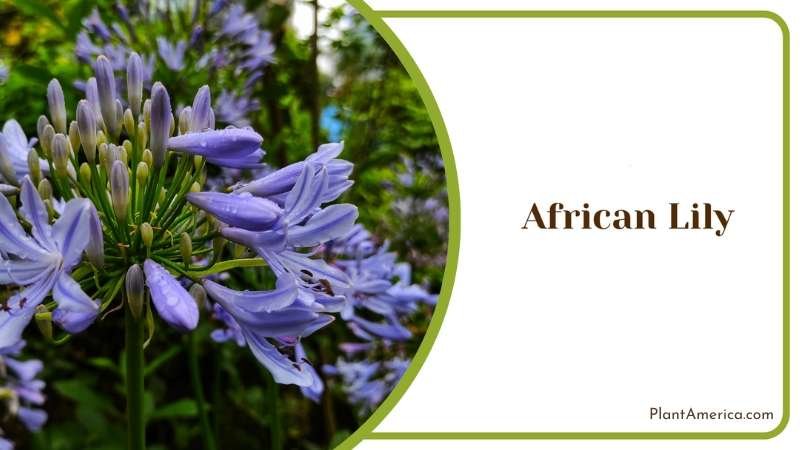
African lilies (Agapanthus africanus) are peacock-like perennials bearing shapely cobalt-blue flowers atop sturdy dark green mounded foliage. These drought-tolerant plants bloom from summer to fall.
African lilies thrive in full sun and moist, well-drained soil that is enriched with organic matter. They are heat tolerant and drought resistant once established. In summer, thick blue-green stems emerge from the center of the leaf rosette, bearing the bloom clusters atop. The tubular, bell-shaped flowers range from bright sky blue to powder blue in color.
African lily flowers last up to six weeks followed by seed pods that open to reveal silvery fluffy seeds that can self-sow. Water infrequently yet deeply during drought, but reduce watering in winter when the foliage has died back.
Propagate by dividing clumps every two to three years in spring or fall. Take care when handling the milky sap as it can cause irritation to sensitive skin. African lilies add instant height, form, color, and structure to the garden with their architectural foliage and striking flowers. The bold blue blooms are a unique addition that stands out among more typical perennial choices.
5. Blue Star

- Growing season: Spring, Summer
- Leaf shape: Lanceolate, Narrow
- Specific needs: Average well-drained soil, Full sun
- Common pest: Leafhoppers, Aphids
Blue star (Amsonia tabernaemontana) is a clump-forming perennial valued for its early summer blooms of small blue star-shaped flowers. Blue star foliage emerges willowy in spring and matures to a neat, rounded shape.
This deer-resistant plant grows well in average soil that is moist yet well-drained. It prefers full sun but won’t tolerate partial shade. Cut stems back to the ground in early spring before new growth emerges.
Blue star flowers from early to mid-summer produce panicles of small pale to medium blue star-shaped blooms that resemble Alexandrian star grass. Blue star hybrids come in varying shades of blue, purple, and white.
Pests rarely bother blue stars, though leafhoppers sometimes feed on foliage, leaf miners can tunnel inside leaves, and symphylans may damage roots. Handpick pests or use organic remedies as needed.
The willowy foliage and delicate starry blooms give the blue star an ethereal, fairy-like quality that softens and adds grace to perennial borders. Its fine color and texture make it a charming choice for a low-maintenance garden.
6. Blue Iris
- Growing season: Spring, Fall
- Leaf shape: Sword like, Erect
- Specific needs: Moist, Well-drained soil
- Common pest: Iris borer, Thrips
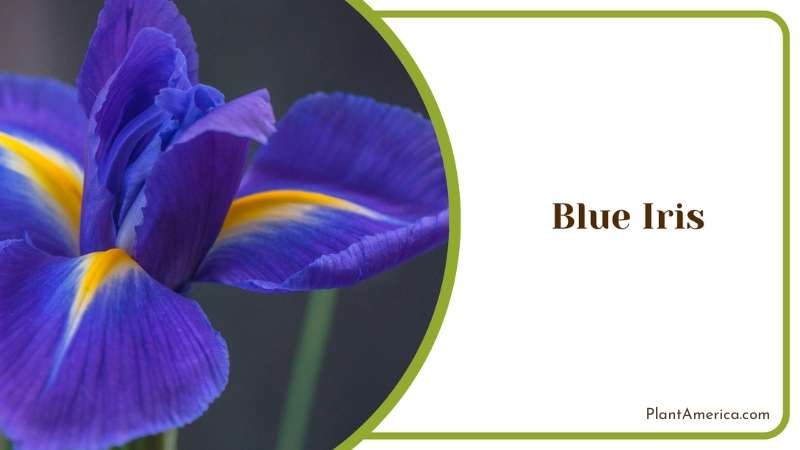
Blue irises are some of the most popular bearded iris varieties thanks to their lovely azure blooms. Bearded irises bloom in late spring to early summer and are valued for their ease of culture.
The sword-like leaves emerge in early spring and remain attractive until fall. The leaves are usually flat but some iris cultivars have crinkled leaves. Keep foliage dry to avoid fungal diseases.
Blue irises require regular watering while in bloom and during hot spells. Infrequent deep soakings are best. Add a layer of mulch to help conserve soil moisture and control weeds. Pests can be a problem for blue irises including mealybugs, thrips, iris borer, and slug damage. Remove damaged foliage and apply organic remedies as needed. Deadhead spent blooms to reduce seeding.
After blooming, cut flower stalks back without damaging surrounding foliage. Iris foliage provides form and color until fall. Lift and divide overgrown clumps every few years. With their striking azure blooms and sword-like evergreen foliage, blue irises bring elegance and grace to the landscape. Their ease of cultivation makes them a reliable choice for perennial borders.
7. Blue Poppy
- Growing season: Summer, Fall
- Leaf shape: Lobed, Pinnate
- Specific needs: Rich, Moist yet well-drained soil
- Common pest: Aphids, Slugs
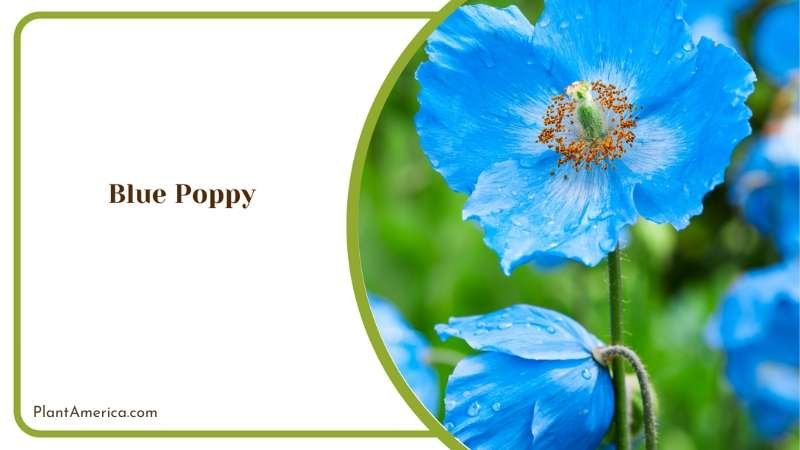
Blue poppies (Meconopsis betonicifolia) are endemic to the Himalayas and known for their pendulous vase-shaped blooms in varying shades of blue. Blue poppies bloom in summer and fall and are valued for their unique beauty.
These poppies thrive in rich, moist yet freely draining soil. They grow best in morning sun and afternoon shade, though some full sun is tolerable if the soil remains consistently moist. Blue poppy foliage emerges in spring forming large basal rosettes of lightly toothed, round leaves. The leaves are grayish-green and covered with fine hairs. Woody stems emerge in summer, blooming until the first frost.
Pests are rarely an issue, though slugs and snails can damage foliage. Apply organic slug baits if needed. Check carefully for spider mite infestations in warm, dry conditions. The uniquely shaped dangling blooms in soft, ethereal shades of blue make blue poppies a distinctive addition to ornamental borders. Their unique growing requirements mean they are best suited to the specialized care of an alpine or rock garden.
8. Azure Aster

- Growing season: Summer, Fall
- Leaf shape: Lobed, Pinnate
- Specific needs: Rich, Moist well-drained soil, Partial shadel
- Common pest: Slugs, Snails
Azure aster (Symphyotrichum oolentangiense), also known as sky blue aster, is a stunning perennial plant native to the central and eastern regions of North America. With its striking azure-blue flowers, this wildflower adds a burst of color to meadows, prairies, and garden landscapes.
The azure aster boasts daisy-like flowers with vibrant blue petals and yellow centers, attracting butterflies, bees, and other pollinators. Its flowering season typically occurs from late summer to early fall, making it a valuable nectar source for late-season pollinators.
As a perennial, this plant returns year after year, providing reliable beauty to any garden or natural habitat. It thrives in full sun to partial shade and prefers well-draining soil. Azure asters are relatively low-maintenance, requiring minimal care once established.
Gardeners and conservationists alike appreciate the azure aster for its ecological significance and aesthetic appeal. By cultivating this charming perennial, enthusiasts can contribute to the preservation of native plant species while enjoying its captivating azure blossoms throughout the late-season landscape.
9. Hyacinth
- Growing season: Spring, Summer
- Leaf shape: Compound, Lobed
- Specific needs: Rich, Moist well-draining soil
- Common pest: Leaf miner, Aphids
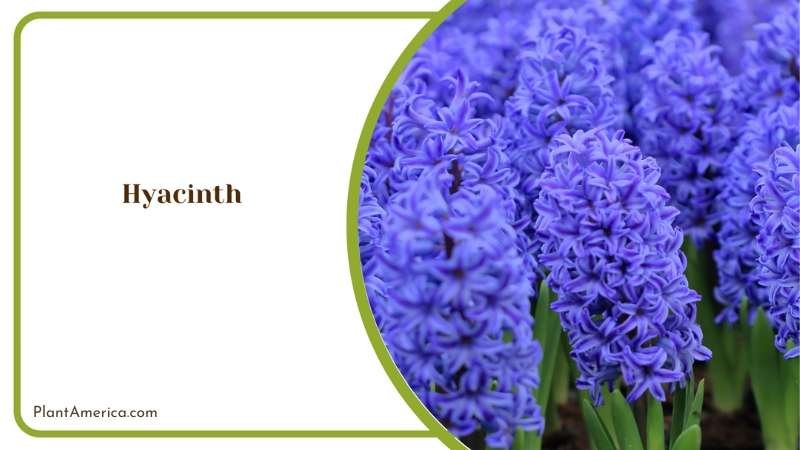
Hyacinth (Hyacinthus orientalis) is a delightful and fragrant perennial plant that captivates gardeners and flower enthusiasts alike. Native to the eastern Mediterranean region, this spring-blooming bulbous plant is renowned for its beautiful, dense spikes of colorful, bell-shaped flowers.
Hyacinths come in a variety of vibrant hues, including shades of blue, pink, white, and purple, each emitting a sweet and intoxicating fragrance. These lovely flowers attract pollinators like bees and butterflies, contributing to the biodiversity of the garden.
Easy to grow, hyacinths prefer well-draining soil and a sunny to partially shaded location. Planting them in fall allows for a stunning display of blooms in early spring. After flowering, the foliage gradually withers, and the bulbs can be left in the ground to naturalize and return year after year.
With their beauty and enchanting scent, hyacinths add charm and elegance to any garden or flower bed, making them a cherished favorite in the world of springtime blooms.
10. Hydrangea
| Growing season |
|
| Leaf shape |
|
| Specific needs |
|
| Common pests |
|
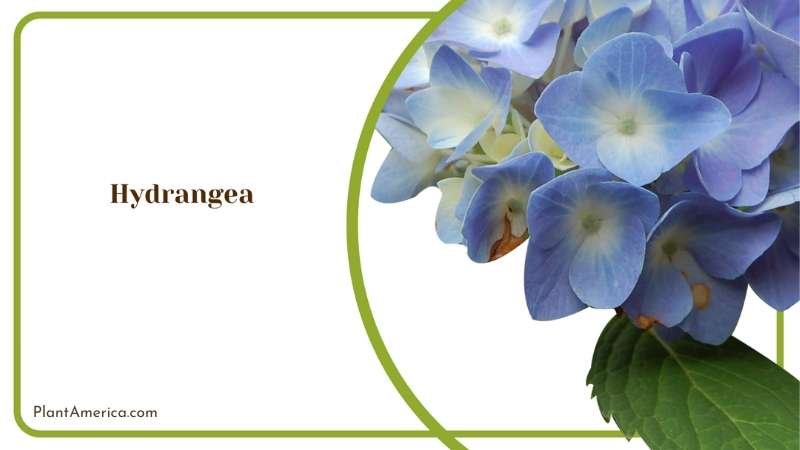
Hydrangeas (Hydrangea macrophylla) bear large rounded clusters of flowers in an array of colors including blue, purple, pink, and white. The most common hydrangea for the landscape, they typically bloom in summer.
Hydrangea leaves emerge thick and glossy with a pointy tip. The leaves grow in an opposite arrangement and can feature prominent veins or smooth surfaces. The shade of green depends on the cultivar.
Blooming occurs in summer with flowers forming mophead clusters atop strong upright stems. The individual florets consist of sepals that transform into papery petals in shades of blue, purple, pink, and white.
Hydrangeas require consistent moisture while blooming and throughout their active growth period. Mulch planted areas and water deeply during dry spells. Fertilize in early spring. Aphids, leafhoppers, and spider mites can damage foliage. Remove infected leaves and spray with a strong jet of water if needed.
11. Delphinium
| Growing season |
|
| Leaf shape |
|
| Specific needs |
|
| Common pests |
|
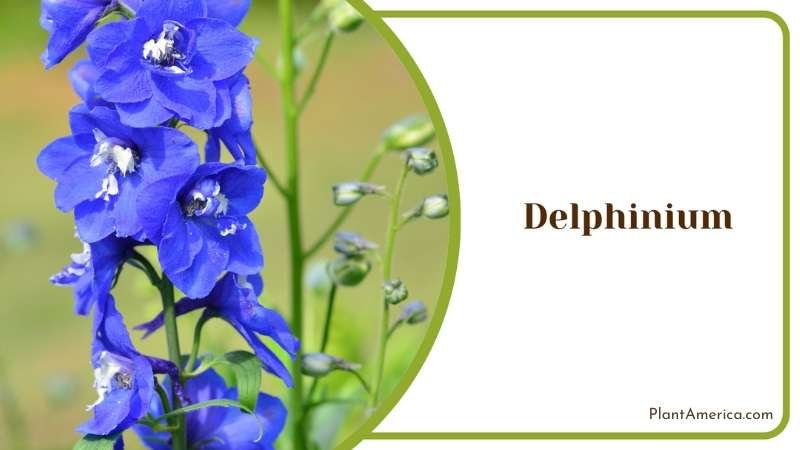
Delphiniums (Delphinium x cultorum) are perennial flowering plants grown for their spectacular spikes of variously colored flowers. They typically bloom in late spring through mid-summer and are prized for cutting gardens. These easy-care perennials thrive in full sun and moist yet well-drained soil. They grow best in soil with high organic matter content.
Prune branches several inches from the ground in early spring before growth starts. The ferny delphinium foliage features deeply lobed dark green leaves and a lacy texture. The leaves grow in an alternate arrangement on branching stems that bear the flower spikes.
Delphinium needs consistent moisture while in bloom to produce optimally. Mulching helps conserve soil moisture and keep roots cool. Fertilize in spring and deadhead spent blooms to encourage continual flowering. Pests and diseases like aphids, spider mites, fungal leaf spots, and rust can affect delphiniums. Remove infected foliage and spray plants with a strong water jet.
The spires of striking blue, white, and purple flowers on towering stems make delphiniums crowning jewels of the perennial border. Their bold spikes add graceful lines and drama to the garden from spring well into summer.
12. Lobelia Blue
| Growing season |
|
| Leaf shape |
|
| Specific needs |
|
| Common pests |
|
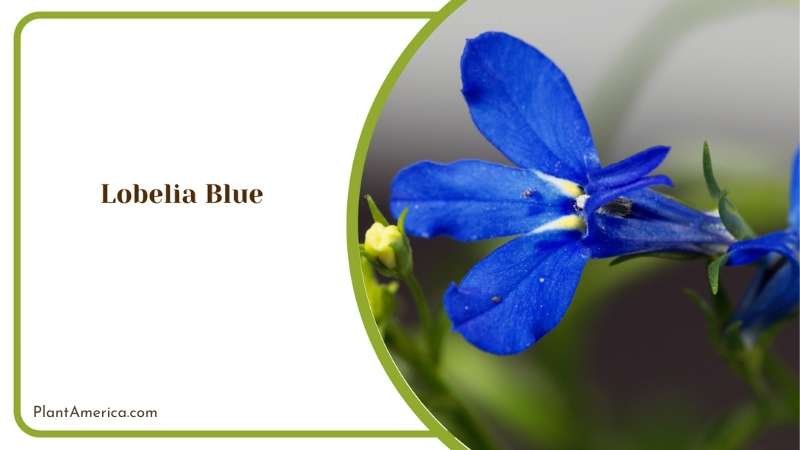
Lobelia ‘Blue’ (Lobelia erinus) is an annual or perennial flowering plant grown as an annual for its profuse summer blooms. The blue-flowered lobelia bears small flowers in vibrant shades of blue. Lobelia blue grows best in partial shade and moist, well-draining soil enriched with organic matter. It performs best in climates with cool summer nights. Provide winter protection in colder zones.
In summer, branched spikes of flowers appear at stem ends and between leaves. The small downward-facing tubular flowers open from the tip of the spike. Many blues rang from sky blue to navy. Lobelia blue needs regular moisture while in bloom to produce optimally. Avoid overwatering during winter dormancy. Fertilize monthly during the growing season.
Aphids are the most common pest, sucking plant juices and leaving sticky honeydew. They spread disease and cause leaf drops, so wash or rinse plants to knock pests off. The profuse display of vivid sky-blue blooms makes lobelia blue an invaluable choice for containers, baskets, borders, and hanging planters. The petite flowers and tidy habit make it a seamless addition to any garden scheme.
13. Globe Thistle
| Growing season |
|
| Leaf shape |
|
| Specific needs |
|
| Common pests |
|
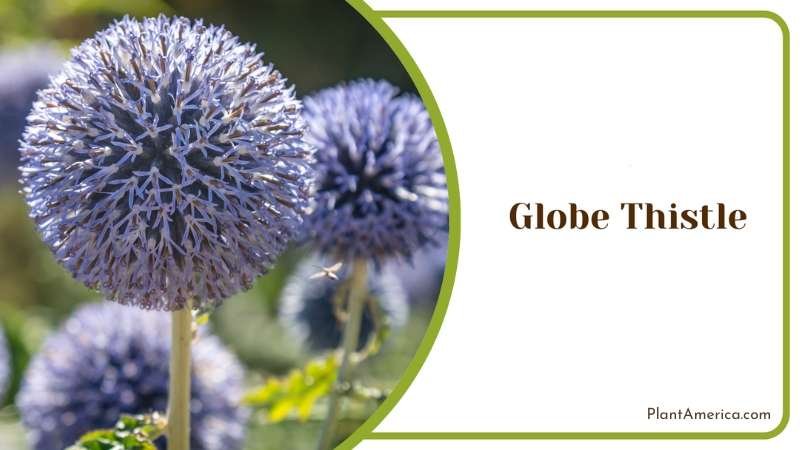
Globe thistle (Echinops ritro) is an ornamental perennial valued for its round, vibrant blue flower heads. These summer bloomers have spiny, silver foliage that provides an ornamental texture in the garden.
Globe thistles thrive in full sun and hot, dry conditions. They are easy to care for, requiring little attention once established. The plants perform best in well-draining soil that does not retain excessive moisture. They tolerate both sandy and loam-based soils. Globe thistles also adapt to partial shade but full sun results in the most prolific blooms.
The silvery-gray, spiny leaves form a dense basal rosette in spring. The ferny foliage remains attractive throughout the growing season, providing an ornamental foliage component when not in bloom.
Tall flowering stems emerge in early summer, carrying numerous rounded flowerheads in shades of intense blue. The spherical capitula consist of tubular florets with spiny bracts. Flowering lasts around six weeks, after which the stems may be pruned back to the base.
When in bloom, the round flower heads measuring two to four inches across, drawing the eye with their vivid color. The spiny blue florets initially form a tight sphere, opening fully as they mature. As they age, the individual flowers fade but the blue sphere maintains its shape, making an impact in the landscape for an extended period.
14. Catmint
| Growing season |
|
| Leaf shape |
|
| Specific needs |
|
| Common pests |
|
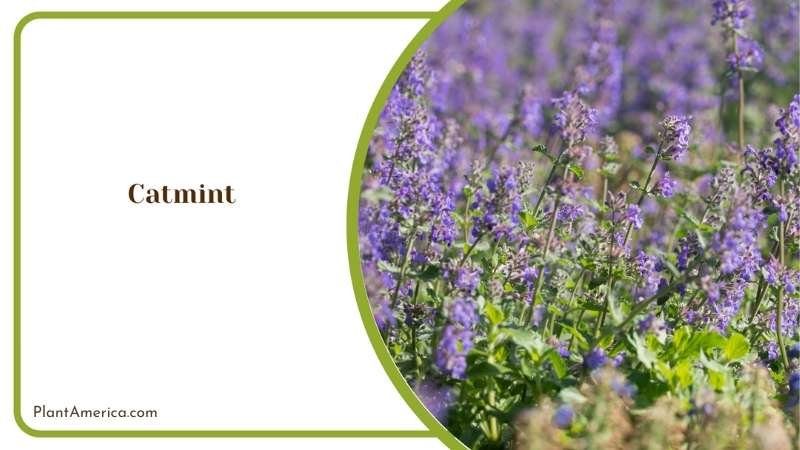
Catmints (Nepeta x faassenii) are bushy perennials grown for their whorls of tubular blue flowers that attract butterflies and hummingbirds. Their aromatic gray-green foliage emits a minty “catnip” fragrance when crushed or brushed against. Catmints grow best in full sun and well-drained soil. They tolerate drought once established and generally require little care.
Remove faded flower spikes to encourage re-bloom and cut stems back in late winter. The aromatic grayish-green foliage emerges in spring, forming mounded clumps of textured leaves that remain attractive all season. The petioled leaves are oval or rounded with toothed edges. In early summer, many spikes of small tubular flowers appear above the foliage.
The flowers are arranged in whorls, typically in shades of blue though some white and pink cultivars exist. Flowering continues until frost. Catmints require regular watering to establish but are fairly drought tolerant once established. Provide winter protection in colder zones. Divide congested clumps in early spring.
15. Veronica
| Growing season |
|
| Leaf shape |
|
| Specific needs |
|
| Common pests |
|
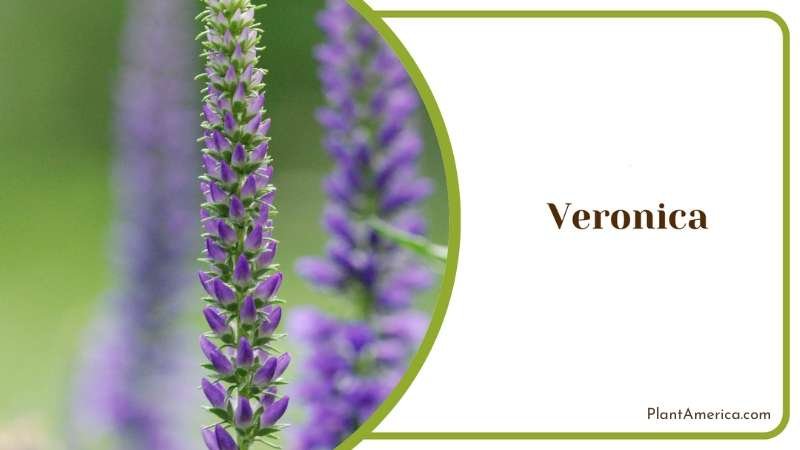
Veronicas (Veronica spicata) are perennial flowers valued for their spikes of small true-blue summer blooms. These tough, easy-care plants offer ornamental interest from spring through fall. Veronicas grow best in full sun and moist yet freely draining soil. They tolerate drought once established but bloom optimally with adequate moisture. Prune back flower stalks after blooming.
The slender, lance-shaped leaves emerge in early spring, forming tight basal rosettes. The leaves are dark green with smooth edges and remain attractive all season.
In early summer, spikes of brightly colored flowers appear on branched upright stems. The various veronica cultivars bear shades of blue, purple, pink, and white blooms. Flowering can extend from summer into fall.
16. Aquilegia
| Growing season |
|
| Leaf shape |
|
| Specific needs |
|
| Common pests |
|
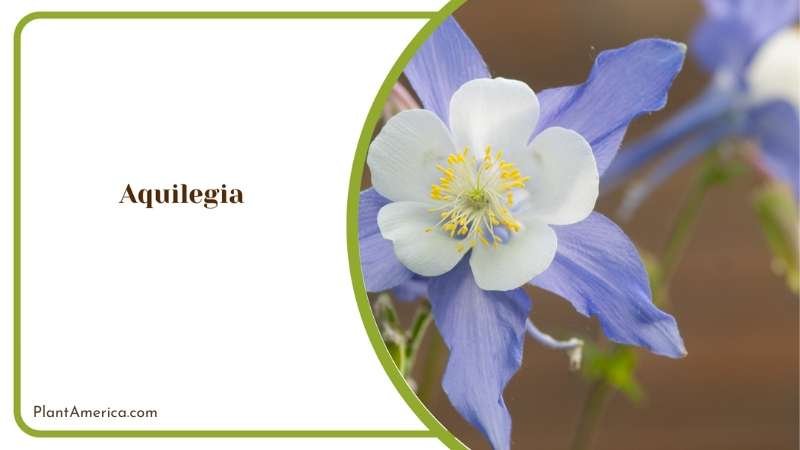
Columbines (Aquilegia vulgaris) are perennial flowers valued for their drooping clusters of spurred, bell-shaped blooms in shades of blue, purple, white, and pink. Columbines typically bloom in late spring to early summer.
These easy-care perennials prefer moist yet well-draining soil with added organic matter. They grow best in partial shade to protect roots from drying out but also tolerate full sun. Prune stems to the ground in spring. The leaves of columbines are palmately divided into several leaflets that spread out from a central point. The foliage emerges early, remaining attractive all season.
The nodding clusters of delicate bell-shaped blooms in romantic pastel hues make columbines a valuable choice for mixed herbaceous borders and cottage gardens. Their ease of culture and longevity ensure Columbines are a treasured place in the perennial garden.
17. Phlox
| Growing season |
|
| Leaf shape |
|
| Specific needs |
|
| Common pests |
|
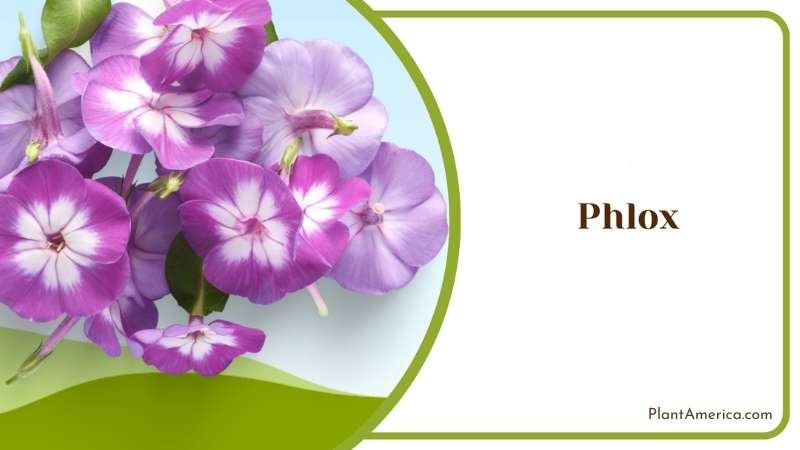
Phlox (phlox paniculata) is a perennial valued in the garden for its flat-topped clusters of fragrant flowers in summer. The many varieties provide a rainbow of color choices, including pure blues. The leaves are dark green in color with smooth margins.
In summer, branched stems arise bearing clusters of fragrant, star-shaped flowers in many colors, including blue. The flower clusters are upright and expand into flattened heads. Flowering lasts around six weeks.
Phlox require consistent moisture while blooming and during hot, dry spells. Apply mulch and water deeply during drought. Fertilize in spring with a balanced feed. Divide clumps every three to four years.
Pests and diseases can sometimes affect this easy-care plant. Prevent issues by providing good air circulation, spacing plants, and removing infected foliage. The profuse flat-topped clusters packed densely with upward-facing fragrant flowers in vivid blues and purples, combined with the foliage’s form and longevity, make phlox a treasured component of ornamental borders and cutting gardens.
18. Geranium
| Growing season |
|
| Leaf shape |
|
| Specific needs |
|
| Common pests |
|
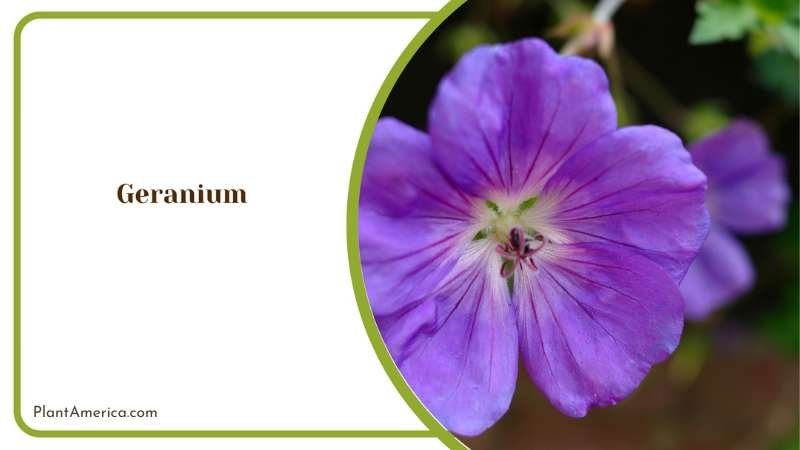
Geranium ‘Rozanne’ is a perennial cranesbill valued for its vivid blue flowers that bloom profusely from spring through fall. This tough, durable perennial tolerates hot, humid conditions and thrives in average garden beds.
Rozanne geraniums grow best in well-draining soils that do not retain excessive moisture. They prefer full sun but also tolerate partial shade. Prune back stems after flowering to promote bushier growth.
Pests rarely bother these geraniums, though spider mites can damage foliage during drought. Use a strong spray of water to knock off these pests. Slugs and snails can chew on leaves, so apply organic baits if needed.
The profuse display of vivid blue flowers that bloom continuously from spring into fall, along with the durable foliage, makes the Rozanne geranium a valuable addition to any landscape. The long season of color and toughness lend impressive value to the perennial garden.
Conclusion
Perennial blue flowers bloom reliably year after year, providing long-term color and interest. Here are some top picks you should definitely try out:
- Blue irises are some of the most popular bearded iris varieties thanks to their lovely azure blooms.
- Baptisia (Baptisia australis) is sometimes called false indigo for the indigo-blue color of its flowers, though it is not actually related to the true indigo plant.
- Hydrangeas (Hydrangea macrophylla) bear large rounded clusters of flowers in an array of colors.
- Phlox (phlox paniculata) is a perennial valued in the garden for its flat-topped clusters of fragrant flowers in summer.
These blues flowers, through their hues of calm and soothing chroma, elevate any garden space from the ordinary to the extraordinary. Their reliable summer blossoms enrich our lives through beauty alone!