
Learning how to prune care for weeping Norway spruce is important, yet a few effective tips will simplify the task. A Norway spruce can be a beautiful addition to a garden or landscape, but it requires proper pruning and care to maintain its health and appearance.

This guide consists of simple tips to help you prune and care for a Norway spruce.
How To Effectively Prune and Care for a Weeping Norway Spruce?
To effectively prune and care for a weeping Norway spruce, which is under the Pinaceae family, you must follow basic tips such as removing dead or damaged branches, providing consistent moisture, fertilizing, ensuring proper sun exposure, and mulching. Knowing when to prune the weeping Norway spruce is also important.
1. Remove Dead, Diseased, or Damaged Branches
Pruning is a crucial part of caring for a Norway spruce tree. Remove dead, diseased, or damaged branches promptly to prevent disease and improve tree health. It is ideal to prune the trees in early spring or late winter before the regrowth emerges. In the spring, prune back about one-third of new growth to encourage a compact shape and increased foliage density.

Before starting, use sharp, clean pruning tools to make precise cuts that won’t damage the tree’s bark or branches. Remember to disinfect tools with rubbing alcohol or a bleach solution between cuts to prevent disease. When making cuts, avoid cutting into the collar, or swollen area, at the base of the branch, as this can damage the tree.
Avoid over-pruning, which can stress and weaken the tree. Selectively prune only what is necessary to maintain the tree’s health and appearance. Remember that these trees have a natural weeping habit contributing to their charm. Avoid excessive pruning or shaping that may compromise their natural form and beauty.
2. Ensure Adequate Watering
Deep, regular watering is key. These trees should receive at least one inch of water per week, whether from rainfall or manual watering. When watering, aim to soak the soil deeply rather than just wetting the surface, encouraging the tree’s roots to grow deeply and anchor the tree more securely.
Make sure to water at the base of the tree rather than from overhead, as this helps to avoid wetting the foliage, which can lead to disease or fungal issues.
You should frequently water the trees when it’s hot or dry outside. Check the moisture content of the soil with your finger or a moisture meter, and adjust watering as necessary. To lessen the chance of water loss from runoff or evaporation, use a soaker hose or drip irrigation system to supply water slowly and directly to the tree’s roots.
Lastly, monitor the tree’s moisture levels regularly and alter your watering schedule based on weather conditions and the tree’s individual needs. Overwatering can be as damaging as underwatering, so aim for consistent, moderate watering for the best results.
3. Add Proper Fertilizers
Fertilize spruce trees in the spring with a slow-release fertilizer according to the manufacturer’s instructions. Use a fertilizer with a stable ratio of nitrogen, phosphorus, and potassium. This can promote healthy foliage and root growth and overall tree health.

Apply the fertilizer uniformly around the tree’s base, taking care not to apply too close to the trunk, and water the tree deeply after fertilization to ensure that the roots absorb the nutrients. Monitor the tree’s growth and overall health throughout the growing season. Avoid fertilizing the tree in late summer or fall, as this can encourage regrowth that may be damaged by winter cold.
4. Ensure Adequate Sun Exposure
These trees prefer full sun exposure to promote healthy growth and development. Partial shade is acceptable for these trees. However, you must avoid planting them in areas with too much shade, which can lead to weak growth and fungal diseases.
Furthermore, good air circulation is important to prevent fungal diseases, so avoid planting trees surrounded by other trees or bushes. Consider the tree’s location before planting to ensure it will receive adequate sun exposure.
5. Add a Good Layer of Mulch
Mulching is an essential step in caring for these trees. To carry out this step effectively, apply a layer of 2-3 inches of organic mulch around the base of the tree. Be careful not to cover the trunk. Shredded bark, wood chips, or compost are recommended.
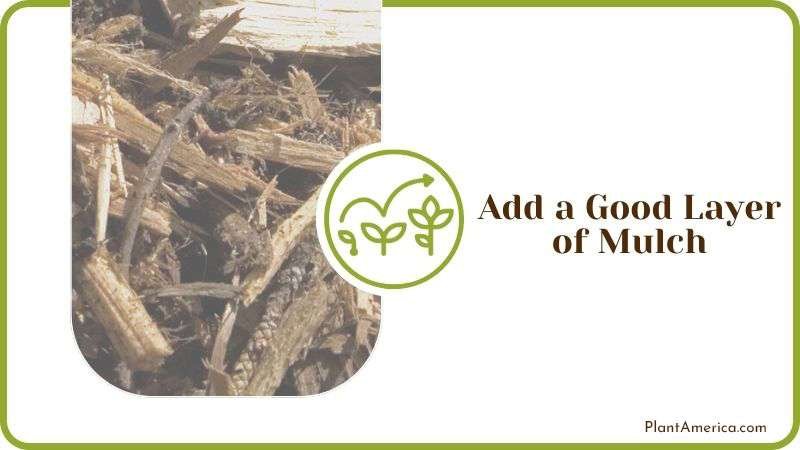
Mulching helps retain moisture around the tree’s roots, which is crucial for healthy growth and development. The mulch layer also helps to suppress weed growth around the tree, which can be a nuisance and compete with the tree for water and nutrients. Avoid piling the mulch up against the tree trunk, as this can cause the trunk to rot and lead to disease or insect infestation.
Reapply the mulch layer annually in the spring to ensure continued moisture retention and weed suppression. Be careful not to over-mulch, as excessive mulch can lead to root rot or other pest problems. Keep the layer at 2-3 inches.
Use caution when mowing around a mulched tree to avoid damaging the tree or the mulch layer. A drip irrigation system underneath the mulch layer is a viable choice to ensure the tree receives constant moisture.