
Mealybugs on African Violets of the Gesneriaceae family often catch plant lovers off guard. They are usually caused by overwatering, high humidity, and poor gardening practices (mainly negligence).
 The problem is, that they discreetly invade, threatening the beauty and well-being of your cherished blooms. Don’t worry; you can remove these white bugs easily if you stick to the end.
What Primarily Causes Mealybugs on African Violets?
️⚡ Mealybugs on African Violets are primarily caused by overwatering and poor air circulation around the plant. Bringing infested plants into your garden can also spread these bugs everywhere. Furthermore, the absence of predatory insects can also allow mealybugs to grow.
– Overwatering and High Humidity
One of the primary causes of mealybug infestations in African Violets is overwatering. When Violets are overwatered, or if the soil doesn’t drain well, it creates an ideal habitat for mealybugs to flourish.
The higher humidity near the plant gives these pests the right conditions to reproduce and get bigger. Moreover, plants weakened by overwatering become more susceptible to pest attacks. So, it’s really important to water your plants just right to keep them healthy and stop mealybugs from taking over.
– Poor Circulation and Crowded Plants
Another significant cause for Mealybugs on African Violets is poor air circulation and overcrowded plant spaces. When multiple plants are placed closely together or in a confined space with limited air movement, it encourages the growth and spread of pests like mealybugs (and even cyclamen mites).
These kinds of places hold onto moisture, making humidity go up even more. This helps bugs move from one plant to another more easily. Spreading out your plants and ensuring they are placed in areas with good airflow can significantly reduce the risk of a mealybug infestation.
– Infested Soil or Potting Mix
Sometimes, the culprit behind a mealybug infestation can be the very soil or potting mix used to plant the Violets. If the soil or mixture is infested with mealybugs or their eggs, it is a direct source of infestation for the plant.
This is particularly common when gardeners reuse soil from pots that previously had a mealybug problem or when purchasing soil from unreliable sources. Using a fresh, sterile potting mix when planting or repotting African Violets is always advisable to minimize the chances of introducing pests.
– Introducing Infested Plants
Bringing in new plants without inspecting them can directly cause mealybug problems. When gardeners purchase or receive new plants, they sometimes unknowingly introduce pests like mealybugs into their homes or gardens.
These pests or their eggs might be hiding in the soil, under leaves, or in the crevices of the plant. You should really check the new plants you add to your garden or indoor collection very carefully. It’s a good idea to quarantine newly bought plants for a few weeks before placing them near existing plants.
– Lack of Natural Predators
In outdoor settings, mealybugs have natural predators like ladybugs and lacewings that keep their population in check. However, mealybugs can multiply rapidly without biological controls in indoor environments or specific outdoor conditions where these beneficial insects are absent.
Encouraging or introducing these natural predators can help manage and reduce mealybug populations. Regular inspections and manual removal can act as a control method for indoor plants in the absence of natural predators.
How To Get Rid of Mealybugs From African Violets?
To get rid of mealybugs from African Violets, first unpot the plant and inspect for white specks. Give the plants a gentle wash to get rid of the bugs, and think about using special soap or a mix of hydrogen peroxide to eliminate them.
– Unpot the Plant and Take a Better Look at the Situation
When you first notice that mealybugs might attack your African Violets, the initial step is to unpot the plant. Taking the plant out of its container will give you a clearer view of the situation. There, you’ll often find tiny white specks on African Violets (a clear sign of a mealybug infestation) as you inspect your plant. They can hide under leaves, along the stems, or even on the roots.
They like the dampness and safety these spots offer. You can figure out how bad the problem is by taking the plant out of its pot and looking at it well.
– Lightly Rinse the Bugs
With the plant out of its pot, the next step is to rinse away the mealybugs lightly. Violets have a soft and delicate structure, and a forceful rinse can cause damage. Instead, use a weak stream of water to wash away the mealybugs from the plant. Ensure you target the areas where you saw the tiny white specks previously.
While rinsing the bugs, ensuring the plant doesn’t suffer from other issues is essential. Violets are susceptible to various African violet diseases. Overwatering or improper care can lead to problems like root rot, crown rot, botrytis blight, and powdery mildew. While doing that, also look at the roots and bottom of the plant for any signs of these issues.
Another critical thing to note while rinsing is to avoid leaving water spots on the leaves. These spots are not a disease but can make the plant look unsightly. If water rests on the leaves for too long, it can lead to the appearance of these spots. To avoid this, gently pat the leaves dry with a soft cloth or tissue after rinsing. Ensure no water is left pooling on the leaves or at the base of the plant.

After you’ve rinsed the plant and ensured it’s free from mealybugs and any signs of diseases, it’s essential to let it dry properly. Place the Violet in an area with good air passage (but away from direct sunlight). Once it’s dry, repot it in fresh, sterile soil.
Keep in mind that doing these things will eliminate the mealybugs on the plant right now, but it doesn’t stop them from returning. It’s important to check often and do something quickly if you see them again. Check your African Violets regularly for signs of mealybugs or any other issues. Prevention and early intervention are often more effective than a full-blown infestation.
– Houseplant Insect Sprays
One of the effective ways to tackle mealybugs, as well as other pests on African Violets, is using houseplant insect sprays. These sprays are made to be nice to plants but also really good at finding and getting rid of issues.
A highly recommended solution is insecticidal soap. When figuring out how to get rid of bugs on African Violets, insect-killing soap emerges as a top contender.
To use this method:
- Spray a light mist of the insecticidal soap solution directly on the affected parts of the plant.
- Cover the leaf’s top and underside, as pests often hide in these less visible spots.
- After application, let the soap sit for a few hours before gently rinsing off the plant with water.
Regular use can keep your African Violets bug-free and vibrant.
– Sticky Traps
Sometimes, the simplest ideas can work really well for pest problems. Sticky traps show this. They are sheets or strips covered in sticky stuff, and they catch pests that move around your plants.

If you’re wondering how to get rid of Mealybugs on African Violets, sticky traps could be one of the tools in your arsenal. The way they work is relatively straightforward. As mealybugs or other pests move around the plant and its surroundings, they get trapped in the sticky substance on the trap.
To use sticky traps efficiently:
- Place them close to your Violets, ensuring they are positioned at the height where you’ve observed the most activity.
- Replace the traps when they’re full of pests or the sticky surface loses effectiveness.
- Ensure they don’t contact the plant directly to prevent damage.
– Cold Treatment
Like many other living things, pests do best within a specific temperature range. They can become inactive or even die when exposed to temperatures outside this range. This principle forms the basis of the cold treatment method for Mealybugs on African Violets treatment.
Cold treatment means making the mealybugs experience colder temperatures than they’re used to. This makes them slow down or even die. Here’s how to do it:
- Remove your Violet from its usual location and place it in an area with cooler temperatures, like an unheated room or garage, but ensure it doesn’t go below freezing.
- Leave the plant in this colder environment for a few hours. The drop in temperature will make the mealybugs lazy, and many might die.
- After the treatment, inspect the plant for any remaining bugs and remove them manually.
- Return the Violet plant to its regular spot, ensuring it’s gradually reintroduced to warmer temperatures to prevent shock.
African Violets, being tropical plants, don’t appreciate extended cold periods. Continuously monitor your plant closely during the treatment and ensure it doesn’t show signs of distress.
– Onion and Garlic Spray For Common Pests
Onion and garlic aren’t just for making food taste good – they can also safeguard plants. Crushing or blending onion and garlic releases compounds that are distasteful and harmful to many pests. Creating a spray from these can offer a natural alternative to chemical insecticides.

To make this spray:
- Take a medium-sized onion and about five cloves of garlic. Blend them with some water to make a puree.
- Strain the liquid to remove any solid pieces.
- Add this liquid to about a gallon of water.
- Optionally, add a few drops of mild dish soap, which helps the onion-garlic solution stick to the plant.
When applying the spray to your Violets, ensure it’s during the more excellent parts of the day, either early morning or late evening. This stops the liquid from evaporating too fast and lowers the chance of the leaves getting burned in strong sunlight. Reapply the spray every few days or after rainfall for the best results.
– Use Imidacloprid Insecticides For Violet Pests
When a plant absorbs imidacloprid, it circulates throughout its system. When pests feed on the treated plant, they ingest the insecticide and are poisoned.
Being systemic means the plant takes up the insecticide and can stay in its system for a while. While this ensures long-lasting protection, you should apply it judiciously.
Before using imidacloprid or any systemic insecticide on African Violets:
- Read the label thoroughly. Ensure it’s safe for use on flowering plants.
- Test the insecticide on a small portion of the plant before a complete application.
Always follow the recommended dosage. Using too much can make the plant stressed out or even hurt it. Also, avoid using systemic insecticides if your Violets are in bloom.
Remember, while imidacloprid can be effective against pests, it’s also potent. Taking good care and being thoughtful is really important to keep your plant and the environment safe.
– Place the Plant in Well-Lit Conditions (African Violet Care)
Placing African Violets in well-lit conditions can also act as a deterrent for pests. Many pests, including mealybugs, prefer the cover of darkness or dimly lit conditions. They’re more likely to infest plants in the dark or shaded areas.
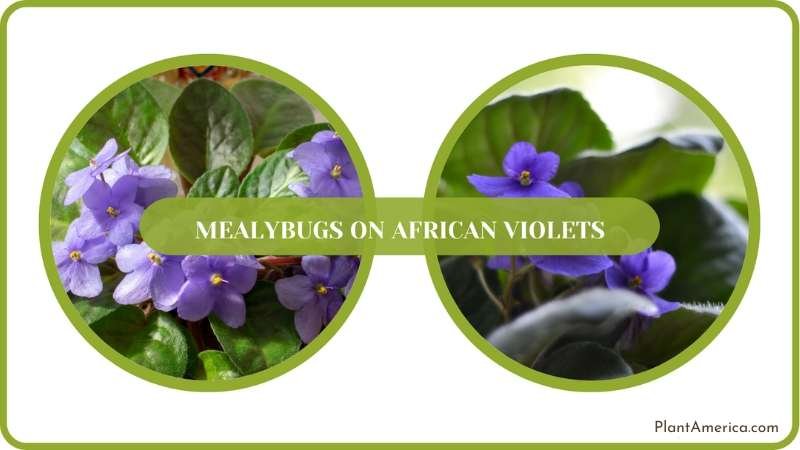
If you make sure your Violets get enough light, you help them grow well and make a place that pests don’t like as much. Here are some tips to provide optimal light for your garden plants:
- Place them near windows that receive bright, indirect light. High UV sunlight can scorch the leaves, so a light curtain or shade can be helpful.
- Rotate the plant every few days to ensure all parts receive equal light, promoting even growth.
- If natural light is insufficient, consider using LED grow lights. These can offer the light spectrum that African Violets need to thrive.
- Regularly inspecting your plants and understanding their needs will make a big difference. Violets can be a joy to nurture with their lush leaves and beautiful blooms. However, like all plants, they have specific care requirements.
You can ensure your African Violets stay healthy by giving them the correct light and shielding them with natural sprays.