
A way to preserve a tree stump is by drying it out well since it has a lot of moisture that can lead to mold.

There are other ways to preserve wood stumps and our experts have listed them all for you below. All you need is a little bit of care and patience, and our guide of course! Read on to know more about how this can be a rewarding experience for you.
How To Preserve a Tree Stump?
Tree stumps are vulnerable to moisture and heat. These two factors are enough to make them rot. To prevent this from happening you need to take the right step, and that way you’ll be able to preserve wood stumps for a long time. Here are the best ways to achieve this:
– Pick the Right Stump To Preserve
Not all stumps are the same. That’s why we recommend you choose hard trees such as western red cedar, oak, and redwood. These are the most durable types of trees. Preserving tree stumps of these trees is easier and they last longer.
If the wood is thinner, you can still preserve it for your use, but it may not be very durable. Preserve thin wood stumps by first sanding and then finishing it with a good wood stabilizer.
– Dry Out a Tree Stump Well
The second way is to dry out a tree stump well if you want to preserve it.

A tree stump can be alive with moisture and oxygen. Thus, it can attract mold and pests, making the stump rot soon. Your best bet is to keep wood stumps outside in the open or in the garage and let them dry out well.
Ensure the stumps stay away from the rain or any form of moisture. What’s more, you can leave them as they are for at least six months. Once the stumps have dried out well, you can use them the way you choose.
During the drying out process, the tree stump can show some signs of splitting or cracking. This is a natural reaction to the process, so don’t worry about it. It adds a distinctive character of its own to the tree stump.
– Cut In a Level Form
To preserve a tree stump, you can also give them a good cut. You can use a saw to give it a level and even cut. Cut the stumps a few inches above the ground.
If you are using a chain saw, use protective safety goggles to protect your eyes before you start work. Wood shards may fly around and cause large damage to the eyes.
– Use a Good Wood Stabilizer
You can also preserve wood stumps by applying a good quality wood stabilizer. Start by covering the entire surface with a layer, and then go in circles for the remaining portions. Cover the stump in plastic for two or three hours and then apply the second coat.
A wood stabilizer such as resin epoxy is vital in preserving tree stumps since it helps to harden the wood well.
While applying the stabilizer you may find cracks on the stump. Tape the sides and the bottom of the stump to cover the cracks. The epoxy can escape out of these cracks so taping will ensure they stay intact. This wood stabilizer will harden the wood well in the process and allow you to use it as decoration afterward.
– How To Preserve a Tree Stump With Roots
To preserve a tree stump with roots still in the ground, saw the stump a few inches above the ground to keep the roots in there.

Do this in a uniform and level manner for the best results. Once you have cut the tree stump, use and treat it in its entirety.
– Preserve a Tree Stump Still in the Ground
A well-cut and chiseled tree stump can be in use for a long time if you preserve it with care. To preserve tree stumps still in the ground, you can begin by removing the tree stump in its entirety and sawing the part that you wish to use for your purpose. Once you have removed it completely, follow the practice of drying it out well for at least six months before using it.
How To Keep a Tree Stump From Rotting?
Tree stumps can decompose, break down or rot over time. If you want to prevent this, you need to prepare the stumps with proper care and patience. Here is what you can do to keep a tree stump from rotting over time.
– Check for Termites
Before you even start the process of preserving wood stumps, check for pests such as termites. Termites can feast on the inner layers of a tree stump. They can make the wood hollow from within, thus increasing the chances of the stump rotting. Eradicate such pests before you begin preserving the tree stump.
– Check the Wood for Signs of Any Disease
Check the wood for signs of any disease that might increase its chances of rotting. A black ring on the bark of the tree stump can be a sign of a diseased stump. In such a case, remove the bark from the tree stump, using a hammer and chisel.

You can also choose to keep the bark around the wood provided you have not spotted any disease on it. This will give it an aesthetic look.
– Smoothen Out the Tree Stump Using Sandpaper
Once you have checked the bark for any disease or termite, sand its surface. Even out the rough edges and remove any sharp shards of wood that may be sticking out.
Start from the large faces of the stump then move on to the sides of the stump, from the place you have removed the bark. Use high-grit paper for the wood surface first. Move on to fine-grit paper later when the wood begins to get smooth.
If you are using an electric sander, do it in a circular motion to get a smooth-to-touch finish. Sanding the stump is optional but it gives a fine and smooth surface.
– Use Tree Stump Sealer
Preserve a tree stump to make them last longer by adding a polyurethane sealant that will keep rot away. You should use at least two coats to completely cover your tree stump. A premium wood sealant will protect your stump for a long time.
Ensure you coat the stump in its entirety starting from the top and then moving along the sides. Then, you should leave the tree stump sealer on for at least two days to dry. Once it has dried, you should protect the stump from fungi and mold. Let us tell you how to do that!
– Protect Tree Stump From Fungi
Over time, tree stumps get infested with fungal organisms. They feast on the lignin and cellulose of the tree stump making them decay fast.
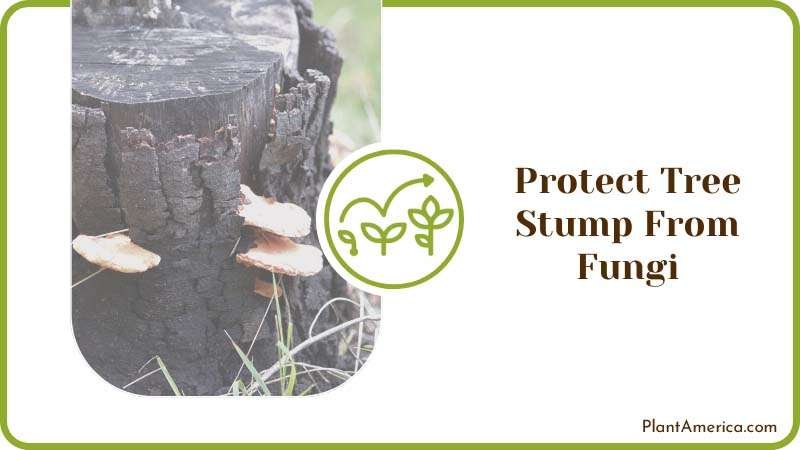
To prevent this, use fungicides on the tree stump. Seal the surface with a complete finish of a good quality fungicide.
– Add Wood Stain
Use wood stain when preserving wood stumps. By adding wood stain you can balance the color of the wood.
To coat your tree stump with wood stain, start by giving the first coat on the top of the stump and then work your way to the sides. Use a large brush first to coat the stump in its entirety. Follow this up with a smaller brush to give it the final touches.
– Prevent Cracking or Warping
To prevent your wood stump from cracking, warping, or rotting, you should use stabilizers. Stabilizers such as epoxy are useful for this purpose. Wait for the stump to dry out well before you apply any coat of the stabilizer.
Only when the tree stump has reached room temperature should you use a wood stabilizer. Apply it completely, beginning with a small amount. Work your way for the entire surface of the tree stump with a larger quantity. The wood will begin to absorb the stabilizer and will seal it well.
– Fill Cracks and Imperfections
Vacuum the cracks to get rid of any dirt or debris. If the cracks are deep after you have vacuumed them, sand and fill them with epoxy. You can also fill in any sharp nooks and cracks that can be rough to touch. Wipe sawdust and debris off the surface of the tree stump.
– Final Clean of the Wood Stump Surface
Give a final clean to the surface of the stump.

With a damp and clean cloth remove any debris or dirt that may otherwise rot the tree stump.