
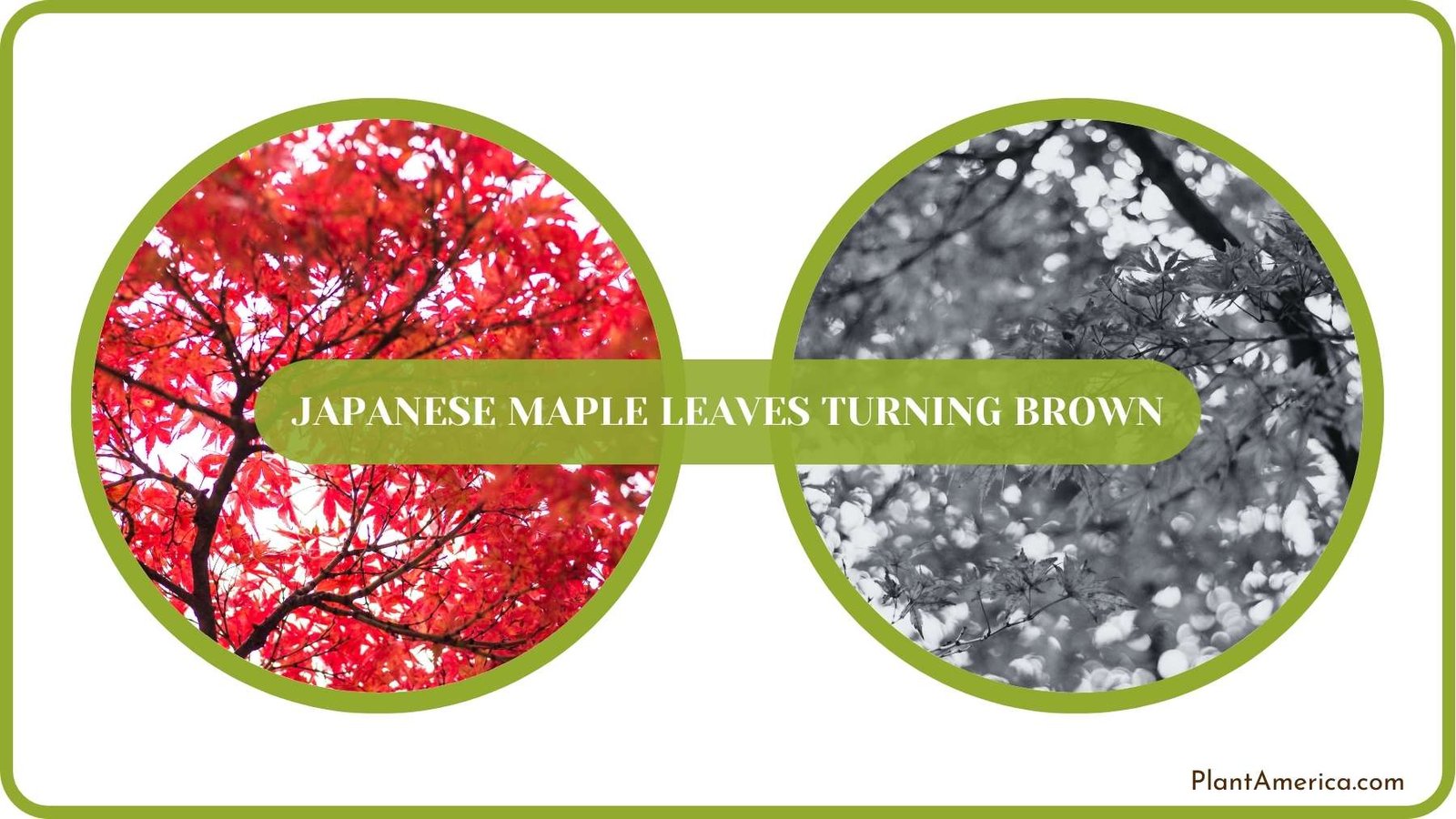
Japanese maple leaves turning brown means your tree is facing different stresses. Various factors can rob these leaves of their iconic red-green hues, from water issues to sunburn.
 The good news is that you can protect your trees if you know all about the causes. So, stay with us to learn about the reasons behind the discoloration and what you can do to stop it.
Why Do Your Japanese Maple Leaves Turn Brown?
Your Japanese maple leaves turn brown due to water stress, incorrect positioning in direct sun, and root problems. If you notice insects in your garden and a foul smell coming out of the soil, it indicates that pests and diseases are the culprits.
– Root Issues
Roots should be in top condition, or the whole tree will get stressed. The two root problems that cause leaves to become brown are:
Root Bound: A tree becomes root-bound when its roots grow extensively but are confined within limited space. Whether in the ground or a pot, these roots can start coiling around themselves, restricting their growth. This prevents them from efficiently absorbing water and nutrients, which leads to brown leaves.
Root Burn: Overenthusiasm in feeding plants can backfire. Root burn occurs when there’s an excessive application of fertilizer. Consequently, the tree struggles to absorb water and other essential nutrients, discoloring leaves.

– Drought Stress (Not Adding Enough Water)
An inconsistency in watering or prolonged periods of dryness can lead to drought stress. When Japanese maples don’t receive the adequate water they need, they can’t maintain their leaf health, leading to browning.
The reason is that water is a critical part of processes like transpiration. When it’s insufficient, these processes slow down and eventually stop. When this happens, brown spots or lines start to appear.
– Excess Watering
It’s the exact opposite of drought stress. If the soil remains continuously waterlogged, the roots can’t breathe. This lack of oxygen can make it hard for them to absorb the nutrients the tree needs. As a result, the plants start to show stress or “Japanese maple overwatering symptoms.”
Moreover, constantly damp conditions are an invitation for fungus and other diseases. One of the most harmful overwatering results is root rot, a condition in which root tissues decay and die. If they are not healthy, they can’t support the tree.

– Sunburn (Over-Exposure to Sun)
If you’ve ever wondered, “Why is my maple tree leaves turning brown and falling off,” sunburn might be the culprit. Maples are fond of a mix of sunlight and shade. But, when these trees experience prolonged periods of direct sun, their leaves may get burned or scorched.
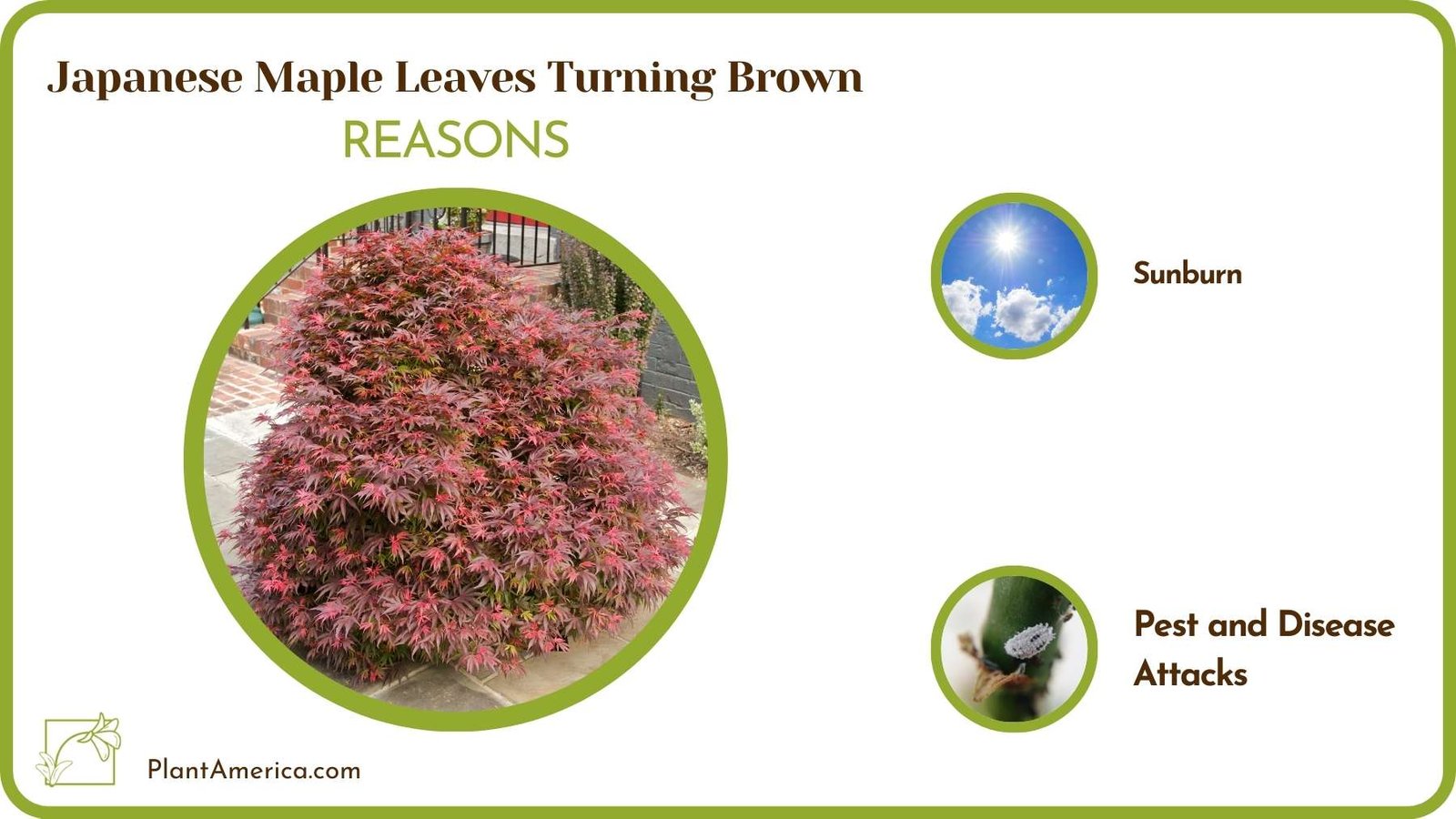
The symptoms are usually more pronounced around the edges but can sometimes cover a significant portion of the leaf. It is generally expected in areas where the sun shines for more than ten hours.
– Pest and Disease Attacks
When you observe that your tree’s leaves start having brown patches, it can often indicate pest infestation.
However, it’s not just pests you need to be wary of. Diseases can also strike, causing widespread damage. One of the more severe diseases that affect Japanese maples is verticillium wilt.
This fungus invades the tree’s system, obstructing its ability to transport water and nutrients. The result? The leaves wilt, turn brown, and might even fall off. But don’t worry; you can save your dying Japanese maple.
How to Stop Japanese Maple Leaves From Getting Brown
To stop Japanese maple leaves from getting brown, it is crucial to provide consistent watering and position them in the right spot with some shade. If the problems are pests and diseases, you should use insecticidal soaps and fungicides. Moreover, ensure the trees stay nourished by timely applying fertilizers.
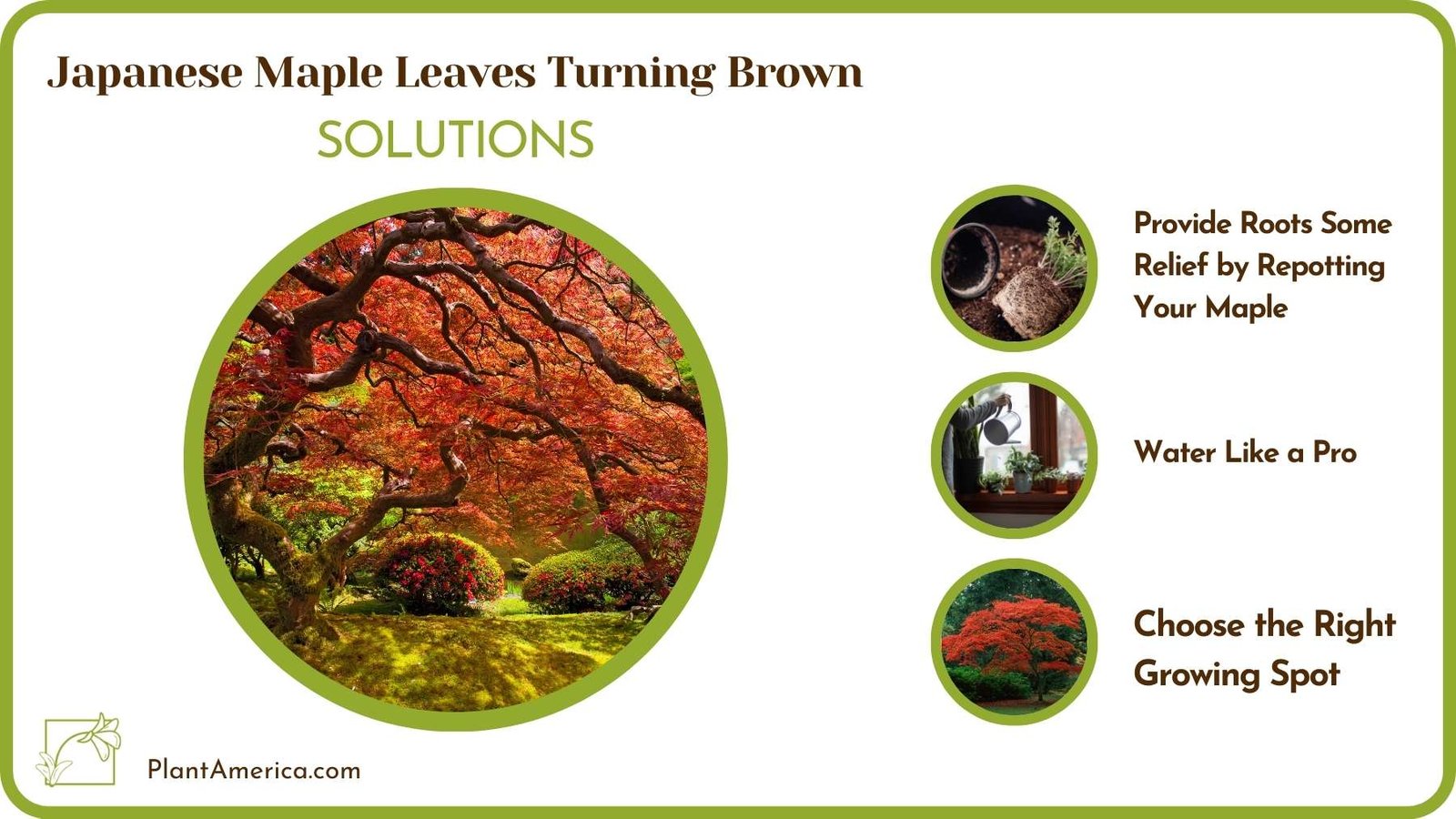
– Provide Roots Some Relief by Repotting Your Maple
When your maple leaves start having brown marks, inspect the soil first. Look whether the soil is compact, retaining too much water, or looks overall unwell. If yes, then do the following:
- Choose a pot or container that is spacious enough to accommodate growth.
- Buy new soil. When selecting new soil, opt for a well-draining mix. This ensures the roots get the right amount of moisture without becoming waterlogged.
- Remove the maple from the current pot and inspect the roots. If they appear tangled or bound together, it’s a sign that the tree has become root-bound. Gently untangle them before placing the tree in the new pot. This allows the roots to spread, absorb nutrients better, and promote healthier growth.
After this, place your maple back in its original spot and water a little to let the roots settle.
– Water Like a Pro
If you’ve noticed Japanese maple leaves turning brown in summer, it’s a sign that the tree might not be getting the water it needs during the hotter months. But as discussed above, watering incorrectly can lead to root problems.
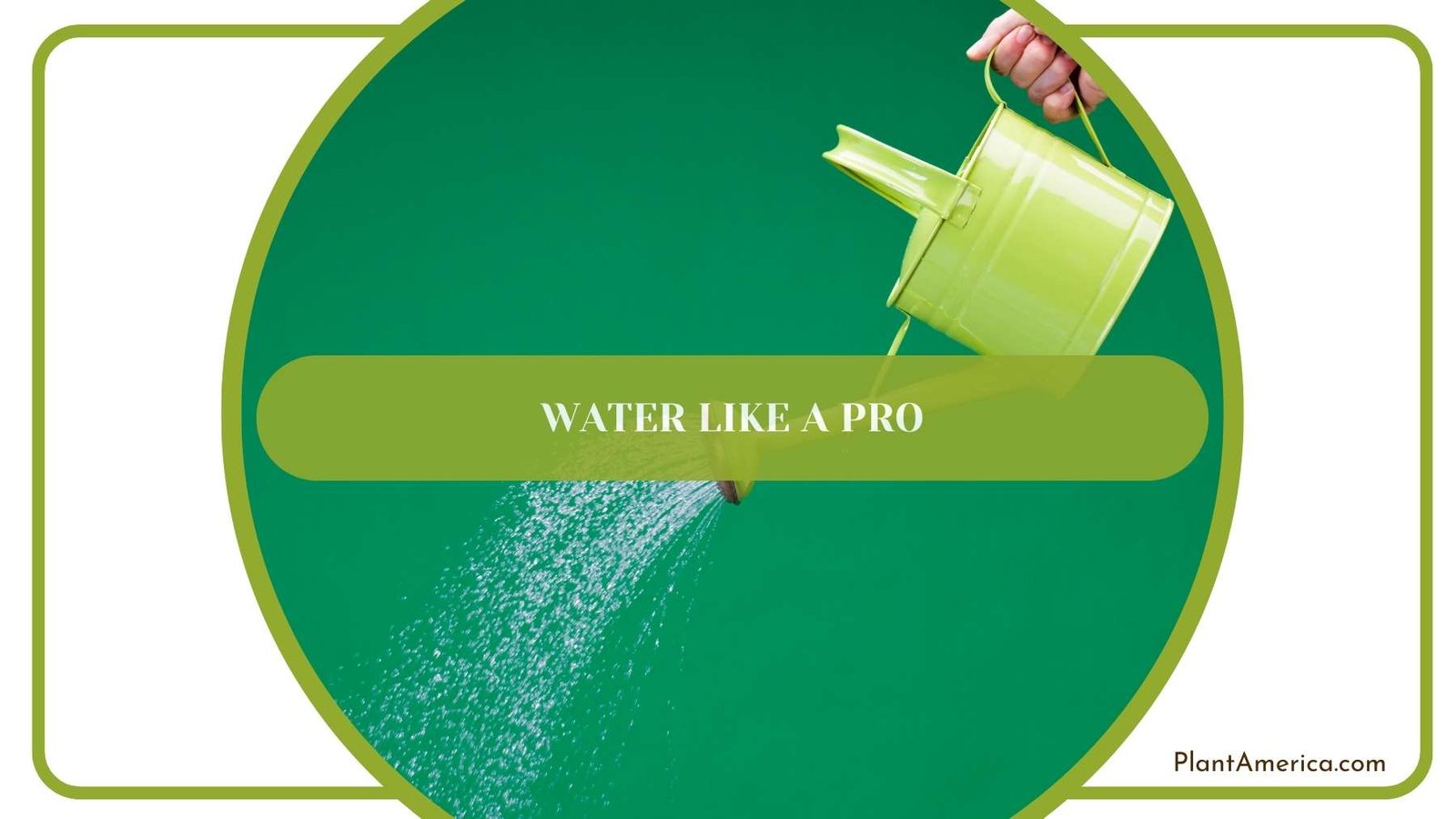
Here’s how to water your tree the right way:
Check the Soil: Before watering, check the soil’s moisture level. Insert your index finger or thumb about an inch deep into the soil. If it feels dry, it’s time to water. If it’s still moist, you can wait a day or two.
Morning Watering: The best time to water your Japanese maple is in the morning. It gives the tree ample time to uptake water before the sun gets too hot. If drenched in the evening, the moisture might not evaporate quickly, increasing the risk of fungal diseases.
Deep Watering: Instead of just sprinkling water on the surface, aim for a deep watering method. It ensures the water reaches the deeper roots, providing moisture where needed. To do this, water the tree slowly, allowing it to penetrate the soil deeply.
Consistency: Keeping the soil consistently moist but not soggy is essential. Water the tree regularly, but ensure the soil has adequate drainage to prevent waterlogging.
– Choose the Right Growing Spot
Where you grow your Japanese maple can make a big difference in its overall health. As explained above, placing the trees under direct sun can lead to leaf scorching. So, when considering Japanese maple leaf scorch treatment, choosing the right growing spot is the best approach.
Japanese maples typically prefer dappled sunlight. They can endure some morning sun but should ideally be shielded from the harsh afternoon rays. A location that offers filtered sunlight, possibly under the canopy of taller trees or where nearby structures soften the sunlight, is ideal.
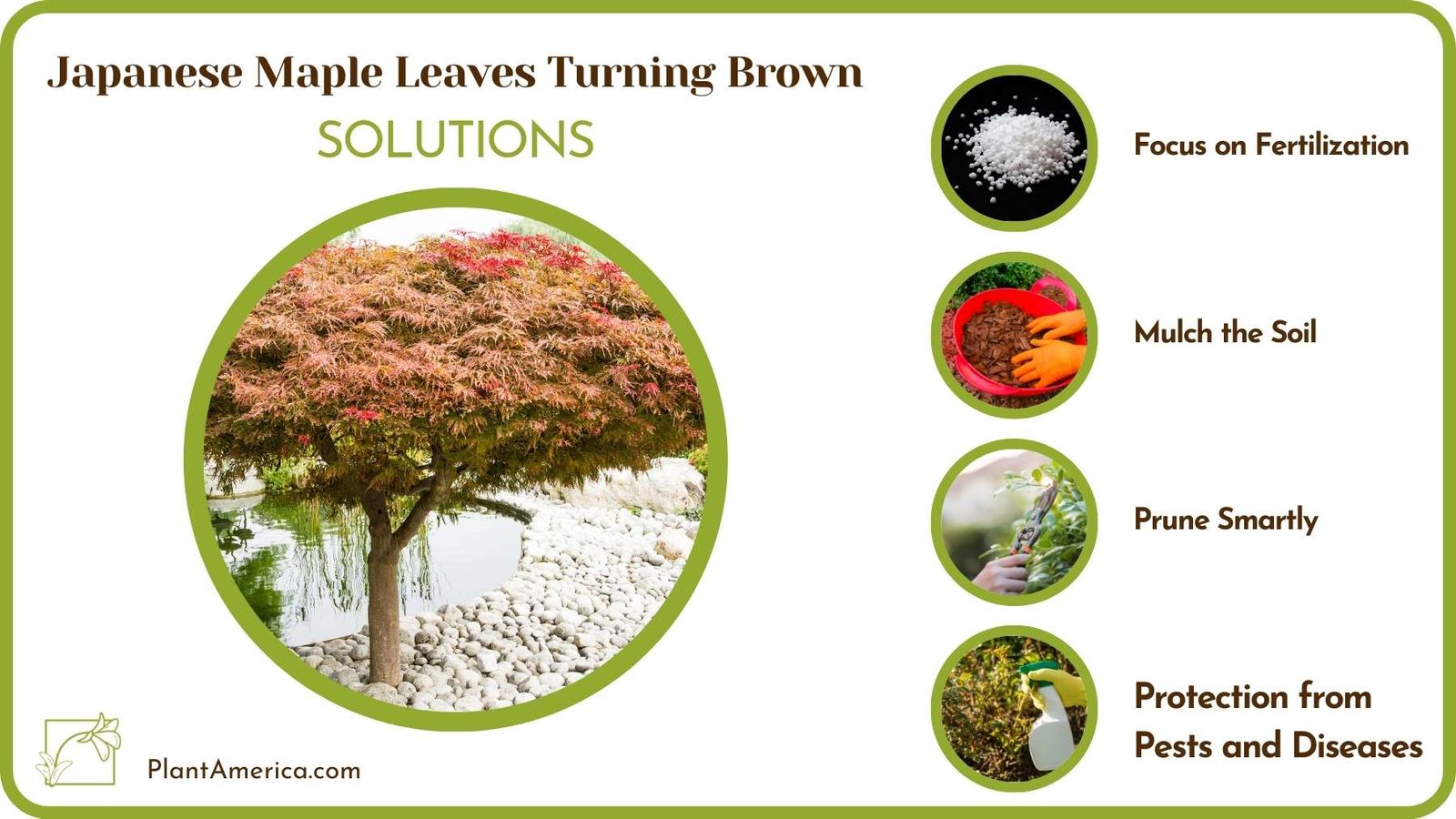
– Focus on Fertilization
Feeding your Japanese maple the proper nutrients is like giving it a well-balanced diet. Proper fertilization ensures the tree grows strong and produces vibrant leaves. We suggest these points if you want to stop and prevent the browning:
- When to fertilize: The best times are during the spring and early summer growth periods.
- Type of Fertilizer: Opt for a slow-release granular fertilizer. This ensures the tree gets a steady supply of minerals over time rather than a sudden surge. Look for fertilizers with a balanced nitrogen, phosphorous, and potassium mix.
- Avoid High Nitrogen Mixes: While nitrogen is essential for leaf growth, an excess can lead to overly vigorous growth, making the tree susceptible to diseases and pests.
- Application: Follow the instructions on the fertilizer label. Generally, you’ll want to spread the fertilizer evenly around the tree’s base, extending it to the drip line (where the branches grow). Avoid letting the fertilizer come in direct contact with the trunk.
- Watering After Fertilization: After applying the fertilizer, water the area thoroughly. This will ensure the nutrients seep into the soil and reach the roots.
Note that you might be over-fertilizing if you notice excessive leaf growth but fewer flowers or poor fall color.
Remember: Japanese maples don’t require frequent fertilization. A once-a-year feed is often enough, especially if the tree is planted in rich, organic soil. Over-fertilization can be as detrimental as not fertilizing at all. So, always take a measured approach.
– Mulch the Soil
You should also try mulching if you’ve noticed your Japanese maple tree leaves turning brown and curling. It does the following:
- Moisture Retention: Mulch helps retain soil moisture, ensuring that the roots of your Japanese maple get a consistent water supply.
- Temperature Regulation: Mulch protects the soil and roots from extreme temperature changes as an insulating layer.
- Weed Control: Weeds can compete with your tree for essential nutrients. A layer of mulch inhibits weed growth, ensuring your Japanese maple gets all the nutrients it needs.
- Protects Roots: A protective layer of mulch can prevent soil erosion and protect the tree’s roots from potential damage.
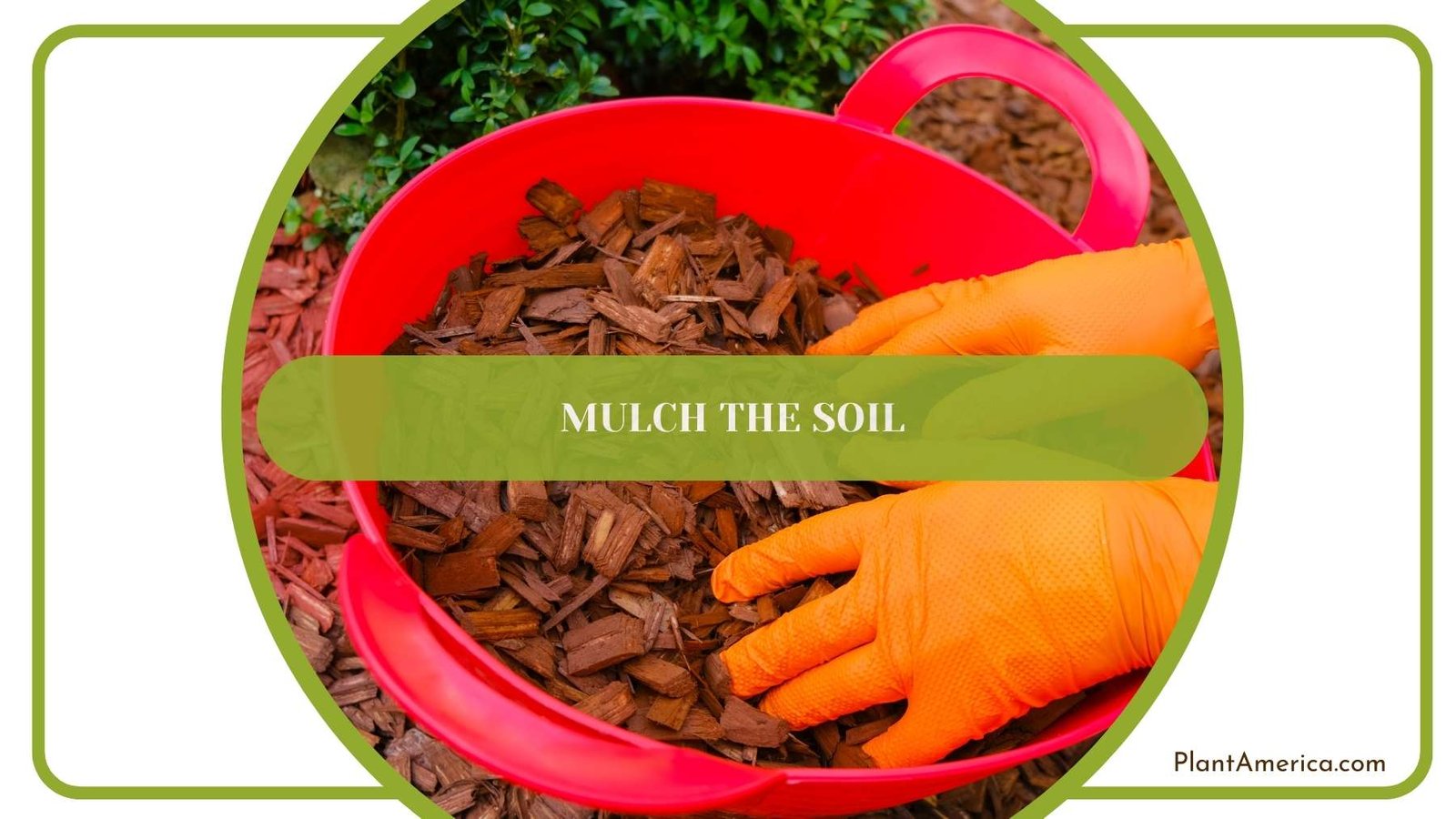
When mulching, make sure to:
- Use organic mulch like wood chips or pine bark.
- Apply a 2 to 4-inch layer around the tree’s base, but avoid piling it against the trunk to prevent rot.
- Extend the mulch to the tree’s drip line to cover the main root system.
– Prune Smartly
A frequent question among gardeners is, Should I remove dead leaves from Japanese maple?
The answer is yes because it helps your trees in many ways, like:
- Improves Health: Removing dead or diseased branches and leaves can prevent the potential spread of diseases or pests.
- Enhances Appearance: You improve the tree’s aesthetics by removing unsightly dead leaves or branches.
- Promotes Growth: Pruning stimulates growth by redirecting energy to healthier branches.
- Safety: Dead branches can be hazardous, especially during storms, as they break off easily.
For clever pruning, we suggest you do the following:
- Prune during the dormant seasons, preferably late winter or early spring.
- Use sharp, sterilized pruning tools.
- Make clean and quick cuts to avoid tearing the bark.
- Start by removing dead or diseased branches and leaves.
– Protection from Pests and Diseases
If pests and diseases start wreaking havoc, acting immediately is essential. Let’s discuss pest management first.
- Physical Removal: For larger pests, like beetles, sometimes the best approach is simply picking them off by hand.
- Natural Predators: Introduce natural predators to your garden. For instance, ladybugs and lacewings can help control aphid populations.
- Insecticidal Soap or Neem Oil: These can deter a range of pests without causing harm to beneficial insects or the environment.
When diseases attack your garden, it’s best to do these four points:
- Regular Inspection: Look for early signs of illness, like brown spots on leaves or a white powdery substance.
- Fungicides: If you notice fungal diseases, consider applying a fungicide as a preventative measure.
- Cleanliness: Ensure you clean up fallen leaves and debris from around the base of your tree. Doing this can prevent fungi and pests from residing.
- Proper Watering: Avoid overhead watering as fungi like humid conditions.
Doing these things will keep trees thriving!
Conclusion
All in all, Japanese maple trees require particular attention and care. The leaves can get brown when you don’t protect them from pests, diseases, and sun stress. To ensure that your Japanese maple flourishes, always keep these essential points in mind:
- Ensure consistent watering, avoiding both overwatering and drought.
- Choose the right spot, offering protection from extreme sunlight and providing optimal soil conditions.
- Be proactive against pests and diseases through regular inspections and timely treatments.
- Commit to a maintenance routine, including smart pruning, mulching, and fertilization.
It’s that easy to keep Maple trees happy!