
Types of mangoes range from very easy-to-grow to some of the hardest cultivars to pull off; and those available year-round from early summer through late fall. The numerous kinds of mangoes listed here offer something for everyone, whether you are a beginner or a seasoned gardener looking to grow an orchard.
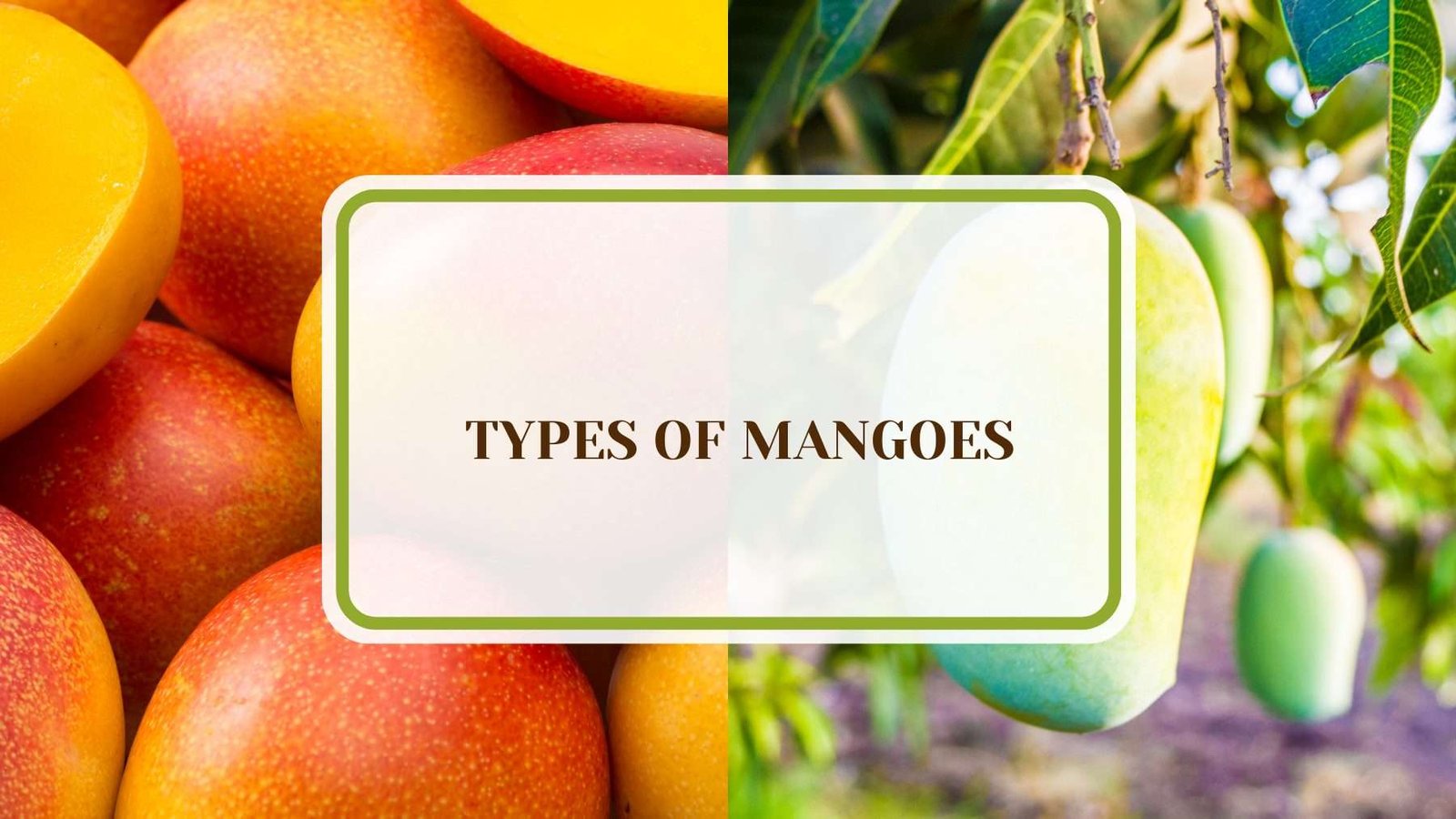
So, get ready to expand your mango horizons as we dive into mangoes from India, Mexico, Southeast Asia, and beyond, discussing traits like shape, aroma, and typical harvest time for each of the common mangoes every gardener must know about.
Types of Mangoes from Around the Globe Worth Knowing
1. Alphonso

- Growing Season: Summer, Late Summer
- Leaf Shape: Elliptic, Ovate
- Specific Needs: Medium to high fertility, Well-drained soil
- Common Pests: Fruit flies, Nematodes
The Alphonso mango tree is a prized variety that is well-suited for cultivation in many warm climates. The trees grow to a moderate size, making them ideal for home gardens. They bear an oblong fruit with fibers that separate cleanly from the flesh.
The Alphonso trees flourish when planted in nutrient-rich, well-draining soil in a location with full sun. Young trees need regular watering to become established. Once mature, the deep-rooted trees are drought tolerant but will produce a larger crop with regular deep watering during flowering and fruit formation.
The fruit is harvested from April to June when the skin has turned a bright yellow color. Ripe alphonso mangoes will yield slightly to gentle pressure. Home growers should allow some fruit to ripen on the tree for peak sweetness fully. Picked fruit can also be ripened indoors to extend the harvest window.
Proper pruning is important for developing a strong tree structure. Alphonsos bear heavily and regular thinning of the developing fruit may be needed for best size and quality. Mature trees are susceptible to fungal diseases, so prevention through good air circulation, pruning and sanitation is key for successful home cultivation.
With its aromatic and fiberless pulp, the Alphonso mango is a prime variety for the home orchard or intensive planting. Its moderate size makes it suitable for smaller urban gardens. With proper care, just a few Alphonso trees can supply a household with flavorful fruit for many summers.
2. Kesar
- Growing Season: Summer, Late Summer
- Leaf Shape: Elliptic, Pointed tip
- Specific Needs: Wind protection, Regular watering
- Common Pests: Hoppers, Scales
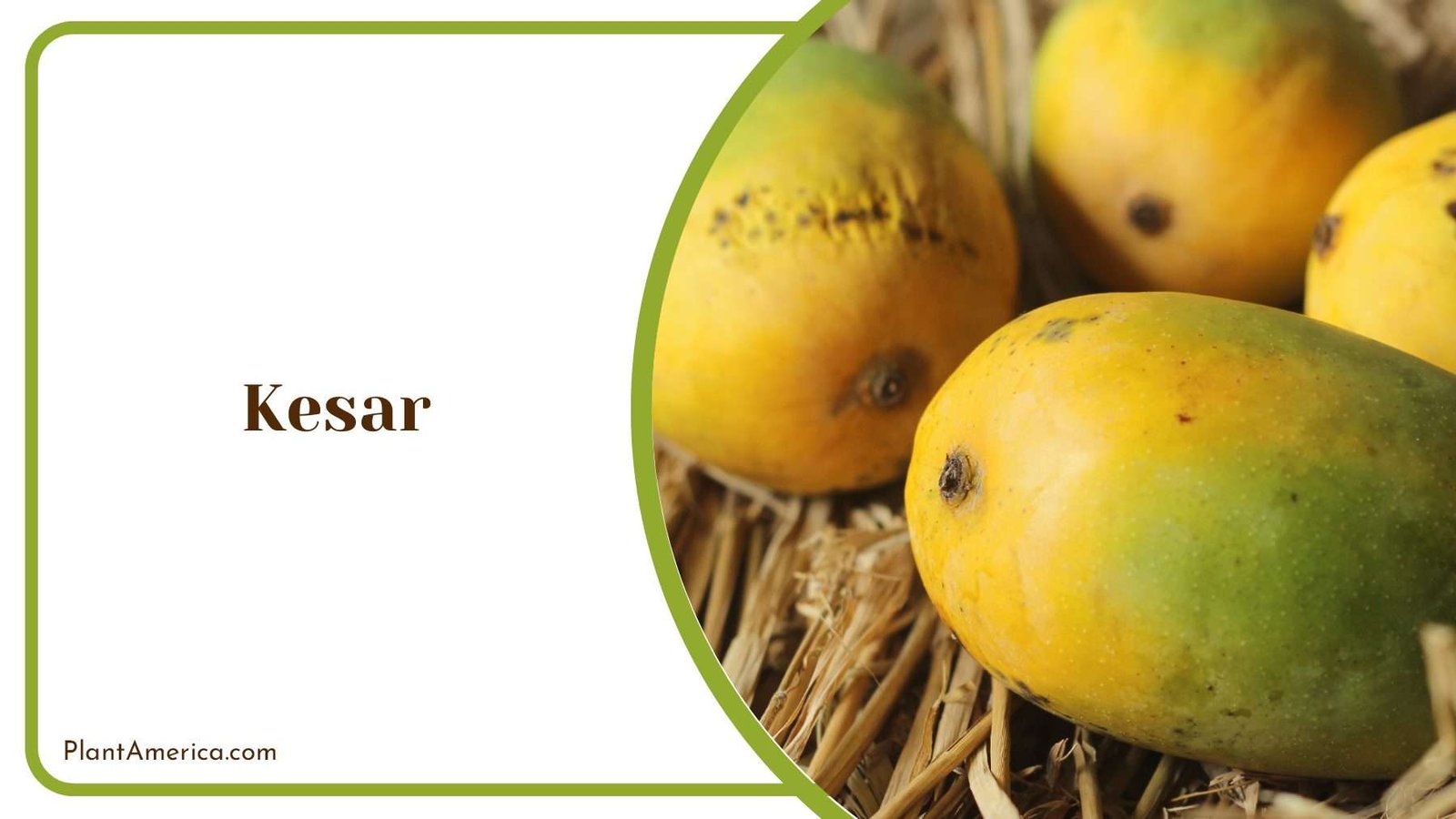
Originating in Gujarat, India, the Kesar mango tree produces a prized saffron-colored fruit renowned for its exquisite flavor. Mature trees have a moderate size, making them suitable for home cultivation.
As the trees begin flowering in late spring, gardeners should amend soil with compost and provide regular watering. When fruits start developing, thinning may be needed to ensure optimal size and quality. During ripening in late spring, the skins take on a signature golden hue dotted with rosy blush.
Come harvest time, the fruits weigh between 8-12 ounces on average. Home growers should allow some to fully ripen on the tree for peak sweetness and color development. Picked fruits can be ripened indoors to extend the season. Proper pruning maintains trees’ structure for heavy and consistent bearing.
The Kesar variety thrives in hot, dry climates where moisture stress brings out its best flavor. Home gardeners in warm regions can grow these trees in full sun with minimal supplemental water once established. Propagation through grafting or air layering protects the trees’ rare genetics.
With their density in flavor and color, even a few Kesar mango trees are sure to delight homegrown fruit enthusiasts. With proper care, their moderately productive habit makes this varietal a superb choice for the home orchard.
3. Himsagar

- Growing Season: Summer, Late Summer
- Leaf Shape: Elliptic, Broad tip
- Specific Needs: Medium fertility, Well-drained soil
- Common Pests: Hoppers, Nematodes
The Himsagar mango tree originates from Bangladesh but thrives when cultivated in eastern India and other tropical regions. Himsagar trees grow moderately in the home garden, making them suitable for smaller spaces.
During flowering in spring, gardeners should amend the soil and provide regular watering to ensure a bountiful fruit set. As the elongated oval fruits develop through summer, thinning may be needed to focus energy on fewer high-quality mangoes.
Come late spring harvest, homegrown Himsagars weigh around 180-250 grams on average. Ripe fruits will yield slightly to gentle pressure and emit a strong mango aroma. Left on the tree, some fruits can ripen further for optimal eating quality.
Himsagar trees succeed in areas with hot, humid summers. In the garden, full sun and well-draining soil ensure productive, resilient trees. Regular pruning maintains structure for heavy, reliable crops. Once established, infrequent deep watering supports the densely-packed fruits through their development.
With their pleasant aroma and balanced flavor, even a few Himsagar mango trees are sure to provide a bounty of fresh, juicy mangoes to enjoy straight off the tree or in dishes through summer months.
4. Banganapalli

- Growing Season: Summer, Late Summer
- Leaf Shape: Broad tip, Ovate
- Specific Needs: Medium fertility, Well-drained soil
- Common Pests: Fruit fly, Hoppers
The Banganapalli mango tree originated in Southern India and thrives when cultivated in the warm, humid climates of Andhra Pradesh and Tamil Nadu.
Banganapalli trees grow to a moderate size in home gardens, bearing oval-shaped fruits starting in their youth. Amending soil with compost before flowering and regular watering during fruit set encourages healthy, prolific crops.
Come late spring, homegrown fruits average 200-250 grams, turning yellow and reddish brown as sugars peak. Gardeners should allow some to color up on the tree fully. Picked fruits can be ripened indoors to extend harvesting.
Known for their fiberless, aromatic pulp packed with intense sweetness, Banganapalli fruit make wonderful additions to fresh meals or preserves. In the garden, full sun and well-draining soil promote vigorous, productive trees that crop reliably for many years.
Regular pruning maintains a sturdy structure for heavy fruit loads. Once established, infrequent deep watering supports trees and developing mangoes through the long, hot growing seasons of southern India. Even just one Banganapalli tree is sure to provide a bountiful harvest for any home gardener.
5. Mulgoba

- Growing Season: Summer, Late summer
- Leaf Shape: Elliptic, Pointed tip
- Specific Needs: Wind protection, Regular watering
- Common Pests: Hoppers, Scales
The Mulgoba mango tree originates from the coastal Konkan region of Maharashtra, India. It thrives when cultivated in similar tropical climates.
In home gardens, Mulgoba trees grow to a moderate size, ideal for smaller spaces. Their oval fruits ripen from greenish-yellow to vibrant shades of yellow and orange in late spring.
Gardeners should amend the soil prior to flowering and provide regular watering to support healthy fruit set and sizing. At full ripeness, homegrown fruits average 200-250g. Some can be left to color up on the tree fully.
Characterized by their bright yellow, fiberless pulp packed with intense sweetness and tangy floral aroma, Mulgoba mangoes are perfect for enjoying straight off the tree. The garden’s full sun and well-draining soil promote productive, resilient trees.
Regular pruning maintains structure for heavy crops. Mulgoba trees tolerate variable rainfall once established but handle mild water stress best when young. Even a single tree will provide a bountiful late spring harvest for any home gardener in its growing range.
With minimum effort, the Mulgoba variety is a superb choice for the home orchard, supplying fresh, delicious mangoes to enjoy season after season.
6. Badami

- Growing Season: Summer, Early summer
- Leaf Shape: Elliptic, Pointed tip
- Specific Needs: Medium fertility, Well-drained soil
- Common Pests: Fruit flies, Hoppers
The Badami mango tree originates from the region around Badami, Karnataka, India. It thrives when cultivated in hot, dry climates where other varieties may struggle.
Badami trees grow moderately sized in home gardens, ideal for smaller spaces. Their ovate to oblong fruits ripen from yellow to reddish hues in spring. Amending soil prior to flowering encourages vigorous growth and large future crops.
Come March through May, homegrown fruits average 150-200g. Gardeners should allow some to color up on the tree fully. Known for their fiberless, aromatic pulp packed with a sweet yet tart flavor, Badami mangoes contribute greatly to fresh meals.
In the garden, full sun and well-draining soil promote productive, resilient trees. Regular pruning maintains a sturdy structure for heavy loads. Badami varieties tolerate variable rainfall once established. Their high acid and sugar content makes them well-suited for various uses.
Even a single tree is sure to provide a bountiful spring harvest. With proper care, Badami proves a superb choice for tropical home orchards, supplying homegrown delicacies season after season.
7. Apple
- Growing Season: Summer, Late summer
- Leaf Shape: Elliptic, Pointed tip
- Specific Needs: Regular watering and pruning, Wind protection
- Common Pests: Fruit flies, Nematodes
The apple mango is an intriguing tropical fruit that results from crossing a common apple with a mango. This hybrid boasts traits of both parent fruits in its appearance and taste profile.
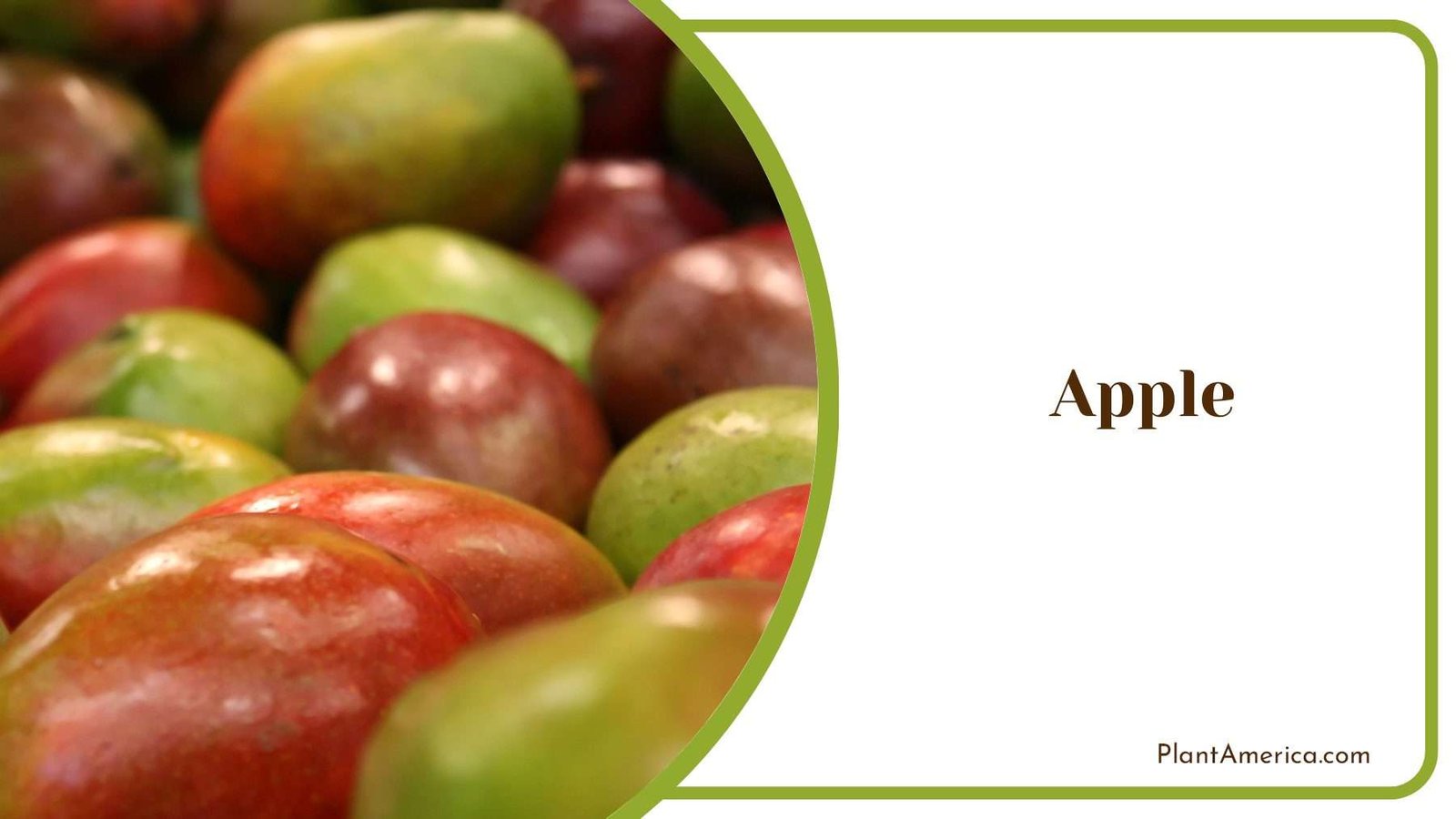
Physically, apple mangoes resemble small mangoes in their oval shape, typically ranging from three to six inches in length. However, their skins have a smooth, waxy texture similar to an apple’s peel. Cutting into the fruit reveals yellow to orange flesh within.
Upon taking a bite, one experiences flavors reminiscent of both apples and mangoes. There are notes of mild sweetness balanced by tanginess, with acidity levels higher than a standard mango but less than most apples. This combination creates a refreshing and interesting blend of tastes.
Nutritionally, apple mangoes provide values from each fruit parent. They contain vitamin C, vitamin A, fiber, and various antioxidants. This hybrid tree grows well in tropical or subtropical climates, producing its oval fruits from late summer through fall.
Beyond its novelty, the apple mango offers a new crop alternative where climates support its cultivation. Its unique attributes continue to inspire further hybridization experiments between diverse fruit families. The hybridization of apples and mangoes resulted in a fruit possessing qualities that honor both of its parents.
8. Kent

- Growing Season: Summer, Late summer
- Leaf Shape: Elliptic, Broad tip
- Specific Needs: Well-drained soil, Regular watering
- Common Pests: Fruit flies, Scales
The Kent mango is a named commercial variety originating from Florida. First cultivated in 1925, it has become an essential commercial crop in several tropical growing regions.
The trees produce large, oval, and elliptical fruits, averaging 1.5 pounds. As the mangoes ripen in late spring through summer, their thin green skin becomes yellow with patches of red blush.
The flesh inside is characterized by its deep yellow color and lack of fiber. Kent mangoes exhibit a pleasant, sweet aroma and balanced fruity flavor profile. Notably, they contain high levels of acidity and sugar content.
These nutrient and taste qualities make Kent an excellent choice for enjoying fresh or using in preparations like juice and chutneys. Their soft and juicy texture results in a very minimal fibrous component consisting mainly of a sweet yet tangy taste.
The harvesting season spans May through August, as indicated by gentle fruit give and distinct aroma. Commercial production focuses on consistent maturation to meet market demands during this period.
Overall, the Kent mango has proven itself to be a reliable, high-yielding variety valued for its large size, good taste, and storage capabilities. These factors have supported its commercial success over nearly a century.
9. Sensation

- Growing Season: Summer, Early summer
- Leaf Shape: Elliptic, Pointed tip
- Specific Needs: Regular pruning and training, Wind Protection
- Common Pests: Scales, Nematodes
The Sensation mango was developed through a collaborative breeding program between the University of Florida and USDA, originating in Miami-Dade County in the 1990s. It has since emerged as a commercially crucial variety.
Trees of the Sensation cultivar bear medium-sized, oblong fruits averaging 9-12 ounces. As the mangoes ripen in late spring and summer, their thin skins develop a uniform yellow color without red blush.
Notably, the flesh has a deep yellow hue and lacks fiber content. Sensation mangoes exhibit a pleasant aroma and predominantly sweet flavor profile due to low acidity. They contain high levels of juice and sugar.
These attributes make Sensation well-suited for eating fresh from the peel or using in applications like juicing. During the May through August harvest window, ripe fruits emit a distinct fragrance and yield slightly to gentle pressure. Soft, juicy and fiberless flesh consists mostly of fruity nuances with a mild sweet taste.
Due to its desirable combination of production qualities, flavor, and postharvest characteristics, the Sensation mango has gained widespread commercial cultivation throughout Florida and in other tropical growing areas. It provides consistent yields of a popular variety for local and export markets.
10. Tommy Atkins

- Growing Season: Summer, Late summer
- Leaf Shape: Elliptic, Broad tip
- Specific Needs: Regular watering, Well-drained soil
- Common Pests: Hoppers, Nematodes
Tommy Atkins is one of the most extensively cultivated mango varieties globally. Propagated in southern Florida in the 1920s from seedlings, it was initially named after the farmer Thomas Byron Atkins.
The trees produce characteristically large oval fruits averaging 1-2 pounds each. As the mangoes mature from June to August, their thick skins develop a vibrant golden yellow pigmentation. The interior flesh is fiberless and ranges in color from bright orange to deep red shades depending on maturity. With its sweet tropical flavor, Tommy Atkins is well-suited for fresh consumption.
This variety saw commercial success due to beneficial traits like vigorous growth and high yields starting at a young tree age. Plus, thick skins allow for transport without bruising. Tommy Atkins also demonstrates resistance to anthracnose and other common diseases impacting alternative varieties.
Consumers favor reliable availability when domestic supplies are low. Large fruits make the variety easy to handle and prepare for fresh eating, as well as juice/dried products.
Today, Tommy Atkins accounts for over half of global imports, satisfying worldwide demand for its dependability and flavor during off-seasons for other types. Its production qualities and disease resistance have made it a dominant commercial crop worldwide, increasing global tropical fruit accessibility.
11. Van Dyke

- Growing Season: Summer, Early summer
- Leaf Shape: Elliptic, Broad tip
- Specific Needs: Regular pruning and training, Well-drained soil
- Common Pests: Fruit flies, Hoppers
The Van Dyke is a valued mango cultivar from South Florida renowned for its exceptional sweetness and juice content. Originating as a chance seedling in Thailand, it ripens its crops from April through June.
Trees bear characteristically large oblong fruits averaging 1-2 pounds each. As the mangoes mature to a bright yellow-orange hue, their skins develop an appealing red blush. The fiberless interior flesh is a deep golden orange with intense fruity aromas. Notably, its Brix level averages a very high 28 percent, resulting in a highly sugary texture and taste.
This variety thrives commercially in tropical growing regions. Beyond high yields, Van Dyke trees demonstrate moderate vigor and disease resistance. Plus, thick skins allow fruits to withstand long-distance shipments without bruising.
Consumers seek out Van Dyke mangoes for their nectar-like flavor profile and satisfying juiciness. These attributes appeal whether enjoyed fresh, juiced, or incorporated into preparations like smoothies, ice cream, or sauces. Van Dyke mangoes have attained international acclaim as a top seller during its season in Southeast Asian markets. Their legendary sweetness remains the gold standard for mango excellence globally.
12. Francis

- Growing Season: Summer, Late summer
- Leaf Shape: Elliptic, Pointed tip
- Specific Needs: Regular pruning, Well-drained soil
- Common Pests: Fruit flies, Nematodes
The Francis mango originated from cultivation tests in Florida during the early 20th century. It is named after the original commercial producer who grew this variety.
Trees bear medium to large oval-oblong fruits averaging 8-12 ounces. As they mature from June through August, the thin skins change from green to yellow with patches of red blush.
Notably, the deep yellow interior flesh lacks fiber content. Francis mangoes exhibit a mild aroma and slightly tart taste profile. They contain high levels of beta-carotene and antioxidants, which lend the pulp its rich yellow hue.
At the peak of ripeness, the fruits yield moderately to gentle pressure tests. The soft, juicy, and fibrous flesh has a medium intensity for both flavor and aroma characteristics.
These traits and nutritional values make Francis mangoes suitable for eating fresh or utilizing in preparations like juice and chutneys. The variety continues to see cultivation as a productive commercial crop option.
13. Gobindobhog
- Growing Season: Summer, Late summer
- Leaf Shape: Elliptic, Pointed tip
- Specific Needs: Regular watering and pruning, Protect from wind
- Common Pests: Fruit flies, Nematodes
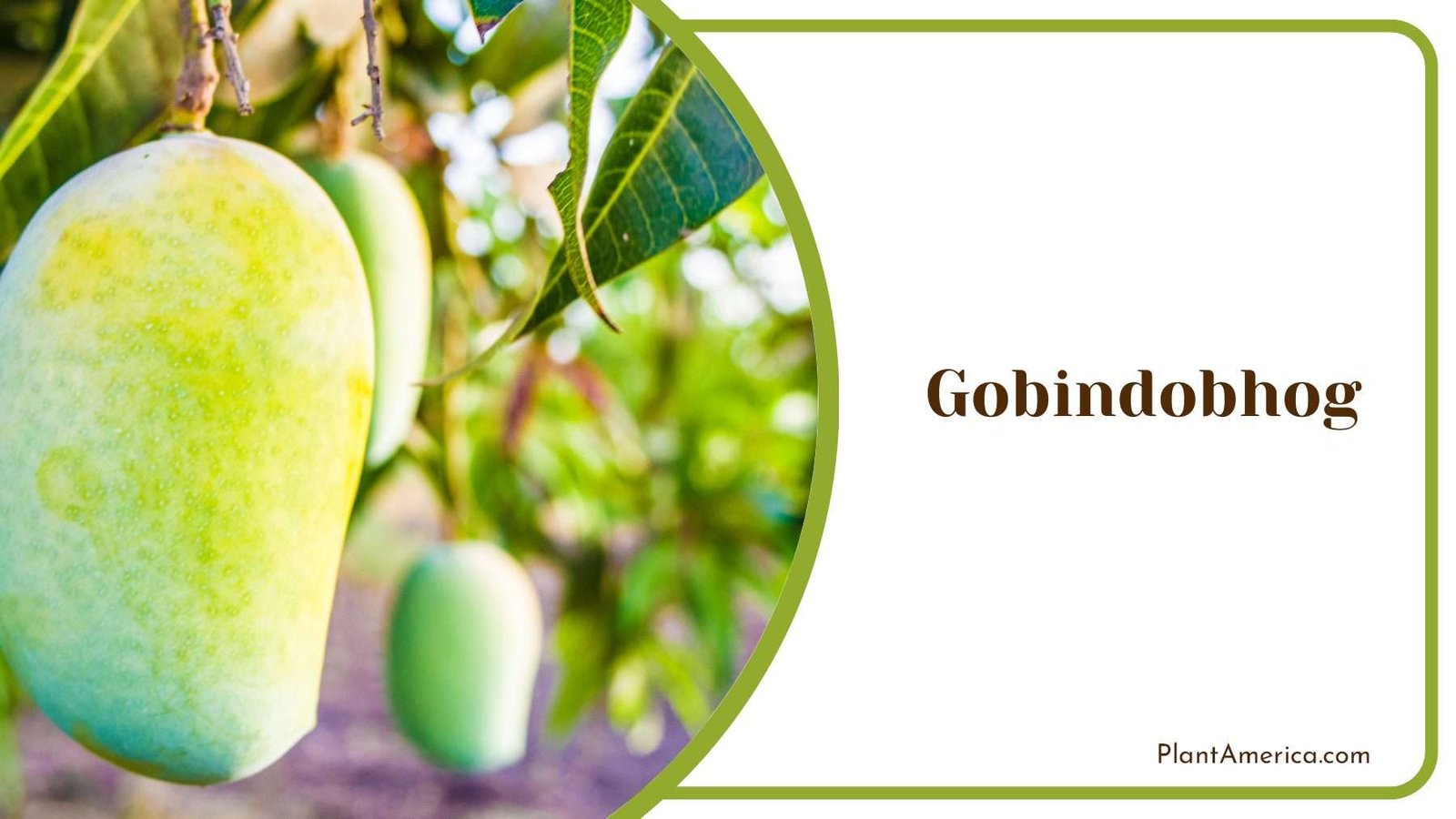
Originating in the Indian state of West Bengal, Gobindobhog is a traditional South Asian mango cultivar. It bears small to medium-sized obovate fruits throughout late spring.
As the mangoes ripen, their thin greenish-yellow skins develop hues of yellow and orange with crimson blushing. The interior yellow pulp contains no discernible fiber.
Notably, Gobindobhog exhibits a distinct aroma and richly musky yet sweet flavor profile. These qualities have made the variety famous for its balanced sugary-tart character and fragrant perfume.
During the April through June harvest window, fully ripe fruits yield slightly to gentle pressure tests while emitting a robust fruity bouquet. The soft, succulent, and minimally fibrous flesh consists mainly of a straightforward, sweet taste.
Historical cultivation of Gobindobhog throughout West Bengal speaks to the variety’s regional importance and suitability for small-scale production. Its flavor profile remains in high demand during the peak of the mango season.
14. Mallika

- Growing Season: Summer, Late summer
- Leaf Shape: Elliptic, Broad tip
- Specific Needs: Regular watering and pruning, Protect from wind
- Common Pests: Fruit flies, Hoppers
Originating in the Indian state of Andhra Pradesh, Mallika is a traditional Southeast Asian mango cultivar bearing medium to large oblong fruits.
As the mangoes ripen in late spring, their thin yellow skins develop patches of reddish blushing. The interior deep yellow pulp lacks discernible fiber.
Notably, Mallika mangoes exhibit a mild aroma balanced by a predominantly sweet yet subtly tart flavor profile. They contain higher nutritional levels of beta-carotene, antioxidants, pectin, and fibers than other varieties in the region.
During the April through June harvest period, fully ripe fruits yield moderately to gentle pressure tests. The soft yet fibrous flesh has medium-intensity flavor and aroma characteristics.
These balanced sensory and nutritional qualities make Mallika well-suited for applications like fresh consumption, juices, and chutneys. Historic cultivation throughout Andhra Pradesh indicates the variety’s importance and suitability to the region. Its ongoing desirability speaks to the enduring appeal of its mild yet complex taste profile.
15. Totapuri

- Growing Season: Summer, Late summer
- Leaf Shape: Elliptic, Broad tip
- Specific Needs: Regular watering and pruning, Protect from wind
- Common Pests: Fruit flies, Nematodes
Believed native to southern India, Totapuri is a small yet prolific producer cherished for its distinctive, flavorful flesh. Compared to larger varieties, Totapuri fruits typically weigh 6-10 ounces each.
At ripeness, their skins develop a bright yellow-green color. Inside, the fiber-rich pulp contains an intense sour-sweet taste likened to citrus with hints of turmeric. Though low in sugars, Totapuri exhibits high acidity.
These bold sensory traits make Totapuri prized in Indian cuisines, where their sour notes lend balance to both savory and sweet dishes. Totapuri mangoes retain flavor even when dried or cooked due to aromatic compounds in the flesh, well-suited for chutneys, pickles, and sauces.
Though lower-yielding, Totapuri trees thrive as home garden crops due to heat tolerance and disease resistance. Ongoing cultivation preserves this distinctive variety’s cultural contributions.
16. Chaunsa
- Growing Season: Summer, Late summer
- Leaf Shape: Elliptic, Pointed tip
- Specific Needs: Regular watering and pruning, Protect from wind
- Common Pests: Fruit flies, Nematodes
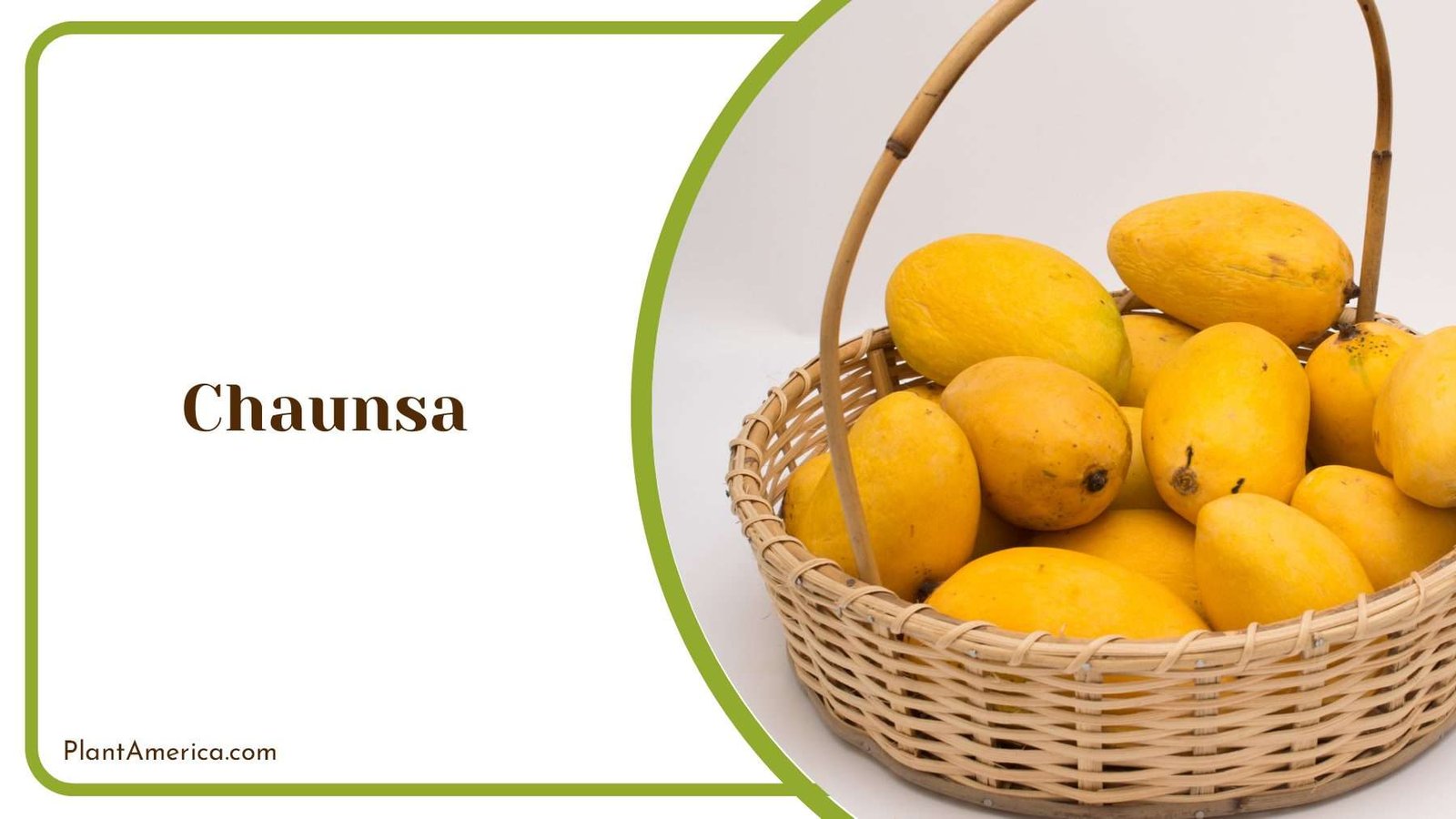
The Chaunsa mango hails from Punjab, India, where it has achieved exalted status for its opulent fruit size and epicurean qualities. Come harvest from April to July, trees burst with oblong treasures, often weighing over a pound each. A hidden nectar awaits discovery as ripeness imbues the thin skins with ochre and flame.
Within lies a blessing to the senses – a buttery pulp rich as dawn, free of woody threads. Chaunsa’s bouquet and taste are a renowned duet, the sweet leading strain complemented by alluring musk. At optimum ripeness, the fragile flesh yields delicately to persuade of harvest.
For aficionados, Chaunsa represents mango mastery distilled. Though noble in form, its true grandeur resides in the intense medley of flavors that flows like satin on the tongue. Fiberlessness allows for maximal savoring of fruity and mysterious notes lingering long after the final savor.
Across Punjab’s groves and global markets, the variety maintains its legendary prestige. Chaunsa shares its sensual splendor freely, ensuring continued tribute from admirers who hold it high among celestial mangoes.
17. Gouveia

- Growing Season: Summer, Late summer
- Leaf Shape: Elliptic, Pointed tip
- Specific Needs: Regular irrigation, Well-drained soil
- Common Pests: Fruit flies, Nematodes
Hailing from Hawai, the Gouveia mango cultivar yields oval fruits averaging 1-2 pounds in size. As spring blossoms into early summer, the tree bursts forth with Nature’s golden gifts, their exteriors transforming from green to a luminous yellow overlaying burnished red.
Beneath run thin yet sturdy skins safeguarding a pigmented nectar renowned for its complexity. The fiberless flesh emanates an ethereal aroma, its delicate sweetness matched by vivacious acidity in a dance for the senses.
Growers prize Gouveia’s reliable bearing and durability, traits allowing its treasures to traverse vast distances unbruised. Hardiness against disease further recommends the variety to subtropical climates.
Connoisseurs globe-trot in pursuit of Gouveia’s refined gustatory symphony, brightening compositions from simplest salads to splendors sweet. Its reputation as a signature South African specialty has expanded distribution internationally, satisfying year-round cravings for its unique charms.
Breeding efforts now leverage Gouveia’s stable production qualities to usher its refined flavors to new frontiers. Its enduring status as a crowning culinary achievement bears witness to nature’s artistry distilled.
18. Amrapali

- Growing Season: Summer, Late summer
- Leaf Shape: Elliptic, Pointed tip
- Specific Needs: Regular irrigation, Well-drained soil
- Common Pests: Fruit flies, Hoppers
The Amrapali cultivar exhibits intriguing sensory characteristics distinction from other commercial mango varieties. Native to the Brahmaputra Valley region of Assam, India, this smaller fruited landrace bears oblong shapes averaging 6-8 ounces in size.
Upon ripening from March to June, the thin skins transform from pale yellow to shades of red-orange. Internally, the flesh ranges from bright gold to golden-yellow, with some visible fiber strands contributing to texture. Of note is the pronounced resinous aroma – hints of pine and tar emerge upon first bite.
Flavor profiles prove more nuanced than initial impressions may suggest. While sweetness provides the baseline, elevated acidity creates an interplay, yielding a pleasantly tart sensation on the palate. The intermingled citric and resinous notes linger seamlessly.
Higher acid and fiber content align this Amrapali with specialized culinary applications rather than standalone desserts. Traditionally featured in regional chutneys and savory dishes, its bold flavor profile enhances layered complexity in recipes.
Physiological traits exhibit adaptations for commercial potential. Firm yet mildly yielding flesh supports longer shelf life. Further evaluation of horticultural traits could optimize this distinctive landrace for broader cultivation and introduce its unique flavors to new audiences.
19. Valencia Pride

- Growing Season: Summer, Early summer
- Leaf Shape: Elliptic, Broad tip
- Specific Needs: Regular irrigation and pruning, Protect from wind
- Common Pests: Fruit flies, Scales
The Valencia Pride mango bears medium to large oblong fruits averaging 8-16 ounces in size. As summer approaches, their dark green exteriors transition to a buttery gold hue blushing with crimson.
Its true glory lies within – a deep golden flesh prized for sensorial superiority. Notably absent are fibrous strands, granting an unparalleled silky texture. A pleasant aroma whets the appetite for flavors to unfold.
Upon tasting, balanced notes of acidity reinforce sweetness, imparting nuance beyond a one-dimensional profile. These attributes make Valencia Pride a crowds favorite, whether enjoyed fresh during its May to July harvest or as juice prolonging the tropical experience.
At optimal ripeness indicated by moderate yielding, the flesh exemplifies tenderness oozing with juice. Flavor, texture and nutrients satisfy all manner of mango connoisseurs. It’s no mystery why generations continue delighting in this specialty.
20. Sindhri

- Growing Season: Summer, Late summer
- Leaf Shape: Elliptic, Pointed tip
- Specific Needs: Regular irrigation and pruning, Protect from wind
- Common Pests: Fruit flies, Hoppers
The Sindhri mango produces medium to large oblong fruits typically averaging 8-16 ounces in size. As the trees emerge into spring, the dull green exocarps transition to vibrant golden yellow overlaying reddish hues.
Internal evaluation reveals the mesocarp to exhibit a semi-fibrous texture in shades of deep yellow. Distinct from other varieties analyzed is the pronounced musky aroma profile imparted. The tasting of the pulp detects primary sweetness complemented by moderate acidity, allowing secondary notes of an alluring muskiness to emerge prominently.
The compositional analysis finds intermediate levels of soluble solids and fibers aligning this cultivar well for direct consumption when ripened fruits yield mildly to tactile testing, as well as culinary applications requiring its balanced semi-fibrous characteristics.
Sensory evaluation panels praise the Sindhri’s subtlety of flavor, free of intense, singular profiles. Its graceful complexity rewards those seeking understated sophistication in mango varieties. Agronomic traits show promise for the optimization of horticultural management to introduce this distinguished selection to broader audiences. Indigenous to South Asia, the Sindhri lends ethnic nuance to tables across palettes.
21. Taiwan
- Growing Season: Summer, Late summer
- Leaf Shape: Elliptic, Pointed tip
- Specific Needs: Regular irrigation and pruning, Protect from wind
- Common Pests: Fruit flies, Scales
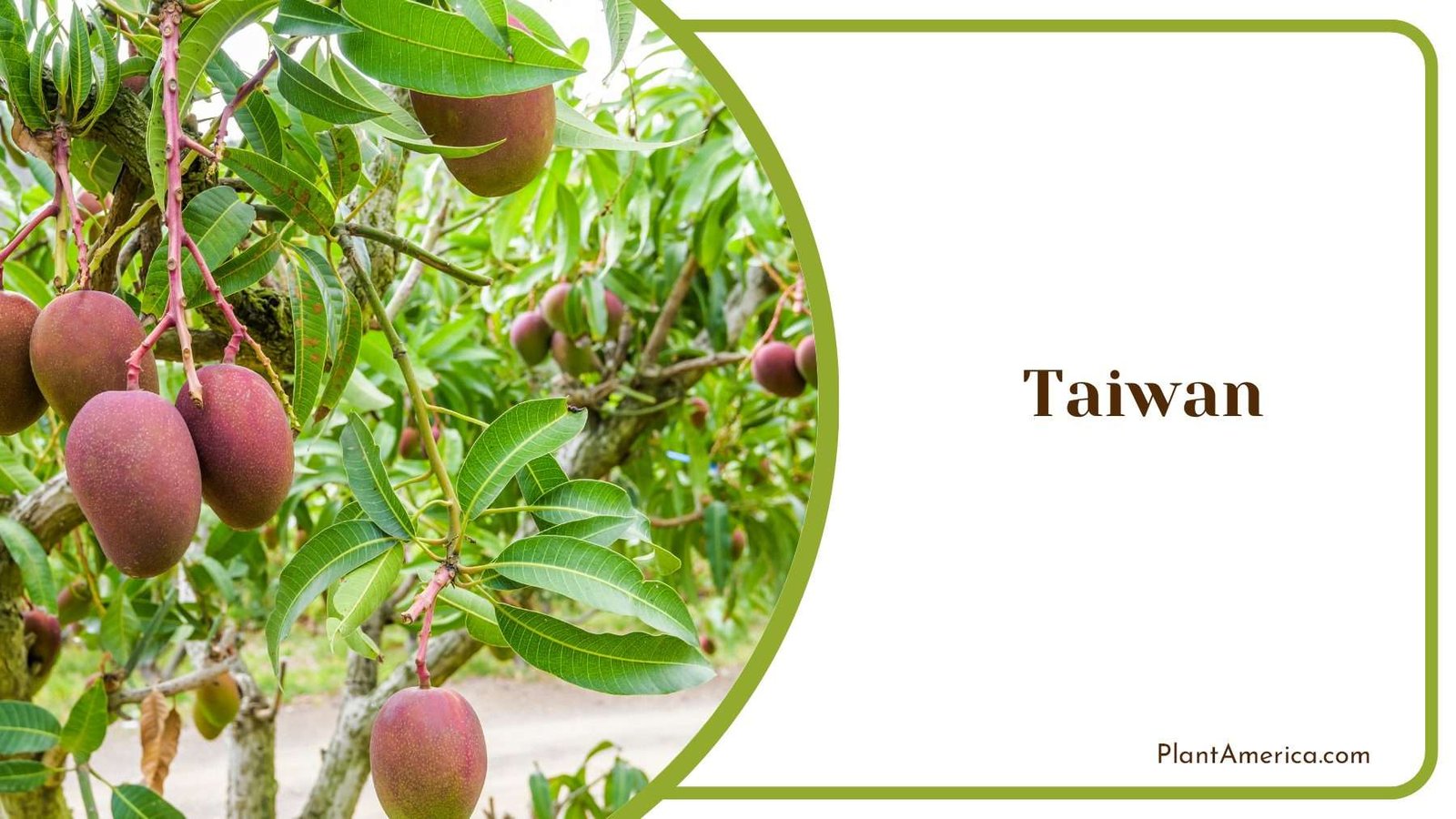
This variety bears medium-sized ovoid fruit. As spring transitions to summer, their light green exteriors transform to a golden hue blushed with crimson.
Interior evaluation reveals a semi-fibrous deep yellow mesocarp imparting an alluring musky-turpentine aroma. Tasting detects mild sweetness complemented by balance acidity, allowing secondary notes to emerge subtly.
Compositional analysis shows intermediate levels of juice and acid suiting direct consumption or chutneys when ripened fruits yield moderately to gentle pressure during its May to July season.
Sensory panels note the Taiwan mango’s nuanced flavor profile, free from singular intense qualities. Its sophisticated complexity rewards those seeking understatedness. Agronomic traits demonstrate potential for optimizing production to broaden appreciation of this distinctive variety.
22. Keitt
- Growing Season: Summer, Late summer
- Leaf Shape: Elliptic, Pointed tip
- Specific Needs: Regular irrigation, Well-drained soil
- Common Pests: Fruit flies, Scales
The Keitt mango distinguishes itself as a uniquely specialized type within the diversity of commercialized varieties. Originating from a chance seedling discovered in Florida in 1905, it has since undergone selection for large size and yield potential.
Mature Keitt fruits typically range from 1-2.5 lbs, exhibiting an elongated oblong shape conducive to ease of harvesting and transportation. As the summer progresses, their green exteriors transition smoothly to hues of yellow, occasionally dusted with reddish tones.
Notably absent from the Keitt’s deep golden mesocarp are fibrous strands, an unusual trait enhancing its sensorial experience. Mild yet enticing aromas emanate from within the entirely fleshy texture.
Upon tasting, a syrupy, charming flavor profile emerges, balanced delicately by acidity. Abundant juice content renders the flesh succulently soft, and prized for enjoyment fresh when signaled ripe by moderate yielding pressure.
Distinguished during its June to August season harvest window, the Keitt variety satisfies discrimination, seeking sophisticated balance versus outright sweetness. Productive agronomic traits concur in validating its elevated status among specialized niche mangoes.
23. Julie/Jalnani

- Growing Season: Summer, Late summer
- Leaf Shape: Elliptic, Pointed tip
- Specific Needs: Regular irrigation and pruning, Protect from wind
- Common Pests: Fruit flies, Nematodes
This prolific mango variety bears medium to large elongated oblong fruits. During ripening in spring and early summer, their light green exteriors transition to golden hues blushed with crimson.
Internal analysis reveals a deep yellow, virtually fiberless flesh imparting a distinct aroma. Tasting unveils exceptionally high sugar content balanced by low acidity, yielding a notably sweet flavor profile.
Compositional traits, including elevated juice levels and soluble solids, make the fruit well-suited for direct consumption when seasonally available from April to June. Ripening is apparent when fruits yield slightly to gentle pressure.
Sensory characterization describes supremely tender and juicy pulp accompanied by a mild aroma. This variety satisfies the discerning palate seeking indulgent yet balanced sugar enjoyment without compromising on complexity. With further agricultural refinement, broader accessibility to the ‘Julie’ mango’s delights could be realized.
Conclusion
The diverse mango varieties offer abundant ways to enjoy and appreciate this tropical fruit, and after reviewing common types of mangoes in this article, here are a few favorites:
- The Tommy Atkins mango variety originated in Florida and is now one of the most widely grown globally with an oval to oblong shape. The peel is thin and green, turning yellow with red blush when ripe.
- The Van Dyke mango variety is less common than Tommy Atkins but known for its small oval size with a thicker peel that is green ripening to yellow with crimson blush, producing very sweet fiberless flesh ideal for cutting and eating fresh.
- The Banganapalli mango originated in Southern India and is cultivated in the Andhra Pradesh and Tamil Nadu regions. The fruit is medium, oval-shaped, with yellowish-green skin that turns yellow and reddish brown when ripe.
With so many types of mangoes that vary greatly in traits like size, shape, color, flavor, texture, and origin, there truly exists a perfect mango for nearly every taste preference – whether you seek fibrous or fiberless, aromatic or mildly flavored varieties. Exploring and discovering your preferred mango types only enhances enjoying this healthy and delicious summer fruit. The diversity of mangoes ensures interest, options, and enjoyment for all mango lovers.