
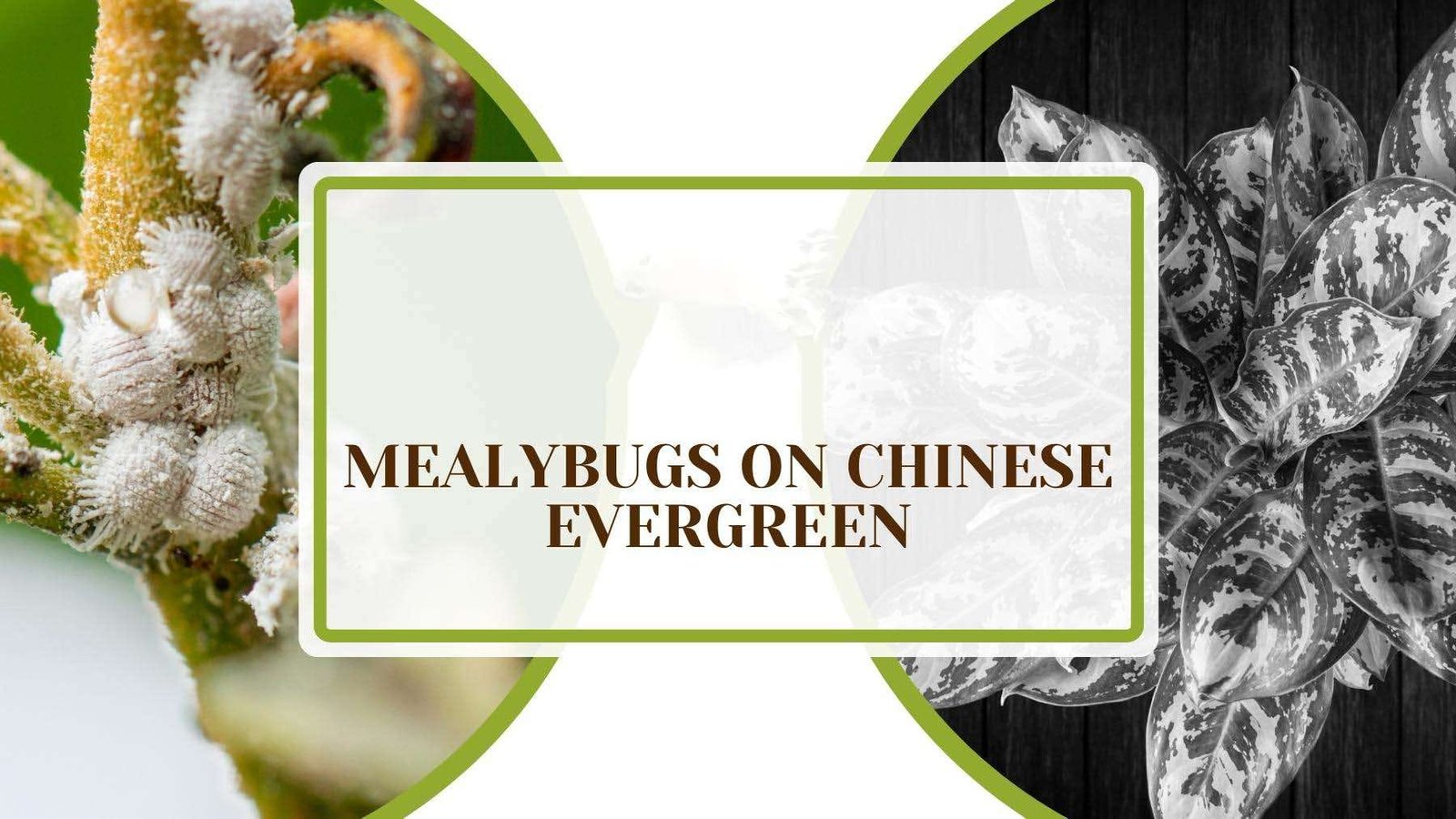
Mealybugs on Chinese evergreen plants of the Araceae family happen due to many reasons, and in most cases, the fault is very much our own. But if you do spot those snowy white fluffs on your beautiful evergreen, know that there is a way to get rid of it.
Sure, these small critters will leave us discouraged, but fast action and a few eco-friendly recipes can go a long way. Join us as we uncover how to spot mealybug infestation early on and how to fight back!
How To Recognize Mealybug Activity on Chinese Evergreen Plants
You can recognize mealybugs on Chinese Evergreen plants by looking out for obvious signs, such as the presence of a waxy substance and pale clusters on the shoots of the plant. Also, you can detect them by looking at the decreased vitality of the plant, such as the aglaonema pictum tricolor one.
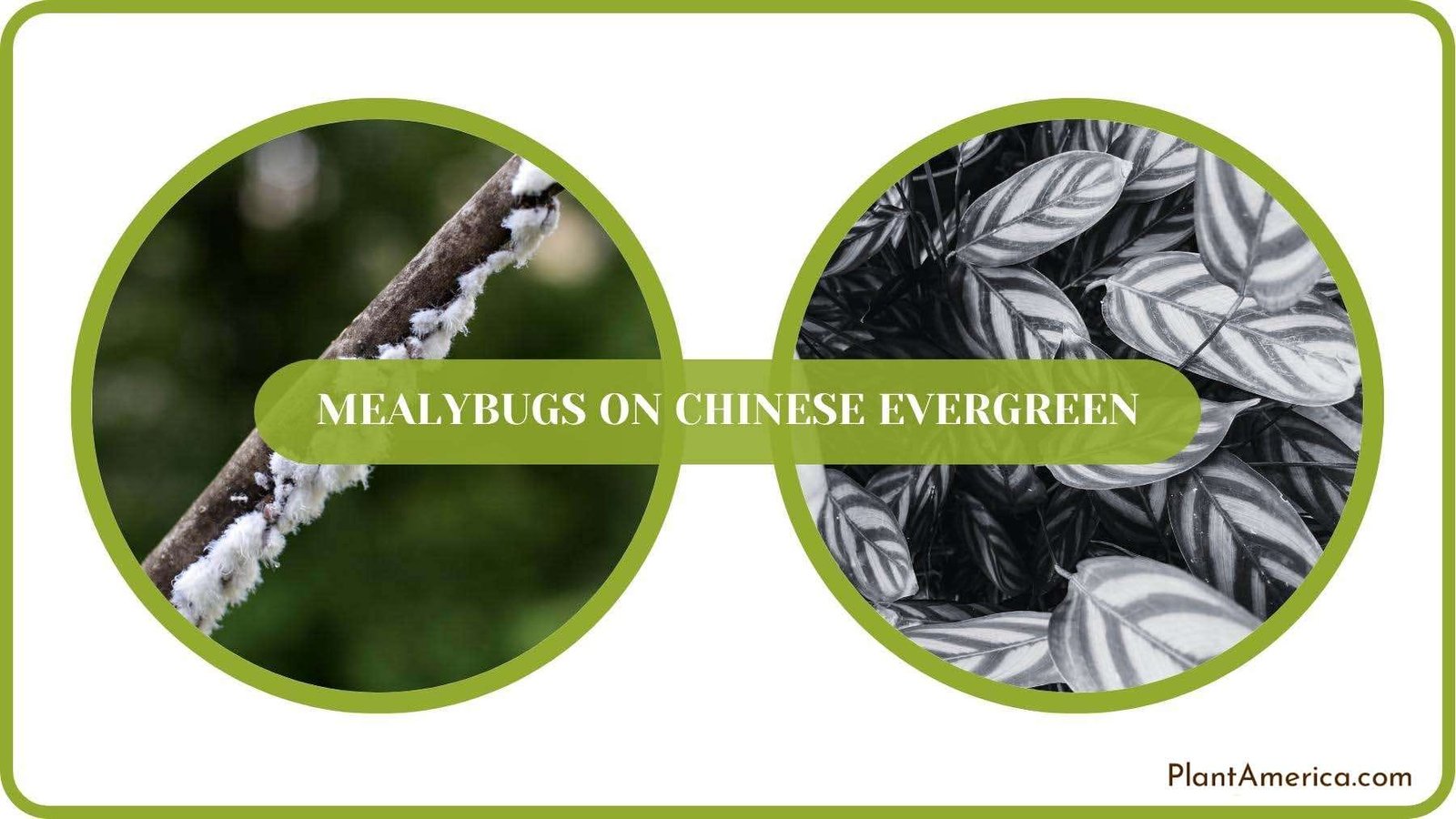
Mealybugs are a type of scale insects, just like aphids, thrips, and even spider mites. They nourish themselves on the sap of indoor plants. What makes them stand out from the crowd is their appearance, reminiscent of small white cotton balls in motion across the foliage of your Chinese evergreen.

And their looks aren’t the only way to tell that you have them around. They exude honeydew, a viscid white substance that adheres to both leaves and stems of the plant, and you’ll often find them focusing on fresh leaves, which are tender enough for them to pierce through.
Moist surroundings allure mealybugs, while arid conditions are intolerable to them. Thus, if you’ve been a bit too loving towards your Chinese evergreen, know that excessive watering becomes a magnet for the presence of mealybugs!
Let’s get behind all the minute details of how to recognize their activity early on, so you can attack them at the right time — when there’s still not plenty of them!
– Do You See Tiny Cotton Balls
Identifying the presence of mealybugs on your evergreen involves recognizing the distinctive cottony clusters they form. Detecting these early on is essential to promptly address the issue. These formations resemble small white cottony fuzz and tend to be located in concealed parts and joints on the plant.
Spotting them early requires regular inspection of your plant, paying particular attention to these hidden crevices. Gently glide your fingertips across the stem joints and in the places where stems leave the ground.
– Sticky Substance
The presence of a sticky residue, or honeydew, can be an early sign of mealybug infestation too. This honeydew has the tendency to accumulate on the leaves, stems, and nearby areas, resulting in a noticeable tacky residue.
Consistently inspect the leaves, stems, and hidden crevices of your Chinese evergreen. Watch out for any glossy or sticky patches on the plant’s surfaces. If you feel a sticky or adhesive sensation when running the fingers through your evergreen, it might indicate the presence of honeydew left behind by mealybugs.
This stickiness creates an environment conducive to the growth of fungal pathogens, eventually leading to the development of a black, sooty mold and can even cause an increase in ant activity!
– Is Your Plant Overwatered

Overwatering your Chinese evergreen increases the humidity around the plant, creating an environment that mealybugs find favorable for breeding and survival.
Excessive watering can also lead to stressed and weakened plants. In this state, the plants lack the natural defenses to fend off these pests effectively, they’ll become more pest-susceptible over time.
That’s why you should implement proper watering techniques — always allow the top inch of the soil to go dry between waterings, and make sure the plant’s pot has proper drainage to prevent waterlogging.
– Plant Malformations
The presence of mealybug infestation can inevitably undermine the growth and progress of your plant. If you observe a lack of robust growth or the emergence of unusually undersized new leaves, these could be indications of insect-related harm.
Infested leaves might exhibit curling or distortion. These often arise from mealybugs consuming the plant’s tissues. Additionally, the presence of yellowed leaves and other symptoms, such as brown leaf spots, could be attributed to mealybug infestation.
Leaf wilting and drooping are also common pests-related issues — resembling symptoms often associated with root rot. Even if the plant receives adequate water, wilting can transpire due to the insects’ disruption of the plant’s capacity to efficiently absorb water and nutrients.
Ways to Battle Mealybugs on Chinese Evergreens
The approach to addressing mealybugs largely hinges on the extent of the infestation you’re dealing with.
When dealing with light mealybug infestations, the situation is more manageable. These cases involve identifying a few mealybugs and their cottony egg masses. Taking swift action at this stage can prevent the situation from escalating to a damaging level.
However, heavy infestations present more challenges. These instances involve a multitude of mealybugs, eggs, and honeydew, which can lead to the growth of sooty mold and attract ants. In severe indoor cases, it might even be necessary to consider disposing of the affected plant.
Despite these challenges, there are numerous options available for addressing the problem. Remember to isolate infested evergreens during treatment to prevent the spread of the infestation.
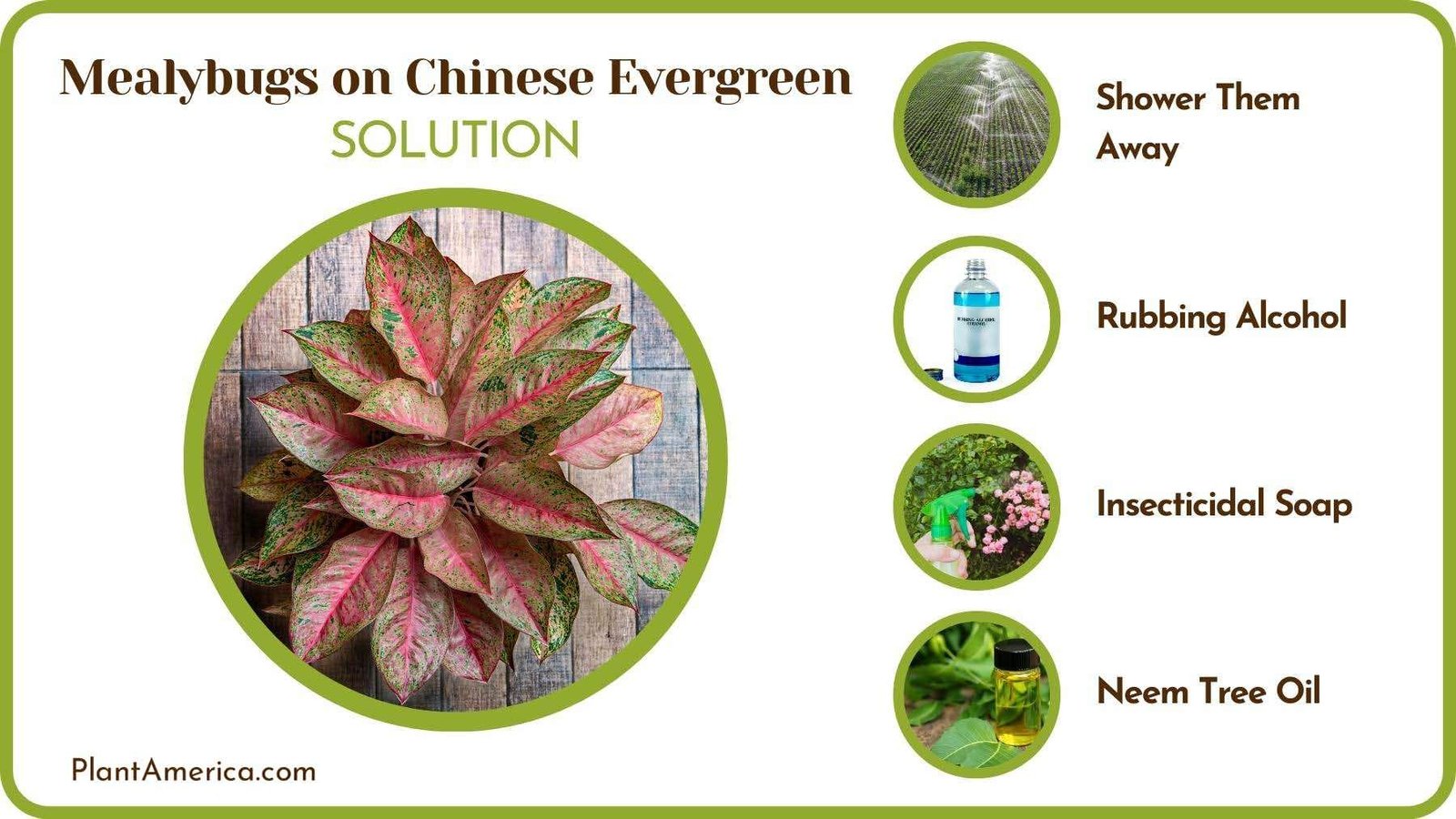
– Shower Them Away
Evergreens enjoy their foliage being showered from time to time, and this technique works wonders in cases of mild infestations. Simply employ a steady stream of water in your kitchen sink, bathtub, or shower to eliminate mealybugs.

If the infestation persists, don’t hesitate to repeatedly wash the plant until you’ve successfully eradicated the pests. If you mistakenly got excess water in the growing container be sure to wait until the soil has thoroughly dried out between each round.
– Rubbing Alcohol
Alcohol is always effective against pests! To apply, soak a cotton ball in 70% isopropyl rubbing alcohol (avoid using stronger concentrations) and dab it on affected areas to effectively eliminate mealybugs, swiftly eradicating and removing them. Before applying it to the entire plant, conduct a test by using it on a single leaf to prevent any potential burning.
If you have a more widespread infestation, opt for a diluted solution of alcohol and water (10-25%) in a spray bottle to treat the plant. Apply the alcohol mixture as needed, while carefully monitoring its impact on the mealybug population and its effect over time.
– Insecticidal Soap
When utilizing insecticidal soap, you typically face a dilemma — either opt for an appropriate off-the-shelf product, preferably free from fragrances and other risky substances or create your own solution by mixing a teaspoon of dish soap with a gallon of water.
Implementing soaps is pretty straightforward — liberally apply the mixture to all portions of the plant, being sure to encompass the undersides of the leaves and plant joints.
Reiterate the application of the soapy solution either every two weeks or on a weekly basis, adjusting the frequency according to the seriousness of your infestation.
– Neem Tree Oil
Neem tree oil presents a natural and potent remedy for tackling mealybug invasions. It has compounds renowned for their insecticidal and repellent attributes, being a favored selection for eco-friendly pest management.

The oil works as a respiratory disruptor by enveloping insects’ bodies and asphyxiating them. To use the oil, simply incorporate it with water as per the instructions outlined on the product label. Typically, a one percent oil concentration is suggested for mealybug control.
Administer the solution every other week or as instructed on the product label. Addressing mealybug infestations might mandate multiple treatments to fully eliminate the pests.
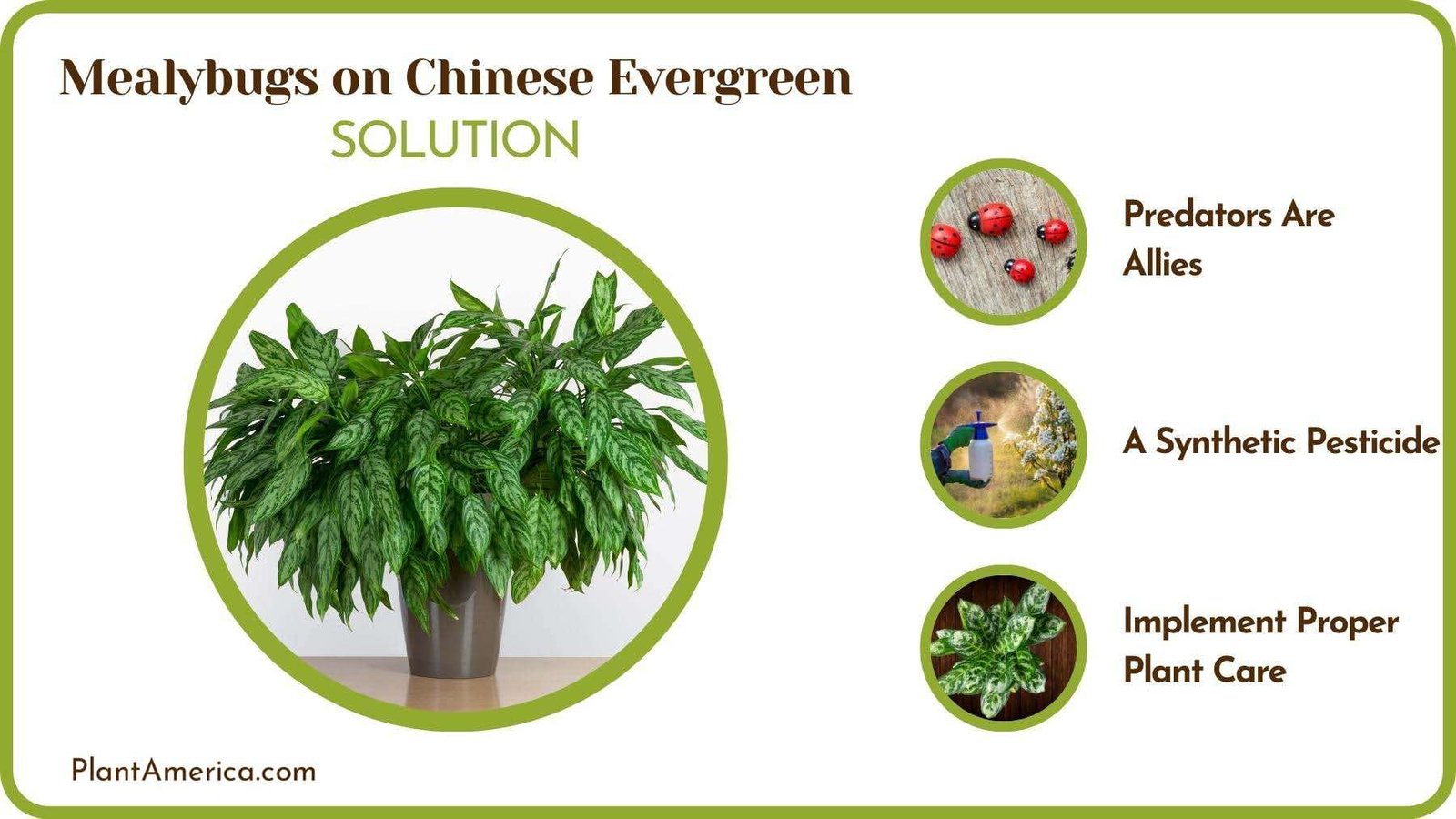
– Predators Are Allies
Lacewings and house spiders are poised to become your newfound allies, displaying insatiable appetites that zero in on these pests with remarkable precision. The treasured presence of ladybugs also becomes more than welcome when these pests are around!
This endeavor involves cultivating a range of flowers, herbs, and ornamental plants for varied food sources and habitats. However, these allies do require you to refrain from deploying harsh chemical pesticides.
– A Synthetic Pesticide
Synthetic pesticides should be a means of last resort when dealing with mealybugs on evergreens. They should be handled with the utmost care due to their potential drawbacks. These pesticides, known as broad-spectrum insecticides, exhibit an indiscriminate approach, eliminating both beneficial and harmful insects alike.
It’s crucial to select one that’s explicitly designed and authorized for combatting mealybug infestations. In cases where the infestation persists, it’s advisable to follow the instructions on the pesticide label for repeated applications.
– Implement Proper Plant Care
Sustaining a robust and thriving plant goes a long way in preventing mealybug infestations. The whole philosophy is pretty simple — when the plant is in optimal condition, it becomes more resilient to pests! And there are a few simple care tips to follow.
Ensure you water your plant appropriately. Overwatering can create a favorable environment for mealybugs, so allow the soil to dry slightly between waterings. Make sure the pot has good drainage too.
Provide your plant with the right amount of light. Chinese Evergreen prefers low to moderate light conditions. Proper lighting promotes plant vigor and natural defenses.
Good air circulation discourages excess moisture buildup and prevents stagnant conditions that mealybugs favor. Avoid placing your plant in areas with poor air movement.
Wipe down the leaves of your plant with a damp cloth from time to time — this will both remove the dust and reduce the chances of mealybugs finding a place to settle. When introducing new plants to your collection, isolate them for a period before placing them near your established collection. This prevents potential pest introduction.
Regularly inspect your plant for any signs of mealybugs, spider mites and other pests. Catching any infestation early makes it easier to address before it gets out of control.
By implementing these practices you’ll create an environment where your Chinese Evergreen can flourish, reducing the attractiveness of your plant to mealybugs and minimizing the risk of infestations.
Conclusion
Mealybugs on your Chinese evergreen may seem like a daunting challenge, but with awareness, action, and eco-friendly solutions, you can effectively combat these pesky invaders. Recognizing the signs of mealybug activity is crucial, from the distinctive cottony clusters they form to the sticky residue they leave behind. Let’s remind ourselves of the most important things we’ve gone through:
- Taking prompt action at the early stages of infestation is essential. Regularly inspect your plant for the telltale signs of mealybugs, such as cottony formations, sticky residue, and plant malformations.
- Overwatering your evergreen can create an ideal environment for mealybugs, so proper watering practices are essential to discourage their presence.
- To battle mealybugs, you have various options, from showering them away with water to using rubbing alcohol, insecticidal soap, and neem tree oil.
- Beneficial predators like lacewings, ladybugs, and house spiders can also help keep mealybug populations in check. Remember that synthetic pesticides should be a last resort due to their potential negative impact on beneficial insects.
- Implementing proper plant maintenance practices, such as appropriate watering, providing adequate light and air circulation, and regular inspections, can prevent mealybug infestations from taking hold.
Vigilance and proactive measures are key to successfully combating mealybugs and preserving the beauty of your indoor garden!