
Treatment for mealybugs on geraniums of the Geraniaceae family involves many techniques like water spray, insect-killing soap, foil reflectors, etc. However, not doing these things right will not impact the bugs.
Don’t worry; we’ve discussed how to eradicate bugs in detail in this guide. Read them carefully and apply the instructions to make your geraniums “bug-free.”
What Causes Mealybugs on Geraniums?
Mealybugs on geraniums are caused by overwatering or poor ventilation. These conditions create a humid environment, which bugs prefer. Mealybugs can also enter your garden through infested soil or plants. Poor soil quality and organic matter can also sometimes encourage the bugs to attack the garden.
– Overwatering the Plants
Watering plants more than necessary creates a soft, damp environment that mealybugs find attractive. This promotes the growth of mealybugs and can lead to other health problems for the geraniums- root rot and other fungal issues.
– Infected Plant Material
When purchasing geraniums from nurseries or cutting from friends’ plants, there’s a risk of getting plants already infested with mealybugs. Once you bring an infested plant into your garden, mealybugs can hop out and quickly spread to other plants.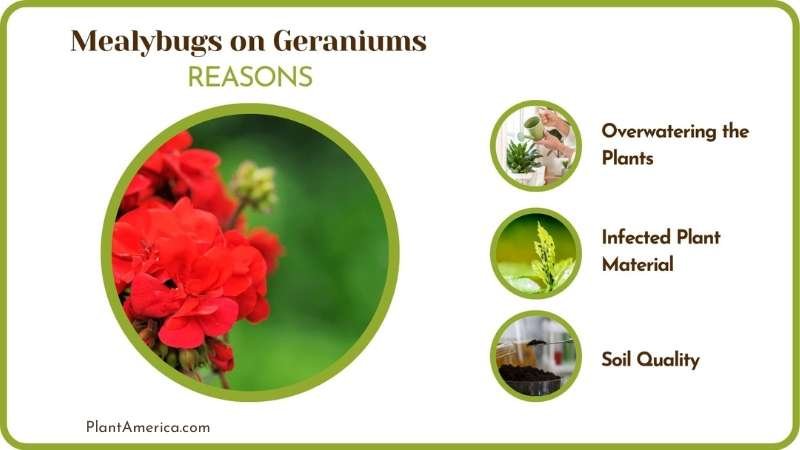
– Soil Quality
Soil that lacks proper nutrients or is too dense can stress the plants, making them more susceptible to mealybug infestation. Note that citrus mealybugs like to prey on plants that are getting weaker daily. So, poor soil quality can indirectly support bugs’ attacks.
However, it can also directly invite mealybugs. Those soils rich in organic matter are a perfect home for root mealybugs.
– Improper Plant Spacing
Tight plant spacing reduces airflow between the plants. This leads to increased humidity, another condition that mealybugs find appealing. Besides inviting mealybugs, improper spacing can also lead to the spread of various diseases among the plants.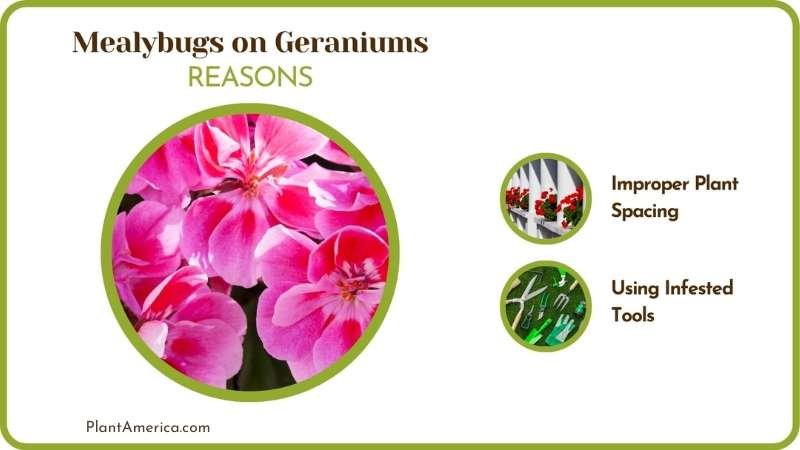
– Using Infested Tools
If you’ve previously used your gardening tools on infested plants and haven’t cleaned them properly, they might carry mealybugs to healthy plants. Transferring mealybugs from one plant to another using infested tools can cause an infestation to spread rapidly throughout your garden.
Treatments for Mealybugs on Geraniums
Treatments for mealybugs include manual removal with alcohol, using insect-killing soap, and employing natural solutions like neem seed oil. Citrus peel spray and hydrogen peroxide can also reduce pest numbers.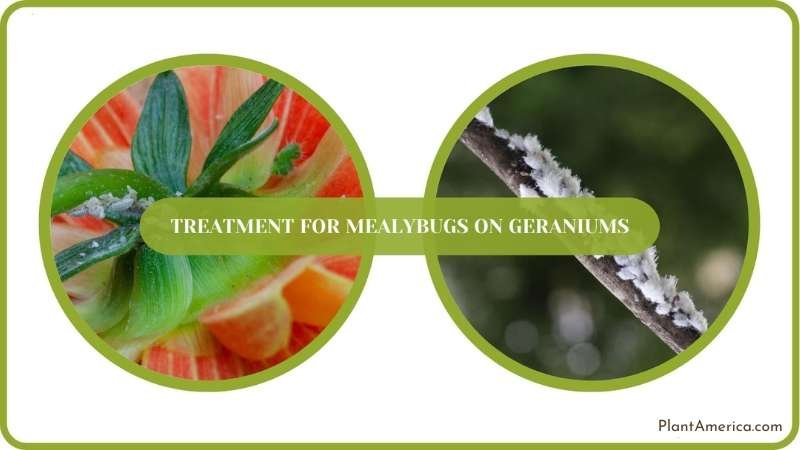 It is recommended to use systemic insecticides for severe infestations.
– Unpot the Plant and Inspect the Roots
So you’ve spotted mealybugs on your beloved geraniums, and now it’s time for action. The first step is about getting up close and personal with the roots. Why the roots, you ask? Well, mealybugs are sneaky, and they love hiding there.
Begin by gently taking the geranium out of its pot. Hold it near the base of the stem, and be as gentle as possible. Once it’s out, shake off the excess soil. You’ll need a clear view of those roots to spot the mealybugs.
Now comes the inspection part. Look carefully for the mealybugs. You might see tiny white insects, their eggs, or even white sticky stuff on outdoor plants. That’s them, alright!
Use a soft brush or fingers to remove the mealybugs from the roots. You might need to trim the roots in severe cases, but don’t be too heavy-handed.
Before repotting the geranium, clean the pot with soap and water. This ensures that no mealybug eggs or larvae are left lurking, ready to infest again. Once that’s done, replant the geranium in fresh soil.
– Shoot Streams of Water on Bugs
Giving geraniums a good misting can also eliminate bugs from them. But this isn’t just any shower; it’s a powerful hose-down to remove those stubborn mealybugs.
Find a hose with the correct pressure. It must be strong enough to dislodge the mealybugs but gentle enough not to harm the plant. If you’ve never done this before, we suggest doing a test run first on a can, bottle, or anything else. You’ll quickly find the right balance.
Aim the hose at the places where mealybugs are likely hiding. They love the undersides of leaves and stems, so focus your attention there. A strong stream of water should send those mealybugs packing.
Don’t walk away just yet after you’ve hosed down the plant. Please inspect it thoroughly to ensure no mealybugs play hide-and-seek in crevices or hard-to-reach spots.
If you find more mealybugs later on, don’t hesitate to repeat the process. Sometimes, consistency is critical, and a few good hose-downs can send a clear message to those mealybugs that they’re not welcome.
– Manually Remove With Alcohol – The Easiest Method
If you’ve ever been mad at those mealybugs, here’s where you can get hands-on. Yes, we’re talking about manually removing them. And not just with any tool but with rubbing or isopropyl alcohol.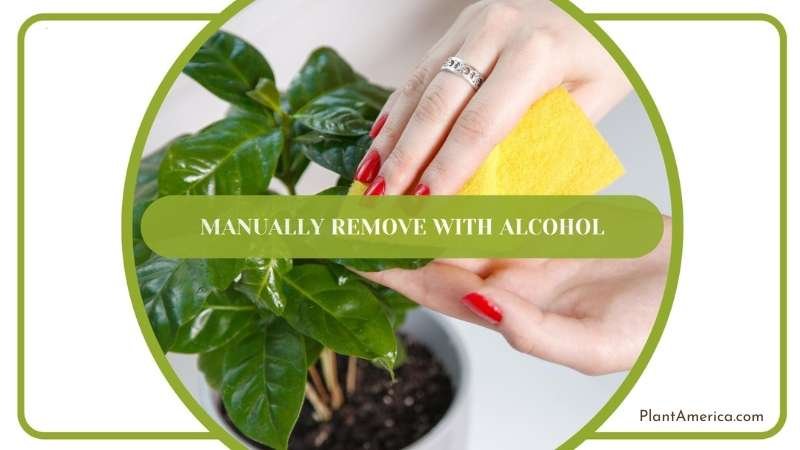
- Grab a cotton swab or a small sponge, and dip it in rubbing alcohol. Alcohol breaks down their waxy protective layer, leaving them vulnerable.
- Once you’ve got your alcohol-soaked tool, gently dab or wipe the mealybugs off the leaves and stems of your geraniums.
- After the removal, inspect the plant again to ensure no mealybugs are hiding. If you missed any, return with your alcohol-soaked tool and finish the job.
– Use Insecticidal Soap For Instant Results
Alright, moving on to something less manual but just as effective: insecticidal soap. You’re probably wondering what kills mealybugs instantly. Insect-killing soap is the answer you’re looking for.
To use insect-killing soap, follow the instructions on the packaging. Usually, you’ll mix it with water and spray it onto the affected parts of the geraniums. Make sure to cover all areas, especially the undersides of leaves, where mealybugs love to hide.
Leave the soap on for the recommended time on the packaging, then rinse the plant with clean water. Inspect it again for any surviving mealybugs, and repeat the treatment if necessary.
– Try Neem Oil
Neem seed oil is a popular choice to eliminate bugs among new and experienced gardeners. However, its effectiveness depends on how you create and apply it to the infested plants.
To use neem oil:
- Mix it with water and a little bit of liquid soap, following the instructions on the bottle.
- Spray it generously on the affected parts of the plant.
- Focus on the undersides of the leaves, stems, and any other areas where you’ve spotted mealybugs.
- Leave the oil on the plant for the time recommended, usually a couple of hours, then rinse with clean water.
Repeat the process if necessary, and watch the plant closely for any signs of recurrence. Neem seed oil may take a little time to show results, but it’s a gentle and effective way to keep those mealybugs at bay.
– Hydrogen Peroxide Solution- Another Super Effective Strategy
The reason why hydrogen peroxide is effective against mealybugs lies in its composition. It breaks down into water and oxygen, two elements that are harmless to your plants but fatal to those unwanted pests.
Mix hydrogen peroxide with water at 1:9. Then, apply this mixture to the infested geranium parts. It can also kill the eggs so that you won’t face this mealybug problem in the future. But remember- concentrated hydrogen peroxide can harm your plants, so always dilute it properly.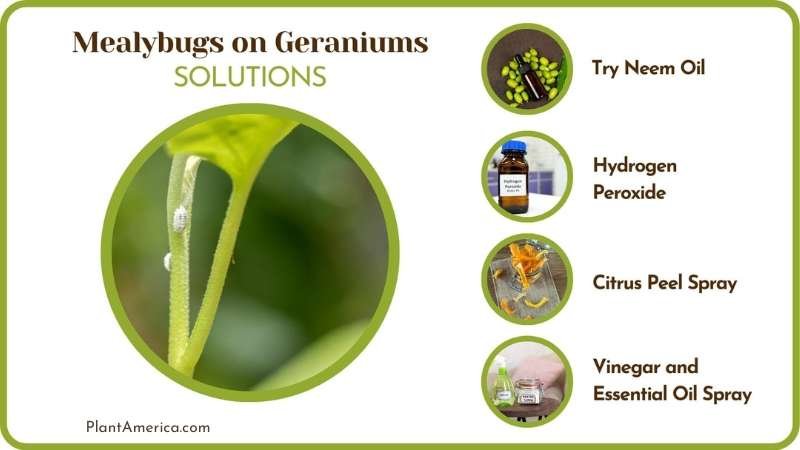
– Citrus Peel Spray- A Natural Approach
Speaking of natural methods, have you ever considered citrus peel spray? Well, it’s the first choice of many plant enthusiasts because citrus peels contain toxic compounds to mealybugs but are safe for geraniums. It’s also for you if you were searching for “how to get rid of mealybugs naturally?”
To make the spray, do these steps:
- Gather citrus peels from oranges or lemons and soak them in warm water overnight.
- Blend the peels and water the next day.
- Then strain the mixture to remove any solid bits.
- Pour the liquid into a bottle, and you have a homemade mealybug killer.
- Spray the citrus peel solution on the affected areas of the geraniums, paying particular attention to the leaves.
Like with neem oil, you may need to repeat the process several times to see results.
– Vinegar and Essential Oil Spray For Pest Control
Vinegar and essential oils may be part of your daily routine for cleaning or relaxation, but have you ever considered using them against mealybugs? That’s right!
- Take a bottle and add equal parts water and white vinegar into it.
- Then, add 3-4 drops of essential oils (peppermint or eucalyptus).
- Once your mixture is ready, transfer it to a bottle and apply it generously to the affected areas of your geraniums.
Remember to rinse the plant with water after a few hours to remove the vinegar residue.
– Aluminum Foil Reflectors: For Outdoor Problems
You might feel overwhelmed when dealing with mealybugs in your outdoor garden. But don’t worry, here’s a unique solution that can help you understand how to get rid of mealybugs outside: Aluminum Foil Reflectors.
If you want to avoid using fancy pest-repelling solutions, try the Reflectors methods. Take some aluminum foil and wrap it around the base of the affected geraniums. The shiny surface of aluminum will start reflecting sunlight on the bugs.
It will create a bright and confusing environment for the bugs, forcing them to relocate. This makes it difficult for them to navigate and settle on the plant. But that’s not all; the reflected sunlight also increases the temperature around the plant’s base, making it less hospitable for the mealybugs.
– Systemic Insecticides For Bigger Mealybug Infestations
Sometimes, those natural methods might not be enough, especially when the infestation is extensive. Systemic insecticides may be your answer if you’ve been pondering how to get rid of mealybugs on houseplants.
The plants absorb systemic insecticides and then transfer them through their system. When mealybugs feast on such plants, they will get poisoned and die. What makes systemic the best insecticide for mealybugs is the thoroughness. They reach areas that sprays usually miss (such as the roots).
While using systemic insecticides, always follow the manufacturer’s instructions. Also, be mindful of the natural predators of mealybugs (like ladybugs and lacewings). If you have these beneficial insects in your garden, consider other methods first, as systemic insecticides could also harm them.
Using systemic insecticides is a strong measure, but it’s effective and often necessary when dealing with a severe mealybug problem in houseplants.
– Keep Doing Proper Gardening
Caring for your garden is not just about helping the plants grow; it’s also about building a place where annoying pests like mealybugs can’t easily take hold.
To prevent mealybugs, practice proper gardening. This includes:
- Regularly inspecting your plants.
- Keeping them at the appropriate moisture levels.
- Pruning any affected parts promptly.
Pay attention to the needs of each plant. Overwatering or underwatering, using the wrong type of soil, or crowding plants too closely together can create a welcoming environment for mealybugs.
Remember- maintaining a clean and healthy garden makes it less appealing to mealybugs.
Conclusion
Dealing with mealybugs on geraniums can be a headache, but there’s no shortage of ways to fight back. In this blog, we explained easy treatments that anyone can do, which are:
- Try natural methods such as vinegar, essential oil spray, or aluminum foil reflectors to fend off mealybugs.
- Don’t hesitate to use the systemic insecticide for mealybugs for severe infestations, but follow all safety guidelines.
- Watch your plants closely, and stick to good gardening habits to stop mealybugs before they hurt plants.
- Keep in mind that a healthy garden takes constant effort and patience.
These simple things can create a thriving garden where geraniums can flourish easily without the threat of mealybugs.