
Watching the black ground break as fresh green shoots sprout to tower as giant bamboo stalks that can reach 90 feet in some species is a magnificent experience.
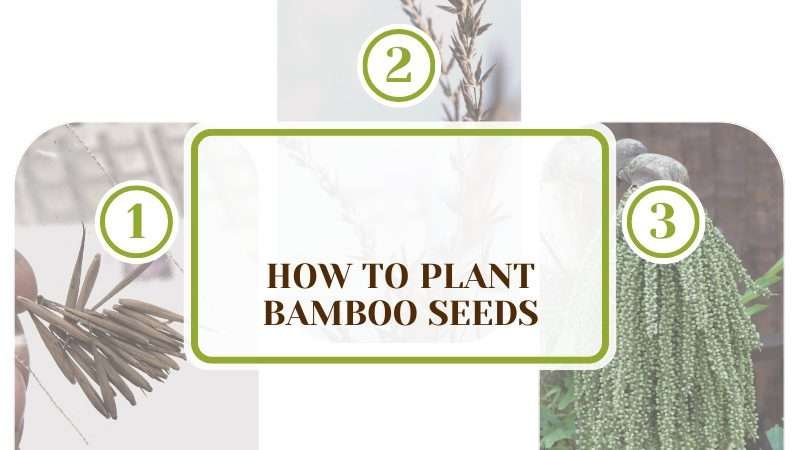
Bamboo is well-known for its beauty and sensuality, but did you know that it’s also one of its fastest-growing plants? Bamboo is a popular plant because of its adaptability and resilience.
These cold, hardy, rugged beauties multiply quickly, and in addition to being attractive, they provide excellent shelter and shade in the landscape, learn how to plant bamboo seeds and more as you read below.

JUMP TO TOPIC
- How To Plant Bamboo Seeds: A Step-by-Step Guide
- – Step 1: Soaking Seeds
- – Step 2: Preparation Of Growth Medium
- – Step 3: Placing Seeds In Growth Medium
- – Step 4: Patience
- – Step 5: Make A Bigger Hothouse
- – Step 6: Protecting Bamboo Seedlings
- – Step 7: Transport The Survivors
- – Step 8: Seeing the New Seedlings’ Delicate Root System
- How Deep Should Bamboo Seeds Be Planted?
How To Plant Bamboo Seeds: A Step-by-Step Guide
Let’s get down to business with planting seedlings. It’s not as difficult as you may believe.
– Step 1: Soaking Seeds
The optimal time to grow bamboo seeds is in the early spring. Soak your bamboo seeds for 24 hours in a dish of warm water before planting them.
You may occasionally, give them a gentle stir, however, at this stage, it is ideal if you are careful not to disrupt the seeds too much.
Like many other seeds, Bamboo seeds will harden if not planted shortly after being collected from the parent plant.
You may need to break the dormancy of bamboo seeds if you discover them and aren’t sure when they were collected. Before putting your seeds in the soil, put them in the refrigerator for a few weeks.
– Step 2: Preparation Of Growth Medium
If you’re planting outside, cover your garden bed with a thick layer of general-purpose compost to help the seeds germinate.
Add your compost or growth material to a pot or growing tray in pots, which is preferred. Plastic sheeting should be used to cover the pot or plant bed.
It indeed receives sufficient sunlight to warm the soil without drying it off. you can use a regular kitchen thermometer to check the temperature of the soil. Soak it in the soil for five minutes, check the temperature, and plant if it reaches 70 to 80 degrees Fahrenheit.
– Step 3: Placing Seeds In Growth Medium
Plant your seeds a quarter-inch apart, cover with an eighth-inch potting soil or compost, moisten, and cover with plastic. Make sure the soil is moist, but not soggy.
– Step 4: Patience
Waiting is the most challenging part! One can always get excited to see new shoots emerge, but each bamboo species has its growth rate. Nonetheless, it is important to be insightful because around days 10 to 15, you might expect to notice some growth.
However, if you haven’t seen any progress yet, don’t worry all you need is to be patient.
Each seed has its timeline to grow and thrive, however, if you are digging them up will cause more harm than good. During this period, keep an eye on the soil temperature to ensure it stays between 70 and 80 degrees Fahrenheit, ideal for germination. On this notion, remember to keep the soil moist and spray it when it starts to dry out.
It is key to remember that dry soil is not suitable for seedlings, especially when they are vulnerable and just starting to germinate, hence this way it will cause damage instead of helping them grow, overall it will not be beneficial.
– Step 5: Make A Bigger Hothouse
Fresh young bamboo shoots are pretty delicate. Therefore keep in mind that watering them from the top is not recommended. Rather than spraying water on the ground, rinse the area around the new growth with a dropper.
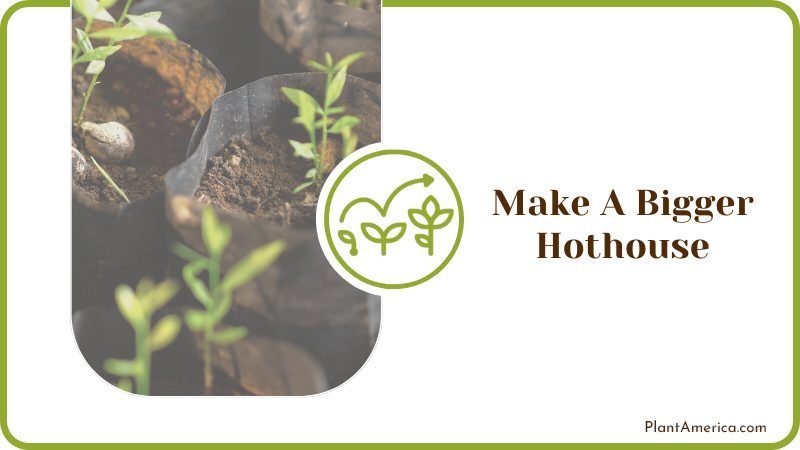
You’ll need to lift the plastic sheeting that covers the seedlings with bamboo sticks or a planting grid because they’ll be growing. If the tops of the shoots come into contact with something, they will perish.
– Step 6: Protecting Bamboo Seedlings
Seedlings in cooler climates will require protection for the first winter. As you’ll be planting in the early spring, there’s a chance that bad weather or winter storms can kill newly grown seedlings. A late frost can thwart all your efforts since seeds can freeze and burst into the earth.
Therefore, remember that it is preferred to start bamboo seeds in pots because this will enhance your freedom, as they can be moved inside when the weather turns cold.
On another note, an extra option would be to preserve the seedlings is to cover the last layer of compost with mulch, which will protect the young shoots from cold winds and early morning temperature decreases.
– Step 7: Transport The Survivors
It’s worth noting, however, that not all bamboo seeds will germinate. Bamboo seeds, unfortunately, can be challenging to please, and some will just decay in the ground or remain dormant.
After about a month, you should have some success and many bamboo shoots that are large enough to transplant. We prefer to plant young seedlings in a shallow 1.5-inch pot or tray since it provides them the best chance of survival.
It’s possible that you’ll need to clear out a garden bed and start over with a newly prepared surface. Alternately, seedlings can be planted in planting bags with the proper compost mix before being transplanted to the garden bed.
– Step 8: Seeing the New Seedlings’ Delicate Root System
By adding 50 percent mulching or bark chips to your potting mix, ensure that it has good drainage. Remember that Bamboo likes water, but its roots decay quickly; therefore, it needs well-draining soil. So give your seedlings plenty of water.
The seedlings that are grown indoors or in a hothouse will be strong enough to plant outdoors once a height of about 12 inches is achieved.

Preferably, start and grow healthy bamboo plants indoors before transplanting them outside because this increases their chances of survival.
Remember that if you’re fortunate enough to see any bamboo seeds, you’ll notice they’re not all the same size, however, they’re usually smaller than cereal seeds or grains.
Seeds frequently fall from the Bamboo when they mature. You must ensure that you do not lose the valuable seeds and collect them before they disappear.
How Deep Should Bamboo Seeds Be Planted?
Plant your seeds at a half-inch depth. If you plant them too deeply, the seeds won’t be able to develop towards the light, and if you put them too shallow, they’ll dry up and deteriorate before germinating.

After one to three weeks of planting seeds at this level, the first green shoots will breach the soil’s surface. If the seeds haven’t germinated after three weeks, there’s a chance they didn’t.
Final note:
Bamboo plants in the yard are a true show-stopper, and while they do require some care, they can be grown from seeds using the steps outlined above. Repotting is an excellent way of propagating and keeping your Bamboo healthy.