
Tall skinny trees for privacy can maximize limited space and provide seclusion without breaking the bank. This post will explore evergreen and deciduous options for privacy screening that grow tall and narrow, from Italian cypress and red cedar to Swedish columnar aspen.
Whether you want fast screening, colorful foliage, or year-round greenery, there’s a perfect tall skinny tree suited to your space and style!
Tall Skinny Trees To Create the Ultimate Privacy Screen
1. Italian Cypress
- Growing season: Evergreen, Grows year round.
- Leaf shape: Scale-like, Linear.
- Specific needs: Well-drained soil, Full sun.
- Common pest: Aphids, Spider Mites.
The Italian cypress (Cupressus sempervirens), also known as the Mediterranean cypress, is an evergreen coniferous tree belonging to the cypress family. It is native to the Mediterranean region of Southern Europe, northwest Africa, and the Middle East. The tree has a slender, columnar form and can grow to heights between 50 and 80 feet tall. It has a characteristic fragrant dark green foliage and thin, orange-brown bark that peels off in vertical strips to reveal the yellowish color of the inner bark. 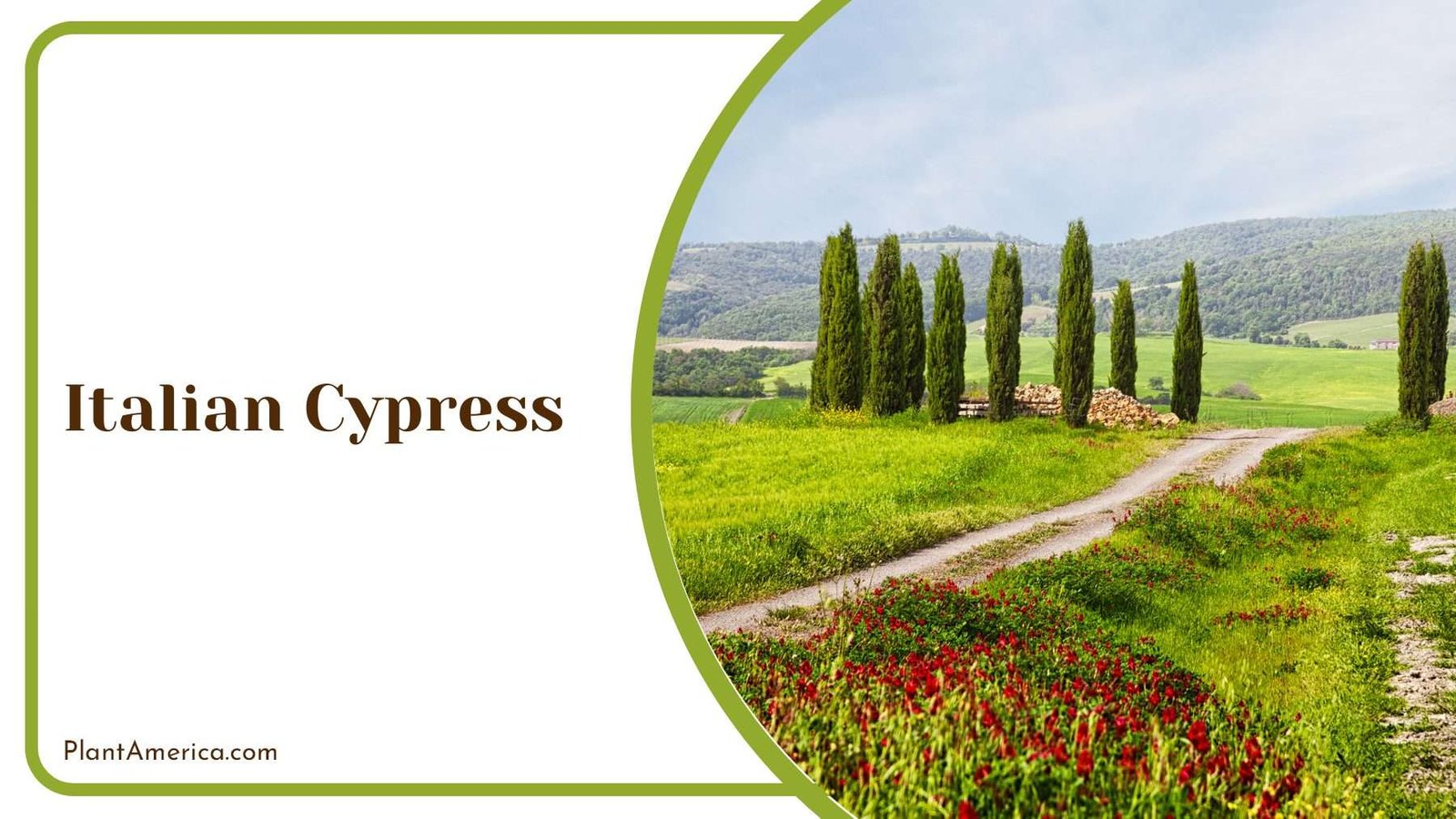
The foliage consists of scale-like leaves arranged in flat sprays which give the tree a light, airy appearance. The Italian cypress is dioecious, with male and female reproductive organs occurring on separate trees. Small brownish cones, less than one inch long, are produced on the female trees.
The tree prefers warm, Mediterranean-like climates and is widely grown as an ornamental plant, often used for hedges, windbreaks, and planting in gardens due to its tall, narrow shape and evergreen nature.
The wood of the Italian cypress is durable, resistant to decay and insects, and is often used for making furniture, musical instruments, and decorative artifacts. The cypress tree also features prominently in Italian culture, architecture, and art due to its abundance and symbolic status.
2. Eastern Red Cedar
- Growing season: Evergreen, Grows year round.
- Leaf shape: Scale-like, Linear.
- Specific needs: Well-drained soil, Full sun.
- Common pest: Aphids, Spider Mites.
The eastern red cedar, also commonly known as juniper, is an evergreen conifer native to eastern North America ranging from Southern Canada down through the Central United States. Scientifically classified as Juniperus virginiana, it typically grows as a medium-sized tree reaching heights between 30 to 60 feet at maturity, with a narrow crown span of two to three feet, though some specimens in optimal conditions can tower over 100 feet tall.
The bark of the eastern red cedar is fibrous with fine, reddish-brown scales that develop deep fissures with age. Arranged in whorls of three along rigid branchlets are its scale-like evergreen leaves, measuring 1 to 3 mm long. Varying from a pale bluish-green to greyish color, the foliage has a pleasant, aromatic resinous scent that is released when crushed.
Small brownish-red berry-like cones, 6 to 10 mm wide, form on the ends of the branch tips. Each cone contains one to three seeds and takes one to two growing seasons to fully mature, often persisting on the tree for several additional years. The dense, yellow-reddish heartwood is exceptionally rot-resistant.
This makes the wood very valuable for fencing, outdoor furniture, and as a long-burning firewood. Eastern red cedar prefers well-draining soils in full sun exposures and grows in a wide pH range. Extremely drought-tolerant when established, it can dominate open areas as thickets due to its rapid juvenile growth.
Ornamentally, the small stature, aromatic evergreen scale foliage, and ornamental cones make this native tree an attractive garden accent or background screening plant. Its hardy nature and picturesque form provide four-season architectural beauty to landscapes.
3. Lombardy Poplar
- Growing season: Deciduous, Sprouts in spring.
- Leaf shape: Palmate, Lobed.
- Specific needs: Full sun, Regular watering.
- Common pest: Aphids, Leafminers.
The Lombardy poplar (Populus nigra ‘Italica’) is a tall, narrow, columnar tree cultivar of the black poplar species. It is native to the region of Lombardy in Italy and gets its common name from there. The Lombardy poplar can grow up to 80 feet tall but has a narrow canopy spread of only about 15 feet wide, giving it an iconic spire-like shape.
 The bark is grey and deeply furrowed vertically with diamond-shaped ridges. The leaves are triangular to diamond-shaped, measuring two to four inches long and arranged alternately on the branches.
The leaves are green above and white below. The Lombardy poplar produces drooping catkins in early spring before the leaves appear. The flowers are monoecious with male and female catkins on the same tree. The fruit is small capsules containing numerous minute seeds dispersed by the wind. This poplar tree prefers full sun and well-drained soil. It is fast-growing but short-lived, typically living 60 to 80 years.
The Lombardy poplar was historically prized for its ability to rapidly stabilize soils and control erosion. However, it has become less popular due to its invasive nature and potential to damage infrastructure with its shallow roots. Still, the unusual pillar-like shape makes it a distinctive accent tree in large landscapes and parks when properly pruned and managed.
4. Sky Pencil Holly
- Growing season: Evergreen, Grows year round.
- Leaf shape: Elliptical, Linear.
- Specific needs: Acidic soil, Full sun.
- Common pest: Leafminers, Spider Mites.
The Sky Pencil holly cultivar, scientifically classified as Ilex crenata ‘Sky Pencil’, forms a tight, uniform column or spire-like shape reminiscent of a classical Greek obelisk. Slow growing yet sprightly, it reaches heights between 15 to 25 feet at maturity while maintaining a narrow diameter of only three to four feet wide.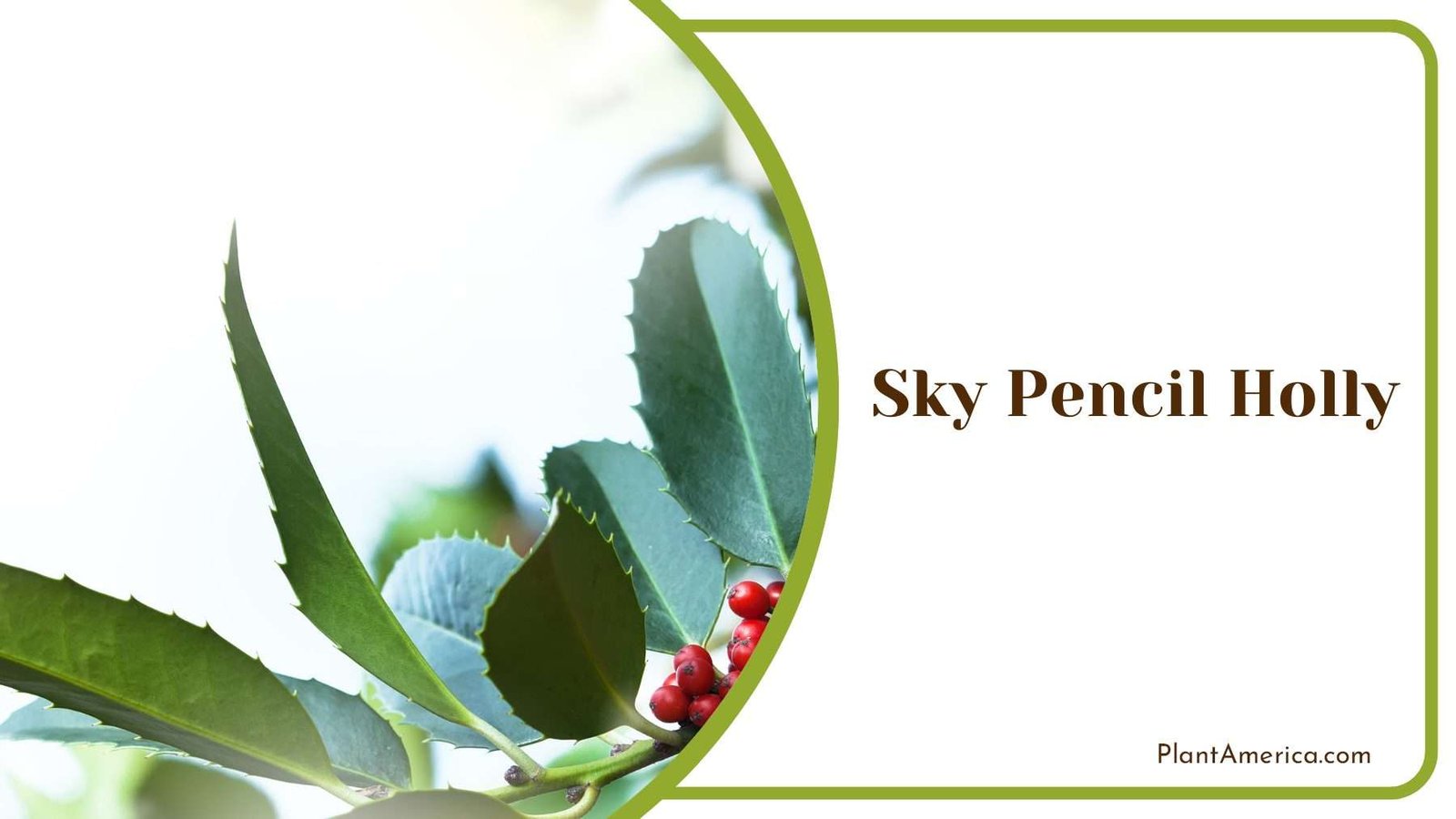
Arranging itself into a true pyramid form, the branches grow densely clad with small dark glossy green hollywood leaves measuring one to one and half inches in length. These tiny persistent leaves blanket the slender branches year-round, providing rich evergreen architecture.
In autumn through early winter, cheerful clusters of bright red berries emerge to pepper the limbs. These ornamental berries persist into the new year, sustaining bird populations with a valuable food source during lean winter months. Some unused berries may remain through spring.
Thriving in full sun exposures or lightly dappled afternoon shade, Sky Pencil holly grows best with consistently moist, well-draining soil on the slightly acidic side. It displays excellent hardiness, tolerating both frigid winters and sweltering summers in many regions.
Requiring only occasional pruning to maintain its conical shape and minimal other care, this compact holly cultivar makes an ideal low-maintenance choice. Its upright, spire silhouette demands little space yet provides a striking focal point through all seasons.
Commonly utilized as a tall, narrow privacy hedge, specimen ornamental tree, or gracefully arching screen, the architectural form and tiny dense evergreen leaves of Sky Pencil holly enhance any garden or landscape design year-round. Its columnar growth habit makes an elegant sculptural accent anywhere space is limited.
5. Swedish Columnar Aspen
- Growing season: Deciduous, Starts in spring.
- Leaf shape: Circular, Round.
- Specific needs: Full sun, Well-drained soil.
- Common pest: Aphids, Leafminers.
The Swedish Columnar Aspen (Populus tremula ‘Erecta’) is a slender, columnar form of the common European aspen tree. It has a narrow, upright growth habit forming a pillar-like trunk with a crown of only 10 to 15 feet wide despite growing up to 80 feet tall. The slender, smooth gray bark develops diamond-shaped fissures with age. The leaves are alternately arranged, simple, and roughly diamond-shaped with a long tapered tip. 
The leaves are a medium green color on top and a whitish-green underneath and turn a brilliant yellow in fall. The Swedish Columnar Aspen produces dangling catkins in early spring before the leaves emerge. The catkins contain male and female flowers that pollinate to produce small, wind-dispersed seeds. This aspen cultivar prefers full sun and average, well-drained soil. It is fast-growing but relatively short-lived, only lasting 50 to 70 years.
The Swedish Columnar Aspen makes an attractive accent tree for larger landscapes and properties due to its vertical, columnar structure. Its graceful, spire-like form and golden fall foliage create year-round visual interest. The slender branching pattern also makes this aspen good for espalier training against walls.
6. Hinoki Cypress
- Growing season: Evergreen, Grows year round.
- Leaf shape: Scale-like, Linear.
- Specific needs: Loose acidic soil, Full sun.
- Common pest: Aphids, Spider Mites.
The Hinoki cypress, also known as the Japanese false cypress and classified botanically as Chamaecyparis obtusa, is an elegant soft-needled evergreen tree native to Japan and South Korea. In youth, it forms a picturesque narrow pyramid shape topped with whorls of branches. Over decades, the crown broadens into an irregular globe-like form enhanced by flaky bark.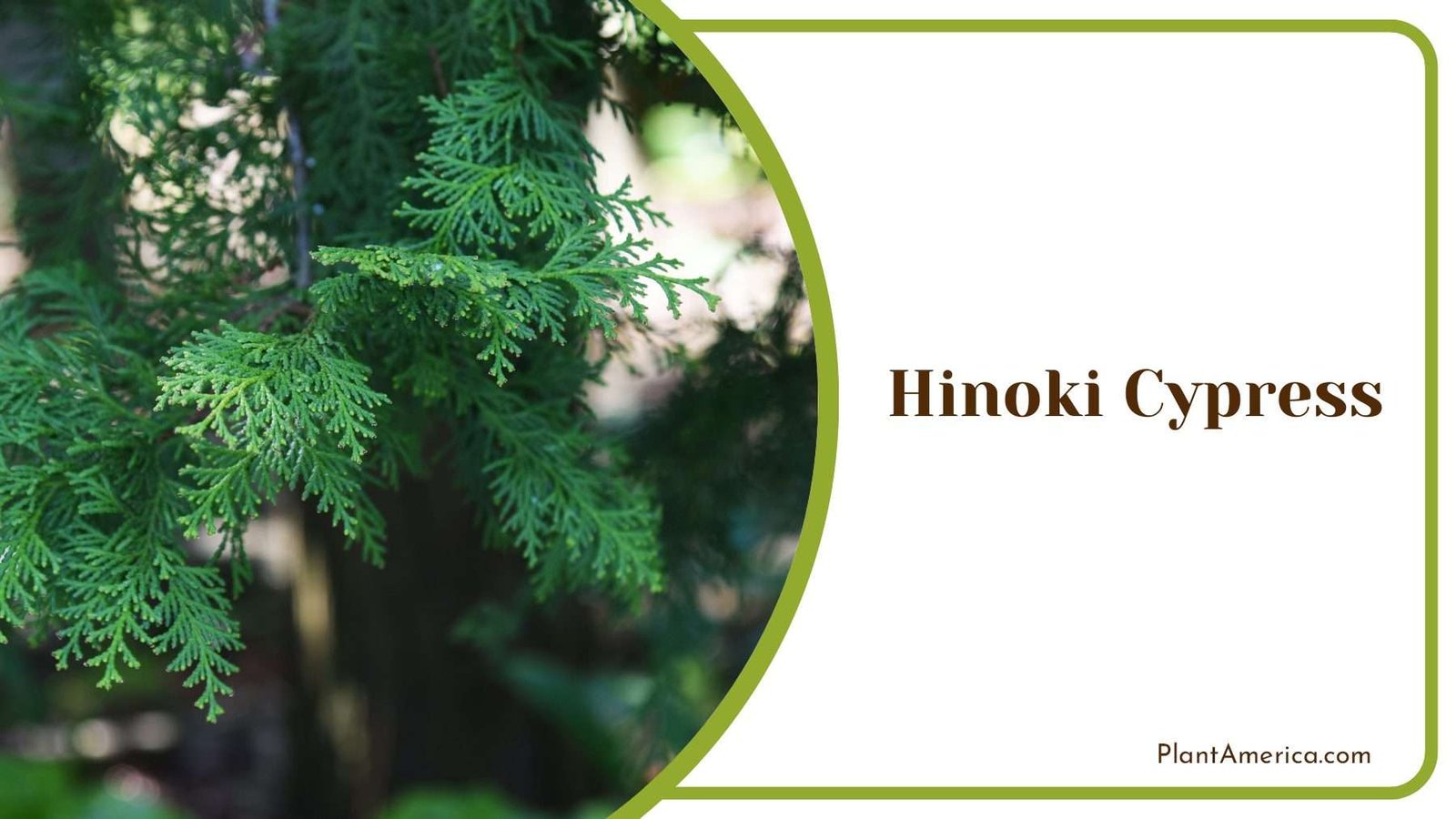
Mature specimens can reach tower over 100 feet tall, spaced across a wide canopy span of 20 to 30 horizontal feet. Thin reddish-brown bark exfoliates in thin musky-scented strips, exposing fresh red-mahogany tones underneath.
Delicate blue-green scale-like foliage tightly sheathes the pendulous lateral branchlets. Male and female cones occur separately on different trees. Female cones are minuscule brownish spheres bearing a pair of winged seeds each.
Adaptable to various soil pH levels, the Hinoki cypress thrives with rich organic content and adequate drainage. It shows tolerance for hot summers while remaining winter hardy to polar temperatures reaching negative 20 degrees Fahrenheit or lower.
The durable, fragrant wood holds intrinsic cultural value in Japanese architecture and art. Resistant to rot and insect infestations, Hinoki wood is prized for interiors of shrines, temples, and sacred spaces. Its contrasting lighter sapwood and darker heartwood create natural beauties invaluable for joinery and crafts.
Ornamentally, the Hinoki cypress lends aesthetic appeal to any garden, bonsai, or Japanese-style landscape through slowly maturing form and subtle blue hues. Its gracefully layered habit composed of tiny persimmon scales allows tranquility even in confinement. Enjoyed for over a millennium in Eastern traditions, this elegant tree remains a model of cultural and natural beauty.
7. Blue Spruce
- Growing season: Evergreen, Seasonal.
- Leaf shape: Needle-like, Narrow.
- Specific needs: Heavy soil, Full sun.
- Common pest: Aphids, Whiteflies.
The blue spruce (Picea pungens ‘Glauca’) is an ornamental cultivar of the Colorado blue spruce, which is native to the Rocky Mountain region of North America. It has soft, silvery-blue needles and a narrow, conical crown when young that becomes irregular and broad with age. The blue spruce can grow up to 80 feet tall and 20 to 25 feet wide at the tree’s maturity. The needles are flat, triangular in cross-section, and range from half to two inches long. 
They are a dull, waxy blue-green color due to a dense covering of wax that contains substances to prevent moisture loss. The cone is three to seven inches long and purplish-brown. The blue spruce prefers moist, well-drained soils and full sun. It is a very hardy tree and can tolerate temperatures as low as -40 degrees Fahrenheit. This spruce cultivar grows moderately fast, though the growth rate declines with age.
The blue spruce is valued as an ornamental conifer for its distinctive coloration and upright, symmetrical crown when young. The soft blue hues of the foliage give the tree a graceful appearance. It is commonly used as a landscape specimen plant, screen, or windbreak due to its longevity and adaptability to varied conditions. The blue spruce remains needle-free only for a short time in the fall during needle drop before new growth appears in spring.
8. Blue Arrow
- Growing season: Evergreen, Grows year round.
- Leaf shape: Scale-like, Linear.
- Specific needs: Well-drained soil, Full sun.
- Common pest: Aphids, Spider Mites.
The cultivar juniper ‘Blue Arrow’ forms an elegant narrow column or spire-like silhouette, growing at an extremely slow pace. Mature specimens reach between 15 to 20 feet tall while maintaining a trim crown width of only 3 to 4 horizontal feet, resembling a tall, slender arrow in structure from a distance.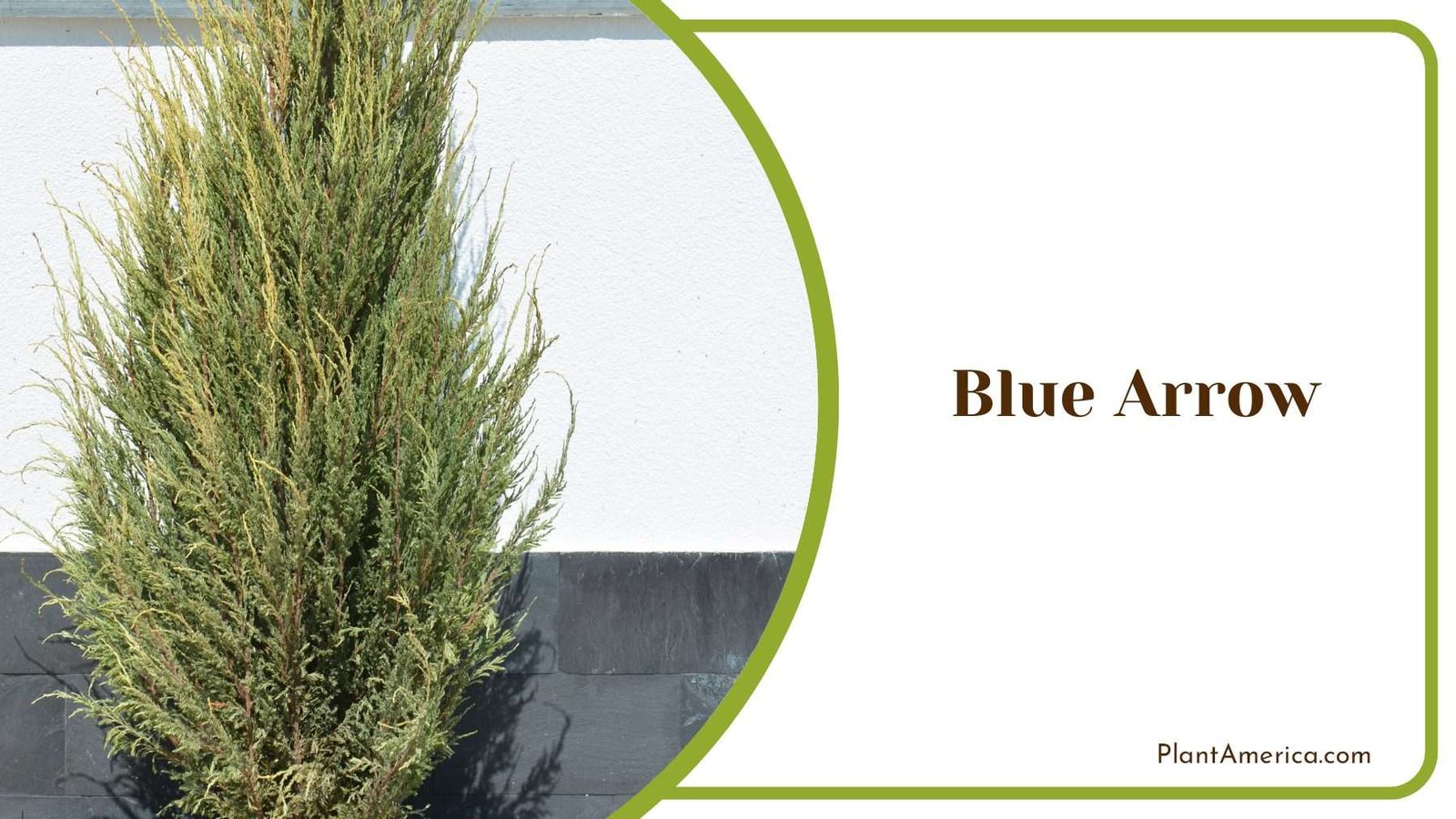
Arranged densely along the upright branches are small needle-like evergreen leaves colored in a distinctly powdery blue-green hue. This distinctive coloration comes from a thick wax coating that protects the foliage. Brightest in spring and summer, the blue coloration lightens slightly but persists all winter long.
Very tiny fleshy brown cones no more than a few millimeters in size cluster along the branch tips, each cone containing a single seed. Well-draining soil in full sun suits this cold hardy cultivar perfectly, allowing it to maintain foliage color and growth pattern year-round in even harsh urban conditions.
Adaptable to varied soil chemistry, ‘Blue Arrow’ thrives with little input once established. Its blue shading and narrow shape give this juniper a unique arrow-like quality, justifying its name. Living up to running “true” in form, very little pruning is needed aside from occasional light shaping.
Matched to appropriately sunny, open areas with sufficient room above and around, the elegant Blue Arrow juniper functions beautifully as a tall slender privacy hedge, background accent plant, or foreground lending sculptural blue hues. Always appearing neatly pyramidal, it requires minimal care long-term yet provides bold impact through seasons.
Perfect for those craving year-round color and structure in smaller spaces, this juniper’s reliability and narrow column habit make it an excellent low-maintenance landscape choice conveying an arrow’s aim skyward.
9. Juniperus Scopulorum ‘Moonglow’
- Growing season: Evergreen, Grows year round.
- Leaf shape: Scale-like, Linear.
- Specific needs: Well-drained soil, Full sun.
- Common pest: Aphids, Spider Mites.
The Moonglow Juniper (Juniperus scopulorum ‘Moonglow’) is a narrow, columnar cultivar of the common juniper species. It has an upright, spire-like form that grows taller than it spreads. Moonglow Juniper can reach heights of 30 to 40 feet tall but remains only five to eight feet wide even at maturity. The foliage consists of small, needle-like leaves that are blue-gray in color due to a dense wax coating. 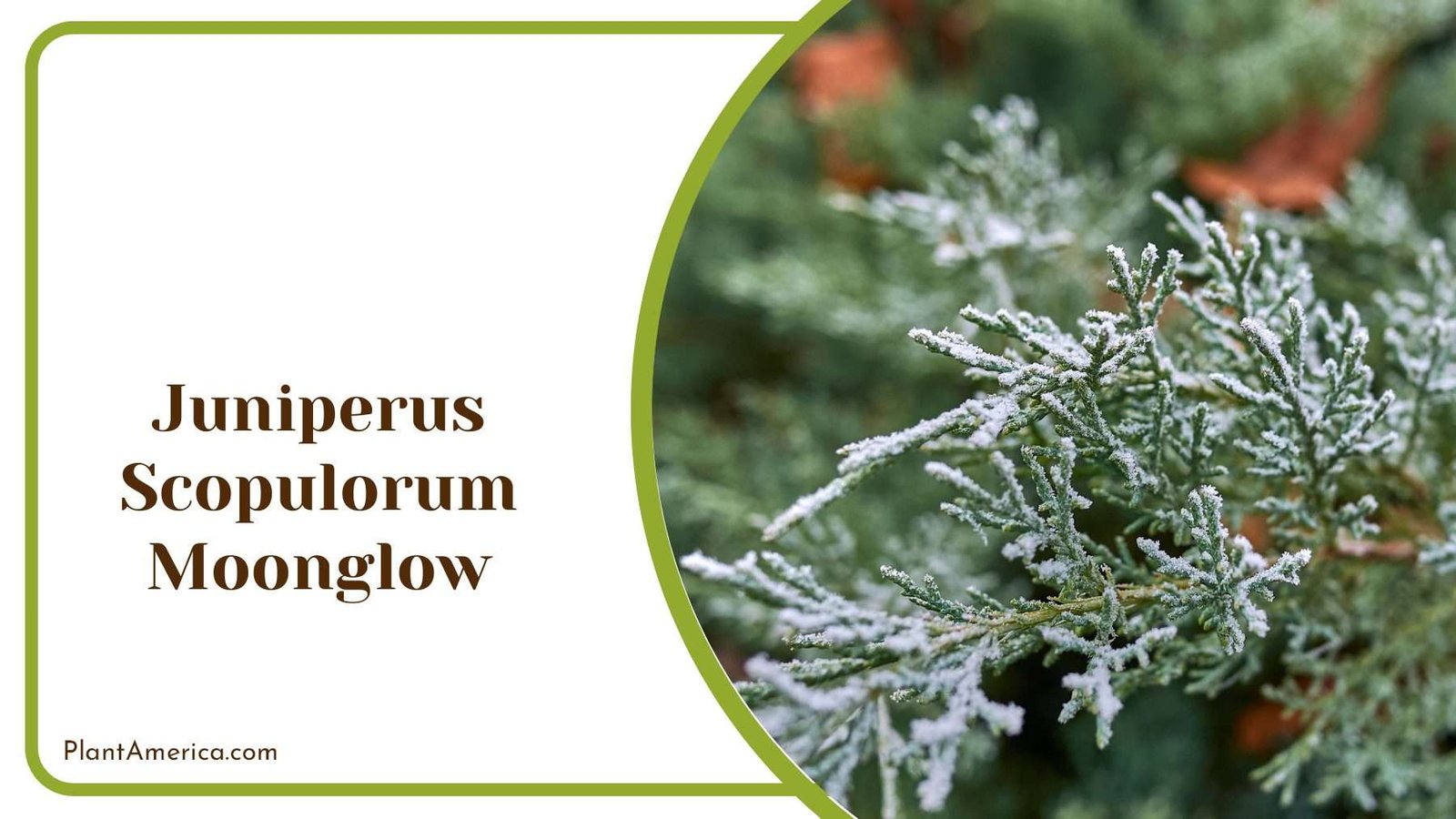
The coloration tends to be brightest in spring and summer and fades slightly in winter. The narrow, pillar-like structure and blue-gray foliage give this juniper its “skyrocket” name. Moonglow Juniper produces small, round, brownish cones that contain one or two seeds. This juniper cultivar prefers full sun and well-drained soil. Moonglow is very drought tolerant once established and can withstand cold temperatures as low as -30 degrees Fahrenheit.
Moonglow Juniper makes an attractive accent plant for larger spaces due to its upright, columnar growth habit. It requires little pruning aside from the occasional shaping and thinning of lower branches to maintain its spire-like form. The blue-gray color provides year-round visual interest and the narrow structure gives a sense of height and formality to landscapes.
10. Pencil Point Juniper
- Growing season: Evergreen, Grows year round.
- Leaf shape: Scale-like, Linear.
- Specific needs: Well-drained soil, Full sun.
- Common pest: Aphids, Spider Mites.
The Pencil Point Juniper (Juniperus procumbens ‘Nana’) is a dwarf cultivar of the juniper species with a very narrow, columnar growth habit. It forms a dense, upright column that grows taller than it spreads. The Pencil Point Juniper typically reaches two to three feet tall and only one to two feet wide at maturity. The foliage consists of small, imbricate scale leaves that are grayish green to bluish green in color due to a dense, waxy coating. 
The coloration tends to be brightest in spring and summer and fades slightly in winter. The narrow, slender structure and blue-green foliage give this juniper its “pencil point” name. The Pencil Point Juniper produces small, round, brownish berries that contain one or two seeds. This juniper cultivar prefers full sun and well-drained soil. It is very drought and cold-tolerant once established.
The Pencil Point Juniper makes an attractive, compact accent plant for small gardens due to its narrow, columnar growth habit. It requires little pruning aside from occasional shaping and thinning of lower branches. The blue-green color provides year-round visual interest and the slender structure offers a sense of vertical formality. The slow growth rate and small, dense size make this juniper cultivar suitable for growing in containers as well as in the landscape.
11. Dwarf Italian Cypress
- Growing season: Evergreen, Grows year round.
- Leaf shape: Scale-like, Linear.
- Specific needs: Well-drained soil, Full sun.
- Common pest: Aphids, Spider Mites.
The Dwarf Italian Cypress (Cupressus sempervirens ‘Stricta’), also known as the Green Pencil Cypress, is a compact, columnar cultivar of the Mediterranean cypress species. It has a narrow, upright form and grows much slower than the typical Italian cypress. The Dwarf Italian Cypress matures at around 10 to 15 feet tall and only three to five feet wide, giving it an almost pencil-like structure. 
The foliage consists of small, dark green scale leaves that are tightly arranged along the slender branches. The leaves have a distinct fragrance when crushed. This cypress cultivar produces small, brown cones that are less than one inch long and contain winged seeds. The Dwarf Italian Cypress prefers warm, Mediterranean-like climates and well-drained soil. It is very tolerant of heat, drought, and urban conditions once established.
This compact cypress cultivar grows slowly with minimal care and pruning requirements aside from occasional shaping to maintain its narrow form. The dense, evergreen foliage and upright, columnar structure make the Dwarf Italian Cypress an attractive accent plant for smaller gardens and containers.
The narrow stature and dark green color provide year-round visual interest and a sense of structure and formality. Due to its slow growth rate, the Dwarf Italian Cypress remains a manageable size for most landscapes.
12. Emerald Green Arborvitae
- Growing season: Evergreen, Grows year round.
- Leaf shape: Scale-like, Linear.
- Specific needs: Well-drained soil, Full sun.
- Common pest: Aphids, Spider Mites.
The Emerald Green Arborvitae (Thuja occidentalis ‘Emerald’) is a compact, columnar cultivar of the eastern white cedar species. It has a narrow, upright form with densely packed foliage. The Emerald Green Arborvitae grows slowly to a height of 15 to 20 feet tall but remains only three to four feet wide, forming a perfect column or spindle shape. The foliage is bright green in color year-round due to the dense wax coating on the scale-like leaves. 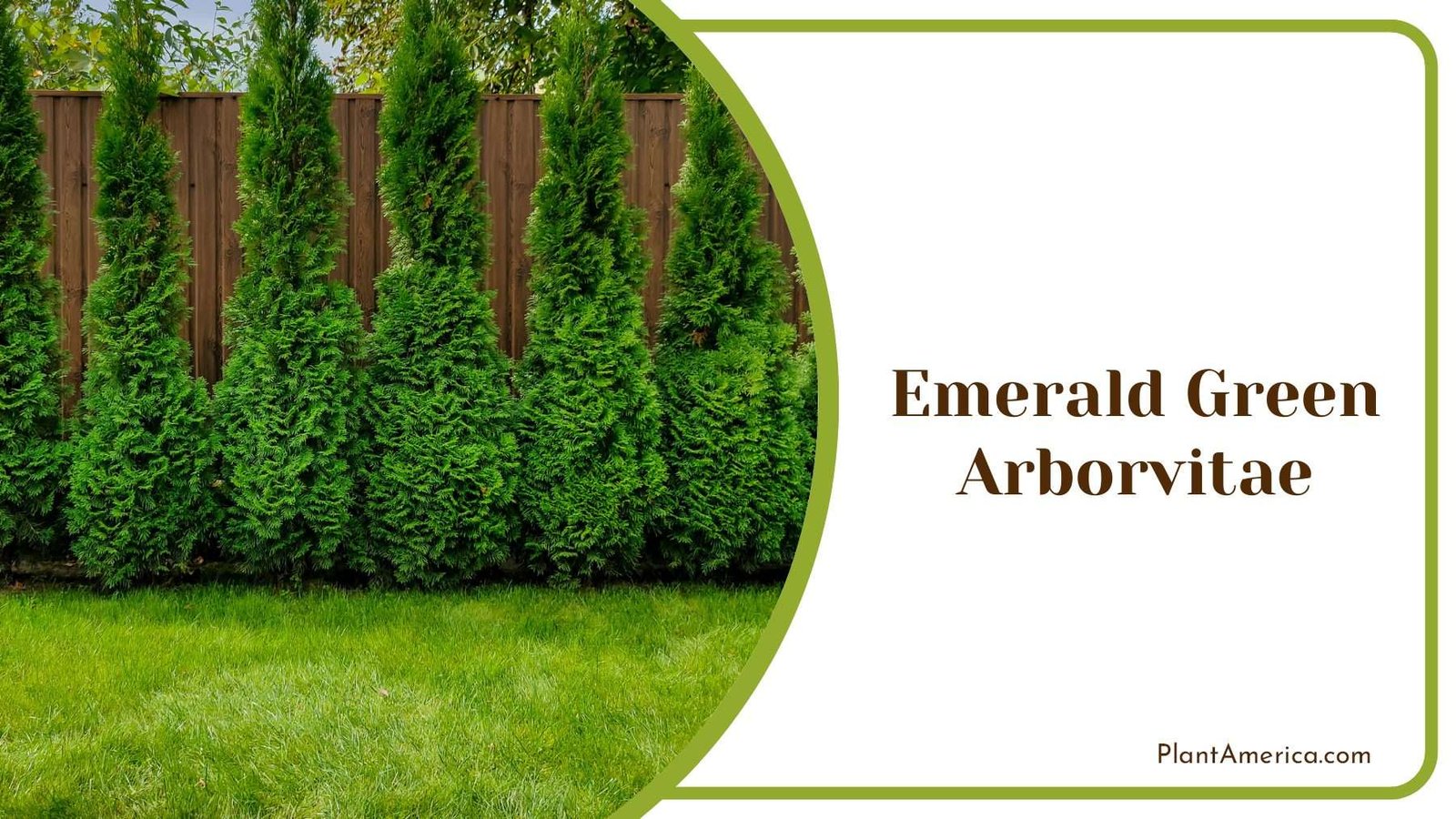
The leathery leaves are arranged in flat sprays or fans on the branches. This arborvitae cultivar produces small, reddish-brown cones that are less than a half-inch long. The Emerald Green Arborvitae prefers full sun but can tolerate partial shade. It grows best in moist, well-drained soil with average pH. This columnar arborvitae is very hardy and tolerant of cold temperatures, urban conditions, and salt spray.
The narrow, columnar form and deep green color make the Emerald Green Arborvitae an attractive accent plant for smaller spaces. The dense, evergreen foliage provides structure and year-round visual interest while requiring little maintenance aside from periodic shaping. The low, compact size also makes this arborvitae suitable for growing in pots and containers.
13. Threadleaf Japanese Yew
- Growing season: Evergreen, Grows year round.
- Leaf shape: Needle-like, Narrow.
- Specific needs: Acidic soil, Full sun.
- Common pest: Aphids, Spider Mites.
The Threadleaf Japanese Yew (Taxus cuspidata ‘Capitata’) is a columnar cultivar of the Japanese yew tree species. It has a narrow, upright form with densely packed, thread-like foliage. The Threadleaf Japanese Yew grows slowly to a height between 10 to 15 feet tall but remains only two to three feet wide, forming a slender column shape. 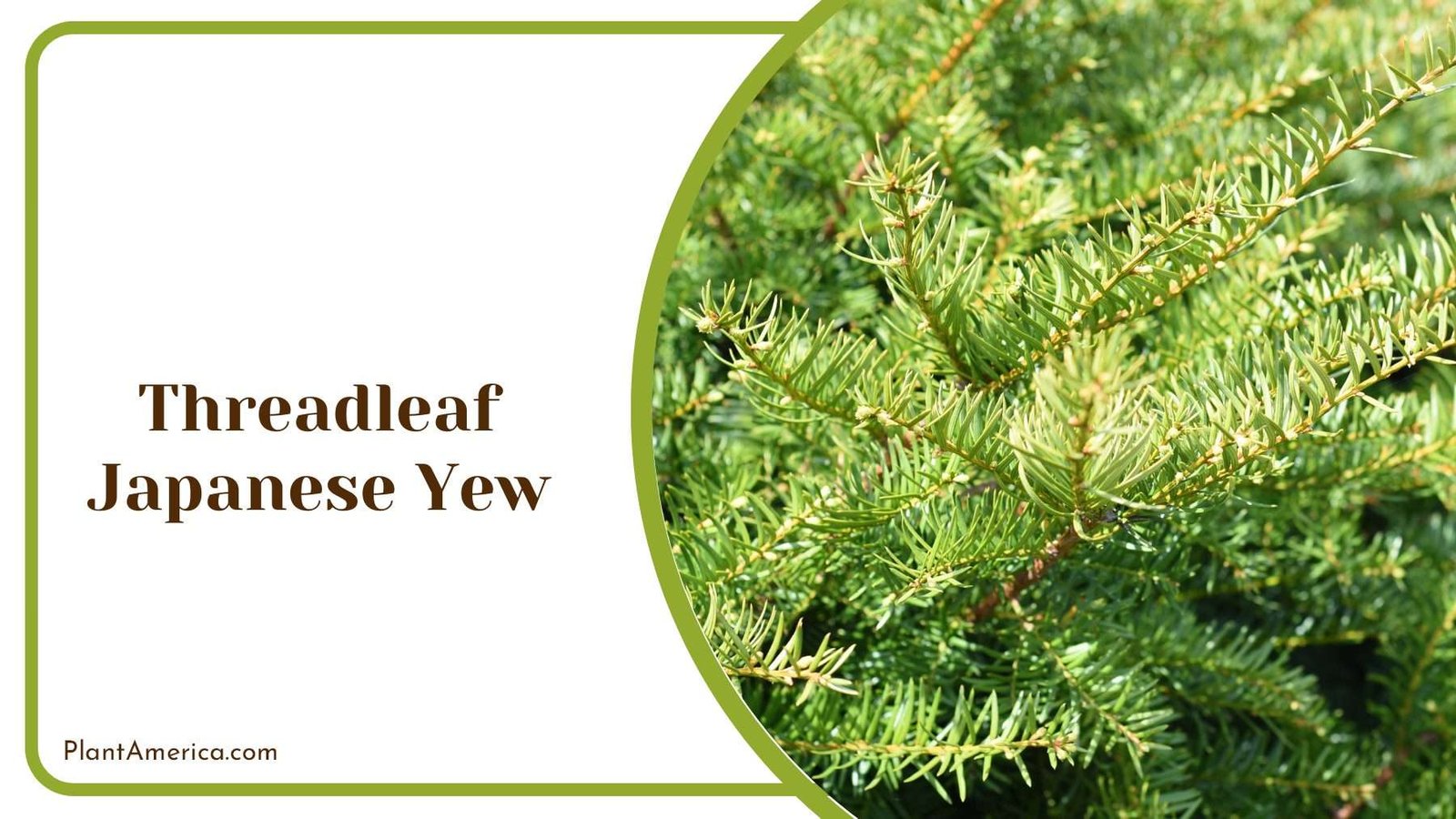
The foliage consists of very narrow, dark green leaves that are needle-like in appearance. Red berries containing the seed are produced but usually go unnoticed due to the plant’s small size. This yew cultivar prefers partial shade and moist, well-drained soil. It is extremely cold hardy and can be tolerant of urban conditions.
The Threadleaf Japanese Yew grows slowly and requires minimal pruning aside from occasional shaping to maintain its columnar form. The dense, evergreen foliage and upright, spindle-like structure make this yew an attractive accent plant for smaller gardens and containers.
The narrow stature and fine-textured foliage provide year-round visual interest and a sense of formal structure. Due to its slow growth rate and small stature, the Threadleaf Japanese Yew remains a manageable size for most landscapes where space is limited.
14. Widdringtonia Whytei
- Growing season: Evergreen, Grows year round.
- Leaf shape: Needle-like, Narrow.
- Specific needs: Loamy soil, Full sun.
- Common pest: Aphids, Spider Mites.
Widdringtonia whytei, also known as Cape claret bush or Southern African cypress, is an evergreen coniferous tree native to South Africa. It has a narrow, columnar form when young that becomes more broad and rounded with age. Widdringtonia whytei can grow up to 50 feet tall and even 15 to 30 feet wide at maturity. The bark is dark red-brown and scaly. The foliage consists of short, green needle-like leaves that are arranged in spirals along the twigs.
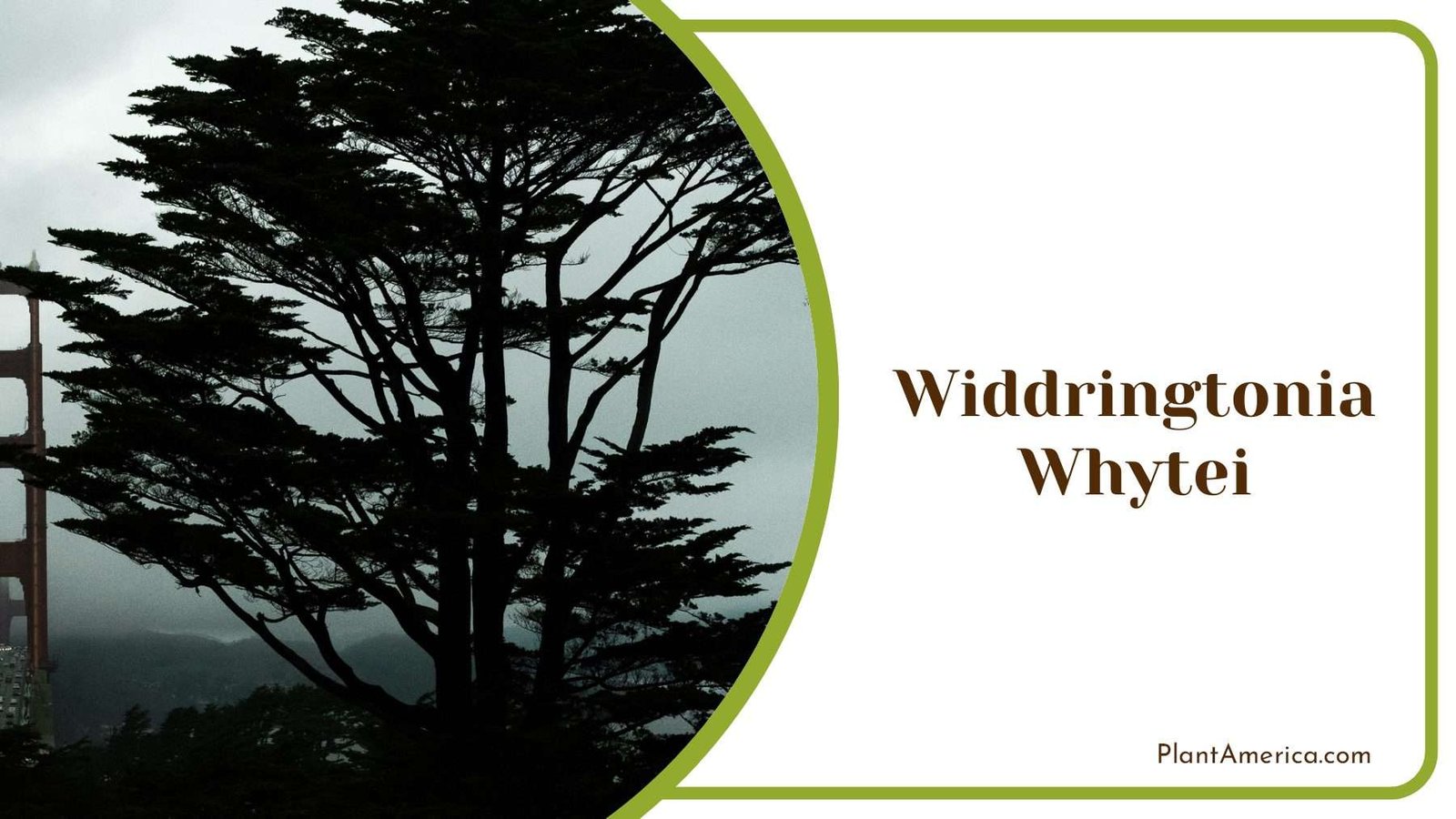 Male and female cones are both borne on separate trees. The female cones are small, oval, and purple-colored, containing one or two winged seeds. Widdringtonia whytei prefers hot, dry conditions and well-drained acid soil. It is drought tolerant once established. This tree grows relatively slowly.
The bright red bark, evergreen foliage, and narrow form make Widdringtonia whytei an attractive ornamental tree, especially when young. It is valued for its drought tolerance and suitability for hot, dry climates. The wood is hard, durable, and insect resistant, making it useful for construction and carving.
Widdringtonia whytei is considered an important component of the indigenous Afromontane forest ecosystem in South Africa due to its role in providing food and habitat for birds and small mammals.
15. Golden Thread Cypress
- Growing season: Evergreen, Grows year round.
- Leaf shape: Needle-like, Narrow.
- Specific needs: Well-drained soil, Full sun.
- Common pest: Aphids, Spider Mites.
The Golden Thread Cypress (Cupressus dupreziana) is an evergreen coniferous tree native to Algeria and Tunisia in North Africa. It has a narrow, columnar form with pendulous branchlets. The Golden Thread Cypress typically grows 30 to 50 feet tall and 10 to 20 feet wide at maturity. The foliage consists of small, thread-like needles that are bright golden-yellow in color, giving the tree its common name. 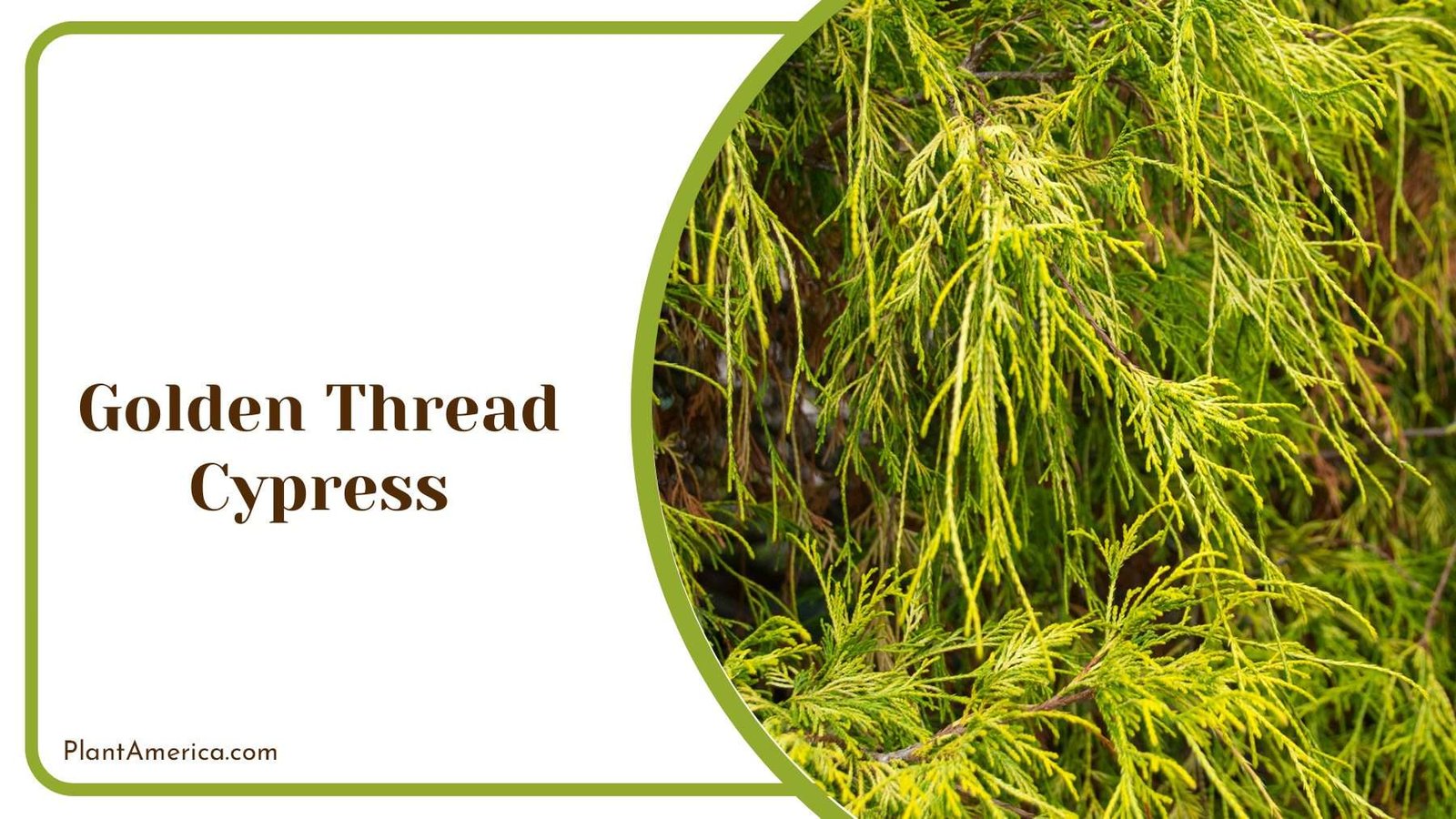
The gold color of the foliage is most vivid in spring and summer but fades slightly in winter. This cypress prefers hot, dry climates and well-drained alkaline soil. It is very tolerant of drought, high temperatures, and salt spray. The Golden Thread Cypress grows relatively slowly. The thread-like, golden needles and narrow form make this an ornamental tree, providing year-round color and contrast in the landscape.
The Golden Thread Cypress is versatile, thriving in containers, large gardens, and mass plantings for a dramatic effect. It is valuable for its tolerance of urban conditions and ability to withstand neglect once established. The soft, golden foliage offers a delicate texture, contrasting with other plants in the landscape.
16. Leyland Cypress
- Growing season: Evergreen, Grows year round.
- Leaf shape: Scale-like, Linear.
- Specific needs: Well-drained soil, Full sun.
- Common pest: Aphids, Spider Mites.
The Leyland cypress (× Cuprocyparis leylandii) is a fast-growing, hybrid conifer cultivated as an ornamental and screening tree. It is a manmade hybrid of the Monterey cypress and Nootka cypress. The Leyland cypress has a narrow, columnar habit when young that becomes broad and irregular with age. Mature trees can reach heights of 80 feet tall and spread 30 feet wide. 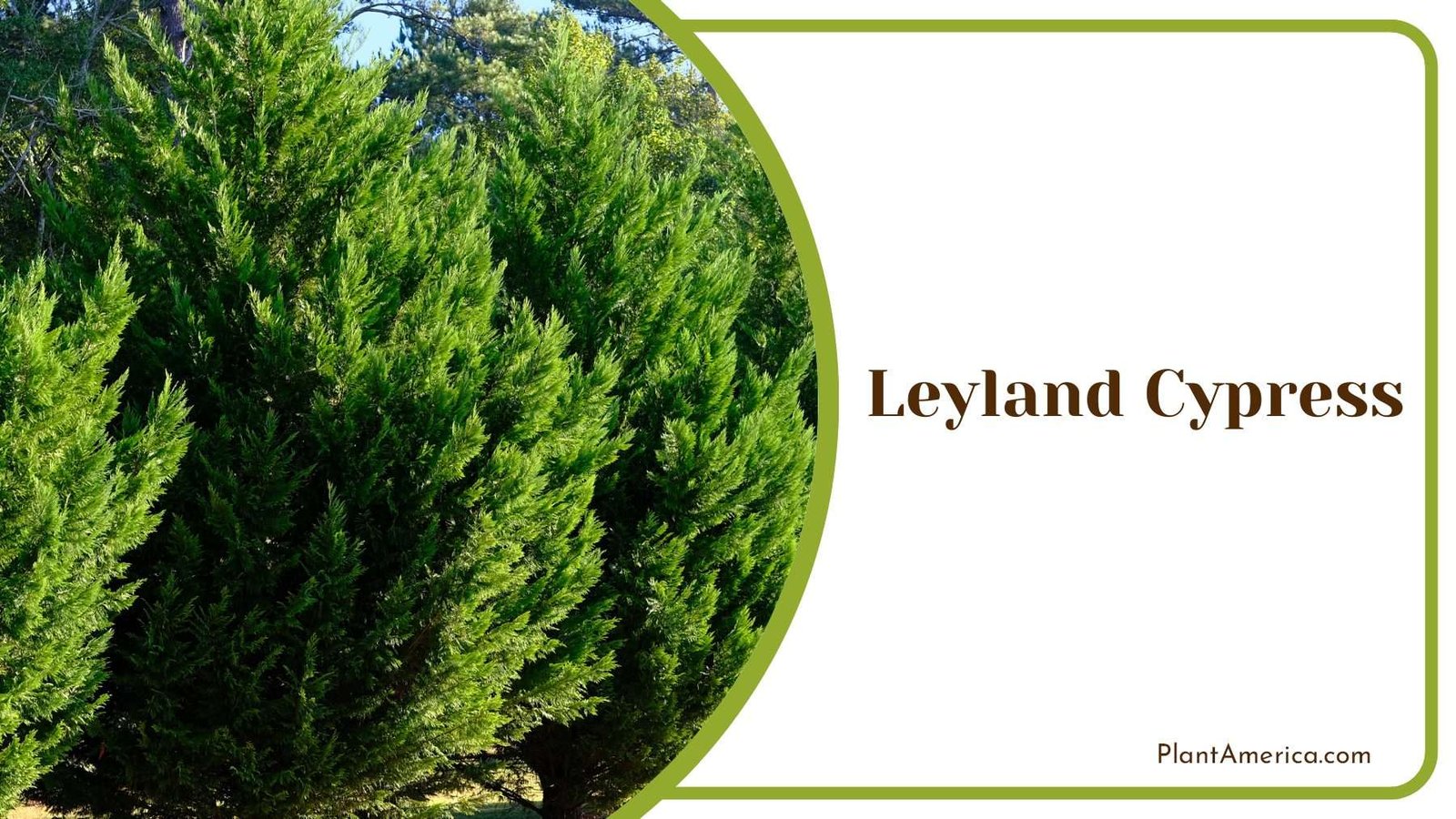
The foliage consists of small, scale-like leaves that are olive-green to grayish-green in color and arranged in spiral patterns. The Leyland cypress produces very small, unnoticeable cones. This cypress prefers full sun and average, well-drained soil. It is hardy and adaptable, tolerating a wide range of conditions. The Leyland cypress grows very quickly, up to three feet or more per year, forming dense thickets easily.
Due to its fast growth and evergreen foliage, the Leyland cypress is popular as a privacy screen, windbreak, and hedge. When pruned and shaped, it can also be used as an ornamental specimen tree. However, the Leyland cypress has invasive tendencies due to its ability to reproduce by suckering.
It also has a shallow root system that can cause infrastructure damage and be susceptible to wind blow-over. Still, the Leyland cypress remains widely used due to its fast growth rate, tolerance of pruning, and adaptability.
Conclusion
With the right selection, tall, skinny trees can transform unappealing views into spaces of tranquility and escape.
- The Pencil Point Juniper is a dwarf cultivar of the juniper species with a very narrow, columnar growth habit.
- Widdringtonia whytei, also known as Cape claret bush or Southern African cypress, is an evergreen coniferous tree native to South Africa.
- The Threadleaf Japanese Yew is a columnar cultivar of the Japanese yew tree species.
Take the time to choose a tree that matches your space and growing conditions. As you care for and watch your privacy screen grow, you will enjoy the benefits for years to come!