
Rhaphidophora Decursiva of the Araceae family is one of the most sought-after varieties today. This is a scarce plant you won’t often find in nurseries or garden centers.
Even though this Rhaphidophora genus plant grows flowers, it is usually cultivated for the stunning foliage that changes in shape and size as the plant matures. This plant is easy to grow when you make sure it has the perfect conditions.
This guide gives the home gardener all the information necessary to ensure consistent Rhaphidophora Decursiva growth.
How to Care for Rhaphidophora Decursiva
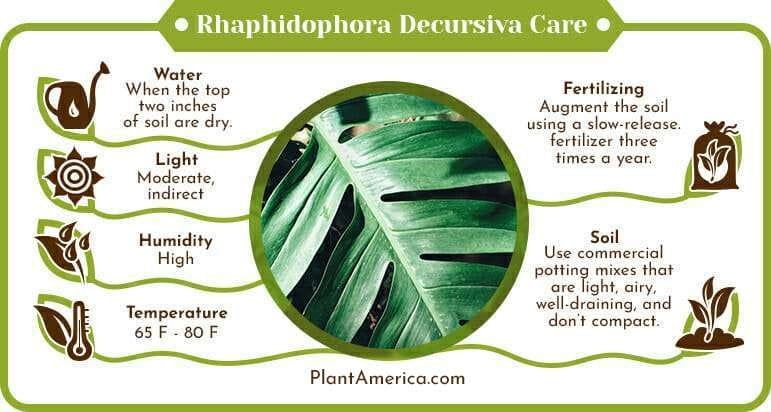
A Rhaphidophora Decursiva plant has specific care requirements. It’s a tropical plant and doesn’t handle cold weather well. These plants are happiest in normal room temperature conditions between 65 and 80 degrees. You will improve the Rhaphidophora Decursiva growth rate by making sure these plants have the optimal conditions.
 Soil Requirements
These tropical plants will grow best in a custom potting mixture. You can use commercial potting mixes that are light, airy, well-draining, and don’t compact. You can also make a mixture of equal parts peat moss, sphagnum moss, perlite, vermiculite, and coconut fiber. This mixture provides a rich growing medium that lets air get to the roots.

You can augment the soil using a slow-release fertilizer three times a year. Rhaphidophora Decursiva fertilizers should have reasonable amounts of phosphorus and nitrogen to improve foliage growth. You should provide fertilizer in the early spring, mid-summer, then at the end of summer. Don’t fertilize in fall or winter.
 Light Requirements
Selecting the correct location for your plant will ensure a faster Rhaphidophora Decursiva growth rate. These plants will grow slower in too bright or too dark conditions. You’ll have the most growth placing these plants in a south-facing window. Rhaphidophora Decursiva plants will grow slower in low-light conditions and won’t produce as large leaves.
Improve growth by using artificial lighting in the spring. You can use LED grow lights to help Rhaphidophora Decursiva get a head start on spring growth. Adding extra light will encourage the plant to grow larger leaves.
 Water Requirements
Correctly watering Rhaphidophora Decursiva lets it multiply. It must develop deep-running roots. You can encourage deep rooting by correctly watering your plant—water when the top two inches of soil are dry. You should add water slowly until the water runs from the drainage holes in the bottom of the pot.
Warmer conditions require more frequent watering, but most of the time, when grown inside, you will be watering Rhaphidophora Decursiva once per week in the summer and infrequently in the fall and winter.
 Humidity Requirements
These plants will grow best when they have plenty of humidity. You can lightly mist the leaves every few days to improve humidity. The best way to get the right humidity level is to place the pot on an evaporative tray of small pebbles and water. Don’t let the pot sit in the water.
– Providing a Climbing Structure
To get the best growth from Rhaphidophora Decursiva plants, you’ll need to provide a structure for it to climb on. A simple wood pole covered in peat moss is ideal for this plant. It will readily climb, which increases the Rhaphidophora Decursiva growth rate. These plants will even climb walls when grown nearby.
Plant Propagation
Propagating Rhaphidophora Decursiva is relatively easy. You can propagate using stem cuttings made in the spring before new growth has begun. You will cut one of the climbing portions of the plant that has at least two aerial roots. Make a clean cut and immediately place the cutting in rooting hormone. Then, place the cutting in the well-moistened potting mixture that’s ideal for growing Rhaphidophora Decursiva plants. Roots will form in about one month.
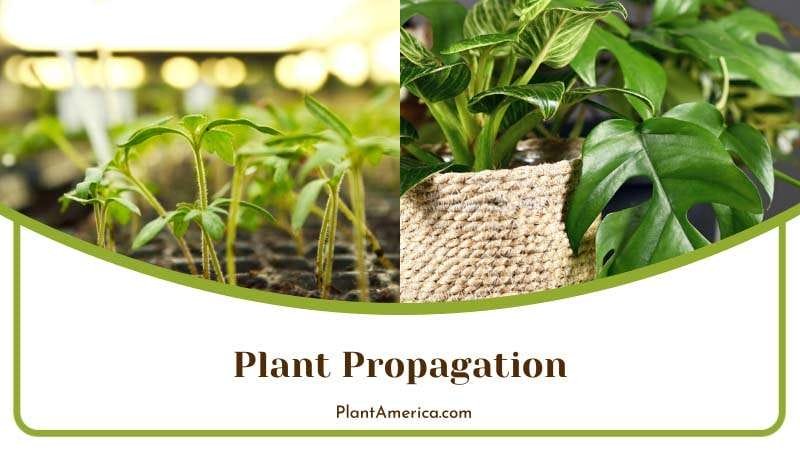
Another way to propagate these plants is to wrap the stem portion showing roots in paper towels. Keep the towels damp, and the roots will grow into the paper. Then you can cut the stem and plant it. You can do the same for both rhaphidophora cryptantha and rhaphidophora tetrasperma plants.
Problems
The Rhaphidophora Decursiva is generally a healthy plant that has few common pests and problems. Sometimes, you may encounter some issues that you will want to attend to at once. Learning to spot the signs of problems will help you avoid them in the future.
- Yellow leaves – The most common cause of yellowing leaves is overwatering Rhaphidophora Decursiva. Make sure the soil dries somewhat between watering. If the soil doesn’t drain well, consider repotting the plant into better draining soil.
- Bleached, brown leaves – This is a sign of a plant that is getting too much sun. Moving the plant into a better location will prevent further damage, but the damaged leaf won’t recover.
- Soft, mushy stems – This is a sign of root rot. Overwatering and poor-draining soil are responsible for causing root rot. You may be able to trim rotted roots from your plant, but it might be a good idea to make a cutting to save the plant.
- Small leaves – If your plant suddenly grows small leaves, it indicates that your plant needs to be repotted.
Common Pests
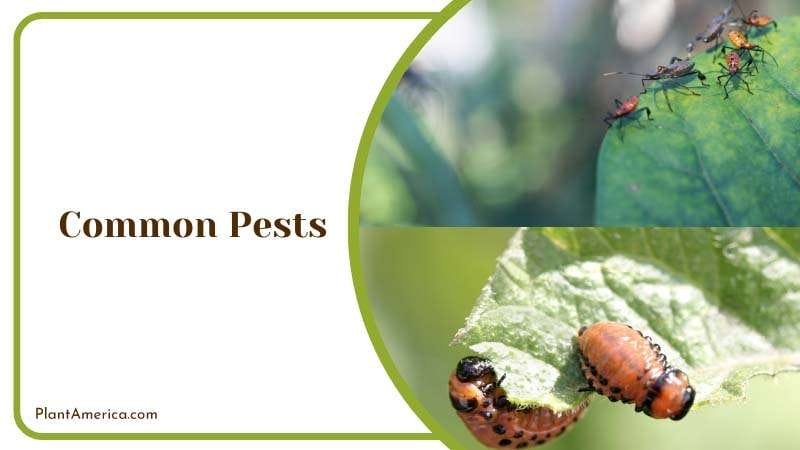
These plants are typically free of pests. The best thing you can do is avoid overwatering your Rhaphidophora Decursiva plant because that encourages destructive pests. Common pests you may find include mealybugs, aphids, and spider mites. Reducing watering will help prevent pest infestation. You can use neem oil, alcohol, or commercial insecticides to eliminate these pests.
It’s a good idea to clean the leaves of your Rhaphidophora Decursiva plant periodically. The best way to do this is to wipe the surfaces of the leaves with a damp towel. It isn’t usually a good idea to shower the leaves, but if you choose to do so, make sure the plant is in a place where the water will quickly evaporate.
When to Repot a Rhaphidophora Decursiva
The Rhaphidophora Decursiva plant will need periodic repotting. You will need to repot Rhaphidophora Decursiva every one to two years. Choose a pot that is two to three inches larger than the old pot. For these plants to get big, they need plenty of room for a deep-running taproot. Make sure that you repot Rhaphidophora Decursiva in an appropriate, well-draining potting mixture.
Final note:
Rhaphidophora Decursiva is a very rare tropical plant that is popular as a houseplant.