
Plants with pink stripes have a touch that will certainly give your spaces a unique pizzazz like no other. These pink-striped plants can be grown in combination with others that are a bit dull so that they add a glow that brightens the space.

However, you need to know the various options that are available so that you can make informed choices. Therefore, this article serves as an information reservoir that is compiled to provide you with expert knowledge about plants with pink stripes.
A List of Plants With Pink Stripes That Can Beautify Your Home
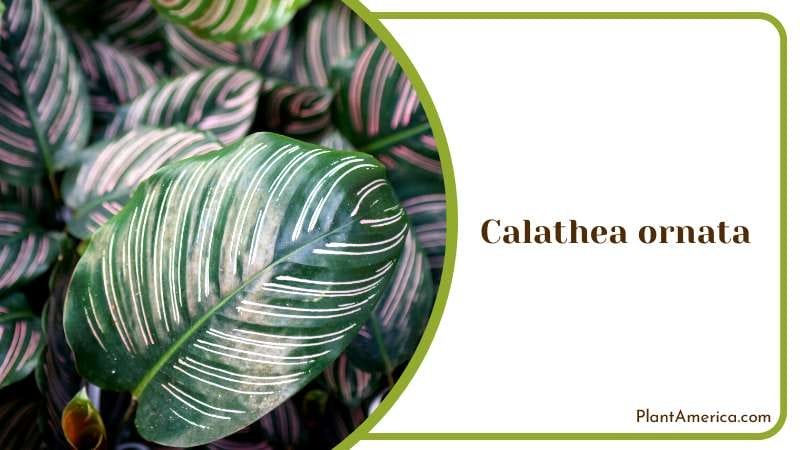
1. Calathea ornata
| Benefits |
|
| Uses |
|
| Distinguishing characteristics |
|
| Care |
|
Also known as the pinstripe Calathea or Calathea pinstripe, the Calathea ornata plant tends to fold its leaves at night when there is no sunlight, and then opens them up during daylight. This characteristic of moving leaves is also exhibited by prayer plants. Please note that this pin-stripe plant is in the Marantaceae family of plants.
2. Tradescantia pallida

| Benefits |
|
| Uses |
|
| Distinguishing characteristics |
|
| Care |
|
This plant, also known as the pink stripe spiderwort, is a member of the Commelinaceae family. Interestingly, the brightness of the colors correlates with the amount of light and water that the plant is exposed to. In essence, the more light and water, the brighter and more vivid the pink color becomes.
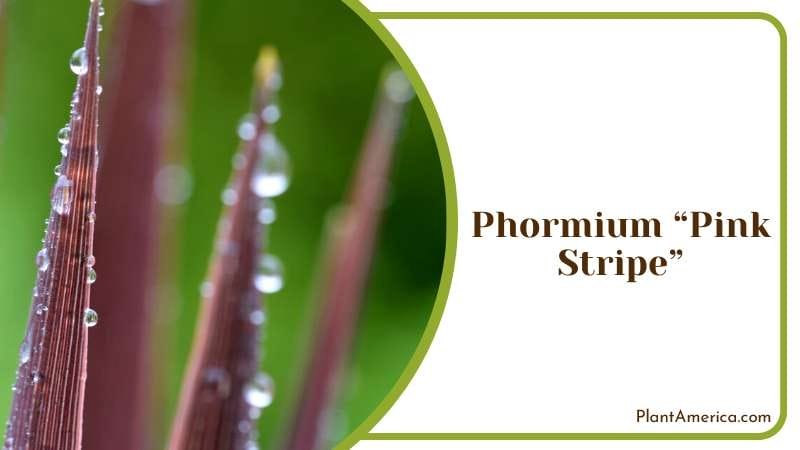
3. Phormium “Pink Stripe”
| Benefits |
|
| Uses |
|
| Distinguishing characteristics |
|
| Care |
|
This plant is also known as the pink stripe New Zealand flax and is classified under the Rosaceae family. The Phormium “pink stripe” has its origins in Eastern North and Central America.
This plant is a point of attraction for birds and butterflies. Therefore, there is a high chance that you will be seeing any of these two should you decide to include this pink-striped plant in your collection.
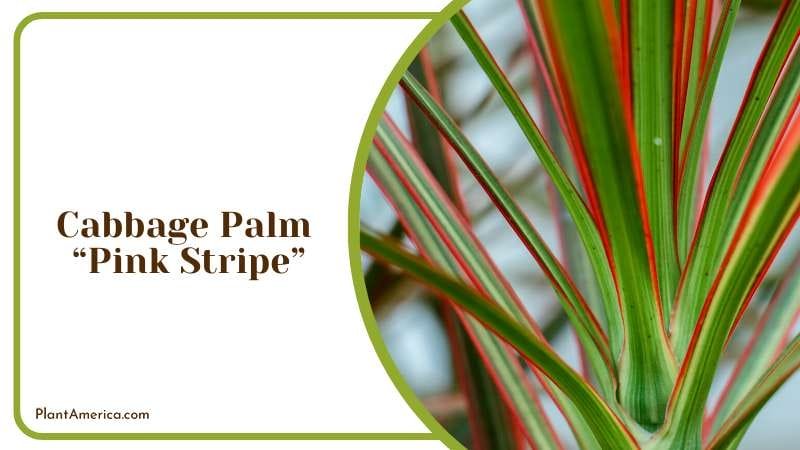
4. Cabbage Palm “Pink Stripe”
| Benefits |
|
| Uses |
|
| Distinguishing characteristics |
|
| Care |
|
The other name for the cabbage palm “pink stripe” is cordyline “pink stripe.” It is an evergreen plant that grows at a slow rate. This cabbage palm has its origins in New Zealand. Please note that this plant is mildly toxic to dogs and cats so be sure to keep it away from your pets.
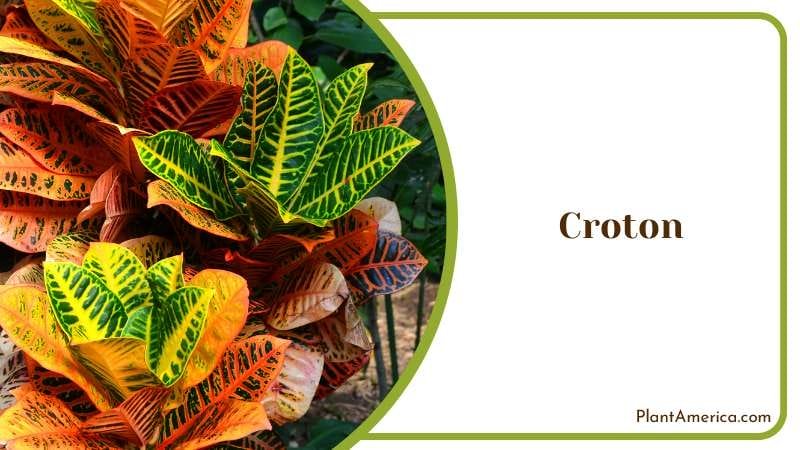
5. Croton
| Benefits |
|
| Uses |
|
| Distinguishing characteristics |
|
| Care |
|
Croton is classified under the Euphorbiaceae family of plants and it’s botanically called Codiaeum variegatum. You may also refer to this plant as the variegated laurel and remember that it is native to the Pacific and Malaysia. Please note that the sap of this plant is poisonous so it can cause skin irritation.
Another interesting fact about this plant is that it loves lots of light because the little chlorophyll that it has reduces the amount that it can absorb at a time, so it maximizes on long-time exposure.
6. Nerve Plant
| Benefits |
|
| Uses |
|
| Distinguishing characteristics |
|
| Care |
|
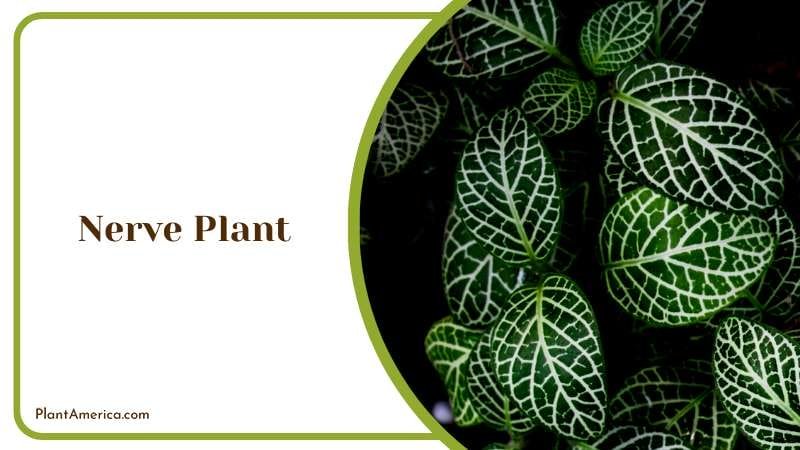
Also known as Fittonia or the Fittonia nerve plant, this beauty is classified as part of the Acanthaceae family. This “Fittonia” part of the plant’s name was derived from the people who discovered it, who are Elizabeth and Sarah May Fitton.
It is referred to as the nerve plant due to the patterns of the pink or white stripes, which tend to resemble the connections between nerve cells in the human body. Here is one take-home point to remember – the fact that the nerve plant loves high levels of humidity does not mean that it loves excessive irrigation, too!