
Plants that start with w are quite many and they exist in different forms so the chances that you will get the ones that match your preferences are quite high.
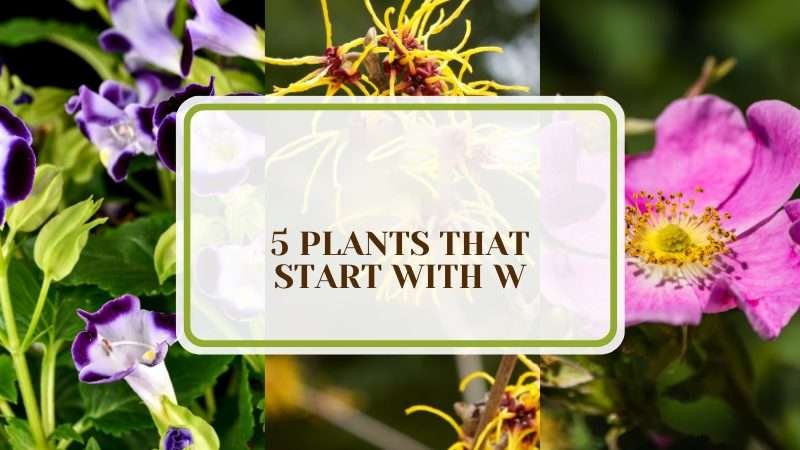
If you would prefer the ones that produce flowers, you will also come across those that are characterized by different colors, shapes, and sizes of blooms. There are also house plants that start with w as much as there are outdoor ones as well.
This article presents to you various plants whose names start with “w.”
Available Options for Plants That Start With W
Some of the plants that you might care to know are the water avens, wax begonia, Weigela florida, wood lily, winter aconite, and water lily of the Nymphaeaceae family. Knowing these plants will make it easier for you to make choices about which plants you can include in your indoor or outdoor garden.
1. Wishbone Flower
| Benefits |
|
| Uses |
|
| Distinguishing characteristics |
|
| Care |
|
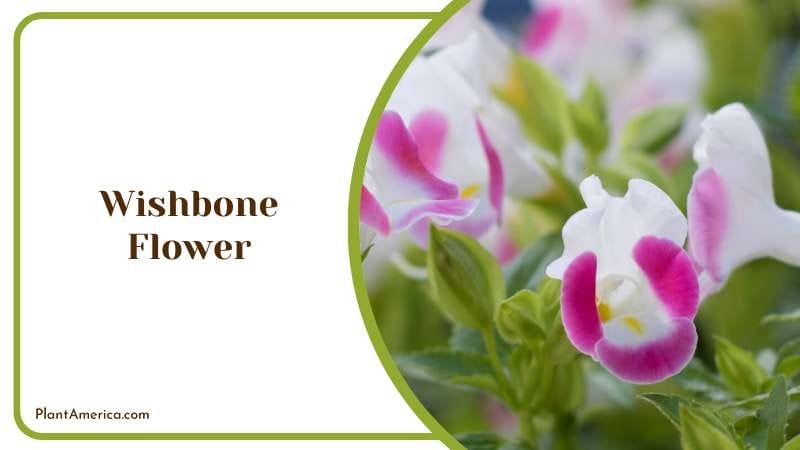
The wishbone flower is also known as the Torenia fournieri. One of the highly unique attributes of this plant is that it blooms very well when grown in spaces that are shady.
Another interesting fact: When the stamens of this plant are pollinated, they tend to break into two halves. This resembles the wishbones of Thanksgiving turkey fame, which is partly the reason why the plant is referred to as the “wishbone flower.”
2. Witch Hazel
| Benefits |
|
| Uses |
|
| Distinguishing characteristics |
|
| Care |
|
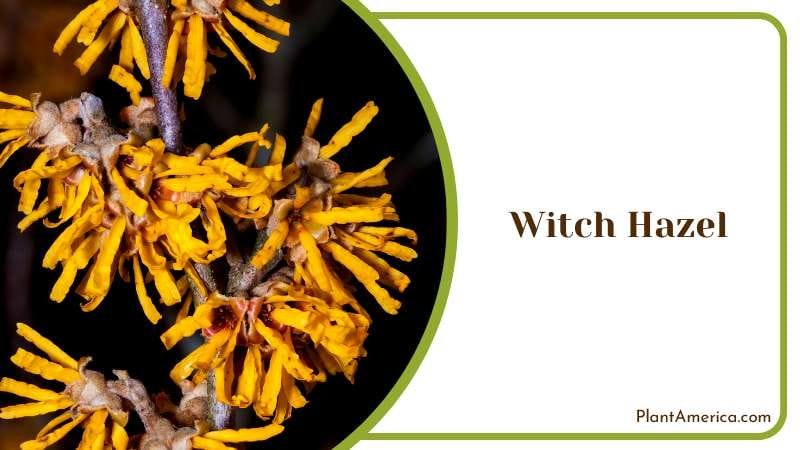
The name “witch hazel” can be quite misleading because it might imply that it is used by witches, which is not really the case. In fact, witch hazel has established a good space in the field of cosmetics and holistic medicine.
This plant is a member of the Hamamelidaceae family and is native to Asia, Europe, and North America. It has other names that refer to it, including the winter bloom, snapping hazel, and magician’s rod.
3. Wild Rose
| Benefits |
|
| Uses |
|
| Distinguishing characteristics |
|
| Care |
|
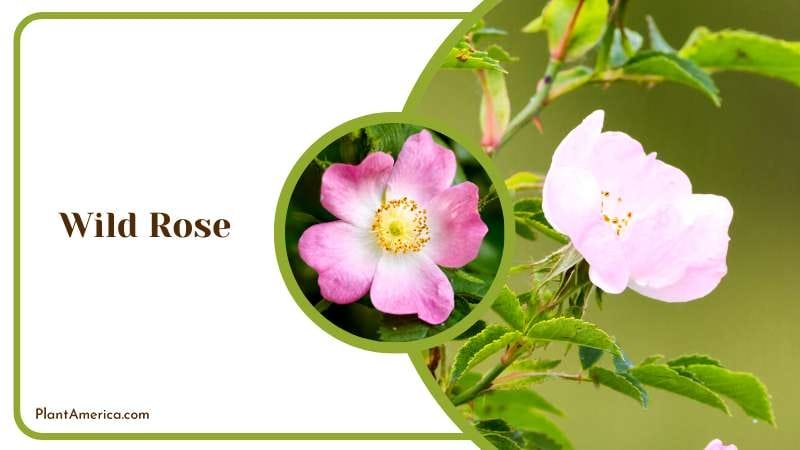
Wild roses are also referred to as “species roses.” These roses have the longest life span, among the other members of their family.
It is also vital to note that there is no way you will ever find a wild rose with more than one petal, otherwise, it would be a product of artificial breeding or cultivation procedures.
Wild roses are believed to be symbolic of unending love and unity that never disappears, not even after death. The Climbing Rose is also a very popular plant that can be used instead of a Wild Rose!
4. Whirling Butterflies

| Benefits |
|
| Uses |
|
| Distinguishing characteristics |
|
| Care |
|
The scientific name of the “whirling butterflies” plant is Gaura lindheimeri. The blooms of this plant can stick around for long periods of time. If you desire more blooms from the whirling butterflies, consider pinching it back, especially as you enter the summer season.
The main disadvantage that is associated with this plant is that the flowering stems are flexible enough to arch so they tend to flop over other plants that are in its vicinity.
5. Wood Anemone
| Benefits |
|
| Uses |
|
| Distinguishing characteristics |
|
| Care |
|
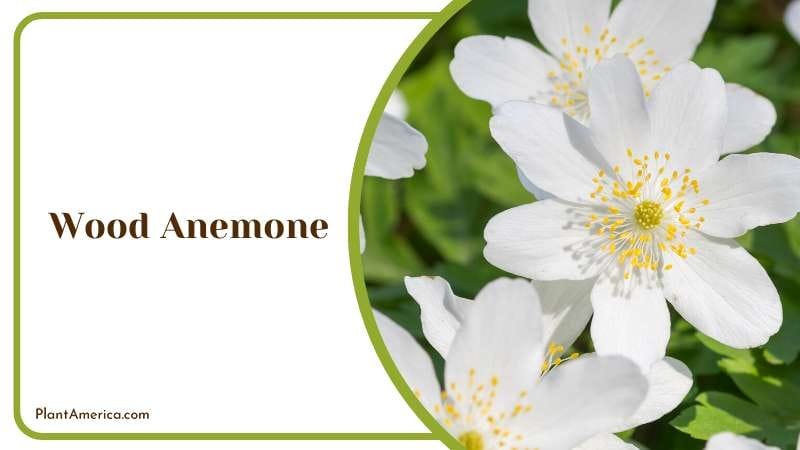
Also known as Anemone nemorosa, the wood anemone is a member of the Ranunculaceae family, which is also called the “buttercup family.” The wood anemone contains a substance called anemonin, which is highly toxic.
The fact that this plant flowers for a short period has led to the belief that the plant is associated with early death. In some European countries, the plant was referred to as the “plant of the devil.”
Final note:
Being a plant enthusiast has never been such fun. With all the variety that is presented by plants that start with w, you should be able to identify plants that speak to the inner you and grow them! Check out the most popular plants starting with “U”.
References
- Gerald Klingaman. (May 5, 2000). Plant of the Week: Wishbone Flower (Summer Wave). The University of Arkansas System Division of Agriculture.
Retrieved from https://www.uaex.uada.edu/yard-garden/resource-library/plant-week/summer-wave.aspx - Shikai Guan, Qian Song, Jinye Zhou, Haixia Yan, Yuxiang Li, Zibin Zhang, Dayan Tao, Shuming Luo, Youqiang Pan. (2021 Jul 5). Genetic analysis and population structure of wild and cultivated wishbone flower ( Torenia fournieri Lind.) lines related to specific floral color. National Library of Medicine.
Retrieved from https://pubmed.ncbi.nlm.nih.gov/34268012/ - Theo de Kok. (2008).Witch Hazel (Hamamelis virginiana) Fractions and the Importance of Gallate Moieties Electron Transfer Capacities in Their Antitumoral Properties.
Retrieved from https://www.academia.edu/24587587/Witch_Hazel_Hamamelis_virginiana_Fractions_and_the_Importance_of_Gallate_Moieties_Electron_Transfer_Capacities_in_Their_Antitumoral_Properties - Sacha llewellyn. (2021). Review of Hornet and Wild Rose; The Art of Tirzah Garwood.
Retrieved from https://www.academia.edu/45146662/Review_of_Hornet_and_Wild_Rose_The_Art_of_Tirzah_Garwood - Soumen Maitra, Pratik Satya, L. C. De. (2016). A Positive Outlook towards the Lesser Known: Wild Rose Brings Hope. ARC.
Retrieved from https://www.arcjournals.org/pdfs/ijarb/v2-i1/4.pdf