
Mealybugs on boxwoods of the Buxaceae family aren’t that likely to happen, although when they do, they pose quite the threat to the appearance of your shrubs!
You’ll likely be dealing with other pests, but you’ll easily recognize them too — mealybugs have a distinct fuzzy white appearance and are similar to psyllids, which will feed on plant sap. That’s why dealing with one kind of insect is similar to dealing with the other — let’s see how to do it efficiently!
How To Recognize Mealybug Activity on Boxwood
To recognize mealybug activity on boxwoods, take note of signs of distress in the plant, including diminished vitality, leaves turning yellow, and leaf deformities. The presence of these pests often prompts affected boxwood shrubs to shed their leaves, which will affect their appearance.
There are several types of boxwood pests that you’ll most likely encounter. From boxwood leafminers to boxwood spider mites and laces, boxwood psyllids and mealybugs stand as the most troublesome pests. And although they won’t be life-threatening to the plants, they certainly won’t leave them pretty.
Mealybugs are notorious for the cottony secretion they leave behind. Despite their classification within the scale insect family, they differ by lacking a protective outer shell. These insect pests can be found thriving all over the globe, largely due to their astonishing ability to endure icy-cold temperatures. During the warmer months, mealybugs lay eggs, leading to fast, full-scale plant invasions.
Beyond the direct damage they cause, mealybugs also secrete a sticky substance and introduce quite a few diseases. With boxwoods, the most prominent are sooty molds and boxwood blight! Fortunately, mealybugs aren’t the tidiest of creatures, and it’s these signs that will leave them exposed early on, so let’s break them down.
– White Growth
When mealybugs infest boxwood, they tend to establish colonies on various parts of the plant, encompassing boxwood leaves, stems, and even the foliage itself. They manifest as soft, fluffy masses, resembling small patches of white or light-colored fluff. The composition of this cottony substance comprises waxy secretions exuded by the mealybugs. This peculiar formation serves a dual purpose — functioning as a protective barrier for the insects against external elements and potential predators, all while facilitating their consumption of the plant’s sap.
These formations might sometimes be mistaken for another mold-related issue. However, it’s of utmost importance to meticulously examine them up close to discern whether any of the telltale signs of the troublesome mealybugs are visibly present.
– Sticky Residue
Gardeners often identify the existence of mealybugs on boxwood trees through the presence of a sticky residue. This substance, commonly referred to as honeydew, is the residual secretion resulting from the mealybugs’ consumption of plant sap. The appearance of shiny or sticky patches on the foliage can serve as a telltale sign that these pests are actively feeding on your boxwood.
Mealybugs exhibit a tendency to conceal themselves on the undersides of leaves, deliberately avoiding easy detection. To unveil their presence, it’s essential to gently turn over the leaves and carefully inspect these concealed areas.
– Molds and Diseases
Sooty mold represents a type of fungus that thrives in the presence of honeydew, which provides an ideal substrate for the mold to cling to, grow upon, and eventually envelop the surfaces of leaves, and branches of boxwood trees.
Resembling the appearance of powdery mildew, this fungal disease manifests as a layer of black or dark gray covering various parts of the boxwood, including its leaves. Sometimes, this coating can be mistaken for dirt or grime, further underscoring the importance of accurate identification.
Swiftly detecting the presence of sooty mold can enable you to address the root cause (often an underlying mealybug infestation) before it escalates into a more severe problem.
– Ant Activity
Ants have a notable affinity for honeydew, and intriguingly, they can assume the role of “farmers” when it comes to mealybugs. They’re known to safeguard these tiny insects from potential predators and other threats, ensuring a continuous supply of this nutrient-rich substance.
Keep a watchful eye for the movement of ants in organized lines or trails across your boxwood plant. These visible paths can often lead you directly to the source of their interest, which is typically the mealybugs producing honeydew.
To deter ant activity, it’s wise to assess any branches that come into contact with neighboring plants or structures, which ants could use as bridges to reach the boxwood tree. An additional tactic involves placing sticky barriers or using ant-repelling substances around the tree’s base, which can effectively highlight any heightened ant presence.
By addressing the mealybug population, you can disrupt the production of honeydew, thereby diminishing the incentive for ants to gather. This approach aids in breaking this symbiotic relationship.
How To Get Rid of Mealybugs on Boxwood
To get rid of mealybugs on your boxwood and prevent their spread to other plants within your home or garden, you should act as soon as you discover the mealybug attack. Use an insect-repellant spray, introduce predator insects, use dish soap, or spray them with a hose.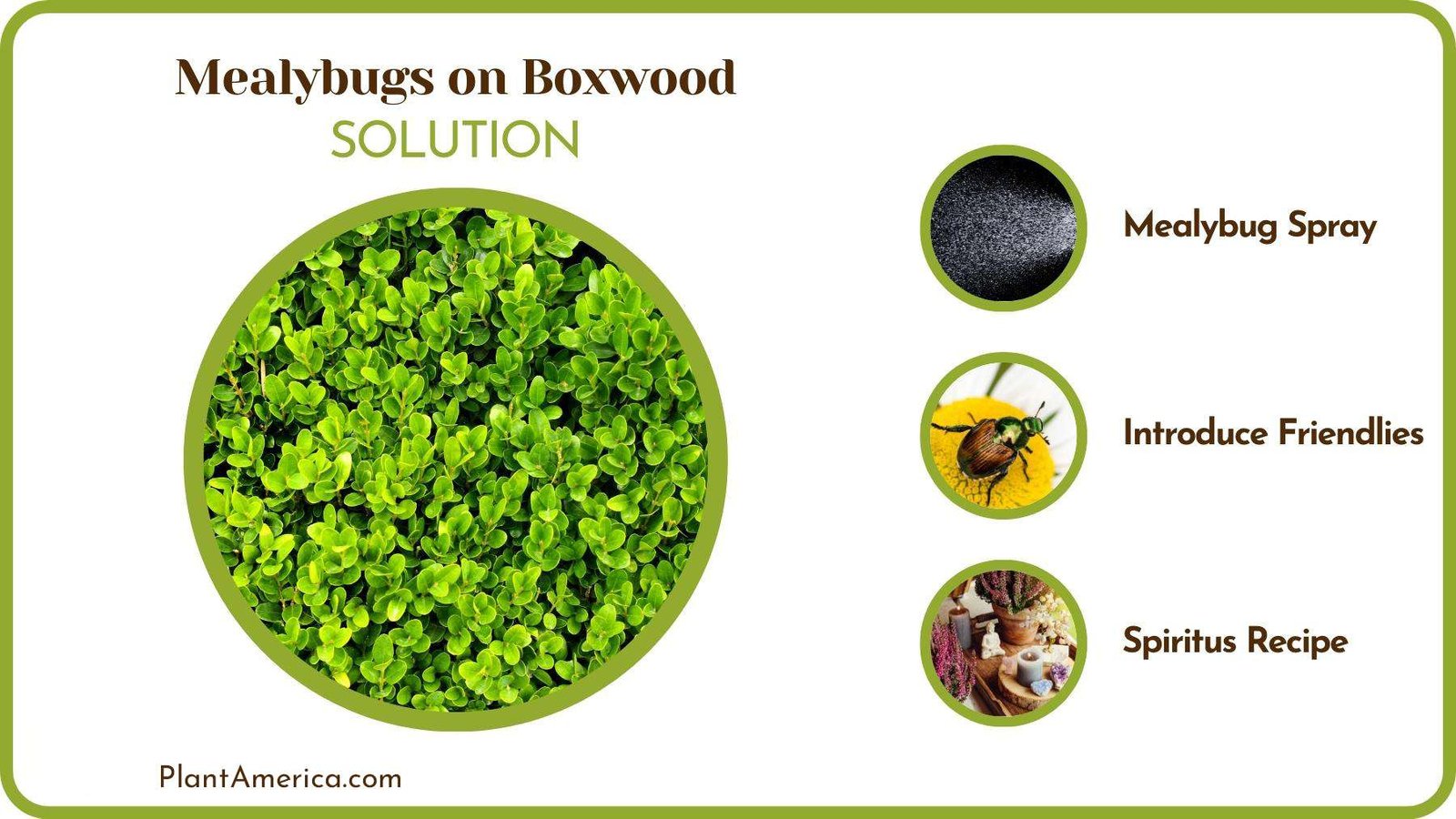
Let’s see what some of the most effective options for your battle plan are!
– Mealybug Spray
You can easily find specialized sprays in the market or opt for concentrated solutions that you can prepare at home. When using a store-bought spray, remember to follow the provided instructions that should come with the product. Next, it’s only a matter of mixing up a solution and applying your spray. Some sprays will already come pre-made, so you only have to go and spray your bushes!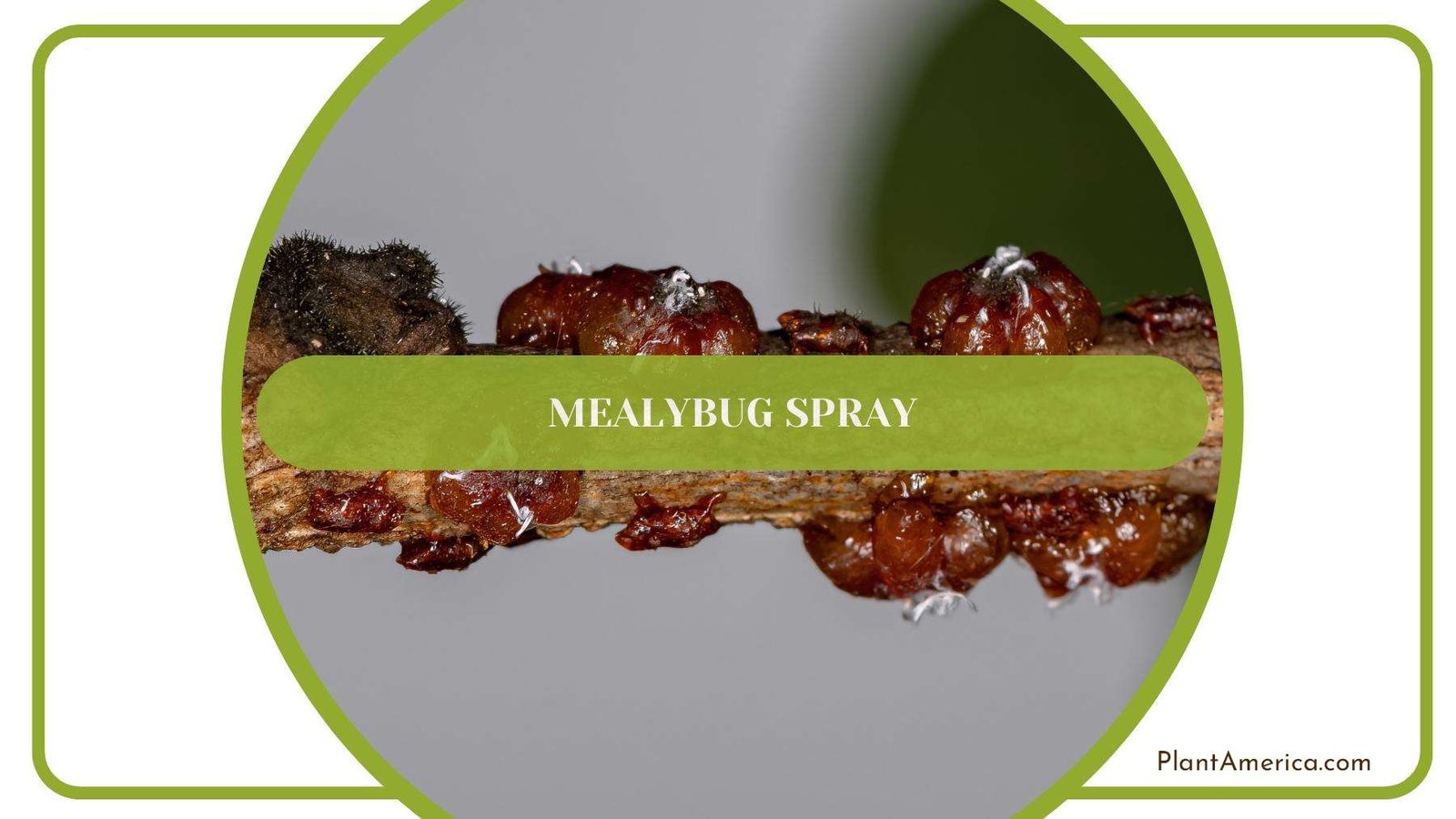
In order for this method to fully work, there are two things you need to equip yourself with — attention to detail and consistency. Full coverage is necessary here as the spray acts upon direct contact. Adhering to the recommended application schedule enables you to control and ultimately eradicate the infestation.
The utilization of a mealybug spray offers a precise and focused approach to mealybug treatment. The active ingredients within the spray are tailored to combat mealybugs and their distinct life stages, ensuring optimal efficacy. These sprays are environmentally safe, posing no harm to humans, pets, or the ecosystem.
– Introduce Friendlies
Biological approaches largely involve harnessing the power of natural adversaries to combat mealybugs. Among these allies, the standout is the mealybug destroyer beetle. Resembling the appearance of ladybugs and Japanese beetles, these beetles sport a blend of brown and black hues.
During their larval stage, they display a robust appetite for citrus mealybugs and boxwood mites. Astonishingly, a single beetle larva can consume a few hundred of these weekly, showcasing their remarkable effectiveness even in the face of a severe infestation.
Ladybugs also emerge as adept mealybug and boxwood leafminer hunters. While perhaps not as visually appealing, lacewing larvae and parasitic wasps are equally valuable beneficial insects in the fight against mealybugs.
These beneficial insects can be conveniently obtained online in the form of larvae and strategically introduced to the afflicted plants.
– Spiritus Recipe
There’s also a homemade solution that combines equal parts of methylated spirits and water. This simple yet potent mixture serves as a powerful tool in your fight against pests. The methylated spirits, also known as denatured alcohol, contain properties that can quickly disrupt the protective waxy layer of mealybugs, leading to their quick death.
To prepare this solution, begin by acquiring a container that can accommodate the desired amount of the mixture. A 50% concentration of methylated spirits combined with 50% water strikes an effective balance between potency and safety for your plants. Once you have the container ready, accurately measure out the required proportions of both ingredients and mix thoroughly.
Once your solution is prepared, transfer it to a plant sprayer. The plant sprayer provides you with the ideal method of application, allowing for an even and comprehensive coverage of the affected plant.
To achieve optimal results, perform this spraying ritual daily for the duration of the infestation.
– Water Treatment
Employing a high-pressure sprayer proves to be an effective strategy in managing mealybug populations. By harnessing the power of a forceful water stream, you can dislodge and eliminate these pests from your common boxwood.
Use a high-pressure sprayer that provides a concentrated and forceful water stream. The strong jet of water is directed at the mealybugs, effectively dislodging them from the plant’s surfaces.
As you initiate this technique, bear in mind that delicate leaves might be vulnerable to damage when subjected to high-pressure water. For plants with fragile foliage, it’s recommended to avoid this approach to prevent unintended harm.
While employing the high-pressure sprayer technique, remain attentive to the plant’s overall health. Monitor for any signs of improvement as well as any potential adverse effects. Adjust the force of the water stream based on the plant’s specific needs and vulnerabilities.
– Dish Soap
Dish soap can be a surprisingly effective weapon against aphids and mealybugs on boxwood plants. And the use is pretty simple — essentially, you’re creating your own insecticidal soap mixture right at home!
Opt for a mild, fragrance-free dish soap. Harsh or heavily scented soaps can harm plants, so it’s important to use a gentle formulation. And the brand isn’t all that important either, as you’re looking for the soap’s properties and ability to pierce through pests’ protective layer and render them unable to feed.
To create your soapy solution, you’ll need to dilute the soap in water, a common ratio being a few teaspoons of soap per gallon of water. A spray bottle or garden sprayer can be used for easy application.
Before applying the soapy solution to the entire plant, perform a patch test on a small, inconspicuous area of your boxwood to ensure it won’t negatively react to the soap. Once the patch test is successful, it’s time to tackle the mealybugs. Spray the soapy solution directly onto the aphid-infested parts of the boxwood.
Leave the solution to do its magic for a few hours. Afterward, gently rinse the boxwood with clean water to remove the soap residue. Use a gentle spray to avoid damaging the plant.
If necessary, you can repeat the soapy treatment every few days until the pest population is under control, and try to apply during cooler parts of the day, such as early morning or late afternoon. This prevents potential leaf burn caused by the combination of soap and direct sunlight.
– Vinegar Works!
Vinegar, particularly white vinegar (acetic acid), is an acidic substance that can interfere with the mealybugs’ ability to maintain their protective wax layer. The acid in vinegar weakens the wax, making it easier for the solution to penetrate the bugs’ bodies and cause harm. Additionally, vinegar’s acidity can disrupt their cell membranes!
Use plain white vinegar for this purpose. It’s important to avoid using flavored or highly concentrated kinds of vinegar, as they might have adverse effects on the plant. Mix the vinegar with water to create a spraying solution. A common ratio is around one part vinegar to three parts water. This dilution helps prevent plant damage while still being effective against mealybugs.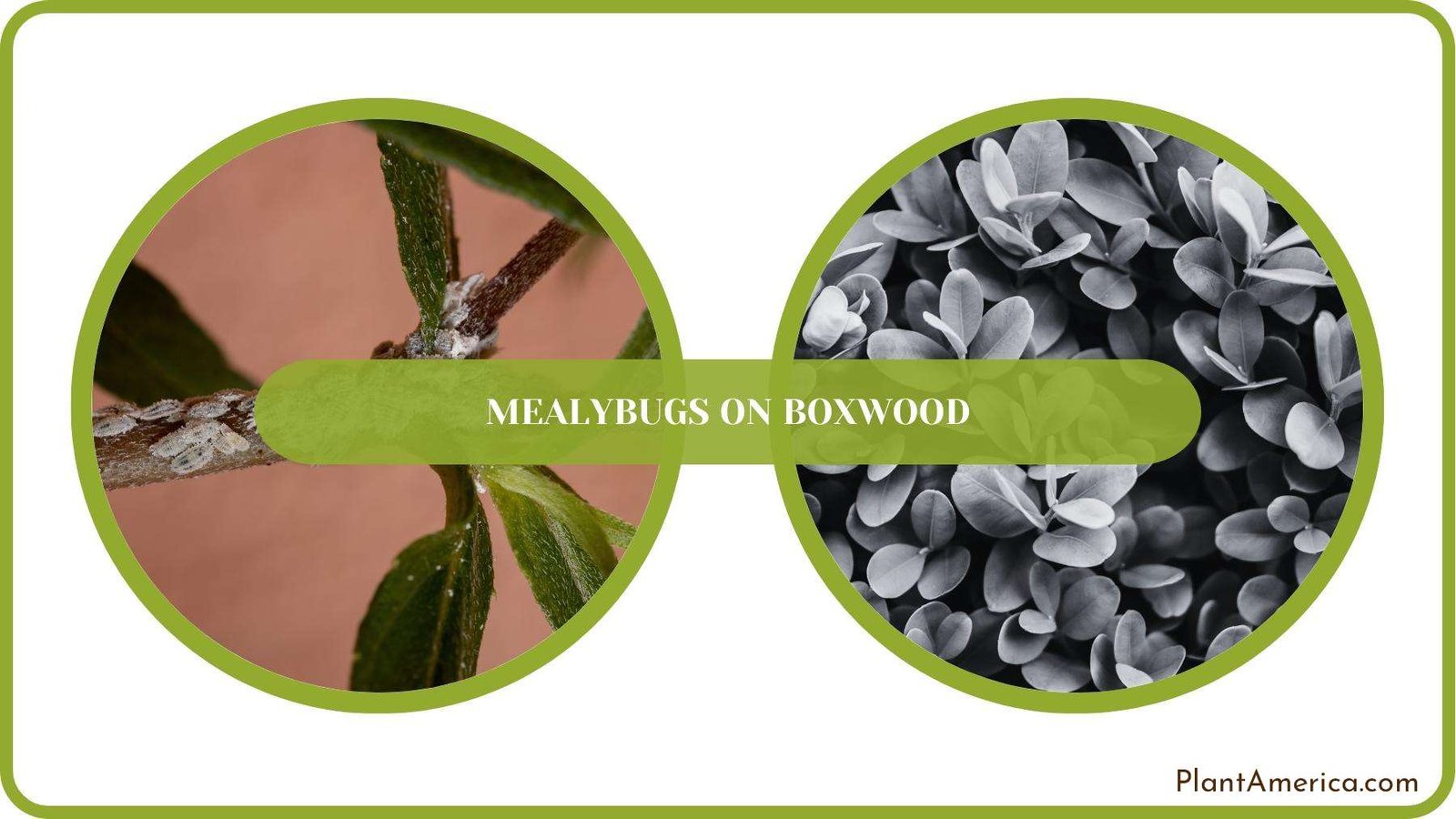
Next up, it’s the same process of testing and spraying just like with the dish soap or any other method we covered before. As a cautionary step, always consider overall plant health before resorting to highly acidic or alcoholic solutions!
Conclusion
While mealybugs infesting boxwood trees might not be a common occurrence, they do present a significant threat to the overall appearance and health of these shrubs. Dealing with mealybugs shares similarities with addressing other pests, so it’s worth remembering what we’ve gone through in this article.
- Identifying and addressing mealybug activity on boxwood involves observing key indicators such as the cottony secretion they leave behind and the sticky residue known as honeydew. Swift detection of these signs allows for early intervention, preventing more severe infestations and related issues like sooty molds.
- Regular monitoring, early intervention, and consistent treatment application are key factors in successfully managing and eradicating mealybug infestations. Utilizing specialized mealybug sprays, both store-bought and homemade, provides a targeted and controlled approach.
- Introducing natural predators like the mealybug destroyer beetle, ladybugs, lacewing larvae, and parasitic wasps can help establish a balance in the ecosystem.
- For those seeking DIY solutions, employing high-pressure water sprays or creating a homemade mixture with methylated spirits and water can effectively disrupt mealybugs’ protective layers. The use of dish soap as an insecticidal solution is also a feasible choice, while white vinegar presents another eco-friendly alternative to combat these pests.
We’re certain that these strategies will allow you to maintain the beauty and vitality of your boxwood trees while keeping mealybug populations at bay.