
Philodendron mamei care is undemanding — only a little attention is needed to maintain it and make it thrive, so it is easy to grow even for beginners. They are found in the rainforests of Ecuador, and they belong to the philodendron genus with over half a thousand species from the Araceae family.
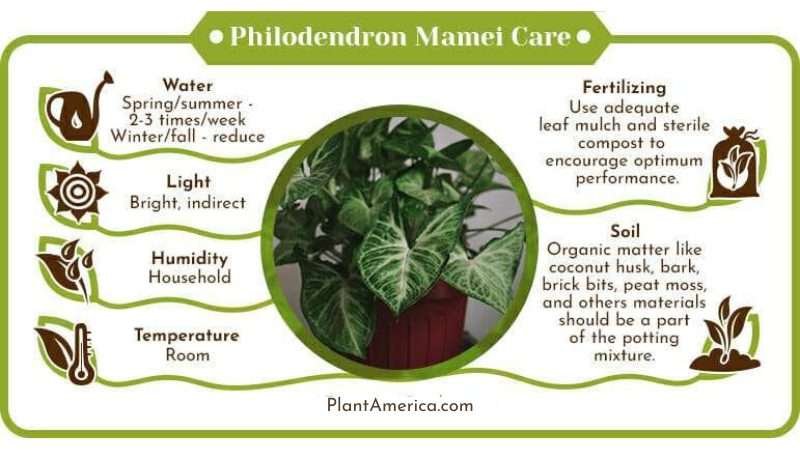
This tropical perennial plant is loved as an indoor décor and is mainly used for beautification, also being known to help in improving indoor air quality.
Their leaves are large, beautiful, green, and heart-shaped, and they contain silvery dust scattered markings on them — which is why it is referred to as a silver cloud, so here is our Philodendron mamei care guide explained in detail below!
Philodendron Mamei Care
With the proper care, Philodendron mamei can easily be maintained. Don’t worry — regarding the proper caring procedure for this unique tropical perennial plant, we have you fully covered on this page. Continue reading to learn everything you need to know about Philodendron mamei care.
 Light Requirements
Philodendron mamei is naturally found on the Eastern slope of the Andes in Ecuador, where it grows in partial shade along river banks.
The plant thrives and performs exceptionally well in bright, indirect sunlight and requires filtered sunlight of about 70-80 percent because the plant is susceptible to sunburn. They can also survive well in low light conditions, making them perfect for your under-lit indoor corners.
However, according to the natural mechanism to manage light absorption, their foliage color often indicates their light requirements as follows:
- Silvery variegation is often produced to reduce light absorption
- The bright green leaves indicate that the plant needs more light while
- The silvery variegation, on the other hand, suggests a need to restrict light on the plant.
 Water Requirements
The watering frequency for this plant varies and is mainly dependent upon sunlight, humidity, and temperature. For instance, cold temperatures decrease the plant’s watering requirements, which is why you should control the watering frequency during this period.
Additionally, wet and soggy soil can suffocate the roots and, as a result, cause pest attacks, root rot, and fungus. Therefore, ensure that you adhere strictly to the proper watering frequency and avoid overwatering at all times.
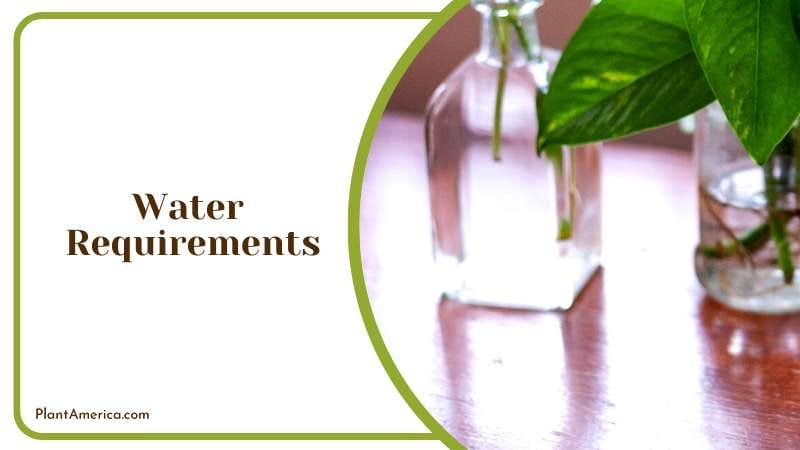
Deep drench your plants once a week to keep the soil moist. Then, you should allow the topsoil to dry out a couple of inches before watering again.
Since the climatic zone and your growing conditions affect the ideal watering frequency of your plant, I will recommend the following practices:
- During spring and summer, the Philodendron mamei plants that are grown outdoors within tropical areas should be watered more frequently, like every other day.
- Meanwhile, if your Philodendron mamei plant is grown in a well-draining pot indoors, allow a couple of inches of the topsoil to dry out before you can drench again.
- You should cut back on watering during fall or winter, but don’t allow the plant to fall short of the moisture required for proper growth and performance.
- For cooler zones, indoors planting in a pot with light watering of about twice a week during summers and very minimal watering during winters is the safest and most recommended way.
 Soil Requirements
Philodendron mamei requires rich, well-draining soil, high in organic matter like mulch and compost. Organic matter like coconut husk, bark, brick bits, peat moss, and other materials should be a part of the potting mixture as they help to improve the soil quality.
The Philodendron roots enjoy wrapping themselves around the organic matter materials and often draw moisture through them at a steady rate.
However, organic matter is not only required when growing the plant indoors; it is also important when the plant is grown outdoors straight in the ground. This is because the plant thrives and performs better in organic-rich soil.
Therefore, I recommend using adequate leaf mulch and sterile compost to encourage optimum performance of the plant and help the soil retain moisture. Additionally, you can simply use a rich and quick-draining all-purpose soil for the plant for a potted plantation.
In summary, you can simply add sand to the soil to enhance drainage, and you can add mulch and garden compost to the soil for better soil fertility.
Propagation
Philodendron mamei are aroids, meaning they are part of the plants that reproduce through monocotyledonous inflorescence, which comes with a spadix and spathe.
The Philodendron mamei plant can be propagated either by cuttings or by seed. Propagation by seed is quite simple as you only need to plant the philodendron mamei seeds in the prepared potting soil and wait for the plant to germinate.
However, this method is not quite advisable for gardeners as propagation by cuttings appears to be more favorable. Therefore, when it comes to propagating the silver philodendron by cuttings, here are the procedures to follow:
- Choose a strong, healthy mother plant.
- Search for nodes from the healthy mother plant vine to the soil end of the creeper.
- When found, cut the stem tip with at least three nodes and a terminal using sharp garden scissors (the nodes near the soil should come with some reliable aerial roots).
- You should plant the cutting in the prepared moist substrate at a 50-50 mix level of soil-less seed raising potting mixture, cocopeat, sphagnum moss, etc.)
- Place the pot in a warm location with indirect light and be patient.
- Ensure to keep the soil moist but not waterlogged.
- The propagation period is usually 2-5 weeks.
Problems
The following are common problems with philodendron mamei:
Philodendron mamei is a plant that contains calcium oxalate crystals which have been discovered to be very toxic to pets, causing mouth and bowel irritation. Therefore, I recommend that you grow your Philodendron plants in an area away from pets to avoid this problem.
Root rot usually occurs due to excess watering, over wet soil, or fungal infection of the roots. It also causes sudden wilting or yellowing of the leaves. However, it is not only the root rot that causes the yellowing of the leaves, as other factors can also cause such problems.
Dark patches on the leaf can also be caused by cold draft exposure and underwatering the plant. When the leaves turn yellow and the soil feels soggy, it could signify that you are overwatering the plants.
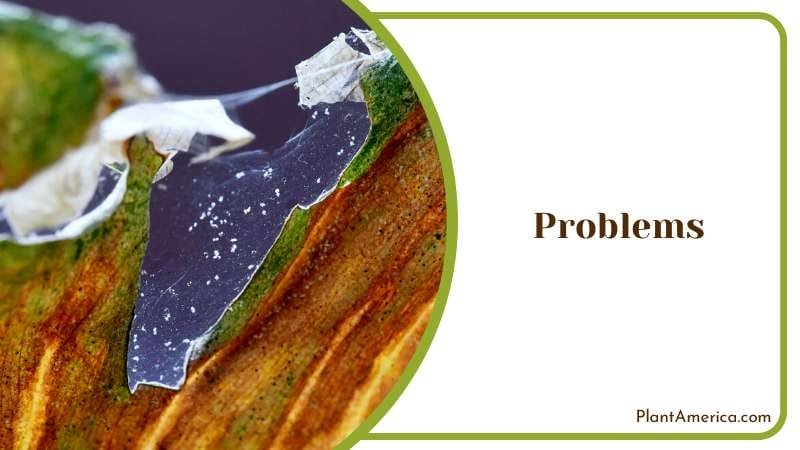
That happens to be the major difference between overwatering and underwatering the plants with regard to problems. Therefore, you should follow the required adequate watering requirements as described below to avoid problems associated with this.
Leaf spots, also referred to as leaf tan patches, are often caused by bacterial infections, resulting in diseases like the Pseudomonas leaf spot or the Erwinia blight.
Bacterial infections need moisture to spread, and plants affected by a bacterial infection usually produce disagreeable smells. Bacterial infections on philodendron mamei typically affect smaller plants severely, and they appear less severe on the older plants grown in the ground.
Pale-colored leaves, which often occur due to poor lighting, make the plant lack a characteristic dark green color feature required of a healthy plant.
Another common problem is pest attacks from common pests of this plant species, such as fungus gnats, shore flies, thrips, mealybugs, scales, aphids, and moths (worms).
Below are the recommended solutions to help prevent or control those problems associated with Philodendron mamei plant as identified above.
- Due to the calcium oxalate crystals content on the plant, which harms pets, I recommend that you handle the plants carefully, especially if you have pets around your household or neighborhood.
- To control root rot in the philodendron plant, I would recommend that you salvage a few cuttings and propagate them in a separate fresh pot with sterile well-draining soil. This practice is aimed to encourage rapid drainage of excess water on the plant and prevent the soil from feeling soggy.
- Since the bacterial infections need moisture to spread, the best control measure is to do the following:
- First, isolate the affected plant from all the other plants in your garden.
- Cut off and remove the affected leaves.
- Minimize watering by avoiding excessive watering of the affected plant at all costs.
- You should also try to keep the leaves dry or provide adequate measures to encourage the leaves to dry very quickly.
- You should also stop misting the plants.
- Cutting off the damaged leaves and moving your plant to a warmer location is also recommended to control dark patches on the leaf of the plant, often caused due to cold draft exposure.
- Moving your plant to a brighter spot will help control the color change problem.