
Philodendron Brasil of the Araceae family is one of the easiest indoor plants and is loved for its green, heart-shaped leaves. There are several variegated philodendron genus varieties available in the stores in different shades of green and lime.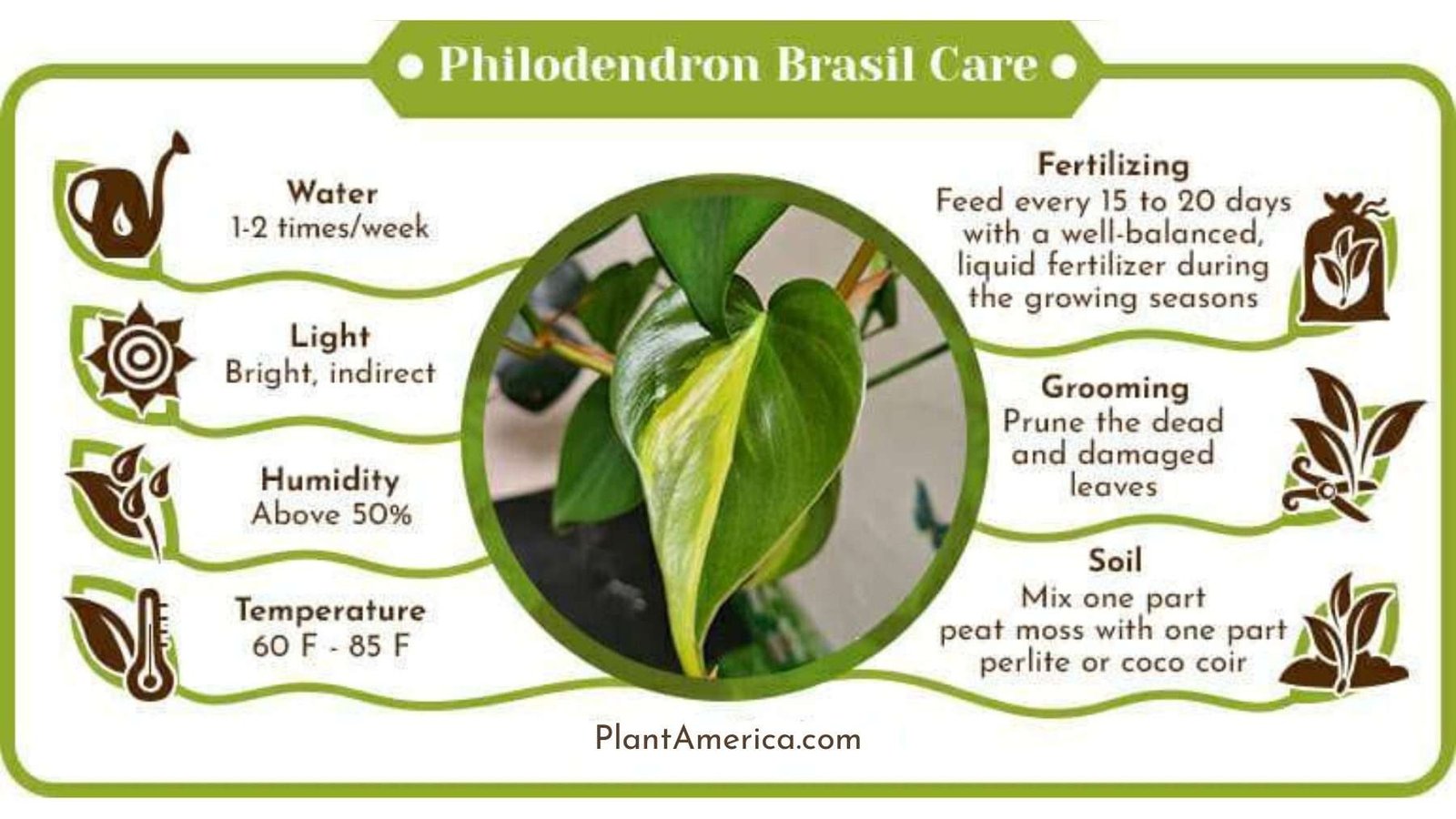
Learn all about Philodendron Brasil care from our comprehensive care guide prepared by our expert gardeners, keep reading.
Philodendron Brasil Care
Philodendron Brasil plant care is quite similar to similar plants such as the Swiss Cheese plant and Monstera Adansonii. Find out all about how to keep your plant bushy and its exact care needs below.
 Water Requirements
Watering the plant one to two times a week works well in the summer months usually. Nonetheless, the frequency of watering will depend on other factors in your areas such as the temperature, humidity and the soil mix used.
Allow the upper few inches of the soil to dry out a bit in between the watering sessions. Do not overwater the plant as it causes water-logged soil which further leads to root rot. If your plant is in a slightly darker spot in medium light, keep an eye on your watering routine, because it will help the plant thrive further.
To prevent overwatering-related issues, always check the soil by inserting one of your fingers till the second knuckle. If the soil sticks to the finger, do not water the plant and check back again after a few days. Another alternative to the finger-knuckle test is using a moisture meter.
 Light Requirements
The Brasil Philodendron plant needs medium to bright indirect light to grow well. Remember that any north or east-facing window or balcony that receives curtain-filtered light works well for its growth. Variegated plants need comparatively more light than non-variegated plants.
However, it is important to make sure that you keep the plant away from direct sunlight as it can scorch the leaves. Yellow and pale leaves are a result of too much light.
Exposure to direct sunlight over extended periods can cause leaf burn and even kill the plant, hence it is key to avoid direct sunlight.
The plant can survive in low-light conditions but if you want to see more variegation on the leaves, keep it in bright, dappled light. You will notice that the leaves lose the lime or yellow variegation, and become plain green and leggy in lack of bright light.
 Soil Requirements
Use a well-draining and rich potting soil to grow your plant. You can grow the plant in a hanging basket as it looks stunning falling and trailing downwards. Use moss poles if you want your Philodendron to climb upwards.
To prepare a rich and airy soil medium, mix one part peat moss with one part perlite or coco coir. It makes a moisture-retentive and well-draining soil mix. Soilless mixtures such as sphagnum moss, peat, and coco coir work better than using traditional soil.
Do your best to avoid adding too much organic matter to your soil as it decomposes and makes the soil compact making the soil prone to overwatering-related problems. As a keynote, you may try and add perlite or sand to prevent the soil from getting compact.
 Temperature Requirements
Temperatures between 60 and 85 degrees Fahrenheit work well for this Philodendron’s growth. Avoid exposing the plant to temperatures below 55 degrees and above 90 degrees Fahrenheit. Extreme temperatures can be detrimental to its overall growth.
Average temperatures in most homes are good enough for its growth. Do not keep the plant near drafty windows, in hot and cold, dry weather conditions. Dry air can make this tropical plant’s foliage wrinkled and crispy.
If you are growing your plant outdoors, make sure to bring it indoors when the temperatures fall as it is not cold and frosty-hardy. You can shift it back outdoors in early spring. In summer, make sure to keep the plant away from drafty windows with dry air.
 Humidity Requirements
The higher the humidity, the larger the leaves will be. Mist the plant occasionally to improve the humidity levels. Humidity levels above 50 percent work well for this plant’s growth. To make your humidity tray, fill a shallow tray with pebbles and water and keep the plant above it. Note that as the water evaporates, the plant will absorb the moisture.
Basic humidity levels in most households work well for this plant’s growth. However, if you live in a dry area where it gets super dry in winter and summer, try to increase the humidity levels by keeping a humidifier or a humidity tray around the plant.
Make sure that there is good air circulation with high humidity conditions. The lack of air movement around this tropical plant can make it susceptible to various fungal diseases and pests such as mealybugs.
 Fertilizer Requirements
Feed your Philodendron every 15 to 20 days with a well-balanced, liquid fertilizer during the growing seasons of spring and summer. You can also use slow-release fertilizers. Small leaves are often a result of lack or irregular fertilization.
Fertilizing becomes more important when the plants are kept indoors. The soil in indoor plants needs more nutrients compared to other plants grown outdoors as there is no way to replenish the nutrients.
Don’t fertilize the plant in the months of winter as it does not show much new growth and is dormant. Also, avoid overfertilizing the plant because too much fertilizer in the soil leads to salt build-up which further causes root burn.
 Pruning Requirements
Prune your Philodendron in spring when new growth begins to appear. If you notice the plant stems getting leggy and stretched out, prune the dead and damaged foliage to keep the plant compact.
This Philodendron needs repotting every two to three years when the roots start coming out of the bottom drainage holes. Spring is the best time to repot most plants as the plant comes out of dormancy and it gets easier for it to respond well to new surroundings.
Propagating
It is quite easy to propagate this fast-growing Philodendron from stem cuttings and root division. You can propagate the cuttings in both water and soil.
– Stem Cutting Propagation
Choose a healthy four to five inches long cutting from a mature stem. Using a clean, sterilized cutting tool cut below the node and keep your cutting either in water or plant it directly in the soil. Make sure that your cutting has two to three nodes for root growth.
Before planting the cutting, make sure you remove the bottom leaves and leave only the top one or two on the stem. If you are propagating the cutting in water, ensure that you change the water every few days.
Once the roots are about one inch long, shift the cuttings in the soil and keep them in a shaded spot so that the cutting can heal fully. Make sure that the nodes are dipped in the soil. Keep the newly rooted stems moist at all times to help them get adjusted to the new soil conditions.
– Propagation from Root Division
The root division works best while repotting the plant. You can untangle the roots and separate smaller plants from the mother plant. Plant these parts and the main plant in separate pots. Keep them in a shaded spot until they fully acclimatize to the new soil mix.
Remember to keep the soil of the newly potted plants consistently moist but not soggy. Moisture at this stage helps the plant adjust faster to the new environment. Do not propagate your plant in winter as it does not show new growth and untimely propagation might even kill your plant.
Problems
– Root Rot
If you come across the leaves turning yellow and mushy, it might be because the plant is suffering from root rot. To prevent the problem from spreading, remove the plant from the soil and check the roots. Prune the dead and damaged roots to control the spread.
Furthermore, you may repot your plant in a freshly prepared, airy soil mix and keep it under some shaded spot for a few days until the plant fully recovers from the transplant shock. Note that excellent drainage is a must to prevent root rot.
– Yellowing and Browning of Foliage
There could be many reasons behind yellow leaves, but it is most often a symptom of underwatering or overwatering. If you allow your plant’s soil to dry out completely in between waterings, the leaves will turn yellow and brown and lack of water can even kill the plant.
Avoid overwatering too as it leads to water-logged soil conditions that can cause root rot. Use humidifiers and humidity trays around your plant, especially when the weather gets too dry and hot.
– Curling of the Foliage
Underwatering is the main cause behind the curling of leaves. However, sometimes overwatering can also cause curling by drowning the roots. Lack of water for extended periods makes the plant stressed and the first symptom shown by the plant is curled leaves.
To prevent the problem, avoid keeping your plant in fully dry soil conditions for too long. Water it as soon as the top few inches feel dry to the touch. Chronic drought stresses the plant. Use the finger-knuckle test for more accurate results.
– Yellowing of Leaves
Although there might be several causes behind yellow and droopy leaves, the most common of all is due to overwatering. When the roots stand in water-logged soil conditions for too long, the leaves start to become pale and droopy followed by root rot.
To correct the problem, water your plant less frequently and allow the top few inches of the soil to dry out each time before watering. Make sure the container or planter has lots of drainage holes so that excess water can drain out each time you overwater the plant.
– Spider Mites
Mites can cause havoc for your Philodendron, especially if you live in a dry area. If you notice web-like structures around the leaves and stems along with tan or silver marks on the leaves, it might mean that your plant is infected with mites.
Soak a cloth in a solution of 50 percent alcohol and 50 percent water and wipe the leaves and stems with it. In case of severe infestations, spray insecticidal soap solutions. Spray neem oil solution if you are looking for an organic solution.
– Mealybugs
Mealybugs are sap-sucking insects that target the foliage and stems. They cause the yellowing of leaves and eventually the leaves drop off. They also release honeydew that encourages the growth of sooty mold fungus.
Dip cotton balls in a solution of isopropyl alcohol and water and rub the affected leaves and stems. You can spray the whole plant with the alcohol and water solution for better results. Use an insecticidal soap solution in case of a bad pest attack.
– Fungus Gnats
Fungus gnats are usually caused by overwatering. They are attracted to warm and damp soil conditions. Cut down on watering to prevent their growth and water the plant only when the soil gets dry.
Proactive treatment such as using isopropyl alcohol solutions helps in preventing such infestations. Neem oil acts as a natural repellent for these unwanted pests. You can try introducing beneficial predatory insects such as ladybugs and lace bugs that feed on pests.
Final Note:
Philodendron Brasil is a trailing Philodendron native to Central America. It is called the variegated Heartleaf Philodendron and belongs to the same family as Philodendron Hederaceum. The plant’s yellow-green leaf variegations resemble the Brazilian flag which is why the plant gets the name ‘Brasil’.