
Lucky bamboo leaves turning brown can be a cause for concern, but it’s important to understand the reasons behind it to eliminate the “guesswork.” You’ll most likely notice the issue after overwatering the plant, but other factors can also lead to the discoloration.

When you know what causes the browning, you can take steps to fix the problem and help your plant continue the “green and shiny” growth. So, stick with us as we explain all the reasons behind the discoloration and how to fix them!
Why are Your Lucky Bamboo Leaves Turning Brown?
Your lucky bamboo leaves are turning brown when you apply more water than needed. The situation can worsen if the water you use is rich in salts. Moreover, temperature stress and unsuitable humidity levels can also force the plant to turn brown. In some cases, pest feeding causes discoloration.
– Overwatering: Applying More Water
Lucky bamboo doesn’t need as much water as you might think. In fact, it’s a pretty low-maintenance plant. When you overwater the bamboo, the roots become waterlogged for a long time. This restricts their ability to take in oxygen (which is essential for plant health). As a result, you might notice the leaves turning brown, starting from the tips and working their way down.
It’s pretty simple to check if overwatering is the issue. Start by examining the plant’s roots. If they appear mushy or brown, that’s a sure sign of overwatering. Also, take a peek at the water in the container. Is it murky or smelly? That’s another indicator.
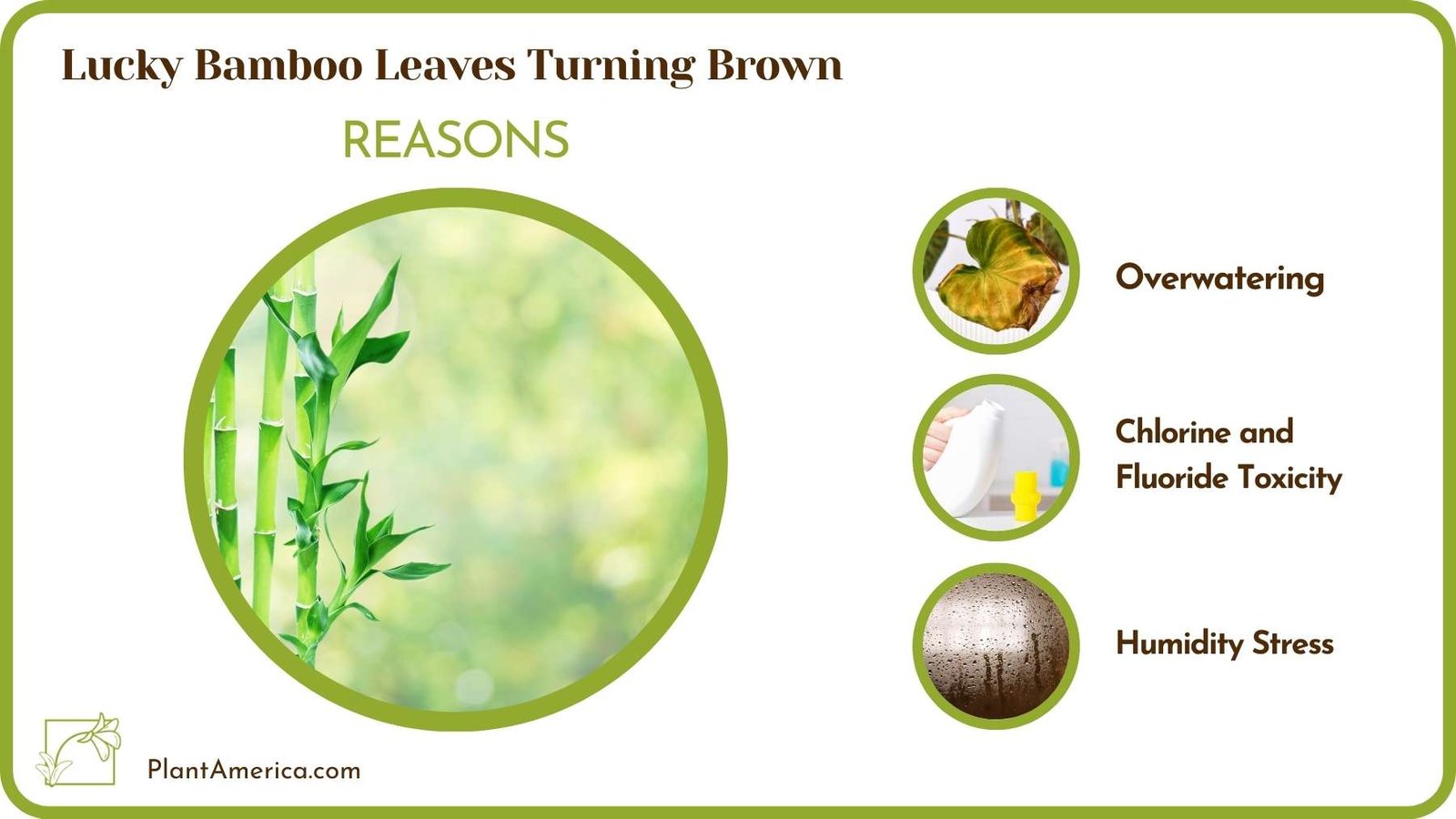
– Chlorine and Fluoride Toxicity
Another factor that can turn your lucky bamboo leaves brown is chlorine and fluoride toxicity. These chemicals are often present in tap water. While they are safe for us, they can harm our leafy friends.
To confirm this issue, consider the water source you’re using. If it’s tap water, there’s a good chance it contains these chemicals. You can also observe the pattern of browning. If it starts from the leaf edges and progresses inward, that’s a telltale sign.
– Humidity Stress
Note that lucky bamboo thrives in conditions that mimic its native habitat. When the air around your bamboo is too dry, it can lead to humidity stress, forcing those vibrant green leaves to take on a brownish hue.
The reason is that the leaves may dry out when the humidity is too low. The roots then try to absorb more water than usual. A time will come when the roots will give up (either because they’re too weak or the soil becomes dry). When this happens, the plant will become dehydrated and turn brown.
– Temperature Extremes: Reason Behind Brown Leaf Tips
Bamboo plants require specific temperatures to grow (70 to 90 degrees Fahrenheit. They can both get easily stressed when the temperature is not within this range. So, if you see lucky bamboo leaves turning brown in summer, we suggest checking today’s weather report. If the temperature is above 92 degrees Fahrenheit, plants are “heat-stressed.”
In the summer, direct sunlight can scorch the leaves, especially if your bamboo is exposed for prolonged periods. So, if you notice outdoor bamboo leaves turning white to brown, the sun has caused the damage.
The warm temperatures can also dehydrate the plant quickly. That’s why it’s common to see tips of bamboo leaves turning yellowish brown on hot days.

Similarly, if you’ve noticed your bamboo turned brown over winter, check the temperature. If it’s below 58 degrees Fahrenheit, the plants are cold-stressed. During the winter stress, internal processes like metabolism slow down. As a result, you’ll see bamboo leaves turning brown and falling off.
– Nutrient Deficiencies: Another Common Cause
Sometimes, your lucky bamboo might not be getting the nutrients it craves. When it lacks essential elements, processes like photosynthesis take a hit. In a few days, the leaves can go from green to yellow and, eventually, brown.
Soon, you’ll observe “lucky bamboo leaves turning brown and brown.” You can stop this if you apply fertilizers correctly (which we’ve discussed in detail later).
– Pest Invasion
Even your indoor bamboo can fall victim to tiny invaders. Pests like spider mites and aphids might make your bamboo their home. If you spot a few of them during the whole “lucky bamboo leaves turning yellow and brown” situation, then there are higher chances that these tiny invaders are the culprits.
Pests suck the life out of your bamboo. The leaves can start turning brown and yellow as they feed on the plant’s juices. After some time, the infested leaves can droop and die. To check for pests, closely examine your bamboo stalks and leaves. If you spot tiny dots or webbing, that’s a sign of spider mites.
If you see small, soft-bodied insects on the plant, those could be aphids.
What to Do When Lucky Bamboo Leaves Start Turning Brown
When lucky bamboo leaves start turning brown, focus on the soil condition and ensure it’s not soggy. You should also manage the humidity levels to be around 50 percent. It’s also critical to fertilize your plants appropriately and deal with pest infestations to keep the leaves green.
– Fix the Overwatered Soil First
When you notice those brown spots on a bamboo leaf, the first thing to address is the possibility of overwatered soil. It’s a common issue, but fear not; we’ve got three tried-and-true solutions to help you fix it.
- Choose the Right Container: Ensure your bamboo pot has drainage holes. If it doesn’t, consider repotting into one that does.
- Adjust Your Watering Routine: Instead of giving your bamboo a regular schedule, water it when the soil feels slightly dry.
- Improve Air Circulation: Make sure your bamboo has good airflow around it. This can help the soil dry out between waterings.
Following these steps, you can address the overwatered soil issue and give your lucky bamboo a better chance to recover its lush, green appearance.
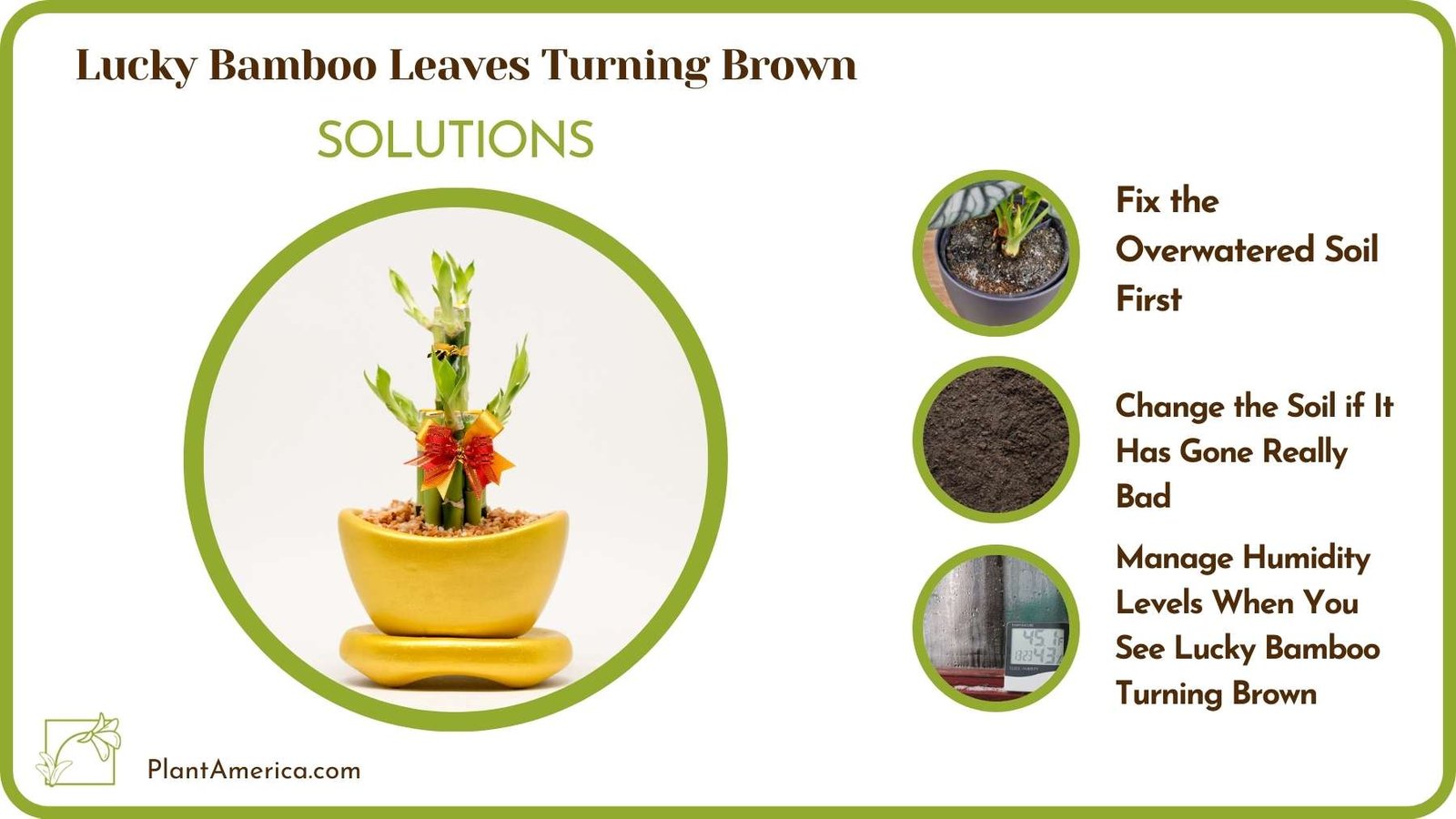
– Change the Soil if It Has Gone Really Bad
Plants can’t recover in a bad growing medium. If you think the soil has poor drainage or notice salts everywhere, we suggest changing it. Doing this will relieve the roots, which will help the plant kickstart the new growth. Don’t worry; changing the soil is a straightforward process.
Here are the steps to guide you through it:
- Gather Your Supplies: You’ll need a new container with drainage holes, a fresh potting mix suitable for lucky bamboo, and a pair of gardening gloves.
- Remove the Plant: Carefully remove your lucky bamboo from its pot. Gently loosen the roots if they’ve become tightly bound to the old soil.
- Clean the Roots: Inspect the roots for any signs of rot or damage. If you see mushy or discolored roots, trim them with clean scissors or pruning shears.
- Prepare the New Container: Fill the new container with the fresh potting mix. Make sure it’s suitable for indoor plants and has good drainage.
- Replant the Bamboo: Place your lucky bamboo in the new container, ensuring that the roots are spread out evenly. Add more potting mix if needed to stabilize the plant.
- Water Sparingly: After repotting, water the bamboo lightly to settle the soil. Remember not to overwater; just moisten the soil.
- Choose the Right Spot: Put the newly potted bamboo in a location with indirect sunlight or filtered light.
- Monitor Progress: Monitor your lucky bamboo over the next few weeks. You should start to see improvements in leaf color and overall health.
Your bamboo will appreciate the effort, and you’ll likely see those vibrant green leaves returning quickly!
– Manage Humidity Levels When You See Lucky Bamboo Turning Brown
Maintaining the correct humidity levels is crucial for the leaves to stay shiny and green. As explained above, dry air dehydrates the plant, which forces leaves to discolor.
Luckily, you can manage humidity levels with these easy methods:
- Misting: Regularly mist the leaves of your bamboo with water. This adds moisture to the air and keeps the leaves hydrated.
- Use a Room Humidifier: A room humidifier can maintain consistent humidity levels in your home. Please set it to the desired humidity level (50 percent) for your lucky bamboo.
- Keep Your Bamboo in the Bathroom: Bathrooms have higher humidity due to showers. Placing your bamboo in the bathroom can naturally boost humidity levels.
- Cover the Pot: Use a clear plastic bag or plastic wrap to cover the top of the pot. This creates a mini greenhouse effect, trapping moisture around the plant.
- Choose the Right Location: Position your bamboo away from heating or cooling vents, as these can dry out the air. Opt for a spot with stable humidity.
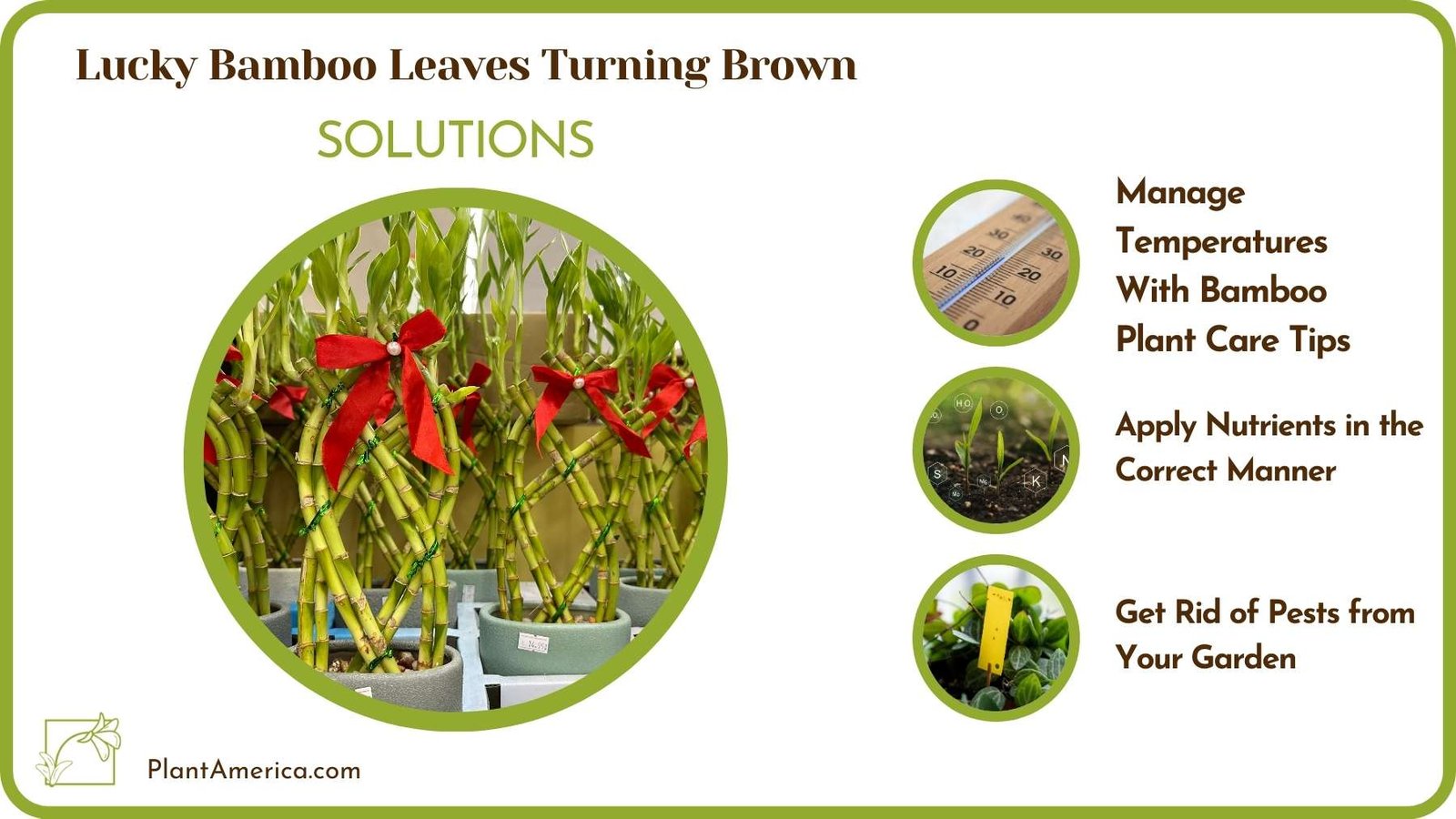
– Manage Temperatures With Bamboo Plant Care Tips
Brown leaves also mean you’re not focusing on the temperature around your plants. It is most content when kept in a room with a 65 to 80 degrees Fahrenheit temperature range.
Let’s break down the lucky bamboo care guide on how you can maintain an ideal growing condition:
- Say No to Chilly Drafts: Keep your lucky bamboo plants away from drafts or sudden temperature drops, like those from air conditioning units or open windows during the winter.
- Shield from Frost: Lucky bamboo is not a fan of frost. If you’re growing it outdoors, bring it inside during colder months to protect it from freezing temperatures.
- Avoid Direct Sun: While providing bright, indirect light is good, direct sunlight can be too harsh.
- Watch Out for Heaters: Place your bamboo away from heaters, radiators, or any heat sources that can dry out the air and cause leaf browning.
- Keep Indoor and Outdoor Bamboo Separate: If you have indoor and outdoor bamboo, remember they have different temperature preferences. Indoor bamboo can be sensitive to outdoor conditions, so keep them separate to maintain the right climate.
Growing lucky bamboo right might look like a lot of work, but it’s definitely exciting!
– Apply Nutrients in the Correct Manner
Giving the bamboo the proper nutrients can make all the difference in maintaining those lovely green leaves. Opt for a balanced, water-soluble house plant or bamboo fertilizer.
We suggest:
- Bamboo special 12 month control release 13-5-11 high nitrogen fertilizer
- Grow More 2-2-2 lucky bamboo fertilizer
- Super Green Lucky bamboo fertilizer ready-to-use all purpose plant food.
- Green green bamboo fertilizer for lucky bamboo plants.
Always follow the printed or label instructions if you want the leaves to turn green again!
– Get Rid of Pests from Your Garden
Dealing with garden pests can be an intense battle. But you can’t let these invaders feast, or the whole plant can turn brown.
Don’t worry; we’ve shortlisted the easiest and proven methods for you:
- Use Neem Oil: This natural pesticide can deter and kill many garden pests. Mix it with water and spray it on your plants.
- Plant Pest-Repelling Herbs: Herbs like basil, mint, and rosemary can naturally repel pests. Plant them alongside your other garden plants.
- Diatomaceous Earth: Sprinkle diatomaceous earth around your plants. It’s made from fossilized remains and is a natural barrier against crawling pests.
- Soap and Water Spray: Mix 3-4 drops of mild liquid soap with water and mist it on plants affected by aphids, mites, or whiteflies. It helps suffocate the pests.
- Garlic Spray: Blend garlic with water, strain it, and spray it on your plants. The pungent smell deters many pests.
- Homemade Pepper Spray: Mix hot peppers with water and some soap. Spray this spicy concoction on your plants to deter chewing pests.
That’s all about how to help your bamboo stay vibrant and full of green leaves!
Conclusion
In summary, lucky bamboo leaves may turn brown due to various causes, including overwatering, poor water quality, humidity stress, etc. In this guide. We explored the best solutions to tackle these problems. Here’s their summary:
- Adjust watering habits and keep the soil “moderately” moist by adding filtered water.
- Manage humidity levels with methods like misting.
- Keep temperature conditions within the optimal range by using frost clothes in winter and providing shade in summer.
- Apply nutrients correctly by following the label instructions.
- Use neem oil and pepper sprays to get rid of pests.
Implementing these solutions allows you to enjoy a healthier, greener plant for years!