
Peace lily brown tips are like nature’s Morse code, signaling issues that need your attention. These could be due to damp soil, low humidity, mite attacks, and more. Luckily, all these problems are ‘fixable,” and you’ll learn how in this guide.
 So, read till the end, follow the solutions we’ve discussed, and say goodbye to those brown leaf tips.
What are the Leading Causes Behind Brown Tips on Peace Lily Plants?
The leading causes behind brown tips on peace lily plants are overwatering and poor soil health. Both of these conditions can harm the roots, which leads to browning. Sometimes, dry air and sun exposure can hurt the leaf tip cells, leading to discoloration.
– Keeping the Roots Underwatered for Too Long
Whenever someone asks us, “Why are my lilies leaves turning brown,” we first request them to check the soil’s moisture. Peace lilies are like most of us; they don’t enjoy having wet feet for extended periods. When the soil remains excessively damp, it can lead to troubles.
The biggest one is limited air supply. Note that roots need oxygen to perform their water and mineral uptake role. So, when they can’t get enough of it, they stop functioning.
As a result, the chlorophyll production, transpiration, and many other processes slow down. When this happens, the leaves’ tips turn brown.

– Unsuitable Soil: Poor Growing Medium Health
When you see peace lily leaves turning black and brown, it might indicate that the pot’s soil has gone bad. Note that peace lilies thrive in well-draining, airy soil. They feel stressed when stuck in heavy soil that doesn’t let water flow freely. As a result, browning starts!
That’s not it. Root rot is common in such soils. When the excess water hangs around, fungi attack the roots and cause them to decay. So, when the roots can’t do their job of taking up nutrients, the plant suffers from nutrient deficiencies.
– Dry Air: Low Humidity
Peace lilies are used to the lush humidity of tropical rainforests. The air is thick with moisture in their natural habitat, and they thrive in these conditions. But when they find themselves in a dry, indoor environment, that’s when the trouble starts.
Check the air moisture levels if you notice peace lily leaves turning brown and yellow. This plant is used to the lush humidity of tropical rainforests. So, what happens when you place it in a low-humid environment?
– Adding More Fertilizers
Adding excessive fertilizers can also lead to those frustrating brown tips. While peace lilies appreciate some nutrients, they don’t need a “feast.” So, when you over-fertilize, most minerals stay in the soil.
Over time, these minerals and salts build up, damaging the roots and preventing the plant from taking up water properly. Unfortunately, a dehydrated plant can have many brown leaves (with brown tips).

– Excessive Sun Exposure (Sun Damage)
“Peace lily leaves curling and turning brown” indicates the plant is getting too much light. It’s worth noting that peace lilies are native to the shady forest floors of tropical rainforests, where they thrive in low to moderate light.
Their leaves can’t handle it when exposed to intense, direct sunlight for prolonged periods. The leaf cells first start to die from the tips. With time, the big brown patches appear on the leaves. You’ll notice these symptoms on the top leaves mostly.
– Spider Mite Attack: Pest Invasions
Spider mites are tiny arachnids that can wreak havoc on your peace lily. When they set up camp on your plant, they pierce the leaves to suck out the juices. This feeding frenzy can produce a distinctive damage pattern, including tiny brown specks on the leaves’ tips.
So, if you’re seeing browning tips, one or more of these causes can be behind the problem. But worry not; it’s time to learn how to treat brown tips on peace lily.
How to Fix Peace Lily Brown Tips
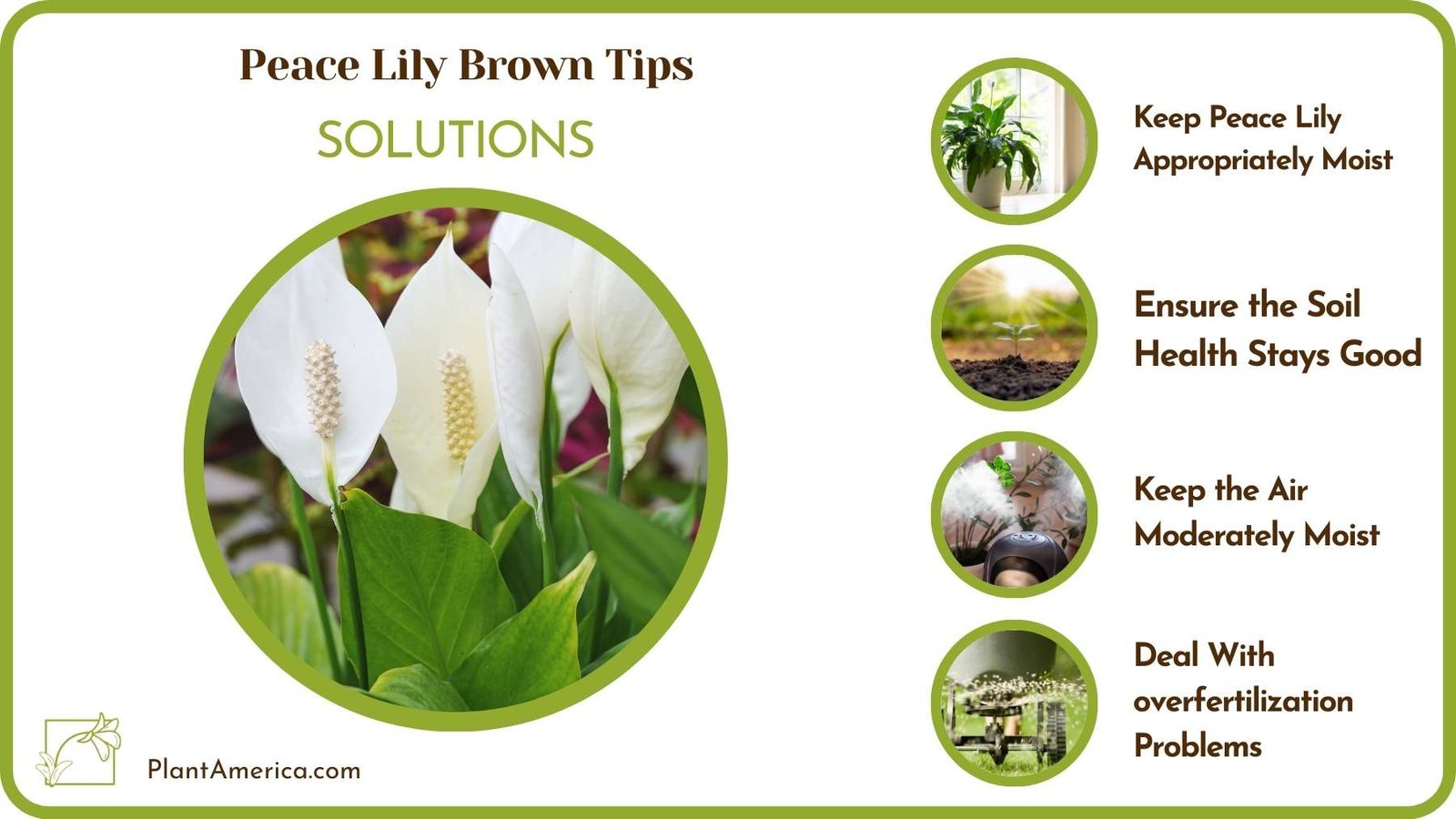
To fix peace lily brown tips, we suggest ensuring the plant is adequately moist. Taking measures to improve soil health is also recommended, as root performance depends on it. You should also maintain humidity levels at around 50 percent and bright indirect conditions to keep the leaves vibrant.
– Keep Peace Lily Appropriately Moist
Peace lilies prefer their soil to be “moderately” moist. It means you must be careful not to over or under-water the plant. Here’s a simple rule of thumb: Wait until the top inch or two of the soil feels before you water your peace lily.
You can use a moisture detector or insert a wooden stick into the soil to know about it.
Also, the type of water you use matters. Peace lilies are sensitive to chemicals like chlorine and fluoride in tap water. Let soft and hard water sit out for a day or two to allow these chemicals to dissipate before using it on your plant. Alternatively, you can use distilled or rainwater.
– Ensure the Soil Health Stays Good
When you’re on a mission to rescue your peace lily from those pesky brown tips, you should never neglect the plant’s soil health.
Here’s what we suggest:
- Repot into the Right Soil: If the soil looks extremely bad, change it. We suggest using a well-draining potting mix that’s designed for indoor plants. This soil type allows excess water to flow away, preventing root rot and other issues.
- Use a Saucer: Place your pot on a saucer to keep the soil moisture level consistent.
- Fertilize Sparingly: Use a balanced, water-soluble fertilizer at half the recommended to keep the soil nutrient-rich.
Remember, keeping the soil health in check is like giving your peace lily a cozy and nurturing environment.
– Keep the Air Moderately Moist
You can’t stop the browning of leaves if the air around the plant is dry. It’s a common indoor problem, but you can fix it with simple plant care tips. First, use a humidity gauge and check the results. If the reading is below 50 percent, add moisture in the air.
Here’s how to care for a peace lily indoors:
- Group Plants Together: Plants are like natural humidifiers. Grouping your peace lily with other indoor plants can create a microclimate with higher humidity levels.
- Invest in a Commercial Humidifier: Consider using a humidifier in the room where your peace lily resides for consistent humidity control.
- Use a Humidity Tray: Place a shallow tray filled with water and pebbles near your peace lily. The water will add moisture to the air as it evaporates.
- Mist the Leaves: A gentle misting of water on your peace lily’s leaves every few days can mimic its natural rainforest environment. Be sure not to soak the leaves, though.
- Bathroom Break: Consider placing it in the bathroom during your peace lily’s shower time. The steam from your shower will provide a humidity boost.
These simple things will create the ideal atmosphere for your plant to grow healthy and green leaves.
– Deal With overfertilization Problems
If you’ve accidentally overfertilized your lilies, it’s the main culprit behind the brown leaf tips. But fear not; you can remedy this problem.
Here’s how:
- Stop Fertilizing: Put those fertilizer bottles away. Your peace lily needs a break from the feeding frenzy. Cease all fertilization until the plant recovers.
- Flush the Soil: To flush out excessive fertilizers, water your peace lily thoroughly. Allow water to run through the pot’s drainage holes for several minutes. This will help wash away excess salts that can harm your plant.
- Make a Plan: When you resume fertilizing, use a water-soluble fertilizer or plant mist fertilizer at half the strength. Feeding your peace lily less frequently can also prevent future overfertilization.
Soon, you’ll notice that the plant has recovered from the effects of overfertilization.
– Maintain Ideal Lighting Conditions
When you see brown or yellow leaves, then focus on lighting conditions. As discussed above, lilies thrive in bright, indirect sunlight. So, we suggest you place these pots in these spots.
For indoors:
- Near a North-Facing Window: North-facing windows provide consistent, indirect light for those in the Northern Hemisphere (like Americans).
- Beside an East-Facing Window: Morning sun from the east isn’t usually as harsh as midday or afternoon sun, so right beside (but not directly in front of) this window can be a sweet spot for many plants.
- Behind Sheer Curtains: Placing plants behind a sheer curtain (regardless of the direction the window faces) can diffuse the light and make it more gentle on the plants.
- In a Bright Room with Skylights: Skylights often provide a good amount of bright, indirect light as the sun isn’t shining directly through them for most of the day.
- On Floating Shelves: Installing floating shelves away from direct window light but in a brightly lit room can be a great way to ensure indirect light exposure.
For outdoors:
- Beneath a Pergola or Gazebo: These structures’ slats or overhead covers can offer shade and filter the sunlight, ensuring bright but indirect lighting.
- Under Tall Trees with Sparse Foliage: Light filtering through the leaves of tall trees can create pockets of indirect sunlight, perfect for lilies.
- Beside Walls or Fences: The structure’s shadow can protect plants from direct sunlight, especially if the light source comes from the opposite side.
- On a Covered Porch or Patio: Plants placed here can benefit from outdoor light without the direct impact of the sun’s rays.
- Under Plant Awnings or Shade Cloth: Specifically designed for gardening, these materials can be used to create a bright but indirect light setting for sensitive plants.
– Tackle Pest Problems
If you’re sure pest infestations cause the browning on tips, act immediately. The reason is that the pest population can multiply in a few days.
We suggest you do the following:
- Gentle Washing: Give your peace lily a gentle shower. Use lukewarm water to rinse off pests like spider mites, aphids, or mealybugs. Be sure to focus on the undersides of the leaves where these critters like to hide.
- Neem Oil Spray: A neem seed oil solution can work wonders. Mix a few drops of neem seed oil with water and a drop of dish soap and spray it on your plant. This natural remedy can deter many common plant pests.
- Soapy Solution: A mild soapy water solution can also be effective. Dip a soft cloth or sponge in soapy water and gently wipe down the leaves. Rinse with clean water afterward.
- Sticky Traps: Yellow sticky traps can catch flying pests like gnats and whiteflies. Place them near your peace lily to reduce the pest population.
- Diatomaceous Earth: Sprinkle it directly on the pests for better results.
- Introduce Beneficial Insects: Consider introducing beneficial insects like ladybugs or predatory mites to your garden. They can help keep pest populations in check.
- Chemical Pesticides: Synthetic pesticides are available for almost every pest problem, though they should be used judiciously due to concerns about environmental and health impacts.
By tackling pest problems head-on with these strategies, you’ll create a safe and stress-free space for your peace lily to thrive and produce shiny leaves!
Conclusion
Peace lily brown tips can be caused by overwatering, unsuitable soil, dry air, excessive sun exposure, overfertilization, and poor lighting conditions. You can help your plants grow well if you follow our suggestions, which are:
- Proper Watering: Check the soil moisture before watering and avoid letting it get soggy.
- Soil Health: Ensure well-draining soil and repot when necessary.
- Maintain Humidity: Group plants, use humidity trays, and mist your peace lily’s leaves to moisten the air.
- Light management: Grow your lilies in a spot with bright and indirect light.
- Pest Management: Use gentle washing, neem oil, or soapy solutions for pest control.
That’s all. Your thriving peace lily is just around the corner, and its future looks green and bright!