
Mealybugs on Bougainvillea of the Nyctaginaceae family presents a unique pest challenge. Unlike your regular issue with bougainvillea loopers, these are substantially smaller and much harder to deal with.

Nevertheless, there’s a way to jump ahead of the issue, and it lies in early discovery — there are quite a few signs pinpointing their presence! Then, it’s only a matter of employing some tried and tested methods to get rid of the pests — join us as we uncover it all.
How To Recognize Mealybug Infestation on Bougainvillea
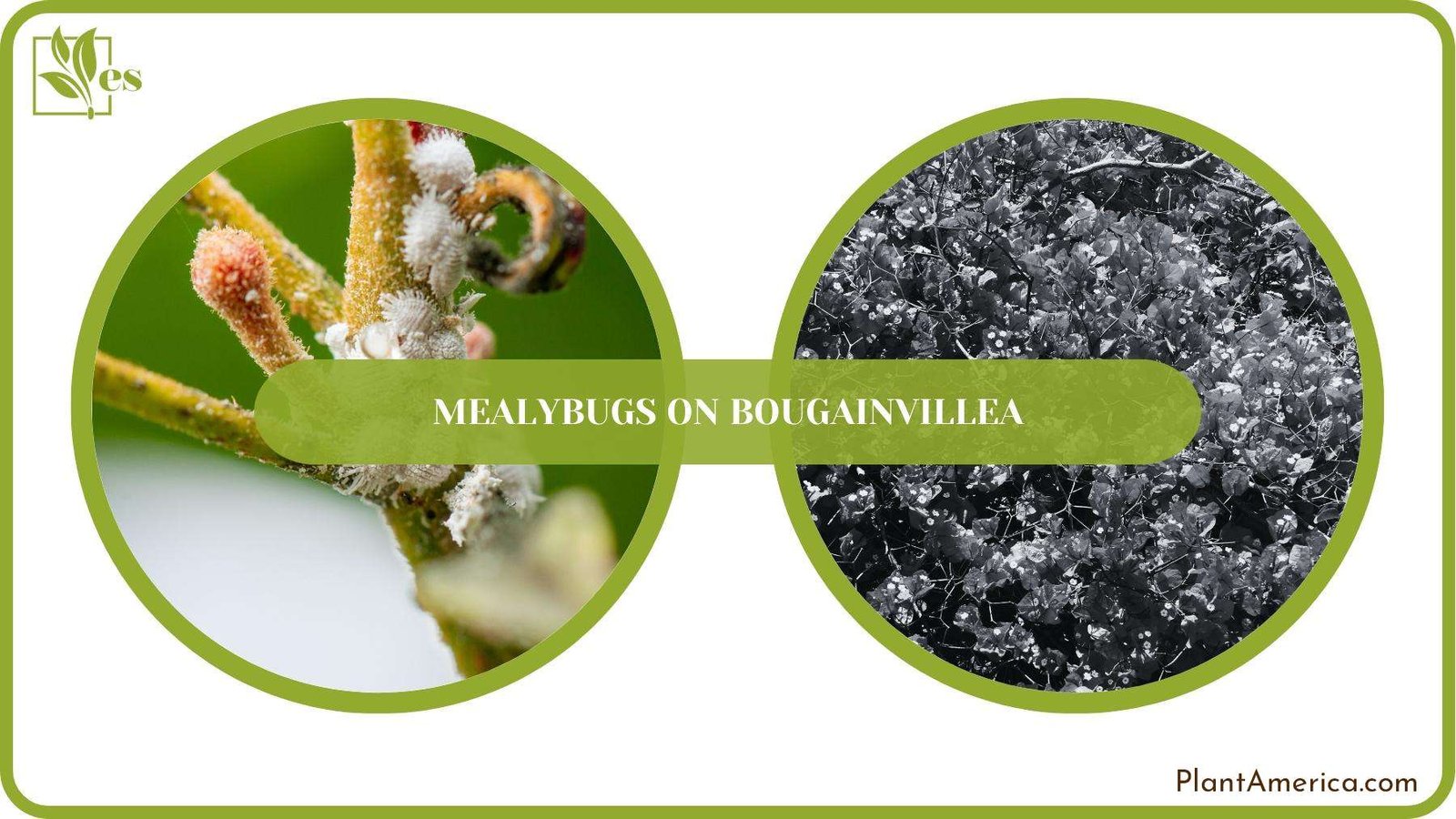
These pesky creatures can be most simply described as resembling fuzzy cotton buds. They have the appearance of brown soft scale insects, covered in small tufts of white.
Though they might be mistaken for other sap-sucking insects, such as spider mites, mealybugs’ appearance makes them pretty unique. They possess a flat, soft body with a noticeable oval shape.
Their segmented body is coated with shiny wax, which acts as a barrier against many standard pesticides The citrus mealybug is the most prevalent in this genus, showcasing a pink body beneath the wax layer.

These insects tend to hide on leaves or stems. Female mealybugs lay numerous eggs within the white, cottony fluff. Once the nymphs hatch, they appear bright yellow and are susceptible to pesticides — the exact life cycle phase in which you want to catch them!
As they develop their waxy covering, they become shielded from external threats so it’s essential to spot the signs of infestation early on. And there are quite a few signs which you can use to identify them!
From direct damage to their secretions and even the activity of certain other insects around your outdoor plants, let’s look at each of them closely.
– Stunted Growth
If you notice that your bougainvillea plant is not growing as vigorously as it should, with smaller leaves and limited new shoot development, this could be a sign of an underlying issue.
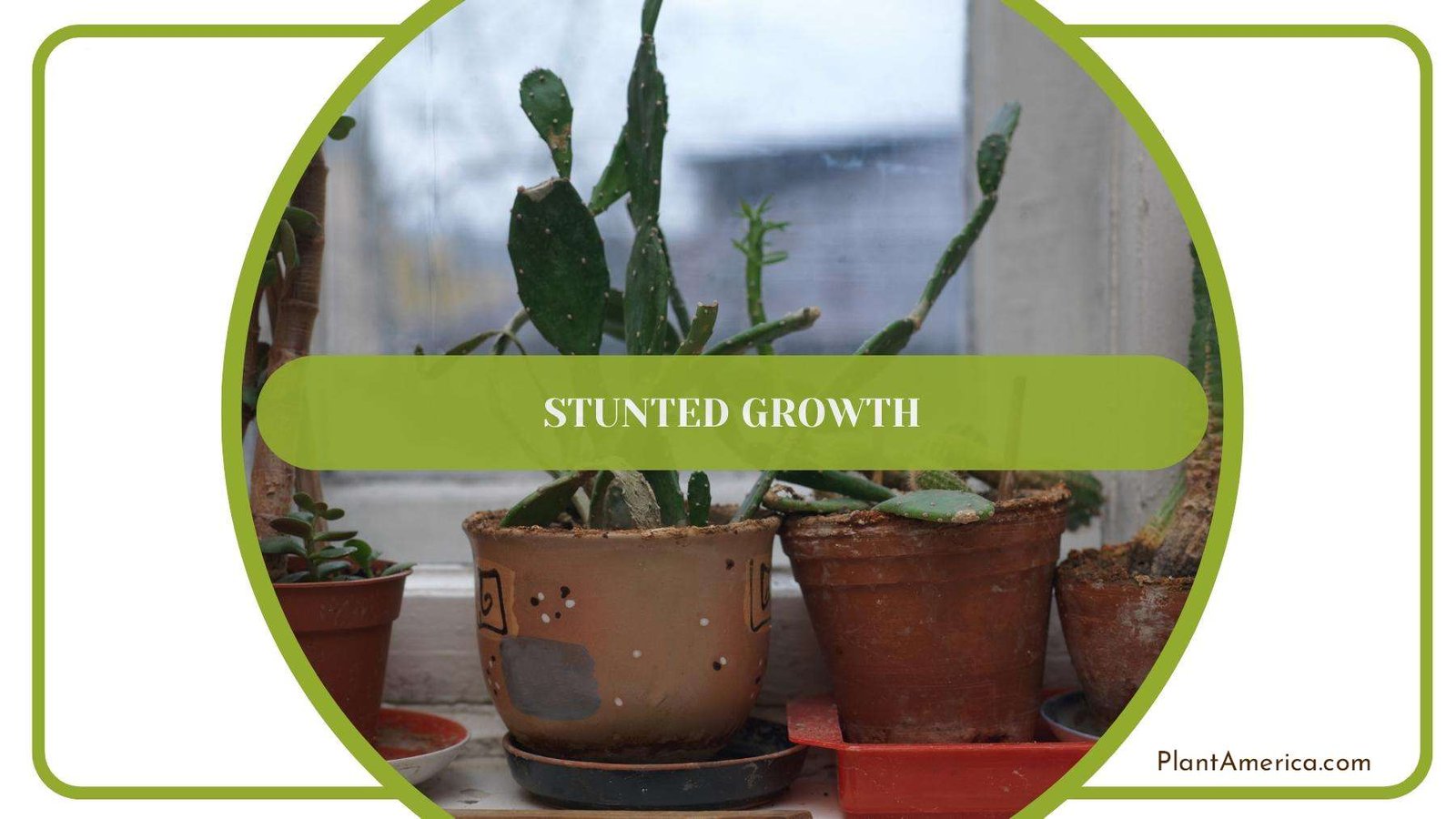
Mealybugs feed on the sap of plants, which can lead to nutrient deficiency. One common symptom of this is the yellowing of leaves. Infested bougainvillea leaves might start to curl or deform too.
– Cottony Formations
Mealybugs tend to form colonies across different parts of the plant, encompassing leaves, stems, and even the blooms themselves. These gatherings give rise to the illusion of delicate, fluffy masses, resembling small patches of white or pale-colored fluff. Its purpose serves a dual role — acting as a protective barrier for the insects against the elements and potential predators, all the while facilitating their consumption of the plant’s sap.
Swift detection of these clusters of white fluff is of utmost importance to address a citrus mealybug infestation in your bougainvilleas. These formations can sometimes be dismissed as mere mold issues. Yet, it’s imperative to closely examine them, taking an intimate look, in order to ascertain the presence of any pests making an appearance.
– Sticky Substances
When it comes to bougainvilleas, the telltale sign that gardeners often notice to identify mealybugs is the presence of a sticky residue on the trees. This substance, known as honeydew, is essentially the leftover plant sap that mealybugs haven’t fully digested. If you spot any shiny or sticky patches on your tree, it could be an indication that mealybugs are feeding on it.

Honeydew serves as a prime breeding ground for sooty mold, a type of fungus. This sticky residue provides the perfect surface for the mold to attach to, grow on, and cover various parts of the plant, including leaves, branches, and even blooms.
Resembling powdery mildew, the ailment manifests as a dark gray or black layer coating the surfaces of the bougainvillea’s leaves and other components.
Vigilant monitoring of your bougainvillea is key to spotting any signs of unusual growth or discoloration. Timely identification of sooty mold empowers you to tackle the underlying mealybug infestation before it becomes a significant predicament.
Mealybugs have a knack for sheltering on the undersides of leaves, where their presence is less conspicuous. Delicately turn over the leaves and scrutinize these concealed areas for indications of mealybugs or their cottony clusters.
How To Get Rid of Mealybugs From Bougainvilleas
Recognizing mealybug infestations on bougainvillea is one thing. But how do you get rid of them? Luckily, you’ve plenty of options on your hands — from alcohol and water to diatomaceous earth and some flying allies. And a lot of these will work for other bougainvillea pests, such as leaf miners and looper caterpillars! Do not transplant your bouganvilleas before getting rid of mealybugs.
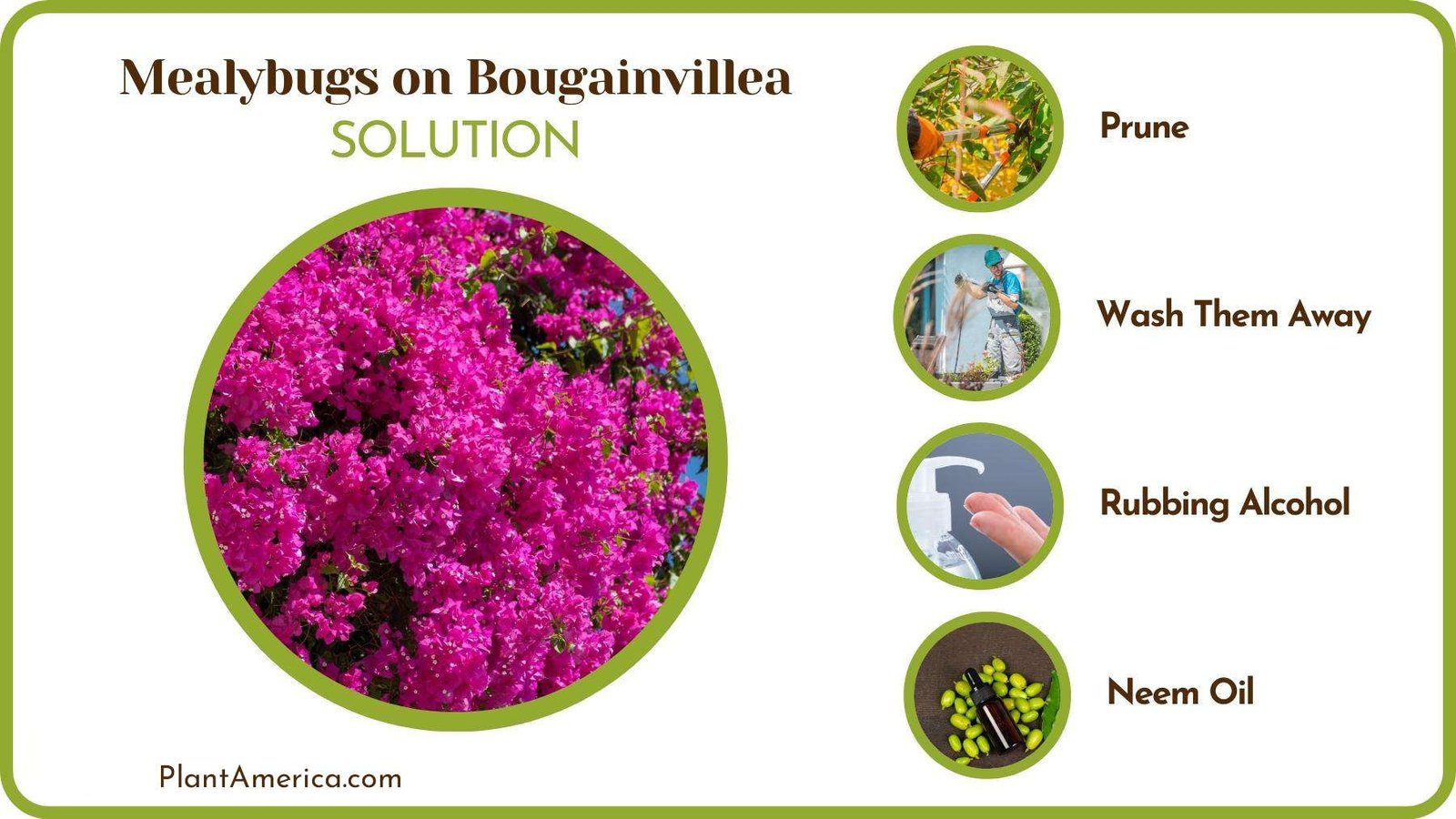
– Prune
Light pruning can do our plants good (especially if you’re not removing huge amounts of foliage), and bougainvilleas tend to respond well to light seasonal pruning sessions. Trim away any sections of your plants that exhibit signs of brown-scale infestation. This action will effectively eliminate a significant portion of the population, along with their eggs.
Unless it’s a vital area such as a leaf node or root stem, avoid attempting to salvage the affected foliage.
– Wash Them Away
Clearing mealybugs from your bougainvilleas involves dislodging these pests from the plant’s surfaces. The power of water disrupts their hold on leaves, stems, and various parts of the tree, directly diminishing their numbers, and is particularly effective against visible clusters and colonies.
Choose a time when the sun’s intensity is moderate to avoid stressing your plants. Typically, early morning or late afternoon is best. Equip yourself with a hose fitted with a spray nozzle or opt for a pressure sprayer. Adjust the nozzle to create a robust stream of water that isn’t forceful enough to harm the plant. Ensure thorough coverage by carefully spraying all surfaces of the tree.
Depending on the severity of the infestation, you may need to repeat this process multiple times across several days or weeks to ensure comprehensive mealybug removal.
– Rubbing Alcohol
Take a cotton ball and saturate it with isopropyl alcohol. Refrain from using higher concentration alcohol, and perform a patch test on a single leaf prior to applying it to the entire plant. This will ensure that the alcohol doesn’t cause any damage.
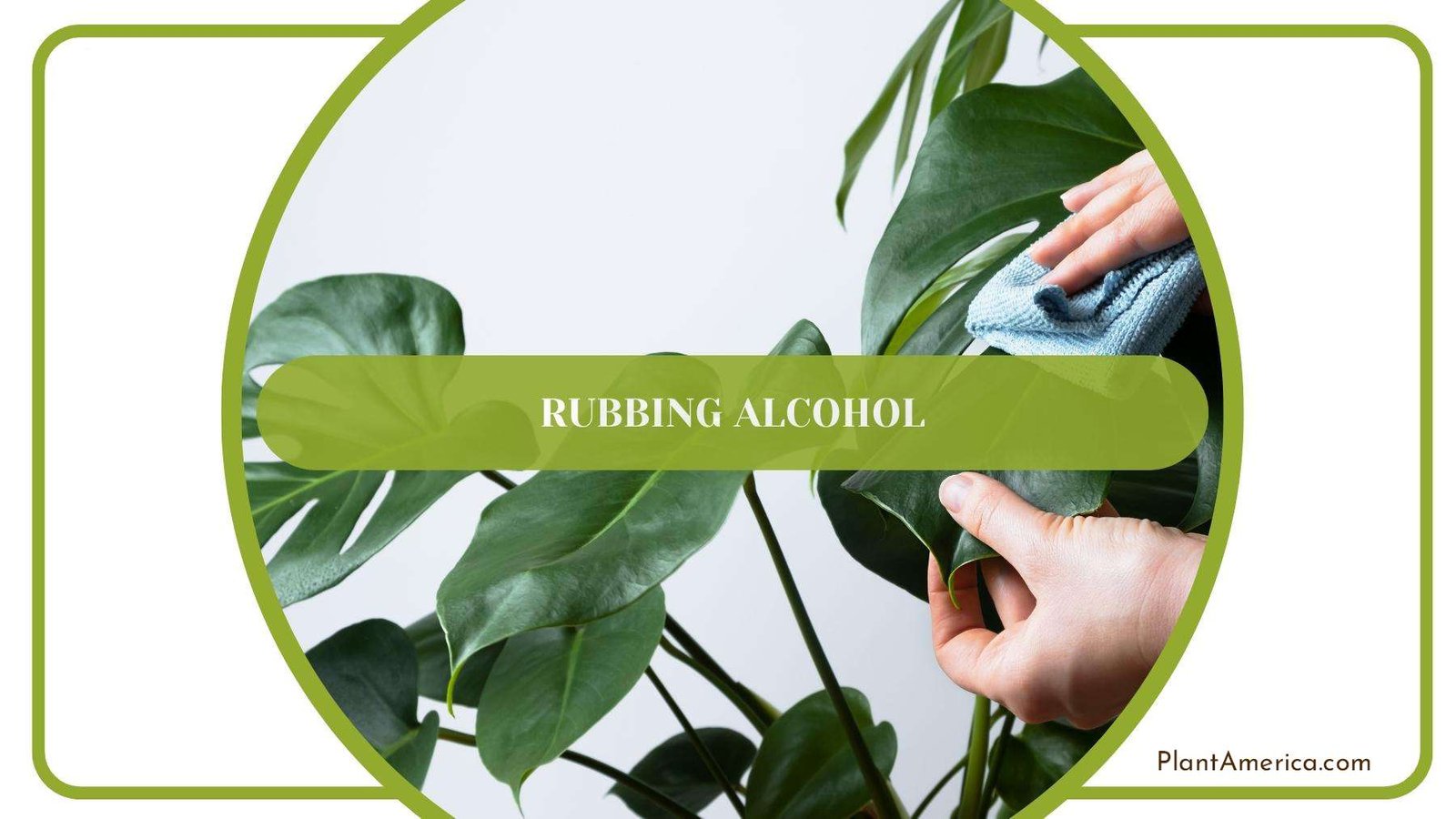
Gently rub the mealybugs with the soaked cotton ball — an action that promptly eliminates them. Continue this treatment on a weekly basis until the infestation is fully eradicated. If your bougainvillea is already an established specimen and has grown quite big, you can also spray cover it with a solution made from alcohol and water. Avoid spraying the plants at midday to prevent leaf burns and other damage!
– Neem Oil
Create a mixture by combining a potent neem tree oil with a mild dish detergent and warm water (use a few tablespoons of neem, one teaspoon of dish detergent, and a gallon of warm water, or follow the guidelines on the product label).
Spray the oily solution onto your plants either in the morning or evening — times when beneficial insects are less active. The oil’s natural properties impact an insect’s feeding, growth, and development, while also serving as a repellent.
The effects of this oil aren’t limited to harming pests alone. The Environmental Protection Agency has deemed neem tree oil safe for application on edible plants, including vegetables, as well as ornamentals such as bougainvilleas.
– Soapy Solutions
Here’s another straightforward solution — whether it’s a store-bought option, preferably devoid of perfumes and plant-harming additives, or a homemade mixture, insecticidal soaps work wonders.
Mist the soapy solution across all plant components, ensuring coverage on the undersides of leaves as well.

If the infestation persists, continue the process biweekly or weekly as required. Homemade soapy spray and numerous commercial products are suitable for use on edible plants and landscaping specimens alike, but always consult the product label for guidance!
– Diatomaceous Earth
Diatomaceous earth is a sharp powder made from fossilized aquatic organisms. The powder is abrasive to the exoskeleton of insects, including mealybugs. When mealybugs come into contact with it, the powder sticks to their bodies and acts as tiny shards that cut through their protective waxy coating.
Make sure to use food-grade diatomaceous earth, as this type is safe for animals and people. Start by making sure your bougainvillea is dry and free from moisture. Mealybugs are less active during dry conditions, making the application more effective.
Focus on the areas where mealybugs are most concentrated, and lightly dust with a thin layer of diatomaceous earth.
This powder loses its effectiveness when wet, so if it rains or if you water your plant, you may need to reapply it. It can become less effective if it clumps together, so reapply if it appears clumpy.
Diatomaceous earth takes some time to work, as it requires contact with the mealybugs’ bodies to take effect. It’s not an immediate solution, but over time, it can help control mealybugs‘ population.
Side note: Avoid breathing in the dust while applying it, and wear appropriate protective gear. Remember that using a combination of control methods, such as diatomaceous earth along with other natural solutions or insecticides, can provide the most effective approach to managing mealybugs on your bougainvilleas.
– Friendly Insects
When it comes to biological control, bougainvilleas have a host of natural adversaries that specifically target the mealybugs. While some of these insects can be obtained from garden supply stores, you can also naturally attract them to your garden, especially when mealybugs are present.
The mealybug destroyer is the most prominent among these, as they exhibit a robust appetite for citrus mealybugs as early as from a larval stage. Surprisingly effective, they can consume up to a few hundred mealybugs per week, proving highly efficient even in severe infestations.
Ladybugs are another proficient mealybug predator, as well as effective hunters of the cherry fruit fly. While perhaps less visually pleasing, lacewing larvae and parasitic wasps also make notable contributions.
Even certain spider and small bird species lend a hand in managing mealybug populations on bougainvillea. To harness the power of these natural allies, it’s important to proceed with caution and avoid using pesticides or insecticides that could inadvertently harm these helpful organisms.
Conclusion
Managing mealybugs on bougainvilleas requires a proactive approach rooted in early detection and a diverse range of effective control methods. These tiny pests can present a formidable challenge, distinct from other bougainvillea-related issues. However, by following this guide, you’ll successfully get rid of them:
- Recognizing the distinct appearance of mealybugs is essential. Their cottony clusters and unique body shape set them apart from other sap-sucking insects. Vigilant monitoring of your bougainvilleas for stunted growth, curled leaves, and the presence of sticky substances can help you identify and address infestations in their early stages, preventing more significant damage.
- When combatting mealybugs, you have an array of effective tools at your disposal. Pruning infested parts and employing the power of water to wash them away are straightforward yet impactful methods.
- Utilizing isopropyl alcohol, neem oil, soap, and diatomaceous earth provides both chemical and natural solutions to tackle the infestation from different angles.
- Nature also offers allies in the fight against mealybugs. Beneficial insects like the mealybug destroyer, ladybugs, lacewing larvae, and parasitic wasps play crucial roles in controlling mealybug populations. By fostering an environment conducive to their presence, you can naturally curtail mealybug numbers without resorting to harmful pesticides.
In your pursuit of a mealybug-free bougainvillea garden section, remember that a combination of approaches is often the most effective strategy.