
Mealybugs on soil are more than a minor inconvenience; they directly attack the roots of your plants, sapping essential nutrients and leaving behind a weakened garden. In short, these tiny pests can rapidly transform a thriving oasis into a wilting one.
That’s why the fight against mealybugs is not one to be taken lightly. So, join us as we discuss how you can eradicate these white pests easily.
Why Are Mealybugs on the Soil Bad for Your Plants?
Mealybugs on the soil are bad for plants because they feed on the root juices, leading to yellowing and weak growth. They can also attract other pests by creating a sticky mess called honeydew. If left unchecked, mealybugs can even kill your garden plants.
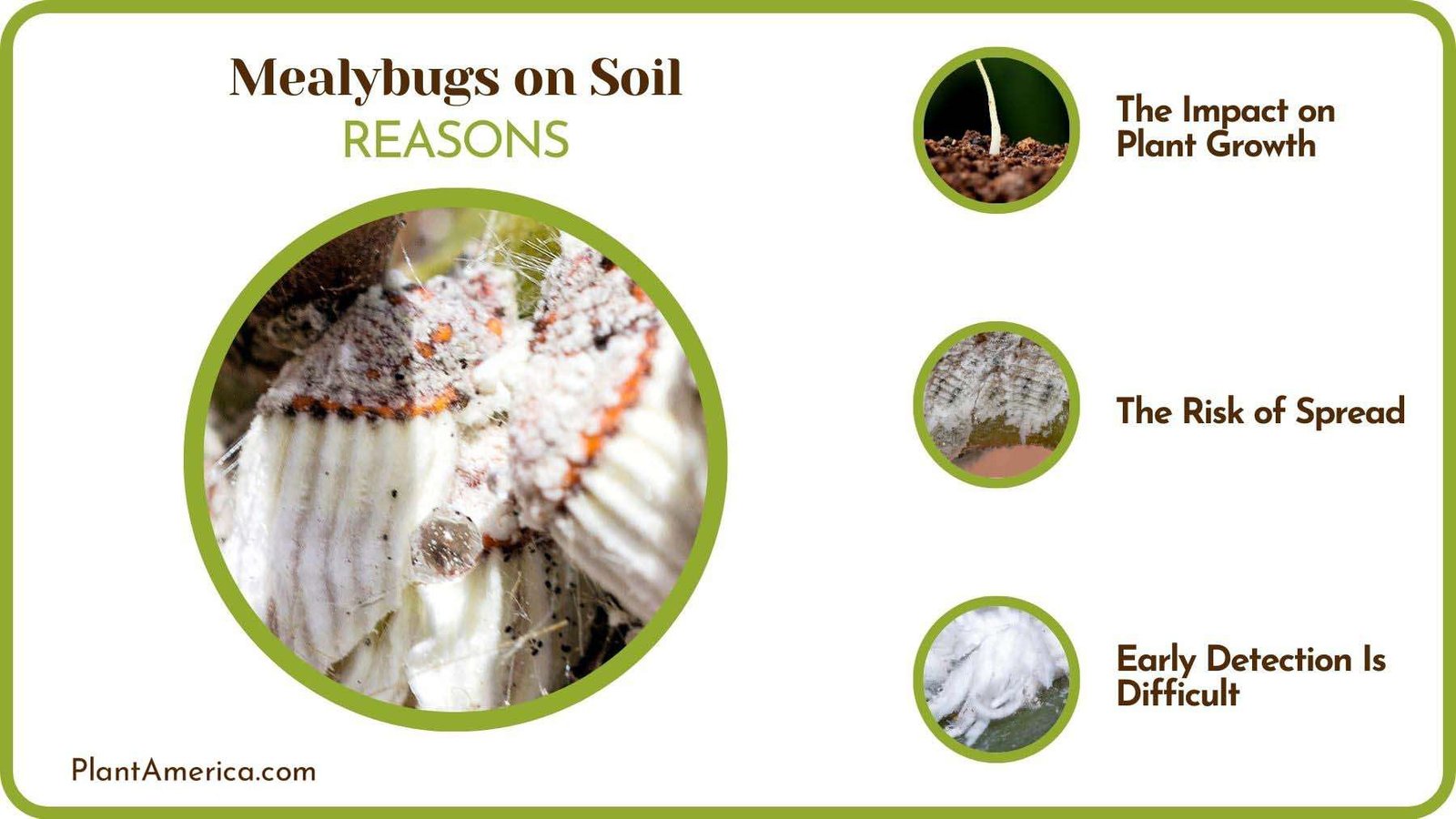
– The Impact on Plant Growth: The Damage You Can’t Afford
Mealybugs damage plants by extracting sap from their roots, affecting their health. This action causes two main problems: loss of nutrients and dehydration. That’s why a mealybug-infested plant shows poor growth.
– The Risk of Spread: The Fear
Once plants are infested, the mealybugs can quickly spread to neighboring greenery. A single infested plant can become the source of a more significant infestation problem that threatens an entire garden or collection of indoor plants.
– Early Detection Is Difficult: A Sad Part of Root Mealybugs vs Mealybugs Debate
Knowing what do mealybugs look like in soil for early detection is essential. They often resemble tiny white, cotton-like masses on the roots or soil’s surface. Recognizing them at this stage can mitigate their negative impact on plants.
Gardeners must know about the differences between root mealybugs and regular mealybugs. While regular mealybugs typically target leaves and stems, the root ones attack the root tissues, causing more profound and often irreversible damage. You will most likely be dealing with root mealybugs if you see bugs in the soil.
What are Some Treatments for Mealybugs on Your Soil?
Some treatments for mealybugs on your soil include hoeing the soil, using insect-killing soap, and using an alcohol drench. You can also try essential oil soaks, water treatments, and sprinkling diatomaceous earth for better results. Chemical treatments and removing ant colonies are also part of effective control.
– Hoe the Soil: First and Foremost Measure
Have you ever wondered how to get rid of mealybugs in soil? Well, then note that hoeing the soil is one way to combat these little pests. By hoeing the soil, you can break up these mealybug eggs, stopping them before they even have a chance to grow.
It is not only good for getting rid of mealybugs. You can also aerate the soil by doing it, giving your plants more room to breathe. Furthermore, the soil won’t face drainage properly when you do this method.
– Flood With Insect-Killing Soap
Let’s talk about a method that sounds fancy but is as simple as pie: flooding your garden with insect-killing soap. It’s simple- mix insecticidal soap with water and spray it all over the affected area. Mist under the leaves, on the stems, and even on the soil. You want to get those mealybugs wherever they are hiding.
This soap doesn’t just clean; it kills those mealybugs in their tracks. So, you can quickly treat mealybug infestations with it.
Also, you’re not adding more chemicals to your garden; you’re using nature to fight nature. Still, it is better to read the printed instructions on the special soap bottle. Some of these soaps are ready to use, while others might need mixing and matching.

– Alcohol Drench: Kill Bugs Within the Soil
Mealybugs can be a real headache for gardeners, but have you ever considered using something as simple as alcohol to deal with them? Alcohol isn’t just for cleaning wounds or enjoying a relaxing evening; it can also effectively eliminate mealybugs.
Here’s how you can use it in your garden:
- Mix it Right: You don’t want to use rubbing alcohol straight out of the bottle. Mix it with water to create a solution that’s gentle on plants but tough on mealybugs. A good ratio is one part rubbing or isopropyl alcohol to three parts water.
- Apply with Care: Drench the infested areas thoroughly with a spray bottle. Focus on the underside of leaves and the soil, where mealybugs love to hide.
- Watch the Magic Happen: The alcohol will quickly kill the mealybugs without harming your plants.
Make sure to give your plants a bit of a hiatus between treatments.
– Essential Oil Soak: An Easy Solution For Soil Bugs
If you believe in the power of natural remedies, essential oils might be right up your alley. You might want to know, does neem oil kill mealybugs? The answer is a yes; it does!
Here’s a step-by-step guide to using neem seed oil against mealybugs:
- Create the Mixture: Mix neem seed oil with liquid soap and water. The soap helps the oil mix well with water and stick to the plants.
- Spray Away: Use a spray bottle to apply the mixture to the infested areas. Be generous, and remember the nooks and crannies where mealybugs might be hiding.
- Monitor and Maintain: Keep an eye on the treated areas, and don’t hesitate to reapply if needed.
– Hot Water Treatment: Another Unusual Method
The answer to the question, what kills mealybugs instantly, might be as straightforward as heated water. No, it doesn’t mean you must boil water and then scorch your plant’s roots. Heated water treatment involves carefully applying hot (but not boiling) water to the affected plants and soil.
A gentle spray or pour ensures the warm water reaches the mealybugs without overwhelming the plants. The heat from the water kills mealybugs on contact, offering immediate relief to your plants.
Keep in mind that this method’s success lies in the water’s temperature. Boiling water can harm the plants, causing you more frustration. Too cold, and it won’t affect the mealybugs. We think the ideal temperature is about 115 to 120 degrees Fahrenheit. Use a thermometer first to ensure the water’s temperature is within this range, and only then apply it on the plants.
– Sprinkle Diatomaceous Earth To Disrupt Life Cycle
Diatomaceous earth is a common and highly effective tool in pest control, including against mealybugs. It is different from others due to its microscopic, razor-sharp edges. While these edges are harmless to humans and larger animals, they are lethal to small insects like mealybugs.
When the mealybugs come into contact with diatomaceous earth, it cuts through their waxy coating. As a result, they dehydrate and, eventually, die.
Sprinkling diatomaceous earth around the affected plants creates a barrier that mealybugs find challenging to cross. It can be used on the soil’s surface, around the base of plants, or even on the foliage if the infestation has spread that far.
Please be aware that diatomaceous earth remains effective as long as it’s dry. Furthermore, it also doesn’t lose potency over time. But if it gets wet, then you will have to reapply it.
Remember to use food-grade diatomaceous earth, as it’s safe for gardens and won’t pose a risk to pets or children. Application is as simple as lightly sprinkling the powder where needed and can be part of a regular pest control routine.
– Solarization Can Treat Mealybugs
Solarization leverages the sun’s natural energy to heat the soil to temperatures that mealy bugs can’t survive. It involves covering the infested area with a clear plastic tarp and leaving it under the sun; the soil’s temperature rises, effectively killing the mealybugs dwelling within.
The best part about solarization is that it can also eliminate other soil-borne pests, fungi, and weeds. However, timing is crucial. It works best during the hottest part of the year. The plastic tarp should be tightly sealed around the edges, and the soil needs to be moist before covering.
Keeping these factors in mind ensures the heat is trapped and penetrates deep into the soil, reaching all the mealybugs hiding within.
– Discard the Old Potting Soil and Add New One
Sometimes, despite all efforts, a mealybug infestation might become so severe that the best course of action is to start fresh. Discarding the old soil and adding a new one may seem radical. But it can be the key to saving your whole garden!

Do these steps:
- Remove as much of the infested soil as possible, taking care not to damage the plant’s roots if you’re dealing with potted plants.
- Once the old soil is removed, thoroughly wash the roots to ensure no mealybugs are clinging on.
- Next, replace the old soil with fresh, sterilized ones that suit your growing plants.
After this, throw away the infested soil and ensure no bugs on your clothes when you return home.
– Do Chemical Treatment: A Relentless Solution
For those facing a relentless mealybug infestation, chemical treatment might be the answer. Utilizing a chemical pesticide can provide fast and effective results, though it must be done carefully and carefully.
One such option is going for “hydrogen peroxide root mealybugs treatment.” Hydrogen peroxide is a common household item but can be a powerful gardening insecticide.
Seasoned gardeners prefer to drench the soil with a peroxide solution. It targets the mealybugs directly in a few minutes. Moreover, it also oxygenates the soil, promoting healthy root growth.
But you should be careful about selecting the right hydrogen peroxide bottle. The correct concentration is essential, as too strong a solution might harm the plants. Usually, a 3 percent hydrogen peroxide solution is recommended. It doesn’t harm the plants, but keeps the bug population in check.
– Remove Ant Colonies: Do This If You Don’t Want Bugs To Return
A broader pest management approach is needed if you want to prevent mealybugs. For this, you will have to eradicate ant colonies too.
Ants and mealybugs have a mutualistic relationship. The mealybugs produce honeydew, which the ants eat. In return, the ants protect the mealybugs from predators and even carry them to new plants.
By removing ant colonies, gardeners can disrupt this “mealybug support.” Without the ants to defend and spread them, the mealybugs become more vulnerable and easier to control.
However, you must be careful when eliminating ant colonies. From simple methods like pouring boiling water into the ant mound to using ant baits and traps, the approach should be suited to the specific situation and the types of ants involved.
Sometimes, consulting with a professional pest control service is wise. They can identify the specific ant species and devise strategies (keeping them in mind). That’s all about how you can protect your garden from mealybugs.
Conclusion
Mealybugs in the soil can cause real problems for your plants, but you can trounce them. We’ve talked about a bunch of ways to deal with these pesky bugs, and here’s a simple reminder of what you can do:
- Try Different Methods: Use soap, neem oil, or alcohol.
- Look at the Whole Picture: Sometimes, ants team up with mealybugs. Break their teamwork, and you break the problem.
- Stay Alert and Ready: Keep an eye on your plants, and act fast if you see anything wrong. Quick action can save the day.
You can send those mealybugs packing with care, attention, and love for your garden. Happy gardening!