
Mealybugs on coontie plants are garden issues that can quickly go bad if left alone. Zamia pumila and Zamia integrifolia are the scientific names of the coontie palm, which can sometimes be subject to mealybugs.

Fortunately, we have the reasons for their existence and how to extinguish them!
Why Are There Mealybugs on Your Coontie Plant?
There are mealybugs on your coontie plants due to their nutrient-rich sap, sheltered growth habit, and lack of natural predators, creating an ideal feeding and breeding ground for these pests. The transport of infested plants, wind dispersal, and the insects’ ability to reproduce rapidly contribute to their presence.
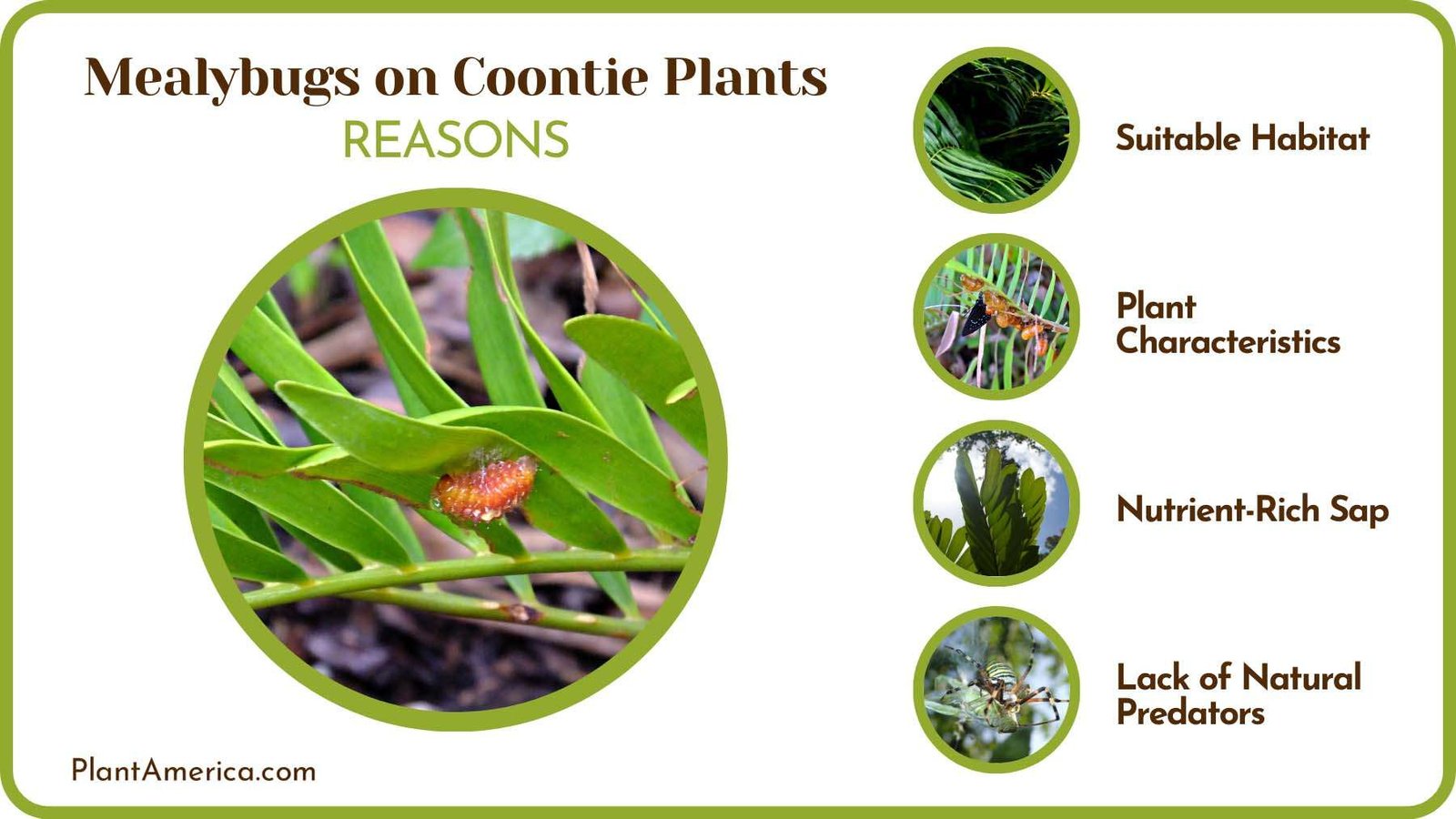
– Suitable Habitat
Coontie plants offer an environment that meets the preferences of mealybugs for feeding, shelter, and reproduction. The soft and tender foliage of coontie plants serves as an ideal location for mealybugs to establish themselves.
These bugs are attracted to the plant’s tight growth pattern. Plus, the nutrient-rich sap within the coontie plant serves as a delectable meal for these bugs, facilitating their growth and reproduction.
– Plant Characteristics
With a compact and dense growth habit, coontie plants offer ideal hiding places for mealybugs. The clusters of leaves create sheltered areas where these insects can establish themselves, shielded from external factors and predators. Mealybugs are naturally drawn to the soft leaves of coontie plants, considering them a cozy place to feed and multiply.
– Nutrient-Rich Sap
The sap refers to the sugary, nutrient-laden fluid that flows through the vascular system of coontie plants. Mealybugs are drawn to this sap as it serves as their primary source of nourishment.
When these bugs indulge in the nutrient-rich sap, it disrupts the plant’s well-being. The plant weakens, its growth is stunted, leaves take on a yellow hue, and in some cases, they even drop off.
– Lack of Natural Predators
In ecosystems where coontie plants are not native, the natural predators that would naturally keep mealybug numbers in check may be absent. These predators, such as ladybugs, lacewings, and parasitic wasps, feed on mealybugs and their eggs, helping to prevent infestations from reaching harmful levels.

– Environmental Factors
These pests are quite attuned to their surroundings, and certain conditions can set the stage for them to thrive and multiply. The elevated humidity levels, often found in the natural homes of coontie plants, create a welcoming space for mealybugs. The moisture in the air not only helps them survive but also fosters the growth of their eggs and young ones.
Plus, warmer temperatures speed up the mealybug life cycle, allowing them to reproduce rapidly and in greater quantities. These conditions mirror the tropical and subtropical climates of coontie plants’ native regions, making it easier for mealybug colonies to establish themselves.
– Transport and Spread
Mealybugs can find their way to coontie palm plants through various modes of transport and spread. These tiny insects can be carried by the wind over considerable distances, settling on coontie plants and establishing new colonies.
Mealybugs can hitch a ride on gardening tools, equipment, or clothing, bringing them into contact with coontie plants unintentionally during routine maintenance. If plants, already infested, are introduced to a new environment, they can become a source of infestation for nearby coontie plants.
How To Keep Mealybugs off Coontie Plants?
To keep mealybugs off coontie plants, perform regular inspections for early signs of infestation and introduce natural predators or eco-friendly solutions when needed. Also, maintain garden cleanliness and consider isolating new plants before introducing them to prevent the spread of these pests.

– Regular Inspection
Conducting frequent and thorough inspections of your coontie plants is a fundamental strategy to prevent and manage mealybug infestations. By routinely examining the leaves, stems, and other parts of your plants, you can catch the early signs of mealybug presence.
Look for obvious signs like the soft, cotton-like clusters that these insects often create. Also, be on the lookout for traces of sticky honeydew on the leaves. Regularly checking your plants also helps address any other potential issues that might affect your coontie plants.
Incorporating this habit benefits their well-being. When you include it in your gardening routine, you’re taking action against pests. This strategy helps your coontie plants look wonderful and stay in good health as time goes by.
– Isolation
When introducing new plants into your garden, especially coontie plants, it’s wise to practice a period of isolation. This involves placing the newly acquired plants in a separate area, away from your existing plants, for a certain duration. This simple step has a couple of important jobs when it comes to keeping those pesky mealybugs away.
First off, it lets you keep a close eye on new plants before they join your garden gang. Catching any mealybug trouble early on can stop those critters from hitching a ride to your coontie plants and other green buddies.
Plus, by giving new plants their own space, you’re making it harder for mealybugs to jump from plant to plant. This smart move cuts down the chances of spreading trouble. When you give new plants their personal space, you’re playing it safe.
– Pruning Infested Areas
When dealing with a mealybug infestation on coontie plants, one effective approach is to promptly prune and remove the infested areas. Mealybugs tend to cluster in specific locations, such as the underside of leaves and the junctions between stems and leaves.

By observing the plant closely and identifying infested areas, gardeners can take prompt action to prevent pest spread. Using clean and sharp pruning tools, they can carefully trim the affected plant parts.
These pruned sections should then be properly disposed of outside the garden. This not only eliminates a significant portion of mealybugs but also halts their migration to the coontie plant’s healthier regions.
– Natural Predators
Introducing natural predators to your garden is a proactive and ecologically balanced method to manage mealybug populations on coontie plants. Beneficial insects, such as ladybugs, lacewings, and parasitic wasps, are effective natural enemies of mealybugs.
Ladybugs, also referred to as ladybirds or lady beetles, are excellent mealybug consumers throughout their life stages, including eggs and nymphs. Lacewings, delicate in appearance, possess larvae that skillfully prey on mealybugs with a hearty appetite. Parasitic wasps lay eggs on mealybugs; their larvae internally devour the pests, effectively controlling their population.
To support these beneficial insects, offer nectar-rich flowers for adults and sheltered spaces for larvae. Utilizing natural predators ensures a sustainable, harmonious approach to managing mealybugs on your coontie plants.
– Spraying with Water
Using a forceful stream of water to spray the coontie plants can prove to be an effective method for managing mealybug infestations. This technique involves directing a strong jet of water onto the affected plants, dislodging the mealybugs from their feeding sites.
The water stream’s force removes insects from leaves, stems, and hiding spots. Mealybugs, due to their weak grip, are easily dislodged by the water’s impact. This method suits light to moderate infestations and washes away sticky honeydew, which can attract pests or mold.
Unlike chemicals, water spray is non-toxic, eco-friendly, and favored by gardeners avoiding pesticides. Regular use, especially on leaf undersides where mealybugs gather, curbs population growth and prevents coontie plant damage.
– Insecticidal Soap
Insecticidal soap is a specialized solution formulated to effectively combat pests like mealybugs on coontie palm plants. This soap is derived from natural plant oils and contains fatty acids that work by penetrating the protective waxy layer of mealybugs.

When the soap touches the insects, it messes up their cell membranes. This leads to dehydration and, eventually, their end. Insecticidal soap is safe and eco-friendly. It works against mealybugs, focusing on soft-bodied insects. It won’t harm good bugs, plants, or people as much.
Dilute the soap as the instructions say. Put it on the coontie plant where needed. Cover the bugs well. Remember, you might need to use it a few times. The soap only affects bugs it directly touches. To control mealybugs on coontie plants, you can use insecticidal soap with other methods. Trim the plant and keep the garden clean. This combo helps a lot.
– Neem Oil
Neem oil, derived from the seeds of the neem tree, is a natural and environmentally friendly solution for managing mealybugs on coontie plants. It contains compounds that disrupt the growth and development of insects, including mealybugs.
Neem oil serves a dual purpose: repelling and disrupting mealybugs’ feeding, molting, and reproductive processes. When applied to coontie plants, it forms a protective layer that hinders mealybug attachment and feeding. Moreover, it weakens their protective waxy coating, enhancing susceptibility to environmental factors and other treatments.
To use neem oil, mix it with water and a bit of dish soap to create an emulsified solution. Spray this mixture onto affected coontie plant areas, ensuring comprehensive coverage on upper and lower leaf surfaces. Neem oil is environmentally friendly, degrading quickly, and a preferred alternative to synthetic pesticides.
– Alcohol Spray
An effective and relatively simple method for combating mealybug infestations on coontie plants involves using an alcohol spray. This solution typically consists of a mixture of isopropyl alcohol and water. When you apply alcohol directly to mealybugs, it disrupts their protective wax coating. This disruption leads to dehydration and, ultimately, their demise.
The alcohol spray technique works well for targeting single insects or small infestations. This is because the alcohol evaporates rapidly, leaving behind very little residue on the plant. However, high levels of alcohol could potentially harm the plant’s leaves.
Plus, you can combine this method with other strategies for integrated pest management. This creates a complete solution for controlling mealybugs. To effectively manage mealybug populations on coontie plants using the alcohol spray approach, you’ll likely need to regularly monitor and apply the treatment.
– Maintain Garden Cleanliness
Mealybugs tend to hide in leaf folds, crevices, and places with plant debris like fallen leaves and weeds. Gardeners can deter these pests by regularly clearing these hiding spots. This creates an environment less suitable for mealybugs to settle and multiply.
Regularly clearing away dead leaves, weeds, and organic debris has several benefits. It eliminates hiding spots for insects and disrupts their life cycle by removing shelter and food sources. This practice also improves garden health and reduces the risk of pest problems.
FAQs
– Can Mealybugs Cause Long-Term Damage to Coontie Plants?
Yes, mealybugs can cause long-term damage to coontie plants. Their feeding behavior can weaken the plant, leading to stunted growth, yellowing leaves, and even death if the infestation becomes severe and unchecked. Quick remedies should be implemented to ensure eradication and future prevention of mealybugs on these plants.
Conclusion
Coontie palm problems due to mealybugs will no longer have a chance because of our guide, so let’s go through the important points one more time:
- Regularly inspect coontie plants for early signs of mealybug infestation.
- Use natural predators like ladybugs and introduce preventive measures.
- Practice good garden hygiene by cleaning debris and fallen leaves.
- Consider natural solutions like neem oil and insecticidal soap.
- Maintain a balanced approach, utilizing both proactive measures and targeted treatments.
Just remember to take measures to keep mealybugs at bay, as these pests can not only undermine the plants’ vitality but also impact their potential coontie uses in landscaping!