
How to transplant vine maple is a procedure that requires you to be conscious of the age and size of the tree, the planting site, and the soil texture. You can transplant the vine maple from a pot to the ground or from the ground to another piece of land as well.
You also need to take note of the transplanting season so that you do not harm your maple tree. This guide will help you become proficient in transplanting the vine maple.
How to Transplant Vine Maple: Crucial Steps to Follow
The crucial steps to follow when transplanting a vine maple include preparation of the ground, and considering the soil texture, space, and tree size. Prepare the tree for transplanting and avoid harming it or the root ball. Be sure to consider all precautionary measures to avoid transplant shock.

1. Establish Your Transplanting Technique
Transplanting is a procedure that involves replanting an actively growing plant in another site to enhance continued growth. There are various methods for transplanting plants but for trees, digging holes is the most preferred strategy. The tree’s size determines the width and circumference of the hole that you will dig.
In most cases, vine trees are propagated in nursery beds or pots, and once they have established a relatively strong root system they are transplanted.
2. Determine Trees to Transplant
All plants can be transplanted but some might suffer a transplant shock more than others due to their health and maturity. Scout your vine maple plants for diseases and pest attacks before you transplant because it might not be wise to transplant affected trees. It is best to first treat your plants and make sure they are healthy before you transplant them. Stressed plants or unhealthy trees might not survive the transplant shock.
Maple trees that are 10 years and below can be transplanted better than those that are older. We recommend that you transplant plants when they are still within six feet, with a small root ball. Avoid transplanting Japanese maples above 20 years because the root balls are too huge and such plants are more likely to succumb to the transplant shock.
3. Be Conscious of the Transplanting Period
You need to know the right season for transplanting Japanese maples to reduce vine maple problems. The finest time for a maple tree transplant is during the beginning of spring or late fall. During this period, the plant will be dormant and resting. You should transplant it then because its biological activity is minimal and it won’t lose much water because it won’t have leaves to transpirate with.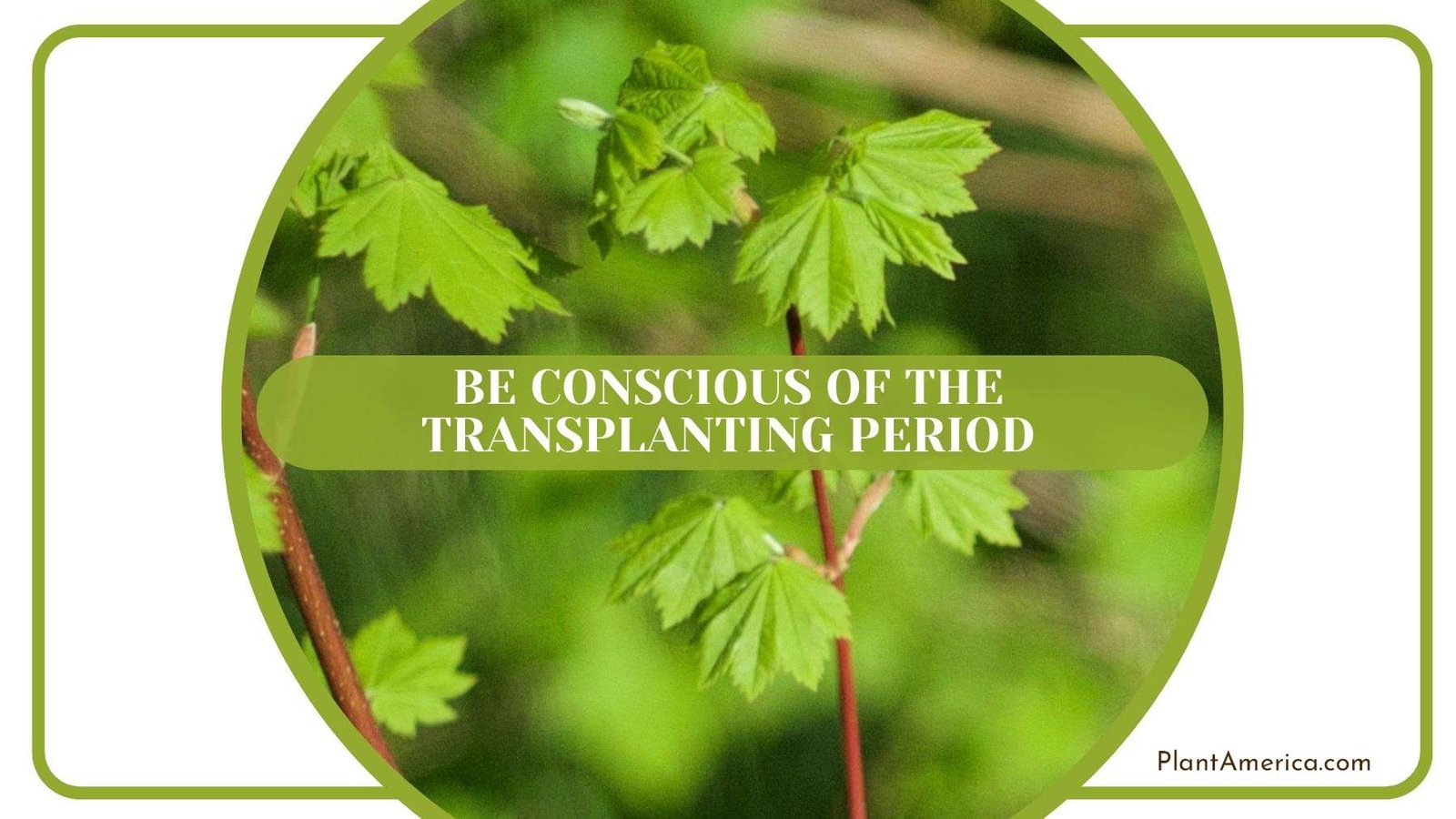
To reduce the maple tree transplant shock, transplant it in late fall because the tree settles well in the new environment slowly before it starts developing new buds and leaves. Reducing the transplant shock helps the tree to quickly adapt to the new environment and it increases the vine maple growth rate.
4. Choose Your Transplanting Ground
To determine the best site for transplanting your trees, please, consider the ideas that we will discuss here. The Japanese maple thrives well in well-drained soils and environments with partial shade to full sunlight. Make sure that your preferred site for a transplant has at least the same soil texture and condition as the current one to ensure that your plant survives. The maple trees should not be exposed to environments with strong winds.
Also, remember that transplanted trees should not be exposed to chemicals, which is why you will need a site with enough organic matter to enhance quick growth. The sizeof the tree to be transplanted determines the space needed. You might need a bit of open space to accommodate a huge tree and less for a small tree.
5. Prepare the Site for Transplanting
You need the right tools to prepare the ground before a transplanting procedure. You need to clear the ground first and then use a pick and a shovel to dig the hole where you will place the tree to be transplanted. Normally the root ball will cover the same space as the tree’s canopy so you need a bigger hole than the canopy of the plant.
Water the hole so that it is ready to moisturize the root ball once it is placed. Be sure to avoid creating a waterlogged environment for your plant.
6. Apply the Root Pruning System Ahead of Time
One of the best ways to achieve good transplanting results is by occasionally engaging in the root pruning system. This is best done when your tree is still young and the roots haven’t fully grown. You can do this by roughly sinking a spade a foot into the ground making a square around the tree, thereby hindering the continued vine-like root growth. This reduces the transplant shock the tree suffers as the roots remain evenly distributed.
If you have enough time, start root pruning a year before you transplant the tree. Curve the square around your plant with the edge of a spade once in early spring, once in late summer, and finally in late autumn, then transplant the following spring. When you do not have much time you can begin the root pruning at least a month or two before transplanting your tree.
Although the root pruning technique allows your vine maple tree to grow feeder roots near the trunk, please note this is practiced mostly when you plan to transplant your tree. Do not apply the root pruning technique on permanently planted trees.
7. Prepare the Tree for Transplanting
Before you transplant a tree, make sure that the tree is healthy and strong. You need to prune your tree before transplanting it and remove all dead branches to reduce unnecessary nutrient uptake during the transplanting period.
Water the plant a day before the transplantation procedure to allow the tree to absorb as much water as possible before you remove it from the ground. This will help to keep the plant roots moisturized during the transplant period.
Dig a trench around the tree, usually where the canopy of the tree ends or at least two feet from the trunk. Dig under the root ball with a sharp object and do not destroy the root ball while digging. Carefully remove the tree from the hole and be sure not to harm the tree branches in the process. Cover the root ball as you transport your red maple to a new location.
Do not expose the roots to wind and direct sunlight. Also, make sure that you transplant the tree as quickly as you can. During the move to a new location, please, ensure that the root ball remains intact and the tree branches are protected at all times.
8. Plant the Tree in a New Environment
Firmly place your maple vine into the newly moist dug-up hole, paying particular attention to its previous setup. The tree would have adapted to the growing conditions in its previous location. You might need partial shade for the transplanted tree because it will be more sensitive to the sun than before.
If your root ball was protected with a burlap, gently remove it from under the Acer circinatum while it is placed in the new position. Some experts suggest that you mix organic matter with the soil you use to fill the hole. However, we recommend you use compost because the organic matter can hinder root expansion. Using the soil from the previous location to fill up the hole for the tree quickly resuscitates the plant.
When covering the plant, ensure that the tree flank is not covered below the ground level. This will help to retain the moisture in the soil by reducing the evaporation rates. Make sure that the tree is not exposed to strong winds, extremely hot temperatures, or too cold temperatures during this period.
9. Drench the Maple Tree
Now that your Japanese maple is firmly standing on the ground, adequately water around it to assist it in perfectly settling in place. The water will help the soil to compact, giving stamina to the tree. It will also help to ram up the soil to make sure that the tree is firm by strengthening the vine maple root system and won’t be pushed over by strong winds. After enough watering check to see if the soil level remains the same, if it has dropped leaving some space in the hole add some more soil and water again. After watering, check if the tree flank has not dropped below ground level, if it has pulled up and add more soil to the ground so that the root flank is maintained at ground level. Water daily for one to two weeks and every two to three days for about three to 12 weeks after planting.
10. Cover the Ground With Organic Matter
Although we discourage the use of organic matter earlier, this step marks where you can use your organic matter without damaging the plant. After watering the tree add organic manure on the surface. The manure will act as both fertilizer and mulch for the tree. Remember that we do not want to expose your new transplant to chemicals as they might have negative impacts on it.
The organic matter also acts as a mulch that will help keep the moisture within the ground. Since the plant is still fresh in the ground it should not face a dry spell, hence the need for a moisture retainer. Although you should keep your plants moisturized as much as possible, please, avoid water logging scenarios as they negatively affect the health of your plants.
11. Assist Your Transplant Settling in New Environment
This is guaranteed by several practices that promote the plant to do well and adapt to the new environment. Remember that transplanted trees are as delicate as seedlings, which is why they need extreme care. During windy days and hot days, the evaporation rates increase and the soil dries up quickly so we recommend that you regularly check the upper soil for moisture.
Water regularly once the topsoil dries so that the roots don’t suffer from dehydration. It might be best to craft a temporary shelter or shade to protect your tree from direct sunlight and strong winds because it will be a bit sensitive. We advise against the use of chemical fertilizers within the first two years after a transplant because the root system will be incapable of uptaking a heavy nutrient dose.
Also, high-nitrogen fertilizers promote foliage growth, which will affect the tree’s root growth focus. The tree should use natural organic fertilizers while it grows and stabilizes its root system. During the first season after the transplantation procedure, the tree will be focused on root development so do not expect much development above the ground level.
Frequently Asked Questions
– Can You Propagate the Vine Maple From Seeds?
Yes, you can propagate the vine maple from seeds. The seeds need to be harvested before they get too dry because they might be difficult to germinate. Also, you should not harvest them before they have matured because they might produce a weak tree or even fail to germinate.
Please note that once you harvest your seeds, you should soak them and then plant them when necessary.
– How Many Times Can You Transplant the Same Tree?
You can transplant the same tree several times, depending on its size and age. For vine maple in containers or young trees, you can transplant it each time you see it necessary. For huge trees, you need to allow the tree to regain its health before you transplant it again.
Give your pants at least three years to grow before you transplant them again. This gives the plants enough time to deal with the stress and shock.
Conclusion
Transplanting vine maple trees is easy and simple especially when you have mastered the dos and don’ts. Below are some of the key points to remember for the best transplanting procedure:
- Choose a transplanting spot with a soil texture similar to or better than the current one.
- Young plants transplant better than older plants.
- The early spring or late fall is the best period for transplanting a vine maple tree.
- Avoid using chemicals on a newly transplanted tree.
With all these tips on how to transplant a vine maple, your first attempt should be victorious. Do not hesitate to transplant your vine tree as you now have what it takes to start!