
 How to transplant juniper tree of the Cupressaceae family is no longer a mystery now that you’ve stumbled upon this article. Here, we guide gardeners of all skill levels in relocating their beloved junipers into new homes, so let’s go!
How to Transplant Your Juniper Tree
To transplant your juniper tree, the first thing to do is prepare the tree, tools, and the site. Once they’re ready, dig the hole for the new home, dig up the existing juniper, plant it, and then provide post-transplant care such as watering and mulching.
1. Gather Your Tools
You’ll need a sharp shovel for digging out the tree and making a fresh hole. Grab some pruning shears too, they’ll come in handy for trimming away any extra branches. Don’t forget a burlap sack to protect the sensitive root system of juniper bushes.
You’ll also need some twine to tie up that burlap securely. Oh, and a wheelbarrow is a smart addition for moving things around effortlessly. Lastly, bring along some organic compost to help keep the new spot rich in nutrients.
2. Choose the New Location
To help your junipers thrive, find the perfect spot for them. Junipers are resilient and prefer well-draining soil with a lot of sunlight. Look for a sunny garden spot that gets a minimum of six hours of direct sunlight daily. Light isn’t the only factor, though as space matters too.
 Junipers come in various sizes, so make sure the spot allows for their eventual height and width. Avoid placing them near structures like buildings, fences, or other plants that could slow down their growth. Also, think about aesthetics. How will transplanting blue star juniper enhance your space? Also, make sure to transplant it near some beneficial companion plants or plant them afterward.
3. Prune the Juniper
This is all about giving your tree a clean, balanced look by carefully trimming its branches and leaves. Trimming does wonders for your tree’s appearance and lowers the stress when moving it. It also helps the tree grow healthier and recover better by redirecting its energy to healing.
For precise cuts, make sure your pruning shears are sharp and clean. But remember, don’t overdo it. Taking off too much can hurt the tree’s ability to make food and heal properly.
To prune juniper properly, trim away dead or diseased branches, making clean cuts close to the main stem or branch junction. Maintain the desired shape and size by selectively removing branches. Avoid cutting too much into old wood, as junipers have limited regrowth capabilities from older branches.
4. Digging The Hole
Your goal is to create a space that fits the root ball comfortably. This helps the roots spread out in their new home. Now, with your perfect spot secured, grab a strong shovel, and start digging. Make a hole that matches the height of the tree’s root ball. Make it about twice as wide too.
This extra width gives your tree’s roots plenty of space to stretch out and settle into their new home. While digging, keep a sharp eye out for rocks, weeds, or debris that could prevent healthy root growth. Keeping the hole clean helps encourage a smoother transplanting process.
5. Remove the Juniper
The goal is to move the tree while keeping its root system intact. Start by digging a trench around the tree with a sturdy shovel. Dig carefully, going around the tree gradually. Be cautious not to damage the roots. This goes for all types of junipers, as their roots can be quite delicate.
Once the trench is deep enough, lift the juniper out of the ground gently, being careful with the root ball. Avoid it falling apart. For safe transport, use a wheelbarrow or a similar tool. This will protect the roots during relocation.
6. Preparing the Root Ball
After carefully digging up the juniper, handle the root ball gently. Wrap it in burlap to protect it. Burlap does two important jobs. One, it shields delicate roots. Two, burlap keeps the roots from drying out. Think of burlap as a protective shield for the roots. It keeps moisture in and soil from spilling out. Use twine to secure the burlap in place when moving the common juniper.
7. Planting the Juniper
Now, this is the part when you plant juniper. Once you’ve carefully prepared a hole of the right size in your chosen spot, it’s time to place the juniper right in the center of this hole. Precision here is crucial so make sure the top of the root ball aligns with the ground surface and maintains the same depth it had in its previous location.
The root ball should fit snugly into the hole, staying level without any tilting. As you fill the hole, use a mixture of soil and organic compost. Gently press it down to eliminate any air pockets, ensuring a solid connection between the juniper’s roots and the soil for successful settling. Your juniper should now stand in its new spot, firmly anchored and free from any wobbling.
8. Mulching the Soil
Mulching works wonders for your junipers. All you need to do is spread a layer of natural mulch, like wood chips or shredded bark, around the juniper’s base. Just by doing this, you’re giving your tree a greater chance of survival. How?
One, mulch keeps the soil moist, ensuring your juniper stays hydrated. Two, it stops weeds from sprouting up and competing with your tree for water, nutrients, and space. Third, mulch acts like a temperature barrier, shielding the roots from extreme weather conditions, whether it’s the sweltering heat or the freezing cold.
Just remember to leave a little space between the mulch and the tree trunk. This keeps things dry and airy around the base, preventing any trunk rot and keeping your juniper healthy and alive.
9. Post-Transplant Care
One of the most important factors of post-transplant care is consistent watering, regardless of your juniper cultivar. Weeks immediately following transplantation are critical, and the tree should be kept consistently moist, especially during dry spells. Just avoid overwatering, as this can lead to root rot.
On top of watering, you should monitor the juniper for signs of stress or disease. Watch out for wilting leaves, discolored leaves, or any unusual developmental patterns. Resolve the issues immediately to prevent them from getting worse.
Once the tree is in its new spot, fertilize it after a few weeks. Use a slow-release, balanced fertilizer in the spring. This gives the tree the nutrients it needs for good growth. But don’t go overboard as too much fertilizer can hurt the tree.
Also, keep an eye on the weather, especially in the first year after transplanting. Really hot or dry spells might mean extra care, especially in watering. You might need to shade the tree or put up windbreaks as part of your juniper care.
10. Monitor Progress
You should monitor the overall well-being and growth of the common juniper closely. Pay close attention to any signs of stress or discomfort. Look out for symptoms, such as drooping or yellowing leaves, as well as any obvious slowdown in growth as these are symptoms that the tree may be facing challenges.
Regularly inspect the mulch encircling the tree. Keep the layer about two to three inches thick, and replenish when it’s degraded. Mulch plays a crucial role in maintaining soil moisture, regulating temperature, and preventing weed growth, so you can focus more on providing care instead of constantly worrying about caring for the tree.
Factors to Consider for Transplantation of Juniper
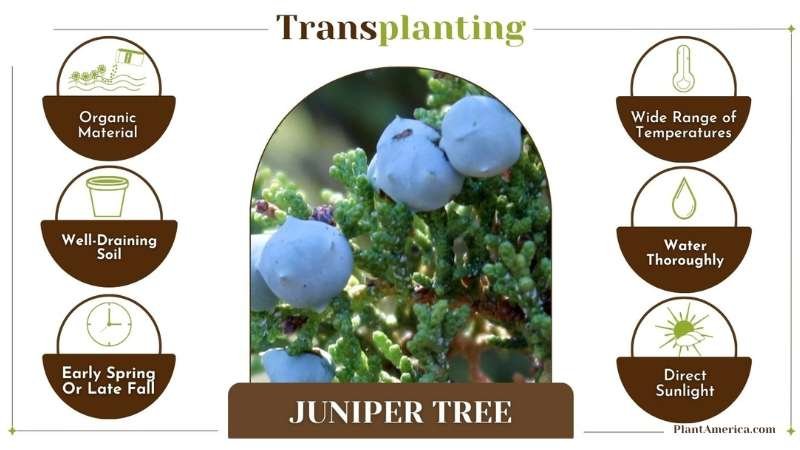
The factors to consider for the transplantation of juniper trees include the best time to transplant, the ideal soil and fertilization products, and the correct temperature requirements. Make sure to provide the correct amount of water and light exposure as well.
Let’s take a look at all of them.
– Best Time to Transplant
Junipers are hardy and can be transplanted either in early spring or late fall when the plant is dormant.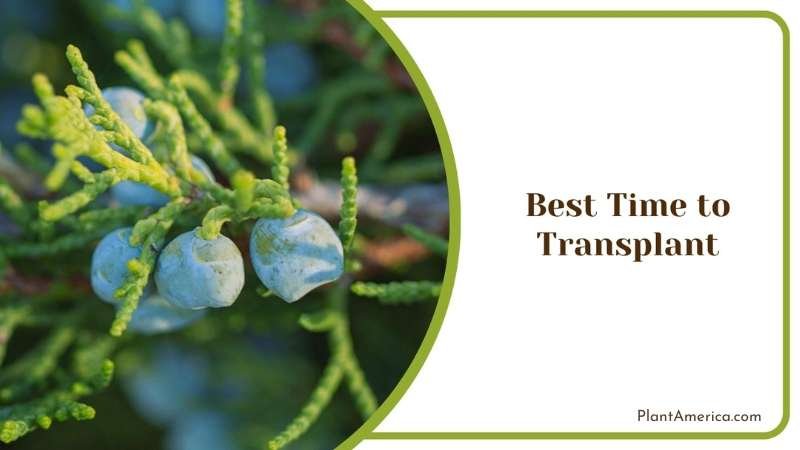 Avoid transplanting during extreme heat or freezing conditions.
– Soil and Fertilization
Select soil that drains effectively and falls within a slightly acidic to neutral pH range. Enhancing the soil with organic material can enhance its drainage capabilities.
– Watering (Before and After Transplanting)
Before transplanting, water the juniper thoroughly to ensure it is well-hydrated. After transplanting, continue to water regularly for the first few months to avoid juniper transplant shock, keeping the soil consistently moist but not waterlogged.
– Temperature Requirements
Junipers thrive in a wide range of temperatures, including the common juniper. However, during the transplanting process, it’s best to avoid extreme temperature conditions, as this can stress the plant.
– Proper Pot (Potting Medium) or Ideal Spot
Ensure the new spot or pot has adequate drainage to prevent waterlogged roots. Use a potting medium that mimics the well-draining soil conditions junipers prefer.
– Light Requirements
Failing to provide sufficient light can lead to a failed transplant. Place them in a location where they receive at least six hours of direct sunlight each day for optimal growth.
FAQ
How Can a Creeping Juniper Be Transplanted?
A creeping juniper can be transplanted by picking the right spot with good drainage and sunlight. Dig a hole slightly bigger than the juniper’s root ball at the new location. Carefully dig up your juniper, avoiding root damage. Place it in the prepared hole at the same depth as before.
Fill the hole with a mix of soil and compost, give it a good watering, and add mulch to keep the moisture in. Keep an eye on the plant, ensuring it gets the water and care it needs during this transition.
Conclusion
Now that you know how easy it is when it comes to transplanting your juniper, let’s go over some important points before we wrap things up:
- Successful juniper transplanting requires careful preparation and timing.
- Gather essential tools and materials like a shovel, burlap, and compost before starting.
- Choose a new location with suitable sunlight and well-draining soil.
- Prune the juniper and measure its root ball to determine the size of the new hole.
- Vigilant post-transplant monitoring and care are crucial for the tree’s adaptation and growth.
Remember, once you have this skill in your arsenal of gardening knowledge, you’ll be the best person to call when it comes to transplanting any juniper tree!