
Coreopsis varieties bring life wherever they are planted, and we guarantee you will find what you are looking for in this article.

What are the ideal conditions required to grow Coreopsis of the Asteraceae family? Which variety best suits your needs?
Continue reading to know the answer to these and so much more.
A Range of Beautiful Coreopsis Varieties
1. Threadleaf Coreopsis (Coreopsis Verticillata)
| Growing season |
|
| Distinguishing characteristics |
|
| Specific needs |
|
| Common pests |
|
This plant produces yellow, daisy-like flowers that bloom profusely from spring through fall. The plant’s unique lacy, thread-like leaves provide a delicate texture in the garden, and the yellow flowers are a beacon for pollinators, such as bees and butterflies.
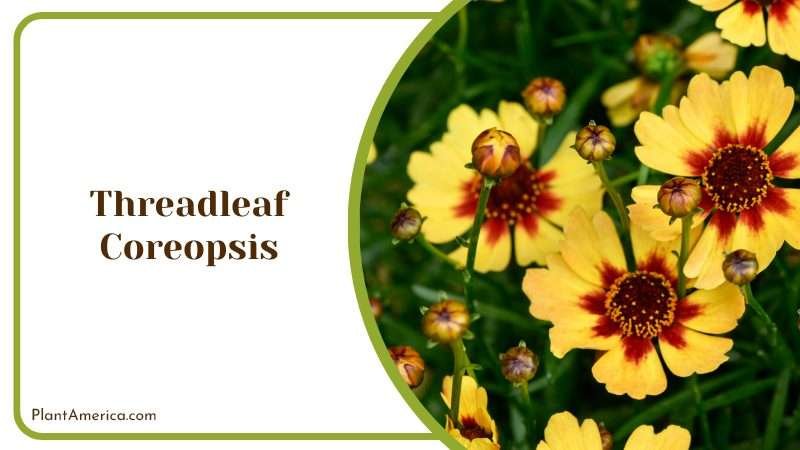
Threadleaf Coreopsis is low maintenance, making it a great choice for beginner gardeners and those who enjoy low-maintenance landscapes. The plant is a perennial that is native to North America. It blooms relatively long, making it an ideal choice to add color and bring life to any space.
It is also called ‘whorled tickseed‘ because of the whorl-patterned leaves structured around the axis. It attracts pollinators like hummingbirds and pollinators and is deer resistant. The leaves are delicate and are further divided into thread-like segments.
One of the most distinctive characteristics of Threadleaf Coreopsis is its fine, needle-like foliage. This delicate-looking foliage provides a textural contrast to the bold, sunny flowers, making the plant a great choice for use as a border or accent plant. The plant grows to be between 12 and 18 inches tall and wide, making it a compact and easy-to-manage option for many gardeners.
Threadleaf Coreopsis is a low-maintenance plant that is relatively easy to grow. It enjoys full sun to partial shade and well-drained soil. The plant is drought-tolerant and can withstand hot, dry conditions with ease. It is also fairly disease-resistant and is not often troubled by pests or other problems.
2. Sunfire Coreopsis (Coreopsis Grandiflora)
| Growing season |
|
| Distinguishing characteristics |
|
| Specific needs |
|
| Common pests |
|
Sunfire Coreopsis, also known as “large-flowered coreopsis,” is a bright and cheerful plant that is perfect for sunny gardens. This plant produces large, yellow, daisy-like flowers that bloom profusely from spring through fall.
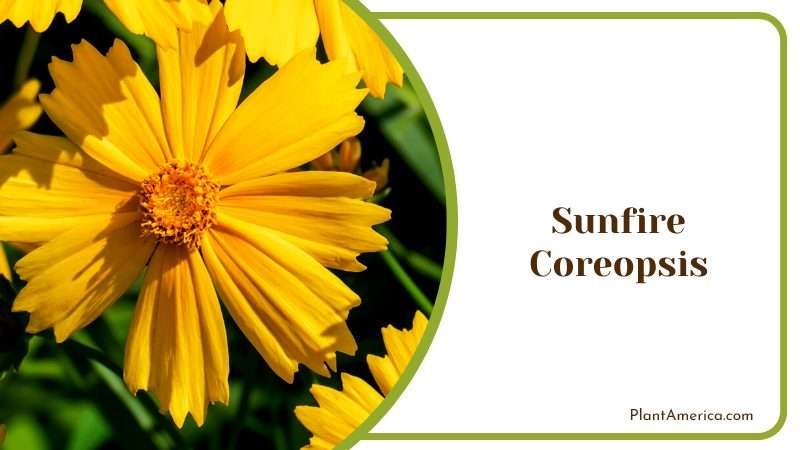
The compact plant is a great choice for smaller gardens or mixed borders. Sunfire Coreopsis is low maintenance, heat-tolerant, and attracts pollinators such as butterflies, making it a valuable addition to any garden. Do not use neem oil for these plants since they may cause issues to these beneficial insects.
This plant is known for its bold, bright yellow flowers that bloom from summer through fall, providing a long-lasting source of color in the garden. The large, daisy-like flowers are up to 3 inches in diameter and sit atop sturdy stems that can reach a height of 36 inches.
One of the most distinctive characteristics of Sunfire Coreopsis is its bushy, compact habit. This makes it a great option for use as a border or accent plant or for mass planting to create a bold, sunny display. The plant has lance-shaped leaves that are dark green and grow 2-3 inches long.
It originates from its native region Southeastern United States and is a recipient of the prestigious Award of Garden Merit of the Royal Horticultural Society. It grows bright yellow, semi-double flowers that are two inches in diameter.
The flowers are long with slender stems and finely divided leaves, swaying gently with the wind. It is among the first varieties to bloom and attracts butterflies. The plant looks beautiful on its own and good when paired with other varieties or contrasting plants.
3. Lanceleaf Coreopsis (Coreopsis Lanceolata)
| Growing season |
|
| Distinguishing characteristics |
|
| Specific needs |
|
| Common pests |
|
Lanceleaf Coreopsis, known as “lance-leaved coreopsis,” is a compact plant that is perfect for sunny gardens. This plant produces yellow, daisy-like flowers that bloom profusely from spring through fall.
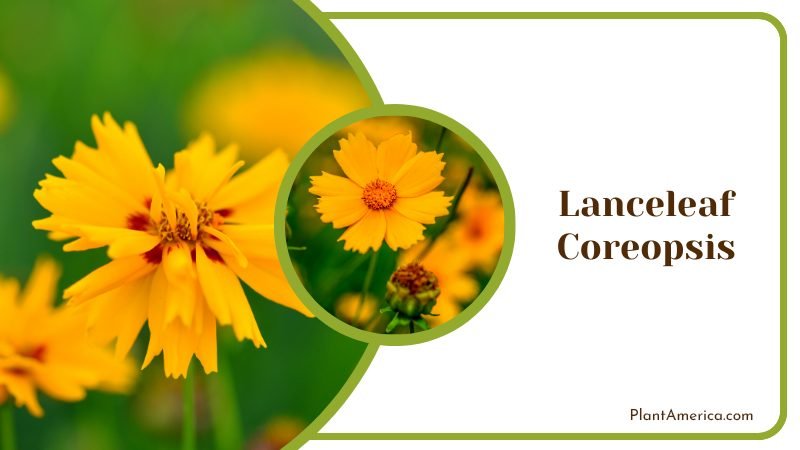
This plant is prized for its bright yellow or orange flowers that bloom continuously from spring to fall. The daisy-like flowers are up to two inches in diameter and sit atop thin, wiry stems that can grow up to 3 feet.
One of the key distinguishing characteristics of Lanceleaf Coreopsis is its lance-shaped leaves, which give the plant its name. The leaves are bright green and grow up to 4 inches long. The plant has a spreading habit, making it a great choice for use as a groundcover or in mass plantings.
The plant’s lance-shaped leaves provide a delicate texture in the garden, and the yellow flowers are a beacon for pollinators, such as bees and butterflies. Lanceleaf Coreopsis is low maintenance, heat-tolerant, and drought-resistant, making it a valuable addition to any garden, especially in hot and dry climates.
The plant is an erect, herbaceous perennial that blooms bright golden-yellow, daisy-like flowers. These flowers have eight ray-like petals that are pointed at the tip. They sit beautifully on top of single stems above the signature spear-shaped leaves.
The leaves at the lower part of the base are mostly whole, while those at the smaller stems are lobed. It has no serious disease or pest problems, but beware, as it self-seeds aggressively. The neighboring plants also benefit from this variety as it attracts pollinators like hummingbirds and butterflies, so brace yourself as garden-friendly visitors soon invade your garden.
4. American-dream Coreopsis (Coreopsis Rosea)
| Growing season |
|
| Distinguishing characteristics |
|
| Specific needs |
|
| Common pests |
|
American-Dream Coreopsis, also known as “pink coreopsis,” is a compact plant that is perfect for sunny gardens. This plant produces fragrant, pink, daisy-like flowers that bloom profusely from spring through fall.
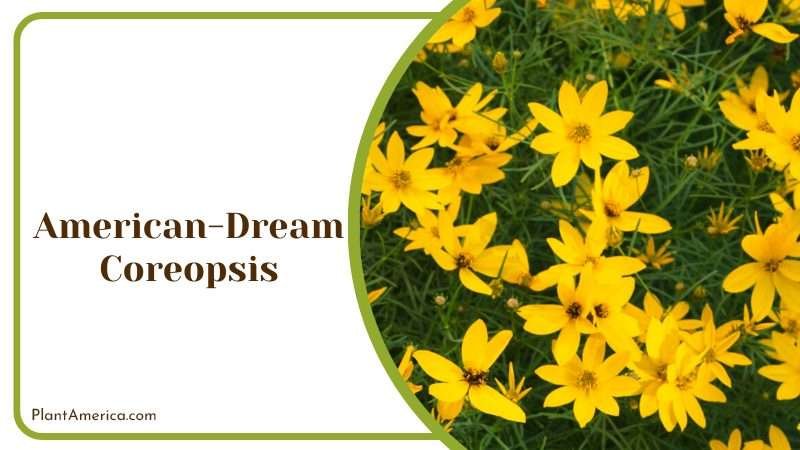
It is prized for its large, pink rose-colored flowers that bloom from spring to fall. The flowers are up to 3 inches in diameter and sit atop thin, wiry stems that can grow up to 2 feet tall.
One of the key distinguishing characteristics of this plant is its delicate, fern-like leaves that are a bright green color. The leaves are finely divided and grow up to 4 inches long. The plant has a compact habit, making it a great choice for use in borders, rock gardens, or as an accent plant.
The plant’s delicate color and fragrance make it a valuable addition to any garden. It is low maintenance, heat-tolerant, and drought-resistant, making it a great choice for hot and dry climates. Additionally, this plant attracts pollinators, such as bees and butterflies, adding to its value in the garden.
It is known for its bright yellow flowers that bloom from early summer to fall, making it a great choice for brightening a garden during the warm months. The flowers are daisy-like, with a central disk surrounded by rays, and can grow up to 2 inches in diameter.
One of the key distinguishing characteristics of Golden Tickseed is its fine-textured, feathery leaves. The leaves are bright green and grow up to 4 inches long. The plant has a bushy habit, with multiple stems emerging from the base, and can grow up to 2-3 feet tall.
It is a pink coreopsis whose native range starts from Nova Scotia to Maryland. The pointed pink flowers with grass-like leaves look like something out of a fairy garden. They bloom for a long period and are half an inch to an inch in diameter.
The plant is the only variety of the plant that has pink blooms. The long summer blooms make the plant a good choice at the garden border and along the footpaths or walkways.
5. Golden Tickseed (Coreopsis Tinctoria)
| Growing season |
|
| Distinguishing characteristics |
|
| Specific needs |
|
| Common pests |
|
Golden Tickseed, also known as “yellow coreopsis,” is a cheerful plant that adds bright color to any garden. This plant produces vibrant yellow, daisy-like flowers that bloom continuously from spring through fall.

It is known for its bright yellow compact flowers, making it a great choice for brightening a garden during the warm months. The flowers are daisy-like, with a central disk surrounded by rays, and can grow up to two inches in diameter.
One of the key distinguishing characteristics of Golden Tickseed is its fine-textured, feathery leaves. The leaves are bright green and extend up to 4 inches long. The plant has a bushy habit, with multiple stems emerging from the base, and can grow up to two to three feet tall.
Golden Tickseed is an easy-to-grow plant that prefers full sun and well-drained soil. It is drought-tolerant and can withstand hot, dry conditions with ease. The plant is also resistant to deer and other herbivores, making it a great choice for gardens in areas with high herbivore populations.
Golden Tickseed is low maintenance, heat-tolerant, and drought-resistant, making it a great choice for hot and dry climates. Additionally, this plant is deer-resistant, making it a smart choice for gardeners who need to protect their plants from browsing animals. Golden Tickseed is also attractive to pollinators, such as bees and butterflies, adding to its value in the garden.
The plant is annual and is also called ‘Plains Coreopsis.‘ It has star-shaped yellow flowers with a red center and a disc in a deeper shade of red. The flowers bloom on top of smooth, hard stalks from the multi-branched stems. The foliage is light, feathery, and spear-shaped, mostly on the bottom half of the stems. It attracts pollinators like hummingbirds and butterflies.
6. Mouse-ear Tickseed (Coreopsis Auriculata)
| Growing season |
|
| Distinguishing characteristics |
|
| Specific needs |
|
| Common pests |
|
Mouse-Ear Tickseed is a low-growing native wildflower that adds a pop of yellow to gardens and meadows. Its daisy-like flowers bloom continuously from spring through fall, making it a great choice for adding long-lasting color to the garden. This drought-tolerant plant can even tolerate some shade, making it a versatile option for various garden situations.

Mouse-Ear Tickseed is also attractive to pollinators, such as bees and butterflies, which can be a valuable addition to any garden trying to provide a habitat for these important insects. Overall, Mouse-Ear Tickseed is a low-maintenance, easy-to-grow plant that adds both beauty and function to any garden.
The plant is also known as “lobed tickseed.” It is a low-growing species and is from among the dwarf variety. The flowers are toothed, a beautiful shade of yellow, and are one to two inches across, while the leaves are wide and ovate and have tiny lobes at the base, giving the impression of mouse ears, hence the name.
7. Star-cluster Coreopsis
| Growing season |
|
| Distinguishing characteristics |
|
| Specific needs |
|
| Common pests |
|
Star-Cluster Coreopsis is a compact and dwarf variety of Coreopsis that is well-suited for small gardens, rock gardens, and borders. This plant is known for its bright yellow, daisy-like flowers that bloom continuously from spring through fall, making it a great choice for adding long-lasting color to the garden. Unlike other varieties of Coreopsis, Star-Cluster Coreopsis is known for producing multiple blooms on each stem, which can greatly impact the garden.
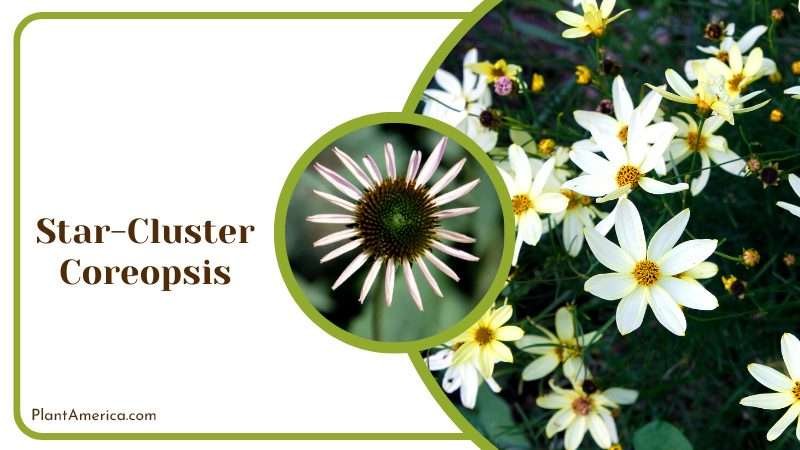
This plant is also attractive to pollinators, such as bees and butterflies, which can be a valuable addition to any garden trying to provide a habitat for these important insects. With its low maintenance and drought-tolerant nature, Star-Cluster Coreopsis is an easy-to-grow option for adding beauty and function to any garden.
The plant blooms throughout its life with cream-colored flowers with purple spots at the base. They reach out to the tips of their petals. The clumps are dense and bushy and green in the middle.
It is one of the charming varieties of Coreopsis. One gets nostalgic after looking at the plant as it reminds of traditional designs like cottage gardens. Deer often dislike it.
Conclusion
Growing Coreopsis is a simple task, but it often gets confusing to choose between such wide varieties. But you don’t have to worry; we are here to help.
Whichever plant you decide to have or grow, always remember the following points from the article above:
- If you are fond of animal-shaped plants, grow Mouse-ear Tickseed, and we promise you will have a lot of fun.
- Sunfire Coreopsis is an ideal light and flowy plant that looks attractive simultaneously.
- American Dream Coreopsis is a pink flower plant to give your dull space some color.
- Are you bored with the regular brownish-yellow flower centers? The Tinctoria variety with its red center is all you need!
With your new-found knowledge, you can choose the right variety for your needs.
References
- Coreopsis lanceolata. NC State University.
Retrieved from https://plants.ces.ncsu.edu/plants/coreopsis-lanceolata/ - Coreopsis, Lanceleaf. Cornell University.
Retrieved from http://www.gardening.cornell.edu/homegardening/scene0f88.html - Coreopsis grandiflora. NC State University.
Retrieved from https://plants.ces.ncsu.edu/plants/coreopsis-grandiflora/