
Flowering weeds can pop up in your yard, and your first instinct may be to pull them out. But many so-called weeds are actually beautiful, beneficial plants that attract pollinators and add color and diversity to the landscape.

In this article, we’ll showcase some gorgeous flowering weeds you should consider leaving or even planting in your garden, as these beautiful but often maligned plants can offer colorful blooms spring through fall with little care or cost.
12 Flowering Weeds That Bloom With No Maintenance Costs
1. Creeping Charlie

- Growing Season: Spring, Summer, Fall
- Leaf Shape: Oval, Rounded, Creeping vines
- Specific Needs: Moist, shaded areas, Alkaline soil
- Common Pests: None
Creeping Charlie, or ground ivy, with the scientific name Glechoma hederacea, is an unwelcome perennial weed that forms creeping and mat-forming vines. It prefers growing in moist, shaded areas as well as alkaline soil conditions. The plant produces oval, rounded leaves on narrow, creeping stems that are able to root at the nodes where leaf stalks meet the main stem.
Creeping Charlie spreads aggressively through two primary means. First, runners or horizontal stems creep along the ground, taking root at the nodes to form new plants. Secondly, stems that come in contact with the soil are able to re-root, creating a dense mat of vegetation. These characteristics make Creeping Charlie very difficult to control and eliminate once established.
Due to its tolerance for low-light environments, Creeping Charlie often thrives in areas below shrubs, trees, and other plants in garden beds. The vines emerge in early spring, forming mats of foliage that creep among desirable plantings and displace other vegetation. The creeping stems spread outwards up to three feet from the central plant each year.
The combination of Creeping Charlie’s ability to form dense mats spread rapidly through runners and re-rooting stems and thrive in shaded conditions under trees and shrubs makes this weed very difficult to manage. Vigilant removal of new growth and applications of herbicides specifically labeled for ground ivy is often required to contain and gradually reduce infestations of this aggressive perennial weed.
2. Bindweed

- Growing Season: Spring, Summer, Fall
- Leaf Shape: Arrowhead-shaped, Linear
- Specific Needs: Full sun, Poor soil
- Common Pests: None
Bindweed, also commonly called morning glory, is an extremely persistent type of weed due to its long, deep roots that can reach up to 16 feet below ground and its ability to produce new plants from root fragments. The vines grow rapidly, producing arrowhead-shaped leaves and twisting in a counter-clockwise direction. The vines can climb as high as six feet up structures and other plants in search of light.
Bindweed vines bloom repeatedly throughout the growing season, displaying funnel-shaped white, pink, or purple flowers that give the plant an attractive appearance. However, bindweed thrives in full sun exposure and poor soil conditions where other plants struggle.
Because of bindweed’s extensive root system penetrating deep into the soil profile, trying to physically remove the roots when weeding is an exercise in futility; even small root fragments left behind can regenerate into new vines, resulting in a larger infestation over time.
The combination of bindweed rapidly climbing and twisting vine growth habit, a deep and expansive root system that produces new plants from fragments, and recurrent flowers that allow for copious seed production make this a notoriously difficult weed to control.
An integrated approach that combines physical removal, soil solarization, and herbicides may be required over multiple growing seasons to suppress and weaken bindweed infestations. Despite its beautiful morning glory flowers, gardeners must remain vigilant to keep this persistent weed from taking over landscaped areas.
3. Amaranth
- Growing Season: Spring, Summer, Fall
- Leaf Shape: Alternate, Oval, Lance-shaped leaves
- Specific Needs: Full sun, Dry soil
- Common Pests: None
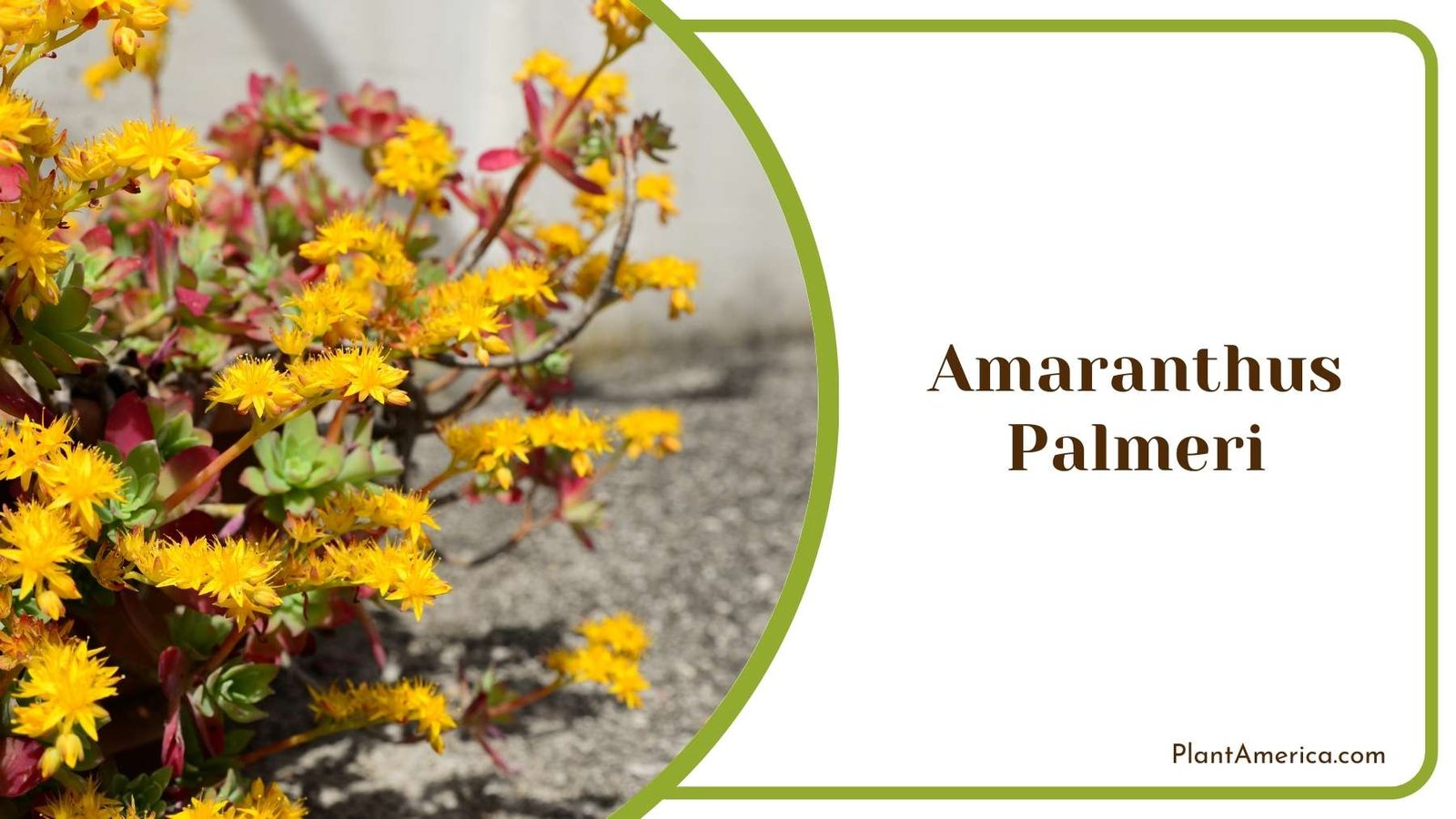
Amaranth is a broadleaf flowering weed native to tropical and subtropical regions worldwide. There are over 60 species of amaranth, many of which have naturalized globally and become agricultural pests. Amaranth thrives in warm, sunny climates and grows vigorously in disturbed soils.
The plant develops an erect, branching stem one to eight feet tall. Leaves alternate up the stem in various shapes—oval, arrowhead or diamond-like—and come in shades of red, bronze or green. Clusters of tiny, pea-sized flowers bloom in summer at stem ends or leaf axils. Flowers are green, pink or red. Seeds closely resemble millet and develop in pyramid-shaped seed clusters.
Seeds drop and disperse readily when mature, spreading amaranth heavily. A single plant can produce over 300,000 seeds. Seeds remain viable in soil for up to 40 years. Amaranth competes aggressively for sunlight, water and nutrients. It releases allelopathic chemicals that suppress neighboring plant growth.
Cultivation spreads roots rapidly, so manual removal should dig out the entire root system. Cutting plants before seed sets help curb spreading. Repeated tilling eventually depletes the seed bank, though follow-up is always needed as seeds persist.
Livestock avoid grazing this plant due to low palatability. Herbicides are effective if applied thoroughly to foliage before flowering. Combining control methods provides the best long-term amaranth management..
4. Crabgrass
- Growing Season: Spring, Summer
- Leaf Shape: Flat, Strap-like leaves
- Specific Needs: Full sun, Sandy soil
- Common Pests: Crabgrass Moth, Mites
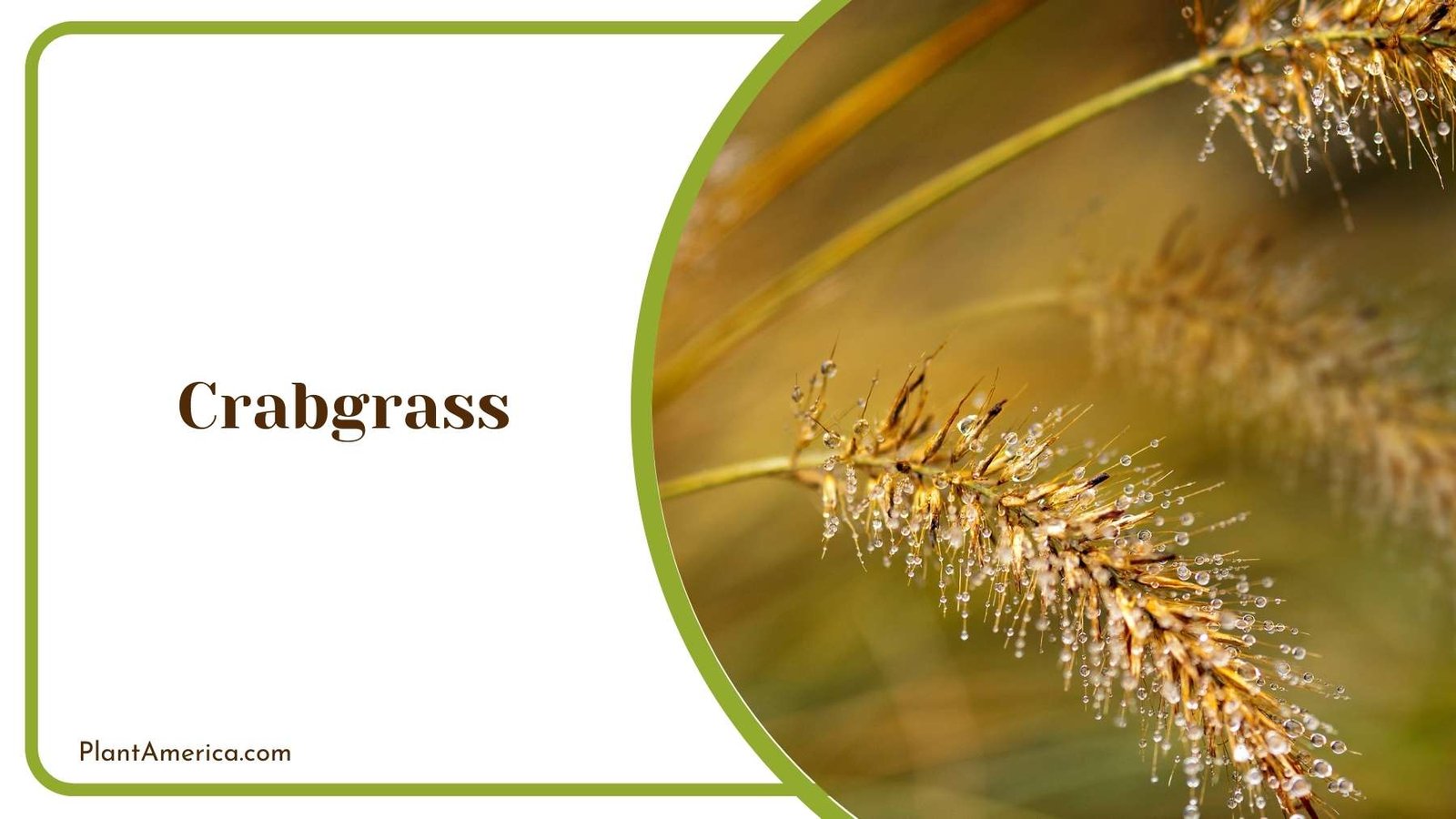
Crabgrass is characterized by its horizontal growth habit rather than the vertical growth of desirable grasses. The flat, strap-like leaves form a mat that spreads outward across lawns and gardens, crowding out preferred plants.
Crabgrass seeds typically begin to germinate and sprout in early spring when soil temperatures reach around 55 degrees Fahrenheit. The weed thrives in areas with full sun exposure and sandy, well-draining soil conditions. As an annual plant, crabgrass completes its life cycle within one year.
Continual germination of crabgrass seeds throughout the warm months of the growing season makes effective control quite challenging. Even after removing existing plants, a new flush of seedlings often emerges a few weeks later as long as adequate moisture is present.
The combination of crabgrass’s mat-forming growth form, germination that persists throughout spring and summer as temperatures allow, and preferences for sunny, nutrient-poor environments transform this otherwise unattractive weed into a formidable adversary.
An integrated management approach is often required, applying pre-emergent herbicides in early spring before seeds sprout along with post-emergent herbicides sprayed on new seedlings all season.
5. Yellow Nutsedge

- Growing Season: Spring, Summer, Fall
- Leaf Shape: Flat, Grass-like leaves
- Specific Needs: Moist, Heavy soil
- Common Pests: None
Across countless yards, gardens, and agricultural fields each summer, a pernicious invader emerges to test even the most patient of land stewards. With triangular yellow-green stems and narrow grass-like leaves, yellow nutsedge assertively carves out territory wherever conditions suit its spread.
Belonging to the sedge family of plants rather than true grasses, yellow nutsedge possesses a tuberous root system well-equipped to persevere against removal attempts. String-like underground rhizomes radiate outwards, depositing nutrient-rich tubers that can lay dormant for years before sprouting a new infestation elsewhere. Even fragmenting the root mass is insufficient, as each fragment is capable of regeneration.
Preferring conditions found in eager abundance across the region—warm soil rich in moisture and organic matter—yellow nutsedge thrives in everything from turfgrass to mulched garden beds. By summer’s peak, tall flowering spikes arise amidst the foliage, bearing small yellow-green flowers suggestive of its interloper status. Seeds ripen but play little role in the weed’s march, which relies instead on the tubers’ efficient propagation underground.
Come autumn, foliage fades but the roots remain, waiting. Even rigorous physical removal fails to preclude resurgence the following growing season, as residual tubers ready to spring forth afresh given the slightest opportunity. Only the most meticulous and repeated efforts show promise of containing the invader, though complete eradication proves virtually impossible.
The aptly named “nutsedge” has thus evolved into public enemy number one for many landowners. Yet through its stubborn persistence, it also serves as a reminder that in nature’s scheme, even seemingly defeated lifeforms often recover their defiance. Perhaps in cooperation rather than confrontation lies the surest path to peaceful co-existence.
6. Speedwell
- Growing Season: Spring, Summer, Fall
- Leaf Shape: Linear, Oblong, Opposite leaves
- Specific Needs: Full sun to partial shade, Moist soil
- Common Pests: None
Speedwell is a low-growing annual or perennial plant commonly found in lawns, gardens, and along roadsides throughout most of the U.S. and Canada. The genus contains over 300 species, but the most common variety is Persian speedwell. Speedwell spreads aggressively through creeping hairy stems that take root wherever they come in contact with soil.
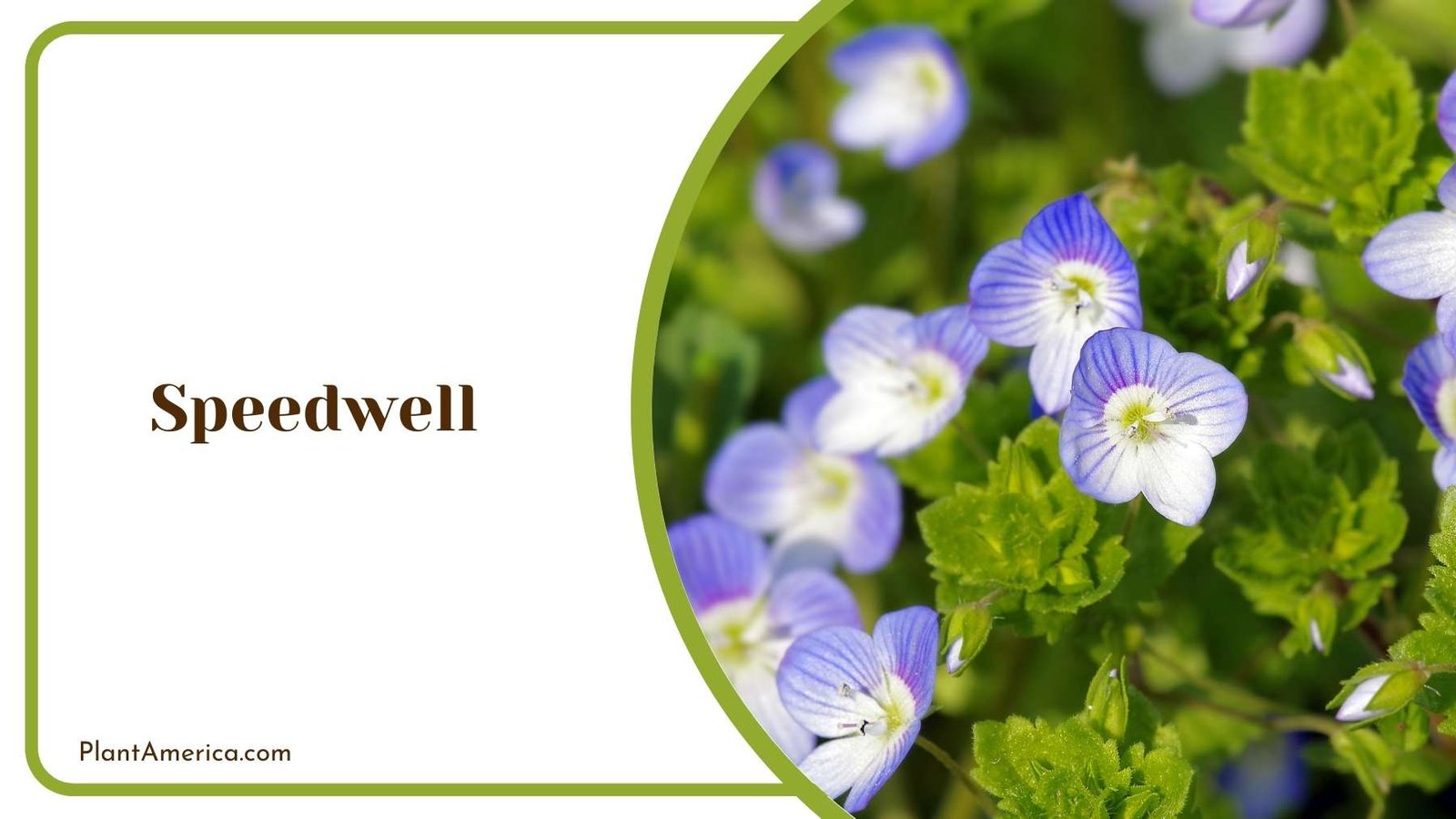
The stems are quadrangular and branching. Leaves are arranged in opposite pairs along the stems and tend to be narrow, smooth-edged, and pointed. Tiny blue, purple, pink, or white flowers bud singly in the upper leaf axils from spring through fall. Each flower has five petals that are fused at the base into a flower crown with five pointed lobes.
Speedwell tends to bloom most heavily in early summer, making lawns and gardens dotted with its colorful flowers. However, it is considered a nuisance weed due to its ability to rapidly overtake and choke out more desirable plants. Its creeping stems allow it to easily invade planting beds, crowding out flowers, vegetables, and ornamental grasses.
The seeds are minute, averaging only about one millimeter in length. A single speedwell plant may produce hundreds of seeds which remain viable in soil for many years, germinating whenever conditions are suitable.
7. Dandelions
- Growing Season: Spring, Summer, Fall
- Leaf Shape: Toothed, Jagged edges
- Specific Needs: Full sun, Moist soil
- Common Pests: None
Across meadows, lawns, and gardens far and wide each spring and summer, one cheerful yellow-bloomed plant emerges uninvited yet unavoidably endearing—the dandelion. Scientifically classified as Taraxacum officinale, this familiar floral intruder with its long taproot and jagged toothed leaves brings Nature’s uncomplicated beauty to even the most manicured of landscapes.
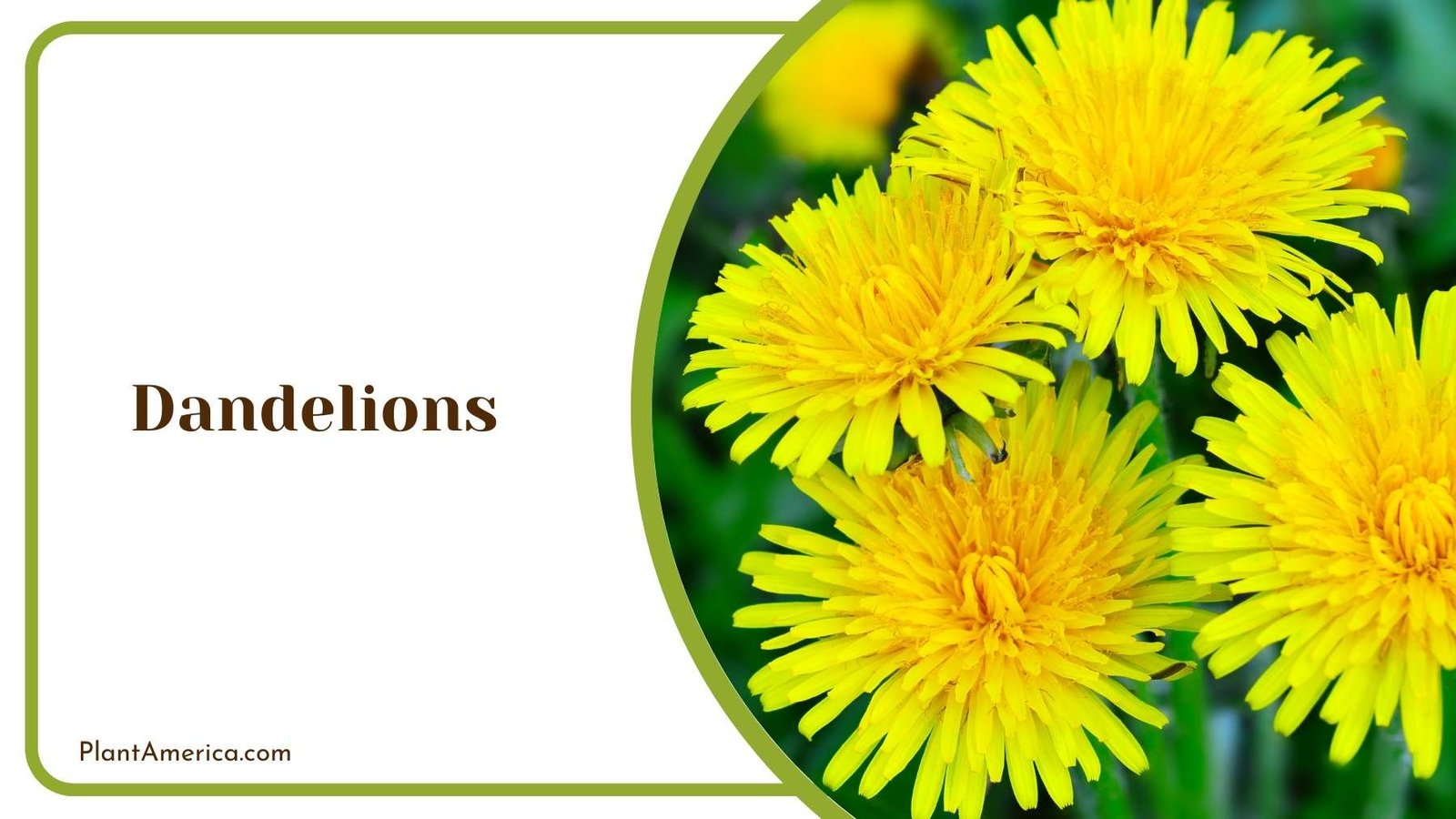
Forming a rosette of deep green foliage low to the ground, dandelion leaves are shaped like lunate swords, their saw-toothed edges wavering gently in slightest breezes. From the rosette’s center rises a bare stalk bearing one solitary rayless flower head in shades of sunlit gold. Upon closer inspection, what seems a single bloom unfurls into scores of tiny florets packed tightly together.
Thriving most vigorously in the sun-drenched clearings harboring moisture and nutrient-wealthy soils the dandelion favors, these hardy perennials spread their cheerful presence far and wide.
After blooms fade, fluffy silver seed heads take form where fluttering parachutes once were. Catching slightest air currents, these miniature silk balls disperse upon feathery threads, each bearing propagules ready to sow themselves anew wherever suitable growing conditions await.
Thus the dandelion ensures future abundance, yet also spreads its gift of natural color variation with carefree generosity. Though pastoralists and landscapers employ relentless tactics hoping to eradicate this prolific wildflower, it seems the dandelion’s persistence and optimistic spirit prevail to enrich untold verdant spaces.
This happens each spring and summer with golden kilted soldiers keeping watch until fall’s conclusion calls them underground to bide their time in slumber once again.
8. Quackgrass

- Growing Season: Spring, Summer, Fall
- Leaf Shape: Narrow, Flat leaves
- Specific Needs: Full sun, Moist soil
- Common Pests: None
Across farm fields and gardens throughout the growing season, a nefarious invader emerges to torment even the most meticulous of land stewards. Known by the evocative names quackgrass or couch grass, Elymus repens is a pernicious weed that spreads through underground networks to form dense mats dominating any terrain it inhabits.
With slender green leaves growing atop wiry stems reaching three feet in height, quackgrass possesses an expansive below-ground structure of rhizomes and stolons well-equipped for colonization. These horizontal stems radiate outwards, depositing nodes capable of sprouting new shoots to continually enlarge the infestation. Even fragmented root fragments can regenerate, leaving no part of the root mass safe from renewal.
Preferring nutrient-rich soils in full sun similar to those found in many cultivated spaces, quackgrass thrives in everything from turfgrass to vegetable gardens. Periodic seeding only supplements its primary means of propagation via underground rhizomes, as even barren fields may unexpectedly harbor dormant roots waiting to resprout.
Come fall, quackgrass foliage senesces yet root masses persist, ensconced in soil safe from methods like tilling. The following spring inevitably reveals regeneration from residual underground architecture, with patches widening year after year through this fortified network. Only the most proactive control shows promise of containment, yet complete eradication proves virtually unachievable.
The aptly worded “quackgrass” has earned its role as a notable agricultural pest through persistence and tenacity. Yet its vigorous spread also stands as a reminder of nature’s dynamic balance, where even lifeforms deemed weeds play roles their dedicated eradication overlooks. With adaptable coexistence rather than domination as the goal, peaceful solutions may emerge.
9. Black Medic

- Growing Season: Spring, Summer, Fall
- Leaf Shape: Compound, Alternate leaves
- Specific Needs: Full sun, Dry to moderate soil moisture
- Common Pests: None
Black medic is a small, low-growing annual legume native to Europe and Asia. It spreads prolifically through its abundant seed production. Stems trail along the ground and root where nodes touch soil. Leaves are composed of three rounded leaflets with obvious veins.
Delicate pink to purple flowers form in small clusters along the upper stem branches from spring to fall. Blooms give way to elongated seed pods containing up to 8 hard, kidney-shaped black seeds. Pods cling persistently on dead foliage before shattering seeds onto soil below.
Black medic thrives in full sun or partial shade and a wide range of soils, from sandy to clay-based. It grows as a winter annual in mild climates. This weed competes heavily for nutrients and water due to its prolific seed production of up to 5,000 seeds per plant. Seeds can remain dormant in soil for over 50 years before germinating.
Manual removal is tedious due to low-lying habits and re-rooting stems. Tillage helps control young plants but promotes further seed germination from the long-persisting seed bank. Mowing before flowering prevents most seed production. Selective herbicides are effective on mature plants if applied prior to seed formation.
This flowering weed remains a persistent challenge for farmers, gardeners and land managers alike due to its adaptive traits and underground seed bank that replenishes even after eradication attempts. Vigilance against new introductions is important to containment.
10. Thistle
- Growing Season: Spring, Summer, Fall
- Leaf Shape: Spiky, Lobes with spines
- Specific Needs: Full sun, Dry soil
- Common Pests: None
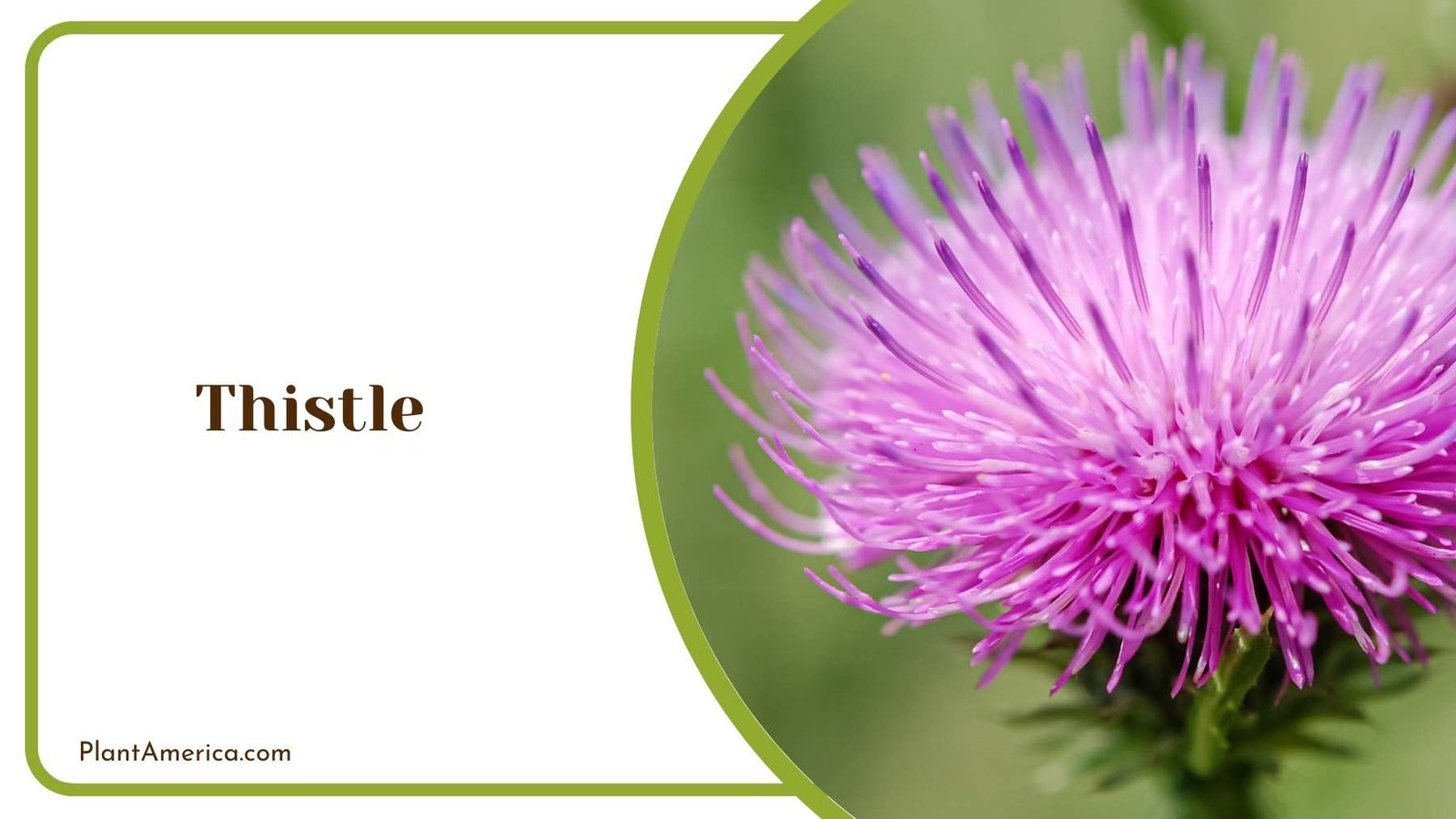
Dotting meadows, fields, and wastelands across temperate regions lies a prickly invader bearing defenses nature endowed to survive any foraging threat. Known collectively as thistles, this diverse genus within the sunflower family Asteraceae masters proliferation through longevity and protection.
Thistles exist as both biennial and perennial types, all bearing characteristic composite dandelion-like flower heads and spiny lobed foliage. Shades of bloom vary from stately purple to soft pink or bright goldenrod, but leaves remain decisively spiked regardless. Running the gamut from ground-hugging rosettes to upright branches towering skyward, what unites these plants is spined armor evolved to deter all but the most determined of herbivores.
Pairs of lobes form the leaves’ jagged silhouettes, lined with tiny calcified projections aptly discouraging close contact. Even crumbling dead stalks retain their prickliness, a testament to nature’s persistence. Burgeoning from basal rosettes in initial years before bolting floral stalks, biennial thistles expend maximal early growth directed solely towards roots and foliage, prolonging longevity through stored vigor.
Thistles demonstrate nature’s penchant for plasticity, occupying deserts to rainforests worldwide through adaptable lineages. Whether profuse purple plumes enlivening meadow solitude or stately golden sentinels crowning deforested soils, their luminosity and longevity commands attention.
Though mankind labels them weeds, thistles flourish not despite but because of ingenious characteristics like defensive spines making them formidable pioneers wherever sunlight shines.
11. Sowthistle
- Growing Season: Spring, Summer, Fall
- Leaf Shape: Lobed, Spiny margins
- Specific Needs: Full sun, Moist soil
- Common Pests: None
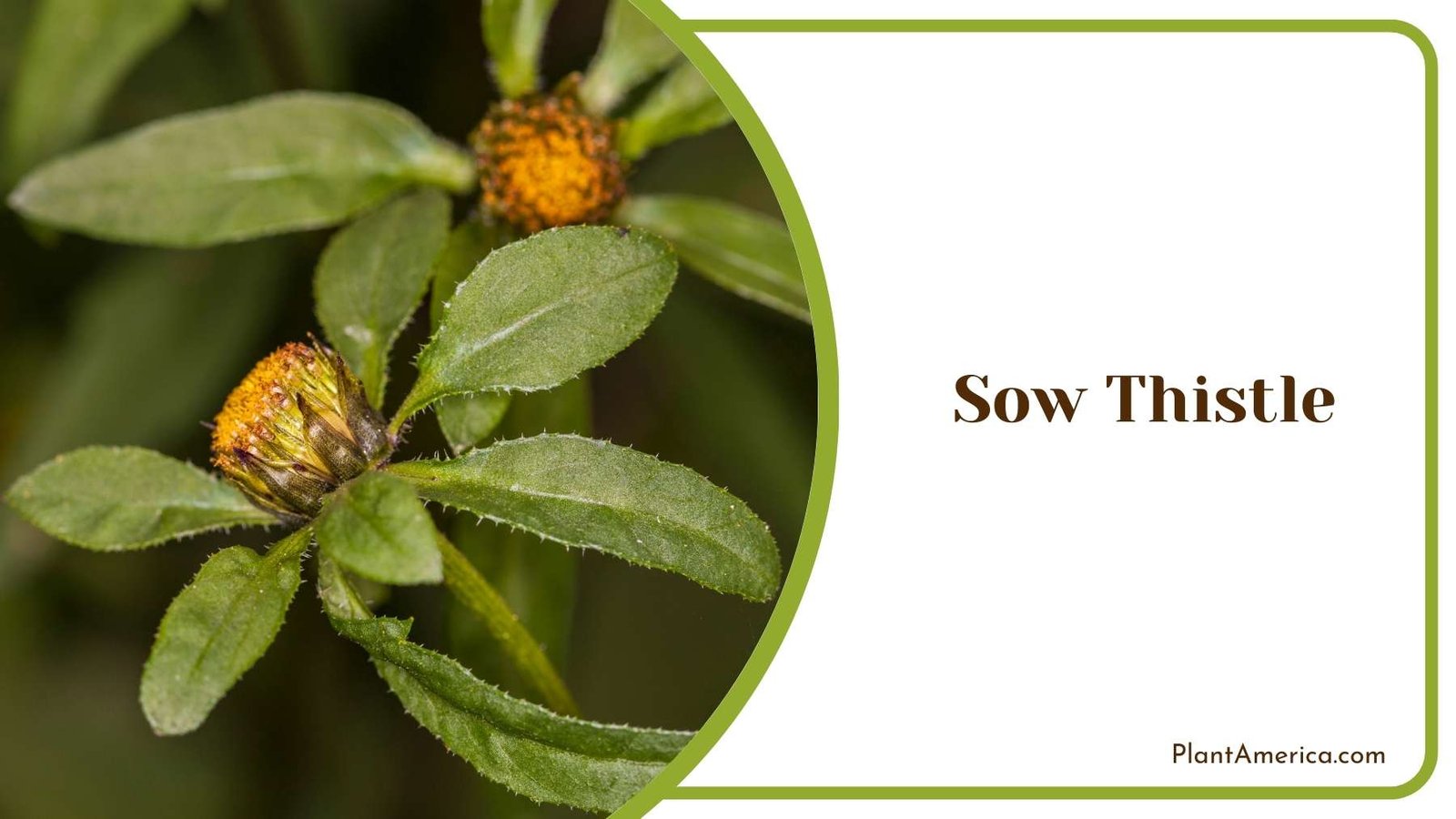
Sow thistle is an annual or biennial broadleaf weed species native to Europe and Asia. It spreads prolifically through airborne seeds and develops extensive root systems. The plant has an erect, branching stem that grows one to five feet tall. Alternate, slightly hairy leaves have prickly, irregular edges and clasp the stem at the base.
Small yellow flowers, sometimes tinted with red, bloom in loose terminal clusters from summer through fall. Each flower is composed of numerous drooping yellow petals surrounding a central cluster of brown to black fruits. After blooming, fluffy white seeds form on brush-like appendages that detach from the stalk easily in the breeze, spreading the seeds widely.
Sow thistle thrives in fertile, loose soils and full sun exposure. It competes heavily for water and nutrients, often crowding out cultivated plants. All parts of the plant contain a milky latex sap that can cause skin irritations in sensitive individuals. Livestock usually avoid eating sowthistle due to its spiny leaves and high silica content, but it remains an invasive agricultural pest.
Physical removal of plants before seed production is the most effective management method, but sow thistle roots can regenerate from even small fragments left behind. Consistent tilling or mulching can help control spread. Herbicides can be used judiciously, being careful not to drift onto nearby garden plants. Vigilance is important as sow thistle seeds can remain viable in the soil for decades.
12. Wild Carrot

- Growing Season: Spring, Summer, Fall
- Leaf Shape: Compound, Alternate leaves
- Specific Needs: Full sun, Dry soil
- Common Pests: None
Wild carrot, also known as queen anne’s lace, is a common biennial weed found in fields, meadows, and along roadsides throughout North America and Europe. The first year it develops a rosette of finely divided, fern-like leaves. In the second year, it sends up a single hollow stem that branches near the top, reaching two to four feet tall.
Small white flowers cluster in flat-topped umbels at the ends of each stem branch. Individual flowers are quite small, with five petals and a central greenish seed cluster in the center. When mature, the umbels develop clusters of bristly seeds that are dispersed by wind and attachment to fur and clothing. The seed heads resemble tiny birdcage-like shapes.
The foliage and stems are hairless and sparsely branched. Leaves decrease in size up the stem, which is also tinged with purple stripes. Wild carrot roots resemble domestic carrots but contain poisonous furanocoumarins that can cause phytophotodermatitis in sensitive skin exposed to sunlight after contact. All plant parts also emit a smell resembling domestic carrots when crushed.
Because of its similar appearance, wild carrots are often mistakenly harvested for domestic carrots. It spreads aggressively through windblown seeds and regenerates from root fragments. Constant tilling and pulling young plants helps control spread. Herbicides may be needed in large infestations but can damage nearby crops and native plants. Preventing flowering and seed production is most effective for long-term management..
Conclusion
Flowering Weeds offer many benefits and sometimes removing them outrightly is not the best move for your garden.
- Black medic is a small, low-growing annual legume native to Europe and Asia and spreads prolifically through its abundant seed production.
- Sowthistle refers to several species in the Sonchus genus, they can grow as annuals or short-lived biennials.
- Amaranth is a broadleaf flowering weed native to tropical and subtropical regions worldwide.
The small changes you make to encourage flowering weeds can have a big impact on the health and biodiversity of your garden ecosystem. Focus on the beauty that comes from accepting nature’s imperfection instead of trying to control every plant.