
Dwarf Japanese maple trees offer a world of wonder within a compact form, bringing untold beauty and interest to the smallest of gardens. Their petite stature, typically reaching only six to 12 feet tall at maturity, allow these colorful citizens of the botanical realm to thrive in patios, courtyards, and wherever space is limited.

If you seek to maximize your garden’s visual impact while minimizing its footprint, consider taking the plunge into the pint-sized paradise of dwarf Japanese maples. These ornamentals of ornamentals prove that good things truly do come in small packages.
Dwarf Japanese Maple Trees to Spice Up a Botanical Garden
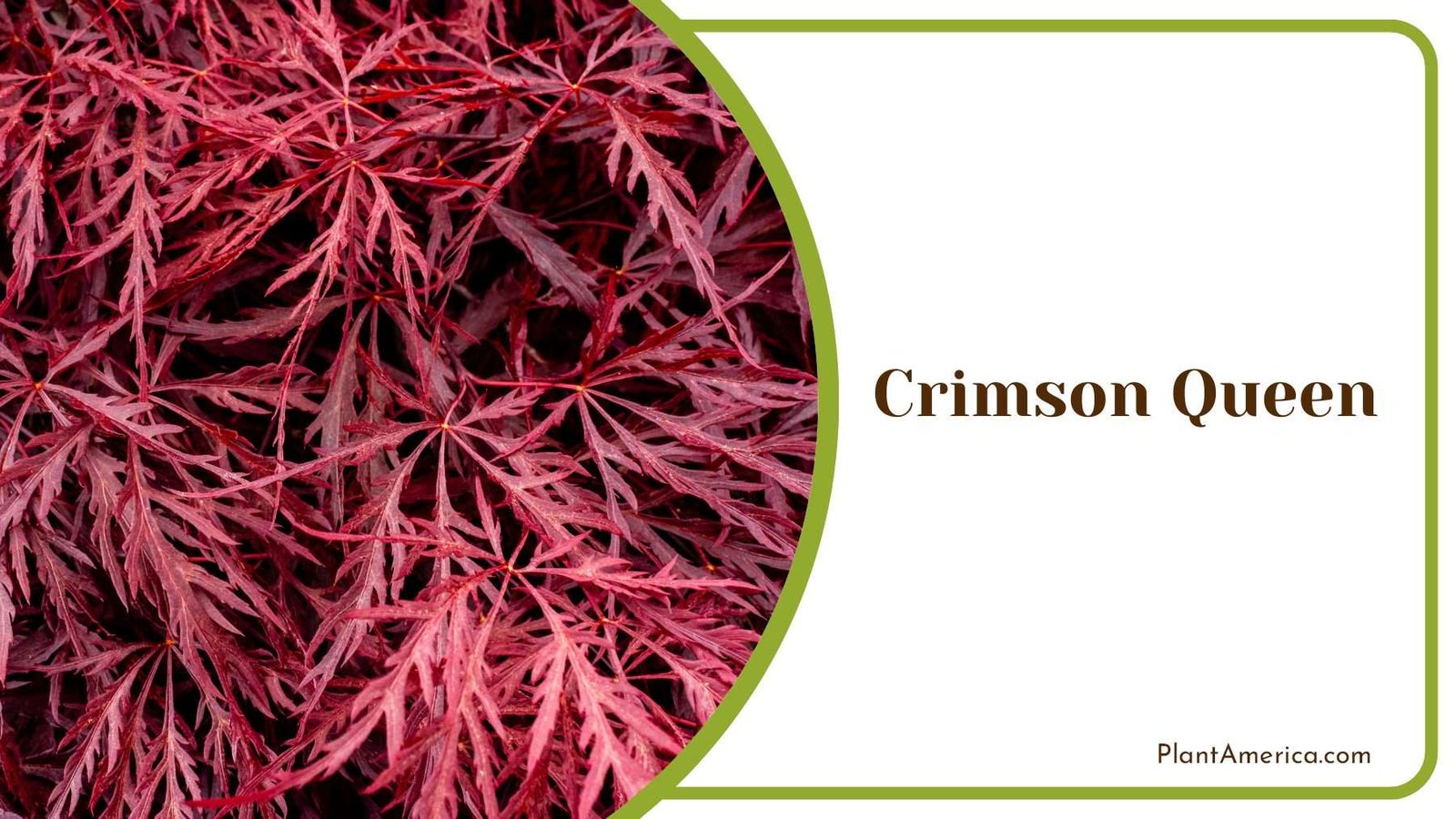
1. Crimson Queen
- Growing season: Early Spring, Early Summer
- Leaf shape: Oval, Lobed leaves, Turns crimson red in fall
- Specific needs: Partial shade, Moist soil
- Common pest: Aphids, Japanese beetles
Crimson Queen is one of the most popular dwarf Japanese maple varieties. It is well-known for its stunning crimson fall color; the leaves emerge green in spring, maturing to a deep wine red in autumn. The crimson foliage turns the tree into a flaming beacon during the fall season.
Crimson Queen maintains a compact, vase-shaped form perfect for smaller landscapes.
The tree reaches only six to eight feet tall and wide at maturity, making it suitable for limited spaces. This dwarf maple tree thrives in partial shade and moist, well-draining soil rich in organic matter. The soil should be kept consistently damp but not soggy.
The brilliant crimson foliage in fall and delicate habit make Crimson Queen a gorgeous landscape specimen. The tree’s petite stature and vivid colors ensure its continued appeal for modern gardens and yards.
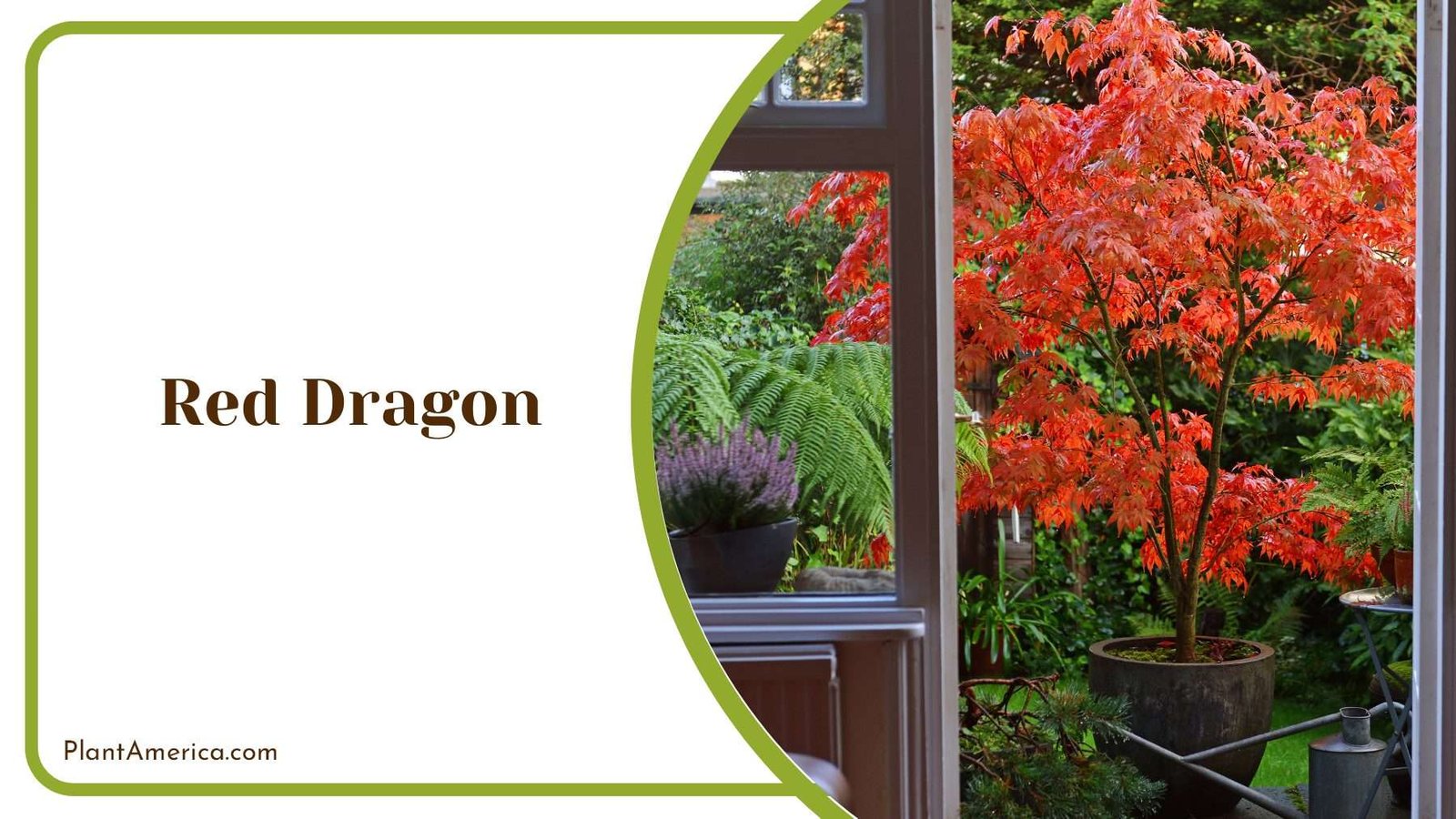
2. Red Dragon
- Growing season: Early Spring, Early Summer
- Leaf shape: Oval leaves, Turns red in fall
- Specific needs: Full sun, Well-draining soil
- Common pest: Japanese beetles, Aphids
Red Dragon Japanese maple is a compact, dense tree well-known for its stunning crimson foliage. The new leaves emerge bright red in spring, gradually darkening to a deep wine-red hue in summer. In autumn, the leaves explode into blazing crimson colors resembling flames, giving the tree its name.
Red Dragon grows slowly to just five to six feet tall and wide at maturity, making it ideal for smaller spaces. This Japanese maple prefers full sun and well-draining soil conditions. Japanese beetles and aphids can damage the leaves, so inspect them regularly.
Prune sparingly during winter dormancy to maintain the tree’s shape. Fertilize before growth starts in early spring and again in late summer. Water the base of Red Dragon regularly during dry spells but allow the soil to partially drain between waterings. Overwatering can cause leaf yellowing.
The Crimson Flame-like foliage and compact size of Red Dragon Japanese maple make it an attractive addition to small landscapes where its bright autumn colors can be appreciated up close. The tree’s vibrant hues and petite stature ensure its enduring appeal in modern yards.
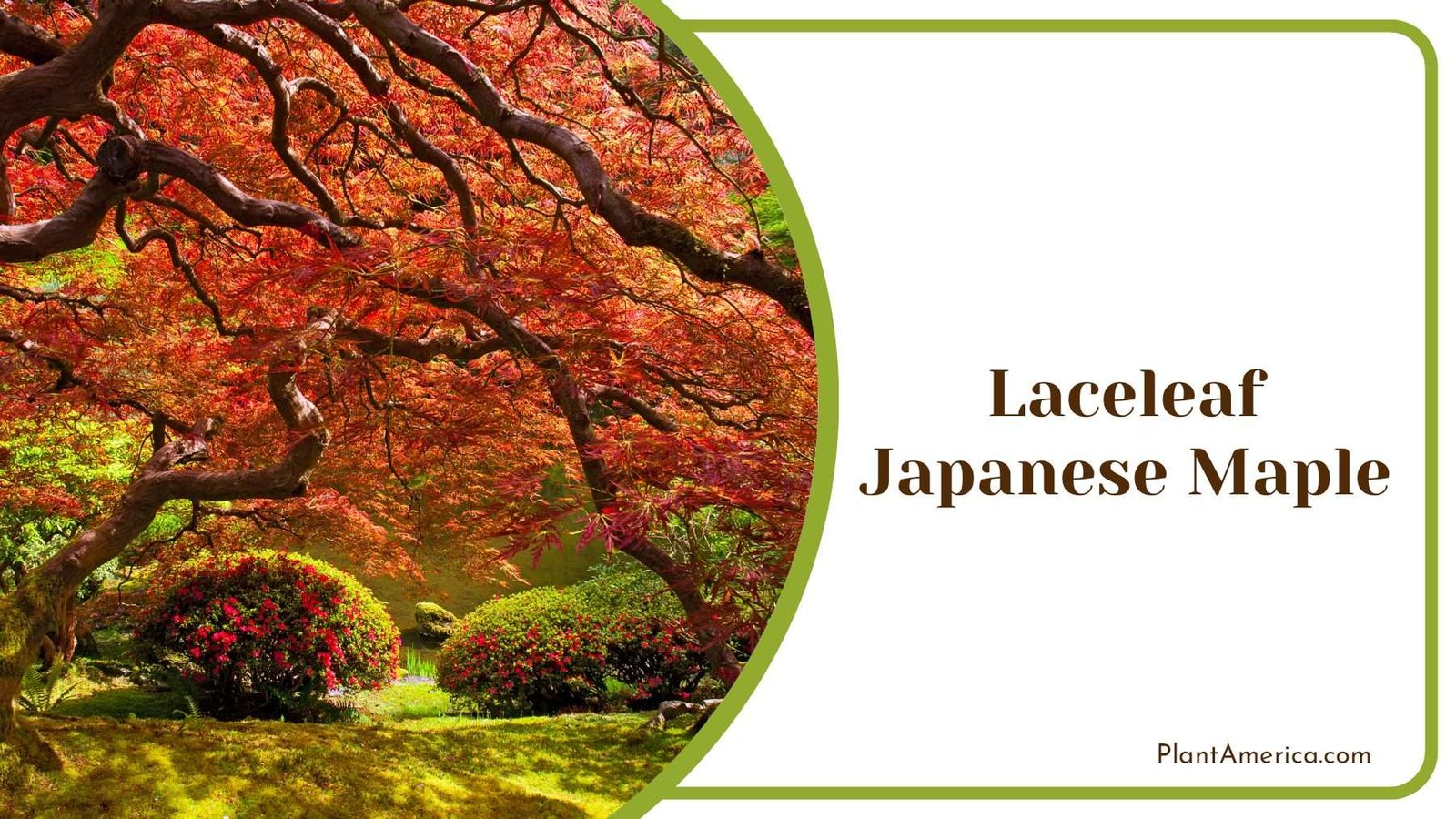
3. Laceleaf Japanese Maple
- Growing season: Early Spring, Early Summer
- Leaf shape: Deeply dissected, Lace-like leaves
- Specific needs: Partial shade, Moist soil
- Common pest: Spider mites, Scale insects
Laceleaf dwarf Japanese maples are prized for their uniquely patterned, dissected leaves. The leaves emerge light green in spring, taking on reddish and yellow tints in autumn. The lacy, intricately cut foliage is fascinating to observe up close.
Laceleaf varieties grow into neat, rounded shapes at maturity, typically reaching around four to six feet tall and wide. These dwarf maple trees have a compact size suitable for smaller landscapes. The trees thrive when planted in partial shade and consistently moist, well-draining soil rich in organic material. The soil should be kept damp but not soggy.
The stunningly dissected foliage, dainty habit, and petite stature of laceleaf Japanese maples make them treasures for the modern garden. Their intricate leaves provide visual texture and interest all season long.
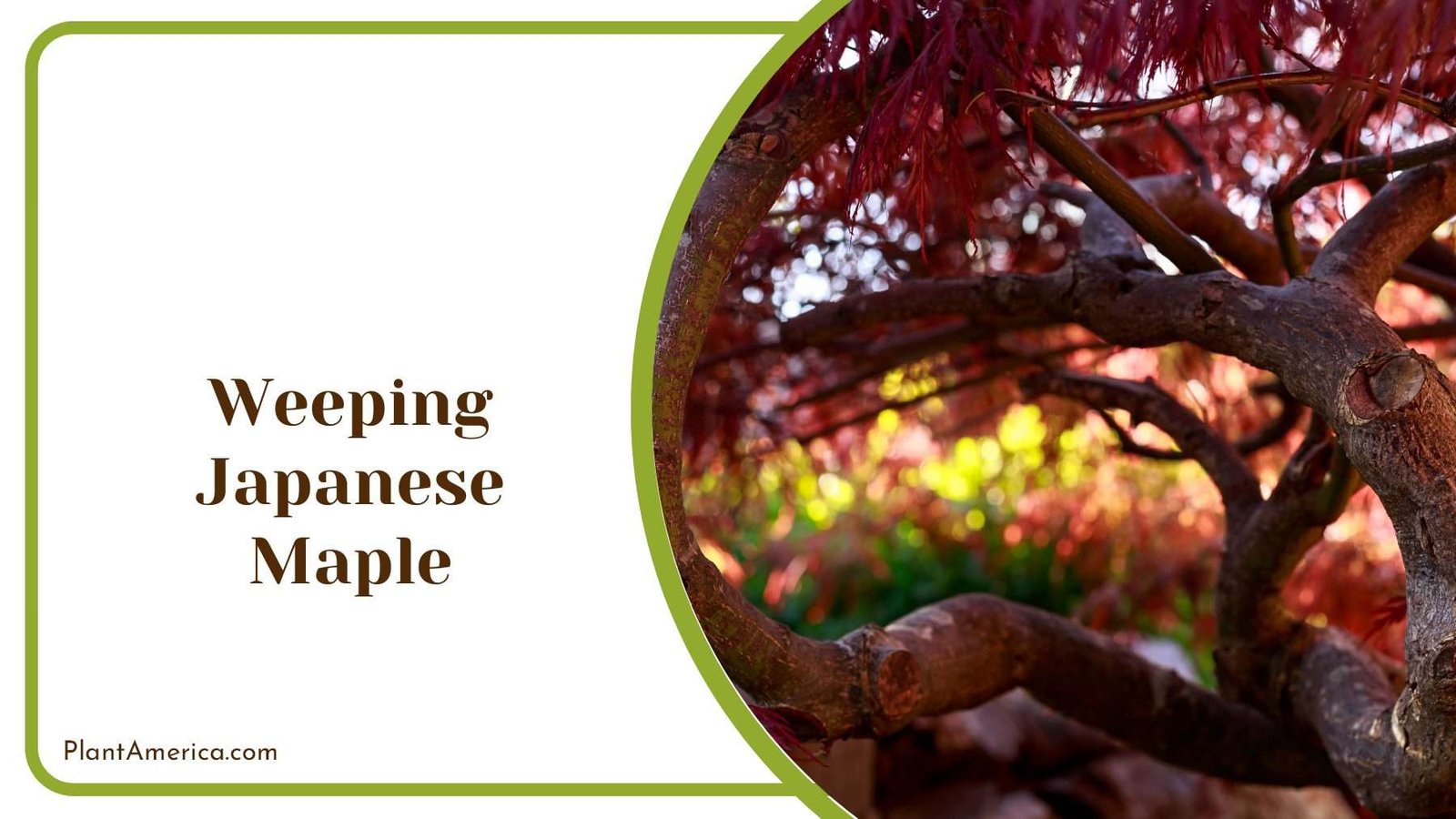
4. Weeping Japanese Maple
- Growing season: Early Spring, Early Summer
- Leaf shape: Oval leaves, Droops downward
- Specific needs: Partial shade, Moist soil
- Common pest: Aphids, Scale insects
Weeping Japanese maples have contorted, pendulous branches that cascade downward, creating a weeping effect. The leaves emerge green in spring, gradually taking on brilliant shades of red, yellow, and purple in autumn. The foliage colors provide seasonal interest.
Weeping varieties typically grow more slowly to around six to 12 feet tall and wide at maturity. They thrive when planted in partial shade and consistently moist, well-draining soil rich in organic material. Pruning is often needed to maintain the desired weeping shape of the tree.
Younger branches will need to be trained downwards or tied to supports. Established weeping Japanese maples require mainly structural pruning to remove dead or diseased wood.
The drooping, cascading habit of weeping Japanese maples makes them a distinctive and eye-catching addition to any landscape. Their graceful, flowing shape provides a sense of natural movement and flow in the garden.
5. Inaba Shidare
- Growing season: Early Spring, Early Summer
- Leaf shape: Finely cut leaves, Fern-like
- Specific needs: Partial shade, Moist, Well-draining soil
- Common pest: Spider mites, Aphids
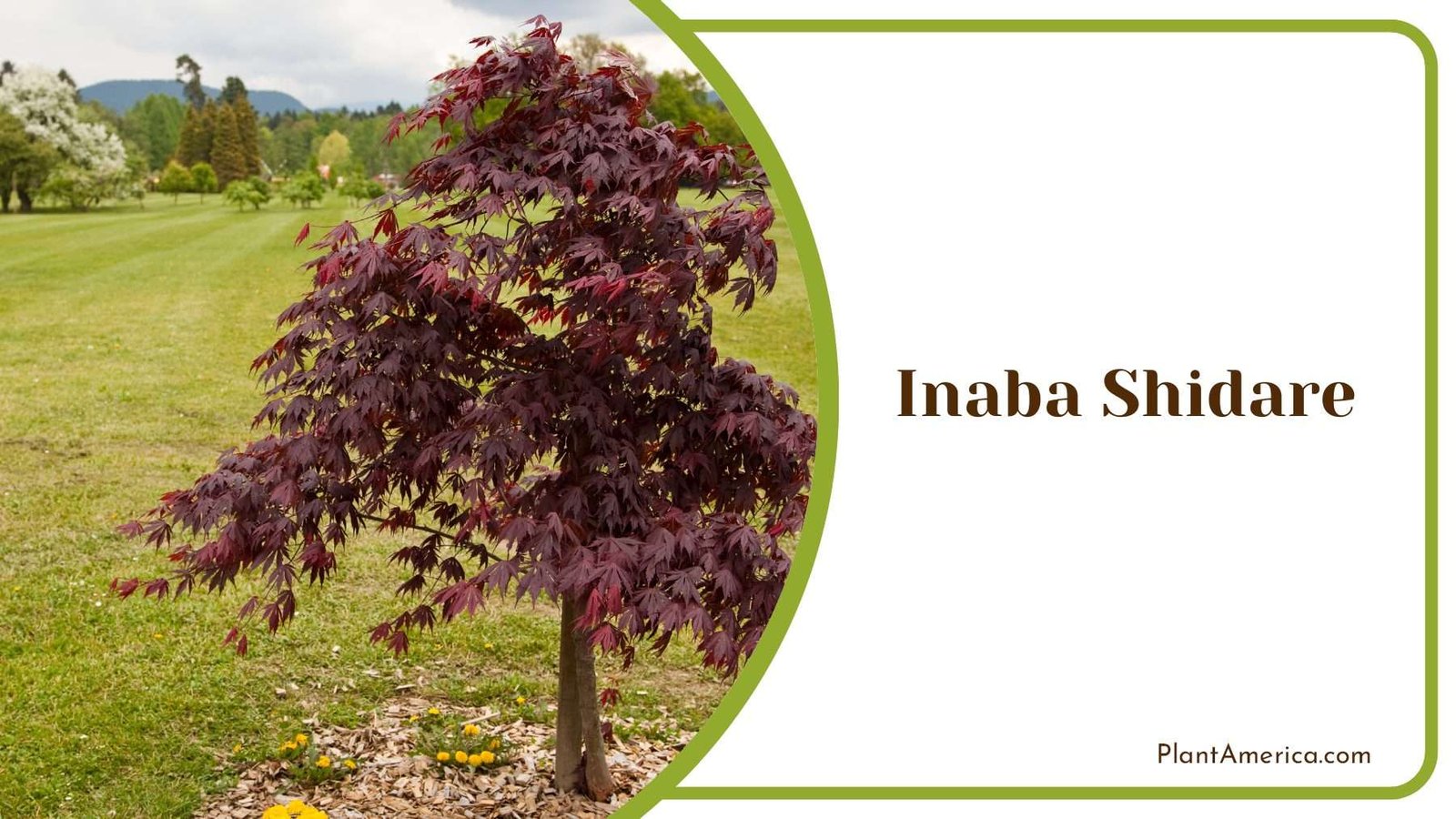
Inaba Shidare is a renowned dwarf Japanese maple valued for its delicate, fern-like leaves. The foliage emerges light green in spring, gradually maturing to a deeper green with vibrant red and orange fall colors.
Inaba Shidare grows slowly to around four to six feet tall and wide, forming a dense, oval shape. This Japanese maple bush prefers partial shade and consistently moist, well-draining soil rich in organic material. Spider mites and aphids can become an issue during warm weather, so keep an eye out for small yellowing leaves or fine webbing.
Prune sparingly in spring to encourage fullness. Fertilize with slow-release granules or diluted liquid in early spring before growth begins and again towards the end of summer. The water base of Inaba Shidare regularly during dry spells but allows oil to partially drain between waterings.
6. Dissected Leaf Japanese Maple
- Growing season: Early Spring, Early Summer
- Leaf shape: Deeply cut, Fern-like leaves
- Specific needs: Partial shade, Moist soil, Well-draining soil
- Common pest: Spider mites, Aphids
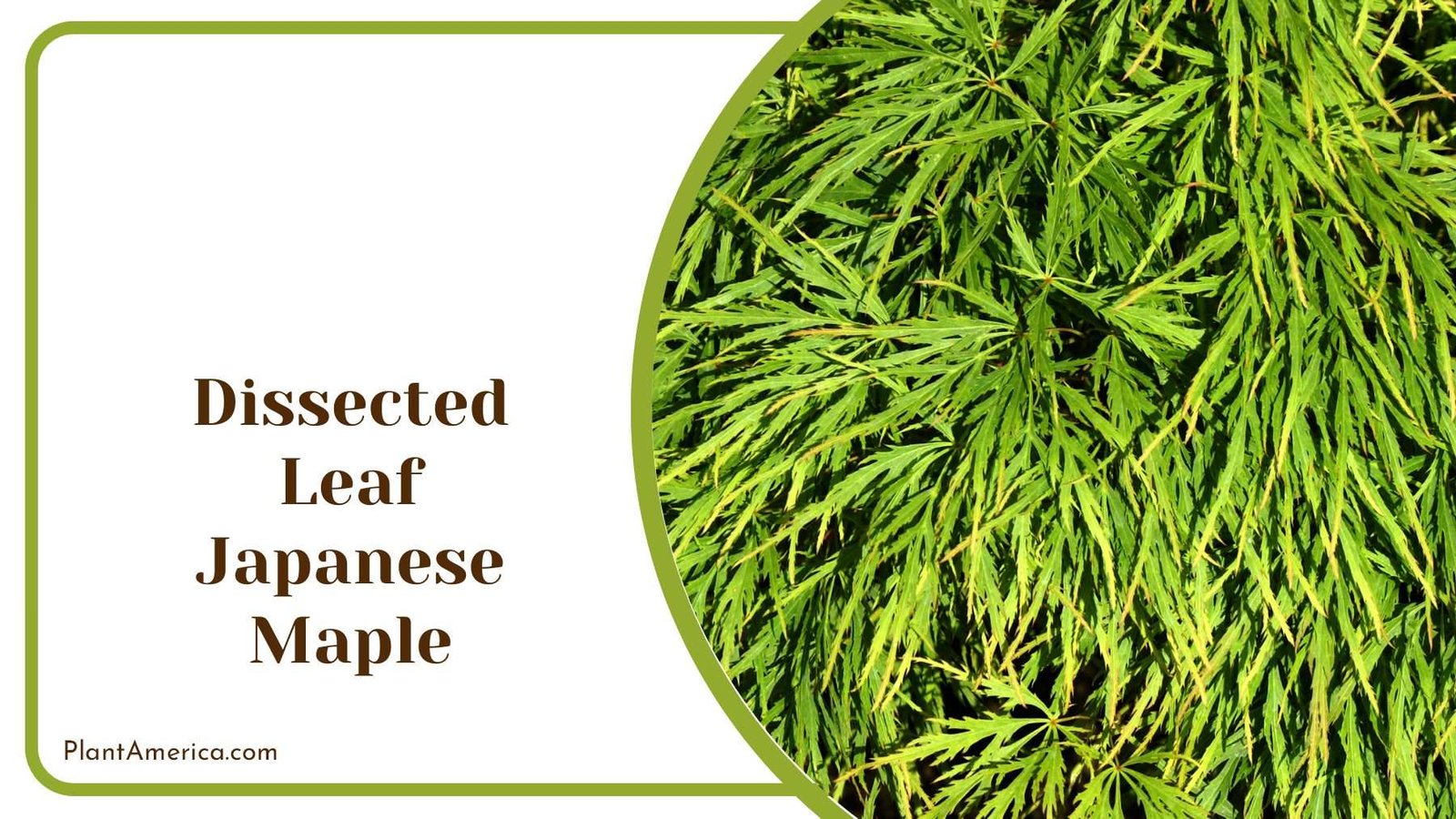
Dwarf Japanese maples with dissected leaves are popular for their unique, fern-like foliage. The leaves are divided into many small leaflets that create a lacy, intricately cut appearance.
The leaflets are dissected down to the veins, and the leaves emerge lime green in spring, gradually changing to vibrant shades of red, orange, and yellow in fall. The colorful foliage provides visual interest throughout the seasons.
Dissected leaf varieties grow into neat, compact, and rounded shapes at maturity. They typically reach heights of four to eight feet tall and wide. These dwarf maple trees have a petite size suitable for smaller landscapes. The trees thrive when planted in partial shade and consistently moist,well-draining soil rich in organic material. The soil should be kept damp but not soggy.
The delicate, intricately cut foliage, petite stature, and miniature habit of dissected leaf Japanese maples make them treasures for the modern garden. Their lacy leaves provide visual texture, interest, and appeal throughout the year. The eye-catching foliage and miniature size of dissected leaf dwarf Japanese maples ensure their continued appeal for modern gardens and landscapes.
7. Red Filigree
- Growing season: Early Spring, Early Summer
- Leaf shape: Finely cut leaves, Red tinted leaves
- Specific needs: Partial shade, Moist soil, Well-draining soil
- Common pest: Spider mites, Aphids
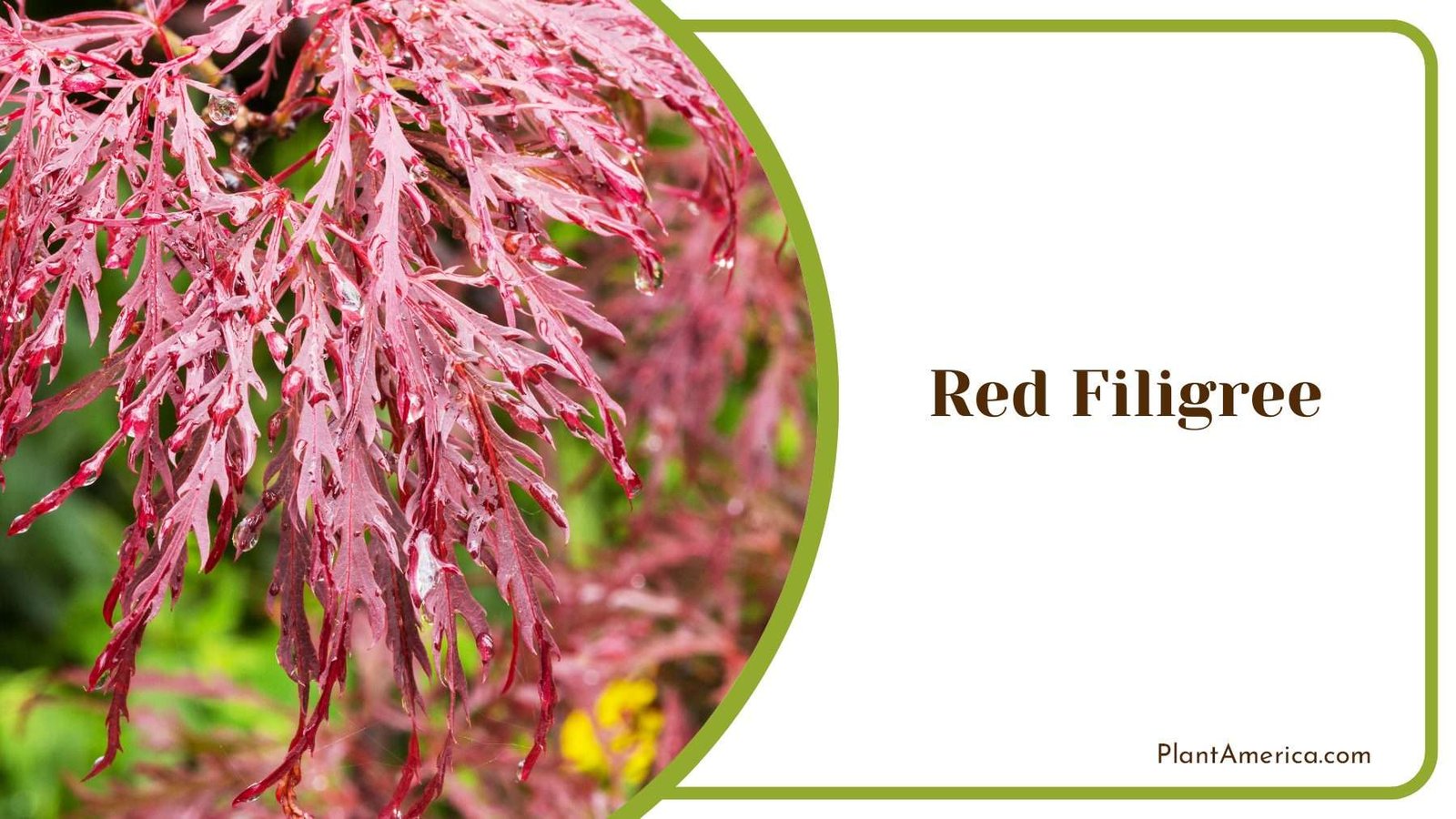
Red Filigree dwarf Japanese maple has intricately cut, fern-like leaves with an irregular red tint. The deep red color intensifies in fall, creating a stunning display. Red Filigree grows slowly to around three to five feet tall and wide, with a dense, compact form. This Japanese maple bush prefers partial shade and consistently moist, well-draining soil rich in organic material.
Regular pruning can be used to maintain a desirable shape. Spider mites and aphids are attracted to new growth, so check leaves frequently for damage or stickiness. Fertilize with slow-release granules in early spring and after leaves fully emerge. Water regularly during dry spells but allow the soil to partially dry out between waterings.
The finely cut leaves and reddish tint of Red Filigree Japanese maple create a gorgeous landscape focal point when the color intensifies in autumn, brightening an otherwise dormant landscape with vibrant color
8. Dwarf Coral Bark Japanese Maple
- Growing season: Early Spring, Early Summer
- Leaf shape: Palmate leaves, Red in fall
- Specific needs: Partial shade, Moist, Well-draining soil
- Common pest: Spider mites, Aphids
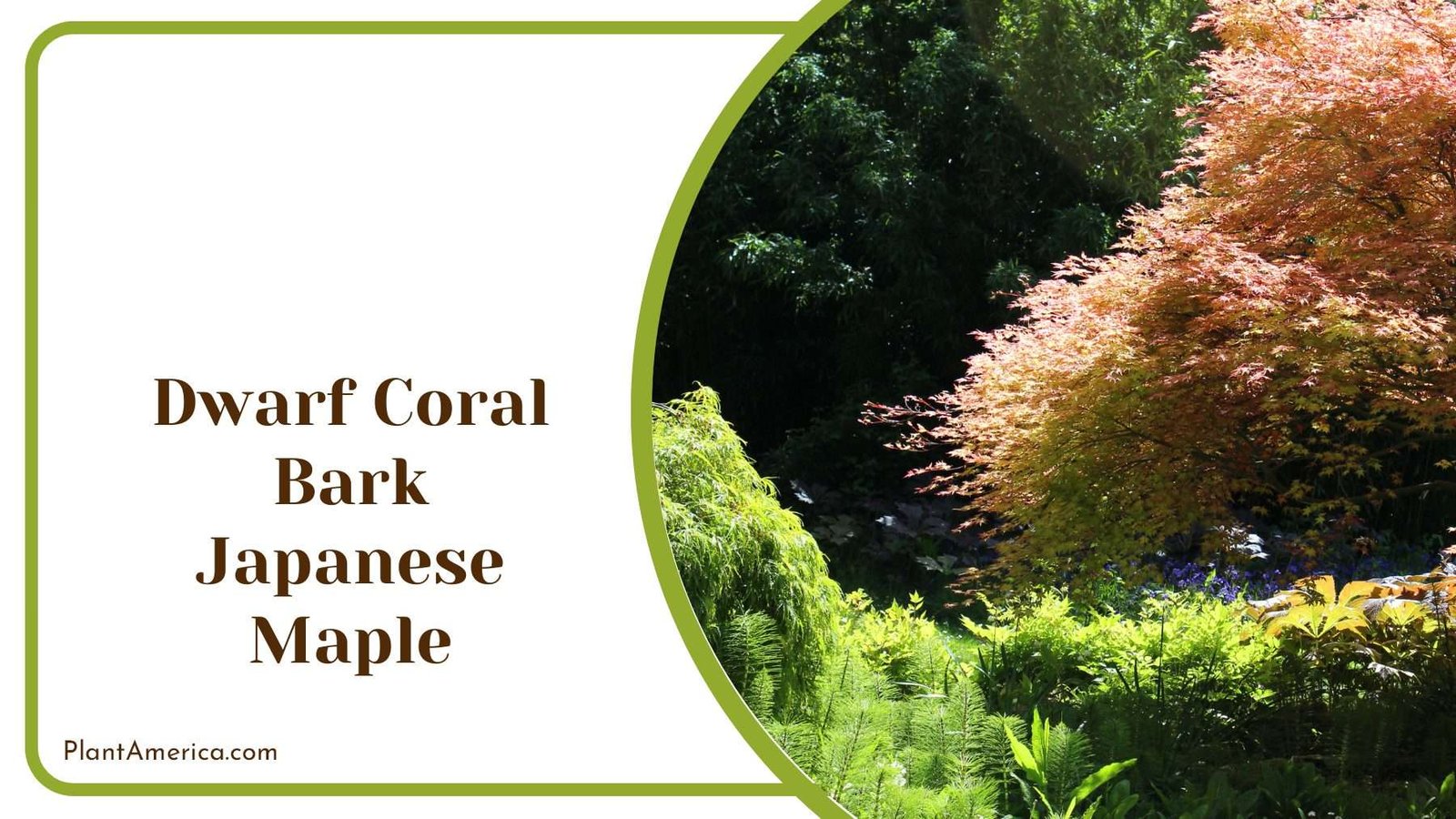
Dwarf Coral Bark Japanese maple is prized for its exfoliating cinnamon bark and vivid red fall foliage. The leaves emerge light green in spring, gradually maturing to a deep crimson-red hue in autumn. The stunning red foliage turns the small tree into a flame of color during fall.
Dwarf Coral Bark grows slowly into a dense, compact, and rounded shape at maturity. It typically reaches heights of four to six feet tall and wide, making it suitable for smaller landscapes. This dwarf maple tree thrives when planted in partial shade and consistently moist, well-draining soil rich in organic material. The soil should be kept damp but not soggy.
The brilliant red foliage in fall, petite stature, and coral bark exfoliation of Dwarf Coral Bark Japanese maple makes it a beautiful specimen plant. The miniature size and vivid hues ensure its popularity in modern gardens and landscapes.
9. Beni Hime
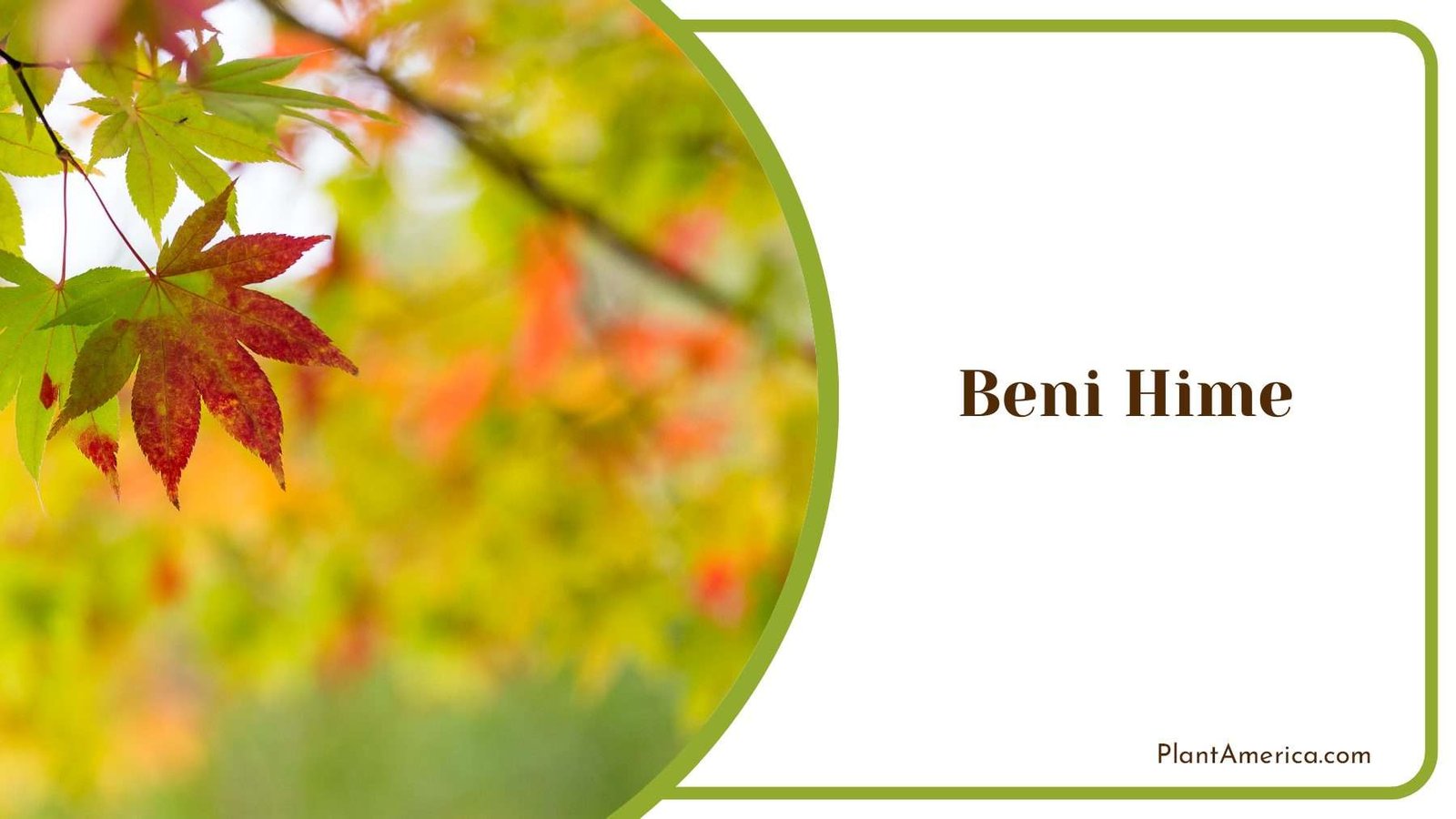
- Growing season: Early Spring, Early Summer
- Leaf shape: Palmate leaves, Vibrant red in fall
- Specific needs: Partial shade, Moist soil, Well-draining soil
- Common pest: Spider mites, Japanese beetles
Beni Hime dwarf Japanese maple is prized for its stunning wine-red to burgundy fall foliage. The leaves emerge green in spring, maturing to a deep purplish-red in autumn. Beni Hime grows moderately slowly into a dense, compact shape reaching five to eight feet tall and wide at maturity.
This Japanese maple bush thrives when planted in partial shade and consistently moist, well-draining soil rich in organic material. Regular pruning can maintain a desirable shape.
10. Mikawa Yatsubusa
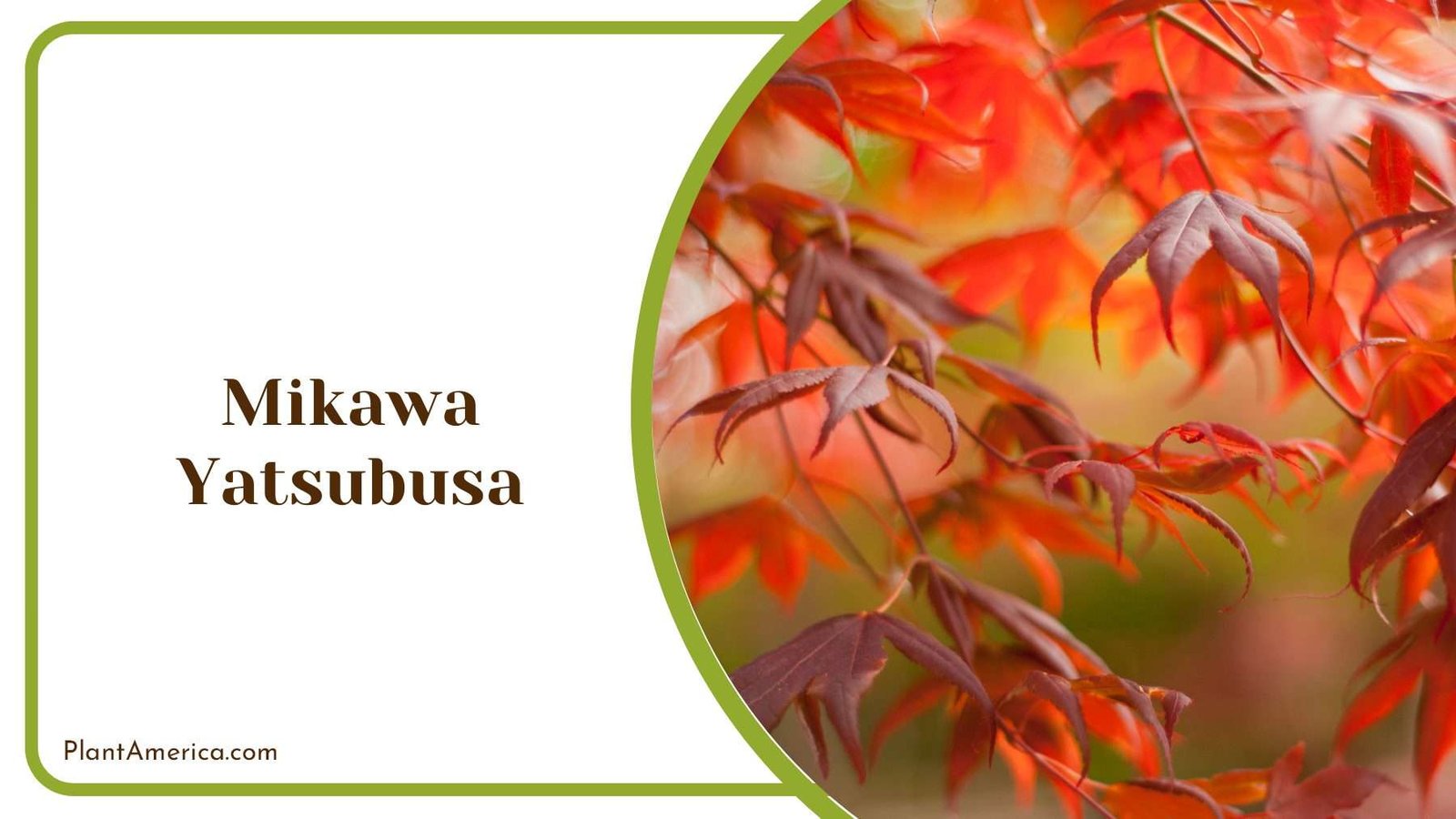
- Growing season: Early Spring, Early Summer
- Leaf shape: Deeply dissected, Palmate leaves
- Specific needs: Partial shade, Well-draining soil
- Common pest: Spider mites, Japanese beetles
Mikawa Yatsubusa dwarf Japanese maple is prized for its delicate, fern-like leaves. The foliage emerges light green in spring, gradually darkening to rich green and putting on vibrant red and orange fall colors.
Mikawa Yatsubusa grows moderately slowly into a dense, compact shape reaching four to six tall and wide at maturity. This Japanese maple bush prefers partial shade and consistently moist, well-draining soil rich in organic material.
11. Coral Bark Japanese Maple
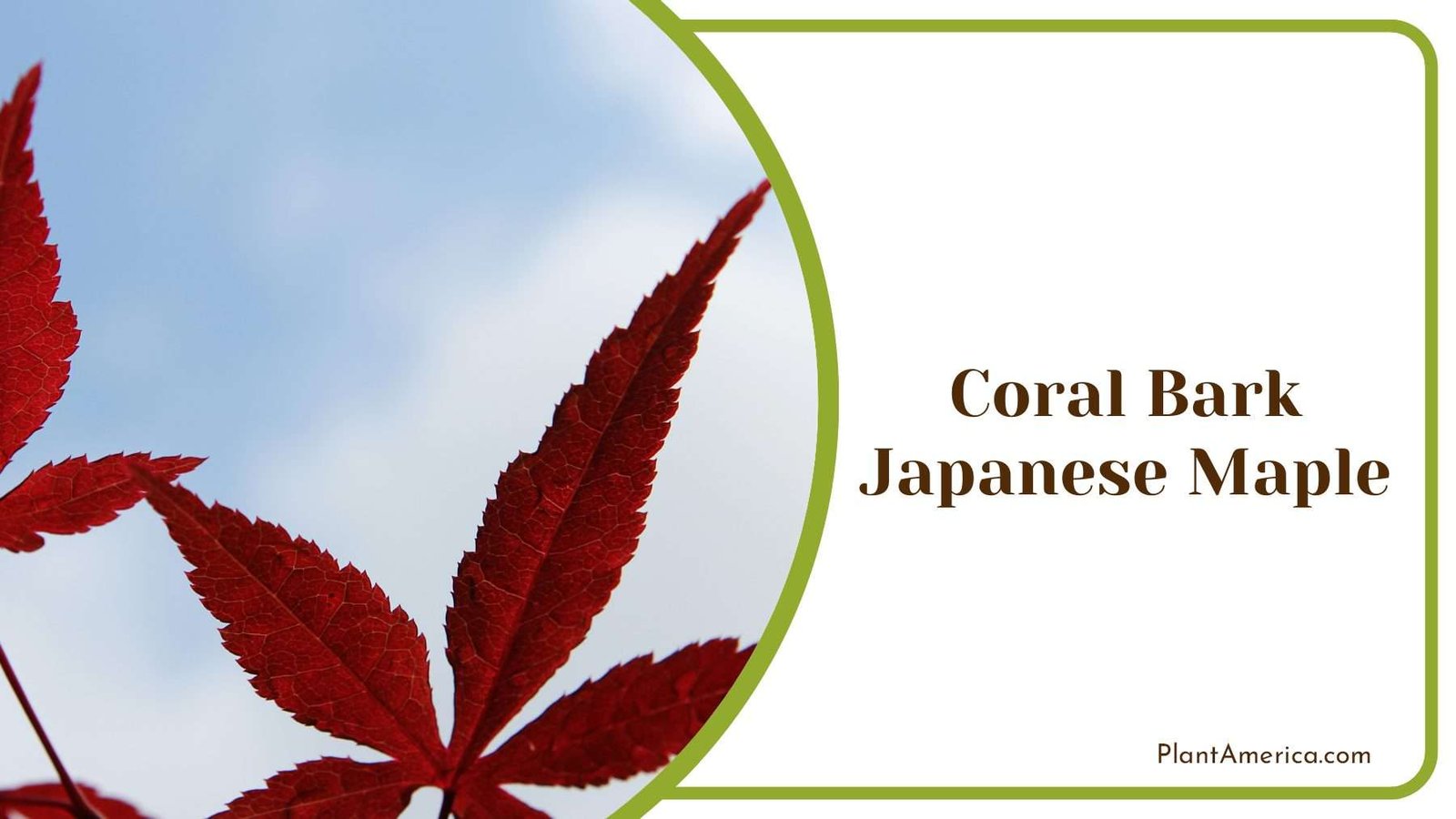
- Growing season: Early Spring, Early Summer
- Leaf shape: Palmate leaves, Red or gold in fall
- Specific needs: Partial shade, Well-draining soil
- Common pest: Spider mites, Japanese beetles
Coral Bark Japanese maple tree is valued for its exfoliating cinnamon bark that resembles coral reefs. The leaves emerge green in spring, maturing to red or gold shades in autumn. Coral Bark varieties grow slowly into oval or rounded shapes, reaching eight to 15 feet tall and wide at maturity.
These Japanese maple bushes thrive when planted in partial shade and consistently moist, well-draining soil rich in organic material. Regular pruning maintains a more compact shape.
12. Bloodgood
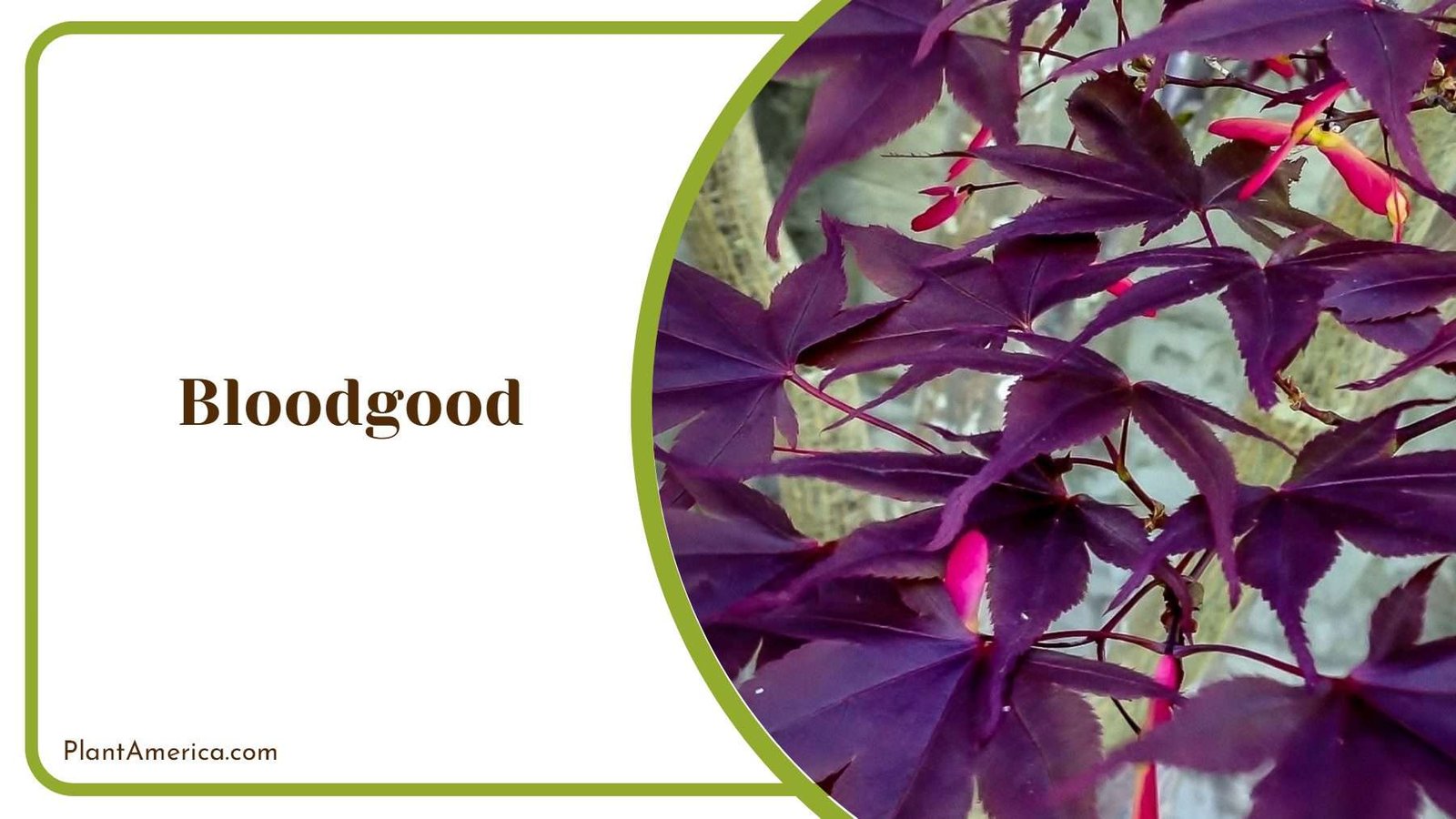
- Growing season: Early Spring, Early Summer
- Leaf shape: Palmate leaves, Turns red in fall
- Specific needs: Partial shade, Well-draining soil
- Common pest: Spider mites, Japanese beetles
Bloodgood Japanese maple tree is valued for its vibrant crimson-red fall foliage. The leaves emerge green in spring, maturing to a bright ruby-red in autumn. Bloodgood grows into a spreading, vase-shaped tree reaching 15 to 20 feet tall and wide at maturity.
This dwarf Japanese maple thrives when planted in partial shade and consistently moist, well-draining soil rich in organic material. Regular pruning when young can help develop a strong branch structure.
13. Orangeola
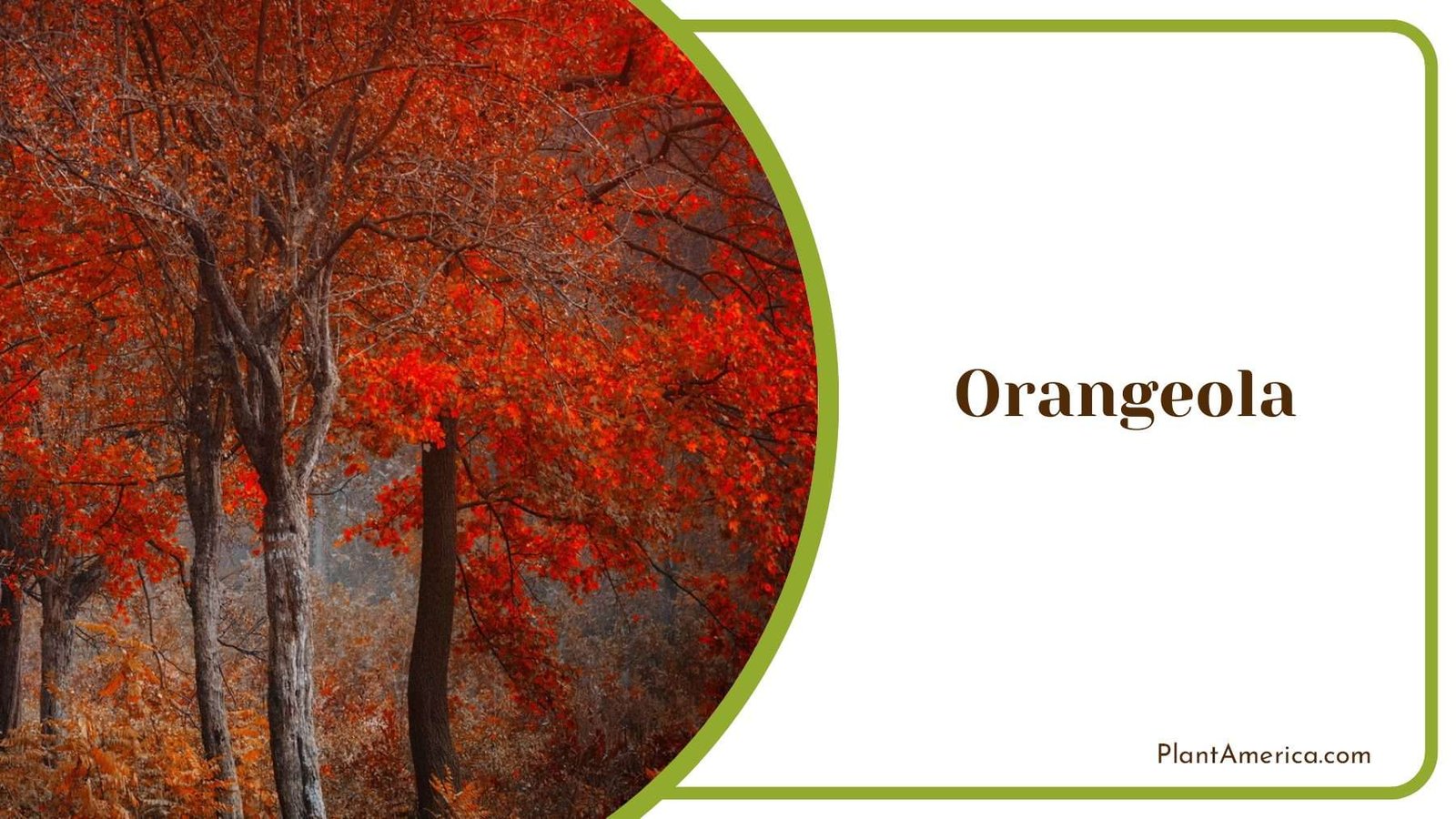
- Growing season: Early Spring, Early Summer
- Leaf shape: Palmate leaves, Amber in fall
- Specific needs: Partial shade, Well-draining soil
- Common pest: Spider mites, Japanese beetles
Orangeola Japanese maple tree is valued for its stunning orange and red fall foliage. The leaves emerge green in spring, maturing to shades of burnt orange and brick red in autumn.
Orangeola grows into an oval-rounded shape reaching 10 to 15 feet tall and wide at maturity. This dwarf Japanese maple thrives when planted in partial shade and consistently moist, well-draining soil rich in organic material. Regular pruning maintains a more compact shape.
14. Osakazuki
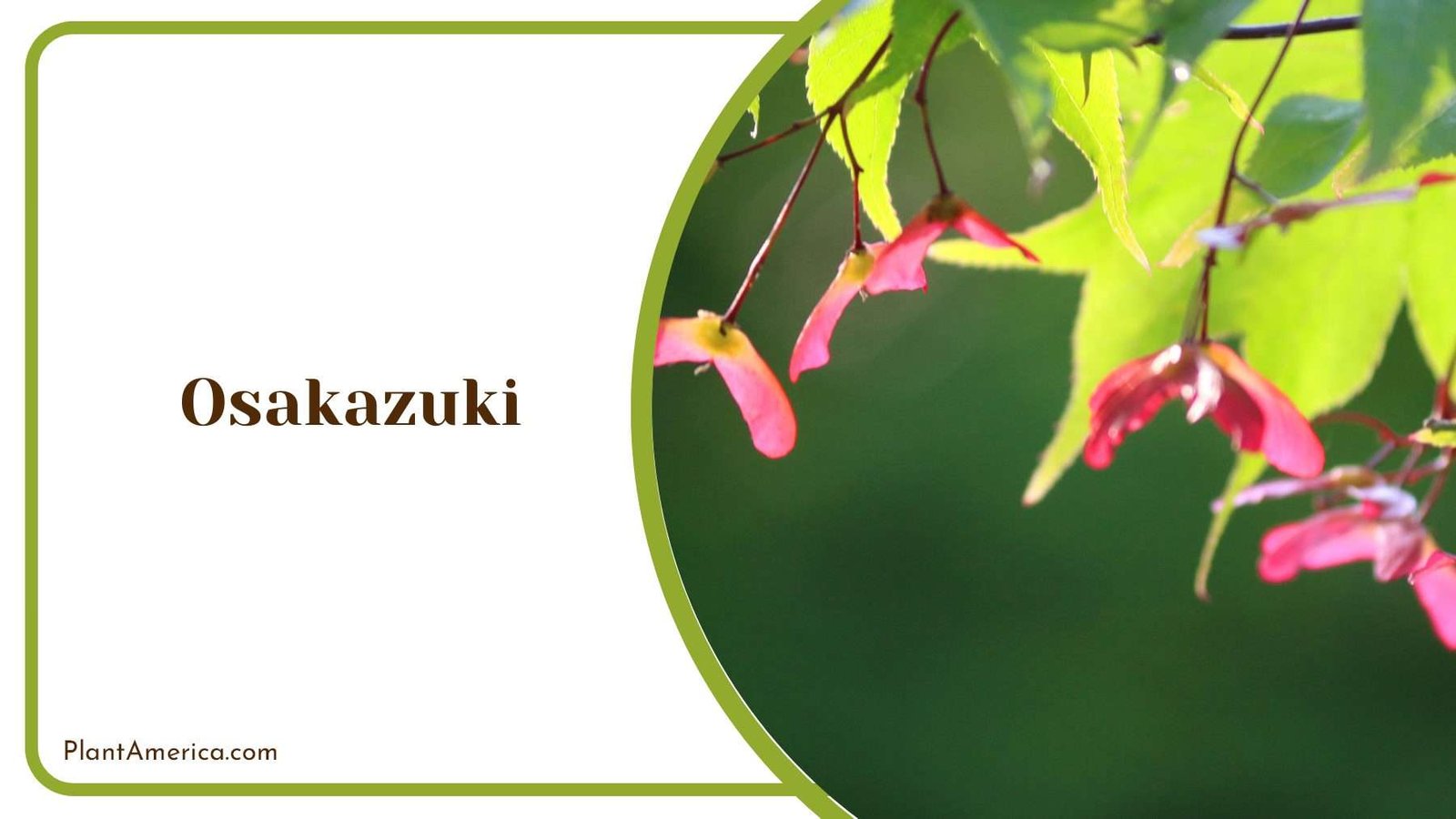
- Growing season: Early Spring, Early Summer
- Leaf shape: Palmate leaves, Turns red or orange in fall
- Specific needs: Partial shade, Well-draining soil
- Common pest: Spider mites, Japanese beetles
Osakazuki Japanese maple tree is valued for its stunning fall foliage of red, orange, and purple hues. The leaves emerge green in spring, maturing to brilliant shades of red and orange in autumn. Osakazuki grows into a vase-shaped form reaching 15 to 20 feet tall and wide at maturity. This dwarf Japanese maple thrives when planted in partial shade and consistently moist, well-draining soil rich in organic material.
Spider mites and Japanese beetles can become an issue during warm months, so inspect foliage regularly for damage. Prune sparingly in spring to maintain vase shape. Fertilize with slow-release granules in early spring before growth and again in late summer. The water base of Osakazuki is regular during dry spells and allows the soil to nearly dry out between waterings.
The brilliant fall color of Osakazuki Japanese maple creates eye-catching foliage displays that last throughout much of autumn before leaves drop for winter.
15. Sango Kaku
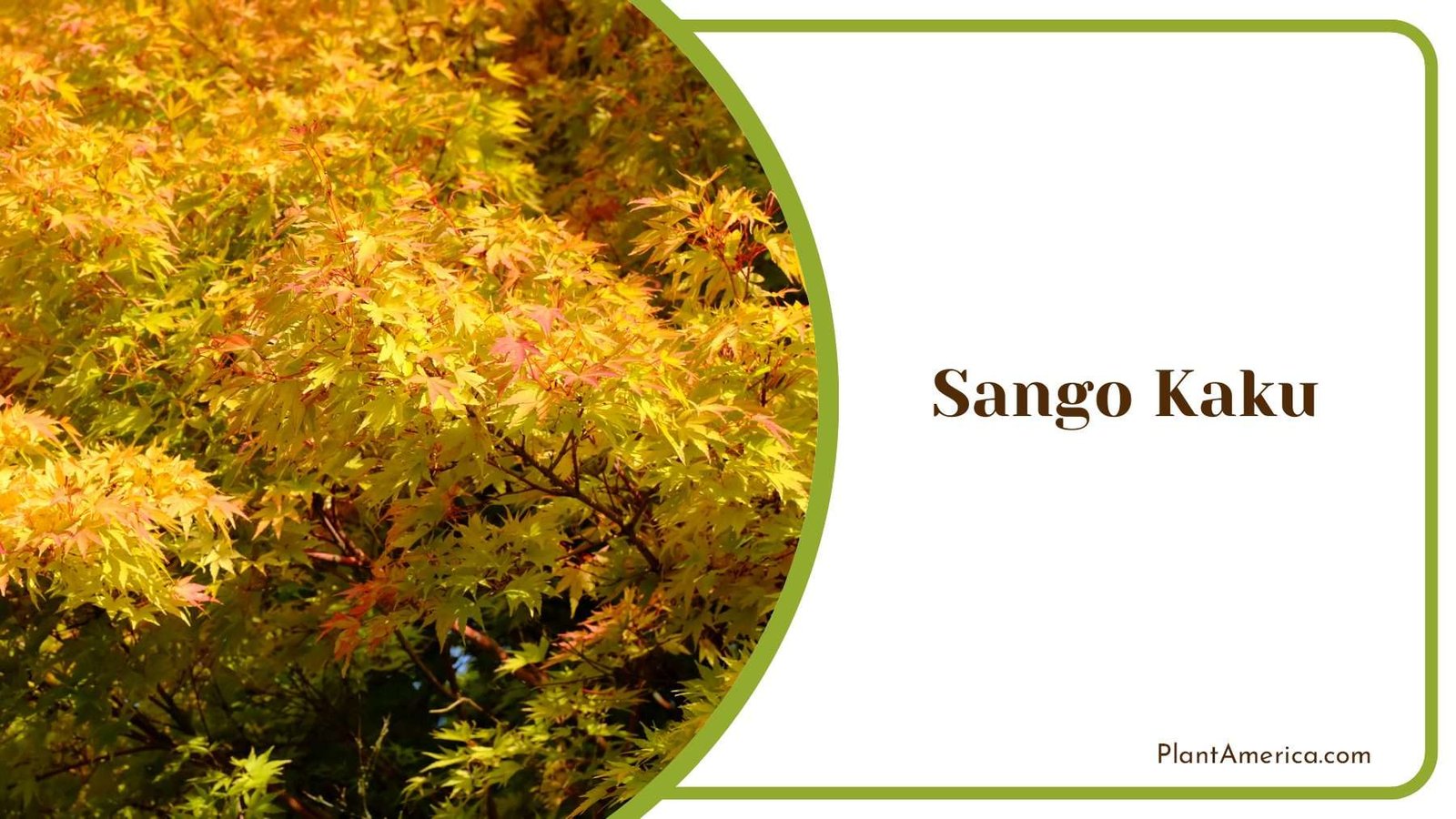
- Growing season: Early Spring, Early Summer
- Leaf shape: Palmate leaves, Distinctive triangular notches
- Specific needs: Partial shade, Well-draining soil
- Common pest: Spider mites, Japanese beetles
Sango Kaku Japanese maple tree is prized for its tri-lobed leaves, which resemble ancient Japanese writing brushes. The leaves emerge green in spring, maturing to vibrant reds, oranges, and purples in autumn.
Sango Kaku grows into an oval to rounded shape reaching 15 to 20 feet tall and wide at maturity. This dwarf Japanese maple thrives when planted in partial shade and consistently moist, well-draining soil rich in organic material.
16. Tetsugen
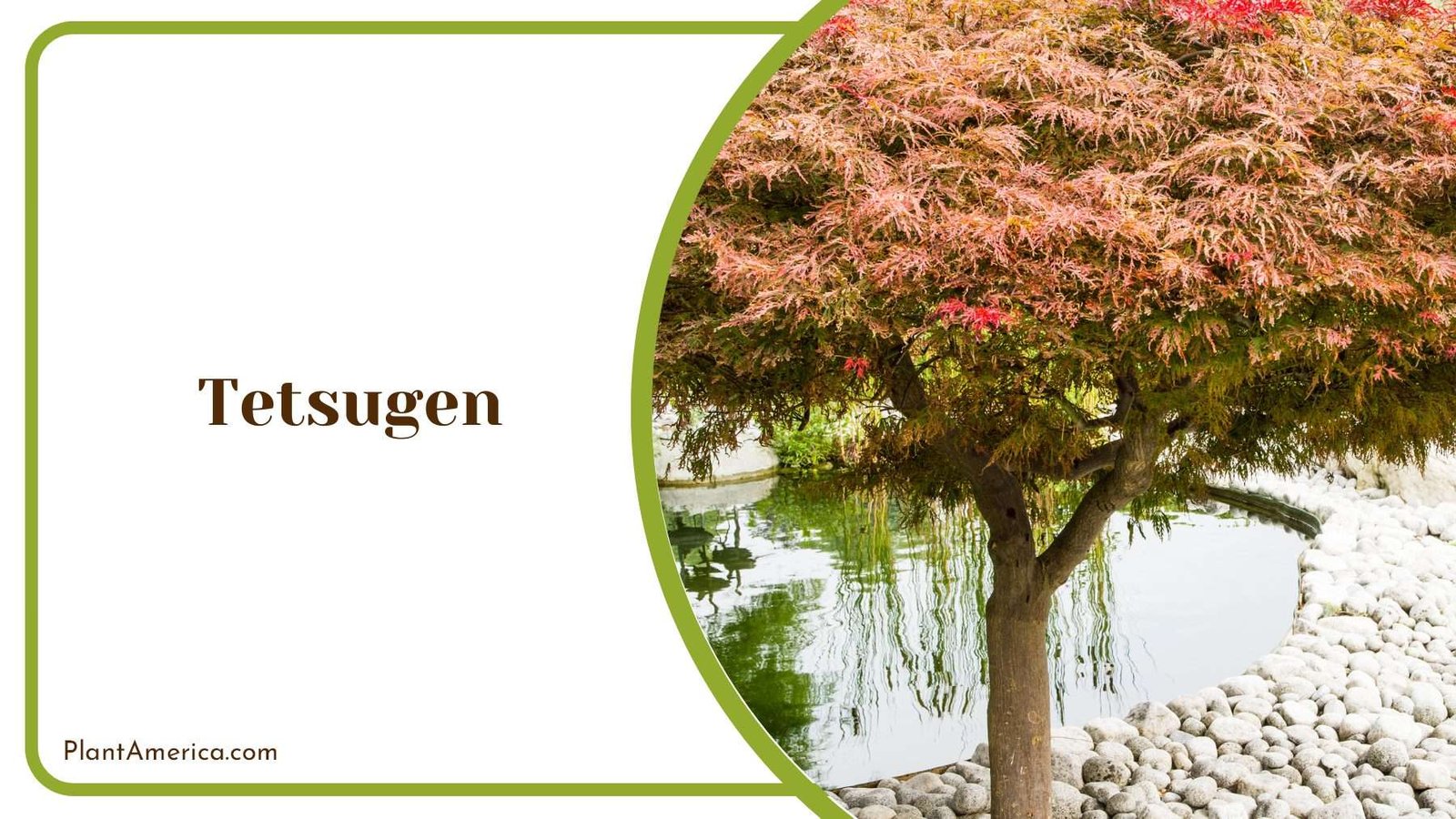
- Growing season: Early Spring, Early Summer
- Leaf shape: Palmate leaves, Distinctive notches
- Specific needs: Partial shade, Well-draining soil
- Common pest: Spider mites, Japanese beetles
Tetsugen Japanese maple tree is valued for its deeply cut, palm-like leaves with distinctive notches. The leaves emerge green in spring, maturing to vibrant shades of red, orange, and gold in autumn.
Tetsugen grows into a dense, round-headed form reaching 10 to 15 feet tall and wide at maturity. This dwarf Japanese maple thrives when planted in partial shade and consistently moist, well-draining soil rich in organic material.
17. Tiny Tiger
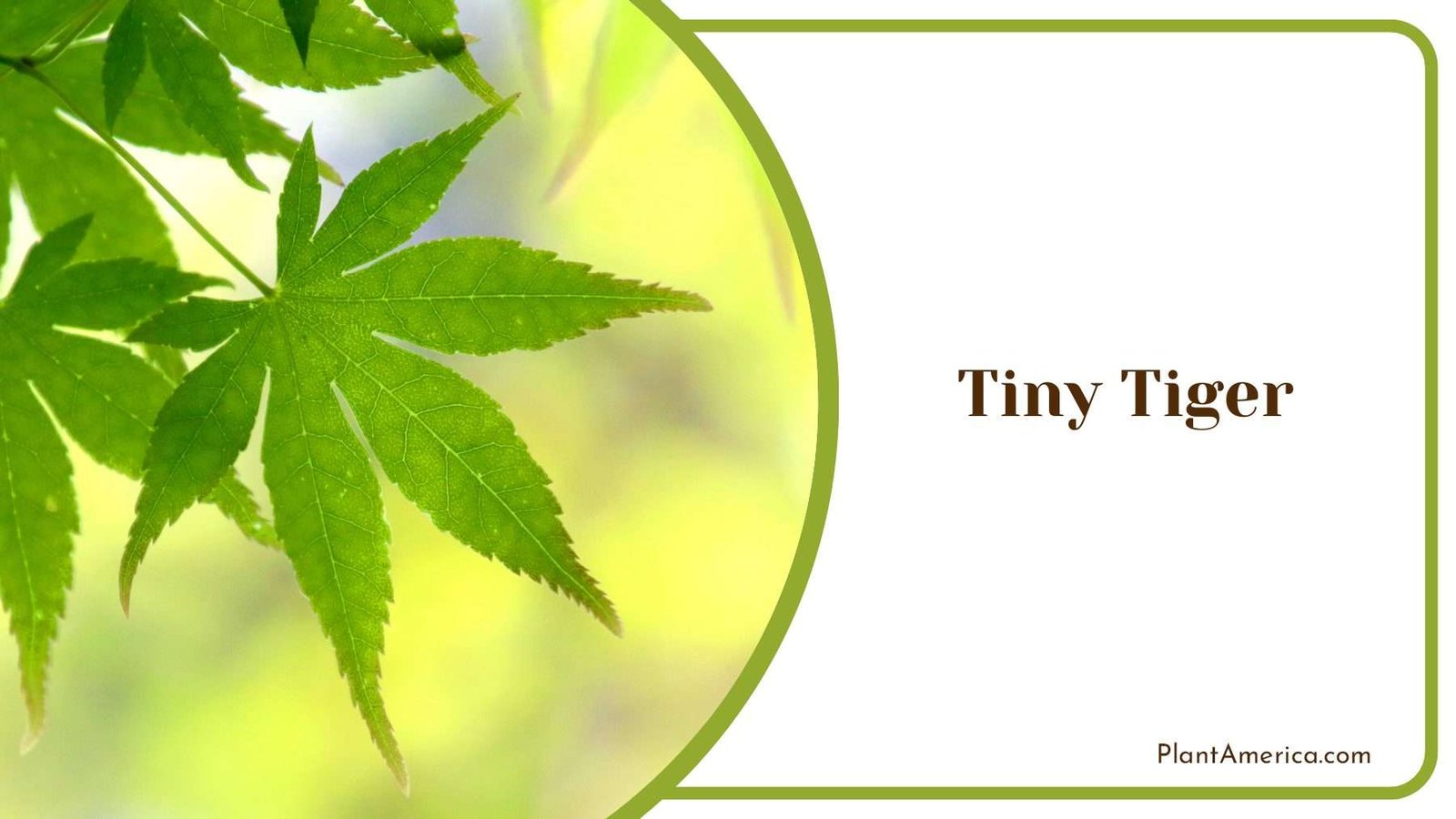
- Growing season: Early Spring, Early Summer
- Leaf shape: Palmate leaves, Jagged edges
- Specific needs: Partial shade, Well-draining soil
- Common pest: Spider mites, Japanese beetles
Tiny Tiger dwarf Japanese maple is prized for its small stature and colorful fall foliage. The leaves emerge lime green in spring, gradually changing to golden yellow, orange, and red shades in autumn.
Tiny Tiger grows slowly into a dense, compact shape reaching only three to four feet tall and wide at maturity. This Japanese maple bush thrives when planted in partial shade and consistently moist, well-draining soil rich in organic material.
18. Tricolor
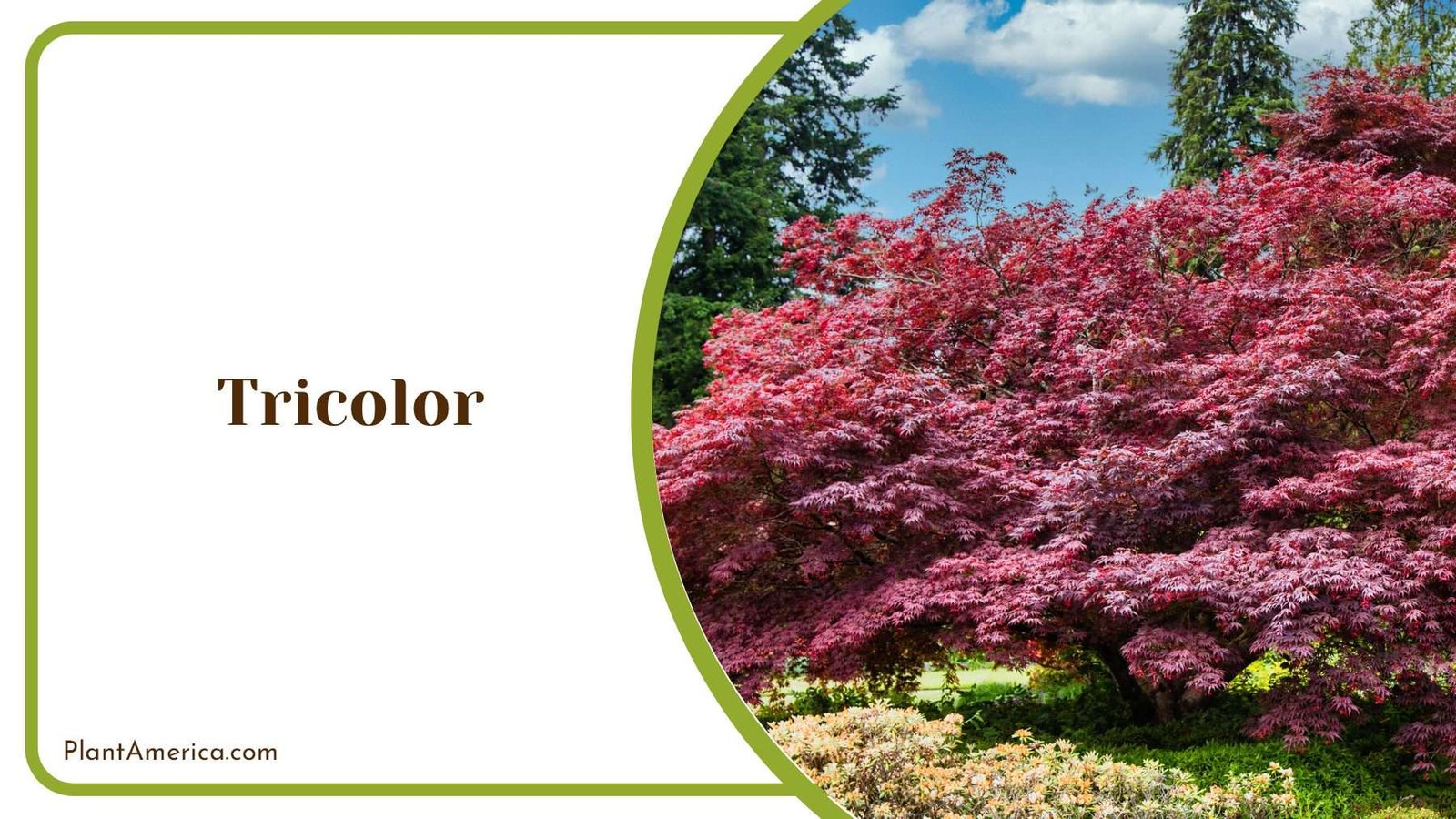
- Growing season: Early Spring, Early Summer
- Leaf shape: Palmate leaves, Red, orange, and yellow variegation
- Specific needs: Partial shade, Well-draining soil
- Common pest: Spider mites, Japanese beetles
Tricolor dwarf Japanese maple is prized for its tricolored red, orange, and yellow foliage that is most vivid in spring. The variegated leaves emerge lime green, edged in red and yellow, gradually darkening to green with splashes of color in summer.
Tricolor grows moderately slowly into a dense, rounded shape reaching six to eight feet tall and wide at maturity. This Japanese maple bush prefers partial shade and consistently moist, well-draining soil rich in organic material.
19. Waterfall
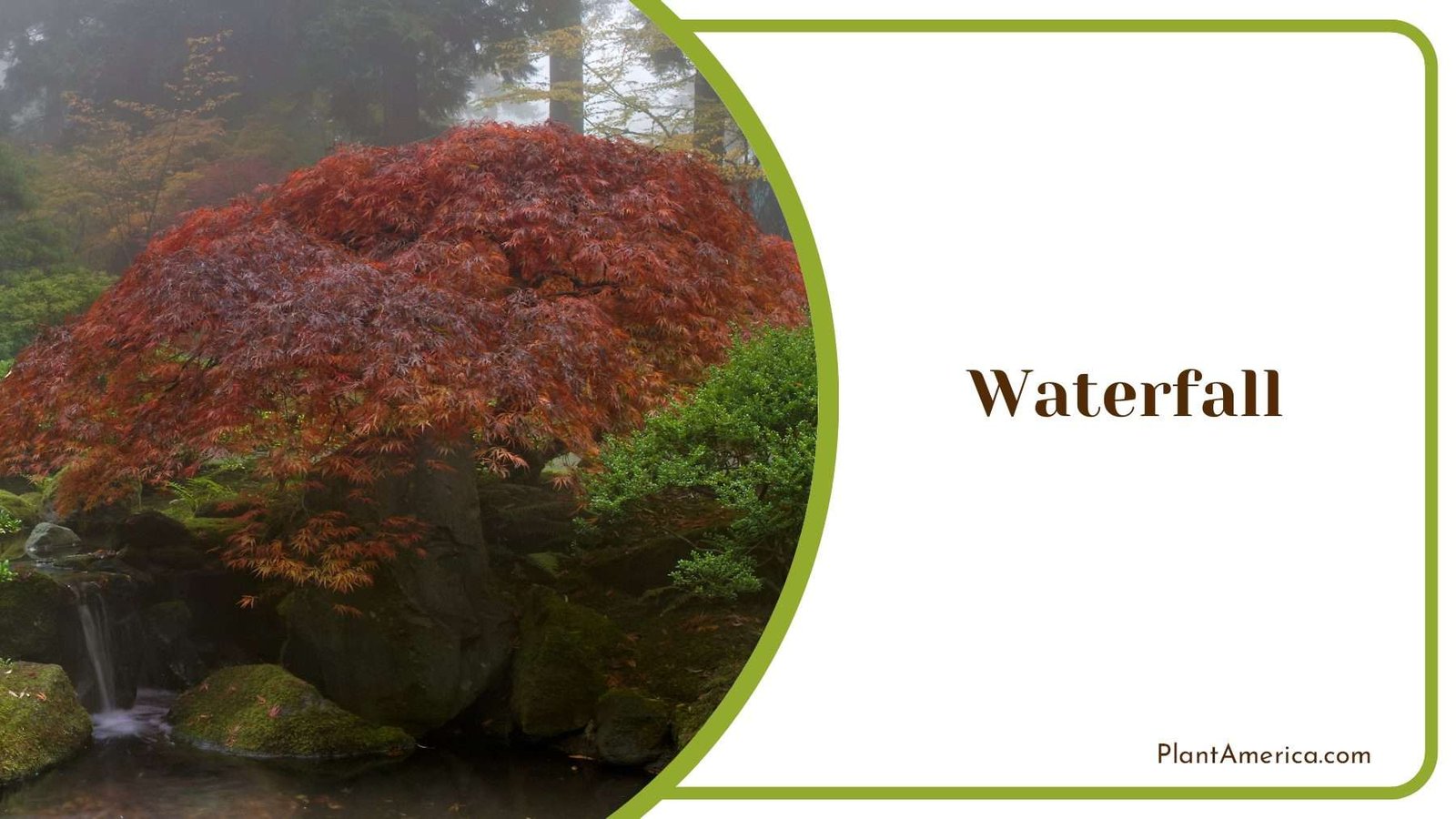
- Growing season: Early Spring, Early Summer
- Leaf shape: Weeping foliage, Pink edges in spring
- Specific needs: Partial shade, Well-draining soil
- Common pest: Spider mites, Japanese beetles
Waterfall weeping Japanese maple is valued for its cascading habit and delicate foliage. The leaves emerge pink-edged in spring, gradually changing to green with red tints in summer. In autumn, the foliage turns brilliant red, orange, and purple shades.
Waterfall grows moderately slowly into a rounded-weeping form reaching eight to 10 feet tall and wide at maturity. This dwarf Japanese maple prefers partial shade and consistently moist, well-draining soil rich in organic material.
20. Emperor One
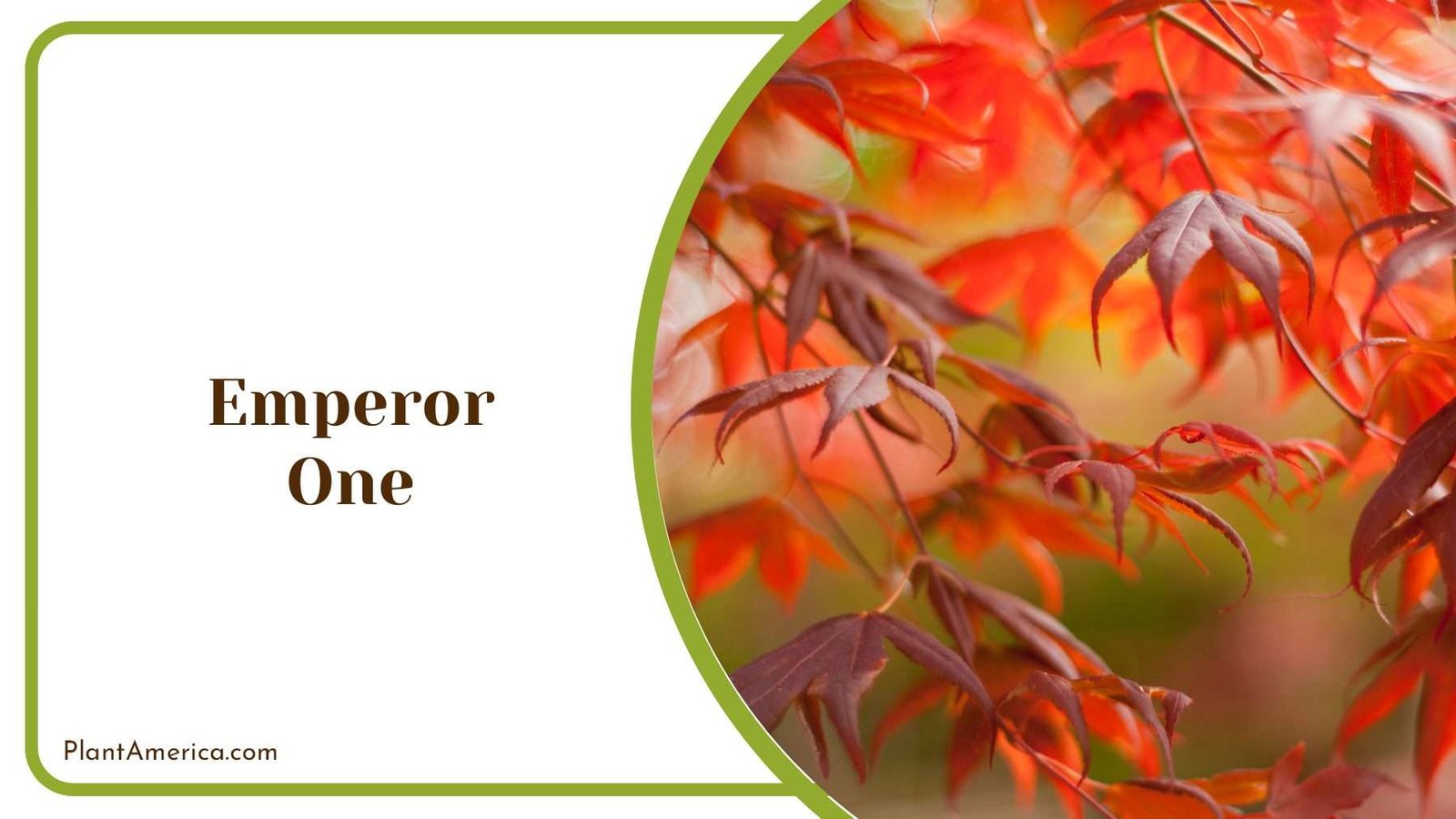
- Growing season: Early Spring, Early Summer
- Leaf shape: Red-tinted, Palmate leaves
- Specific needs: Partial shade, Well-draining soil
- Common pest: Spider mites, Japanese beetles
Emperor One Japanese maple tree is valued for its purple-red foliage that is most vibrant in spring. The leaves emerge burgundy-red in spring, gradually shifting to purple-red in summer. In autumn, the foliage turns deep crimson.
Emperor One grows into an oval-rounded shape reaching 15 to 20 feet tall and wide at maturity. This dwarf Japanese maple prefers partial shade and consistently moist, well-draining soil rich in organic material.
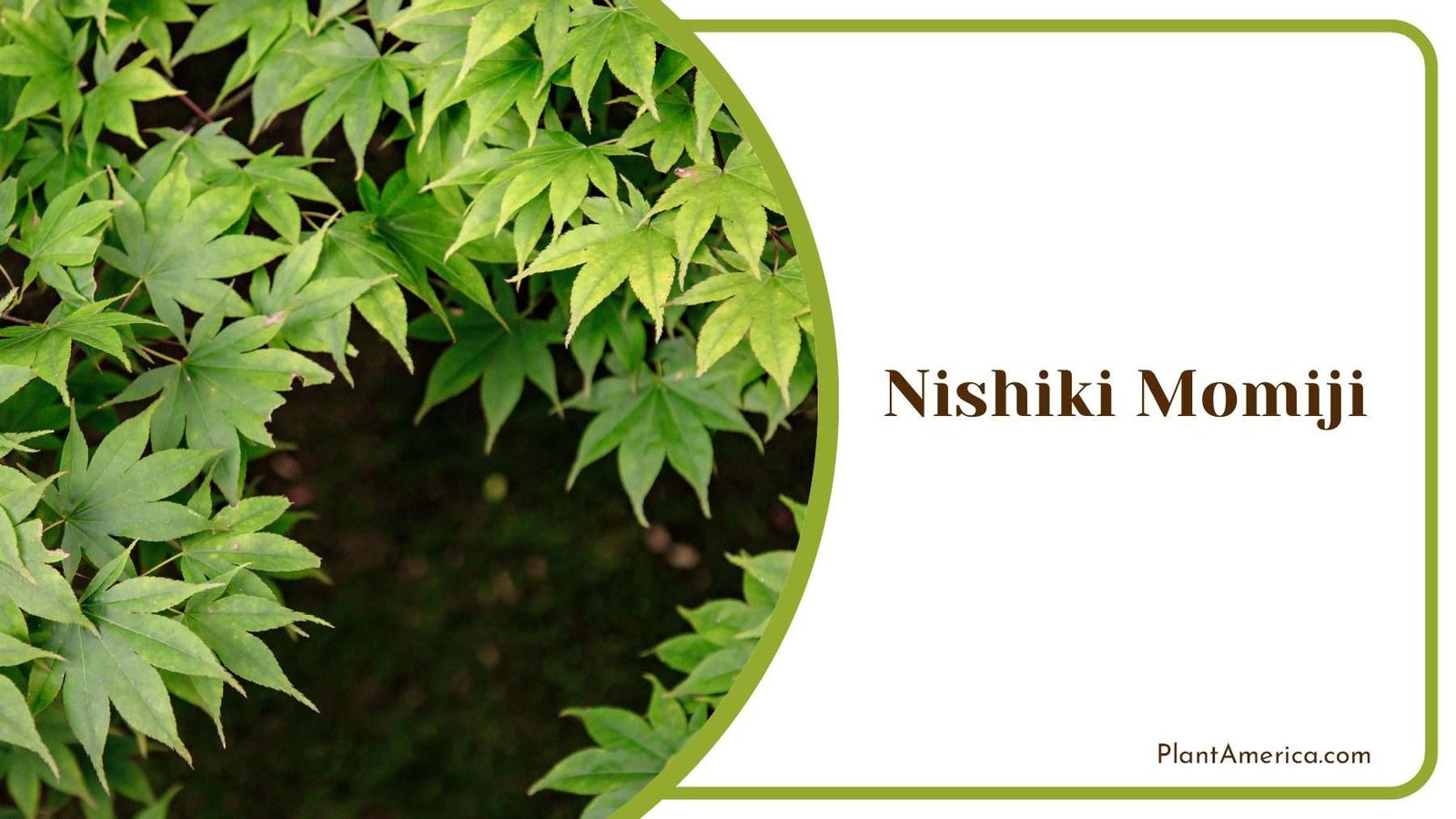
21. Nishiki Momiji
- Growing season: Early Spring, Early Summer
- Leaf shape: Red-tinted leaves, Green veins
- Specific needs: Partial shade, Well-draining soil
- Common pest: Spider mites, Japanese beetles
Nishiki Momiji dwarf Japanese maple is prized for its coral and red foliage that is most vivid in spring. The leaves emerge red with green veining in spring, gradually shifting to coral with hints of red in summer. In autumn, the foliage turns vibrant shades of orange and red.
Nishiki Momiji grows slowly into a rounded shape reaching six to eight feet tall and wide at maturity. This Japanese maple bush prefers partial shade and consistently moist, well-draining soil rich in organic material.
Conclusion
These bonsai-inspired trees offer a range of choices to suit diverse tastes from classic laceleaf and coral bark varieties to more unusual selections with uniquely shaped leaves, colors, and growth habits.
- Mikawa Yatsubusa grows moderately slowly into a dense, compact shape reaching four to six tall and wide at maturity.
- Crimson Queen is one of the most popular dwarf Japanese maple varieties due to its stunning crimson fall color.
- Red Dragon is a dense, compact form of dwarf Japanese maple with stunning crimson foliage that resembles flames
- Red Filigree Japanese maple creates a gorgeous landscape focal point when the color intensifies in autumn, brightening an otherwise dormant landscape with vibrant color
Whether adding just one special variety for its distinctive qualities or curating a mini maple grove, these living works of horticultural art will surely become cherished companions bringing years of aesthetic pleasure and fostering a deeper appreciation for nature’s wonders in miniature.
So choose your favorite miniature maple today to begin unfolding its unique story, and let its seasons of verdant growth and fiery renewal enrich your own landscape for years to come.