
Fittonia plant benefits are exactly what makes this eye-catching houseplant so desirable. As you’ll discover in this post, these vividly colored trailers offer more than just beauty – with ten unique advantages that will give you plenty of reasons to add one to your indoor oasis.

From natural stress relief to allergen removal, we’ll dive into why Fittonia’s vibrant leaves are wonderful for your health and home. By the end of this article, you’ll be as smitten with fittonia benefits as we are, so let’s jump into what makes these charmers such a great houseplant to have around.
Fittonia Plant Benefits that You Should Be Aware of
1. Air Purification

- Reason: Fittonia plants have tall, slender leaves and stems that naturally move with any air currents or breezes in a room. : Allows them to act like a natural air purifier.
- Impact: By generating movement through their foliage, Fittonia plants help distribute oxygen circulating in indoor spaces. : They also remove aerial pollutants that are then filtered through the plant.
- Pros: Circulate stagnant air without fans or filters. Native circulation promotes a healthier indoor climate. : Remove common indoor air toxins like benzene and formaldehyde from the air we breathe.
- Cons: A single plant may have limited effect in very large rooms. : Multiple plants provide better overall air flow. : Leaves may collect dust over time that needs occasional cleaning.
The fittonia plant has many benefits beyond its vividly colored leaves, making it a charming home accent. Not only does it add visual appeal wherever it trails, but it also works diligently to purify the indoor air.
Fittonias have powerful air-cleaning abilities through their leaves, which absorb harmful toxins such as formaldehyde, benzene, and trichloroethylene. These are common contaminants that can negatively impact indoor air quality levels.
Multiple studies have shown that fittonia leaves are among the most effective at removing these indoor air pollutants. They work around the clock to help zap harmful chemicals and leave the surrounding air freshener and easier to breathe.
Formaldehyde, in particular, is a known carcinogen often found in building materials and household cleaners. By absorbing this toxin from the air, fittonias helps reduce exposure.
With a fittonia plant in a home or office, occupants benefit from its lovely appearance and the peace of mind of cleaner, purer indoor air. Beyond looking attractive as they trail over shelves or tabletops, fittonias fulfill the important task of safeguarding respiratory health.
Their ability to tackle common indoor air pollutants with their leaves makes them a wonderful choice for any indoor space where air purification is valued.
2. Natural Stress Relief

- Reason: Simply looking at and caring for plants has been shown to lower stress hormones like cortisol., Fittonia plants are very low maintenance so providing this benefit requires little effort.
- Impact: Their lush green leaves that put out new growth often serve as a calming, living element to have in one’s space., Their resilience also means they are relaxing to care for.
- Pros: Adding greenery and life to a space., Low maintenance means easy to incorporate stress relief into a busy schedule., Witnessing new growth can be mentally rewarding.
- Cons: Effects are likely most impactful for individuals who notice and engage with plants regularly., Alone may not replace other stress management techniques for severe issues.
In today’s fast-paced world, finding easy methods to reduce stress is crucial. Many may be surprised to discover that simply gazing upon the vibrant leaves of a potted fittonia plant can provide a calming effect.
Various studies have shown how being around living greenery and natural beauty can measurably lower stress levels. There seems to be something comforting about their lively presence that helps diminish feelings of anxiety and pressure.
Vittoria’s cheerful assortment of hues is a natural mood booster for the eyes. Their trailing leaves cascade gracefully over the edges of pots, lending an airy quality that declutters space while soothing the mind. With their lively foliage, fittonias have a way of instantly uplifting a room and signaling it is time to let go of tension.
Beyond improving visual aesthetics, these lovely trailers offer stress-relieving benefits. Surrounding oneself with fittonias’ vibrant leaves proves a simple indulgence worth incorporating into a hectic schedule. Their lively presence reminds us daily to pause and decompress, even for a brief moment.
Making space for one of these charming stress-busters promises to enhance indoor spaces with visual delight while lowering anxiety. In small yet impactful ways, fittonias can brighten moods and alleviate some of life’s pressures through their calming influence. Their ability to lift spirits mentally and decoratively makes them a wonderful choice for any home or office.
3. Easy Care

- Reason: Fittonia plants have thick succulent leaves and resilient stems that allow them to go long periods without water., Not prone to diseases and damage
- Impact: They are very tolerant of inconsistent care,, They do not demand a lot of time or resources be spent on regular upkeep.
- Pros: Can be left alone for one to two months at a time with no care needed., Forgiving of occasional mistakes like under or overwatering., Thrive in low-light conditions with minimal effort.
- Cons: May become stressed and drop older leaves if totally neglected for many months., Can still benefit from occasional fertilizer or repotting over many years.
One of the Vittoria’s most notable characteristics is its low-maintenance nature. This house plant prefers a forgiving approach to care. As long as the soil is consistently moist but not soggy, and the plant receives medium to low indirect light, a fittonia will flourish with little effort.
Fittonias have proven to be resilient regarding variations in watering schedules. They truly forgive being left for a week or longer without issues arising. Even without precise, consistent care, their lush foliage maintains vibrant colors. These qualities make them ideal for homes or offices where frequent absences occur.
Their compact size and non-invasive root structure also allow fittonias to thrive in locations where some plants may begin to outgrow their welcome. Their trailing form adapts gracefully on shelves, windowsills, or on top of pebbles in shallow trays of water. They will not demand constant repotting into larger containers in such spots as their roots do not spread widely.
Overall, the easygoing nature of these charming foliage plants means they bring lush beauty to indoor spaces without burdening caretakers with rigorous demands. Travel schedules or forgetful tendencies will not doom these resilient blooms.
Their ability to withstand missed waterings or less-than-ideal light levels makes them a stress-free choice for any home or workplace. A fittonia’s lush greenery can be enjoyed effortlessly with low fuss.
4. Vivid Color Accent

- Reason: Fittonia leaves come in dramatic shades of burgundy, pink, green, and white, Brightens interiors and gardens.
- Impact: Their colorful leaves provide a lush, eye-catching contrast, Perfect as a foreground or accent plant.
- Pros: Thrives in low-light for colorful foliage where other plants may struggle, Hues stand out against neutral backgrounds, Unusual veins/patterns on leaves.
- Cons: May get leggy if conditions aren’t ideal, Colors can fade without sufficient light, Needs moist soil to maintain saturated hues.
The fittonia is celebrated for its vividly colored leaves that contribute dramatic pops of color to any indoor space. Their hues range widely from shades of green to striking pinks, reds, burgundies, and even white cultivars.
One cannot help but be drawn in by their eye-catching color packages. Many varieties go beyond displaying a single shade, instead showcasing multiple tones on one plant – contributing to visual complexity.
Their small leaves fill out densely like a lush mat that blankets the pot’s surface, much like a living tapestry. Weaved together, their overlapping foliage forms create depth and fascination. For those seeking to impart more radiance and cheer into their home décor, fittonias certainly fit the bill.
Their jewel-toned palette brings a liveliness and uplifting energy that enlivens any room. Whether on a bookshelf, side table, or hanging planter, fittonias demand attention through their animated colors.
Their diminutive size allows them to be multifariously displayed. Showcase one or two as a focal point piece, or let a few trailing specimens spill cascades of color over the edges of a hanging basket for a festive accent bursting with abundant visual style.
No matter the setting, fittonias fill domestic spaces with beauty through riveting foliage hues. Their densely packed, softly varied leaves spread joy, delighting the eye and mind alike. These qualities make them a top choice for adding vibrancy anywhere more color is desired indoors.
5. Moisture Regulation

- Reason: Fittonia leaves will fold inward when dry, Has a built-in conservation response until rehydrated.
- Impact: This allows the plant to survive short dry periods, Signals when it needs water without permanent damage.
- Pros: Adaptive traits make it resilient to irregular watering, No wilting like other plants if briefly underwatered, Leaves perk back up quickly when watered.
- Cons: May appear less attractive when leaves are folded, Needs consistently moist soil for optimal color/growth overall.
While often overlooked, the fittonia has incredible power to regulate moisture levels around it. These modest houseplants have an amazingly high transpiration rate, releasing substantial amounts of water vapor through their tissues.
Multiple fittonias together can significantly boost indoor humidity. Their trailing form maximizes surface area, further increasing their humidity-generating capacity.
This makes them wonderful companions for other plants requiring higher moisture to thrive and flourish. Fittonias spare burdensome misting or pebble trays in one’s home or office by constantly refreshing the air with moisture through their leaves. Their talent for humidifying turns dry winter months into a verdant oasis suitable for all kinds of leafy friends.
Beyond humidity regulation, fittonias have a brilliant adaptive quality. As hygroscopic plants, their leaves are phenomenally sensitive indicators of when watering time has arrived. Their window-leaf tissues will begin to curl and droop dramatically upon drying, signaling wisdom to revive them with hydration.
With very little effort on their owner’s part, fittonias generate a lush micro-habitat through high rates of transpirational water release. Their trailing forms maximize this ability, granting them wonderful potential as multi-plant companions. Their feats of moisture regulation signally make them indispensable members of any indoor foliage collection.
6. Indoor Air Humidity

- Reason: Fittonia have thick, waxy leaves that are mostly made of water.
- Impact: Their leaves release moisture into the air through transpiration.
- Pros: Natural and chemical-free way to moisturize dry air, Thrives in normal household humidity levels so very low or high humidity is not required, Leaves release moisture steadily without needing misting
- Cons: A single plant may have a minimal impact in very large rooms, Multiple plants provide more humidity, In tropical climates, may need occasional misting to prevent drought stress
During dry winters, indoor humidity levels often plunge dramatically, negatively impacting human and plant health. However, the good-natured fittonia understands this hygric plight and happily provides a solution through its leaves.
Their thick foliage is highly effective at retaining water internally and transpiring it externally throughout the day—continuously improving indoor humidity conditions.
This creates a naturally rife environment suitable for humans and houseplants alike. One or just a few fittonias have proven marvelously capable of moisturizing even the most parched interior spaces through their hydrating talents.
Their humidifying abilities are necessary when artificial humidifying methods prove too bothersome or energetically demanding during winter’s low moisture.
Best of all, fittonias self-regulate humidity passively with no labor required from their human companions. All they ask in return is an occasional drink to stay saturated, and in turn, they reward owners many times over through their hygric feats. Their deep water reserves allow transpirational moisture release to continue unabated for over a week between waterings.
Fittonias single-handedly transform even the driest living zones into lush, moisture-rich microhabitats through their kindly hydrating ways. In doing so, they safeguard all houseplants and inhabitants from the environmental drying effects plaguing indoor spaces during winter.
Truly, fittonias prove themselves staunch protectors against low humidity through their generous, continuous transpirational water gifting. Their hidrotic powers surely earn them top ranking as seasonal humidity heroes.
7. Pet Safety

- Reason: Fittonia are non-toxic and have no spines or irritating hairs that could harm pets., Their waxy leaves also make them unattractive to animals looking to chew on plants.
- Impact: They can safely be placed around homes with dogs, cats, rodents, or other common pets., No risk of poisoning or injury if ingested.
- Pros: Safe for areas like living rooms or offices where pets spend time., Waxy leaves that pets are unlikely to nibble on., Stiff stems that can withstand occasional bumps or leaning.
- Cons: Very energetic dogs or chewers may still knock the plant over., Cats may try to use it as a scratching post, which could damage the leaves or stems over time.
For those seeking non-toxic houseplants to keep near pets, the fittonia is an outstanding choice. While its delicate appearance and showy leaves provide visual appeal, the plant risks no harm. Due to irritating or toxic properties, many typical indoor greens pose dangers if nibbled or consumed accidentally by cats, dogs, or other furry companions.
However, fittonia foliage and all other tissues contain no concerning elements that may jeopardize curious mouths or digestive systems. Their softly trailing forms also lack sharp spines, protrusions, or other physical threats that could wound or endanger animals.
Provided pets can be trained to avoid disruptive behaviors like forceful uprooting, fittonias safely give their human guardians gardening joys.
Fittonias brilliantly fill homes with lively colors for all family members, whether two- or four-legged, to experience securely. Their jewel-toned leaves and compact size make them accessible yet out of major reach from most play or accidents. Place them on shelves, side tables, or mounted in hanging pots to keep treasured greenery unmolested.
For those welcoming animals indoors, fittonias give gardening freedom without lingering fears. Their charms dress living areas lively for all, tail or not, to treasure equally. Overall, fittonias prove an ideal blemish-free botanical buddy when deciding on pet-friendly purifiers for the modern multi-species home.
8. Low Light Tolerance

- Reason: Fittonia plants have thick, waxy leaves that prevent water loss even in low light environments., Their evolved growth pattern focuses energy on roots and stems over leaves.
- Impact: They remain healthy and survive well in very low indoor light levels where other plants would struggle or die.
- Pros: Thrives in medium to low indirect light away from bright windows, Survives well under fluorescent office lighting or low cabinets, Adaptable to various indoor conditions.
- Cons: May grow more slowly with limited light but stays healthy, In very low light will benefit from occasional fertilizer for optimal growth.
The pliable fittonia is notably flexible when it comes to lighting conditions. While they appreciate brighter indirect light for lush foliage and vibrant colors, they will tolerate considerably lower light levels that defeat most other houseplants.
This makes them a terrific choice for locations lacking optimal sun exposure yet still deserve a living occupant – such as beneath shelving, deeper inside living spaces, or under window panels.
A fittonia will persist handsomely in shadier corners rather than fizzle out. Their ability to survive on paltry illumination without declining is admirable indeed. Their brilliant tints shine through in lower lighting, casting shadows of vivacious hues across the surroundings and lamenting inadequate light. Place your hopes in a fittonia and watch them bloom regardless.
9. Trailering Shape

- Reason: Fittonia plants have a naturally cascading growth habit, letting them spill attractively over containers and hanging baskets.
- Impact: Their trailing vines add visual interest, Fills out interior/exterior spaces in a unique way compared to upright plants.
- Pros: Creative way to use vertical surfaces like shelves, Brightens dark corners, Softens hardscape edges in gardens.
- Cons: May need support for heavy foliage or long vines, Can be leggy without adequate pruning/trimming, Not ideal for small tabletop containers.
Vittoria’s signature trait is undoubtedly its fetching trailing habit. Unlike other plants that prefer to remain pot-bound, fittonias joyfully spill over edges in a cascade of leaves. Their pliant stems allow lush runners to flow freely, softening stiff container lines.
Leave room for roots to spread and watch lush mats cultivate a lush indoor jungle with minimal space. Their elegant sprawling form is well-suited to hanging baskets, tall planters, and shelves where foliage flows over naturally.
Not only is their cascading style scenic, but it also multiplies their environmental impact. More leaves translate to better air purification, hydration, and natural beauty – essentially, more benefits from under one label. Let the tendrils trail freely to maximize fittonia value in any setting.
10. Allergens Removal
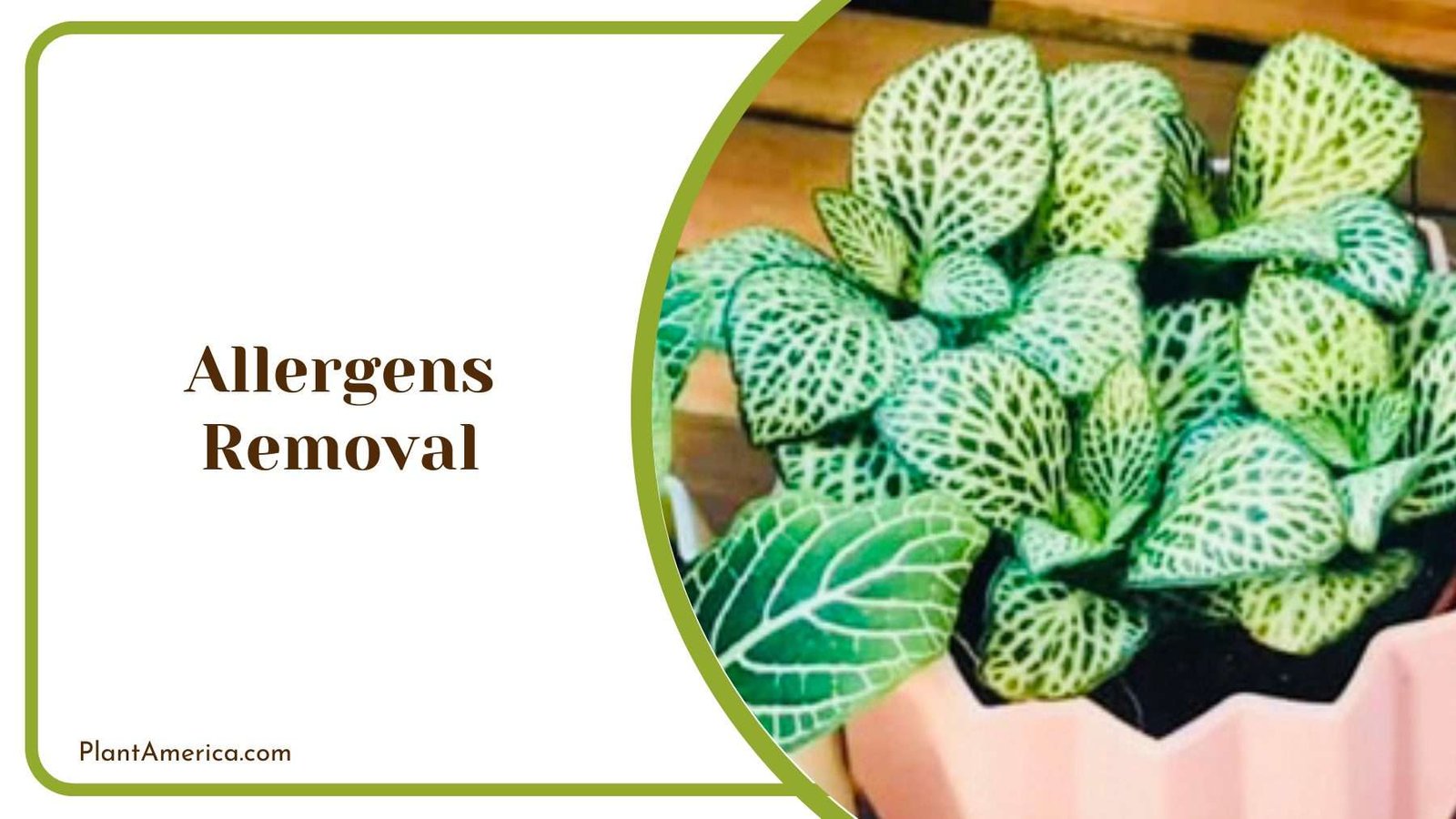
- Reason: Fittonia is effective at absorbing common indoor air pollutants like benzene, formaldehyde. Absorbs trichloroethylene from the environment.
- Impact: This helps naturally purify indoor air quality by reducing irritants that can trigger allergies and other health issues.
- Pros: Low-maintenance plants require no filters or operating costs, Remove multiple types of volatile organic compounds, Create a cleaner indoor atmosphere.
- Cons: Effect depends on the number/size of plants for space, Cannot fully replace HVAC filtration systems in larger buildings.
Alongside revitalizing stale air, fittonias work diligently to clear particulate allergens that aggravate sensitive individuals. Multiple studies have shown their facility for scrubbing indoor pollutants like pollen, dust, and dander, which linger as troublemakers.
Even low amounts of these substances are easily absorbed and trapped within fittonia leaf structures until they decompose.
Constantly purifying the air as they photograph synthesize, fittonias act as nature’s sustainable vacuum filters. For allergy and asthma sufferers, surrounding furniture and work areas with their purifying panels bring an invisible yet mighty layer of protection.
Their contented removal services sweeten indoor conditions naturally without cost or side effects – a winning solution for more comfortable living quarters.
Conclusion
Fittonias offer many advantages that make them a truly worthwhile houseplant to consider:
- Powerful air-purifying abilities
- Natural stress relief from their vibrant colors
- Year-round color accentuation for any indoor space
- Passive humidity regulation benefits other greenery
While their small stature belies an inner might, fittonias hold tremendous value both aesthetically and functionally within the home. Their charming peacock-like leaves serve our wellness and environment diligently without complaints. For plucking even the smallest beauty from nature’s garden to lift your spirits, fittonias makes an excellent choice.