
Chestnut trees have much to offer, from delicious nuts to stunning fall foliage. If you plan to grow one, you’ve come to the right place! We’ll explore types of chestnut trees you may have never heard of before but should consider.

From historic American chestnuts to funky Japanese chestnuts, there are many options perfect for your yard or garden that will bring you joy for years with their cascading flowers, abundant crops, and gorgeous shapes. So read on to discover these underrated chestnut trees and determine which would thrive and delight you the most.
Chestnut Trees and Varieties To Spice Up Your Back Garden
1. American Chestnut
- Growing Season: Spring, Fall
- Leaf Shape: Long, Pointy
- Specific Needs: Well-drained soil, Full sun
- Common Pests: Chestnut weevils, Blight
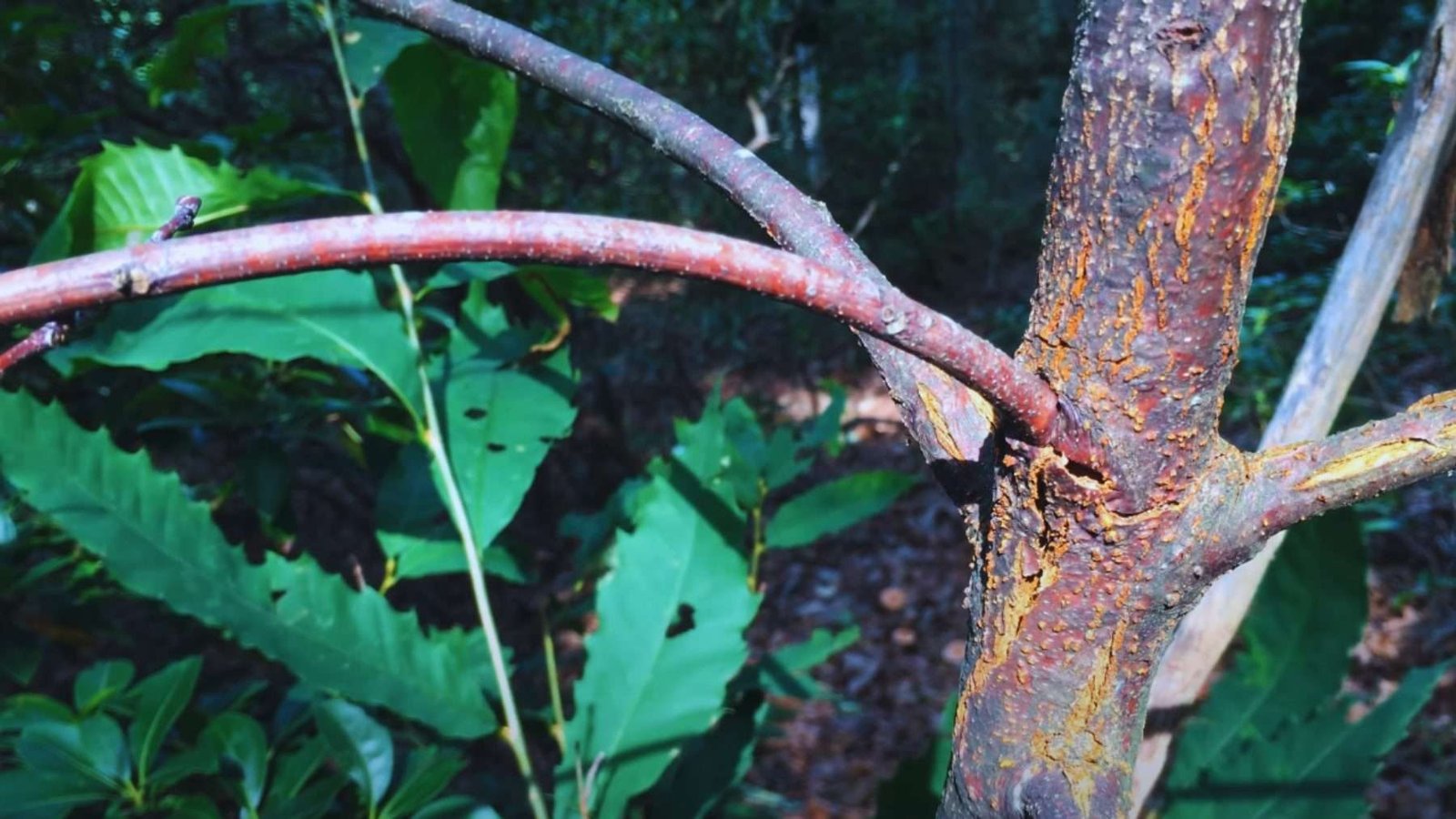
Once majestic titans of eastern forests, American chestnut trees virtually disappeared after the chestnut blight hit in the early 1900s. At maturity, the American chestnut grew rapidly to tower 80 to 100 feet tall and reach diameters up to five feet, producing cooling shade and spectacular golden fall foliage that turned hillsides into dazzling displays and a treat for the eyes.
The American chestnut provided abundant nuts that supplied food for both humans and wildlife. The easy-splitting wood was durable yet lightweight, making it prized for construction, furniture, and fence posts. The tree’s combination of rapid growth, adaptability to diverse landscapes, and usefulness of nuts and lumber made it potentially the most valuable tree in American forests.
However, the chestnut blight – an Asian fungus accidentally introduced around 1900 – changed everything. The worst part was that the disease quickly spread and wiped out up to 4 billion American chestnut trees within 50 years, leaving only stumps that resprout but succumbed again to the fungus. The American chestnut was virtually driven to extinction across its native range.
Today, conservation efforts aim to breed blight-resistant hybrids that could reintroduce American chestnuts back into forests. Researchers have crossed American chestnuts with blight-tolerant Chinese chestnuts to produce cultivars exhibiting hybrid vigor and resistance to the chestnut blight as well as other issues like ink disease.
These emerging trees carry mostly American chestnut genetics but keep the Chinese genes for blight resistance. They grow similarly large and nutritious, producing delicious, sweeter nuts and delivering the same exceptional shade, fall color, and structure as majestic specimens for lawns, gardens, and landscapes.
With ongoing conservation work, resurrected American chestnuts may someday again flourish in eastern forests.
2. Chinese Chestnut

- Growing Season: Spring, Fall
- Leaf Shape: Long, Serrated, Pointed
- Specific Needs: Prefers acidic soil, Full sun
- Common Pests: Chestnut weevil, Blight
The Chinese chestnut tree (Castanea mollissima) has a long history of cultivation in China, having been grown for over 2,000 years, which makes it one of the oldest domesticated tree crops. These trees typically grow to moderate sizes, ranging from 50 to 80 feet in height at maturity. The spreading branches form either an oval or rounded crown shape.
The leaves of the Chinese chestnut tree are dark green on the surface and pale green underneath. They have long, pointed tips. The leaves take on various shades of yellow to bronze in the fall before dropping from the tree.
The fruits of the Chinese chestnut tree, commonly called chestnuts, are borne in spiny burrs that split open at maturity to release between two and three nuts.
The Chinese chestnut tree is extremely hardy and adaptable, able to thrive in the U.S. Department of Agriculture plant strength zones five to nine. When young, these trees grow rapidly and tolerate hot and cold temperatures.
The nuts produced are large in size and sweet in flavor, making the Chinese chestnut tree an excellent choice for either chestnut orchards or landscape specimens. The fast growth rate when juvenile and tolerance for varied conditions also contribute to the tree’s suitability for landscaping.
3. Ozark Chinkapin

- Growing Season: Spring, Summer
- Leaf Shape: Oval, similar to oak leaves
- Specific Needs: Partial shade, Well-draining soil
- Common Pests: None
Indigenous to the Ozark region of the central United States, the Ozark chinkapin is a lesser-known chestnut species worth learning about. Despite facing threats in its natural habitat, this tree has traits enabling it to not only survive but thrive in private landscapes when certain needs are met.
Unlike other chestnuts bearing larger nuts that often draw unwanted attention from wildlife, the Ozark chinkapin produces seeds too small to interest most foragers. Squirrels and birds ignore their crops, meaning you don’t require strategies for protection. This provides a relaxing perk if you treasure harvest time.
Thriving beneath canopies of taller trees, the Ozark chinkapin flourishes in Partial shade—a welcoming characteristic for those lacking full sun. Its foliage resembles that of oak leaves, adding visual texture to woodland edges or gardens. When the fall arrives, golden hues bring beauty before drop.
Deep, well-draining soil plays a key role in this tree’s success outside protected forests. Given these conditions, along with occasional water during dry spells, the Ozark chinkapin flourishes with a picturesque form and bubbly personality shining through. Its perseverance highlights nature’s resilience when nurtured in suitable spaces.
By including this understory species originating from the Ozark highlands, your outdoor retreat embodies conservation in a scenic, low-effort way. The Ozark chinkapin deserves broader recognition for qualities making it a prime pick for biodiverse yards everywhere it calls home.
4. Japanese Chestnut

- Growing Season: Spring, Fall
- Leaf Shape: Broad, Serrated edges
- Specific Needs: Acidic soil, Shelter
- Common Pests: Aphids, Japanese beetles
The Japanese chestnut tree (Castanea crenata) is a magnificent species native to East Asia that has been cultivated for its nuts and timber for centuries. At maturity, Japanese chestnut trees typically reach heights between 60 to 80 feet tall with trunks that can measure up to three feet in diameter. They develop broad, rounded crowns filled with branches.
The leaves of the Japanese chestnut are medium green in color, broadly elliptic in shape, and measure four to eight inches long. The leaves have sharply toothed edges that create an attractive texture, especially when rustled by the wind. The leaves take on beautiful shades of gold, orange, and red in autumn before dropping from the branches.
The Japanese chestnut is winter hardy through USDA plant hardiness zones five through eight, although they thrive best in areas with cooler summers. These trees prefer acidic, well-drained soil that remains moist, along with some shelter from hot, drying winds.
Though the nuts produced by Japanese chestnut trees are generally smaller than American chestnuts, they have an excellent sweet flavor once harvested and roasted. The nuts remain enclosed in spiny green husks until maturity in the autumn, at which point the husks expand and split open to release the chestnuts.
Japanese chestnut trees make magnificent specimen trees in landscapes due to their large stature, attractive foliage, and brilliant fall colors. Their rapid growth rate allows them to become established quickly, and their tolerance for varied growing conditions enables them to adapt to a wide range of urban and suburban environments. With sufficient space, Japanese chestnuts make glorious ornamental trees that produce a bounty of nuts each autumn..
5. European Sweet Chestnut
- Growing Season: Spring, Summer
- Leaf Shape: Elliptic, Spiny margins
- Specific Needs: Prefers loamy, Acidic soil
- Common Pests: Chestnut leaf miner, Weevil
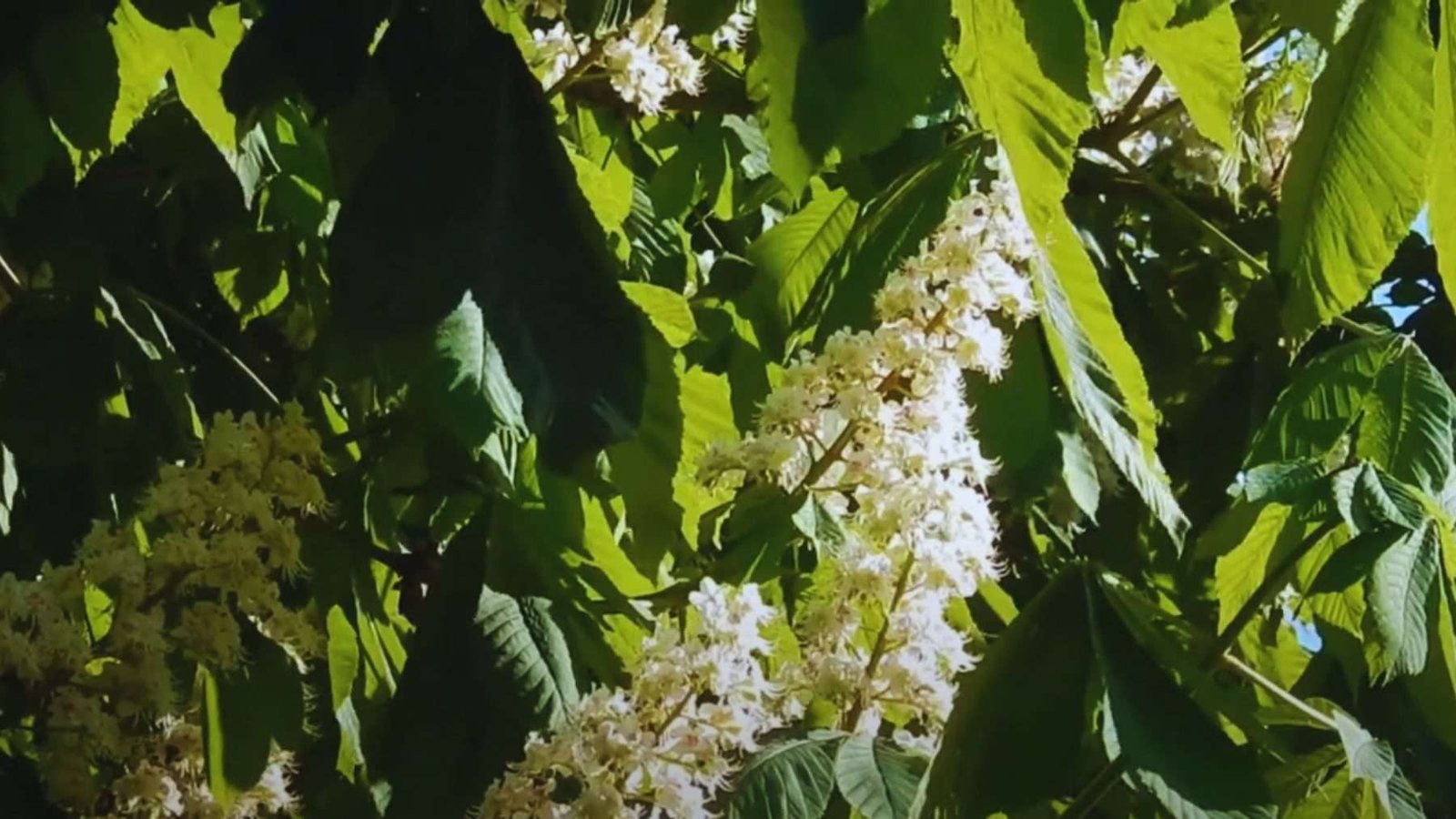
The European sweet chestnut (Castanea sativa) is native to southern Europe and western Asia. At maturity, these trees typically grow to heights ranging from 60 to 120 feet tall and develop trunks reaching four to six feet wide. They form broad, rounded canopies with spreading branches.
The leaves of the European sweet chestnut tree are simple and alternate in arrangement. They are elliptic in shape, measuring 4 to 8 inches long. The leaves have finely toothed margins that give them a somewhat spiny appearance. In autumn, the leaves take on shades of golden yellow to rich red before falling from the trees.
European sweet chestnut trees are usually grown in a multi-stemmed form, with several major branches spreading from the ground instead of a single trunk. The nuts within the prickly burrs are large and feature a flavorful taste with a high starch content once roasted.
This tree species is winter hardy through USDA plant hardiness zones five through nine. It prefers acidic, loamy, and well-drained soil while maintaining moisture. The European sweet chestnut tree also makes for an attractive ornamental addition to the landscape due to its broad canopy, summer flower spikes, and colorful foliage in autumn.
6. Henry’s Chestnut

- Growing Season: Spring, Early summer
- Leaf Shape: Ovate, Serrated edges
- Specific Needs: Acidic soil, Partial shade
- Common Pests: Aphids, Squirrels
Henry’s Chestnut is a unique tree species native to Asia that fewer homeowners may be familiar with compared to more common varieties. However, if you’re looking to introduce something out of the ordinary into your yard, this tree deserves consideration.
Sporting attractive oval-shaped leaves with serrated edges, Henry’s Chestnut brings visual interest to the landscape throughout much of the year. Its leaves emerge in spring and persist into early summer before falling. From a distance, the sawtooth leaf design provides an eye-catching texture. Up close, you’ll appreciate their lush green color and flexibility dancing in the breeze.
While Henry’s Chestnut prefers partial shade similar to other chestnut trees, its growth habits and needs otherwise set it apart. Unlike species bearing bigger nuts, tiny fruits on this tree go practically ignored by foraging squirrels. You won’t have to worry about them raiding your harvest! The tree also flourishes in acidic soil Conditions where others may struggle.
Providing that soil requirement is met, Henry’s Chestnut rewards homeowners with a slower growth rate, producing an ornamental structure leaning more aesthetic than practical. Its narrow canopy wouldn’t provide much shade, but evaluations of light-dappled shadow are part of the appeal. Interesting bark adds winter texture.
If you have an opening in a shaded spot with acidic soil, consider ushering Henry’s Chestnut into your unique yard. Its exotic good looks and independence from pests make it a lower maintenance choice, bringing beauty all season long. Your property may become better known for including this lesser-known species, adding an exotic touch of Asia.
7. Indian Chestnut

- Growing Season: Spring, Fall
- Leaf Shape: Elliptic, Spiny margins
- Specific Needs: Tolerant of a variety of soils
- Common Pests: Chestnut leaf miner, Weevils
The Indian chestnut (Castanopsis indica) is a very useful, fast-growing tree native to South Asia in regions including India, Nepal, and Sri Lanka. These trees typically grow to heights between 50 and 70 feet tall at maturity. They develop broad, rounded canopies consisting of spreading branches similar to most of the chestnut trees listed today.
The dark green leaves of the Indian chestnut tree are broad and elliptic in shape, measuring between three to seven inches long. The leaves have sharp, tooth-like margins, giving them a somewhat spiny texture. In autumn, the foliage changes color, shifting to shades of yellow, orange, or red before dropping from the trees.
The Indian chestnut tree exhibits extreme versatility, tolerating various soil conditions from wet to dry and sandy to clay-rich. It also shows some resistance to the chestnut blight that historically impacted American chestnut populations.
These trees bring an abundant crop of sweet, edible nuts enclosed within prickly burrs. Though the nuts remain relatively small, they are flavorful when roasted.
8. Dwarf Chestnut

- Growing Season: Spring, Fall
- Leaf Shape: Oval, Serrated edges
- Specific Needs: Well-draining acidic soil
- Common Pests: Leaf miner, Japanese beetle
The dwarf chestnut (Castanea pumila) is a small, multi-stemmed chestnut native to eastern North America. At maturity, these trees typically grow to heights between six to 30 feet tall, making them perfect for small yards or containers. The leaves of the dwarf chestnut tree are simple in shape, ovate, and measure two to five inches long.
The edges of the leaves are sharply toothed, giving them a spiny texture. In autumn, the foliage turns vivid shades of red, orange, and purple before dropping from the trees. These dwarf chestnut trees are incredibly adaptable, and able to tolerate drought and flood conditions. They thrive in the U.S. Department of Agriculture plant strength zones four through nine and do their best in acidic and well-draining soil.
The dwarf habit and small stature make this chestnut tree ideal for limited spaces. The dwarf chestnut produces an abundance of small nuts enclosed within prickly burrs. Though the nuts are edible once roasted, they tend to be smaller than other chestnut varieties.
In addition to nut production, these chestnut trees boast attractive foliage, colorful fall displays, and the ability to thrive in difficult landscape conditions. Their compact size and tolerance for pruning also make them a versatile landscaping option.
The dwarf chestnut’s small stature, environmental tolerance, availability of edible nuts, ornamental qualities, and ability to grow well in containers contribute to its desirability as a landscaping choice. Its upright, multi-stemmed habit, colorful fall foliage, and versatility for limited spaces make the dwarf chestnut a distinctive and low-maintenance specimen tree for yards and gardens.
9. Water Chestnut

- Growing Season: Summer
- Leaf Shape: Rounded, Saw-toothed edges
- Specific Needs: Flooded or marshy soil
- Common Pests: Snails, Weevils
The water chestnut (Trapa natans) is a small aquatic plant native to Europe and Asia. Unlike other chestnut trees, the water chestnut is an herbaceous annual that typically grows in still or slow-moving freshwater habitats.
The leaves of the water chestnut float atop the water’s surface in a rosette formation, making it a sight to encounter. The rounded leaves measure two to five inches wide and have saw-toothed edges. They produce a waxy coating that helps repel water, allowing the leaves to remain afloat instead of drowning in the water.
The water chestnut thrives in still bodies of fresh water like ponds, lakes, and marshes. The plant’s roots grow into the muddy substrate while the leaves and floating stems live at the water’s surface. This particular chestnut variety requires flooding or high water levels for optimal growth and reproduction.
These aquatic plants produce small nut-like fruits containing a single edible seed. The prickly spines on the fruits help with attachment to water animals that spread the seeds. Though the nuts are edible, the water chestnut is observed to be an invasive species in some regions due to its ability to form dense mats that crowd out native species.
The floating leaf and growth habit, waxy leaf coating, edible seeds, and invasive tendencies of the water chestnut contribute to its ecological impact and uniqueness compared to true chestnut trees. However, where invasive, the propagation and spread of this aquatic annual plant should be carefully managed to protect native biodiversity.
Conclusion
In this article, we covered ten types of chestnut trees you may never have heard of before and here are some top picks from the pack:
- Japanese Chestnut produces reliably tasty nuts in cooler climates
- Chinese Chinkapin tolerates difficult conditions and shows blight resistance
- Indian Chestnut – A fast-growing, versatile option from South Asia
- Dwarf Chestnuts are compact trees perfect for small gardens
While the more common chestnut trees tend to get the most attention, exploring some lesser-known species can open you up to discovering a perfect match for your needs and space. Any of these chestnut trees would make a valuable addition to your yard or garden, so why not try something new? Consider branching out – you might find your next favorite tree.