
Citronella plant vs lemongrass of the Poaceae family is a popular topic of discussion among gardeners as both plants look quite similar and may be hard to identify for a beginner. However, with a bit of knowledge and some expert tips and tricks, you’ll be able to differentiate between the two in no time.

We are here to help you understand the similarities and differences of both so that you can identify them and grow them accordingly.
Comparison Table
Here is a quick comparison table of the difference between citronella and lemon grass.
| Citronella Plant | Lemongrass Plant | |
| Origin | A fragrant grass from South Asia known for its oil called citronella oil. | A lemon-scented edible grass famous in Asian cooking. It has immense health benefits and is used in medicines, perfumery too. |
| Features | It has a magenta or red base. | It has a green base. |
| Size | It can reach up to six feet high and four feet wide. | It can grow as big as two feet tall and spreads four feet wide. |
| Uses | Used in making oil and as insect repellent. | It is mainly used for cooking, growing in a garden, and is said to have insect repellent qualities too. |
Difference Between Lemon Grass and Citronella
The main difference between the citronella and lemon grass plants is in their use in cuisine, flavor and scent; citronella plants have a red or magenta base, while lemongrass plants have green stem bases. While both are scented, lemongrass has a prominent lemon scent.
– Citronella Grass vs. Lemongrass: Appearance
Citronella plants and lemongrass look very similar, especially for the ones who do not know the difference. However, if you look closely, there are visible differences between the two. The citronella plant has blade-shaped leaves that are wider than the lemongrass leaves.
These leaves are also tinged with red or magenta color close to the base of the plant. Lemongrass, on the other hand, has a green base and leaves. It is easier to distinguish between mature plants of these species than younger ones.
Lemongrass grows as big as two feet tall and spreads four feet wide, while citronella plants can reach up to six feet height and spread four feet wide.
– Mosquito Repellents
When it comes to the ability to fight mosquitoes, Lemongrass takes the lead. That explains why all the products that you see that are labeled as natural mosquito repellents are made from lemongrass essential oils.
On the other hand, citronella is also used as a mosquito repellent. The plant is grown in gardens and sold massively during summers in nurseries and plant shops. Citronella plants look good on patios as potted plants and become a good addition to landscapes.
Both plants are used for making the essential oil that repels mosquitoes. Lemongrass oil requires repeated applications to be most effective. It must not be applied directly to the skin, which is why the oil is added to lotions and creams and applied every hour.
– Propagation
There is a difference between lemongrass and citronella propagation. Lemongrass is grown easily in pots from the stalks brought from the market. These fresh stalks are soaked in water until they begin to root after two to four weeks. They are then transplanted into the garden.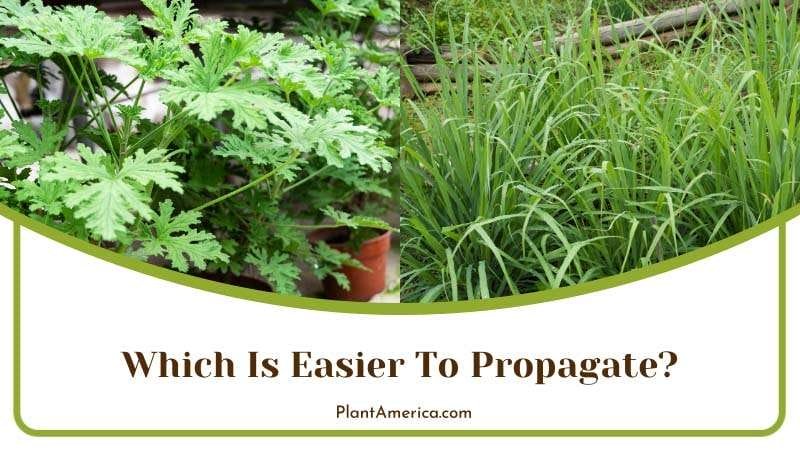
Existing plants are multiplied by separating the baby plants from the base of the mature plant. Lemongrass likes to grow in full to partial shade and in loamy, rich soil. It is hardy in zones 10 to 11 but can be easily grown as a houseplant in other regions with proper care.
Citronella grass grows by division method too. It can be propagated through a mature plant that is two to three years old. Choose a healthy plant for division in the fall season.
What Is Citronella Plant Best For?
The citronella plant is best used for its scent that is popular in aromatherapy. The essential oil made from it is used in soaps and candles, while it is applied as a mosquito repellent too. It can be mixed with water and sprayed or used as a diffuser. The citronella oil is also used in skincare products such as creams and ointments.
Geraniol and citronellol is a chemical found in citronella plants, and these are antiseptics. This makes the citronella oil antiseptic too and perfect for use as disinfectants. It is also antifungal and used for the treatment of parasitic infections. The essential oil accelerates the healing process of a wound and brings comfort in fatigue.
Although it looks very similar to lemongrass, it is popular for its essential oil and for being an insect repellent.
– Where Is the Citronella Plant From?
The citronella plant or the Cymbopogon nardus plant is a perennial grass from tropical Asian countries. Burma, India, Sri Lanka and Indonesia host this as their native plant. The grass grows up to 2 meters high in its natural habitat and can be grown in pots.
– Is Citronella Plant Toxic?
Yes, citronella plants are toxic and may lead to indigestion. Inhaling too much of the scent of the citronella plant can also harm the lungs and cause irritation and coughs. The essential oil should not be applied directly to the skin, and citronella plants must be kept away from children and pets.
What Is Lemongrass Best For?
Lemongrass is best for its culinary use as a herb in Asian cuisine as the grass has a lemony flavor and scent, which blends perfectly well with southeast Asian cuisine specifically.

It is an essential ingredient in Thai food and is widely grown too. The stalks and leaves are highly nutritious and have immense health benefits.
Besides its use in food, the essential oil made from the lemongrass plant is used in aromatherapy, skincare products, deodorants, soaps and candles. It is also used as an insect repellent. You can identify lemongrass by its green base, height and smell.
– Where Is Lemongrass From?
Lemongrass is a perennial plant from the subtropics of Asia, Africa and Australia. India cultivates lemongrass in the largest quality and supplies lemongrass stalks globally. There are about 45 species native to these regions, and the scientific name of lemongrass is Cymbopogon citratus.
Final note:
Lemongrass is easier to propagate because it can be regrown from store-bought fresh stems by water propagation.