
Brown tips on blue rug Juniper plant of the Cupressaceae family requires identifying the specific cause, as various factors, including salt injury, mechanical damage, cankers, and more, can contribute to the issue. The appropriate remedial actions depend on understanding the root cause.

This guide is designed to help you revive a struggling juniper by helping you understand the issue before you can address it.
Why Is My Blue Rug Juniper Turning Brown?
Your blue rug juniper is turning brown due to a variety of reasons from rotting roots to issues with nutrients, pests, and diseases. Juniper blight, salt damage, transplant stress, or even animal damage may also be the cause of the plant’s browning.
All of these have their own characteristics and spotting them in time will help you save the plant!
So let’s see how these common problems occur.
– Rotting Roots
Fungal diseases, such as Phytophthora, often lead to root rot in Junipers. This condition causes wilting, yellowing needles, and the eventual browning of junipers. The affected branches may fall, creating a sparse appearance. Symptoms may initially appear in individual branches, but over time, the entire shrub can be affected, resulting in its demise.
– Juniper Blight
Various blights can lead to the browning of your trees. Common signs of blight include yellowing spots on the leaves, and over time, the foliage transitions to a brown color. This progression often involves the formation of cankers, contributing to the demise of the affected brown areas.
Phomopsis blight or juniper blight is caused by the fungus Phomopsis juniperovora. It can affect various parts of the juniper, including stems and foliage. Symptoms include browning of needles, dieback of branches, and the formation of cankers.
– Kabatina Tip Disease
Observing junipers turning brown during winter is a common occurrence, often attributed to either winter desiccation or the Kabatina tip blight disease. Winter desiccation in juniper plants is marked by an inadequate absorption of water, leading to browning.
This condition is typically induced by strong winds. Alternatively, the fungus Kabatina Juniperi can also cause a similar browning effect, especially in stressed or damaged tissues, making them susceptible to Kabatina twig blight.
– Salt Damage
Junipers can experience salt damage in various ways. Whether it occurs on the foliage or in the soil, salt absorbs moisture from leaves, buds, stems, needles, and roots, leading to desiccation and causing newly planted junipers to turn brown. Over time, this salt damage can progress to the point of killing the affected areas of the plant.
The breakdown of sodium and chloride ions may occur, with chloride ions being transported and absorbed into the leaves. This can contribute to toxic levels and result in marginal leaf burns.
– Cedar Apple Rust
Apple rust is caused by the fungus Gymnosporangium juniperi-virginianae, and it manifests as orange-colored galls on juniper branches. These galls are spherical, clear, and roughly the size of a golf ball, featuring contoured outer layers. The presence of these formations is often associated with the browning of junipers.
– Nutrient Deficiency
Insufficient magnesium nutrition is a common issue in Junipers, leading to magnesium deficiency. When Junipers lack an adequate supply of magnesium, their leaves turn yellow and brown, eventually causing the center foliage to die. The deficiency typically starts in older tissues, and the damage may bear a resemblance to Phomopsis twig blight.
– Scales, Bugs, Mites
Infestations of spider mites or scales can lead to the development of yellow spots on Juniper needles, eventually causing the entire bush to turn brown, with leaves falling off. If left untreated, this infestation has the potential to kill the Juniper bush.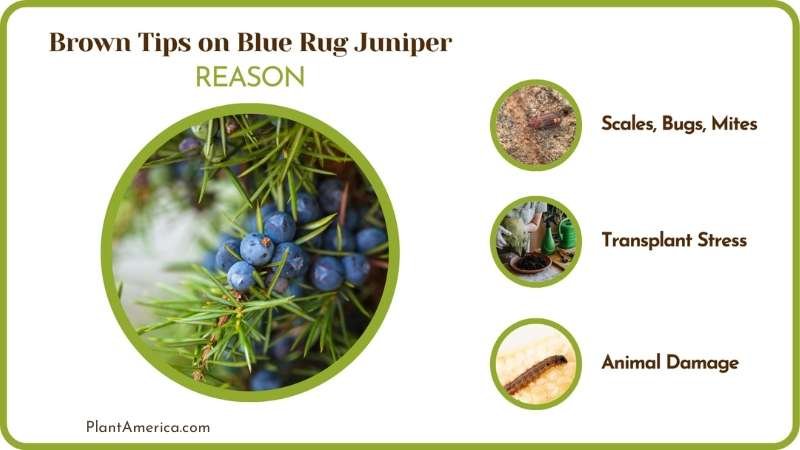
Spidery mites thrive in cooler weather, particularly in fall and spring, while scale insects appear as small, oval, or round bumps in gray or black colors, possibly producing honeydew when pressed. To confirm the presence of mites, you can tap a branch over a white piece of paper, revealing mites in brown or green colors.
Bagworm larvae are notorious for feeding on Juniper foliage too — typically attacking during the summer months.
– Transplant Stress
Transplant shock is another factor that can cause juniper leaves to turn brown. This occurs when the plant struggles to adjust to its new environment after being transplanted, leading to the root ball drying out and, consequently, the juniper plant displaying a brownish appearance.
– Animal Damage
Rodents sometimes may be at fault for the damage to juniper plants. This is characterized by the complete chewing of bark from branches and stems. The damage is most prevalent during winter and early spring, particularly on branches or stems that are not protected by snow. The consequence of such rodent activity is the yellowing and browning of foliage on the affected branches where the bark has been removed.
Ways To Prevent Brown Tips on Blue Rug Junipers
To prevent brown tips on blue rug junipers, proactive measures are essential. Planting in well-draining or heavy clay soil is a simple way to avoid infections. It’s crucial to note that fungi persist in the soil even after pruning, so avoid planting new vegetation in the same area.
Factors like high temperatures, overwatering, and drought can make newly planted Junipers susceptible to diseases, leading to browning.
– Dealing With Diseases
Address Juniper blight by promptly pruning any browning or damaged foliage and applying a fungicide to the remaining plant, following label instructions.
Immediate action is necessary if winter desiccation or Kabatina tip blight disease is causing the juniper bush to turn brown. Remove and dispose of diseased sections and limbs, and spray fungicide generously on fresh shoots for management.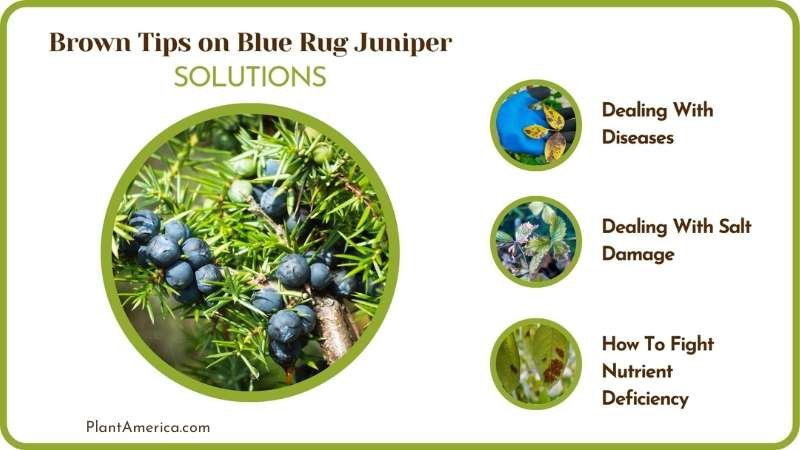
For galls formed by the cedar apple rust, prune and destroy them before fungal horns emerge. Additionally, apply a generous layer of fungicide inside the greenhouse on Juniper shrubs between mid-July and early August.
– Dealing With Salt Damage
To mitigate potential damage from winter salt, opt for de-icing agents or sand instead of rock salt. However, exercise caution to avoid excessive use. If you find it challenging to control salt damage, avoid planting Junipers in areas prone to cleared snow and exposure to salt spray or meltwater runoffs, as these factors can elevate salt levels.
– How To Fight Nutrient Deficiency
Conduct a soil analysis and, if nutrient deficiencies are identified, apply an appropriate fertilizer.
A general-purpose granular fertilizer with a ratio of 10-10-10 or 14-14-14 is highly recommended for creeping junipers. It’s important to choose a well-balanced fertilizer to support overall plant health and growth.
You may want to select a slow-release fertilizer to provide a steady supply of nutrients over an extended period. Always follow the manufacturer’s recommendations for application rates and timing.
– Addressing Insects
Fighting sap-sucking pests on junipers involves a combination of preventive measures, monitoring, and targeted treatments. Regularly inspect your junipers for signs of sap-sucking pests such as aphids, scales, or spidery mites. Look for discolored or distorted foliage, sticky residue (honeydew), or the presence of the pests themselves.
Prune and remove infested branches or sections of the juniper. Dispose of the pruned material away from the garden to prevent the pests from spreading.
Encourage natural predators such as ladybugs, lacewings, and predatory beetles that feed on sap-sucking pests. Plant flowers that will encourage beneficial insects, as this will help create a balanced ecosystem.
Apply horticultural oils, such as neem oil, during the dormant season. These oils suffocate and disrupt the life cycle of many sap-sucking pests. You can also use insecticidal soap, which is effective against soft-bodied pests like aphids and mites. It works by disrupting the insect’s cell membranes. Follow the instructions on the product label.
Consider using systemic insecticides containing neonicotinoids or other effective ingredients. These are absorbed directly and will kill pests as they feed on the plant sap.
Be careful to always read and follow the instructions on pesticide labels, and consider environmentally friendly options to minimize the impact on beneficial insects and the overall ecosystem.
– Dealing With Transplant Stress
The browning of newly planted Junipers, often attributed to transplant shock, may give the impression of impending demise. However, there is hope for recovery from this shock. To revive the plant, it is crucial to provide a weekly water supply of at least one inch and carefully cultivate the optimal growing conditions.
– Pruning as a Viable Option
Pruning Junipers should be delayed until early spring when new growth becomes apparent. During this process, it’s essential to wear protective clothing and use clean, sharp hand pruners and pruning loopers.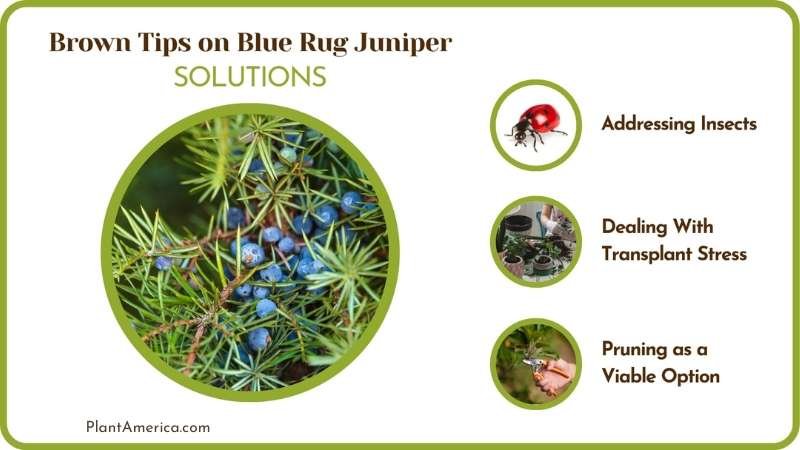
Once the tools are prepared, carefully examine the Juniper for any signs of browning. Remove dead branches by cutting from the tip to the base, using pruning loppers for larger branches. Focus on eliminating dead wood, especially in the shrub’s center, where light penetration may be limited due to dense outer growth.
Address overlong or visually unappealing branches, cutting approximately a quarter of an inch above outward-facing green shoots at a forty-five-degree angle. Flexibility is key in managing a brown juniper, so adjust the amount pruned from each infected branch while avoiding the last green shoot near the trunk.
For new shoots, cut them individually by fifty percent of their length, ensuring a quarter-inch cut above the shoot in the direction of desired spring growth. Proper pruning contributes to the healthy growth of Junipers in the upcoming growing season!
Conclusion
Understanding and addressing the various factors contributing to brown tips on your Blue Juniper is crucial for its revival. Whether it’s rot, blights, nutrient deficiencies, salt damage, insect infestations, transplant stress, or even animal damage, identifying the root cause is the first step toward a healthy and vibrant juniper.
- Each issue has its unique characteristics. From fungal diseases causing rotting roots to blights like Phomopsis or Kabatina, understanding the symptoms and prompt action is vital for managing the health of your juniper.
- Salt damage, often overlooked, can be mitigated by choosing de-icing agents or sand over rock salt and avoiding planting in areas prone to salt exposure. Nutrient deficiencies, notably insufficient magnesium, can be addressed through soil analysis and the application of a well-balanced fertilizer.
- Sap-sucking pests like spider mites, scales, or aphids can be controlled through a combination of preventive measures, natural predators, and targeted treatments such as horticultural oils or insecticidal soaps.
- Transplant stress, a common cause of browning in newly planted junipers, requires careful attention to watering and optimal growing conditions for recovery. Pruning, when done correctly in early spring, can also contribute to the revitalization of your juniper.
By recognizing the signs, understanding the specific issues, and implementing the appropriate remedies, you can revive your struggling juniper and ensure its continued beauty in your garden!