
With its incredibly attractive large bell-shaped purple flowers and lacy fern-like foliage, Jacaranda mimosifolia of the Bignoniaceae family makes magnificent bonsai. The mature blue jacaranda can be fashioned into a stunning bonsai, which is why it can be found in gardens all around the world.
Maintenance for Jacaranda mimosifolia is simple if you provide conditions comparable to its natural habitat: plenty of sunshine, wet soil, and frost protection.
If you’re still worried about caring for this Jacarand genus Bonsai, continue reading because this article offers you everything there is to know about the plant’s care and upkeep.
Blue Jacaranda Bonsai Care
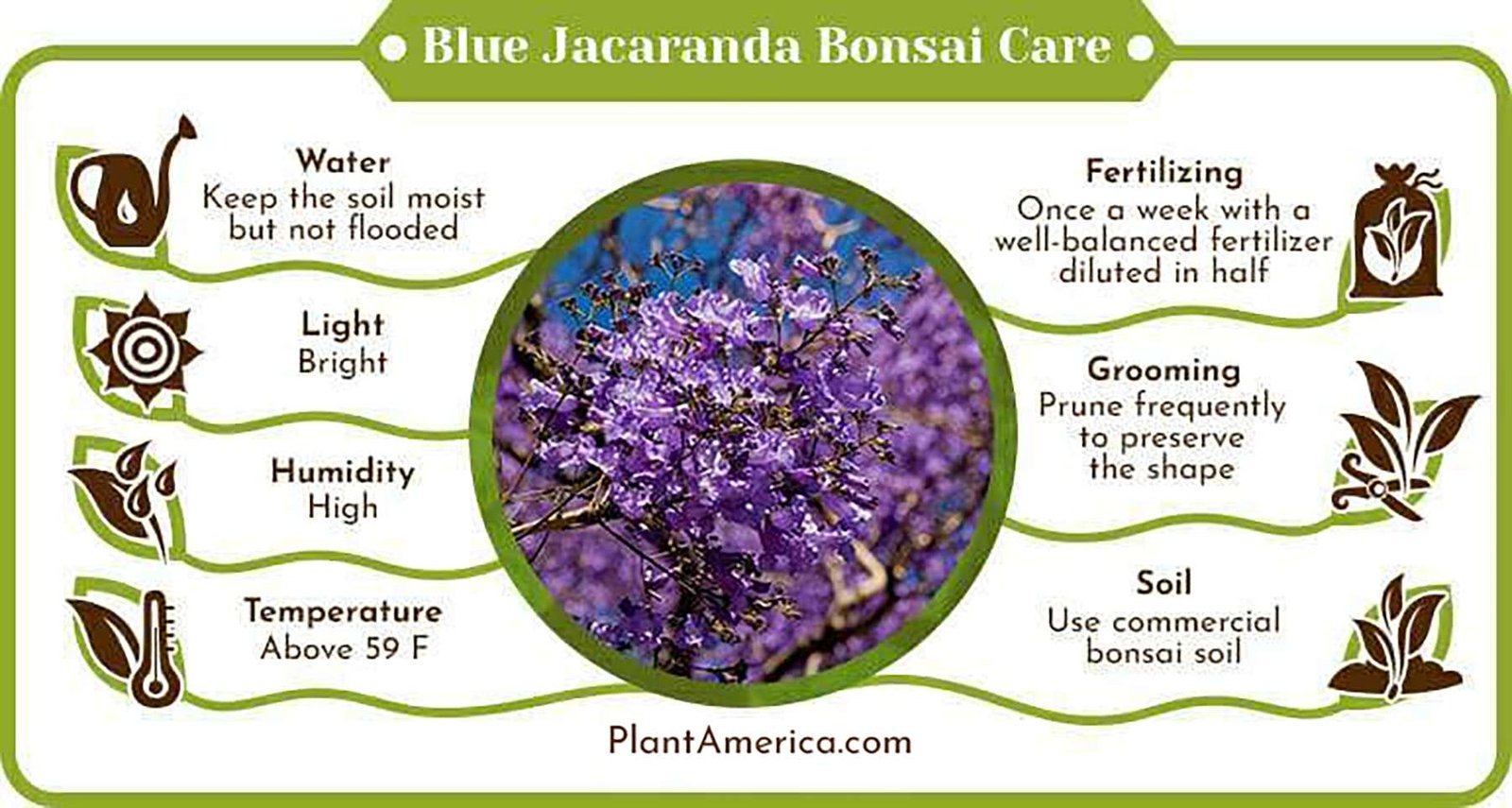
Bonsai maintenance for Jacaranda is simple when supplied with sufficient light or light shade, a mild temperature, wet soil, and protection from cold. Although you can keep Blue Jacaranda Bonsai indoors all year, provided it gets enough light, it thrives best outside from May until it gets cold.
 Water Requirements
Bonsai blue must be irrigated regularly during the growth period to keep the soil moist but not flooded. The tree can withstand brief dry periods but may lose its leaves. If it is overwatered, it will also drop its leaves.

Touch the soil with your fingertips before watering your bonsai. If it’s still wet, wait a few more days before watering.
The use of sound, well-drained bonsai soil is the best method to avoid water issues. When the blue Jacaranda’s leaves fall off, stop watering them.
 Light Requirements
Jacaranda mimosifolia loves plenty of light but will enjoy the light shade in the summer. If you can provide it with a lot of light, you can keep it indoors year-round. Unfortunately, your bonsai might not bloom under such conditions.
Blue Jacaranda loves the bright, warm conditions of a greenhouse or being left outdoors in warm areas.
 Soil Requirements
Jacaranda prefers moist soil, but it must be well-drained to prevent the roots from sitting in water. For optimum results, use commercial bonsai soil, which has coarse clay and sand particles and enough organic content.

 Temperature Requirements
The Jacaranda tree is a subtropical tree that grows in warm weather so that the plant won’t survive in temperatures less than 59 degrees Fahrenheit (15 degrees Celsius).
If you live in a warmer climate, you can keep your bonsai outside all year, but if you live in a country where the temperature decreases in the fall, bring it inside and put it in a warm, brightly-lit spot that isn’t directly over the heat source.
 Humidity Requirements
Jacaranda Bonsai needs lots of moisture and warmth to grow correctly, so it should be kept in places that have more humid climates and do not experience prolonged phases of dryness.

 Fertilizer Requirements
Throughout the growing period, fertilize your Jacaranda bonsai once a week with a well-balanced fertilizer diluted in half. When the tree’s leaves fall off or if they start turning yellow or brown, stop fertilizing. To give it a boost in the early spring before it blooms, you might choose to fertilize it.
 Pruning
Jacaranda trees grow quickly, so you’ll have to prune them frequently to preserve the tree in the shape you want. When the tree has four or five-leaf pairs, trim the young shoots and leave behind one or two leaf pairs.

Pruning can be executed during the spring, before the buds open, but you can maintain removing new growth all year, especially for those in a warm climate.
When you see huge leaves, cut them. More branches will sprout, and the leaves will become smaller as you trim your jacaranda bonsai, giving it the appearance of a mature tree on a tiny scale.
The step is straightforward: clean the roots and place the root ball in a water-filled container. A glass or a mason jar may carry all the roots for many Bonsai trees. If the tree is dehydrated, a fine water mist can be sprayed on its top as it soaks.
A full-blooming Jacaranda bonsai tree is a sight to behold. The tree is entirely covered in clusters of enormous bell-shaped blue or purple blooms. This spectacular view can be seen from late spring to early summer. Bonsai Blue Jacaranda may bloom if cultivated in a warm area and kept outside.
Flowers have a delicate scent; place your tree where you can appreciate it the best. You can maintain your jacaranda bonsai indoors if you have lots of light indoors, but it won’t flower.
While it’s in full bloom, you can bring it inside for a few days to admire it but leave it outside to absorb as much sun and heat as possible.
When the flowers fall, the fruits– brown pods with seeds within, remain. Remove the pods once they have dried out and gather the seeds. They germinate quickly and produce healthy seedlings.
Propagation
Cuttings or seeds are a good way to propagate Jacaranda mimosifolia. It will take a long time to progress from seedlings to bonsai, but it is enjoyable to participate.
You can also create a new Jacaranda bonsai by acquiring a tree with an attractive trunk from a garden center and trimming it until it fits in a pot. This method yields a mature-looking bonsai jacaranda in a considerably less amount of time.
– Tools
Growing a single bonsai tree can rapidly become a hobby. You may maintain your Jacaranda mimosifolia bonsai with simple garden cutters for pruning branches and roots and ordinary pliers to wire the components at first if you only have one tree.
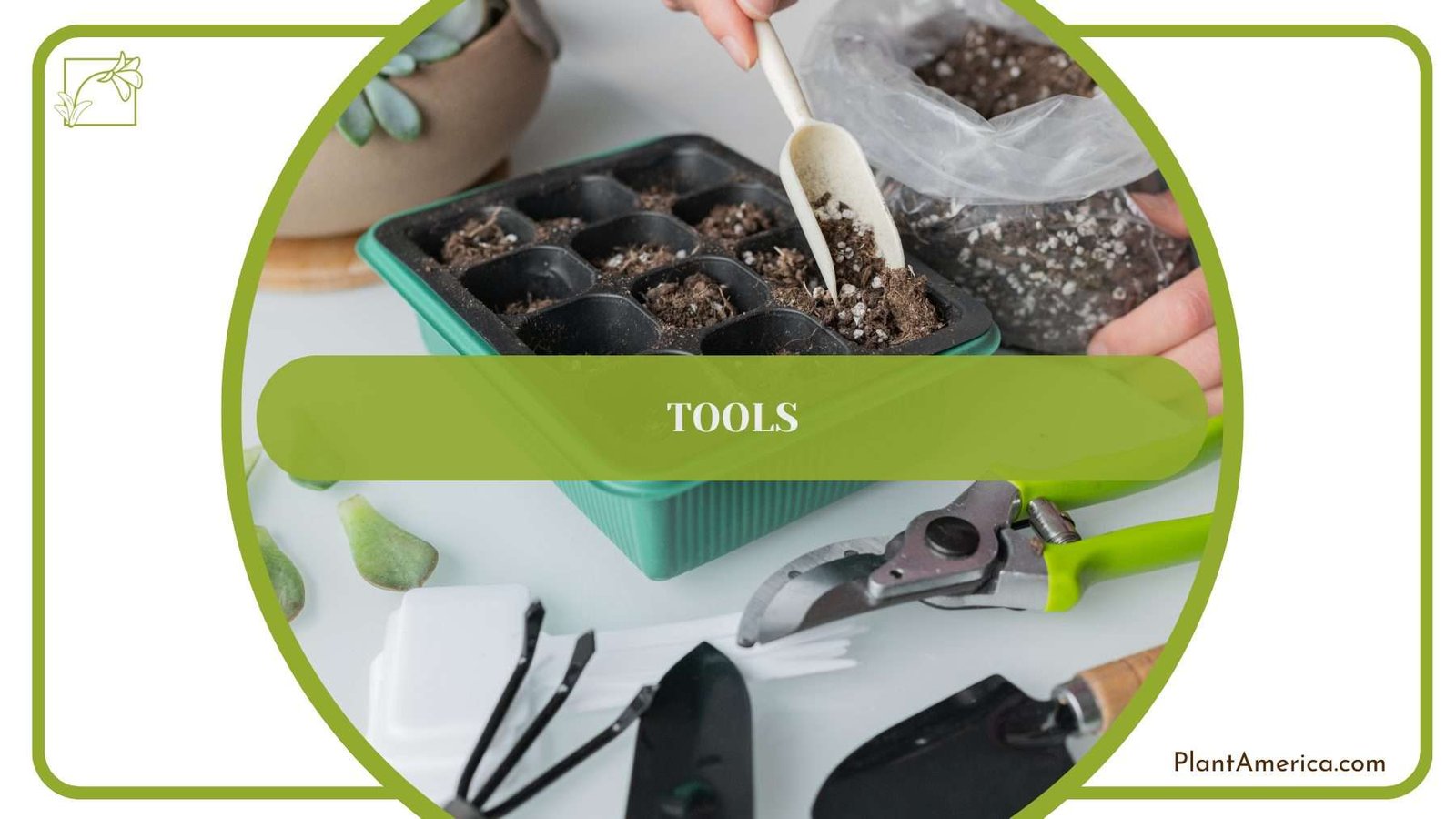
The more you become engaged, particularly if you join a bonsai group, the more specialized tools you’ll learn about and want to own.
It can be a costly hobby because most bonsai tools are imported from Japan and are extremely pricey.
– Preparing Pots
As with all bonsai trees, blue jacaranda bonsai should always be planted in a shallow bonsai pot that is two-thirds the length of the tree’s height.
The pot should be a complementary shade to the Jacaranda’s grey-brown trunk and vibrant purple blossoms. Make sure the color and attractiveness of the pot don’t overshadow the tree.
Problems and Pests
It is important to note that Jacaranda is pest-resistant to some extent. Nonetheless, root rot is the most severe issue, hence to fix it you can use only free-drained, grainy bonsai soil to avoid this. Although Jacarandas prefer damp soil, they should never be planted in waterlogged soil.

Additionally, scales, aphids, and mealybugs are the most common pests that attack Jacaranda mimosifolia. To prevent infestation, spray them with neem oil insecticide as soon as you notice them.