
Begonia acetosa of the Begoniaceae family is the house plant with the most glamorous leaves. It has large and fancy leaves with the softest velvety texture.
Experts have compiled this guide with years of expertise growing acetosa. Take advantage of these tips to grow the healthiest Begonia genus plants ever.
What Is Begonia Acetosa?
Begonia acetosa is an exotic plant from Brazil. Their most unique feature is their round, fan-shaped, and velvet textured leaves. These leaves are bright green from the top and reddish on the underside. Even their stems are fancy; being orange in color and quite velvety.
Begonia Acetosa Care
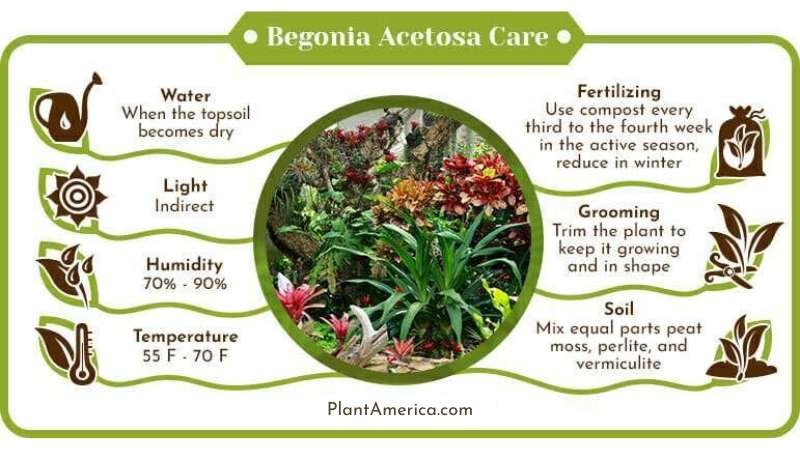
For the best possible plant care, place this plant in bright indirect light and water it when the topsoil dries. However, when you maintain the proper requirements of this plant it will thrive, don’t worry, we have covered it all for you below.
 Light Requirements
Of course, this house plant needs bright light during the day to grow. This light must be indirect because its leaves are prone to sunburnt by direct light. You can see this sunburn in the form of brown edges and dry leaves.
Outside in the yard, a tree would shade it from direct exposure. You can also use a shaded spot near a north-facing wall. Even within a greenhouse, you must put it under the shade of larger trees and vines. Sunlight is more harmful during the hot summertime of the year.
Inside the house, you have fewer chances of sunburn. If you want to put it near a window, then a window to the east or the west is safe. You can use a sheer curtain to mitigate the light during the few hours when the sun comes directly through.
If your leaves are getting darker due to a lack of adequate sunlight inside the house, there is a solution to this as well. Install a few artificial grow lights six to 12 inches from the plant, preferably right overhead. These lights work just like sunshine when turned on for 12 hours straight each year.
 Water Requirements
Unlike most other Begonias, this one is tolerable if you occasionally forget to water it. However, being a responsible plant parent, you should keep an eye out on the topsoil. When it gets dry, you need to water it right away.
Many people just put their finger on the topsoil to check if it is dry. A better approach is to insert a pencil or a skewer only two inches deep. Then take it out to see if it comes out with dry or moist soil. The most meticulous gardeners keep a moisture meter to keep their topsoil in check.
Better use filtered water at lukewarm or room temperature. Using very hot or cold water can harm the roots. If you only use filtered water, put it in a bucket for one whole light exposed to air. This is a cool hack to get chlorine from tap water before using it on the plant.
 Soil Requirements
For this Begonia, make your own potting soil with all the best properties possible. Trust us, this takes very little time, and your plant’s consequent health will speak for itself. First, you need to purchase equal parts peat moss, perlite, and vermiculite. Then mix them in as thoroughly as possible on a piece of sheet or newspaper.
Peat moss will contribute nutrients to the soil and act as a sponge. It will absorb water from the soil to prevent extra water collecting. Later, when the soil starts drying, it will release this water back to moisturize. If you want to, you can substitute it with sphagnum moss instead.
Both perlite and vermiculite are inorganic minerals that contribute to the drainage of your soil. Both of these come in different consistencies. They will create lots of tiny spaces for air and water circulation in the soil. A layer of gravel spread right at the bottom of the pot also contributes to better drainage.
 Temperature Requirements
This plant will survive under normal room temperatures around 55 to 70 degrees Fahrenheit. You can place it inside and outside the house during spring and summer. This is also when the plant’s growth is at one of its peaks.
When temperatures start to drop below 50 degrees, Begonia will suffer. At first, it will drop a few leaves and hibernate as a survival mechanism. Prolonged exposure to cold air or temperature will just kill this plant. Sadly, you must keep in mind that once a plant dies due to frost, it becomes very difficult to revive, because frost is very harmful for the plant to thrive.
That is why moving this begonia plant inside is a safer option. If the plant is receiving cold drafts of air from some source like a vent or something, this needs to be moved elsewhere. Consequently, placing it near a radiator above 70 degrees Fahrenheir is not recommended.
 Humidity Requirements
This plant can tolerate lower humidity levels just fine. However, it thrives within a range of 70 to 90 percent humidity. Misting is one of the surest ways of instantly boosting humidity around a plant. We advise against it because it easily produces powdery mildew on the leaves.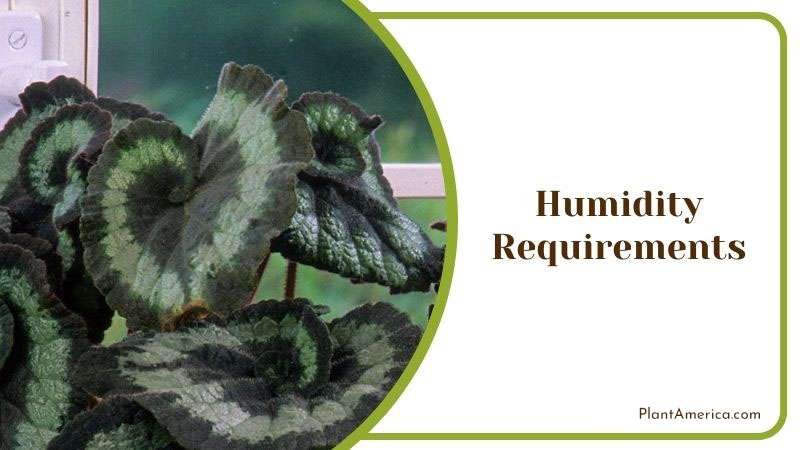
A better alternative would be to take help from a pebble tray. Plenty of these are available in the market. You only have to take care not to let the pot sit directly on the water. Letting a plant sit in the water is like calling for root rot. Most likely, the Begonia plant will start having rotten stems as well.
The highest levels of humidity can only be achieved using a humidifier all the time. This would make it uncomfortable for you to live in the house, though. If you have a spare room or garage, pile all your humidity-loving plants and turn the humidifier on. In addition, a pebble tray would also be helpful to keep the plant’s humidity range high.
 Fertilizing Requirements
Acetosa is a bit of a heavy feeder. You should fertilize it one week after planting it in a new pot. Afterward, start a feeding regime every third to the fourth week. Carry this on as long as the plant is growing. When the growing season ends at the end of summer, reduce feeding to only once per month.
Using a liquid fertilizer is the easiest way to feed any plant. However, it needs to be diluted to half its strength first. Despite this, take care while pouring to avoid any splash on the plant. The leaves and stems can get burnt when they come directly in contact with fertilizer droplets.
If you want to use only natural fertilizers, use compost. Every two weeks, mix one handful of compost into the top layers of the soil. To keep the soil moist, you can also cover the surface with mulch doubles as compost.
 Pruning
This plant also needs regular pruning. Do this during early springtime and keep your instruments sharp and sterilized beforehand. Even if a stem is particularly healthy, trimming it half an inch from the end would help promote further growth.
Any item growing askew and keeping your plant out of shape must be pruned off. Furthermore, any leaf that has become too old or deformed is also better gone. Pruning also keeps the air circulation around the plant going.
Propagation
There are three ways to carry out Begonia acetosa propagation. Whether you choose stem cuttings or leaf or seed propagation, all these methods are equally fun. Carried out properly, all of them yield fantastic results. Stem cutting means you take a part of a stem and use it to grow a whole new plant. This is a pretty easy method for those of you who are new to gardening.
Keep in mind that you only need a pair of sharp pruning scissors first of all, make sure that this pair of scissors is sterilized properly in order to avoid any kind of infestation from taking place. Start by sharpening and cleaning it with 70 percent isopropyl alcohol.
Now cut off a four to five inches long piece of the healthiest stem in your plant. Put this cutting in a glass jar filled with water, and cover the jar and then place it on a window sill. Cover it with a sheer curtain to mitigate it if it receives direct harsh light.
Every day, lift the lid of the jar, so fresh air can get into the water. Within a month, a significant size of roots and shoots will have grown. This might be the right time to transplant the tiny Begonia cutting into the soil.
To plant the cutting in the soil directly you can use the same soil from the parent plant. Keep the soil of your cutting and newly propagated plant moist. If enough love and care are given, your new plant will thrive.
Problems
Begonias are extremely chill plants to look after. Pests such as mealybugs, mites, aphids, snails, and even deer attacks might be the only problems you will have to deal with. They can also get infected with root rot if there is a persistent problem with your soil and pot drainage.
– Mealybugs
Mealybugs are the most common plant pests you will have to deal with. They are easy to spot, being white in color and slow-moving. Because they hide underneath the leaves and the sheaths of stems, you might occasionally miss them. Soon enough, your plant will start showing signs of malnutrition by itself. 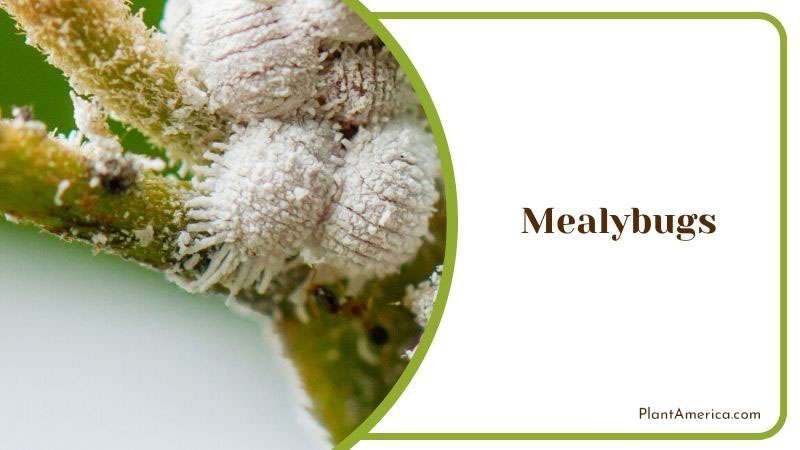
A mealybug-infested plant will first start developing yellow leaves. The otherwise vigorous acetosa leaves will become listless, weak, and floppy. Your flower yield will be affected the most.
If you can just remove most of these pests from the plant, that would solve half the problem. Wash the plant thoroughly so that all the adult mealybugs drain off to kill the larvae; use a neem oil foliar spray. You can simply make a DIY spray at home by mixing one tablespoon of neem oil in one gallon of water.
– Spider mites
If you find strange spider web slings around the leaves, you have a spider mites infestation. These tiny pests are also sap feeders and eventually starve your plant. Mites are a bit harder to spot as compared to mealybugs. You might not even discover this problem until significant damage has been done.
The symptoms of a spider mites infestation are the same as those of mealybugs. Your plant will become weak, develop yellow spots and produce very few small-sized leaves. Again, washing the plants is the first step. Add a good quality insecticidal soap to the water while washing. Afterward, start a weekly regime of spraying using a foliar spray made of neem oil. An alternative to that will be a sodium bicarbonate foliar spray.
– Slugs
You will experience slugs only if you keep this plant outside in a garden. If the grass around it is overgrown or the soil is moist, this will attract the slugs to the plant. A slug infestation is the worst because it chews on and destroys your begonia leaves. Slugs also leave their characteristic slimy trail behind them.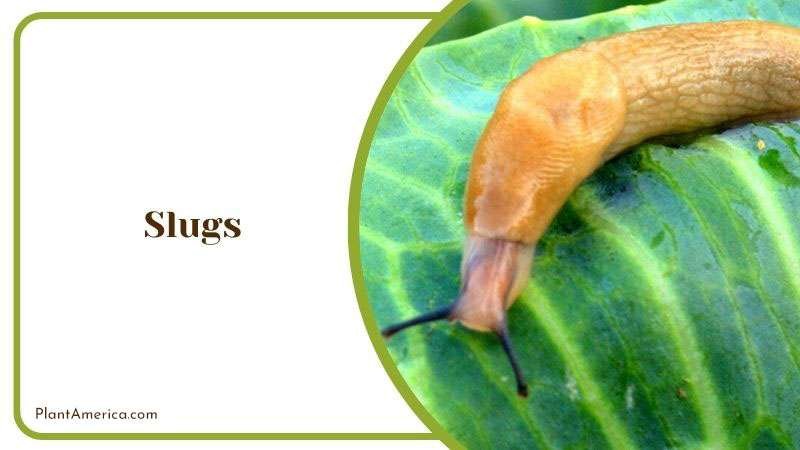
Technically, the easiest approach would be spraying them with an insecticide. However, before taking such drastic measures, we suggest you try natural approaches first. Clearing the garden around your outdoor potted plants is the first thing you must do.
Crush four eggshells and then spread them over the soil’s surface. Slugs hate this and will stop coming over to that plant. Instead of eggshells, they also cannot tolerate crushed coffee beans. You can use these instead as the choice is totally up to you.
– Root Rot
When kept constantly in water, the roots will eventually begin to rot. This is quickly followed by superimposed fungal infections by any fungal specie that usually colonizes the soil.
Root rot then transfers to the stem and leaves. This manifests in the form of brown and black moist rot spots. The leaves also begin to droop down and become sort of sponge-like.
It is very difficult to save a plant suffering from root rot. You must quarantine it from the rest of your baby plants. Start a weekly anti-fungal regime, but if it seems like the plant is too far gone, discard it as an infectious waste product.