
How to get rid of aphids on outdoor plants is a common concern for many plant enthusiasts who want to keep their outdoor plants thriving. Unfortunately, aphids are bad news for plants that can quickly spread to others if timely solutions are not sought.
Learning about how to diagnose if your plants have an aphid infestation is also important. Therefore, this article is a perfect guide to educate about the signs of infestations and solutions to eliminate them.
What Are the Most Common Signs of Aphid Damage?
The most common signs of aphid damage in plants include stunted growth, flaking, formation of honeydew, mold, and an onslaught of the virus. Plants can become weaker and deformed as aphids expand their colonies and feast on food crops and ornamentals.
Aphids are some of the most damaging pests to deal with during the summer because of their direct and indirect harm and how quickly they multiply. But, what causes aphids on plants. The answer is, it is the sap that they are after.
There are about 5,000 species of aphids in the insect family, and all of them exist on the nutrient-rich sap from plants’ leaves, twigs, stems, or roots. Some aphid species are generalists that feed on various plants, and some are specialists that only attack specific plant families. Therefore, it is important to keep an eye on them.
The very birth of aphid infestations usually starts small and only on a single plant. When left unchecked, aphids multiply quickly and spread like wildfire through the garden. Minimize the damage by detecting colonies early. Here is how to detect the signs of an infestation.
– Plants That Have Been Weakened or Disfigured
Aphids are tiny insects that, since they are frequently green, can be difficult to spot on plants. They can be found on the undersides of immature leaves or freshly grown stems. They usually congregate on new succulent growth.
Most of the time, their feeding has no visible effect on the plant. It might not grow as quickly as the others. Leaves will yellow, twist, or curl in extreme infestations or plants vulnerable to aphid feeding. Galls are abnormal swellings of plant tissues on stems, leaves, or roots caused by some aphid species. Aphid colonies live within the gall, which shields them while they feed on plant sap.
– Plants With Little White Flakes
Nymphs evolve through four stages after birth before maturing into adult aphids. They grow a little larger and shed their skins with each metamorphosis. A colony of nymphs will continuously molt and lose their exoskeletons, leaving behind what appear to be little white flakes on the ground that can help identify aphids.
– Honeydew on the Leaves
Aphids inject saliva into the host plant while feeding on its interior juices using their needle-like proboscis. This helps them absorb the plant’s carbohydrates. Plant sugars that aphids cannot absorb flow through them as sugary excrement. This sticky and glittery stuff is essentially aphid excrement, which they make in large quantities!
Honeydew can be found on leaves, stems, and bark. It will collect on surfaces beneath the tree canopy in tree-feeding aphids, such as driveways, cars, sidewalks, patio furniture, and understory vegetation.
Ants enjoy honeydew, but yellow jacket wasps and honey bees will also flock to it for food. Another insect activity surrounding your plants increasing is a good indicator that the sticky thing is honeydew.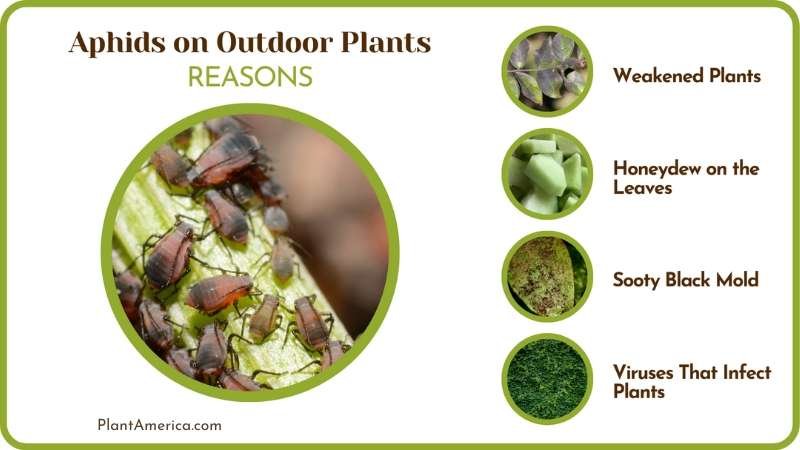
Aphids aren’t the only insects that create honeydew; mealy bugs, whiteflies, and soft scales also do, but it’s as good a sign as any that aphids are present. Although honeydew is not toxic to plants, it can promote the growth of a fungus known as black sooty mold.
– Sooty Black Mold
Sooty mold can develop everywhere there is honeydew. The wind blows Sooty mold spores and sticks on honeydew-coated leaves, stems, branches, or fruits. Sooty mold is not a plant parasite. It gets all of its nutrition from honeydew.
As the fungus grows, it produces dark mycelial threads that resemble a charcoal black film on plant foliage. It can eventually completely cover the plants and block out the sunshine. Sooty mold damage is usually minor and aesthetic because it does not attack the plant.
You can wash it off plants with liquid dish soap water, but it will return unless you control the honeydew-producing bug. You can also mix cayenne pepper for even better results.
– Viruses That Infect Plants
The most troublesome aspect of aphids isn’t necessarily their xylem sucking, which can hinder plants from prospering. It’s also not the copious amounts of honeydew they produce, which offers the ideal environment for fungi to establish themselves in your yard.
The most serious damage aphids can do is disease infection in plants. Aphids are the most frequent plant virus vectors, capable of carrying and transmitting over 100 different viral illnesses to plants.
Virus transmission can occur whenever aphids feed with their stabby mouthparts. Even plants that do not have an aphid colony can get ill. Winged adults looking for a new host will taste and explore several plants before settling on a feeding location.
The viruses that aphids can spread range in severity. Some viruses that can limit development, diminish yields, and create discolored or deformed foliage are alfalfa mosaic virus, strawberry mottle virus, and blueberry shoestring virus.
How To Protect Outdoor Plants From Aphids?
To protect outdoor plants from aphids, start by keeping weeds in check, spraying plants with water, using soapy solutions and some other methods. Most of these methods work well in combination with others so it is important to see what works for you.
1. Remove Any Nearby Weeds
Keeping your yard weed-free isn’t just for aesthetics; it can also help remove aphids and other agricultural pests from invading your property. Weed removal is most definitely a marathon, not a sprint. Pull out any weeds that intrude on garden beds and the surrounding area from early spring to late fall.
Weeding in the early spring will kill any aphid eggs that may have overwintered in the garden. Weeding during the balance of the season will reduce the number of possible host plants that winged aphids can utilize to find your crops.
2. Keep a Close Eye on Your Plants
Spend a few minutes each week inspecting your plants. Examine the plant for general vigor and health. Concerns include stunted plants, delayed flowering, discolored leaves, and irregular growth. Aphids can be found on the undersides of leaves and stems, branches, and shoot tips.
Look for honeydew splashed over the foliage, white flaky skins scattered throughout the earth, and a rise in ant activity.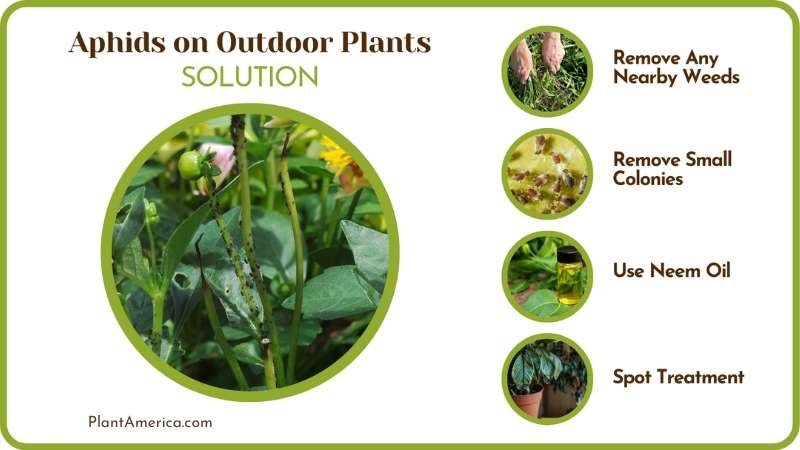
3. Remove Small Colonies
When you first notice aphids, the colony will likely be small and confined to a single plant. This gives you good biological control to prevent aphids and controlling aphids populations from thriving. Trim back all infected leaves or stems to eradicate the aphids if the infestation is still in its early stages.
Isolate the pruned portions as soon as possible by placing them in a sealed bag and throwing it away. If trimming the plant will cause more harm than good, aphid colonies can be crushed by hand. Aphids in galls or other difficult niches can be readily smushed by applying gentle pressure to the area.
4. Spray Them With Water
As an infection advances, aphids will spread to other plants in the garden, and their population will become much more entrenched. A powerful burst of water is a highly effective way to detach them from the host plant physically after identifying aphid populations. It will also remove honeydew and any sooty mold. Aphids cannot return to the plant after falling to the ground.
5. Soapy Water for Spot Treatment
A few drops of homemade soap spray in plain water is a powerful toxin for soft-bodied bugs like aphids. To be effective, insecticidal soaps must directly contact the entire aphid colony. They will dry out and die after being sprayed and get rid of aphids.
Use this method in combination of diatomaceous earth for best results. Although homemade aphid soapy sprays are a natural therapy safe for plants, they are still pesticides that can kill other insects. Reduce drift by just spraying areas where aphids have been discovered congregating.
6. Use Neem Oil
Neem oil is a natural insecticide and repellent from the neem tree’s seeds and fruit and a great way to introduce natural solutions. The primary ingredient in neem oil is azadirachtin, a molecule that prevents pests from feeding and disturbs hormones, preventing them from growing or laying eggs. The use of other essential oils like horticultural oil is also effective.
It is effective against a wide variety of foliage-feeding pests, including aphids. Because neem oil is intended for plant foliage, it will not damage birds or other beneficial species if applied to flowers or fruit. Aphids are particularly fond of young and nourishing succulent growth.
7. Encourage Nitrogen Deficiency
Because nitrogen promotes new flushes of leaves, stems, and branching, fertilizing aphid-infested plants will only provide them with more and better food supplies. Feeding plants with high-nitrogen fertilizers should be avoided until the aphid problem has been resolved to deter aphids.
When all colonies have been shipped, you can resume your fertilization schedule. Use less plant food initially and watch for new aphid outbreaks.
8. Plant Aphid Repellents
When it’s time for flying aphids to ascend to the air in search of a new brooding location, they rely heavily on smell to discover and pick host plants. These plants are extremely effective at interfering with the aphid’s smell capabilities. Some hide the odor of hosts that aphids would ordinarily like. Others emit volatile chemical molecules that disrupt their operation.
- Rosemary
- Catnip
- Lavender
- Dill
- Coriander
- French marigold and pot marigold
- Garlic
- Onion
- Summer savory
- Chives
- Basil
9. Utilize Trap Crops
Trap cropping is an ingenious approach to keep pests away and preventing aphids in particular from your prized plants. Aphids are attracted to mustards and nasturtiums. Plant them near the garden and monitor the foliage for aphid activity.
Cut the plants back to control aphids if your trap crop becomes overrun with aphids. This will help keep their population under control and keep them from invading the rest of your garden. Companion planting is also an effective methodology. However, the presence of aphids will encourage their natural predators to patrol the area.
10. Attract Beneficial Insects
Aphids are an important element of the lifecycle of some beneficial insects. Aphids and other soft-bodied insects are a significant food supply for the larvae of ladybugs, hoverflies, lacewings, aphid midges, and wasps.
Wild birds, spiders, and adult ladybugs also kill aphids and eat nymphs and adult aphids. Plant small-flowered herbs like yarrow, fennel, mint, chicory, lovage, and dill to make outdoor environments more appealing to these beneficial bugs and get organic aphid control.
You can buy and release ladybugs in your garden to get an early start and control the entire life cycle of aphids. Planting your garden with native perennials will ensure that these most welcome visitors return frequently.
For those asking, “how to get rid of aphids permanently” or “how to get rid of aphids naturally” this is the solution.
Conclusion
Aphids can cause a lot of destruction to your outdoor and indoor plants if there is no early detection, therefore,
- Ensure that you inspect your plants for an infestation early on for pest control.
- Fortunately, with the right methods, you can get aphid control and finally seize the spread of aphids.
- Encouraging aphid predators to stay in your outdoor garden is the most natural and effective way to keep their population in check.
With this guide, you are now educated with the knowledge of detecting the issue of aphids and getting rid of it. Now you can grow plants with ease!