
Mealybugs on string of pearls of the Curio genus is a gardener’s silent nightmare that attacks when you don’t do gardening properly, or the environmental conditions change. Unfortunately, these tiny pests creep in unnoticed, threatening to rob your beautiful string of pearls plant of its lush vitality. The fight against mealybugs isn’t just urgent; it’s personal for those who love their indoor greenery. Please keep reading to find simple solutions to eliminate them before they take over your favorite plants.
What Are the Reasons Behind Mealybugs on String of Pearls?
The reasons behind mealybugs on string of pearls include overwatering, high humidity, lack of proper ventilation, and proximity to infected plants. They also thrive in conditions that lack adequate care. Furthermore, nearby neighboring plants and using contaminated tools can also cause the spread of mealybugs.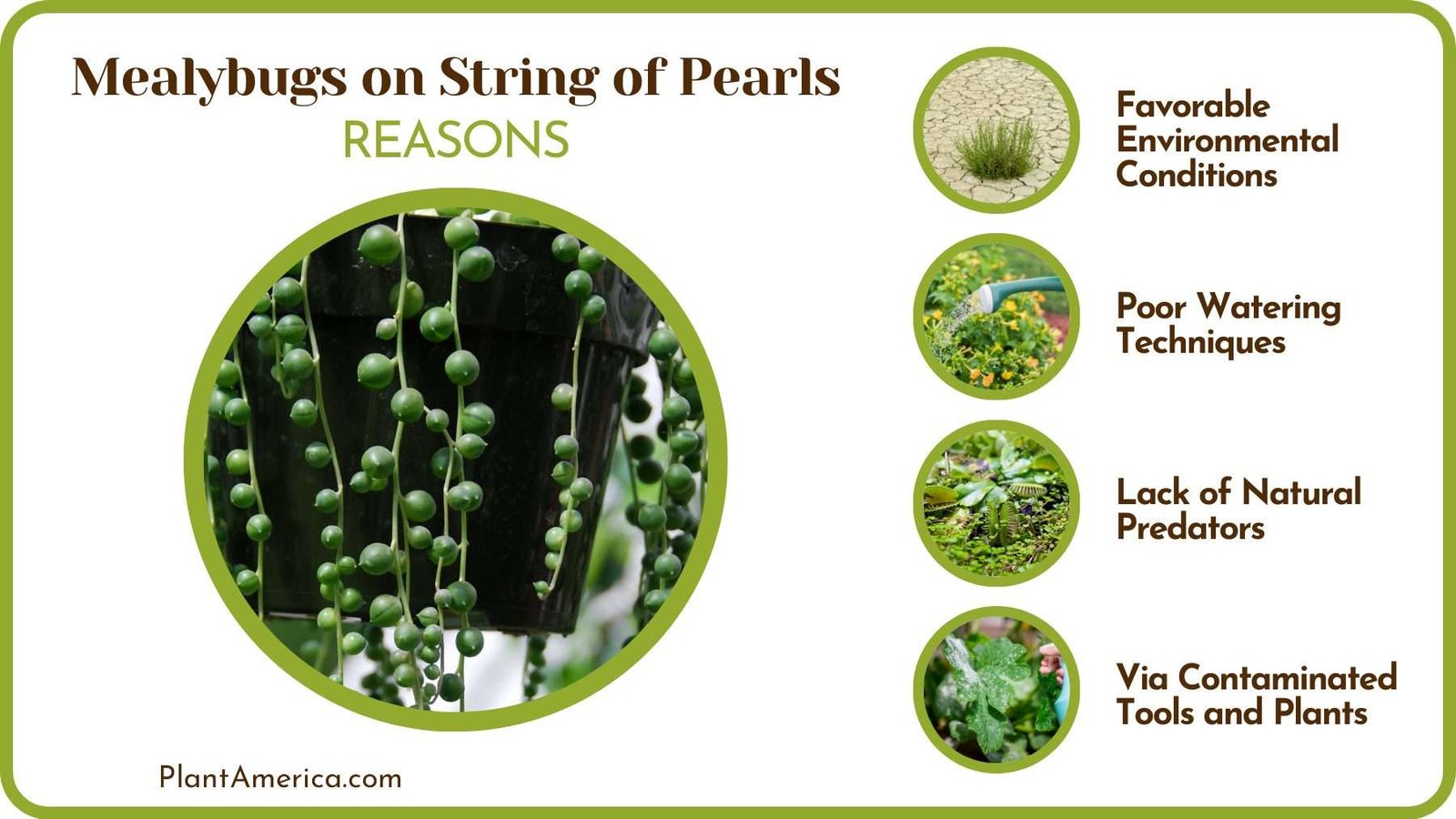 – Reason 1: Favorable Environmental Conditions
Mealybugs are attracted to the string of pearls (Senecio rowleyanus) mainly due to the environmental conditions that favor their growth and survival.
- Humidity: High moisture levels can create an ideal environment for mealybugs, leading to an infestation of a string of pearls.
- Temperature: Warm indoor temperatures can be especially inviting for these pests.
- Air Circulation: Poor air circulation may contribute to mealybug problems, as stagnant air can provide a comfortable habitat.
– Reason 2: Overwatering and Poor Watering Techniques
Incorrect Watering can play a massive role in attracting mealybugs to your garden.
- Overwatering: Too much water can weaken the plant and make it more susceptible to pests like mealybugs.
- Watering Technique: Watering the leaves instead of the soil may create damp conditions that mealybugs find appealing.
– Reason 3: Lack of Natural Predators
In the indoor environment, the natural predators of mealybugs may be absent, contributing to their proliferation.
- Predator Absence: Ladybugs and other predators may not be present indoors to keep the mealybug population in check.
- Uncontrolled Growth: Mealybugs can quickly overrun a plant like a string of pearls without natural enemies.
– Reason 4: Improper Plant Care and Maintenance
Neglect or improper care can make the string of pearls more inviting to mealybugs.
- Lack of Pruning: Dead or dying parts of the plant can attract mealybugs.
- Poor Soil Conditions: Using soil that doesn’t drain well can create conditions that mealybugs find favorable.
– Reason 5: Via Contaminated Tools and Plants
Even gardening tools can be a source of mealybug infestation. Infected New Plants: If new additions to your garden are already hosting mealybugs, they can quickly spread to your string of pearls.
- Contaminated Tools: Using tools in contact with infected plants can spread mealybugs to the string of pearls.
- Lack of Sanitization: Regular cleaning and sanitizing of tools can prevent this, but failing to do so can lead to a problem.
How To Eradicate Mealybugs From String of Pearls Easily?
To eradicate mealybugs from string of pearls, start by quarantining the infested plant, using sticky traps, and applying horticultural oils. You can also go for heat treatment and IGRs if you want. Furthermore, maintaining proper lighting and ventilation is also crucial to eliminate bugs. You should not propagate your String of pearls and you should not transplant it if it has a mealybug infestation.
– Quarantine and Treat the Plant: First Line of Defense
When you discover mealybugs on string of pearls indoors, it’s time to take swift action.
- Isolation: Immediately separate the infected plant from other indoor plants. Mealybugs can spread quickly, so isolating the affected plant will protect the rest of your indoor garden.
- Examine the Plant: Carefully check the entire plant, including the leaves and the stem.
- Clean the Area: It’s crucial to clean the area where the plant was initially located. Mealybugs might have dropped off and could find their way back or infect other plants.
- Change the Potting Mix: The mix could harbor more mealybugs or their eggs. Consider replacing the old soil with a fresh, sterile mix to ensure you’re not leaving behind any hidden invaders.
- Wash the Plant: Gently washing the plant with a mild soap solution can remove additional mealybugs. Be gentle, as the string of pearls can be somewhat delicate.
- Monitor Progress: Monitor the plant over the next few weeks to ensure no mealybugs are left. Regularly inspecting the plant will help you catch any lingering pests before they become a significant problem.
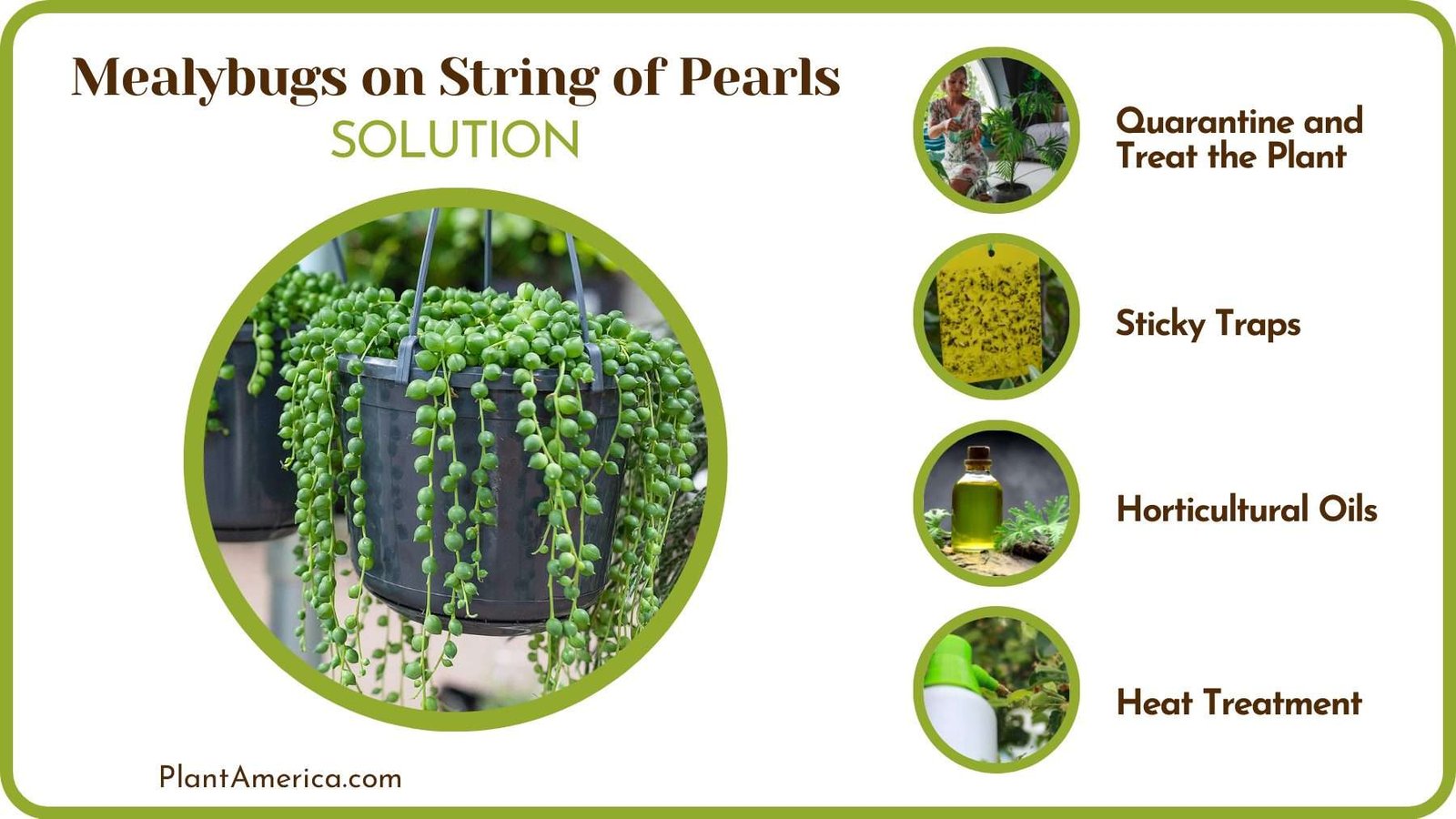 – Sticky Traps: Capture the Bugs
After you’ve quarantined the plant, sticky traps can efficiently deal with those persistent mealybugs. Let’s look at how you can make this method work for your pearls plants.
- Purchase or Create Sticky Traps: You can find sticky traps at most garden centers or make them at home using bright yellow cardboard covered with a sticky substance.
- Placement: Place the traps near the infected plant. Mealybugs are attracted to the bright color and will get stuck on the adhesive surface.
- Regularly Check and Replace Traps: Keep an eye on the traps and replace them as they become full of mealybugs. When mealybugs get captured, you can dab them with rubbing alcohol to kill them.
- Combine with Quarantine Measures: Using sticky traps in conjunction with the quarantine measures can create a powerful one-two punch against the mealybugs.
– Go For Horticultural Oils
Horticultural oils (especially neem oil) are well-known for treating common pests. People use them against:
- Mealybugs
- Spider mites
- Gnats (and the list goes on).
So, if you want to know how to treat mealybugs on string of pearls using these oils, we suggest you use a horticulture oil spray. First, get neem seed oil and mix it with water. How much to add is generally mentioned on the bottle. Then, spray the mixture on the affected areas, covering all the mealybugs. It’s also essential to keep an eye on the plant and reapply the oil as necessary. Though these oils are generally safe, it’s wise to test a small area first to see how your string of pearls reacts.
– Heat Treatment: Another Effective Technique
Have you ever thought about using heat to remove mealybugs from your string of pearls? It may sound unconventional, but it can be an effective method for mealybugs on string of pearls treatment.
The goal is to find an uncomfortable temperature for the mealybugs but within the plant’s tolerance level. You can get a hair dryer or a specialized heat gun to apply a controlled stream of warm air to the affected areas.
However, it is crucial to monitor both the mealybugs and the string of pearls during the process. You want to see the pests react to the heat without the plant showing signs of distress.
– Use Strong Stream of Water To Dislodge Bugs
When you notice signs of mealybugs on succulents, one of the first things you can try is spraying water on them. Here’s how you can go about it:
- First, you must identify where the mealybugs are feeding. They might be on the leaves, stems, or even hiding near the roots.
- Then, attach a nozzle to a garden hose, go for a bug blaster, or use a spray bottle filled with water. You want to achieve a strong but controlled stream.
- Aim the water at them, spraying them off the plant. That’s how to get rid of mealybugs on string of pearls.
- After spraying, thoroughly inspect the plant to ensure you have removed all the mealy bugs. Also, allow the pearl plant to get dry to avoid root rot and other root infections.
Then, keep an eye on the plant in the following days and repeat the process if you notice any more mealybugs.
– Use Citrus Oil Extract
Mealybugs aren’t the only insects that can plague your string of pearls. Other pests, like aphids on string of pearls, can be equally annoying. Thankfully, there’s a natural and pleasant-smelling solution to eliminate both: citrus oil extract.
Here’s how to treat mealybugs on succulents with Citrus solution:
- Prepare the Citrus Oil Solution: Mix a few drops of citrus oil extract with water. Then, add 3-4 drops of soap in a bottle and shake it well.
- Spray the Infected Areas: Target the areas where you notice aphids. A light spray of the citrus oil solution will repel and even kill them on contact.
- Be Gentle: Although citrus oil is natural, it can be potent. Be mindful of the amount you use, and always test a small area of the plant first to see how it reacts.
- Inspect and Repeat: Keep an eye on the plant, and reapply the citrus oil solution if you notice any more aphids.
– Insect Growth Regulators (IGRs): An Uncommon Approach
You can also go for IGRs to target the growth stages of the insects. It disrupts the molting process or the formation of the exoskeleton, leading to an inability to grow and reproduce. Here’s what to do:
- Choosing the Right IGR: Different IGRs are available, each targeting specific growth stages of insects. Selecting the right one for mealybugs is crucial for success.
- Applying IGRs: These can be sprayed or applied to the soil. Following the manufacturer’s guidelines is essential to achieve the desired results.
- Monitoring the Effect: It might take a while to notice the results since IGRs work by disrupting the growth rather than killing instantly.
- Safety Considerations: Even though IGRs are targeted, it’s still essential to follow safety guidelines, especially if you have other plants, pets, or children around.
IGRs are a scientifically advanced approach to pest control. While it might not be the first choice of most gardeners, it can be a highly effective method for those looking for a more targeted and thoughtful way to deal with mealybugs on the string of pearls. – Maintain Lighting and Ventilation
Lighting and ventilation are two critical aspects of Pearl care that you must pay attention to.
Note that mealybugs thrive when there is low-light and poor air circulation. Focusing on both can create a less appealing environment for these pests.
Here’s how you can achieve this:
- Providing Direct Sunlight: Mealybugs dislike direct sun exposure, so placing your string of pearls where it can receive plenty of natural light will deter these insects.
- Ensuring Good Air Circulation: Proper ventilation helps keep the plant dry and prevents mold growth and other conditions that attract mealybugs. Utilizing fans or placing the plant near a window can aid in this.
- Balancing the Light: Too much sunlight can also harm the plant, so understanding the specific needs of your string of pearls is essential. Finding a spot with the right balance of light and shade will support healthy growth.
- Regular Inspection: Regularly checking the plant for signs of mealybugs or other common problems allows for early intervention, should needed.
Moreover, keeping the area around the plant clean and free from debris reduces the likelihood of pests finding a home close to your string of pearls.
Conclusion
All in all, tackling mealybugs on a string of pearls requires both targeted treatments and preventive care. These essential steps can guide you:
- Adopt Various Methods: Diversify your approach from water streams to insect growth regulators.
- Try Natural Measures: Apply citrus and horticultural oils if you want to follow an organic approach against mealybugs.
- Prioritize Pearl Care: Pay attention to lighting, ventilation, and cleanliness.
- Stay Consistent: Regular monitoring and persistence in efforts are crucial.
By following these “easy-to-do” strategies, you can keep your string of pearls vibrant. These things will also create an environment where a string of pearls will live, free from the troubles of mealybugs!