
Start a compost tumbler to make composting easier and less time-consuming for yourself. What are compost tumblers and why should you use them?
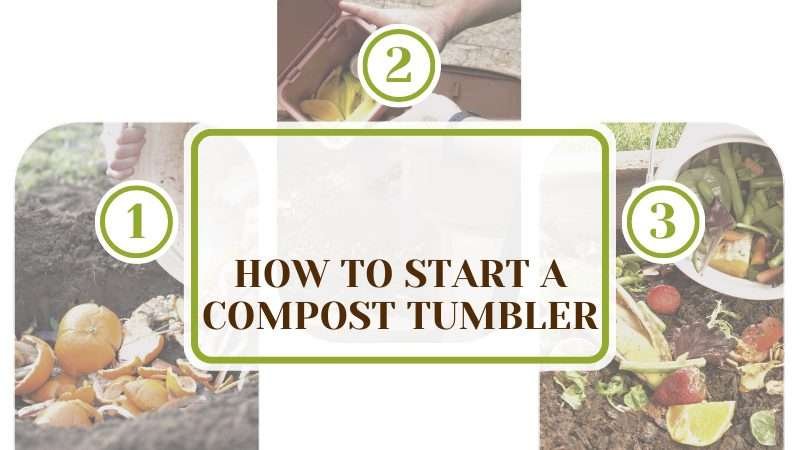
When you know the benefits of composting with a compost tumbler and learn how to use it, you will not want to compost any other way. Read this article to learn what compost tumblers are and how you can process your waste with them.
How to Start a Compost Tumbler: A Step-by-Step Guide
To start a compost tumbler is easy and convenient if you have the proper equipment and techniques. Simply select a good location, gather “green” and “brown” composting materials, and then start the acceleration process.
In this section, we’ll discuss the processes involved in starting a compost tumbler. Follow the detailed steps below:
1. Select the Right Location
Your preferred location is very important because composting works best in a place with enough humidity and access to a little bit of sunlight for the sake of temperature. Placing your tumblers under the full sun can delay the process as well.
You can keep your compost tumbler under a tree. If you do not have a tree, however, you can keep it in the west or south-facing part of your home.
2. Gather Your Green Wastes
There are two major components in compost piles. The first component is the green waste, which means nitrogen-rich wastes. These organic materials have a lot of nitrogen and other nutrients such as phosphorus and potassium.
When you finish composting, all the nutrients in the compost are mostly from the green wastes. This means that you need to search for and include nutrient-rich green wastes in your compost pile. Examples of green wastes are:
- Grass clippings
- Animal manure
- Fruits
- Kitchen scraps
- Green leaves
To help the composting microbes to break down your green wastes efficiently, you can shred your green waste into smaller bits. Another recommended way to speed up the composting process is to gather the other type of waste in your compost pile.
3. Gather Your Brown Wastes
Unlike green wastes, the major purpose of brown wastes is not to enrich the compost. Instead, it is to boost the energy level of the decomposing microbes in your compost pile. Brown wastes have more carbon than other nutrients.

The carbon-rich wastes act like sugar (carbohydrate) for composting microbes. Just like you need energy to digest food, the composting microbes also need energy to decompose your compost pile. Brown wastes give energy to the microbes.
Some extra benefits of brown wastes include:
- Many types of brown wastes are dry and absorb a lot of moisture. While moisture is important during composting process, too much of it can lead to fermentation (occurs in an oxygen-depleted environment) instead of decomposition (for aerobic organisms such as fungi).
- Prevents smell: Remember that green wastes are nitrogen-rich. Most nitrogen-rich organic wastes such as animal manure have nitrogen in the state of ammonia. If there is too much green waste, your compost pile will smell like ammonia.
Some examples of brown wastes include:
- Paper
- Eggshells
- Dried leaves
- Coffee grounds
- Wood products
- Nut and seed shells
Just like in the case of green waste, you should shred your brown wastes before you add them to the compost pile.
4. Fill the Compost Tumbler With the Wastes
When you have gathered enough wastes, pour them into the compost tumbler. Make sure that you have enough waste.
You should add your wastes in a ratio of one-part green waste to two or three-parts brown waste according to the humidity of your area. Add fewer brown waste if you live in a dry zone (i.e. low humidity).
5. Pour in a Compost Starter or Accelerator Into the Tumbler (Optional)
One minor downside of composting with a compost tumbler is that the compost barrel is above the ground.
Even though it can be a good thing, taking the barrel away from the ground can limit the access of microbes such as fungi from reaching your compost bin. Without these microbes, your pile may not decompose.
To help your compost pile to start decomposing quickly, you should add a compost starter for tumbler. These products introduce effective beneficial microbes that can quickly decompose your pile. Pouring this product into your tumbling compost bin is very important.
6. Turn Your Compost Tumbler Regularly
Most compost tumbler manufacturers suggest turning or rotating the compost tumbler at least once daily. Some, however, suggest turning it once every two days. You should follow the manufacturers’ guide for your compost tumbler.
Take note that you must turn your compost pile so that your wastes can decompose quickly. Make sure that the compost tumbler has holes through which oxygen, carbon dioxide and other gasses can pass through.
7. Water Your Compost Pile Occasionally
Never allow the compost pile to become dry. You can water the pile once or twice weekly according to the humidity of your environment.

Use clean water and do not water the pile too much that it starts to drip. If the pile is dripping water, collect the water and use it to water your crops as it is nutrient-rich.
8. Monitor Your Compost
When you have poured your compost pile into the tumbling composter and are turning the bin regularly, you should monitor your compost pile for the following:
- Temperature: You do not need a thermometer to measure the temperature progress of your tumbling composter. If you open the bin, you should feel the heat emitting from the pile. If there is not a single sign of heat from the pile, it is not composting.
- Odor: A normal compost pile should smell earthy or just like the waste you put in. If the smell is pungent like ammonia or it smells like rotten egg, you should add more brown wastes.
- Pests: Check the pile for millipedes, centipedes, lizards and other types of pests that can pass through the holes in the barrel. You should remove these pests as they can spoil your pile by excreting on it (by altering your green-to-brown waste ratio).
If everything looks good with your pile, the wastes should finish composting in no time.
9. Check Your Compost if It Is Ready
Most compost piles should take less than two months to finish. Even though the compost tumbler manufacturers say your pile can finish in two weeks, you should not be so sure about that. When your pile is ready, you will know as it will have an earthy smell (uniform smell), consistent texture and will be slightly dark brown.
Congratulations! You have successfully created a compost tumbler. Continue reading for more composting tips.
Compost Tumblers
Compost tumblers are becoming more popular among gardeners. Instead of using conventional compost bins that sit in one place, more people are adopting the use of compost tumblers to achieve equal results.
Are compost tumblers worth it or are they just overhyped? What are the benefits of using a compost tumbler and how do you start composting in a tumbler? Let us start by discussing what a compost tumbler means.
– What Are Compost Tumblers?
As its name suggests, a compost tumbler is a tumbling compost bin that you can use to easily turn and mix your compost pile in the compost barrel.
Compost tumblers are more than just fancy types of compost bins as these promise to finish your entire process of composting in two weeks while making the work involved in composting easier.
How is this beneficial to the process of composting? Remember how composting works: when you load a pile of organic wastes into a bin, you do not just leave them there. Instead, you use a rake or shovel or mix and turn your pile so that the outer and upper wastes can go inside. This turning helps oxygen and moisture to circulate.
The major purpose of compost tumblers is to eliminate the physically taxing nature of regular composting. In addition, compost tumblers truly have a lot of benefits.
– Benefits of Using a Compost Tumbler
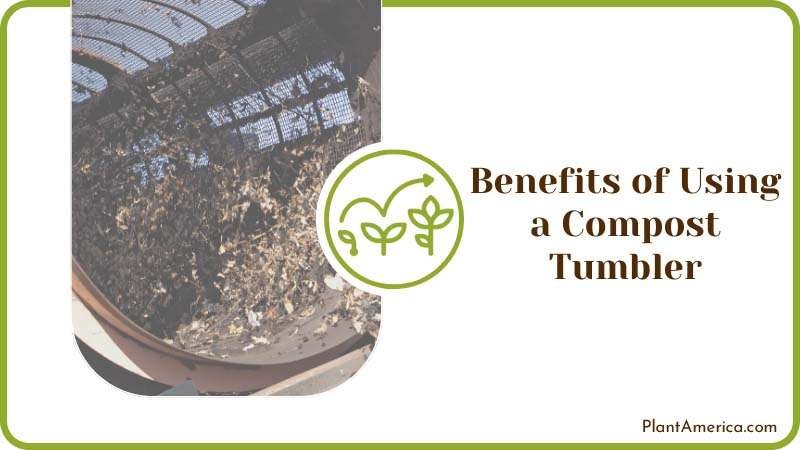
Here are just a few of the benefits of composting with a compost tumbler:
-
Speed
Many compost tumbler brands say that their compost tumblers can finish the process of composting in just two weeks. If you do not fail to follow their instructions, you can surely get your compost ready faster than when you compost in regular bins.
-
Prevents Pests
Your tumbling compost bin is always above the ground and mammalian pests such as rats and squirrels cannot get in it. Also, most compost tumblers have a lid that you can close or lock.
-
Eliminates Back Pain
If you have ever gotten back pain from composting, you should worry less as compost tumblers eliminate the chances of having one. The tumblers are placed above the ground and you do not need to bend down.
-
Good for Large Piles of Wastes
Composting a large pile of waste is difficult because it is heavy and thus more difficult to turn. You can easily tumbler your pile of waste with ease using a compost tumbler.
-
Saves Space
Most compost tumblers are way above the ground and they have legs on which they stand. As long as the bin is not on the ground, there is space below it where you can keep an object or two.
-
Mobility
Many regular compost bins, especially those with wooden frames, are not mobile. You can easily move your compost tumbler from one location to another.
– Cons of Using a Compost Tumbler
Here are two cons of using a compost tumbler:

-
Composting Does Not Start Immediately
The compost bin is away from the ground, so microbes such as fungi cannot reach it.
-
Consumes More Water
Water drips off compost tumblers easily, which means this process consumes more water than regular composting.
Essential Tips for Composting
Here are some cool tips to help you compost like a pro:
– Large Tumblers Are Better Than Small Ones
Here are some reasons why larger tumblers are better to use than smaller ones.
- Temperature balance: Temperature can easily fluctuate in small compost piles. To help stabilize the temperature in your compost pile, use a larger compost bin. Remember to fill it up before composting.
- More wastes: You can compost a larger volume of waste using a large compost bin. This means that you get more compost at the end.
- More microbes: More microbes mean that your wastes can quickly compost in a large compost bin.
- Does not dry quickly: If the humidity is low, your small compost bins can get dry quickly. You should opt for a larger one.
– Start Your Compost in Spring
The best season for composting is summer because of the heat. To make sure that your pile finishes during the summer months, you should start composting it in mid-spring.
You should protect your pile from the rains of autumn as rains can wash the pile and drain off the nutrients.
– Watering or Misting Your Tumblers
One con of compost tumblers is that they consume a lot of water. There are holes everywhere in the rotating barrel. This means that when you turn the barrel, water in the pile can escape quickly.
You should always monitor the moisture of your compost pile and add more water when it looks dry.
– After Composting
Here’s a tip that can save you a lot of money. When your compost pile is ready, do not use all of your compost. Instead, save some for future use.
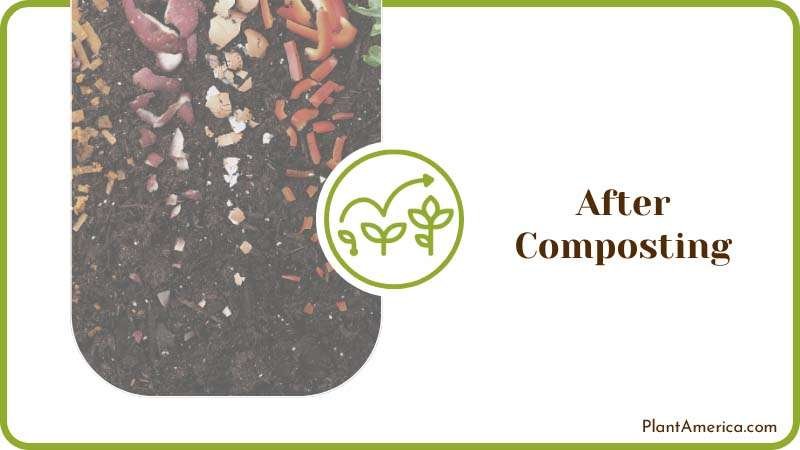
Your compost pile is rich in beneficial microbes that can help to decompose the next waste pile. Instead of returning to a gardening store to purchase more compost starters or accelerators, you just need to pour your remaining compost into the new pile.
The microbes available in your previous compost batch will start composting the new batch.
Other Methods To Convert Your Wastes Into Nutrients
Aside from making compost in a tumbler, here are some other cool alternatives to achieve this purpose:
– Regular Compost Bin
The most convenient way to process your organic waste to become nutrients for your plants is by using a regular compost bin. This method is just like using a compost tumbler, but you will have to manually turn the wastes by yourself.
– Burying the Waste
If you are too lazy or do not have time to compost your food wastes, you can bury them in your garden soil. Burying food wastes is not as easy as it seems. You need to calculate the best time to do so. If you bury the wastes in late fall, they should be ready before summer.
You should not plant in soil with freshly buried waste. Also, take note that buried wastes can attract different types of pests if they have access to your garden.
– Culturing Insects and Insect Larvae
Aside from getting a protein-rich feeder for your farm animals, culturing insect larvae is also beneficial in food waste processing. You can turn your food waste into plant nutrients in less than three days when you feed them to insects.
The larvae of insects such as black soldier flies and mealworms can quickly convert your food waste. You can also use isopods, which are a type of crustacean.
– Cultivating Mushrooms
How would you like a nice Portobello mushroom? Well, after culturing your mushrooms, what do you do with the substrate? Mushrooms are types of fungi, which are organisms that can decompose organic materials into nutrients for plants. The spent substrate of mushrooms is very nutrient-rich and you can use it to amend your soil.

Cultivating mushrooms because of the nutrient-rich spent substrate is just like composting, but you also get to enjoy sweet mushrooms as a bonus.
– Biogas Production
Most of the methods listed above are aerobic methods. This means that aerobic organisms are mostly involved in converting your waste into nutrients for plants. An anaerobic method is the production of methane (biogas).
While you can use methane as cooking gas or to power a methane-powered engine, the byproduct of biogas production is slurry.
Biogas slurry is rich in nutrients for plants and it takes less than two months to get the nutrient-rich slurry. However, take note that you should check local laws and confirm if you can produce biogas at home before attempting to try it out.
What method will you try out?