
White Knight Philodendron has heart-shaped, dark green colored leaves with beautiful white splashes and patches and belongs to the Araceae family. White Knight Philodendron is a rare variegated tropical plant.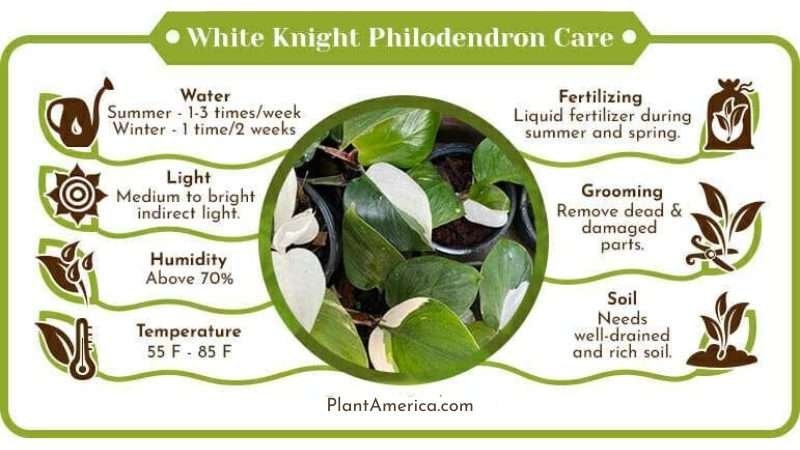
Ideally, an indoor plant can also be grown outside in mild weather. White Knight Philodendron of the Philodendron genus is a South American native; they are low-maintenance and grown beginners and some lazy gardeners. First, let us learn a bit more about the plant’s growing habits.
How to Care for White Knight Philodendron
Philodendron is a low-maintenance plant. Because they are grown with less care, you should follow a simple guideline so that your flourishing philodendron will be there to welcome you when you get home.
 Water Requirements
Water the Philodendron once the top surface of the soil is dried out. Philodendron grows well in moist and well-drained soil. Water the Philodendron moderately after testing the soil. During summer, water the philodendron once to thrice a week.
During winter, water the Philodendron once every two weeks. Overwatering the plant will cause issues like fungal diseases or root rot. If your plant remains underwatered for long, the soil will not provide the essential nutrients necessary for its growth.
 Light Requirements
Medium to bright indirect sunlight is required for the Philodendron to grow well. Avoid direct sunlight as it is harmful to the delicate foliage. White stretch marks on the leaves get damaged the most. The color variations are the beauty of Philodendron.
If the plant is under the shade for long, there is a discoloration in variegation. For the indoor setup of the plant, the ideal position is near a window. If the indoor conditions don’t supply sufficient light to the Philodendron, try to arrange artificial light through a bulb or fluorescent light. Humidity Requirements
Philodendron needs an average amount of humidity level. As the Philodendrons are the natives of the rainforest, they grow lush foliage in high humid levels. For best results, the humidity level must be above 70 percent. Low humidity may affect the growth of the plant.
You have to provide moisture to the Philodendron during dry weather. It can be accomplished by regular misting. Check the ventilation system near the Philodendron as the foliage cannot withstand wetness for long.
During winter, the atmosphere becomes dry. It is the reason why a plant grows slower or might not grow during winter. Here are some ways through which you could keep your plants humid:
- Use a room humidifier to keep the moisture level under control and avoid dryness
- Put the White Knight Philodendron on a tray containing damp pebbles
- Place your plant in the bathroom, but the bathroom must provide indirect bright sunlight to the plant
- If you have grown several tropical indoor plants, place them close to each other. This method will increase the humidity level
 Fertilizer Requirements
Give your plants fertilizers during the summer and spring seasons, but use less for the delicate foliage. Liquid fertilizer is the best choice for houseplants or indoor plants. Slow-release granular fertilizer is also a good option.
Remember, over-fertilizing has detrimental effects on plants. They may burn out or make the plant die.
 Soil
Soil
Philodendrons need well-drained and rich soil. If you are growing Philodendron in containers, use natural soil instead of garden soil. Garden soil may not allow quick drainage and may contain microorganisms, weeds, or germs. Use a good quality potting mixture that contains ingredients such as perlite and orchid bark.
 Temperature Requirements
This tiny and delicate Philodendron needs a moderate climate to dwell. To keep the foliage growing the temperature must be from 55 to 85 F. The White Knight Philodendron is unforgiving to extreme cold weather. Place the plant in a warmer place inside the house during autumn and winter.
– Potting
White Knight Philodendrons can be grown in small pots, containers, or hanging baskets.
These are creepers and can be grown on walls, trees, and poles. When they are grown in a hanging basket, they look beautiful because the foliage cascades down on its own.
Check the drainage hole in the pot before potting the White Knight Philodendron for proper drainage.
 Pinching And Pruning
If the White Knight Philodendron looks thin, pinch those leaves to make your foliage look healthier and beautiful. Pruning is an essential part of the growth of the plant. Pruning maintains the shape of the plant. When White Knight Philodendron grows bushy, prune them.
Through pruning, remove the dead and damaged parts of the plant. Pruning helps the plant get nutrients. When the philodendron grows bushy, there might be a chance that only the bushy part is taking up all the nutrients, leaving behind the other part of the plant. The other parts will die due to a lack of nutrition.
How to Propagate Philodendron White Knight
White Knight Philodendron is a beautiful plant. Every gardener wishes to propagate this plant. The propagation of White Knight Philodendrons is not easy, the reason being they are slow growers. The best time for White Knight Philodendron’s propagation is from the middle of the spring until summer.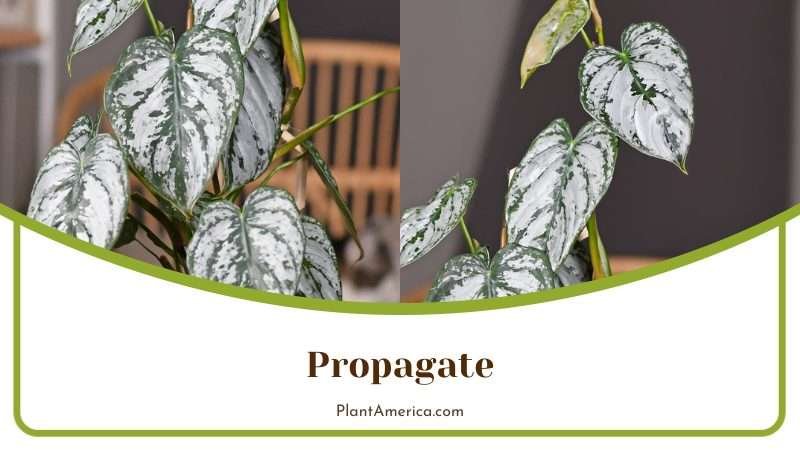
Here are some different methods for the propagation of the White Knight Philodendron:
- Fill a jar with filtered water
- You may also use tap water but put the water uncovered for 48 hours to evaporate the chlorine present in the water
- With clean scissors, cut the stem to remove individual leaf-cutting and place them in the jar filled with water
- Place the cutting in such a way that the node of the plant must be underwater
- Place the jar in a position where it should face bright but indirect sunlight
- The place should have a warm temperature and low humidity
- Change the water every week
- Observe the development of roots
- Now place the plant in a pot. The plant can be in the water for more growth
Here is how to do propagation by the stem-cutting method:
- Take a container, drill holes at the bottom, and fill the container with soil
- Water it and let the water drain through the holes. The soil must be moist
- Cut the part of the stem from its base. Check the cutting for spoilage
- Take a clean stick and make a hole in the container, put the stem cutting into the hole to get it firmly attached
- Place it where the plant would get bright but indirect sunlight
- Make sure the soil may not remain dried out
- When you see the development of roots, shift the plant to a stable location
Philodendron White Knight Problems
Pests attack the White Knight Philodendron. Pests may be aphids, mealy bugs, whiteflies, and others. When you closely observe the plant, you can easily find the symptoms of pest infestation. The symptoms are:
- Brown spots
- Discolored patches
- Leaf curling
The pests suck the plant sap. To control the damage, use neem oil or other chemicals for pest control.
White Knight Philodendrons are also susceptible to some diseases. These diseases are:
- Root rot
- Yellowing of leaves
The disease appears due to improper water management.
- Root Rot: The White Knight Philodendron is highly susceptible to root rot. Root rot is caused by overwatering the plant. It happens when the soil is waterlogged. Due to excessive water in the roots, the roots do not get a sufficient amount of oxygen.

Yellowing of Leaves: When the White philodendron gets attacked by pests, its leaves become yellow. It is also a symptom of overwatering.
To solve this problem, reschedule your watering routine.