
Epiphyllum varieties of the Cactaceae family make wonderful additions to any plant collection with vivid colors and night-blooming flowers. We’ll explore epiphyllum varieties you must add to experience the joy of their spectacular blooms.
So join us as we uncover hidden gem epiphyllum varieties with distinct markings, frills, teeth, and spines that will have you rushing to the garden center to bring some of these beauties home.
Epiphyllum Varieties to Perfectly Brighten Up Your Garden
1. Oxypetalum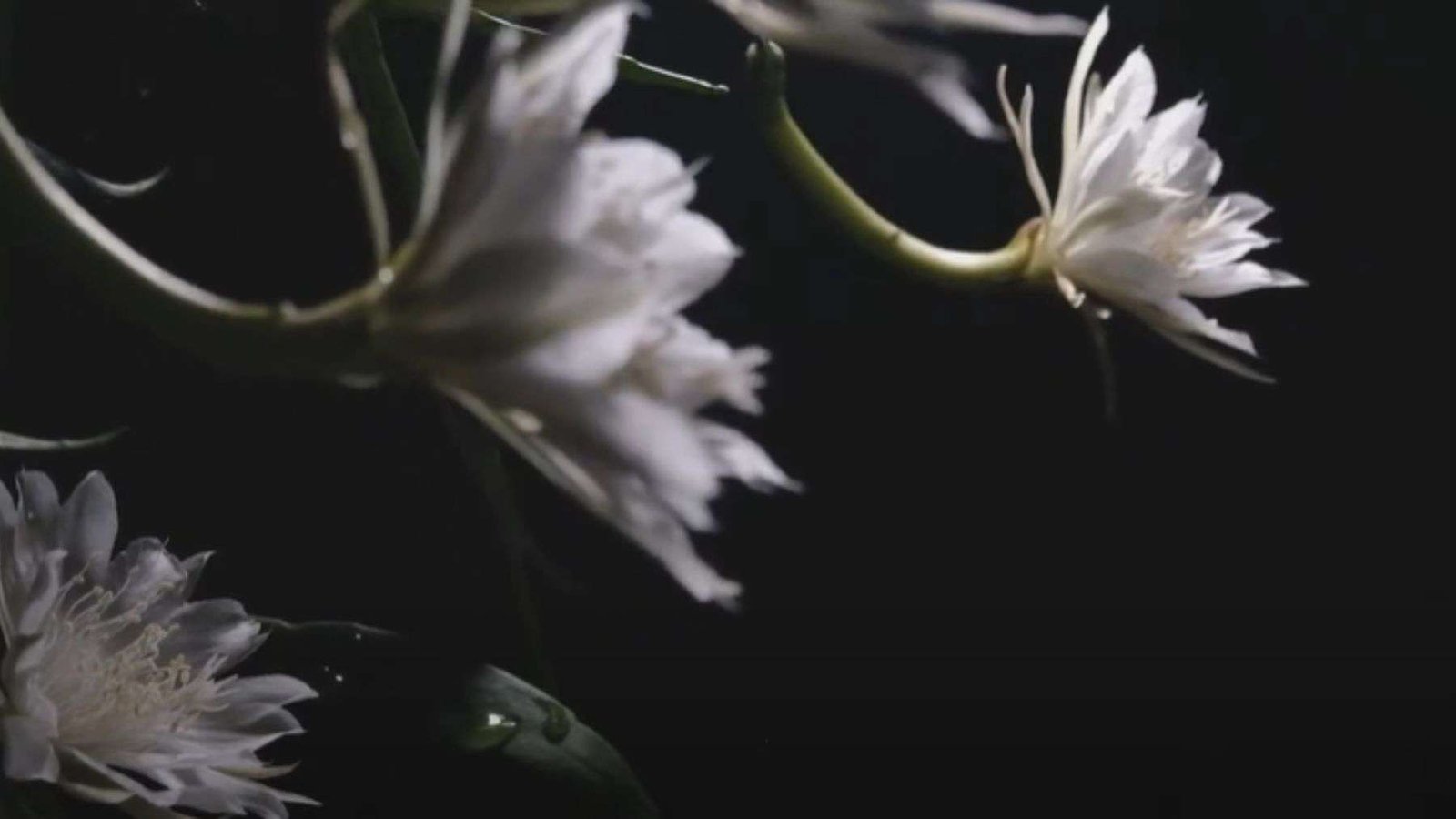
- Growing Season: Year-round, Spring, Summer
- Leaf Shape: Broad, Oval
- Specific Needs: Well-drained soil, Moderate water
- Common Pests: Mealybugs, Scale insects
The Epiphyllum oxypetalum cactus, also known as the Dutchman’s pipe or Queen of the Night, is native to tropical forests in Central and South America. It grows tall climbing stems that are flat and segmented like a pipe.
The pipe-like stems can reach over 20 feet long as they wrap around tree branches high in the canopy. They are flat with deeply notched edges, resembling a rolled up pipe made of greenish-gray cactus pads. Tiny barbs along the edges help it cling tightly to trees without soil.
In the evening or nighttime during warm months, spectacular white trumpet-shaped blooms suddenly open all along the stems. A single flower is about 6-10 inches long with a thin tubular base that flares out into many silky white petals in overlapping layers. Their intense creamy fragrance fills the air.
After blooming, the flowers quickly fade away by morning light. They only last one night before vanishing. This has earned it the name “Queen of the Night.” Seed pods follow blooming but this cactus mainly spreads via stem cuttings that root easily in damp conditions.
As an epiphyte, it thrives suspended in trees where it gets dappled shade and damp air. In homes, grow it hanging or on structures with humidity. Water weekly during growth and less in winter. Cut stems can root to propagate new plants indoors or as landscaping.
The incredible nightly show makes this eccentric cactus a real head-turner in the garden. Its unfurling of giant velvety blooms, only to vanish by daybreak, adds drama and mystery to any collection.
2. Phyllanthus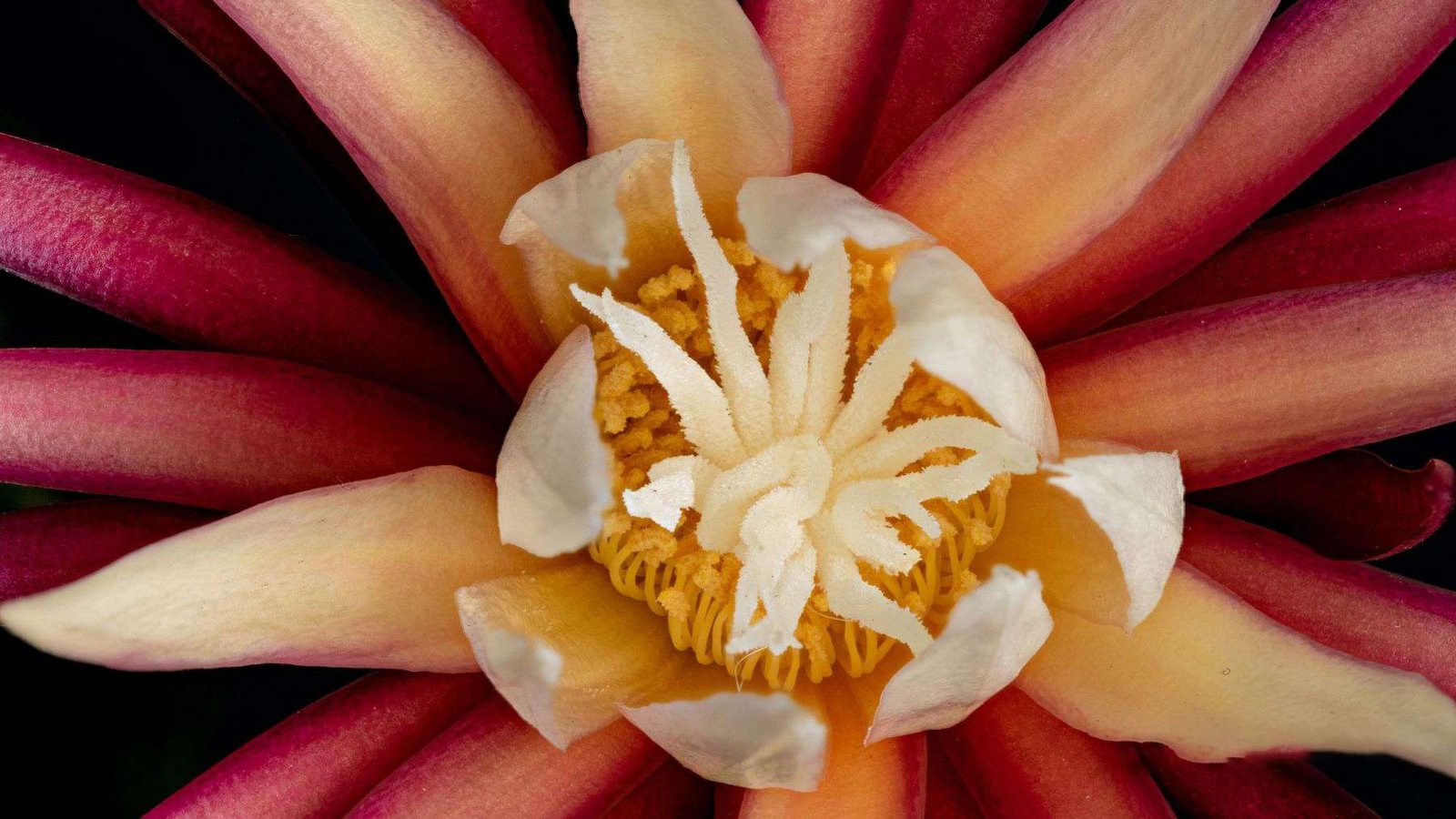
- Growing Season: Year-round
- Leaf Shape: Broad, Oval, Round
- Specific Needs: Well-drained soil, Low light
- Common Pests: Mealybugs, Spider mites
The epiphyllum phyllanthus, called the fishbone cactus, produces yellow flowers with red stripes. The leaves of this epiphyllum variety are thick and light green with serrated edges.
The Epiphyllum Phyllanthus grows rapidly as a climbing vine and can cling to walls or tree branches with its aerial roots.
The flowers of this variety grow in clusters and have thin twisted petals that resemble a fish skeleton, giving it the name fishbone cactus.
3. Crenatum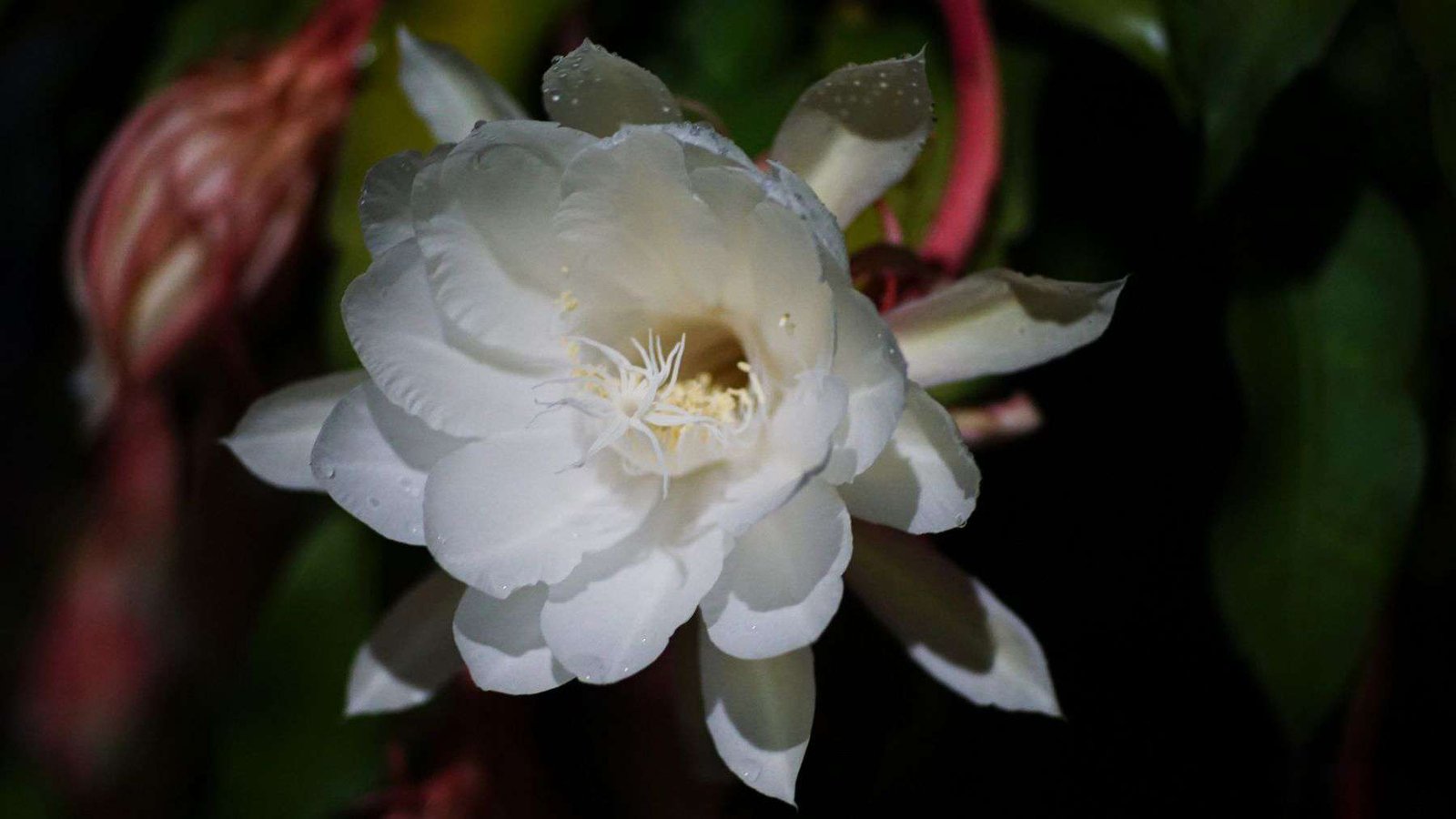
- Growing Season: Spring, Summer
- Leaf Shape: Toothed edges, Oval
- Specific Needs: Well-drained soil, Low light
- Common Pests: Mealybugs, Scale insects
The epiphyllum crenatum, commonly called the crenate orchid cactus, has beautiful scalloped leaves and clusters of white flowers with scalloped petals.
The notched leaves of this variety give it the name crenate or toothed. The flowers open at night and emit an intense fruity aroma. The epiphyllum crenatum grows quickly and can climb up trees and walls using its aerial roots.
This epiphyllum variety tends to bloom multiple times yearly, producing large clusters of showy flowers.
4. Pumilum
- Growing Season: Year-round
- Leaf Shape: Broad, Oval, Round
- Specific Needs: Well-drained soil, Indirect light
- Common Pests: Mealybugs, Scale insects
The epiphyllum pumilum, also known as the little Epiphyllum, dwarf orchid cactus, or champagne cactus, produces lovely apricot-colored flowers.
Epiphyllum pumilum, commonly called dwarf orchid cactus, is a popular houseplant for its beautiful purple and yellow flowers. However, moderate care is required to ensure healthy growth and flowering.
The dwarf orchid cactus needs regular watering, especially during spring and summer when new growth occurs. Let the top one to two inches of soil dry out between watering, but do not let the plant wilt. Mist the leaves frequently to increase humidity around the plant.
Provide well-draining soil for dwarf orchid cactus that is rich in organic matter. A cactus and succulent mix with perlite or sand added is ideal. Use a pot with holes in the bottom to allow excess water to drain freely.
Though called dwarf, dwarf orchid cactus can grow up to four feet long when mature. The stems and leaves tend to vine and drape over the sides of hanging baskets. Prune long, leggy stems as needed to control size and shape.
The small leaves of this epiphyllum variety are oval with scalloped edges. Even though it is named the dwarf orchid cactus, the epiphyllum pumilum can still grow to around four feet long when mature.
The small flowers of this variety open during the day but still emit a fruity fragrance. The epiphyllum pumilum is popular for beginners due to its ease of care and tolerance for lower light conditions.
5. Laui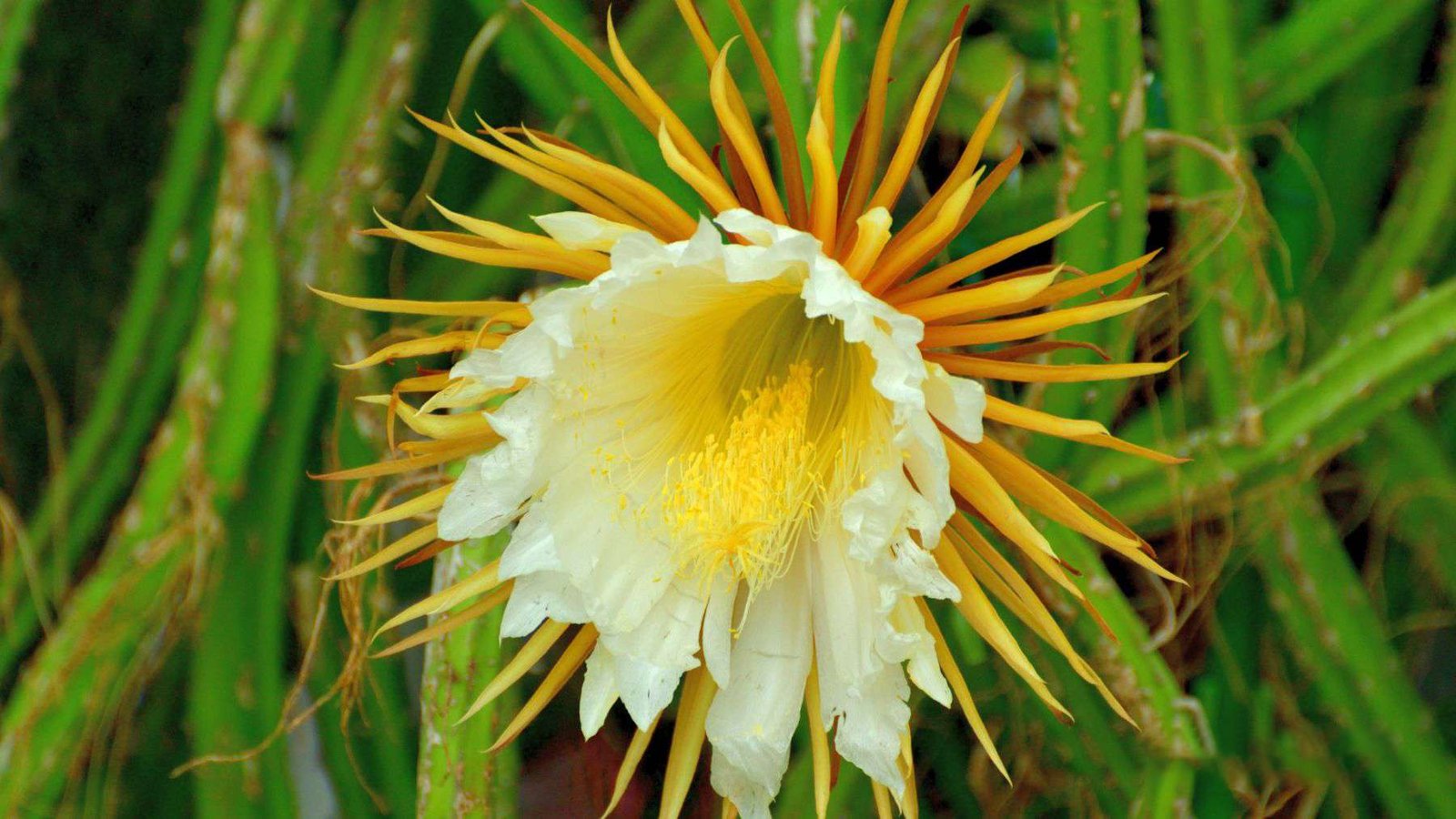
- Growing Season: Year-round
- Leaf Shape: Broad, Oval
- Specific Needs: Well-drained soil, Low light
- Common Pests: Mealybugs, Scale insects
The epiphyllum laui, commonly called the lavender orchid cactus, features stunning lavender to purple flowers.
The leaves of this epiphyllum variety are oval with small teeth along the edges. The epiphyllum laud grows as an active climber and can cling to trees and walls using its aerial roots. The lavender-colored flowers of this orchid cactus grow in huge clusters and have scalloped edges.
The epiphyllum laud blooms frequently, making it a showy addition to any epiphyllum collection. It is also fairly easy to grow, even for beginners.
6. Anguliger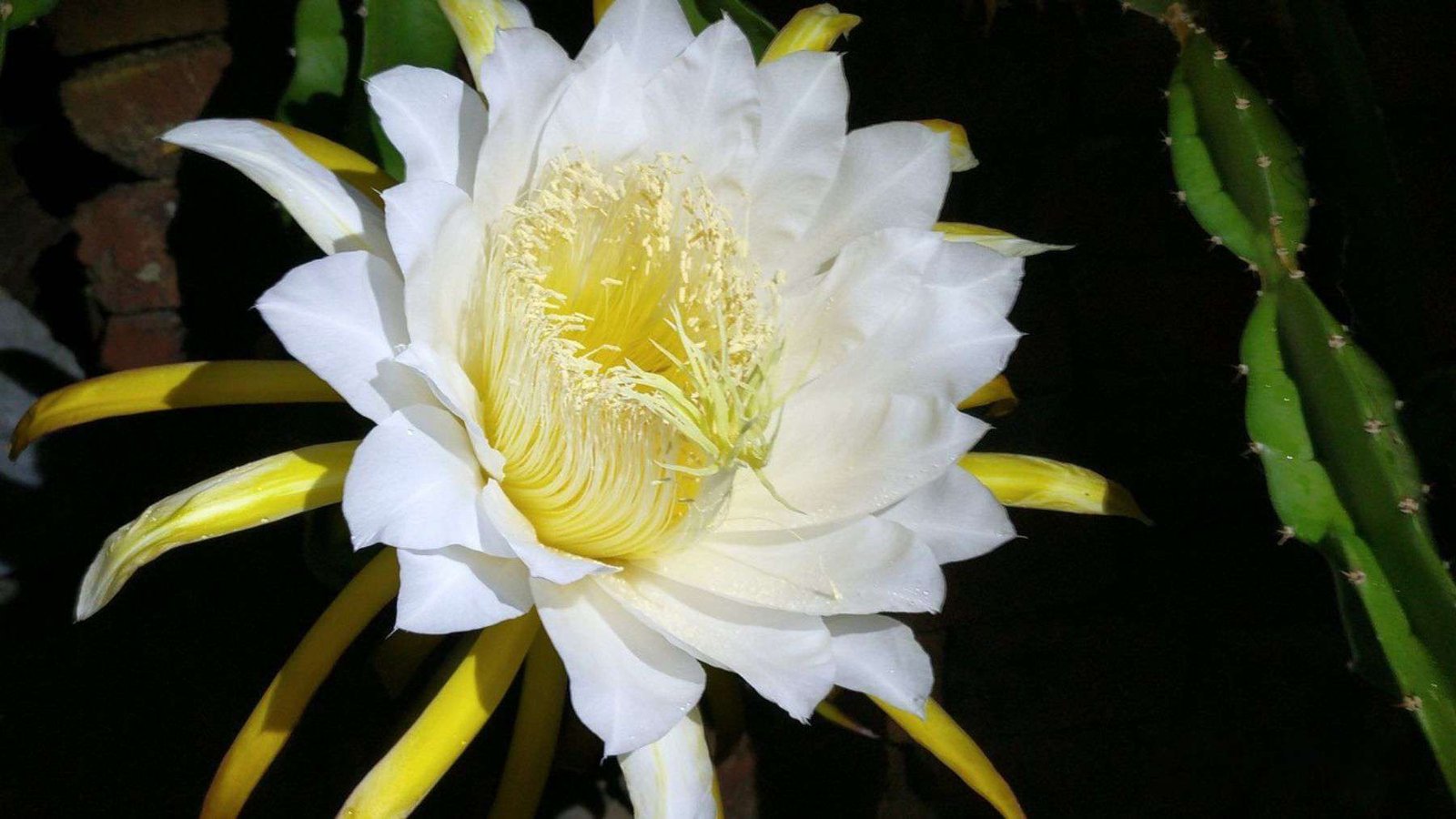
- Growing Season: Year-round
- Leaf Shape: Broad, Oval, Spiny edges
- Specific Needs: Well-drained soil, Low light
- Common Pests: Mealybugs, Scale insects
Epiphyllum anguliger, known as the night-blooming cereus, produces attractive pale yellow flowers with distinctive red stripes. The plant has broad and oval leaves with sharp spines along the edges to protect it from predators.
Proper pruning of the plant’s stems immediately after flowering can encourage new growth and the production of additional blooms the following season. Excess foliage that does not contain flower buds should be trimmed away.
Common pests that can affect epiphyllum anguliger include mealybugs and scale insects. Spraying the plant thoroughly with neem oil can help keep these pests under control. The oil acts as an insecticide and fungicide, helping protect the plant’s leaves and stems.
Regular monitoring of epiphyllum anguliger is necessary to detect any pests or other issues early before they cause irreparable damage. This night-blooming cereus can produce clusters of beautiful yellow and red flowers for many years with proper care and pruning.
7. Hookeri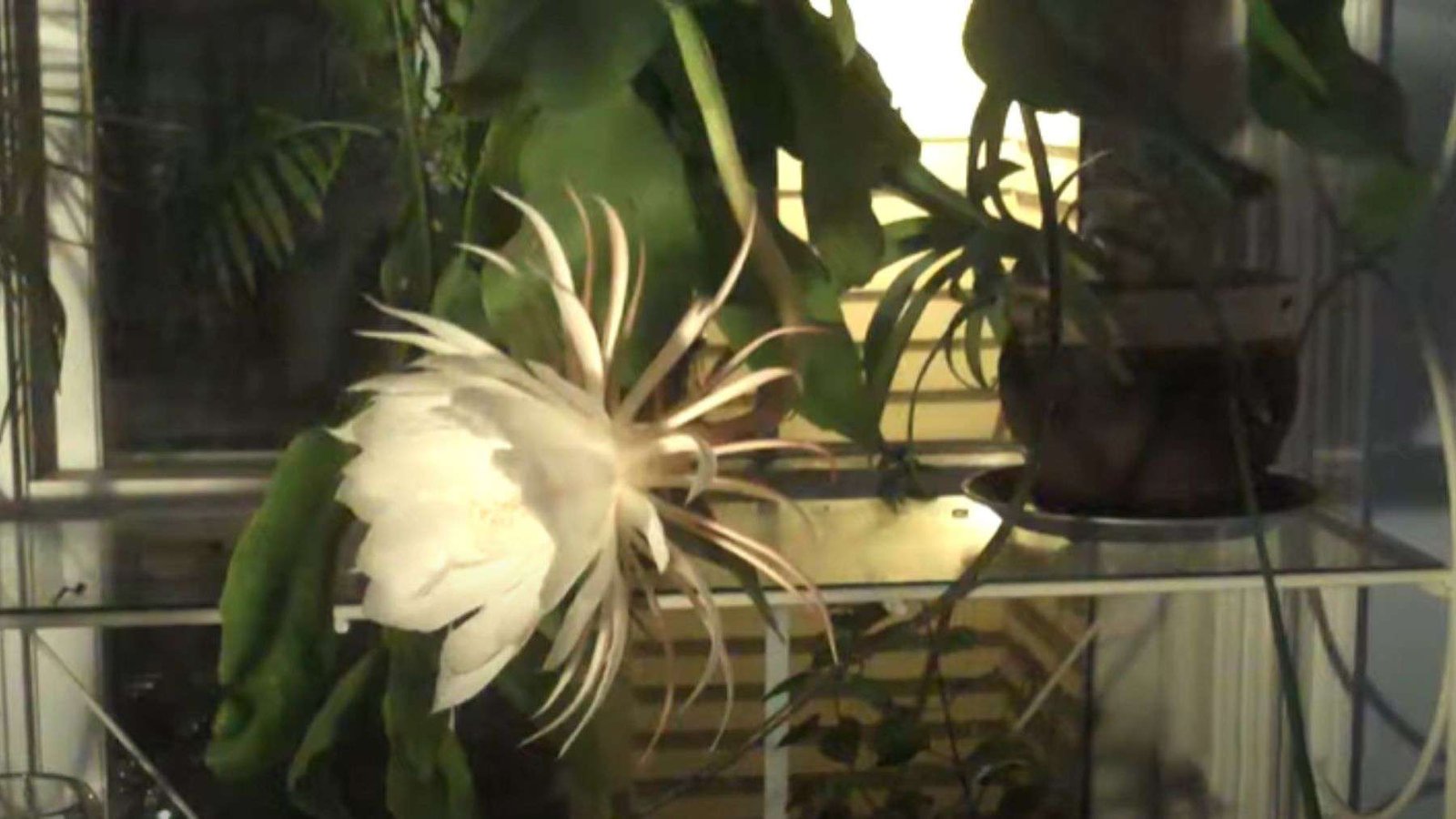
- Growing Season: Year-round
- Leaf Shape: Oblong, Elliptic
- Specific Needs: Well-drained soil, Low light
- Common Pests: Mealybugs, Scale insects
Epiphyllum hookeri, commonly known as the fishbone cactus or rainbow cactus, produces stunning, crescent-shaped flowers in a dazzling array of colors. The leaves of the epiphyllum hookeri are oblong to elliptic in shape with toothed edges. As an epiphyte, this epiphyllum variety thrives as a climbing vine, attaching its aerial roots to surfaces to climb and spread.
The peculiar flowers of the epiphyllum hookeri appear in vibrant colors ranging from yellow and orange to red and sometimes pink and white. The curving petals resemble the shape of a fish skeleton, earning the plant its common name of fishbone cactus.
The epiphyllum hookeri blooms abundantly throughout the year, making it an extremely showy epiphyllum variety. Each flower lasts only one night, fading by morning. However, many flowers open simultaneously, ensuring a continuous floral display.
The colorful blooms begin opening in the afternoon and peak at night, emitting a sweet fragrance to attract pollinators like bats and moths. The next morning, the withered petals drop off to reveal an elongated structure bearing the orange fruit.
The epiphyllum hookeri thrives in warm, humid conditions with high light. Temperatures between 65 to 85 degrees Fahrenheit and moderate watering encourage frequent flowering. The plant needs excellent drainage, so a soil mix containing coarse sand, perlite, and bark works best.
Though easy to grow, the epiphyllum hookeri benefits from extra humidity. Propagation is simple through seeds or stem cuttings. The seedlings need high humidity and protection from direct sun during their first year.
8. Thomasianum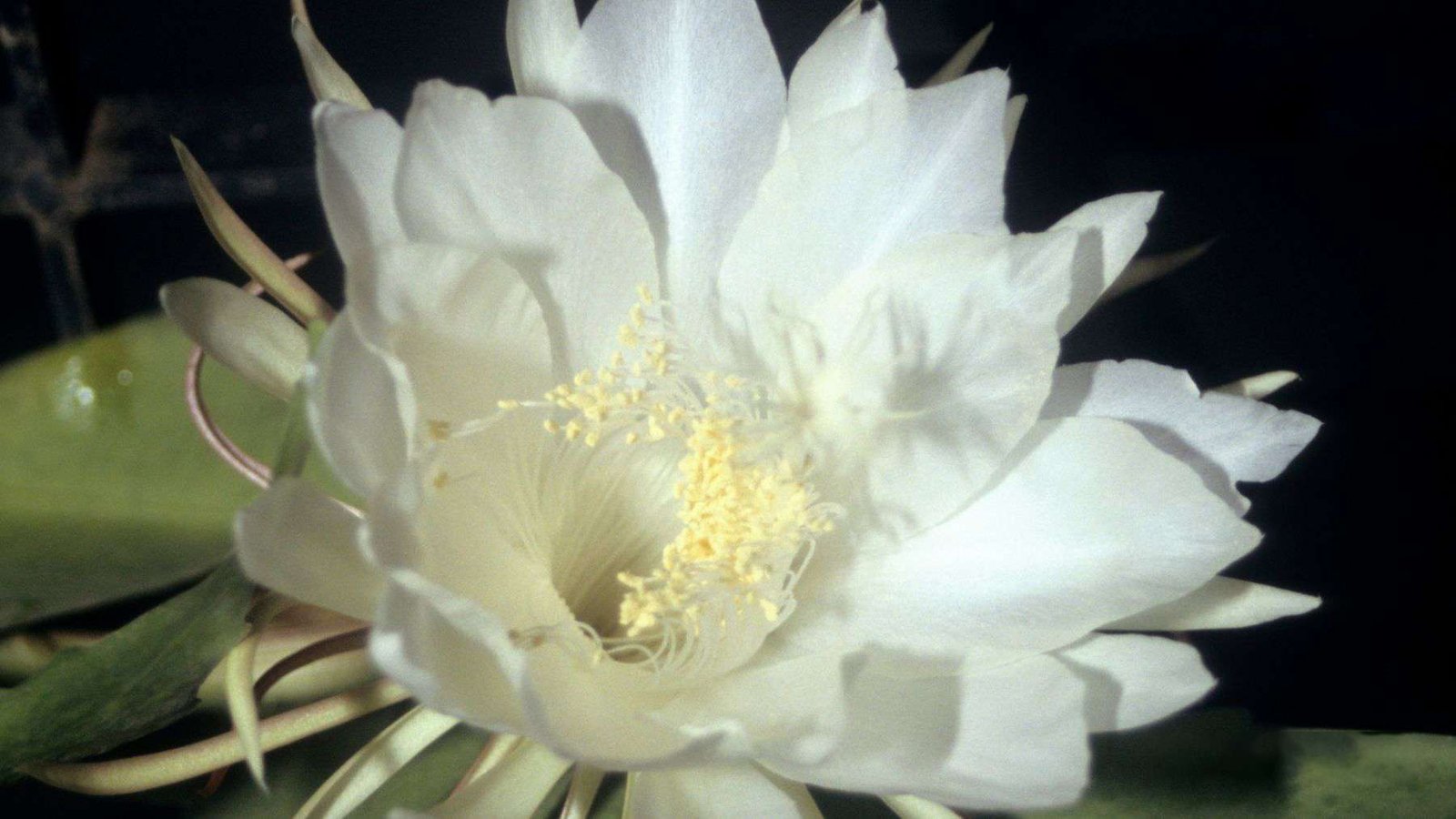
- Growing Season: Year-round
- Leaf Shape: Broad, Oval, Round
- Specific Needs: Well-drained soil, Low light, Indirect light
- Common Pests: Mealybugs, Scale insects
The Epiphyllum thomasianum cactus, commonly called the Peach-colored Orchid Cactus, is another type of epiphytic cactus from tropical America. It grows climbing pipe-like stems similar to the Queen of the Night cactus but has stunning peach to light pink flowers.
The segmented stems reach 10-15 feet long as they attach high in trees. They are flat and flexible with notched edges. Small bristles help the stems cling directly to tree bark without soil. Beautiful blooms emerge throughout the aerial roots in the evenings, from spring to fall.
Each flower is three to four inches wide and has many overlapping rose-to-soft pink tepals resembling orchid petals. They have a light, pleasant fragrance and stay open overnight. Come morning, the bloom fades into a white star shape. After pollination, small flattened green fruits form, containing thousands of tiny seeds.
Like other epiphytes, it grows best suspended with good airflow and humidity rather than soil. It can handle some direct sun but prefers dappled shade. Water weekly during the growth season, less in winter. The flexible stems can root from cuttings to propagate new plants or landscaping.
With its long flowing stems waving high in trees and soft pastel blooms opening at dusk, Epiphyllum thomasianum makes a stunning display. Its delicate peach petals bring a scenic tropical touch to any outdoor space or indoor hanging planter. With a bit of dampness and kind tree branches, this epiphyte thrives beautifully without earthy roots.
9. Chrysocardium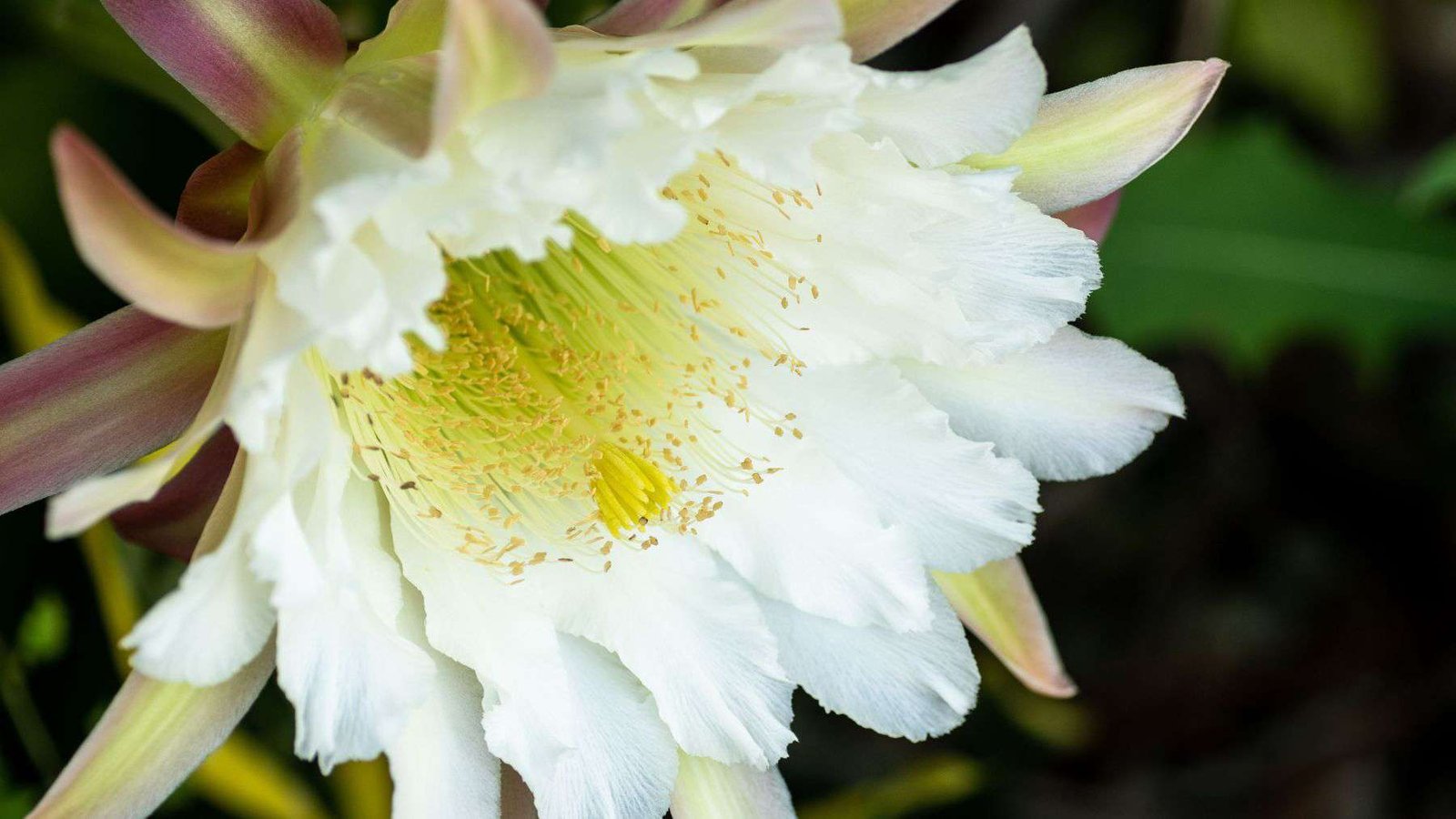
- Growing Season: Spring, Autumn
- Leaf Shape: Oblong, Elliptic
- Specific Needs: Well-drained soil, Low light
- Common Pests: Mealybugs, Scale insects
The epiphyllum chrysocardium, called the golden heart epiphyllum, produces gorgeous yellow blooms with prominent red markings. The leaves of this variety are elliptic to oblong with scalloped edges.
The epiphyllum chrysocardium thrives as an active climber that attaches to surfaces using aerial roots. The yellow flowers with red give this Epiphyllum its common name. The blooms open at night and emit a pleasant fragrance to attrmarkings in the center act pollinators.
The vivid coloring of the flowers and constant blooming throughout the year make the golden heart Epiphyllum an eye-catching addition to any collection.
10. Epiphyllum Cactus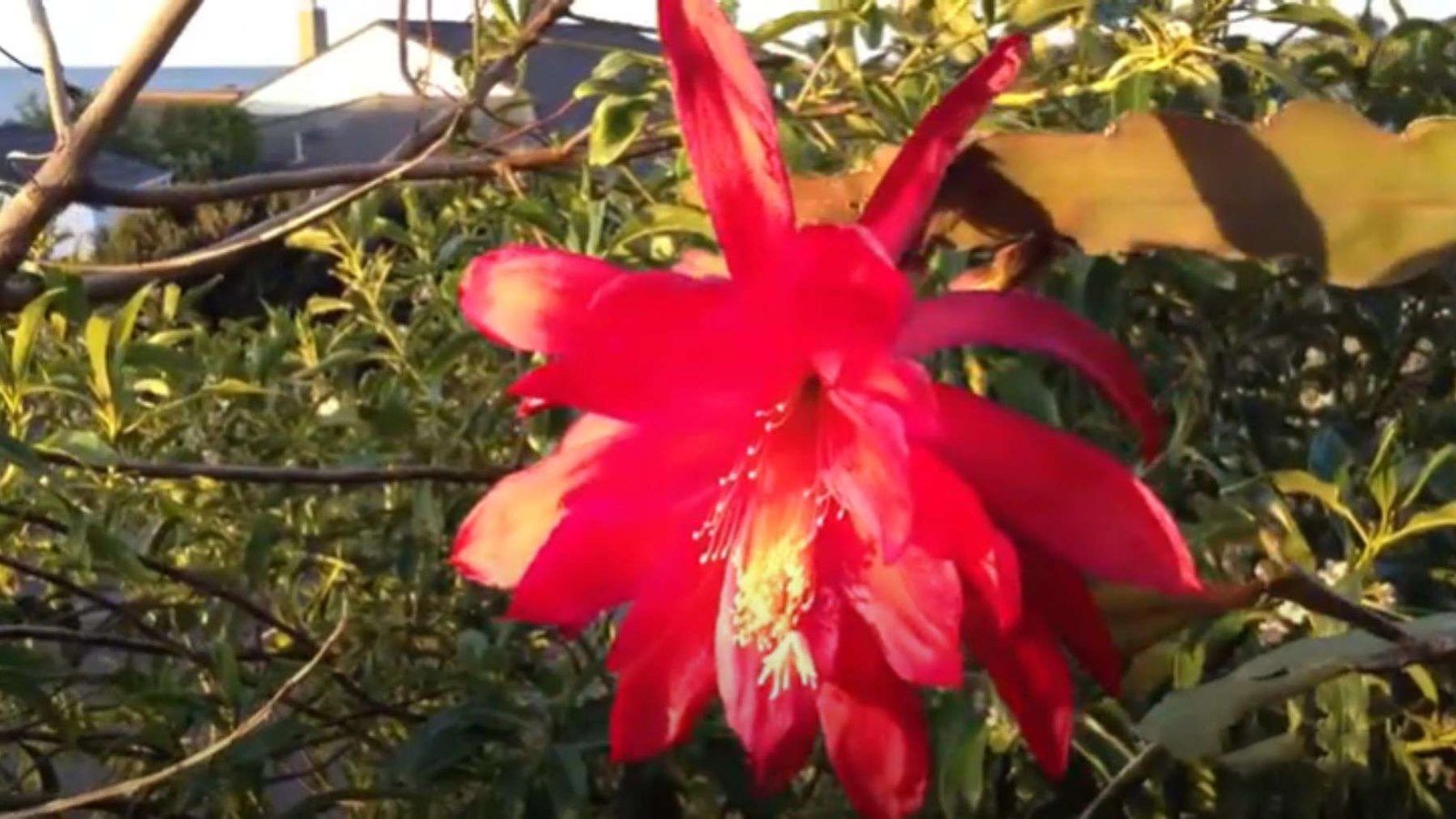
- Growing Season: Year-round
- Leaf Shape: Broad, Oval
- Specific Needs: Well-drained soil, Low light
- Common Pests: Mealybugs, Scale insects
Epiphyllum cacti, commonly called orchid cacti or climbing cacti, are native to tropical regions in the Americas. They are well adapted to grow attached to other plants or structures using thick roots called aerial roots.
Most epiphyllum cacti have flattened succulent leaves that vary in shape from oval to oblong toothed. Many species produce large clusters of colorful flowers in hues from white to red and yellow. The flowers often open at night and emit a sweet fragrance.
Epiphyllum cacti are winter-blooming plants and flowers, most prolifically in the spring and summer. The blooms typically last for a single day before wilting.
Epiphyllum cacti make excellent houseplants and landscaping additions in warm, frost-free regions. They require minimal care but appreciate regular watering, occasional misting, fast-draining soil, and partial shade. Pruning after flowering can encourage additional buds and growth.
11. Baueri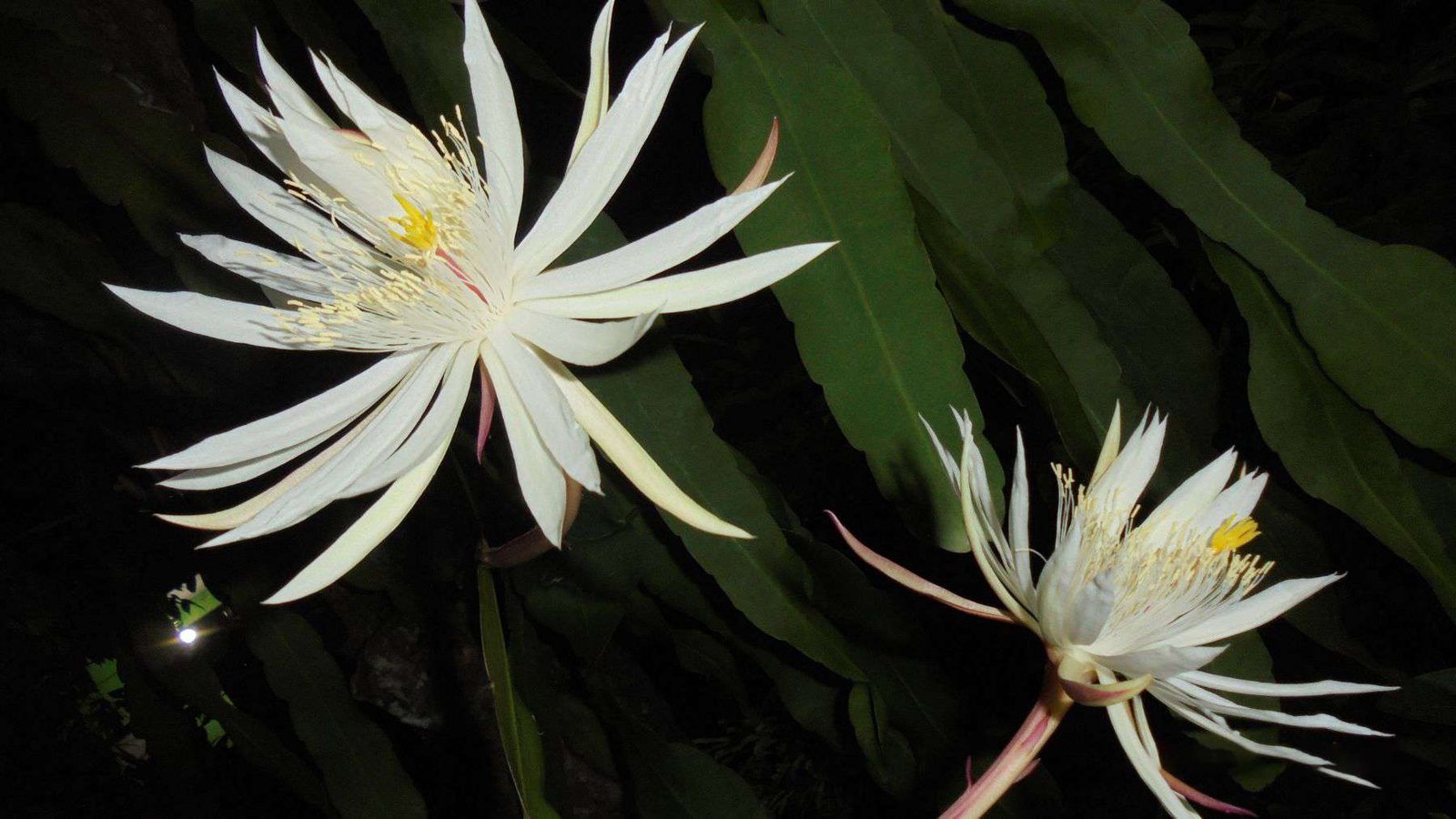
- Growing Season: Spring, Summer
- Leaf Shape: Oval, Heart-shaped
- Specific Needs: Well-drained soil, High light
- Common Pests: Mealybugs, Scale insects
Epiphyllum baueri, commonly known as the orchid cactus, is native to southeastern Brazil and northeastern Argentina. It grows epiphytically in trees in tropical forests. The stems can reach 30 feet long when supported by trees in its natural habitat.
The flowers of E. baueri range in color from white to pale pink to bright magenta. Each flower is approximately 6 to 8 inches in diameter and blooms at night, emitting a sweet fragrance. They only last one to two days before wilting. However, the plants may flower multiple times throughout the spring and summer months.
In addition to needing bright, indirect sunlight, E. baueri prefers humid conditions of 50 to 70 percent relative humidity. It can be grown indoors as a houseplant in warm climates but may drop leaves if exposed to temperatures below 50 degrees Fahrenheit.
The soil should be well-draining, such as a mix of potting soil and perlite or coarse sand. Overwatering can cause root rot in this epiphytic cactus.
Pests are usually only a problem if the plant is stressed. Mealybugs, scale, and spider mites may occasionally be issues. They can often be controlled with neem oil or insecticide soap treatments. With proper care, E. baueri makes an excellent addition to its striking flowers.
12. Cartagense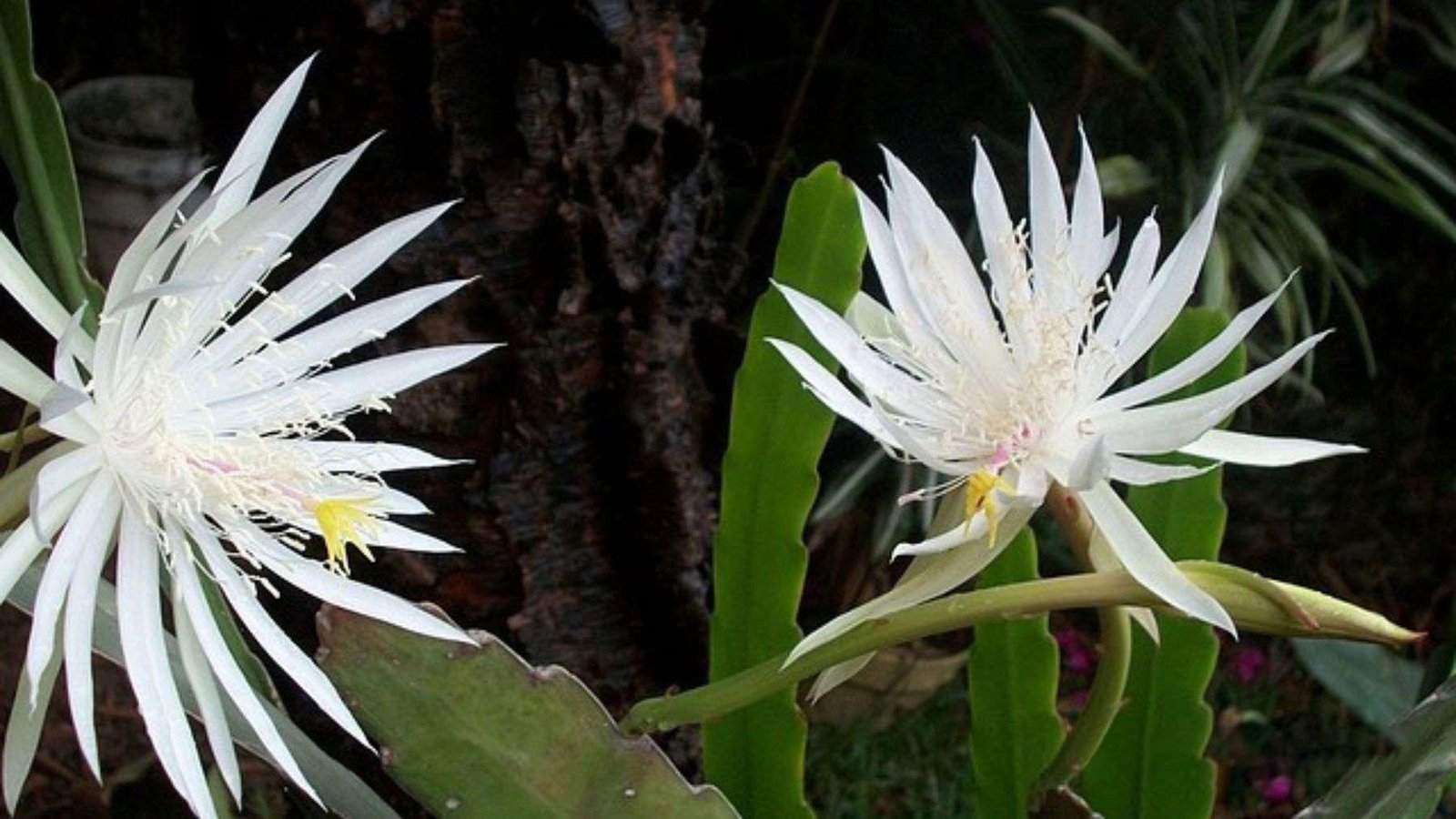
- Growing Season: Spring, Summer
- Leaf Shape: Long, narrow leaves
- Specific Needs: Warm temperatures, High light
- Common Pests: Mealybugs, Spider mites
Nicknamed the “Dutchman’s pipe,” Epiphyllum cartagense produces unusual furry blooms resembling a smoking pipe. In spring and summer, long, slender leaves emerge to support the pipe-like flowers.
Native to Panama and northern Colombia, this tropical epiphyte enjoys warm temperatures around 70 to 80 degrees Fahrenheit and ample sunny exposure. Keep the soil lightly moist but well-draining.
Pests can be an issue in low-light or drafty conditions, so provide an insect-free environment. Whether in bloom or not, the fuzzy leaves offer an eye-catching display that will have guests asking to “light your pipe!”
The unusual bloom structure of Epiphyllum cartagense has earned it the common name “Dutchman’s pipe.” From the tips of elongated, narrow evergreen leaves emerge unique fuzzy white or pale pink flowers in spring and summer.
Resembling an oversized smoking pipe, the pendulous blooms add an element of whimsy to the landscape or patio. Native to Central American cloud forests, this epiphytic cactus enjoys warm tropical conditions. With sufficient light, humidity, and drainage, it puts on a quirky show sure to spark curiosity and conversation.
13. Grandilobum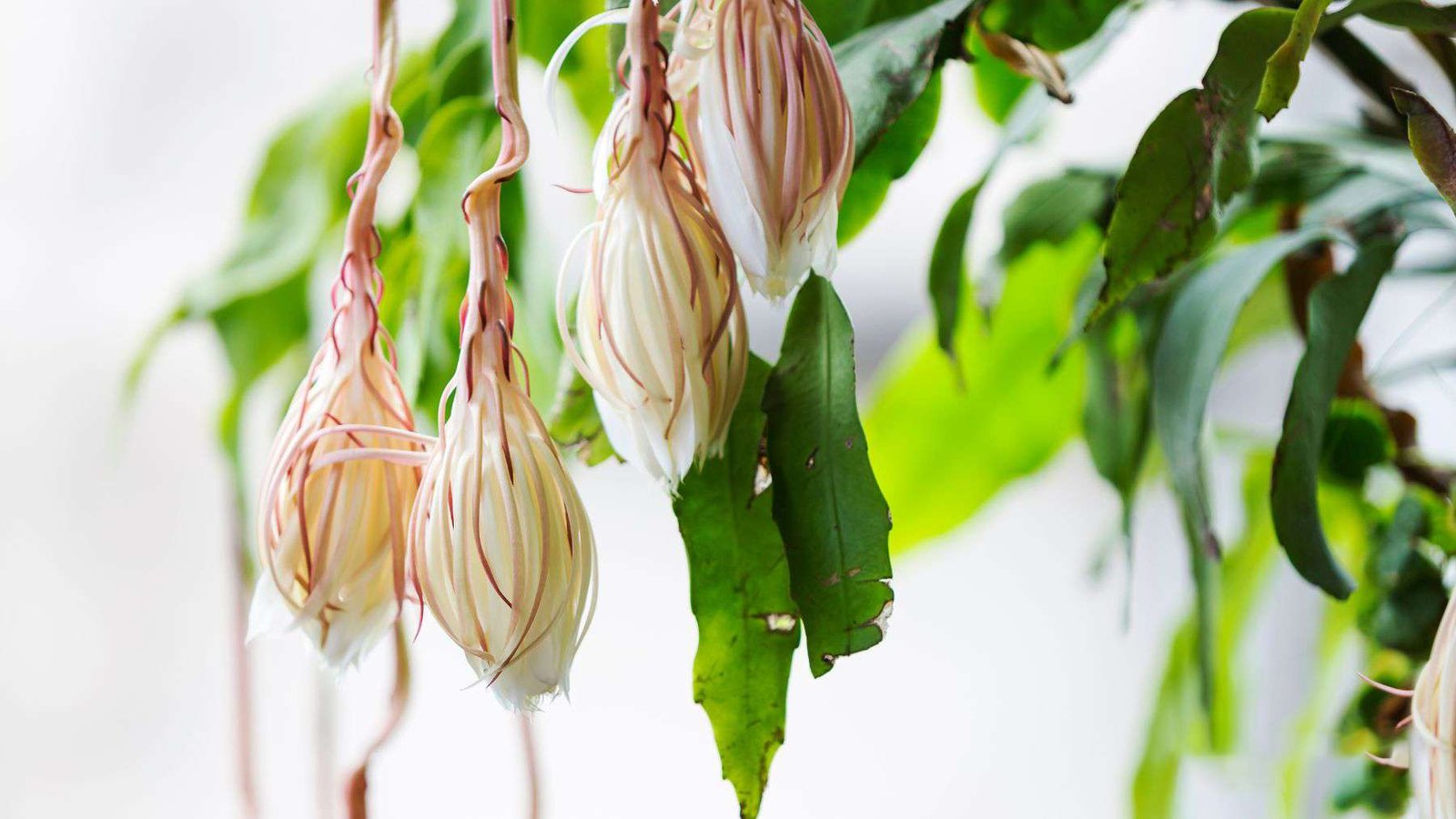
- Growing Season: Spring, Summer
- Leaf Shape: Broad, lobed leaves
- Specific Needs: Warm temperatures, High light
- Common Pests: Scale, Mealybugs
Epiphyllum grandilobum exhibits beautifully lobed leaves and fragrant nocturnal blooms in spring and summer. Native to Mexico and Central America, this orchid cactus is well-suited to growing conditions that mimic its tropical origins. By day, broad green lobes lushly embellish the stems. After dusk, lemon-scented flowers up to 10 inches wide open—perfect for a moonlit stroll around the garden.
With dappled sunlight and well-draining soil to keep potential pest issues at bay, you’ll be enchanted night after night. Be sure to give this charmer warmth and humidity to best showcase its frilly flowers.
Commonly called the sweet-scented cactus, Epiphyllum grandilobum lives up to its name. By day, this orchid cactus sports attractive foliage in the form of broad, deeply lobed leaves. But come nightfall in spring and summer, it truly dazzles with dramatically frilly blooms, releasing a heavenly lemon fragrance.
Native to tropical forests from Mexico to Panama, it thrives when provided with warm conditions and high light to mimic its natural habitat. With potential scale or mealybug issues kept in check, this admirable epiphyte puts on a genuine show for the senses both day and night.
Conclusion
Epiphyllum varieties feature beautiful flowers, fragrant blooms, and interesting leaf shapes, and since they are winter-blooming plants, they thrive with moderate levels of care.
- The German empress epiphyllum (Epiphyllum baueri) features elegant white flowers with purple streaks.
- The epiphyllum hookeri called the fishbone or rainbow cactus, produces unique crescent-shaped colorful flowers.
- The epiphyllum phyllanthus, called the fishbone cactus, produces yellow flowers with red stripes.
While epiphyllum orchid cacti require proper growing conditions to thrive, their low maintenance needs and ability to adapt to various conditions make them enjoyable, versatile plants. If you can provide the basics of warmth, light, and well-draining soil, along with regular watering, aesthetic wonders like bloom clusters, and showy flowers await you.