
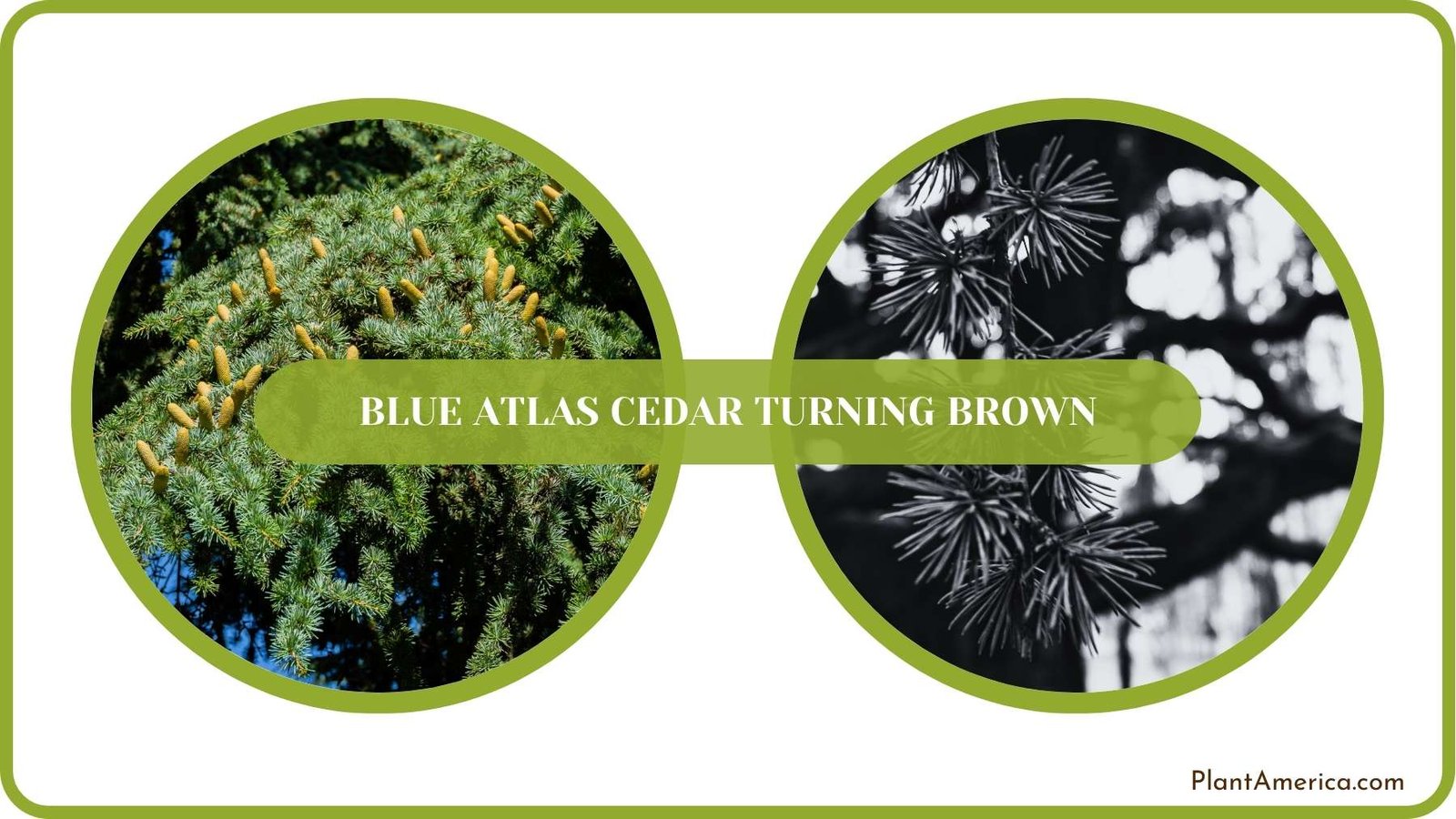
Blue Atlas Cedar turning brown concerns many gardeners, leaving them puzzled and seeking answers. Several factors, from environmental stresses like drought to insect attacks can lead to this unwelcome change.
 But to save your plant, finding the exact reason behind the discoloration is crucial. Stay with us to learn what causes browning and how to fix it.
Why Are Blue Atlas Cedars Turning Brown?
Blue Atlas Cedars are turning brown due to drought stress, excessive humidity, and disease attacks such as tip blight. Sometimes, even harsh weather conditions like strong winds or winter stress can lead to discoloration. Furthermore, you’ll see brown patches if you don’t prune correctly.
– Drought Stress: The Silent Killer
Trees can’t stay healthy when you don’t add water. Like any other tree, cedar has a natural water requirement. When there’s a deficiency, one of the first and most visible signs is the tree’s foliage changing colors, often leading to the Blue Atlas Cedar losing needles.
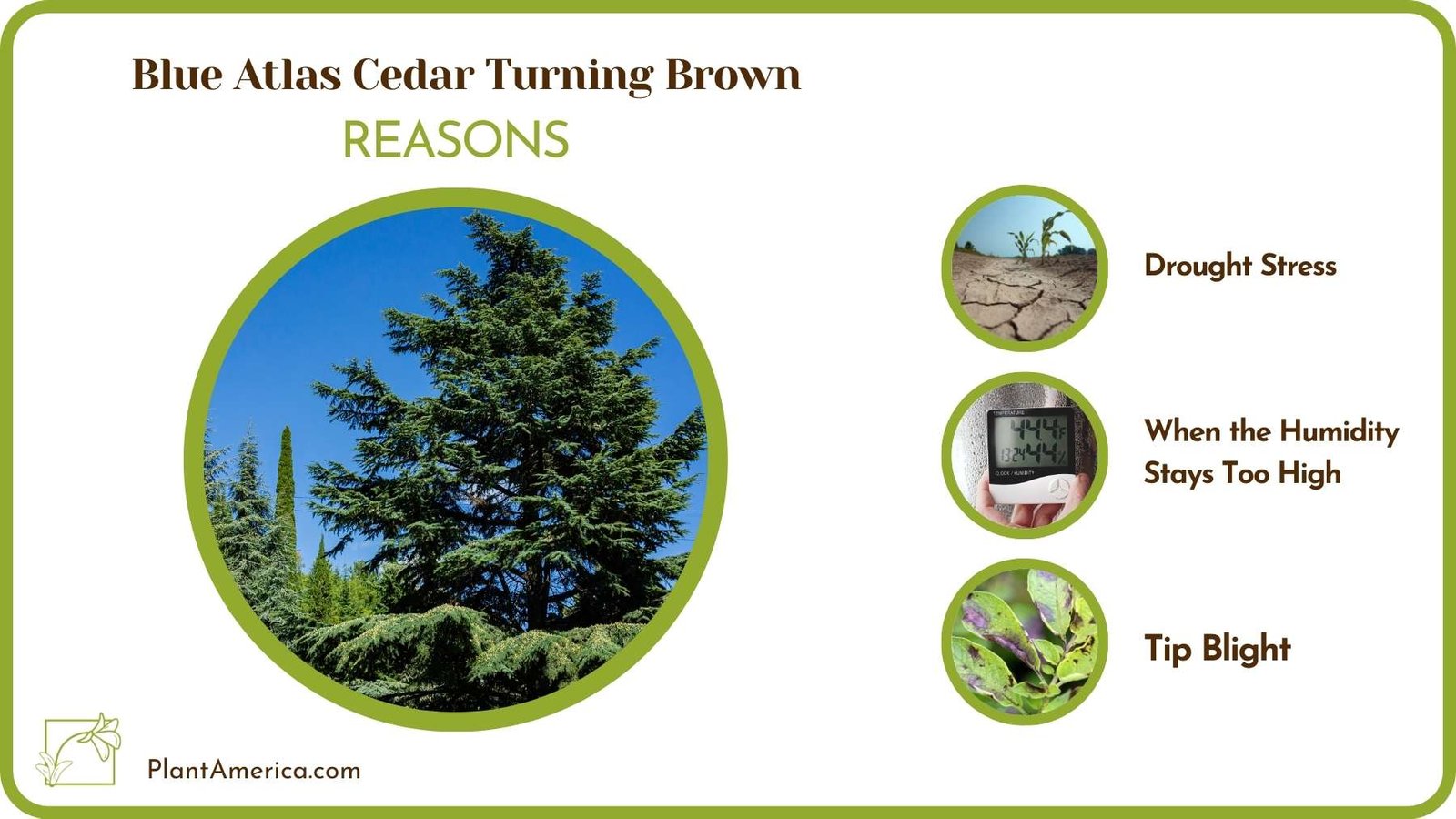
Drought stress primarily affects the tree’s capability to transport essential nutrients and minerals from the roots to the other parts of the tree. This means the tree can’t produce chlorophyll efficiently.
Furthermore, water acts as a coolant for plants. It helps to regulate their internal temperature. So, when a cedar doesn’t receive adequate water, it can’t cool down effectively. This temperature imbalance causes the foliage to essentially ‘burn,’ leading to browned needles.
– When the Humidity Stays Too High
Trees, including Blue Atlas Cedars (scientifically known as Cedrus atlantica), have a certain threshold for moisture and humidity. If the air around them remains too moist for extended periods, it can cause issues.
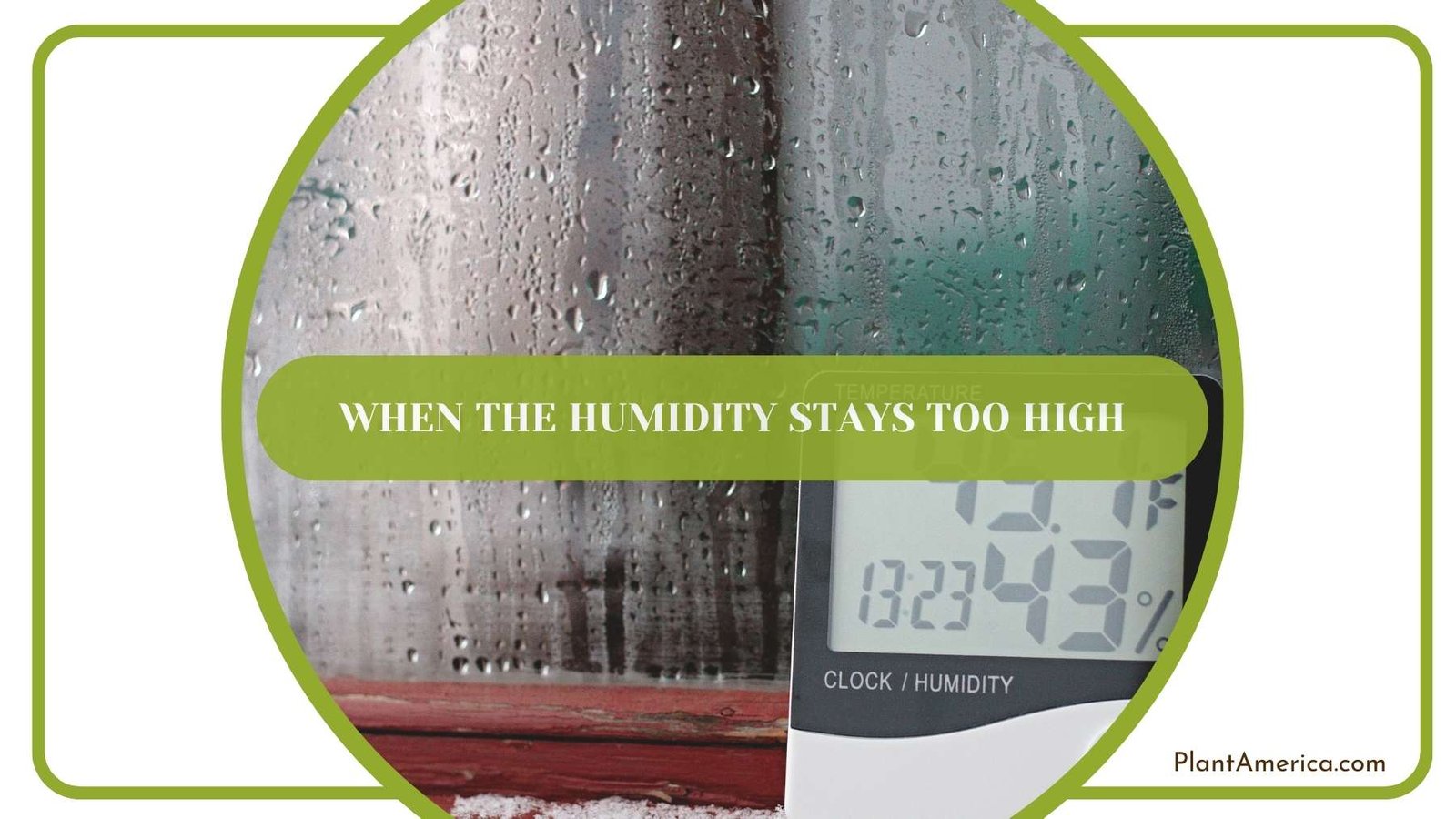
The Horstmann Blue Atlas Cedar and other varieties are not exempt from this. High humidity can make these trees susceptible to fungal infections. These fungi love the damp conditions and quickly colonize the tree, leading to discolorations, usually manifest as brown patches.
Excessive humidity also reduces the tree’s transpiration rate. Transpiration is when trees release water vapor from tiny pores on their leaves or needles. When this slows down due to high humidity, the tree might struggle to uptake necessary nutrients from the soil, leading to mineral deficiencies and, as a result, browning of the needles.
To confirm if high humidity is the reason behind discoloration, consider the following:
- Check if the weather has been unusually rainy or foggy for extended periods.
- Are mornings regularly dew-laden?
- Check the tree’s branches and foliage for signs of fungal growth, which often appears as white, black, or brown patches.
Another way to determine it is by using a hygrometer or a humidity gauge, an instrument that measures the moisture content in the environment. If readings consistently show high humidity levels, it contributes to your tree’s discoloration.
– Tip Blight: A Dangerous Disease
The Blue Atlas Cedar tip blight is a common issue that can cause the tree’s needles to turn brown. Blight is a fungal disease that starts at the tips of the branches and works its way down. The fungus responsible targets the young shoots, causing them to die off and turn brown. The browning can spread to mature needles as it progresses, making large tree sections look unhealthy.
Additionally, the affected tips may have black fruiting bodies of the fungus. These are small and may need a closer look to spot. If you see these signs and have had damp conditions, tip blight is likely the cause.
– Deodar Weevil Attack
Are Blue Atlas Cedar turning brown in spring? Then look for deodar weevils. They are small beetles that love to munch on the cedar’s needles and young shoots. When these pests feed on the tree, they damage the plant tissue, disrupting its ability to transport nutrients and water.

The weevil’s life cycle starts in spring. This is when the females lay their eggs on the tree. When the larvae hatch, they dig into the tree, causing even more damage. Feeding both adults and larvae can lead to significant browning, especially if the infestation is severe.
Now, to confirm if the deodar weevil is behind your tree’s browning, inspect your cedar. You might see tiny holes where the larvae have burrowed into the tree. The adult weevils may also be present, feeding on the tree.
– Winter Stress
The Blue Atlas Cedar turning brown in winter is not uncommon. Trees, like all living things, face challenges during the cold months. The frigid temperatures and sometimes the lack of moisture can strain the tree.
Similarly, if you see Blue Atlas Cedar turning brown after winter, the reason can be the aftermath of cold. While cedars are relatively hardy, they aren’t immune to winter’s wrath. The cold can freeze the water inside the tree’s cells, causing damage (brown spots).
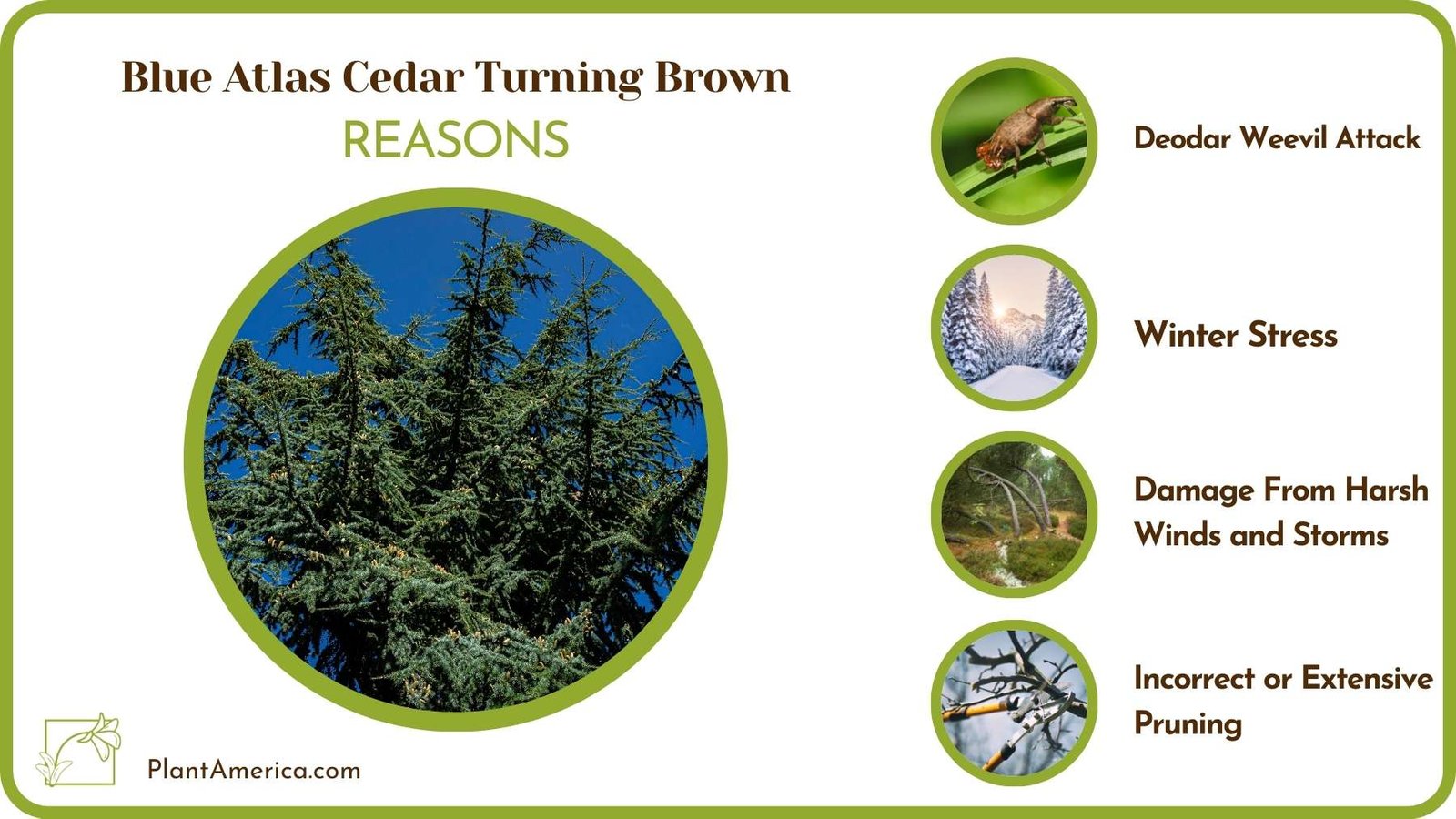
– Damage From Harsh Winds and Storms
Blue Atlas Cedars can get exposed to nature’s more violent sides. Harsh winds and storms can break branches, or the rapid movement can cause the needles to become damaged. This physical damage can make parts of the tree look brown.
If you notice broken branches or physical signs of injury, the recent storm is likely the culprit behind the browning.
– Incorrect or Extensive Pruning
If you’re wondering, “Why is my weeping Blue Atlas Cedar turning brown,” one of the reasons could be improper pruning. If too many branches are cut, especially during the tree’s active growth period, it can stress the tree.
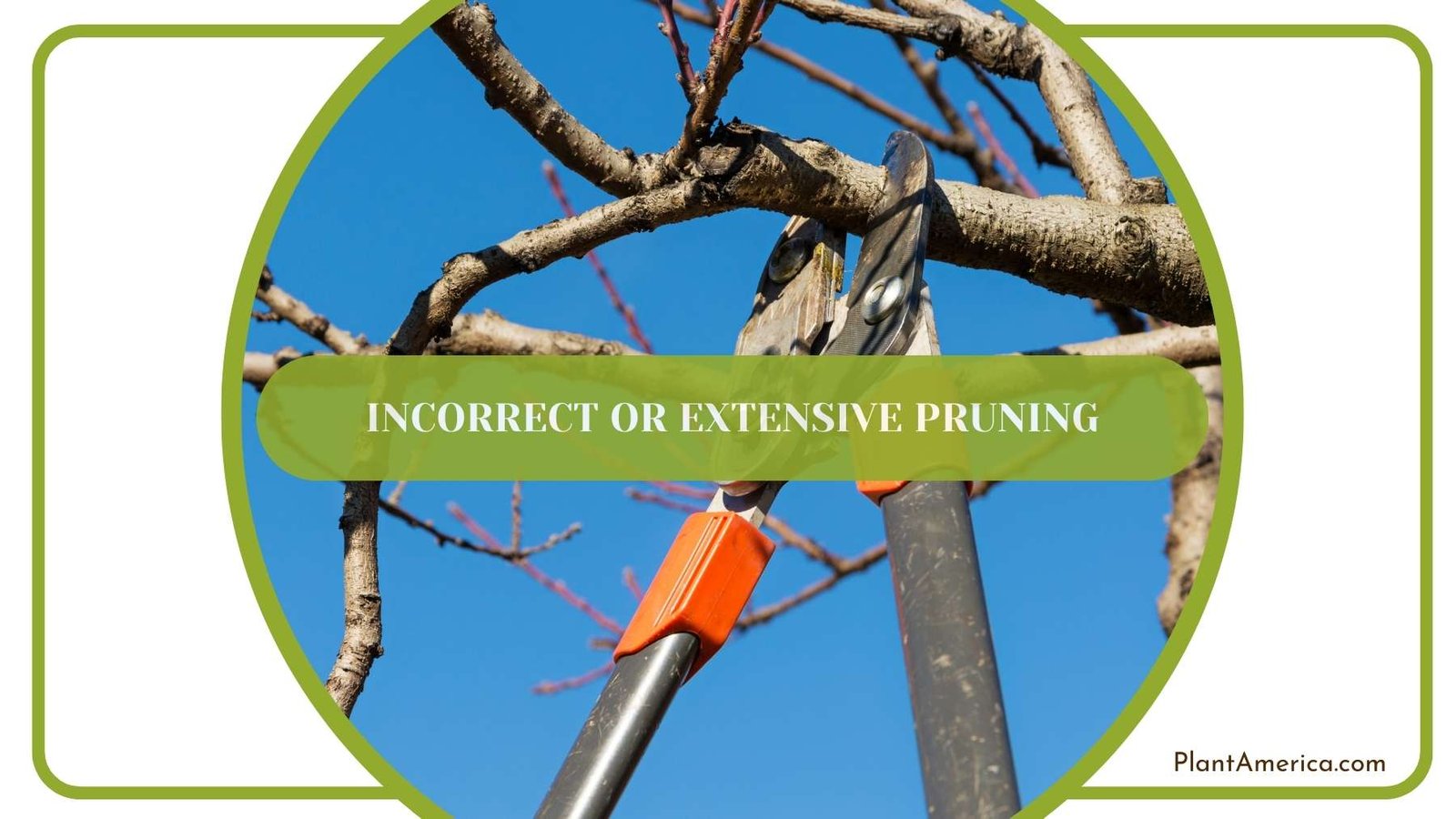
Also, note that removing a significant portion of the tree disrupts its balance in terms of its structure and nutrient distribution. This disruption can lead to parts of the tree, especially near the pruning sites, turning brown.
Moreover, if pruning is done haphazardly without clean tools, it can introduce diseases or pests, exacerbating the browning issue. So, if you’ve recently pruned your tree and notice browning soon after, it’s likely linked to the pruning. But don’t lose hope; you can save your cedar trees by doing simple things.
How to Save Blue Atlas Cedar From Turning Brown: 5 Solutions
To save Atlas Cedar from turning brown, trim all dead or brown leaves first and ensure adequate watering. When pests and diseases attack, treat them with fungicides and neem seed oil. If you live in windy regions, implement breakers to shield the tree.
– Remove Dead and Fully Brown Leaves First
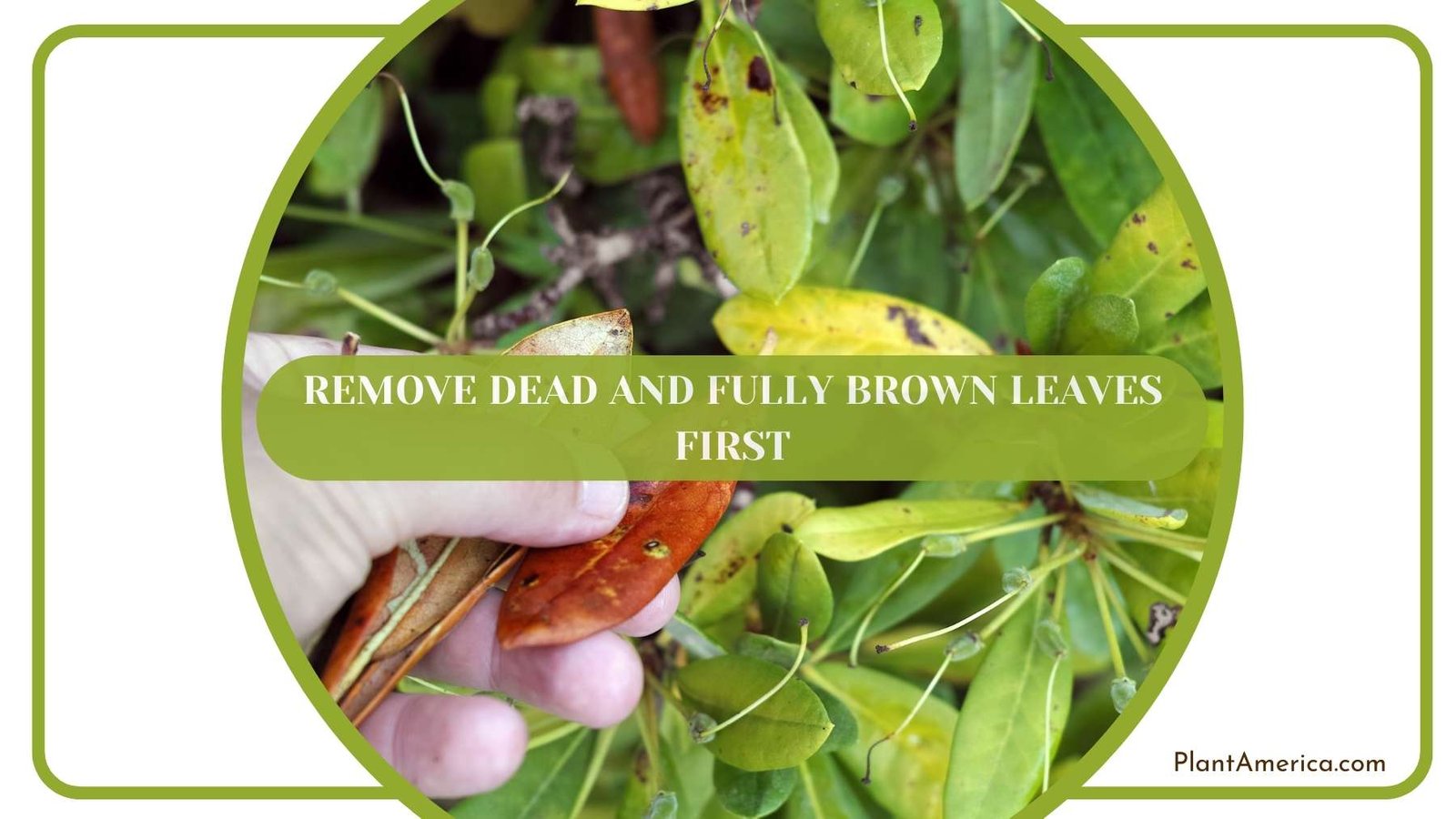
Before diving into any treatment plan, getting rid of the visibly dead or entirely brown leaves is crucial.
Here’s why:
- Identification: Removing the brown leaves allows you to identify areas of the tree that are particularly affected. This can help pinpoint underlying issues.
- Health: Dead leaves can become a breeding ground for pests and diseases. By removing them, you’re reducing the chance of any further spread.
- Energy Conservation: Trees continue to send energy to all parts of themselves, including the brown, non-functional needles. By removing them, the tree can focus its energy on healthy growth.
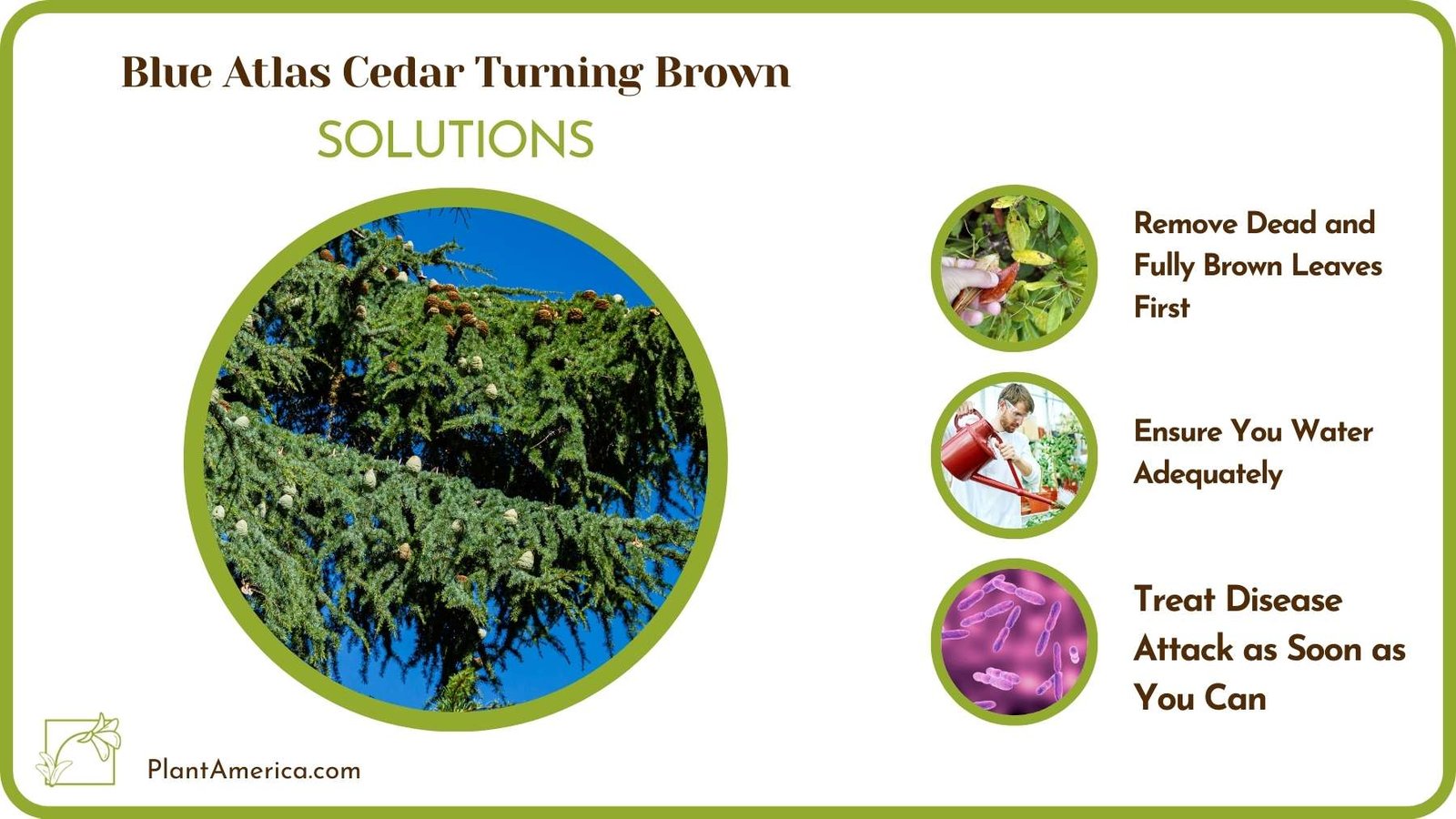
These are the steps to remove dead leaves:
- Prepare Your Tools: Ensure you have sharp pruning shears or scissors. Dull tools can damage the tree further. Also, ensure they’re clean to prevent the spread of diseases.
- Identify the Affected Areas: Before you start, take a moment to identify all the browned areas. This will give you a clearer idea of where to focus.
- Prune Gently: Cut off the brown needles close to the branch, ensuring you don’t damage the green parts. If an entire branch is brown, consider removing it from the base.
- Dispose of the Brown Needles: Don’t just leave them lying around. Collect and dispose of them properly to prevent any potential spread of disease or pests.
- Clean Your Tools: Once you’re done, disinfect your tools. This prevents the potential spread of diseases during your next pruning session.
– Ensure You Water Adequately
Watering is a crucial part of tree care. However, with the Blue Atlas Cedar, excessive watering can be as harmful as “too little.”
We suggest these watering practices if you don’t want to face “Blue Atlas Cedar too much water” complications:
- Soaker Hoses: This method provides a slow, deep watering that can penetrate the roots without flooding the surface.
- Drip Irrigation: This more efficient method delivers water directly to the root zone. It’s perfect for younger trees that haven’t established deep roots yet.
- Hand Watering: While labor-intensive, it allows for the most control, ensuring you neither overwater or underwater.
– Treat Disease Attack as Soon as You Can
Diseases can rapidly compromise the health of a cedar if left untreated. Hence, swift action is essential.
We suggest the following:
- Fungicides: Many diseases affecting cedars are fungal. Applying a fungicide can help combat these diseases. When choosing a fungicide, ensure it’s specifically recommended for the disease you’re trying to treat.
- Biopesticides: These are derived from natural materials such as animals, plants, bacteria, and minerals. They are typically less toxic than conventional pesticides and are eco-friendly. Examples include Bacillus thuringiensis (a bacterium that combats caterpillars) and beneficial nematodes (which target root-eating grubs).
- Cultural Controls: Sometimes, simply altering the environment around the tree can deter disease progression. This might include improving air circulation by spacing out plants or ensuring the tree receives adequate sunlight.
- Quarantine: If you’ve recently introduced a new plant into your garden, keep it separated from your established plants for a few weeks. This can prevent the spread of potential diseases to other plants, including your Blue Atlas Cedar.
– Use Neem Oil for Insect Attack
Neem oil is a versatile and organic solution sourced from the neem tree. Not only does it act as a repellent for various pests, but it also disrupts the life cycle of insects, ensuring they don’t reproduce.
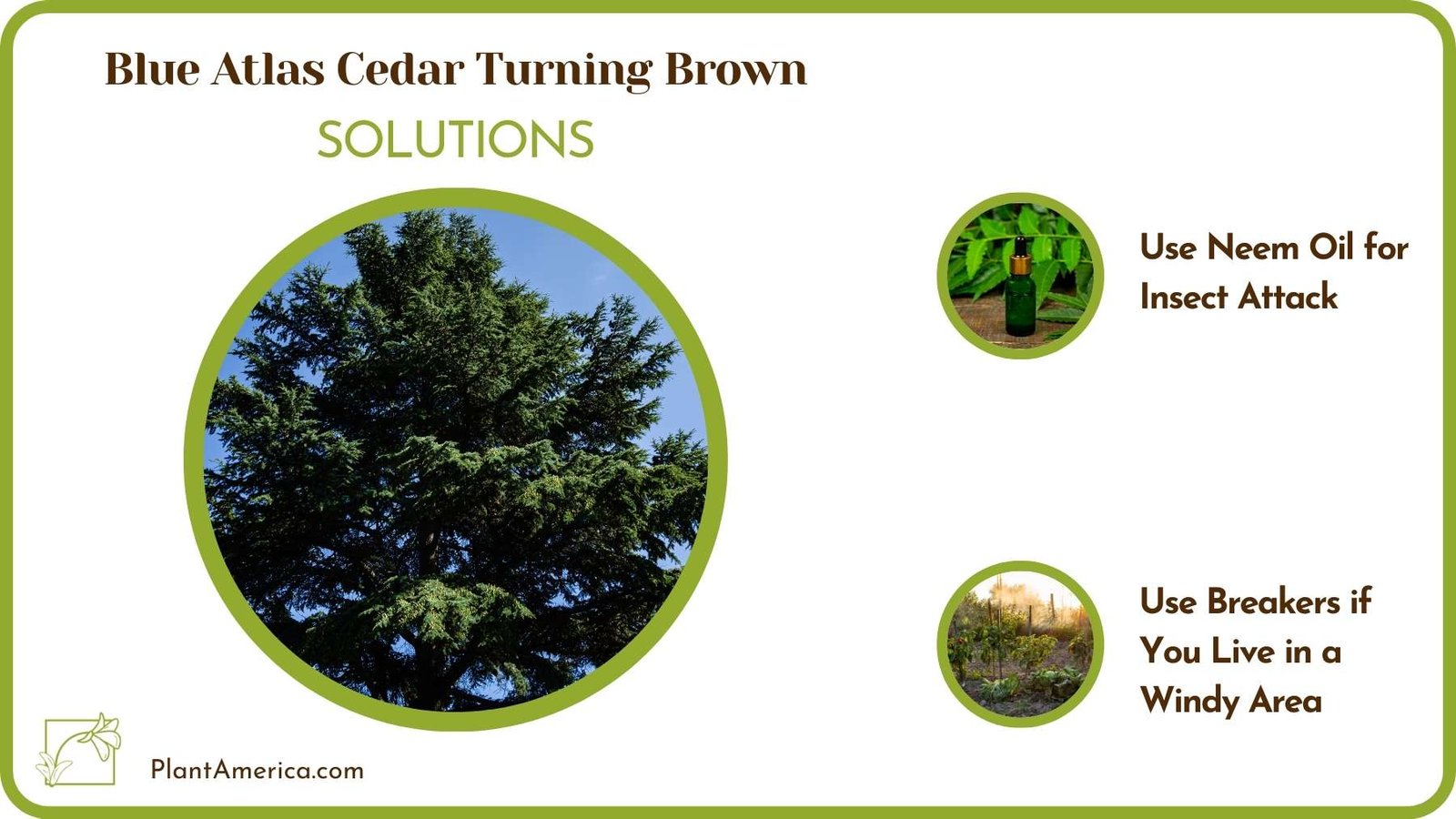
Here are the steps to use neem oil on Blue Atlas Cedar:
- Purchase Pure Neem Oil: Ensure you’re buying 100 percent pure neem oil. Many formulations in stores may be diluted or mixed with other ingredients, reducing their effectiveness.
- Prepare the Solution: Mix two tablespoons of neem seed oil with a gallon of water. You can include a few drops of mild dish soap for added effectiveness. This helps the oil spread and stick to plant surfaces.
- Test Before Applying: Test the solution on a small section before spraying your cedar. If the tree shows no sign of stress, you can proceed.
- Spray Thoroughly: Cover all parts of the tree using a spray bottle or garden sprayer, focusing on areas where you’ve noticed insect activity. The undersides of leaves are critical, as many pests tend to hide there.
After applying, remember to store the oil in a cool, dark place and ensure the lid is tightly sealed. If it does solidify, placing the bottle in warm water for a few minutes will return it to liquid form.
– Use Breakers if You Live in a Windy Area
Wind can cause physical damage to the tree by breaking branches or causing abrasions from flying debris. But setting up windbreakers can protect your trees:
- Natural Windbreaks: Planting dense, sturdy shrubs or trees upwind of your Blue Atlas Cedar can act as a buffer. Ensure these plants tolerate high winds and grow densely enough to provide effective protection.
- Fences and Walls: Building a fence or wall can offer immediate protection. The height and density of the structure will determine its effectiveness.
- Netting and Screens: These are less obstructive than walls and can be erected temporarily during particularly windy seasons.
- Proper Placement: When planting a new blue cedar, consider placing it in a location shielded naturally by the layout of your property or other structures.
By diligently following these practices, gardeners can create an environment where their Blue Atlas Cedar can flourish. Remember, a proactive approach to care often prevents potential issues, ensuring that your tree remains a stunning centerpiece in your garden for years.
Conclusion
Blue Atlas Cedars turning brown can be alarming, but you can fix the problem by doing simple things, which are:
- Remove dead or entirely brown leaves to prevent further damage.
- Water the tree adequately, being cautious of over or under-watering.
- Treat diseases with fungicides and use remedies like neem oil for insect attacks.
- Use breakers in windy areas and ensure regular gardening practices.
By prioritizing your tree’s needs, you can enjoy the beauty of a healthy Blue Atlas Cedar for years.