
Mealybugs on bottlebrush plants are just one of many prevalent issues that gardening enthusiasts face. Despite their small presence, combatting these pests once they establish themselves in your plants can present quite a task. This highlights the importance of quick intervention.
Fear not, because we’re equipped with the ideal solutions for your situation. Stay with us as we delve into effective remedies tailored to your beautiful bottlebrushes.
How to Identify Mealybug Attack on Bottlebrush
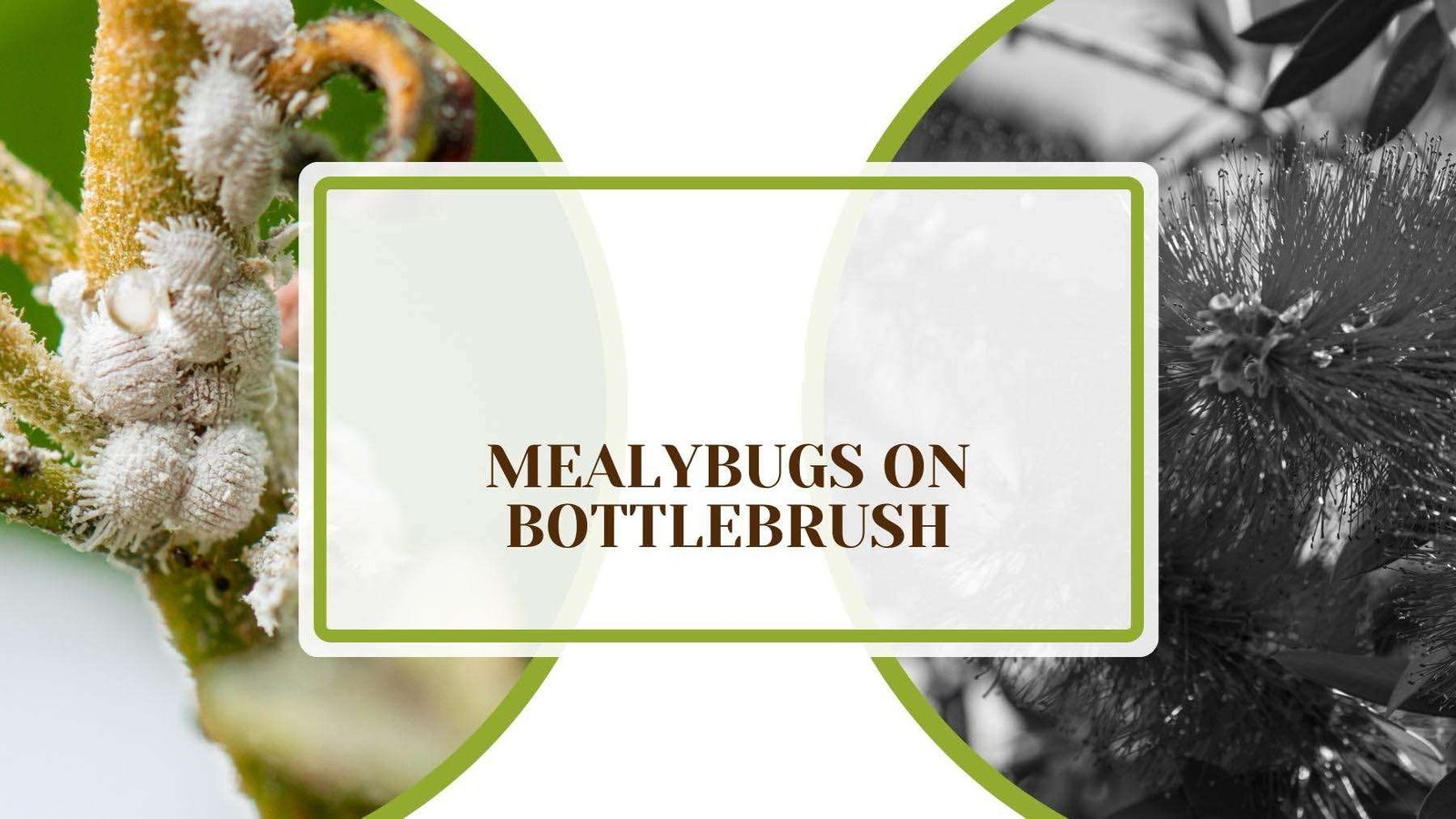
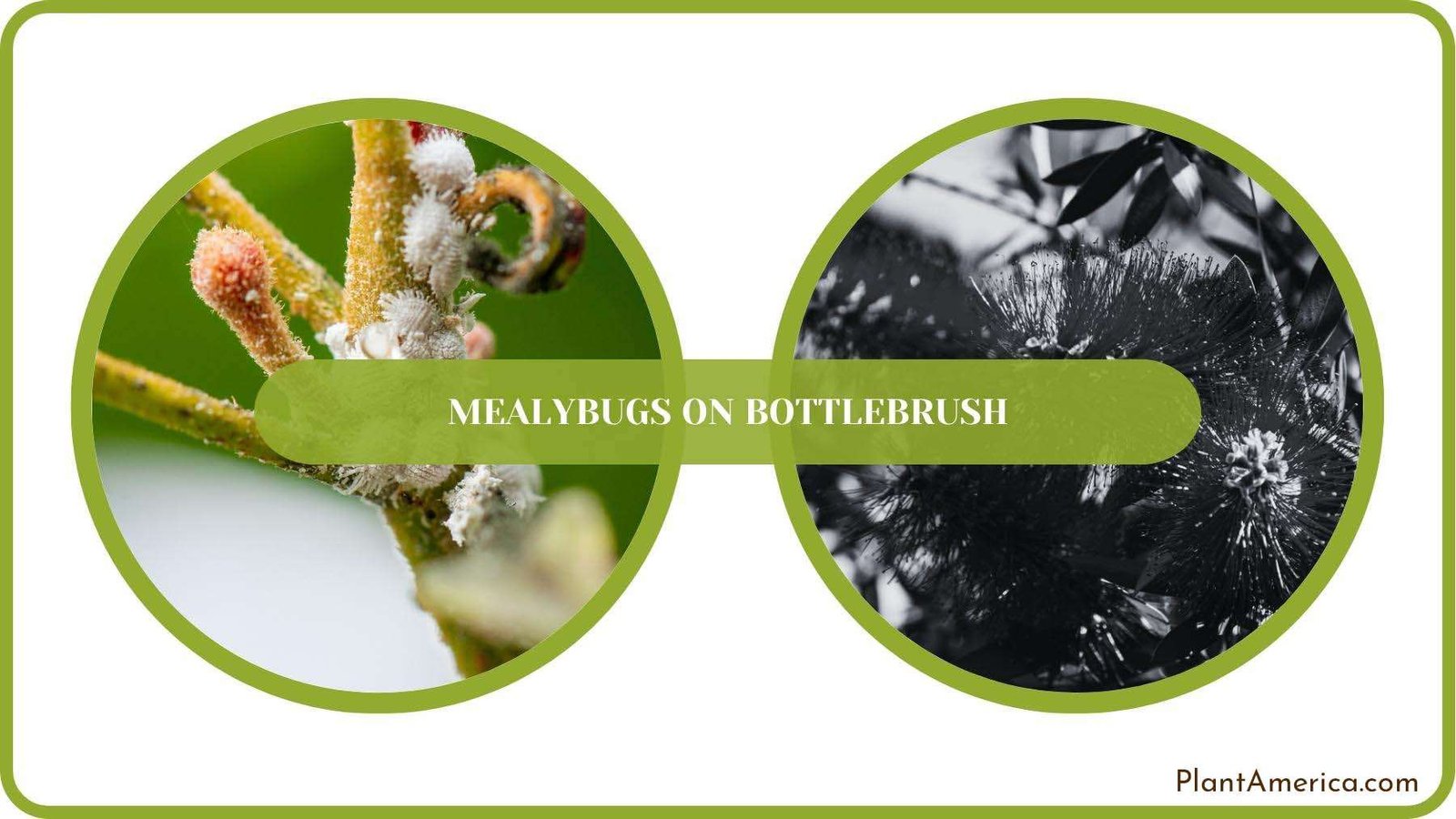
The mealybug stands out as a common and easily recognizable intruder on Callistemon citrinus. These pests possess an oval shape concealed beneath a wax coating, imparting a powdery white appearance, accompanied by elongated waxy filaments around their bodies. Mealybug egg masses manifest as small white cotton-like puffs or fluffy deposits of white powder due to the female’s waxy cover.
Comparable to aphids and scale insects, mealybugs partake in a similar feeding mechanism. Employing a slender beak, they extract plant sap by puncturing the plant tissue. This feeding activity, often leads to significant sap loss and the weakening of heavily infested plants, potentially resulting in their demise.
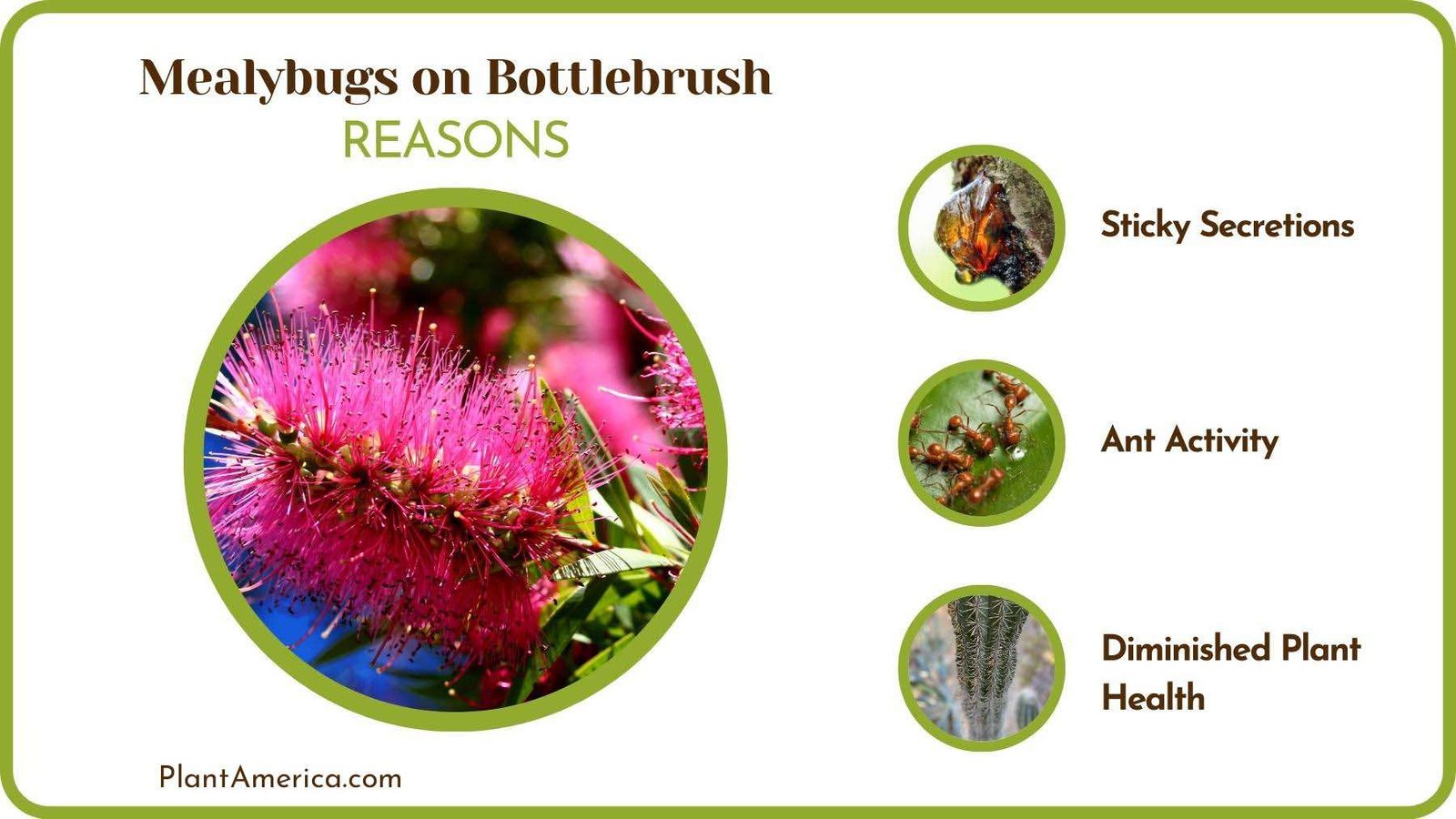
Plants with milder infestations might only display signs of stunted growth, yellowing, or deformities. The sweet honeydew secreted by these sap-feeding insects creates an environment conducive to the growth of sooty mold, a dark fungus that further compounds the issues. And it’s these damage signs that will make mealybug infestation obvious.
– Sticky Secretions
In the process of feeding mealybugs exude a sugary substance known as honeydew. This residue accumulates on leaves, stems, and even blossoms. Detecting its presence is a straightforward task — a gentle touch on these areas can reveal a sticky sensation, indicating the likely presence of mealybug honeydew.
Wherever honeydew is found, it provides an ideal breeding ground for the development of sooty mold, which presents itself as dark powdery patches. Plants might find themselves covered in this mold, adversely affecting both their visual appeal and overall health.
– Ant Activity
The presence of ants on your bottle brush plants can serve as a telling sign of a potential mealybug infestation. Ants are often attracted to mealybugs due to the sweet honeydew that these pests excrete. The sugary substance is a favored food source for ants.
In their search for honeydew, ants may not only be found near mealybug colonies but might also actively tend to these pests, protecting them from natural predators.
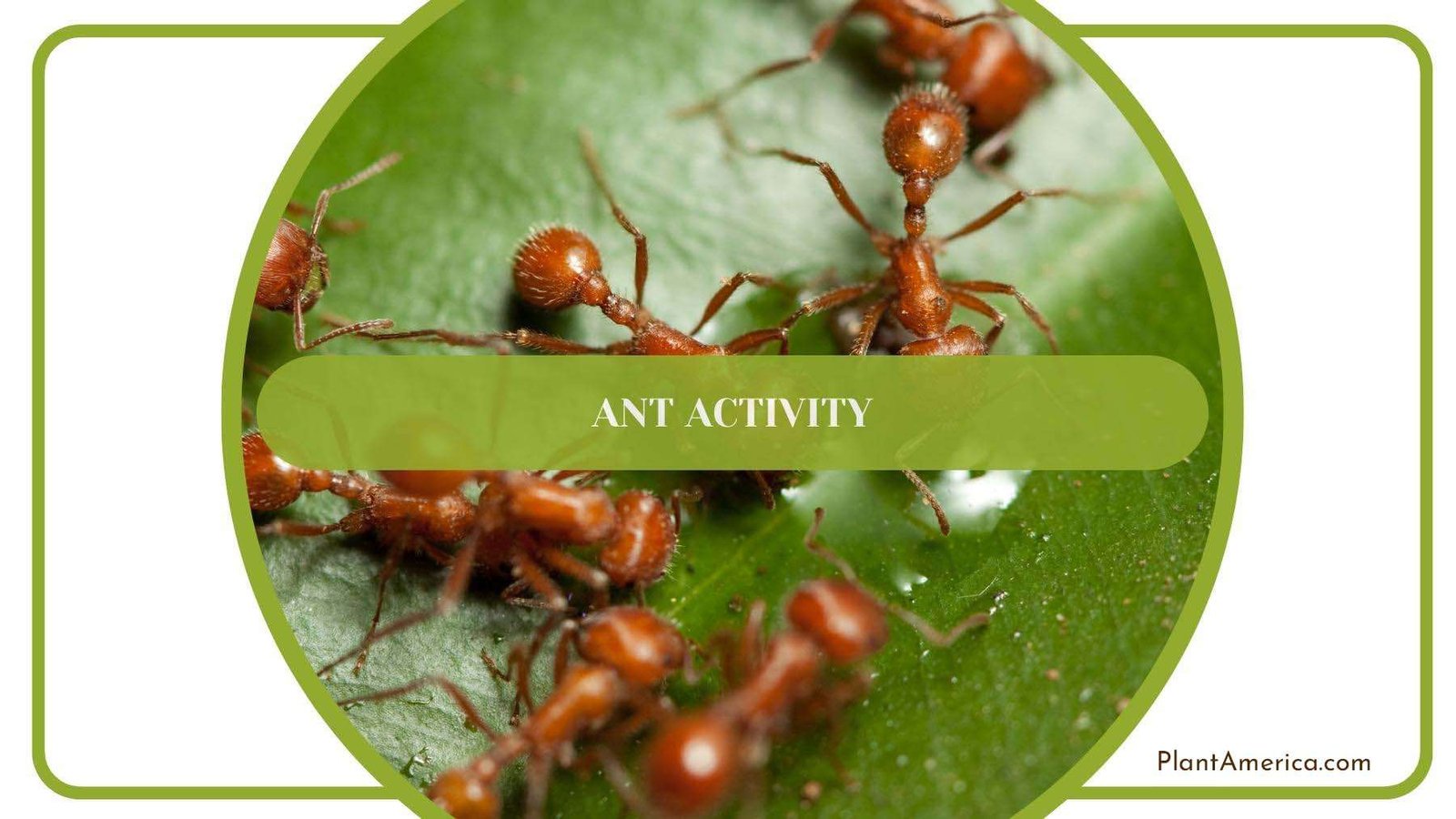
Therefore, if you observe an unusually high level of ant activity around your bottlebrushes, it’s a strong indication that mealybugs might be present. This association between ants and mealybugs can alert you to the need for closer inspection and potential intervention!
– Diminished Plant Health
The presence of mealybugs feeding on your bottlebrushes can lead to observable consequences, such as distorted or stunted growth, imparting an overall weakened appearance to these beauties. Affected plants often exhibit irregular shapes or sizes, standing in contrast to their healthy counterparts.
This transformation often stems from mealybugs draining out the plant’s essential fluids, which can induce manifestations like yellowing, browning, or other forms of discoloration. Such changes can be evident in the blossoms too, as the plant’s stress response can trigger the premature dropping of flowers and buds!
Addressing infestations in a timely manner becomes imperative to mitigate deformations and safeguard the vitality and visual appeal of your bottlebrush cacti. Let’s delve into effective strategies for doing so!
How To Deal With Mealybugs on Bottlebrush Plants
As mealybugs make themselves at home on your Callistemon citrinus, they find a favorable environment to thrive. The unique structure of the bottlebrush’s leaves provides ample hiding spaces for these pests. However, there are effective strategies at your disposal to combat this invasion.
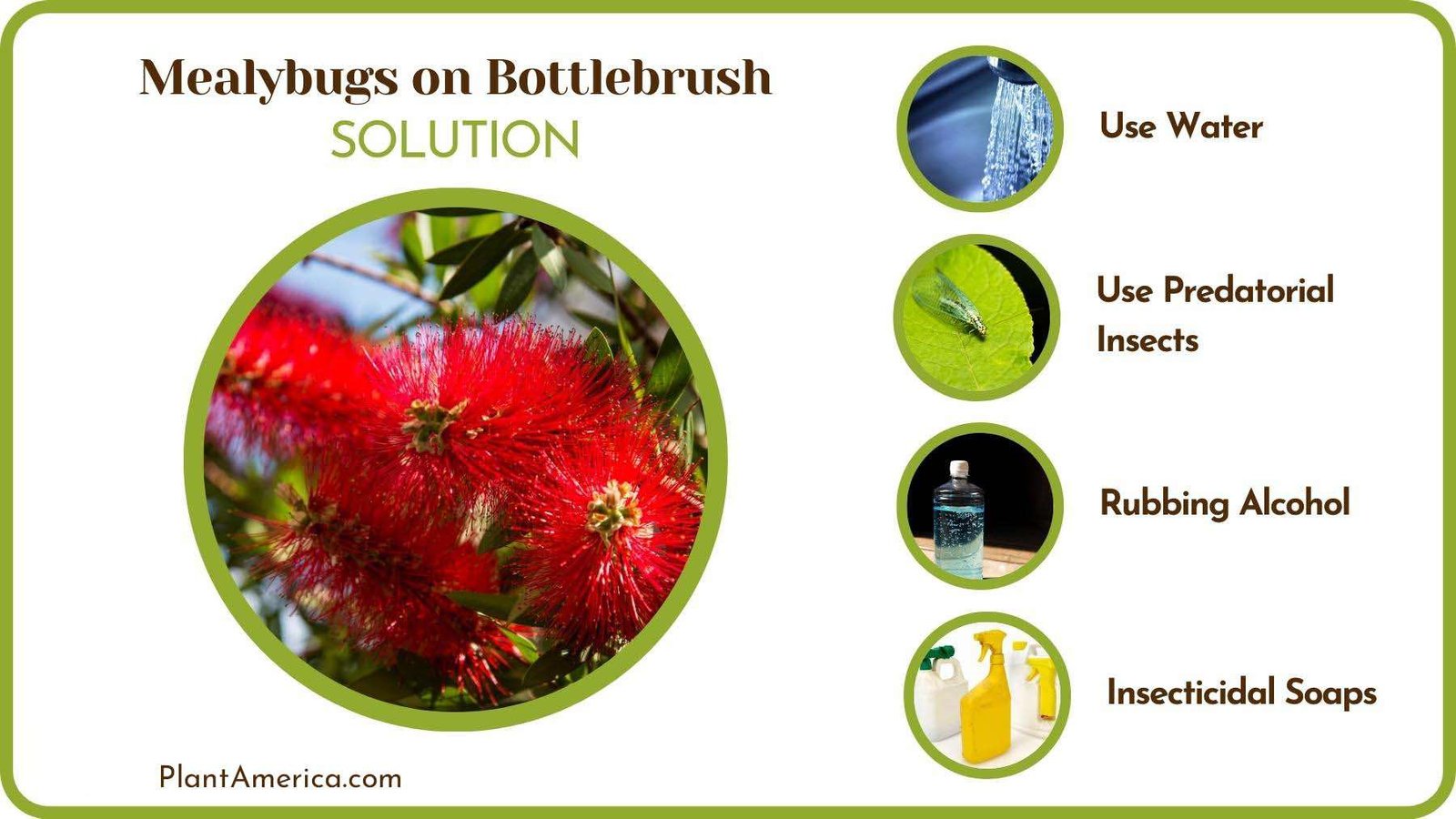
From classic water treatments to the assistance of natural predators, let’s delve into these solutions and take action!
– Use Water
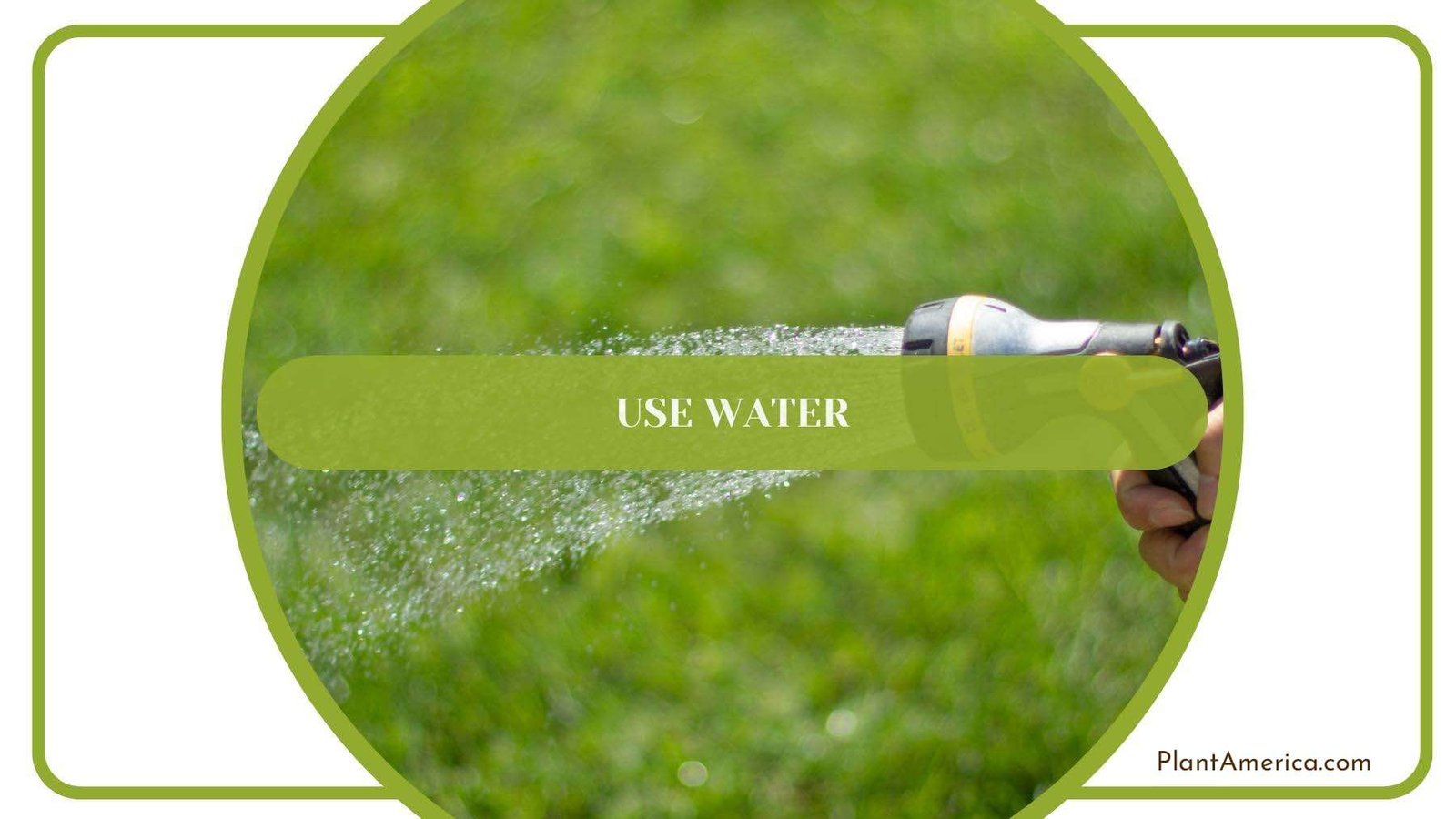
When dealing with mealybugs on your bottlebrush, harnessing hydraulic pressure emerges as a practical and straightforward strategy to dislodge both adult grown-ups and their eggs. This method proves to be cost-effective too, making it an attractive choice.
Apply pressure using your thumb while utilizing a garden hose. For mealybugs tucked within the folds of your bottlebrush’s leaves, employing a spraying bottle can work. If such tools aren’t already at your disposal, considering their inclusion in your plant care toolkit is advisable. Keep a watchful eye on your plants, and if mealybugs make a reappearance, reapply the treatment as needed.
However, exercise caution to avoid overwatering your succulents through this method. If deemed necessary, repotting your bottlebrush can be considered to jump to the problem of root rot.
– Use Predatorial Insects
Standard ladybugs or the specialized mealybug ladybird can serve as valuable additions to your efforts. The ladybird displays a remarkable proficiency in swiftly eliminating mealybug populations.
While bearing a resemblance to typical ladybugs, these are slightly smaller and exhibit a more understated appearance. Diverging from the iconic red wings adorned with black spots, they sport unassuming brown wings and a modest tan head. In essence, their demeanor is all business.
These natural predators can be acquired through garden centers or online platforms, providing you with a strategic long-term approach to manage mealybug infestations.
– Rubbing Alcohol
Depending on the severity of the infestation, you have the choice of using either a spray bottle or a simple Q-tip doused in alcohol to tackle these pesky insects.
Gently applying the Q-tip to the affected areas allows you to meticulously scrub away the mealybugs. In cases where the infestation is more extensive, using a spray bottle to cover the entire plant is recommended. There’s no need to worry about overwhelming the plant with moisture, as the alcohol swiftly evaporates— just ensure not to overly saturate the plant and don’t do it in the hottest periods of the day.
As the alcohol evaporates, you can expect all mealybugs on the succulent to perish. These grayish insects will undergo a transformation, adopting a deep red hue, while the cottony residue they leave behind disintegrates.
Notably, applying isopropyl alcohol is safe for your bottle brush plants, as succulents possess a robust cuticle — a protective layer on their leaves that prevents the penetration or escape of liquids.

– Insecticidal Soaps
Turning to insecticidal soap emerges as a potent countermeasure for a more serious infestation. Opting for a trusted product can play a pivotal role in addressing such scenarios. Alternatively, you have the flexibility of crafting your own solution using common household ingredients.
For a homemade spray, simply combine a tablespoon of mild liquid soap with a quart of water. This blend results in a gentle yet effective insecticidal soap that proves effective against mealybug infestations.
After mixing the solution, transfer it into a conveniently sized spray bottle. Thoroughly apply ensuring even coverage across the afflicted plant surfaces. This approach offers a practical and tailored way to combat mealybug issues on your flowery plants and succulents.
– Neem Oil
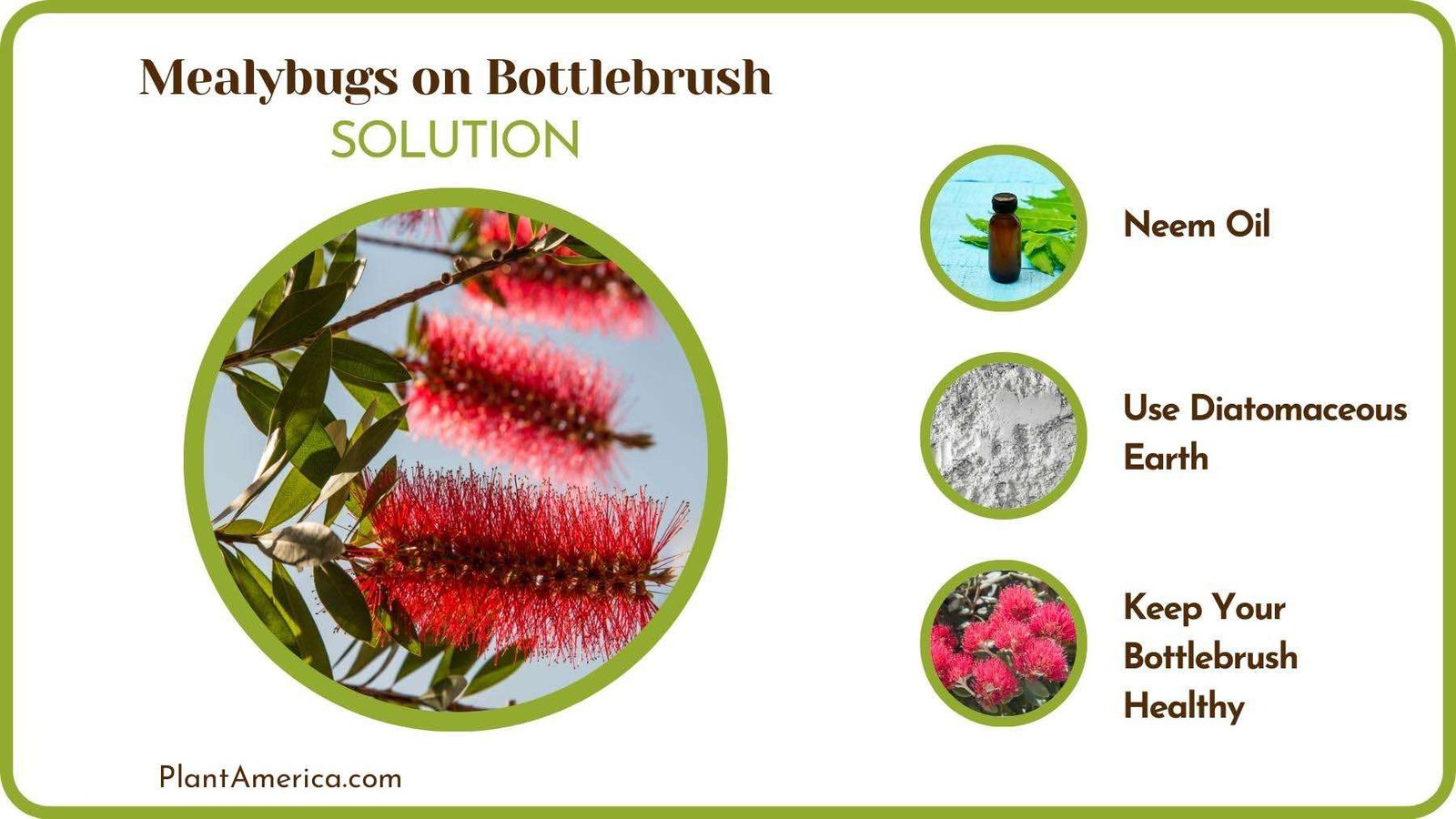
This solution, boasting antiseptic and antifungal attributes, stands out as a potent tool against mealybugs. What’s more, it ensures the health and vitality of your plants.
Of course, we’re talking about the widely favored neem oil — a cost-efficient option that truly delivers results! For comprehensive pest control purposes, a tablespoon of this potent oil per gallon of water should work well enough.
Exercise caution and review the product label closely before application, as proper dilution is essential for it to work. It’s worth noting that using neem oil during daylight hours might lead to potential plant burns, attributed to the sun’s interaction with the solution.
– Use Diatomaceous Earth
Diatomaceous earth takes the form of a fine powder crafted from the fossilized remnants of diatoms. The texture of this powder poses an abrasive challenge to the exoskeleton of insects. Upon contact, the powder adheres to the mealybugs’ bodies, transforming into minuscule shards that puncture through their protective waxy layers.
While administering diatomaceous earth, employ gloves and a mask so as not to inhale the fine particles. Mealybugs exhibit reduced activity during airy and dry conditions, heightening the effectiveness of the application.
Delicately dust the areas impacted by mealybugs on your bottlebrush with a thin layer of diatomaceous earth. Pay attention to results, as reapplication might be necessary. Additionally, if the powder forms clumps, it loses potency, warranting reapplication.
While it’s not a quick-fix solution, its gradual impact aids in reducing the mealybug population over time.
– Keep Your Bottlebrush Healthy
Prevention is your safest bet, and ensuring the health of your bottlebrush flower plants will be of the essence. By creating an environment that is less conducive to these pests, you can greatly reduce the likelihood of an infestation taking hold.
Bottlebrush flowers thrive in full sunlight. Proper exposure to sunlight encourages strong growth and healthy foliage, making it less likely for mealybugs to target weakened or stressed plants.
Avoid overwatering your plants, as excessively moist conditions can attract pests. Allow the topsoil to dry out between watering sessions, and ensure proper drainage to prevent waterlogged roots. Plant them in well-draining soil to prevent water stagnation.
Provide adequate space between your plants, as overcrowding can lead to poor air circulation, creating a damp environment that mealybugs like. Regular pruning helps remove dead or diseased foliage, reducing potential hiding spots for mealybugs. It also promotes better air circulation and light penetration, and bottlebrushes generally respond well to it.
Avoid over-fertilizing, as excessive nitrogen can lead to lush, tender growth that is more susceptible to mealybug attacks. Use balanced fertilizers and follow recommended application rates. Regularly inspect your bottlebrush for any signs of mealybugs, such as the presence of sticky honeydew, white cottony clusters, or distorted growth. Early detection allows for prompt intervention.
Before introducing new plants to your garden, inspect them thoroughly for signs of mealybugs or other pests. Isolating new plants for a period can prevent the spread of infestations.
By following these guidelines and maintaining a healthy environment for your bottlebrush plants, you can significantly reduce the risk of mealybug infestations. Remember that a combination of preventive measures and regular monitoring is key to keeping your plants thriving and pest-free.
Conclusion
The presence of mealybugs on your beloved bottle brush plants can pose a formidable challenge. These pests can wreak havoc once established, underscoring the importance of swift intervention. By staying with us and the tailored remedies we’ve explored, you can take proactive steps to protect the health and beauty of your bottlebrush flowers. Let’s remind ourselves once again:
- Identifying the signs of mealybug infestations, such as their distinctive appearance and the telltale honeydew residue, is the first step toward combating these pests. Ant activity can also be an indicator, alerting you to the potential presence of mealybugs on your plants.
- The consequences of mealybug feeding, including distorted growth and weakened appearance, highlight the urgency of timely action.
- From utilizing water pressure to employing predatorial insects, rubbing alcohol, insecticidal soaps, neem oil, and diatomaceous earth, each method offers a unique approach suited to different levels of infestation. These methods, when used individually or in combination, can help you effectively manage and prevent mealybug issues.
- Furthermore, maintaining the overall health of your bottlebrushes plays a pivotal role in preventing mealybug infestations. By providing optimal sunlight, proper watering, well-draining soil, and regular pruning, you create an environment less favorable for mealybugs to thrive.
- Vigilant monitoring, timely intervention, and incorporating natural predators into your garden ecosystem contribute to a comprehensive and successful strategy against mealybugs.
The key lies in a combination of prevention, observation, and targeted remedies to maintain the health and beauty of your garden treasures.