
Mandevilla leaves turning brown can be caused by a wide range of factors. However, they are easy to fix as long as you start early. Ensure that your Apocynaceae family plants are growing in the right environment and properly care for them. Learn the causes and solutions to the brown leaves of your Mandevilla genus plants by reading this article.
Why Are Your Mandevilla Leaves Turning Brown?
Your mandevilla leaves are turning brown because you are growing them in the wrong environment, not watering them correctly, or not giving them enough light. The plants may also be attacked by pests such as insects and microbes. Just check the growing conditions of your mandevillas.
– You Are Overwatering Your Mandevillas
Whenever you see brown leaves in your mandevillas, one of the first things you should consider is the watering rate of your plants. When you overwater mandevillas, they can get root rot and start dying, as their roots will be suffocating inside the soil. This gives room for the attack of harmful fungi.
Aside from overwatering your plants, their roots can also start rotting when the soil is too compacted. This happens, as water will no longer drain out quickly and will still lead to the suffocation of the roots. Therefore, check that you are not overwatering your mandevillas or watering them in poor soil.

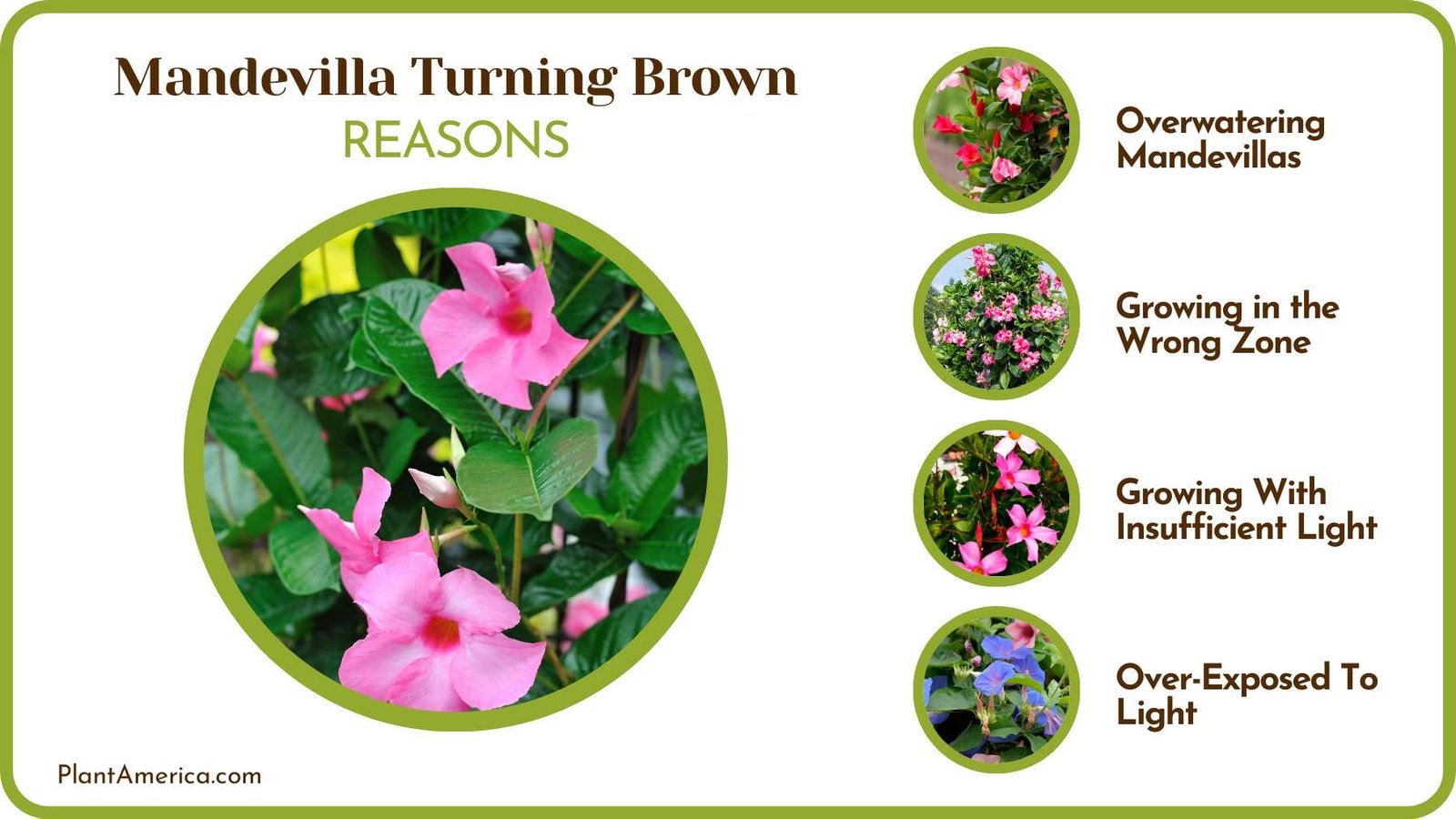
– The Mandevillas Are Growing in the Wrong Zone
Environmental stress is a very important factor to consider for your plants with brown leaves. Temperature and USDA zones are the first things to consider before you start growing any plant, as growing plants in the wrong zone can lead to stunted growth, brown leaves, and death. Check if the temperature needs of your mandevillas are met.
Even if you are growing your plants in the right zone, there still could be a chance that the plants are not growing in a room with optimal temperature. For example, if you are growing them close to an appliance such as a refrigerator, the temperature fluctuations can affect the color of the leaves and sometimes it will affect the plant’s blooming.
– The Mandevillas Are Growing With Insufficient Light
Another growing factor that majorly affects mandevilla plants is how exposed they are to light. Light is a very important factor for plants, as it ensures that the plants get enough energy through photosynthesis. Therefore, if you don’t give plants enough light, they will either get stunted growth or their leaves will start becoming pale.
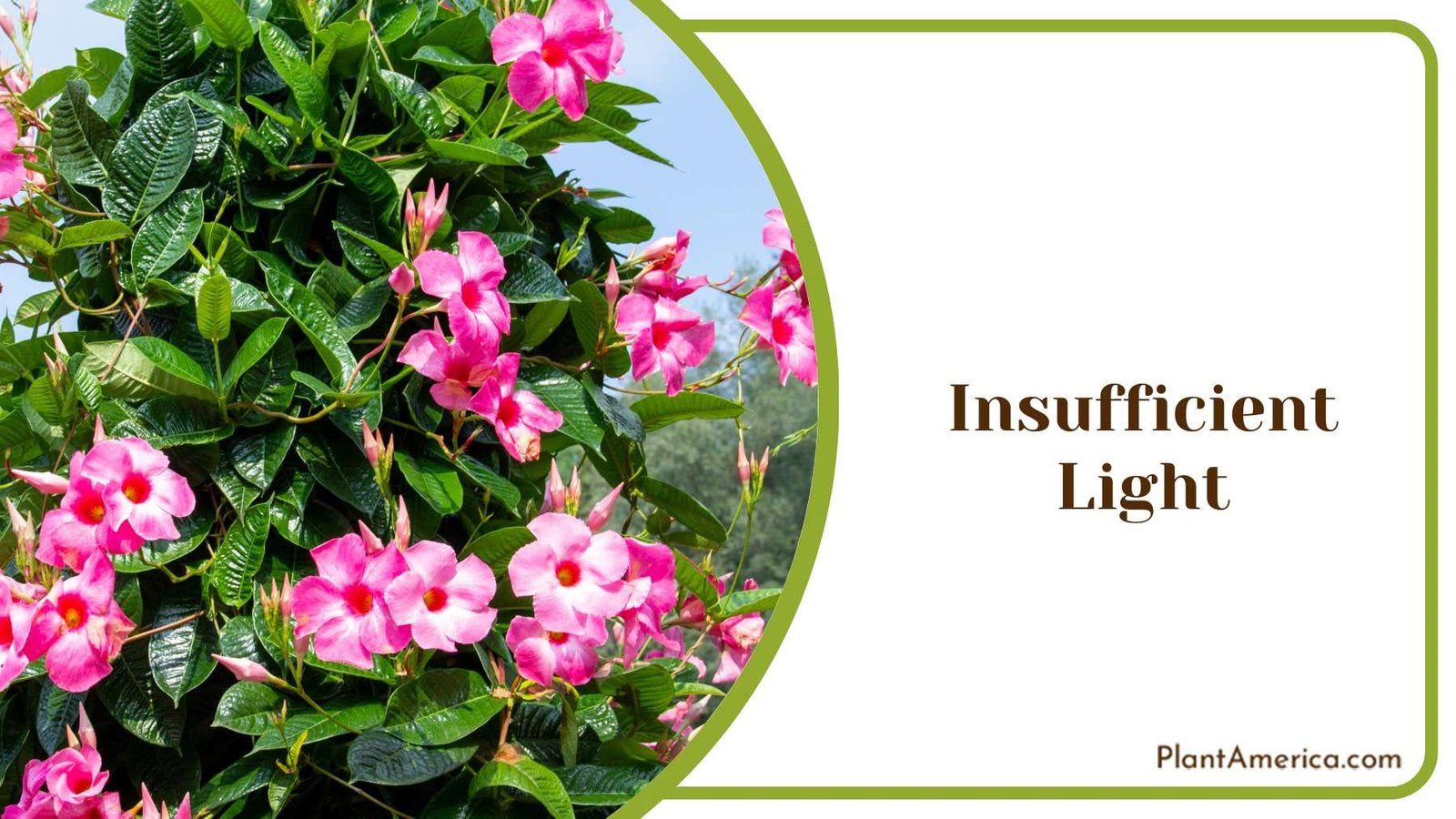
When a leaf gets too pale, it dies out and then becomes brown. Therefore, if insufficient light is the reason for the brown leaves of your mandevillas, there is a high chance that the leaves are already dead before you start treating them. Check your plants and try to find out if they are receiving enough light.
– The Mandevillas Are Over-Exposed To Light
Light exposure has several ways of giving brown-colored leaves to your mandevillas. Aside from the leaves becoming brown because of insufficient light, they can also become brown because of too much light exposure. When you plant your mandevillas in direct sunlight and they are getting more light than they need, the leaves can get burnt.
You can tell when your plants are overexposed to light. Check the brown leaves and you’ll notice that the brown patches are concentrated near the edge of the leaves. It would also be as if the leaves are burning from the outside. Also, the leaves will feel dry and flaky.
– Your Plants Have Nutrient Problems
Nutrient deficiency is a killer of mandevilla plants just like every other plant. Every plant needs nutrients to grow and maintain the beautiful colors of their leaves. Therefore, when you see the leaves turning pale, it could be because they lack nutrients. Pale leaves die out and turn brown, so leaves that are brown because of insufficient nutrients are most likely dead.
Likewise, too many nutrients present in the soil can kill your plants. When the nutrients are too many, your mandevilla plants will find it difficult to collect water from the soil. Therefore, the leaves and entire plant will start drying out or burning. This is very similar to when the plants are exposed to too much light.
– Your Plants Are Dehydrated
What if you are growing your mandevillas in the right environment but they are still getting brown leaves? Consider the watering needs of your plants. Inconsistent watering will make your plants wither and give them brown-colored leaves. Therefore, check how often you water your plants.
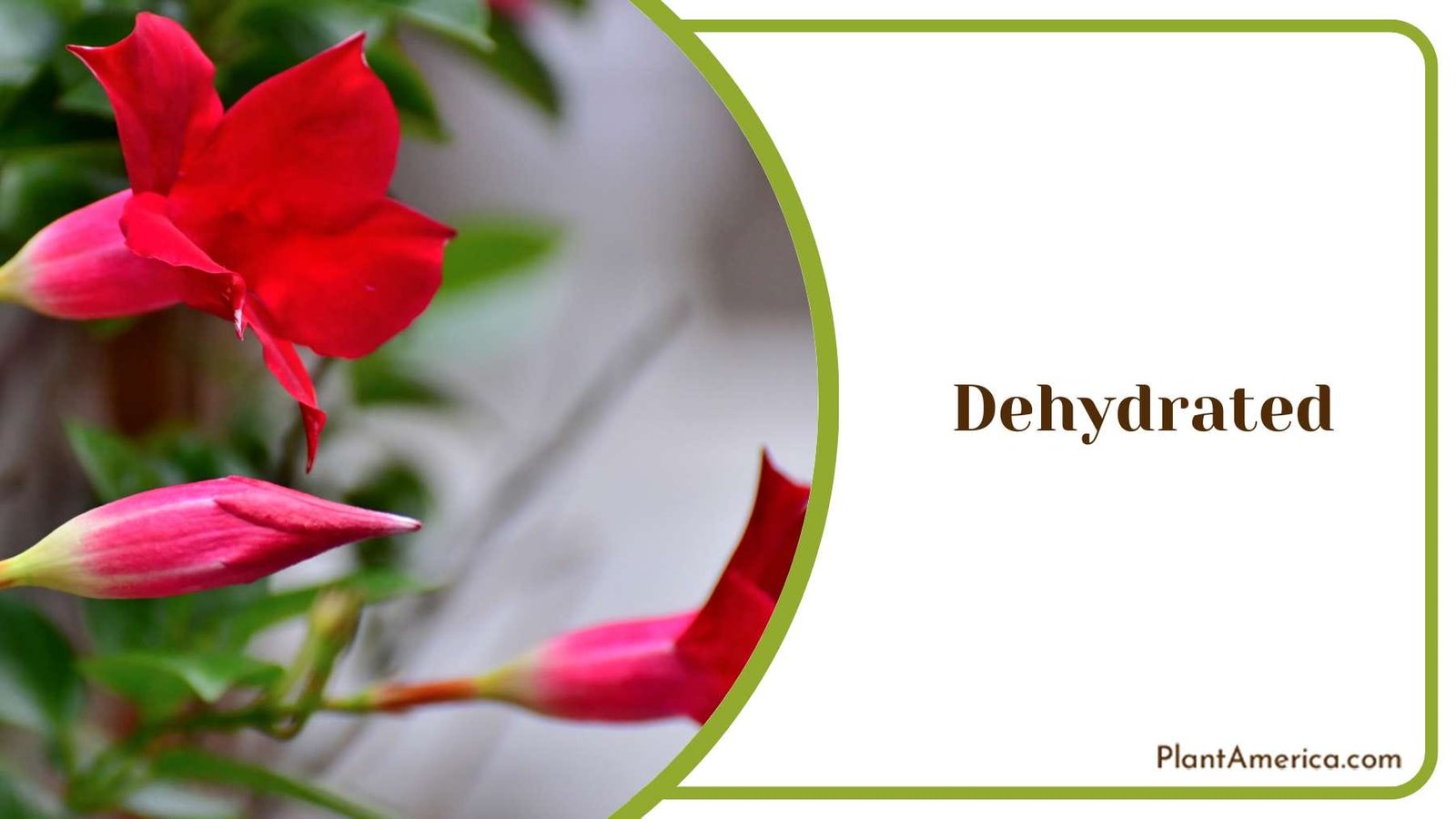
Do you wait until the soil dries out completely before you water the mandevillas again? Do you give your plants deep watering whenever you water them? These are two questions that you should ask yourself to be sure your plants are getting enough water. Dehydrated mandevillas will turn weak while their leaves become brown.
– Pests Are Attacking the Plants
There are many fungal diseases and some bacterial infections such as bacterial wilt that can attack your plants. Some insect pests such as spider mites, aphids, and mealybugs, are also killers of mandevillas. Therefore, check for pests, as they could be the reason for the discoloration of the leaves of your mandevillas.
Note that when pests attack plants, the leaves don’t become entirely brown. You will most likely see discolored spots, especially when the pests are insects. If the leaves are entirely brown because of pests, there is a high chance that they are already dead. Therefore, try to start acting quickly.
How To Treat Your Mandevillas With Brown Leaves?
To treat your mandevillas with brown leaves, ensure that you grow them in the right USDA hardiness zone as well as optimal temperature needs. Also, water them as regularly as you need to. Regularly check for pests and ensure that your plants are growing free from pests.
– First Consider the Mandevilla Temperature Needs
Temperature and USDA hardiness zone should be the first things to consider when growing any plant. These plants need to grow at 65-85 degrees Fahrenheit for optimal growth. Ensure that you grow them in zones 9-11. If you are growing your plants in the wrong zone, grow them in a controlled environment such as a greenhouse.
Also, ensure that you don’t plant your mandevillas in a room with fluctuating temperatures. If you notice that winter or intense summer is coming, protect your plants from the extreme temperatures if you are growing them outside. So long as the temperature needs of your plants are met, you can easily fix their leaves.
– Ensure Your Plants Receive Just Enough Light
Like every other plant, mandevillas need light to grow. Ensure that your plants get six or more hours of sunlight daily so that they can grow quickly. You can tell that your plants are getting the right light exposure when their new leaves stay green or freshly colored and are not becoming brown. The leaves will also not feel dry.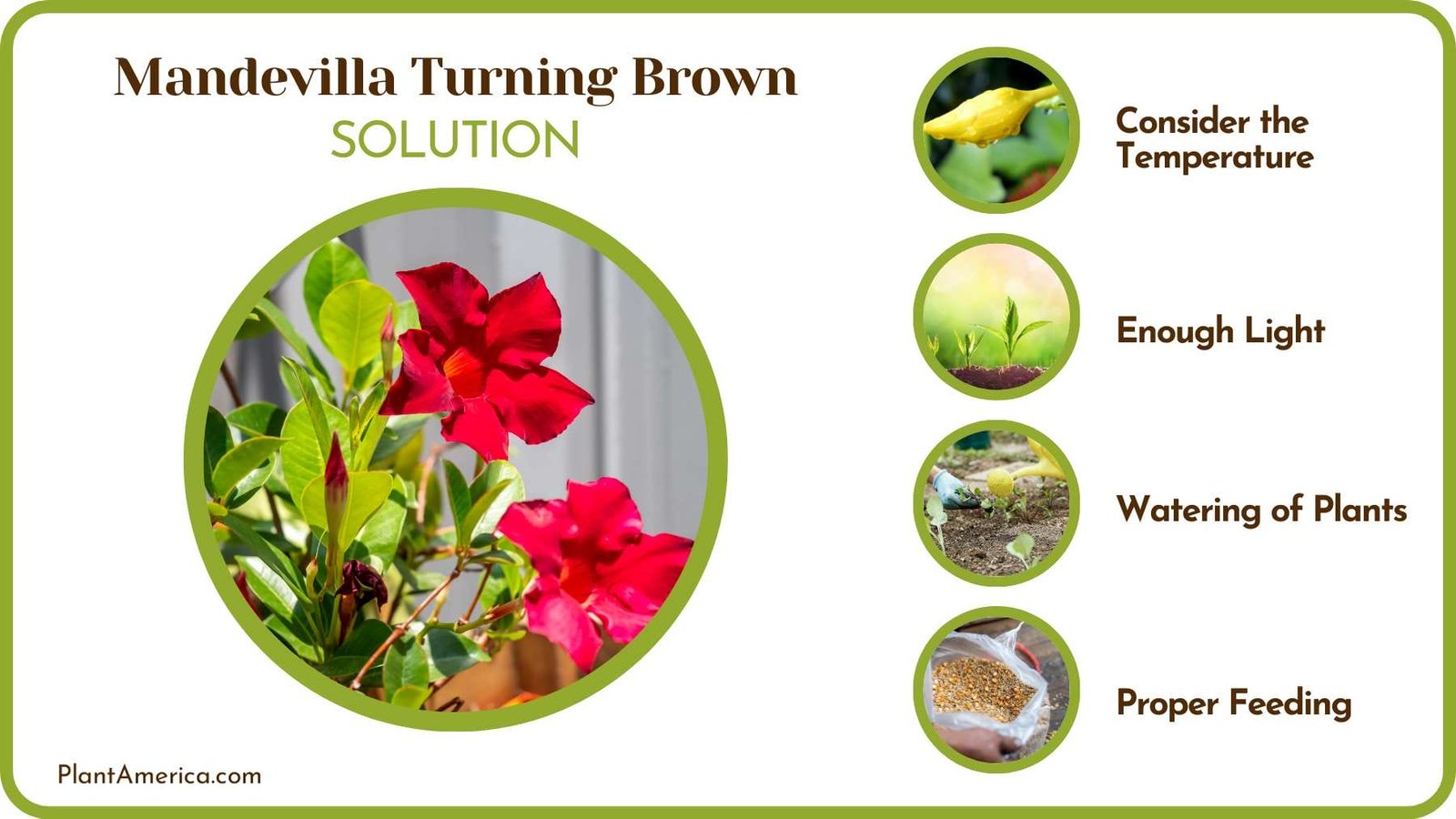
If there is not enough light exposure for your plants because you are growing them inside or under shade, you can install a grow light for the plants. With a grow light that gives your plants over 10 hours of daily light, the mandevillas will grow just fine. You will even love the colors of the leaves when you see them.
– Practice Proper Watering of Your Plants
How often do you water your mandevilla vine? The watering rate of your plants is very important to consider. Don’t wait until the soil completely dries out before you water your plants again. Water your plants when the soil or substrate is around or slightly below 50 percent in moisture. Also, try to water the plants deeply.

Remember that even though you are watering the plants correctly, they can still get leaves with brown colors if the substrate is compacted. Therefore, before watering your plants, check that the substrate is still well-drained. If you don’t see excess water leaving the substrate quickly, amend the substrate as quickly as you can.
– Practice Proper Feeding of Your Plants
After considering the watering rate of your mandevillas, consider the feeding rate. Brown spots in your mandevillas could signify that the plants are not getting enough nutrients or may be getting too many nutrients. Therefore, check that you are feeding them correctly. The first thing to consider is the type of fertilizer that you use.
Ensure that the fertilizer is suitable for mandevillas or plants like mandevillas. Also, strictly follow the instructions and dilute the product exactly the way you are required to. You can feed your plants monthly or every two months. If you feel that the leaves are pale because of the lack of nutrients, feed the mandevillas using the foliar spray method.
– Check the Humidity and Ventilation
Another very important factor to consider whenever you see your plant leaves becoming brown is humidity. When the humidity gets too high, water gets trapped in the leaves and they will turn brown after some days. To prevent this, ensure that you are growing your plants in a room with good ventilation.
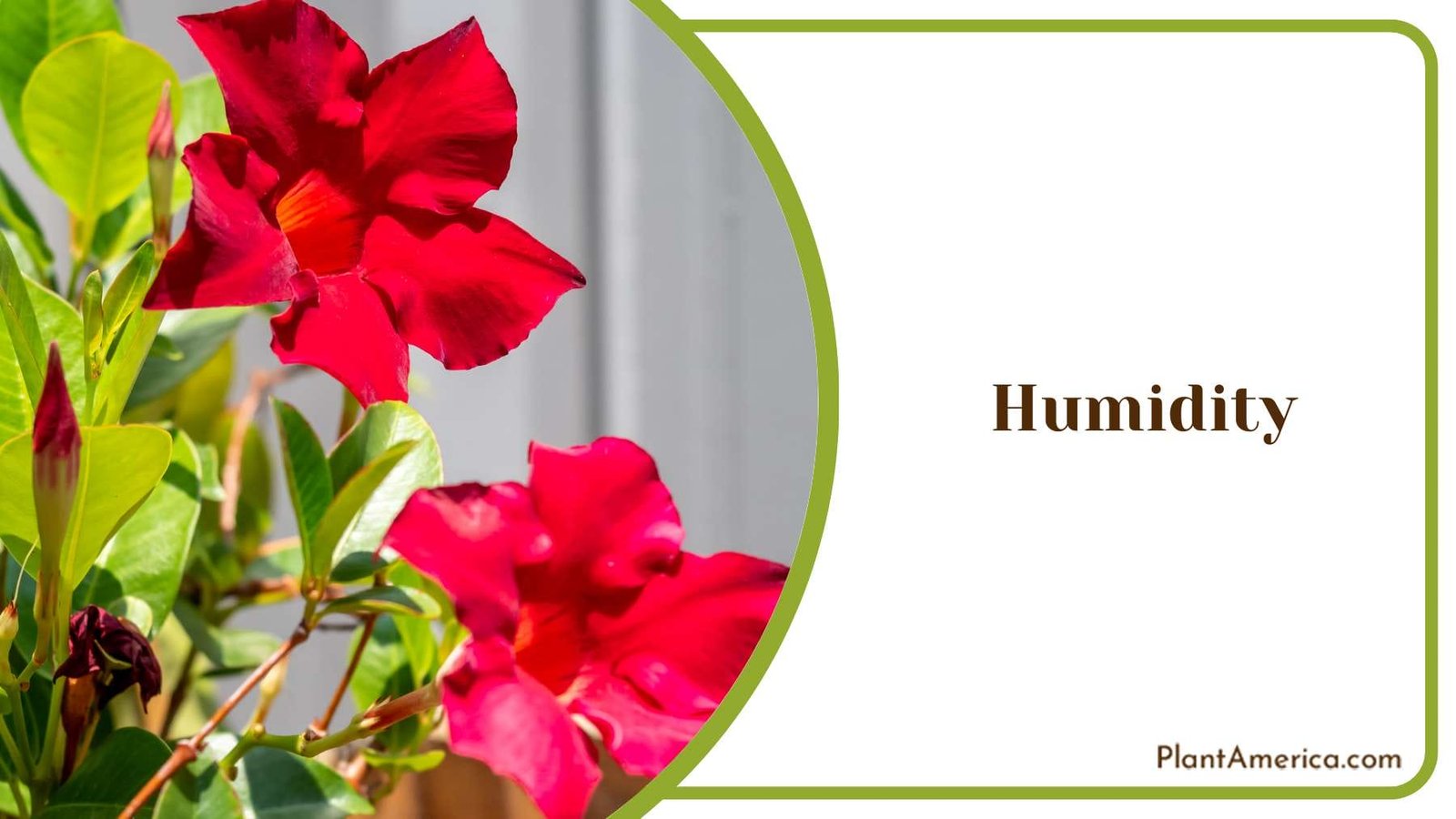
Mandevillas need over 65 percent humidity in a room. Ensure that the humidity is not significantly higher or lower than what they need. Also, consider the spacing of your individual plants. Ensure that each plant is spaced enough so that proper airflow can reach all the leaves of all your plants.
– Get Rid of Your Plant Pests
Remember that the brown, yellow, to pale leaf spots you see on your plants can be caused by pests. Therefore, check for and get rid of all the pests attacking your plants. For insect pests such as mites, you may need to turn the leaves to see the pests, as these pests love hiding under the leaves. You can also find them near the base of the petioles.
As for microbial pests, you can tell that they are attacking your plants when you see mold for fungi or spots for bacteria. After identifying the pests attacking your plants, head to a store and buy a pesticide. You can use an insecticide or fungicide for your plants.
– Prune the Mandevillas
After you see your plants turning yellow or brown, little can be done to change the color of the leaves back to their original color. This is simply because leaves become discolored only after they are damaged and it is difficult to repair or resurrect damaged leaves. Therefore, brown leaves will stay brown even when the plants become very healthy.
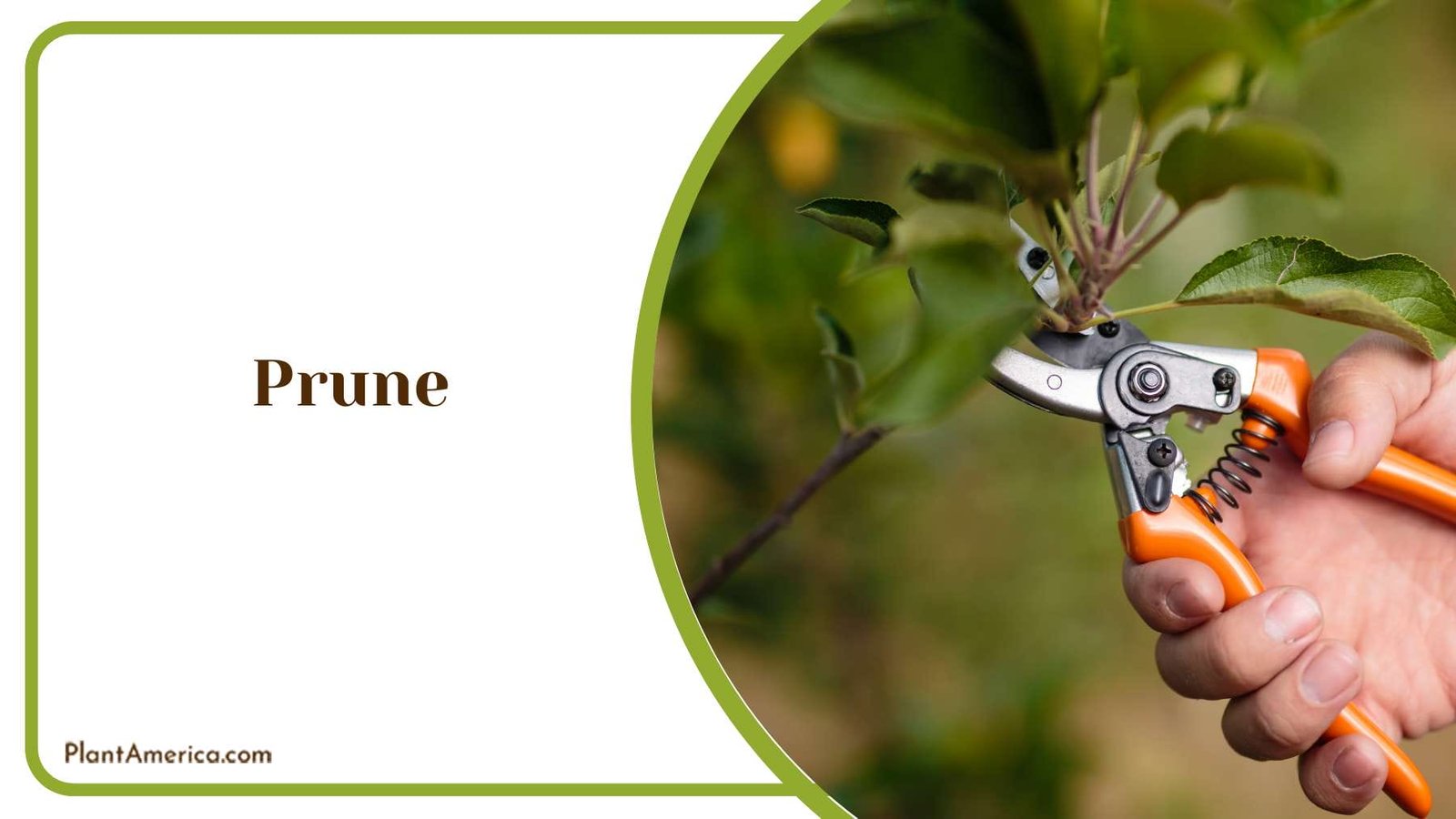
The solution to keep every leaf freshly colored in your plants is to prune off the brown ones. So long as you are sure that your mandevillas are healthy, remove all the brown leaves to make room for new ones. In a few weeks, the beauty of your mandevillas will be fully restored. 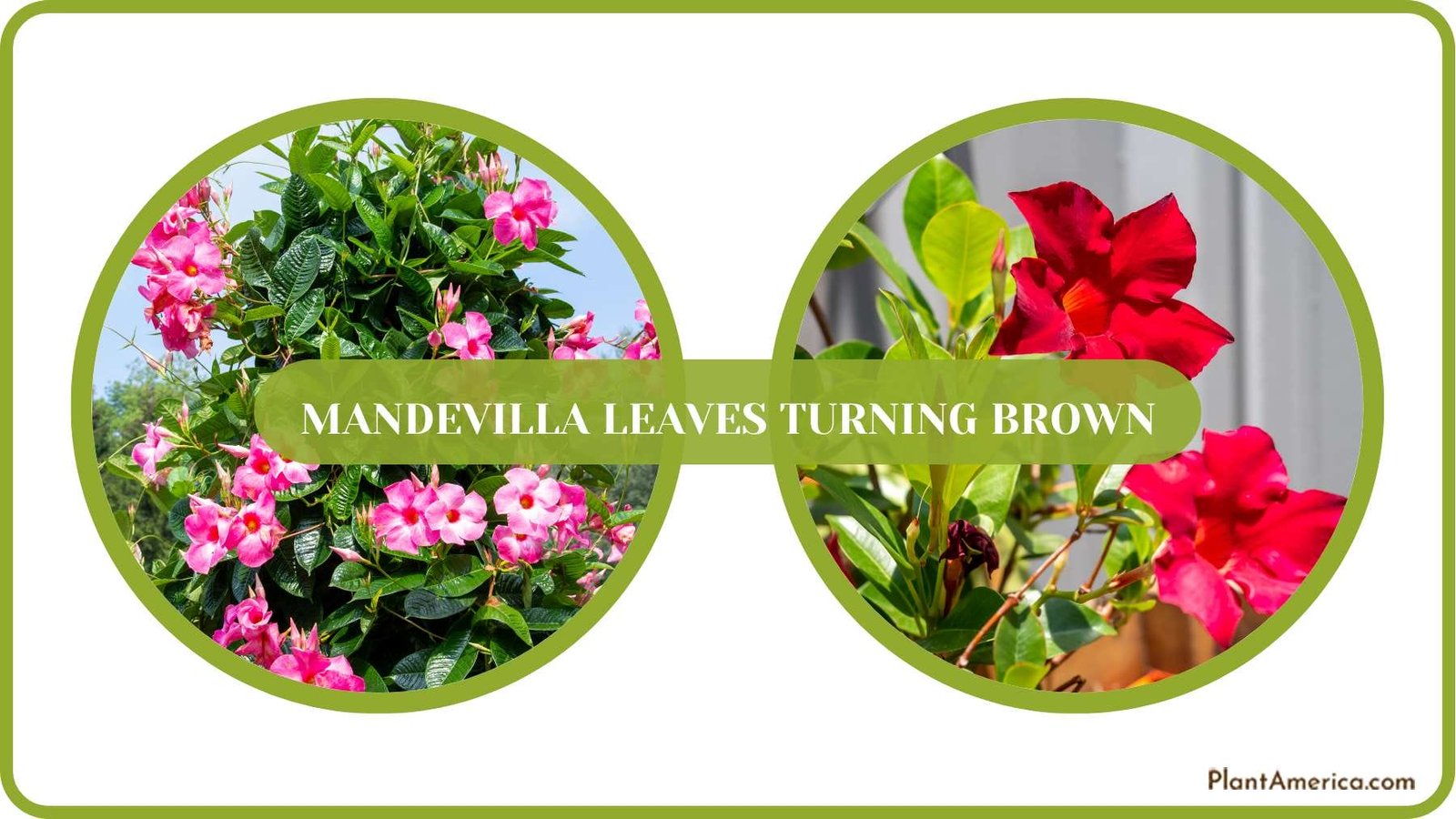
Conclusion
Surely, you will easily fix every cause of brown leaves in your mandevilla after reading this article, right? Before you start treating your plants, remember the following:
- Consider the growing conditions of your mandevillas whenever you see brown leaves.
- Note that age can also cause brown leaves, as the leaves can get old.
- Check the watering and nutrient needs of your plants with brown leaves.
- Ensure that your mandevillas are free from pests.
- After treating your plants, prune them to restore their beauty.
You are ready to go fix your plants. Don’t forget to check on the plants regularly and ensure that they don’t get sick anymore.
References
- (2018, March 6). Mandevilla – Anthracnose. Center for Agriculture, Food, and the Environment. https://ag.umass.edu/greenhouse-floriculture/photos/mandevilla-anthracnose
- Filipski, G. (2018, March 24). Growing Things: Monitor water, soil to keep mandevilla healthy. Edmontonjournal. https://edmontonjournal.com/life/homes/gardening/growing-things-monitor-water-soil-to-keep-mandevilla-healthy