
There are many types of trees in Minnesota that you can plant and grow without any hassle. Many of these trees have colorful fall foliage and some of them produce flowers that add to the beauty of your garden.

This list will introduce you to trees that can add variety to the landscape with their unique shapes, colorful foliage, and textures.
Beautiful Trees of Minnesota That You Can Easily Grow
1. Quaking Aspen

| Characteristics |
|
| Considerations |
|
| Growth Requirements |
|
| Care |
|
The quaking aspen gets its name because of the unique property that its leaves exhibit. In the presence of the slightest breeze, these leaves will tremble or “quake.” The tree is a member of the willow family and has a unique white trunk and colorful fall foliage.
The tree is not the greatest option for everyone because it is one of the high-maintenance plants but great for landscaping if you choose it.
2. Red Pine

| Characteristics |
|
| Uses |
|
| Growth Requirements |
|
| Care |
|
Red pine (Pinus resinosa) is one of the evergreen coniferous trees that are native to North America. The tree grows very tall with a conical shape that gradually turns into a narrow dome. The plant gets its name because of the red hue of its bark in the top crown area. There is also some red color present in the fissures of the trunk.
The tree has yellow-green needle-like leaves and symmetrical cones that change colors as they mature. The tree is a low-maintenance option for many regions and can even withstand windy conditions. It has a very long lifespan and can live up to a maximum of 500 years.
3. White Oak

| Characteristics |
|
| Benefits |
|
| Growth Requirements |
|
| Care |
|
This is one of the native trees that belong to the Eastern North American forests. The only requirement you will have to meet is the necessary space. They reach sizes up to 80 or even 100 feet in length.
When they grow in the wild, they’re resistant to many diseases. However, when grown in urban spaces, they can become very vulnerable, especially when they’re kept in small areas or gardens (their leaves might start to turn brown).
4. Sugar Maple
| Characteristics |
|
| Uses |
|
| Growth Requirements |
|
| Care |
|
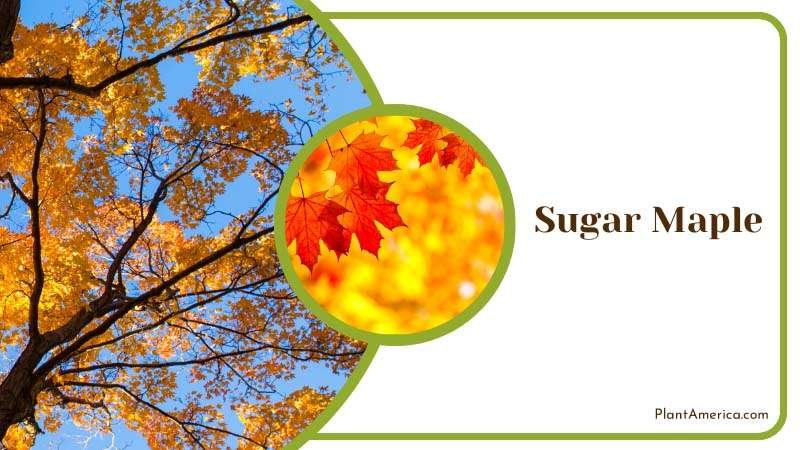
Acer saccharum is a unique tree among the native American maple trees. This tree is most well-known for its golden sugary sap. These trees are not very fast-growing. Maple trees only grow a few inches every year. They reach full maturity after several decades.
The tree produces vibrant foliage with bright and lively colors during the fall season. They beautify their surroundings with lush green leaves from spring to early fall.
5. Red Maple

| Characteristics |
|
| Benefits |
|
| Growth Requirements |
|
| Care |
|
The scarlet maple is the fastest-growing native tree that resides mostly in the eastern United States. It is a part of the Sapindaceae family, and it can reach a considerable height. The tree gets its name due to the bright red color of its foliage during the months of autumn. It is a reliable way to elevate the beauty of your garden while also being a source of shade.
The foliage of this maple is green during the summer and spring months alongside its reddish branches and leaf stalks, but when the fall arrives, its leaves turn bright red giving them their name.
6. White Spruce
| Characteristics |
|
| Uses |
|
| Growth Requirements |
|
| Care |
|
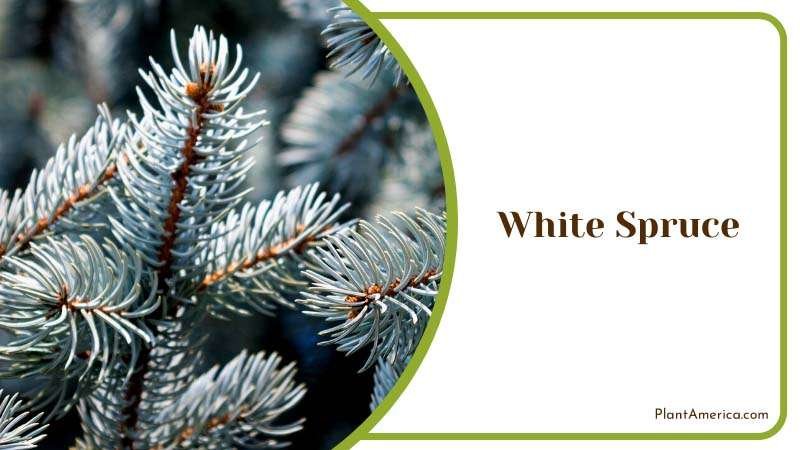
The white spruce is a large tree with a narrow crown that can reach considerable heights. It has four-sided sharp, need-like leaves that are whitish green in color.
They give off a foul odor that becomes pleasant with age. It is a low-maintenance tree that can grow in a lot of different environments.
7. Basswood
| Characteristics |
|
| Uses |
|
| Growth Requirements |
|
| Care |
|
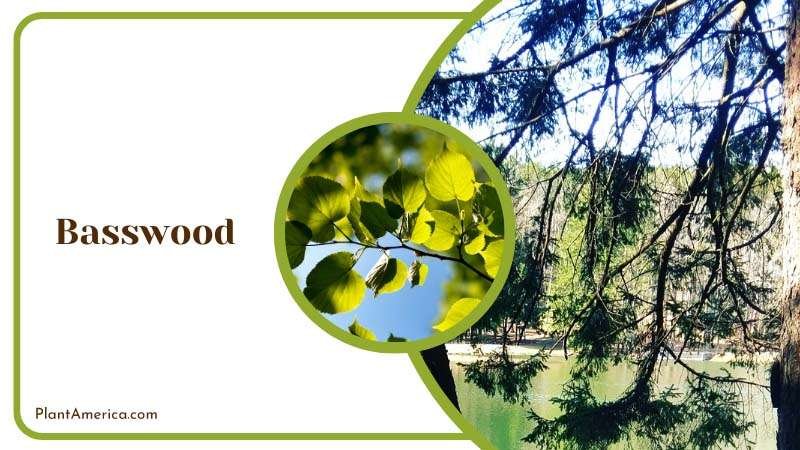
Basswood (Tilia americana), along with lime and linden, are all names for this tree. It belongs to the Tilia genus. These trees can be found in a lot of different regions, but there are plenty of them in Minnesota as well.
The linden tree is frequently used as a shade tree in many cities, and this is because its dense canopy can create a deep shade. These canopies have bright green or deep green leaves and a heart shape. In addition, the main source of attraction for linden trees is their fragrant flowers, which are yellow, that bloom every spring.
8. Black Cherry

| Characteristics |
|
| Benefits |
|
| Growth Requirements |
|
| Care |
|
The black cherry or Prunus serotina is a deciduous shrub that is very commonly found in the North and South Americas. The tree is related to other cherries like the sweet and sour cherry.
It is a fast-growing tree that has yellow or red autumn foliage and small white flowers. The tree can survive in several different growth environments without much hassle.
9. Arborvitae

| Characteristics |
|
| Uses |
|
| Growth Requirements |
|
| Care |
|
Arborvitae or Thuja occidentalis is a tree that is prized for its aesthetic nature. It is a low-maintenance plant that is a perfect option for hedges or as a privacy wall.
The plant is hardy with lush green needles and urn-shaped cones. It also displays vibrant fall foliage during the autumn months.