
Outdoor plants with long thin leaves are unique not only for their appearance but also for their wind-resistant nature. The thin, long leaves protect plants from possible overheating and drying during the day, as well as freezing at night.
This attribute is not found in plants that have thick and wide leaves, like the Brunnera macrophylla, coral bells and elephant ear. This article will give you a detailed outline of plants that have long thin leaves.
Various Outdoor Plants With Long Leaves for Best Vintage Outlooks
Outdoor plants with long thin leaves give a great finishing touch to your spaces, so they can be grown as ornamental grasses. Some of them are flowering plants whose blooms can brighten any outdoor area where they are grown. Ornamental grass-like plants look great when they are grown in hanging baskets where they can showcase the beauty of their leaves.
A quick outline of various outdoor plants with long thin leaves will assist you in making informed choices with regard to the ones that you should include in your outdoor garden.
1. Citronella

| Benefits |
|
| Uses |
|
| Distinguish characteristics |
|
| Care |
|
The scientific name of the citronella plant is Cymbopogon citratus. It is also known as lemongrass because of the citrus scent that it produces. The citronella plant gives your outdoor spaces amazing appearances if you grow it in a rocky area or close to your lawn. Please note that this plant originates from Southeast Asia. It is also very easy to propagate a Citronella plant!
2. Agave

| Benefits |
|
| Uses |
|
| Distinguish characteristics |
|
| Care |
|
Agave is a slow-growing member of the Asparagaceae family. It is also referred to as the “century plant” even though its survival does not exceed three decades. Agave is mainly grown for its beautiful and uniquely arranged foliage, then for the flowers.
Just a take-home bonus – the spikes on the edge of the agave’s leaves are a defense mechanism for protecting the plant from predators. There are a few plants that look like Agave that can be used in your garden.
3. Bromeliads

| Benefits |
|
| Uses |
|
| Distinguish characteristics |
|
| Care |
|
Bromeliads have their origins in Uruguay. These plants grow throughout the year, and they have long-lasting flowers. Even though the bromeliads can grow on trees, they are not parasites.
For some reason, mosquitoes love bromeliads a lot, so you should put together measures such as buying methoprene, which disrupts the life cycle of these insects.
4. False Red Yucca
| Benefits |
|
| Uses |
|
| Distinguish characteristics |
|
| Care |
|
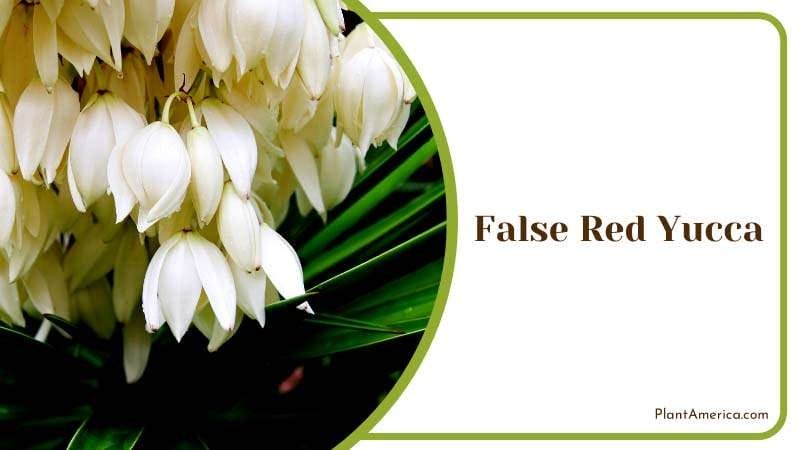
The false red yucca, also known as Hesperaloe parviflora, is also part of the century plant family. This plant is believed to be a symbol of purity, opportunities, protection and loyalty.
The false red yucca plant is loved by hummingbirds due to the red flowers that it produces, which is why it is also called the “hummingbird yucca”. Please note that the sap of the plant is slightly toxic, so never consume it when it’s not cooked.
References
- Melissa Petruzzello. Agave. Britannica.
Retrieved from https://www.britannica.com/plant/Agave - Neha Pathak. (January 03, 2023). Agave: Are There Health Benefits?. Webmd.
Retrieved from https://www.webmd.com/diet/agave-health-benefits - (June 8 2016). 5 fascinating facts about bromeliads. News-Journal.
Retrieved from https://www.news-journalonline.com/story/news/2016/06/08/5-fascinating-facts-about-bromeliads/27955572007/ - Hesperaloe parviflora. N.C. Cooperative Extension.
Retrieved from https://plants.ces.ncsu.edu/plants/hesperaloe-parviflora/