
Mock orange leaves turning brown makes the plants look ugly, as the leaves should be shiny green. However, the beauty of your Philadelphus coronarius plants should only come after their health and you must be sure that the plants are healthy.
 The leaves of your shrubs becoming brown could indicate that the plants are sick, so you have to take action. Learn how to find out the cause of your shrub leaves changing color and how to fix them by reading this article.
Why Are Your Mock Orange Leaves Turning Brown?
💥 Your mock orange leaves are turning brown because of a few growing conditions and cultural practices. For example, temperature, light, and humidity are factors that can affect your shrubs. Practices such as improper watering and fertilizing can also make the leaves of your shrubs brown.
– Root Rot
If everything seems right and you just see your mock orange shrub dying, suspect root rot. Aside from the leaves becoming burnt in your shrubs, root rot also makes your shrubs very weak. In a few days, the shrubs will start dying. All these happen if you fail to take action.
Root rot is mostly caused by bad watering practices. If you overwater your mock shrubs, they can get root rot, especially if the soil is old. The root rot fungi attack the weak roots of your shrubs and when they are populated enough, they start attacking healthy roots. This is what causes the death or weakening of your shrubs.
– Bad Soil Quality
When was the last time you changed or amended your soil? Remember that the soil is the bed of life for your shrubs. Your shrubs collect anchorage and nutrients from the soil. However, there are other soil qualities such as pH and the presence of pests that you must consider. If one soil quality is unsuitable for your shrubs, the shrubs will get brown leaves.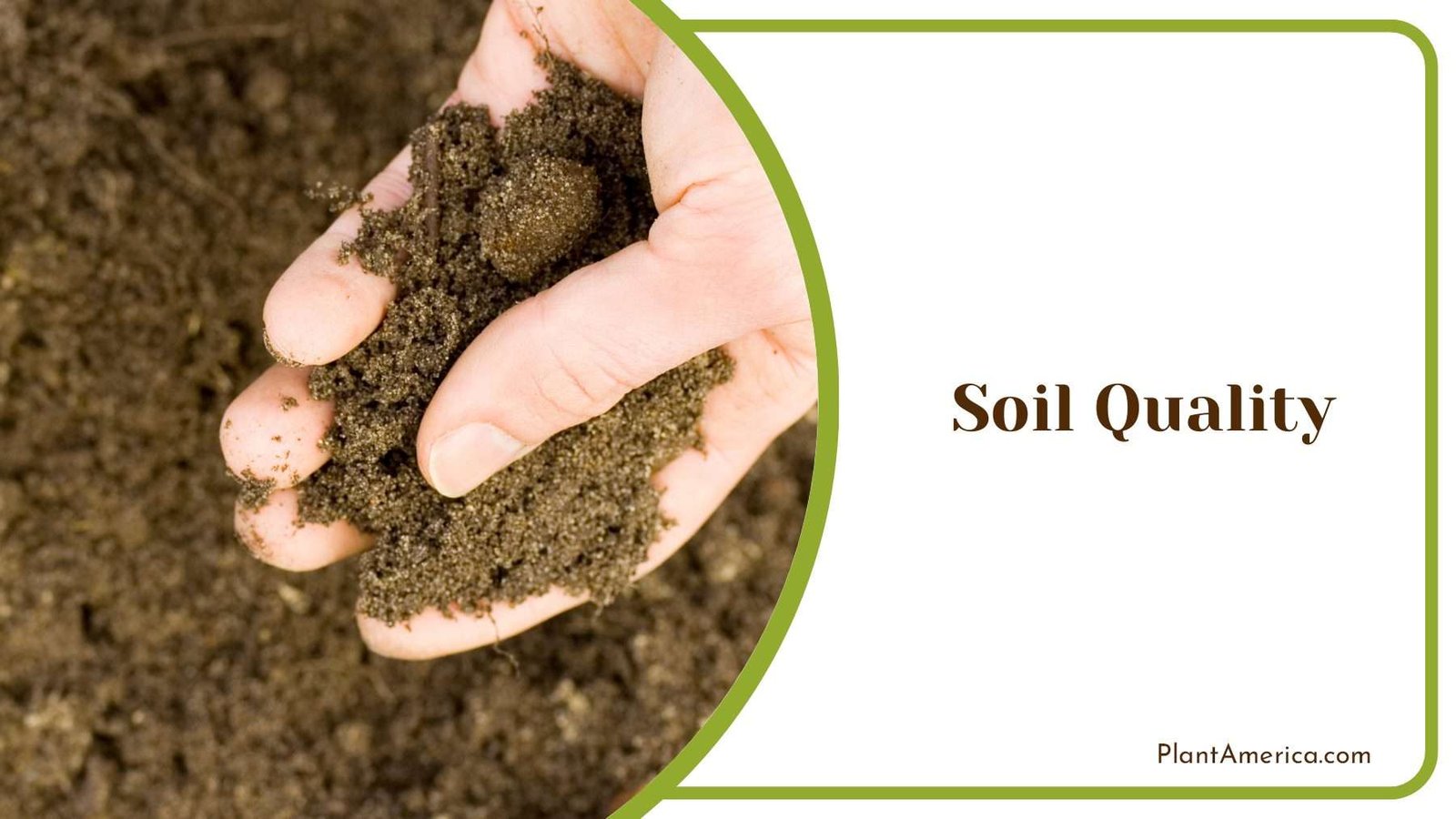
Unless you are a soil expert, you may not know the exact soil quality affecting your shrubs. Therefore, all the qualities are grouped as one (i.e., bad soil). If your soil quality is bad for your shrubs, the shrub leaves will start getting brown spots until they fall off the plant.
– Unsuitable Temperature and Other Conditions
After analyzing the quality of the soil below, you have to analyze the quality of the atmosphere above. Thankfully, atmospheric conditions are very easy for us to assess. This is because the atmosphere affects us just the way it affects your mock orange shrub. One very important factor to consider is temperature.
Temperature is the most important atmospheric condition to check, as it affects the entire growth of every plant. When your shrubs grow in a place with unsuitable temperatures, they will not grow well. Another atmospheric condition worth considering is the humidity of the place where your shrubs are growing.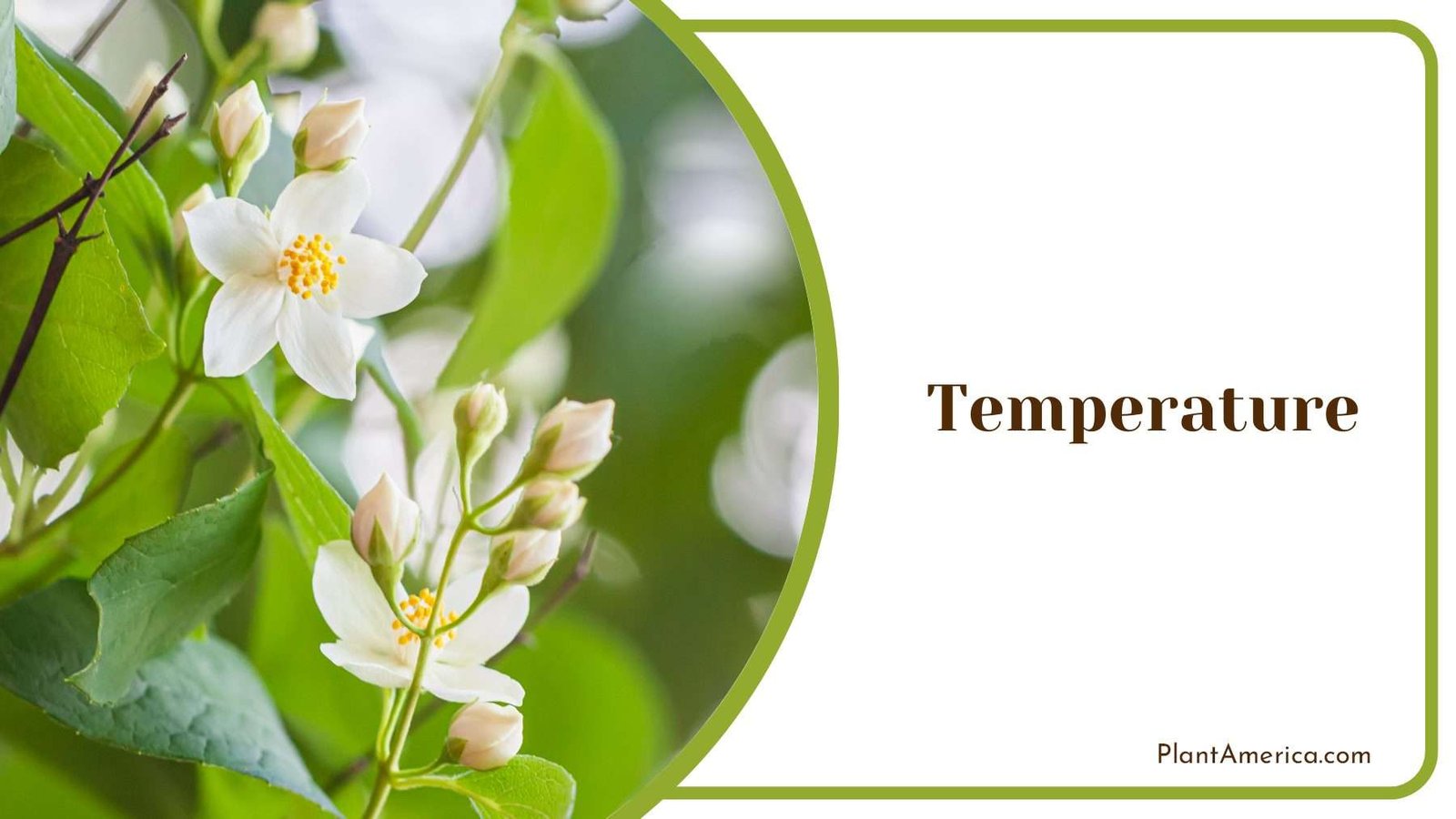
– Lack of Light
Lack of light can ultimately lead to your shrub leaves becoming brown. However, it is quite easy to tell that your shrubs are suffering from a lack of light. The very first symptom of this problem is that your shrub branches, especially the new ones, will become etiolated. This is because they are trying to stretch towards the light. The leaves will also start losing their colors.
If your shrubs continue suffering from low light for some days to weeks, the pale leaves will start becoming brown. In this case, they will be difficult to save. Carefully look at the leaves that are becoming brown in your shrubs. Are they paler than they should be? Also, how unusually thin are the new branches?
– Overexposure to Light
One would think that just exposing the orange shrub to enough sunlight can solve the problem of insufficient light. Well, if you give the shrubs more light than they need, they might get burnt leaves. However, note that the chance of shrubs and other larger plants getting sunburnt is quite low. This mostly occurs in summer.
To know whether your shrubs have sunburn or not, check the leaves with brown marks or spots. If these leaves are the upper leaves or those that receive the most sunlight in a day, your shrubs might just be suffering from sunburn. The leaves will feel very dry when you touch them.
– Dehydration of the Mock Oranges
Overwatering can lead to root rot and this can kill your shrubs. However, this does not mean that you should no longer water your shrubs. If you have bad watering processes and your shrubs lack water for long, the leaves might turn discolored or brown. Note that shrubs have long roots, so they can only get dehydrated if the soil is too loose and dry.
This means that it will be very obvious if your shrubs are suffering from dehydration. You can simply tell by looking at the soil or poking your fingers into it. The leaves will also feel dry when you touch them, as there is no moisture to maintain their freshness.
– Nutrient Problems
When last did you feed your shrubs? Again, shrubs will rarely suffer from nutrient problems, especially nutrient deficiency, as their roots will almost search for nutrients in the soil. Therefore, it will be obvious that your shrubs are suffering from nutrient deficiency, as you only need to remember when you last fed them.
However, your shrubs can easily suffer from overfeeding. This means that the nutrients in the soil are too many at a given time. This happens when you spray the plants with too much fertilizer or use unrotted organic fertilizer for your shrubs. It can lead to similar symptoms of sunburn. It can also kill your shrubs, especially if you don’t take action.
How to Fix Your Mock Orange Leaves Turning Brown
To fix your mock orange leaves turning brown, repot them so that they can have a new pot or substrate. You can also move their pots to a new location. However, you have to properly water and feed them so that they can grow healthily.
– Repot the Potted Shrubs
Are you growing your mock orange bush in a pot? If so, you can easily fix their problem. If the temperature and other atmospheric conditions are not suitable, you can easily move the shrubs to new locations. If the soil is bad or your shrubs are turning root-bound, you can easily change the pot. Repotting shrubs is important, so do so occasionally.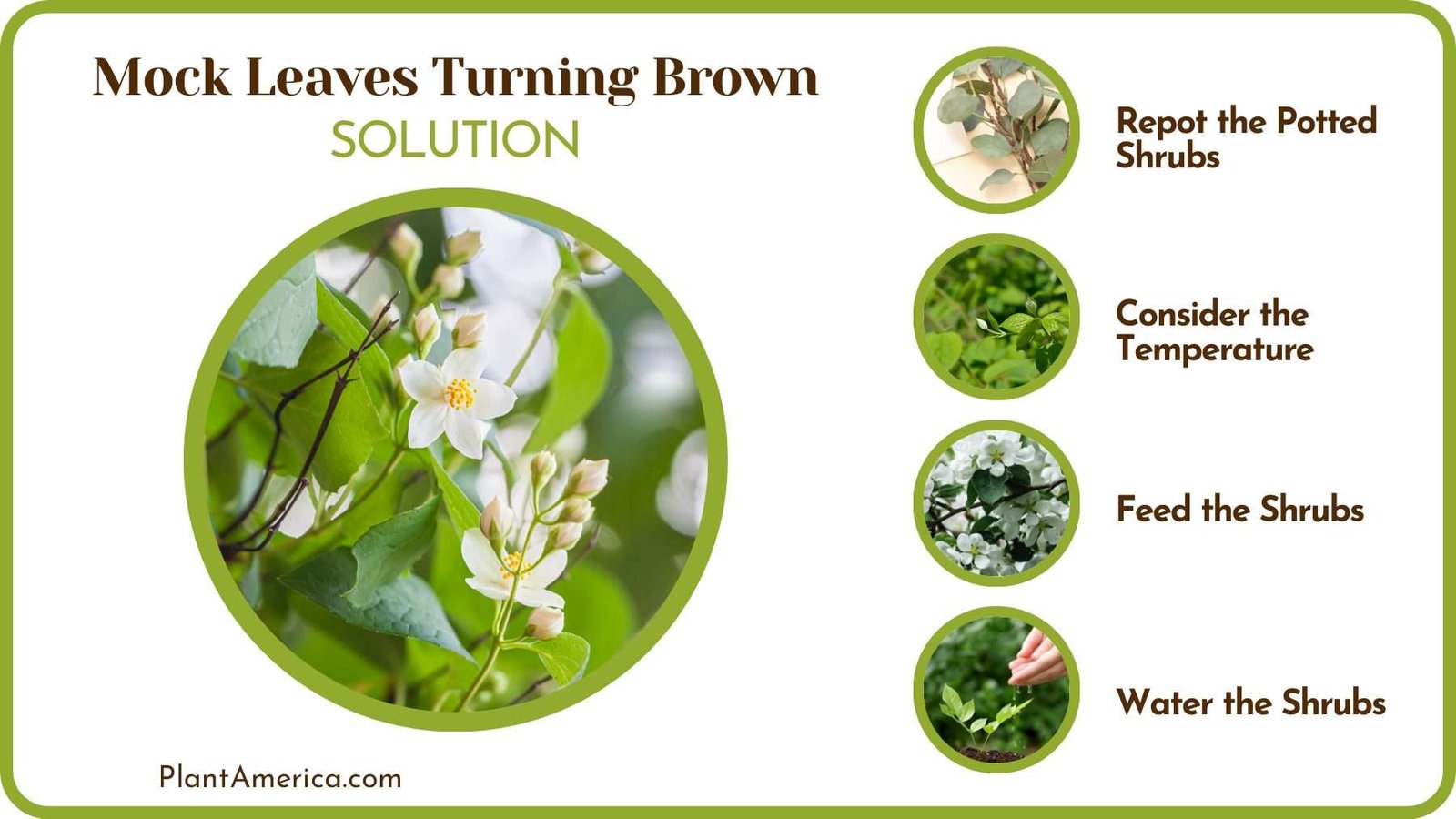
To repot your shrubs, go to a store and buy a new pot. The new pot should be two or three steps larger than the current one if the shrubs are root-bound. Otherwise, one or two-stepped larger pots are best. When repotting your shrubs, please remember to be careful so that you can keep their roots unharmed.
– Properly Water the Shrubs
You have to change your watering culture and properly water your shrubs if you have bad watering practices. Don’t overwater your shrubs nor fail to water them when you should water them. If the soil is dry, water your shrubs every three days or twice weekly. If the shrubs are still young, water them every two days or so.
When you water your shrubs, remember that they have deep roots. Therefore, they need deep watering. So long as the soil is suitable, excess water should quickly drain away from the soil. Therefore, don’t be afraid to water the shrubs deeply. Also, you can mist the shrub leaves if you like.
– Properly Feed the Shrubs
Just as you have created a new watering routine for your shrubs, you have to create a good feeding routine. To properly feed your shrubs, go to a store and buy fertilizer for shrubs. It’s totally your choice to use either organic or inorganic fertilizer. Just ensure that the nutrients are suitable for your shrubs.
If you are using organic fertilizer, ensure that they have readily available nutrients and will not burn your shrubs. Follow the instructions that come with the fertilizer so that you can properly dilute it and use it for your shrubs. So long as you do it well, your shrubs will grow healthily.
– Consider the Temperature of the Environment
Remember that the atmospheric conditions are always worth considering. Your shrubs grow best at 55-75 degrees Fahrenheit. Also, they love humidity levels above 60 percent. If their current location is not suitable for them, you can move them to a better place. If the problem is humidity, consider misting your shrubs while you water them.
Note that before you start growing shrubs in the first place, you must consider their USDA hardiness zone, as this will tell you the best place to grow your shrubs. Your Philadelphus shrubs grow best in zones 4-8. Don’t grow them outside these zones except you want to grow them in a controlled environment.
– Grow Your Shrubs in a Well-Lit Place
You also want to consider the lighting needs of your shrubs. Shrubs usually need around eight hours of sunlight daily, especially in off-summer months. When it’s summer and you cannot change their positions, you may have to use a shade cloth for your shrubs, especially in the afternoon hours of the day. With this, your shrubs will never lack light or suffer from sunburn.
If, for some reason, you are growing your shrubs in a place without access to eight hours of sunlight, consider installing artificial lights. With artificial grow lights, your shrubs will get their needed amount of sunlight.
– Repel Pests
Surely, your shrubs will get attacked by pests. Shrub pests come in different forms. Diseases such as powdery mildew, gray mold, and bacterial blight can change the colors of your shrub leaves. Also, the disturbance of insects can make your shrubs brown or even kill them. Therefore, you have to get rid of the pests and diseases affecting your shrubs.
Your pest extermination style depends on the type of pest attacking your shrubs. However, the first thing to do is to check for the source of the pests. Where are the pests coming from? If you can eliminate the shrub pests from their source, you will have solved your shrub pest problems.
– Prune Your Mock Oranges
After fixing your shrubs and ensuring that no new leaf will become brown, you have to prune the old leaves that have turned brown. Brown leaves will no longer turn green, as they are dead. Therefore, if they are spoiling the look of your shrubs, remove them.
To prevent the attack of microbial pests on your shrubs, use sterilized pruning shears to prune the shrubs. Also, to propagate your shrubs, prune off long cuttings so that you can plant them in new places. Congratulations, as your shrubs are officially growing healthily!
Conclusion
It does not matter whether the shrub leaves turn brown or not, you can now properly care for your shrubs. Here are a few reminders from this article for you:
- Your Philadelphus lewisii plants can become brown because of unsuitable temperatures.
- Dehydration, overexposure to light, and overfeeding can make the leaves look burnt.
- Lack of light and nutrient deficiency will make the leaves look brown, but they usually start as pale.
- Pests such as bacteria, insects, and fungi can make your shrubs brown.
- After treating your shrubs, prune off the brown leaves
You are ready to go fix your shrubs. Remember to stick to the care tips in this article.
References
- Lerner, R. (2020, July 29). Mock orange stumps knowledgeable pair. Indiana Yard and Garden – Purdue Consumer Horticulture. https://www.purdue.edu/hla/sites/yardandgarden/mock-orange-stumps-knowledgeable-pair/
- Mockorange. (n.d.). UMN Extension. https://extension.umn.edu/trees-and-shrubs/mockorange
- Mock Orange. (n.d.). Mock Orange. https://www.uaex.uada.edu/yard-garden/in-the-garden/reference-desk/shrubs/mock-orange.aspx