
Living fence plants allow us to add privacy and charm to our outdoor spaces in a natural, sustainable way. We’ll explore options for living fences and hedges that require little maintenance while bringing nature into your yard.

Whether you want a fast barrier to block views, a living screen for four-season interest, or a natural border plant to welcome wildlife, we have ideas to match your needs and space. Read on to discover living fences to incorporate into your garden design.
Top Choices for Beautiful, Low-Maintenance Living Fences
1. Privet Hedge
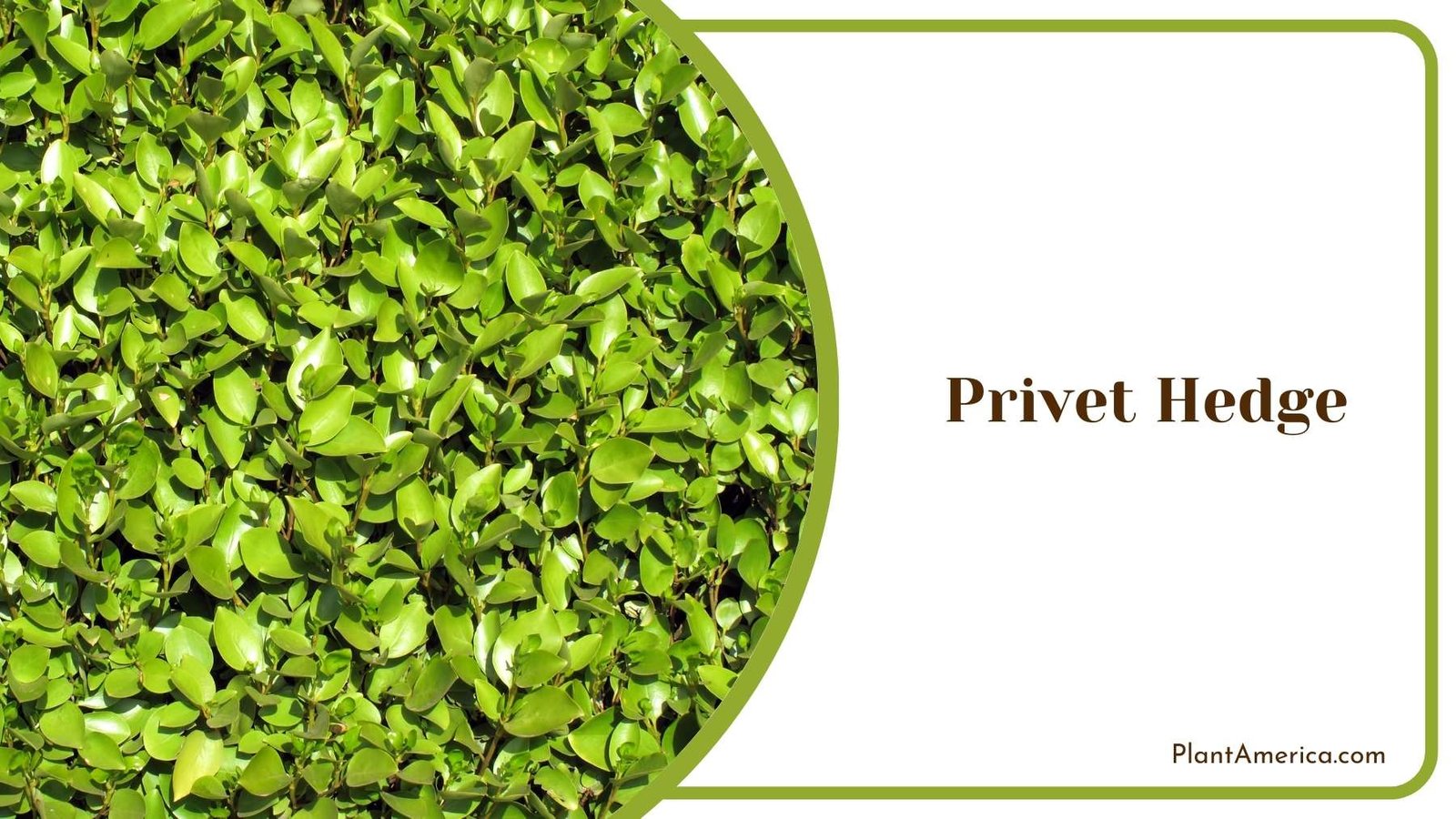
- Growing Season: Deciduous
- Leaf Shape: Elliptic, Oval
- Specific Needs: Well-drained Soil, Full sun to partial shade
- Common Pests: Aphids, Scale insect
Privet hedges are a popular choice for privacy barriers or borders in gardens due to their dense growth and ability to be closely trimmed into neat geometric shapes.
Native to Europe and Asia, privet is a genus containing over 500 shrub species, but the common variety grown for hedges is Ligustrum vulgare. This privet variety forms a sturdy, evergreen wall of leathery dark green leaves that effectively block visibility in either direction.
While privet is sometimes maligned for being overly common in traditional garden designs, it has proven itself as a reliable option over centuries of use. The denseness it achieves from ground level up to six or seven feet tall means it establishes a solid visual and physical barrier immediately upon planting.
With regular trimming several times per year, privet hedges stay compact yet maintain their thick wall of foliage. Their leathery leaves also make the hedges durable, withstanding various weather conditions without damage. For gardeners seeking traditional boundaries or privacy screens, privet hedges offer a simple solution that requires minimal ongoing care.
They thrive in most soil types and sun or shade exposures, tolerating different growing conditions without complaint. While other hedging plants may provide more colorful flowers or unique foliage, privet exists solely to define spaces and conceal what lies behind the neatly clipped evergreen barrier.
Their resilience and versatility cement privet hedges as a timeless choice for framing gardens across diverse landscapes..
2. Hawthorn Hedge

- Growing Season: Deciduous
- Leaf Shape: Serrated, Oblong
- Specific Needs: Well-drained Soil, Full sun to partial shade
- Common Pests: Aphids, Caterpillars
The hawthorn hedge is a classic choice for any garden. With its dense, fast growth and sheer hardiness, hawthorn provides superb privacy and boundary protection. Its gray-green leaves offer year-round foliage, but what truly stands out is the stunning display of white blooms in spring.
Clusters of sweetly scented flowers emerge en masse, covering the branches and filling the air with their perfume. As if this weren’t charming enough, hawthorn also puts on a show in fall when its leaves take on vibrant shades of crimson and scarlet.
Beyond its good looks, hawthorn has practical merits as well. The thick, thorny stems naturally deter human and animal intruders from infringing on one’s space. Yet despite its hardy defenses, hawthorn is quite manageable with the right tools.
Regular trimming keeps the hedge neatly shaped and enhances its density. Over time, it will form a tight, impenetrable barrier along fences or property lines. Also remarkable is how readily hawthorn accommodates pruning and sheering. Complex patterns and topiary designs can transform an ordinary hedge into a formal architectural element.
While hawthorn demands little beyond the sun and occasional water, it rewards the gardener with constant ornamentation from spring through fall. Its lush greenery, fragrant blooms, and fiery foliage bring beauty to the landscape for most of the year.
Best of all, once established, a hawthorn hedge demands very little ongoing care. It is a proud, long-lasting testimony to the gardener’s vision and commitment to natural landscaping.
For anyone seeking an unfaltering buffer with abundant year-round appeal, the hawthorn hedge is a choice that truly stands the test of time..
3. Barberry

- Growing Season: Deciduous
- Leaf Shape: Ovate, Small
- Specific Needs: Well-drained Soil, Full sun to partial shade
- Common Pests: Powdery mildew, Spider mites
Barberry is a woody shrub known for its colorful foliage and fruit. It comes in many varieties with leaves ranging from purple to yellow to variegated greens. Small yellow flowers emerge in spring, followed by berries that mature from green to bright red, depending on the specific cultivar. Barberry grows well in most soil types, getting full sun to partial shade.
It thrives as a low hedge, border plant, or accent in the landscape. Some varieties have nicely exfoliating bark that also adds visual interest in the winter months. Barberry is generally disease-resistant and drought-tolerant once established.
While its thorns can deter grazing deer and other animals, barberry provides valuable bird cover and food. Its abundant berries persist into winter, nourishing birds during the lean months.
Barberry multiplies slowly through suckering to fill out a space and requires minimal maintenance beyond an occasional trim or pruning to maintain its shape. Its colorful foliage and fruit make barberry a desirable addition to any garden.
Barberry hedges offer textural, four-season appeal with coppery red new growth in spring, showy flowers in early summer, and ornamental red fruits that persist into winter. Their upright, columnar habit works well for tall screens and hedges, while more sprawling cultivars beautifully fill garden beds and frame pathways.
4. Buxus (‘Green Velvet’ Boxwood)

- Growing Season: Deciduous
- Leaf Shape: Ovate, Elliptical
- Specific Needs: Well-drained Soil, Partial shade to full sun
- Common Pests: Scale insect, Leaf Spot
‘Green Velvet’ boxwood hedges are evergreen shrubs with ovate leaves that thrive in well-draining soil. Common pest problems include various fungal leaf spot diseases under humid conditions.
‘Green Velvet’ boxwood hedges make excellent living fences due to their dense, compact growth and ability to be sheared into linear forms. When mature, boxwood hedges provide natural privacy barriers that require little maintenance beyond an occasional shaping and trimming once or twice a year.
Boxwood hedges offer year-round structure and texture with thick, dark green foliage. Their small stature works well for formal, low hedges between foundations and walkways or framing garden entrances. To keep boxwood hedges thriving as living fences, prune directly after flowering in late spring or early summer.
Excessive pruning will promote thicker, denser growth, making hedges fuller and requiring less space between individual plants. Fertilizing using a balanced, slow-release plant food in early spring also improves foliage production and hardiness. Proper care and early detection of issues will ensure boxwood hedges remain beautiful, low-maintenance living fences for decades.
5. Pyracantha
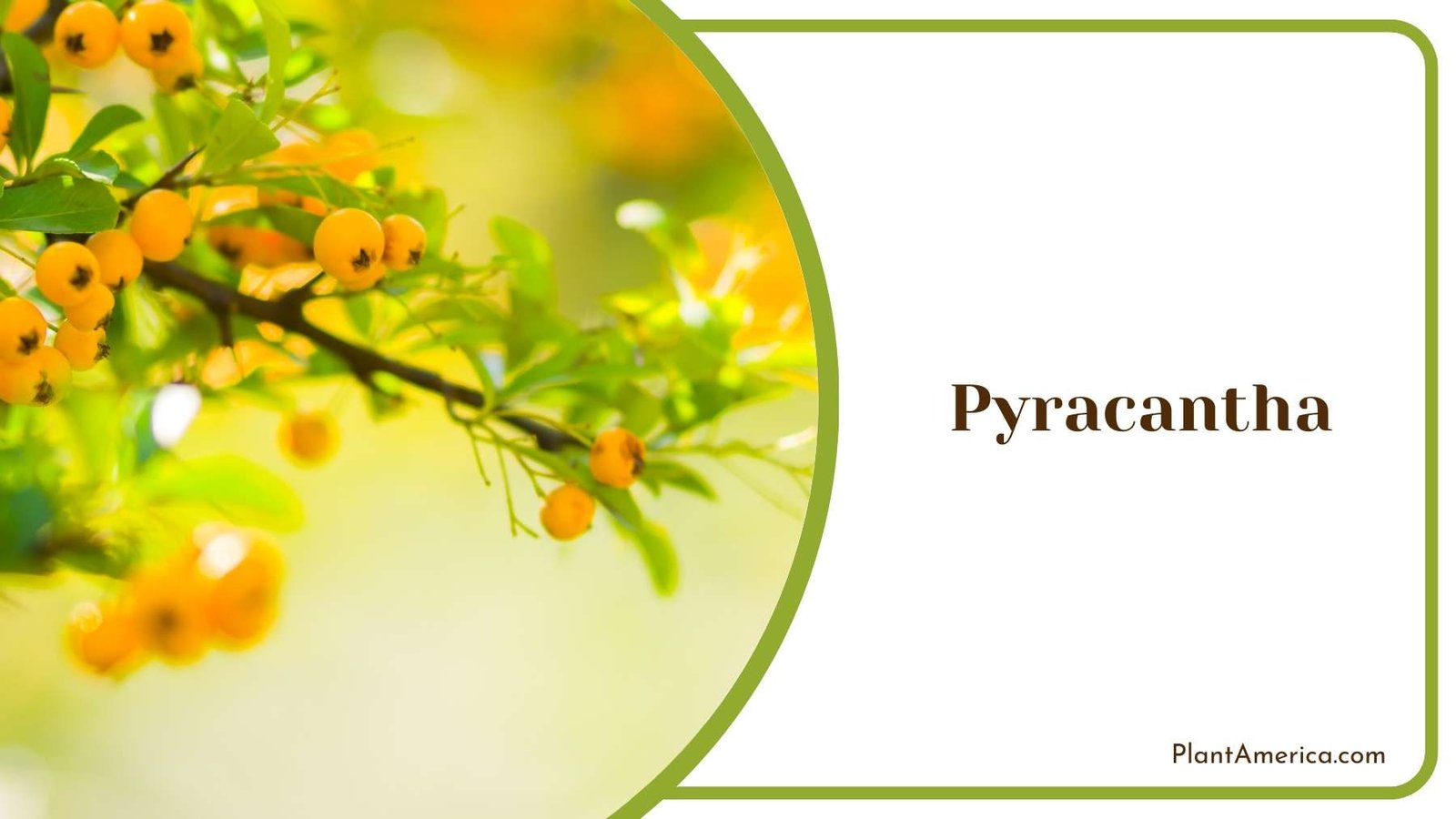
- Growing Season: Evergreen
- Leaf Shape: Simple, Lanceolate
- Specific Needs: Well-drained Soil, Full sun
- Common pests: Spider Mites, Aphids
Pyracantha is a dense, thorny hedge shrub that provides both beautiful ornamentation as well as formidable protection. Native to Southeastern Europe and Asia, pyracantha grows vigorously and fully, forming a thicket of interwoven stems covered in dark green, glossy leaves.
In autumn and winter, clusters of fiery orange or scarlet berries emerge among the leaves, creating a striking display that draws birds and eye-catching color even in seasons past bloom.
The berries are also the source of pyracantha’s protective quality, as each is surrounded by four to eight sharp, pointed spikes. These thorns deter intruders like deer or trespassers who may try to pass through the dense foliage.
At the same time, the intricate spines add visual interest to the shrub’s textured appearance. Come warmer months, pyracantha erupts in lush clusters of small white flowers that attract pollinators, lending brief beauty before the berries emerge.
Well-suited for shaping into formal or informal hedges, pyracantha responds well to trimming and pruning to maintain a distinctive form. It spreads vigorously to establish an impenetrable thorny barrier measuring six to twelve feet tall, ideal for enclosing boundaries, outlining gardens, or screening unsightly areas from view.
6. Japanese Yew
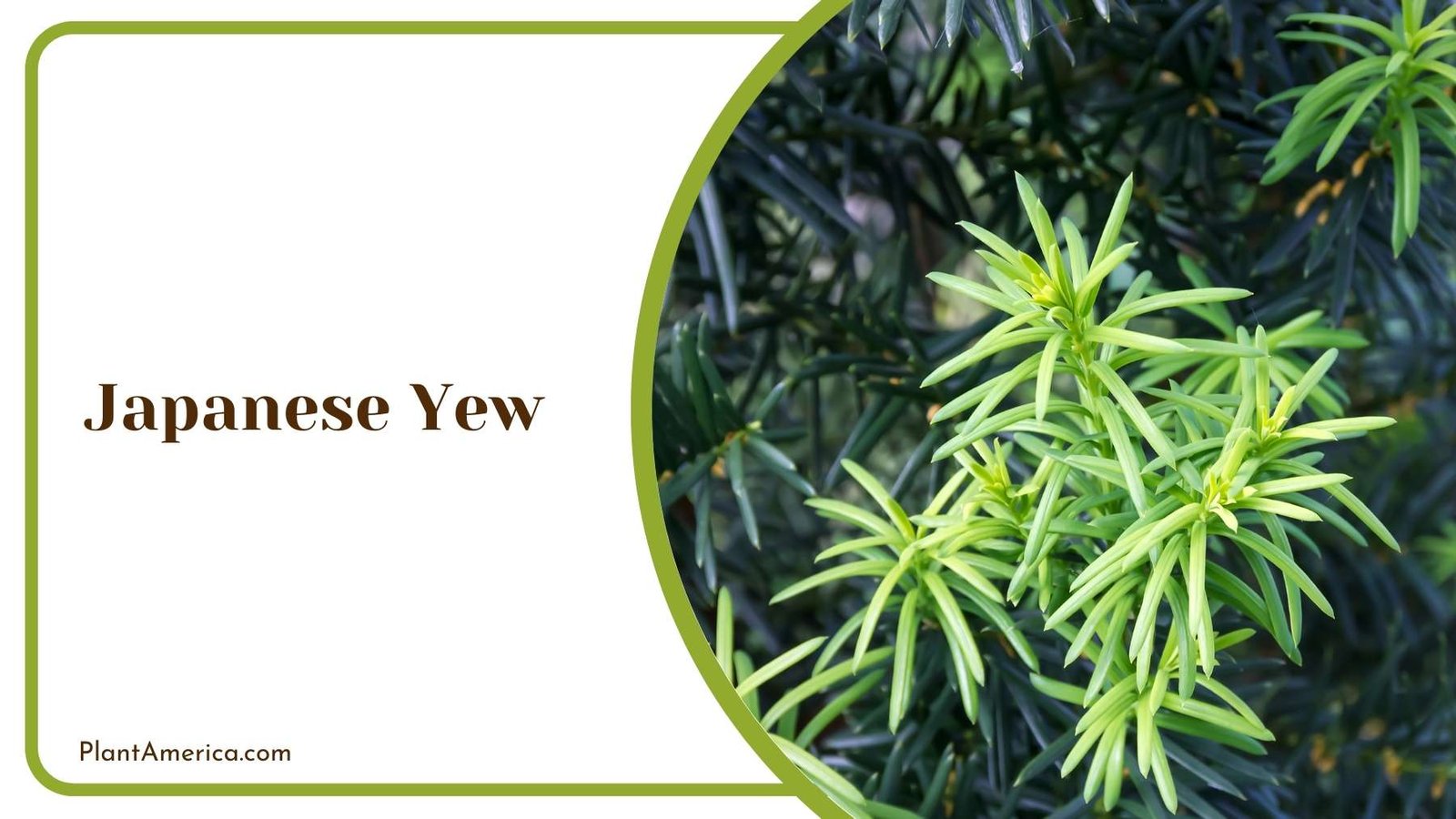
- Growing season: Evergreen
- Leaf shape: Elliptic, Linear
- Specific needs: Well-drained Soil, Shade to partial sun
- Common pests: Root Rot Fungus, Winter Burn
The Japanese yew hedge is renowned for its sculptural elegance and versatility in the garden. Though slow-growing initially, it develops into a supremely customizable evergreen that keeps its formal lines even in the harshest climates. Neatly pruned, a yew hedge lends serenity to its surroundings with its dark, glossy foliage.
Beyond symmetry and structure, yew also offers noteworthy texture. Its needles are tiny and soft, feeling lush whether seen from afar or brushed against closely. Come winter, when most greenery has withdrawn, the yew’s dense cushions take on even greater prominence; dustings of snow set its needles aglow.
Yet for all its solemnity, yew is anything but dour. Warm variations within its shade of green change with the light, at times verging on olive, cobalt, or navy. This subtle play enlivens its presence throughout every season.
Of course, yew’s signature attribute is malleability. Through careful shearing, it assumes virtually any form desired. The possibilities are endless, from geometric blocks and cubes to flowing waves and points. Yew lends itself to sculpted accents, vibrant centerpieces, and intricate borders with equal grace.
Over decades, expertly crafted yew hedges in Japan have evolved stunning visual complexity, testifying to horticultural patience and mastery. There is deep satisfaction to be found in coaxing such artistry from this resilient evergreen over a garden lifetime and beyond. For stately structure, tactile softness, and year-round appeal, the Japanese yew truly stands alone..
7. Euonymus

- Growing Season: Evergreen, Deciduous
- Leaf Shape: Simple, Linear
- Specific Needs: Well-drained Soil, Full shade to partial sun
- Common Pests: Scale Insects, Leaf Spot Fungi
Euonymus, commonly known as spindle tree or burning bush, makes a versatile evergreen hedge that thrives in both sun and shade. This hardy shrub comes in many cultivars, with the most popular hedge varieties producing dense, rounded forms.
Euonymus grows well in most soil types and has few pest or disease problems. It tolerates pruning and shaping, allowing gardeners to keep hedges tight and compact.
Depending on the cultivar, new growth emerges with a pink, orange, or red tint before maturing to a dark green. In fall, the foliage turns shades of pink, red, and purple—some varieties like ‘Emerald Gaiety’ have variegated leaves all season. Birds appreciate euonymus fruits, which mature from green to vivid red or pink in late summer and persist into winter.
This plant creates privacy screens, boundaries, or foundation plantings around homes for decorative and functional purposes. Euonymus is established quickly from transplants and withstands trimming for a neat year-round appearance. Its ease of care and reliability make it an ideal low-maintenance hedging choice.
8. Cotoneaster

- Growing season: Deciduous
- Leaf shape: Simple, Oval
- Specific needs: Well-drained Soil, Full shade to partial sun
- Common pests: Fire Blight, Scale Insects
Cotoneaster hedges are deciduous shrubs with simple, linear leaves demanding well-draining soil conditions. Common pest issues include fire blight bacteria and scale insects, which disfigure the foliage.
Cotoneaster hedges make beautiful living fences due to their dense branching and ability to form impenetrable screens when pruned regularly. As mature cotoneaster hedges can grow very tall and wide, they become thriving privacy fences requiring minimal maintenance beyond occasional trimming.
Cotoneaster hedges provide year-round appeal with showy displays of white flowers in spring and colored red, orange, or blackberries persisting into winter. Their upright growth habit works well for tall hedges, while more spreading cultivars frame pathways and foundation beds.
Prune directly after spring flowering ends to keep Cotoneaster striving for living fences.
More frequent shearing encourages denser growth, making fuller hedges with less space between plants. Fertilizing annually in spring using balanced, slow-release plant food boosts foliage production. Proper care and monitoring for issues ensure CotoneasterCotoneaster remains attractive for many years.
9. Spirea

- Growing season: Deciduous
- Leaf shape: Simple, Serrated
- Specific needs: Well-drained Soil, Full sun to partial shade
- Common pests: Scales, Aphids, Mildew
Spirea shrubs are beloved for their cheerful presence in the landscape, providing beauty as well as function through their adaptability as living barriers. There are many varieties of spirea to choose from, though Bridalwreath Spirea is one of the most commonly used as a low hedge due to its dense and orderly growth habit.
Originating from Eastern Asia, Bridalwreath Spirea forms a compact, graceful mound of arching stems studded with clusters of small white flowers in springtime. The delicate blooms erupt throughout the branches, creating an abounding bouquet effect that lives up to the variety’s name.
As if not showy enough already, the flowers are complemented by distinctive blue-green foliage that takes on vibrant hues of red, orange, and plum in autumn.
Such superior ornamentation aside, Bridalwreath Spirea is valuable as a garden screening hedge for its discipline. With minimal pruning throughout the growing season, it stays neatly tapered at two to three feet tall and up to five feet wide, allowing seamless shaping into elegant rounded formations or clipped dividing lines.
Planted in rows, it establishes an instantly cohesive boundary that remains neatly kept yet welcomingly naturalistic in appearance.
Many gardeners also appreciate Bridalwreath Spirea’s ease, thriving with little special care beyond the occasional trim or division every few years as it spreads. Its resilience to weather, pests and diseases means a lifetime of enjoyment from this sprightly shrub that serves decorative purpose while complementing any style of garden design..
10. California Lilac

- Growing season: Deciduous
- Leaf shape: Lanceolate, Ovate
- Specific needs: Well-drained Soil, Full sun to partial shade
- Common pests: Powdery Mildew, Aphids
The fresh yet dignified presence of the California lilac hedge is a delightful addition to any warm-climate garden. A showy bloomer, it bursts forth in spring and summer with clusters of pale violet flowers admired by both humans and pollinators alike. These fragrant blooms attract scores of butterflies and hummingbirds, bringing an air of vibrancy.
Beyond its flowering display, however, California lilac is noteworthy for its lustrous foliage. Even in its non-blooming state, the hedge demands attention with its neat, dense growth of smooth green leaves.
Their vibrant color provides a lush backdrop for the intermittent splashes of delicate purple. The leaves persist in brightness in fall and winter, and occasional flowers may still emerge to prolong the hedge’s beauty period.
Low-maintenance yet exceptionally hardy, California lilac thrives with little beyond basic sun and drainage. Able to withstand both drought and heavy rain seasons, it forms a dependable evergreen screen that holds its structure throughout the year. Its natural denseness and density provide sound soundproofing and privacy from visual intrusions.
Gentle trimming is all that’s required to maintain the hedge’s formal shape and optimize its bloom potential for subsequent seasons. The California lilac hedge deserves prominent placement for gardens graced with rich textures, vivid color, and life-enhancing fragrances from spring into fall and beyond. Its elegant hardiness and thriving performance in warm climates have made it a favorite choice for screening and beautifying outdoor living spaces for many decades..
11. Quince

- Growing season: Deciduous
- Leaf shape: Serrated, Ovate
- Specific needs: Well-drained Soil, Full sun to partial shade
- Common pests: Fire Blight, Mildew, Scale Insects
Quince shrubs make handsome, fragrant hedges prized as much for their blossoms as their form. In early spring, quince is cloaked in delicate pink flowers resembling butter-soft roses before leaves appear. Their sweet aroma wafts on the breeze to perfume the garden. As the blooms fade, oval green leaves emerge to provide an attractive structure for the rest of the growing season.
Quince forms dense, bushy, rounded shapes ideally suited for hedges through careful pruning and annual shearing after flowering. While quince prefers well-draining, slightly alkaline soil, and full sun, it has some adaptability to different conditions.
Its surface roots spread slowly to form a sturdy yet moldable hedge. Quince is generally pest-free and grows at a reliable, moderate pace to fill the desired space.
Best of all, its charming flowers recur annually to delight the senses. Come fall, some cultivars bear decorative yellow or orange quince fruit, though the shrub is primarily grown for its blossoms and form. Quince makes the perfect traditional hedge to grace the borders of formal English gardens or country estates where its beauty can be fully appreciated.
12. American Arborvitae
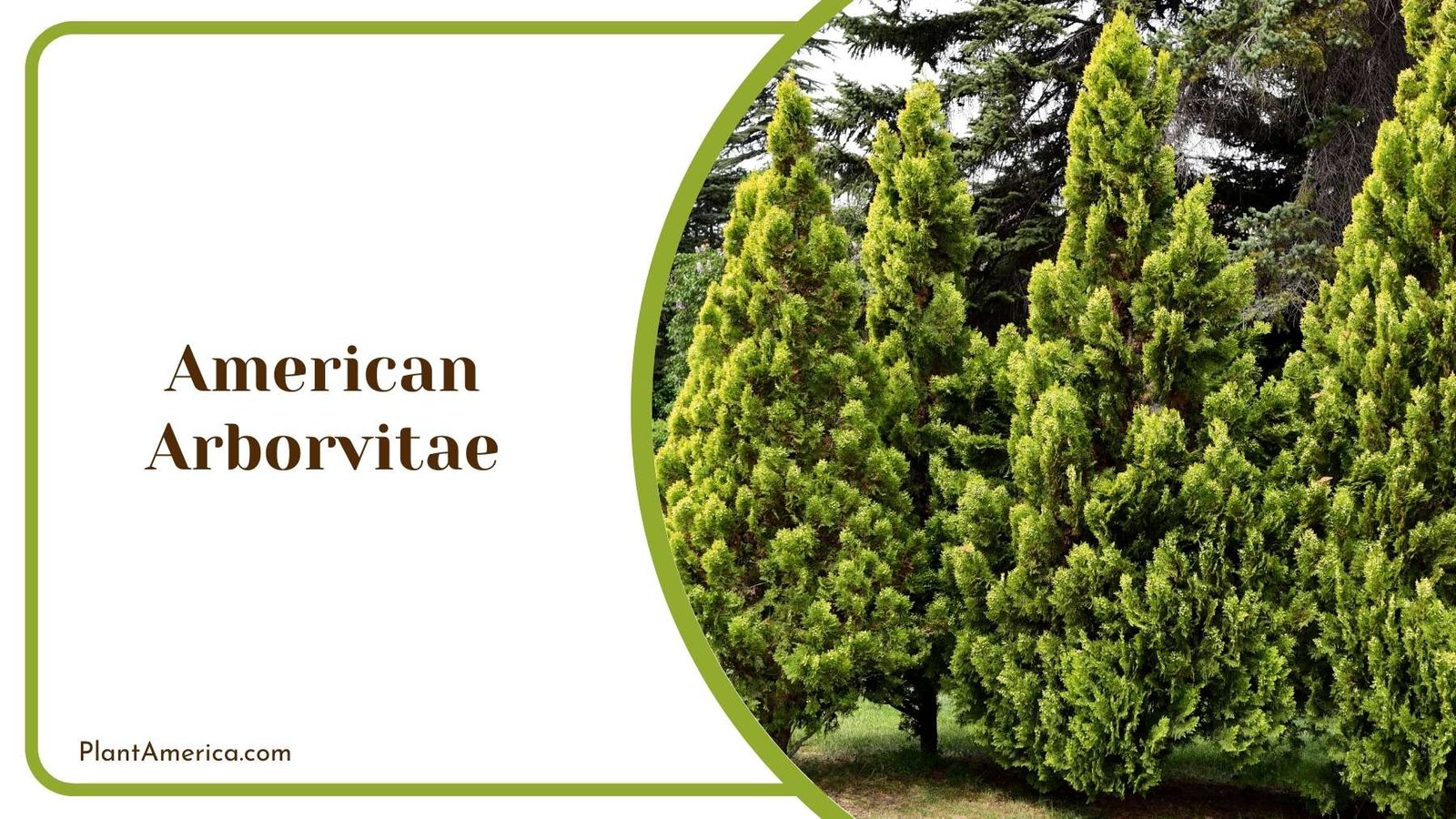
- Growing Season: Evergreen
- Leaf Shape: Scaly, Simple
- Specific Needs: Well-drained Soil, Full sun to partial shade
- Common Pests: Bagworms, Spider Mites
American arborvitae hedges are evergreen shrubs with flat, scale-like leaves demanding well-draining soil conditions. Common issues include bagworm infestations and spider mites, which disfigure foliage under stress.
American arborvitae hedges make excellent living fences due to their columnar growth forms, ability to attain great heights, and dense foliage when pruned regularly. Mature arborvitae hedges multiply, becoming sturdy privacy fences with minimal maintenance needs.
American arborvitae hedges are valued for their year-round screen and texture with flat sprays of dark, scale-like leaves. Their narrow, columnar forms work particularly well for hedges and dividers between properties.
Prune off damaged or diseased branch tips regularly to keep arborvitae thriving for living fences. Additional shearing encourages dense growth, making fuller hedges with less space between individual trees.
Fertilizing annually in spring using a slow-release plant food boosts growth and drought tolerance. Proper care ensures arborvitae remain attractive options for living fences for many years.
13. Leyland Cypress

- Growing season: Evergreen
- Leaf shape: Scaly, Simple
- Specific needs: Well-drained Soil, Full sun
- Common pests: Bagworms, Spider Mites
The Leyland cypress is a popular evergreen conifer valued for its rapid growth and ability to form dense screens or towering hedges. A hybrid of Monterey cypress and Nootka cypress, this plant was created in the 1900s and named after the estate, which was first developed in the United Kingdom.
Leyland cypress thrives in diverse landscapes, establishing itself swiftly with a conical shape even in less-than-ideal growing conditions. Within a few years, a hedge can reach heights over 15 feet tall with a breadth to match.
The dense foliage creates a complete visual barrier once filled in, eliminating views beyond any angle. Its deep green needles provide year-round coverage without needing seasonal changes.
While an accelerated growth rate is touted as a benefit for quickly attaining privacy, some argue Leyland cypress’s popularity has been detrimental. The trees spread aggressively through reseeding and tendrils, potentially becoming invasive.
Pruning maintains its intended forms and locations when used as ornamental screens. However, they grow too quickly for many residential landscapes and require frequent trimming not all homeowners anticipate.
Despite some drawbacks when not adequately managed, Leyland cypress remains a go-to solution for fast, foolproof hedging when installed thoughtfully according to individual site needs and priorities. With responsible care, this rapidly growing evergreen can be a beautiful centerpiece to mark boundaries or offer instant division between spaces..
14. Red Tip Photinia

- Growing season: Evergreen
- Leaf shape: Elliptic, Oval
- Specific needs: Well-drained Soil, Full sun to partial shade
- Common pests: Spider Mites, Leaf Spot Fungi
The Red Tip Photinia hedge brings a vibrancy like no other to the landscape. In early spring, hints of crimson emerge on branch tips, gradually spreading to paint the entirety of each pliant stem. Come summer, walls, and borders have become engulfed in bright scarlet, a glowing hue unmatched in nature.
Yet fascinatingly, this epitome of intensity shifts dramatically as the fall arrives. Then, a firestorm of color erupts as leaves transform into burnished oranges, fiery reds, and shimmering bronze.
The hedge blazes in spectacular pyrotechnics for months, leaving gardens ablaze until the last leaves spiral down. Even bare of foliage in winter, its branches retain hints of fiery pigment, promising the coming seasonal combustion.
Aptly named, Red Tip Photinia is genuinely a dynamo of changing color from spring through fall. Its reliable denseness and handsome texture – small, dusty gray leaves that lie flush to branches even in the wind – serve as the perfect backdrop for this continual pyrotechnic show. Though fast-growing initially, it assumes a uniform shape with basic annual shearing.
Perhaps most remarkable is how this equatorial Asian native thrives even in cool temperate zones. Hearty and resilient, it endures both drought and deluge with equal resilience.
Requiring minimal care, the Red Tip Photinia hedge often earns its space through a visual crescendo, lighting up any garden with unmatched seasonal drama. Its pyrotechnics alone render it a prized landscape staple, bringing color and glory when little else in the garden stirs..
15. Burning Bush

- Growing season: Deciduous
- Leaf shape: Elliptical, Ovate
- Specific needs: Well-drained Soil, Full sun to partial shade
- Common pests: Bagworms, Aphids
The Burning Bush hedge casts a perpetual spell of enchantment upon the landscape. From its earliest emergence in spring until deep into autumn, flame-colored foliage engulfs this broadleaf evergreen, bringing fiery magic to borders and foundations.
Yet even as leaves fall in winter, the Burning Bush retains its mystique. Bare branches become infused with shades of copper, rose, and terracotta, nourishing the spirit throughout the dormant season with promises of next year’s pyrotechnics.
Generous in size yet neatly pruned, the hedge establishes a striking backdrop for any garden setting. Its texture lends graceful contrast to neighboring plantings with small, slightly elongated leaves that overlap neatly along stems.
Hardy and resilient from zone three northward, Burning Bush proves as easy to cultivate as it is unparalleled in aesthetic rewards. Minimal care sustains its seasonal magic for decades, dazzling the senses anew each spring through fall. For unbridled fire and nonstop color drama, the Burning Bush hedge casts a spell like none other in the landscape..
16. Knock Out Rose
- Growing season: Deciduous
- Leaf shape: Compound, Pinnate
- Specific needs: Well-drained Soil, Full sun
- Common pests: Blackspot Fungus, Japanese Beetles
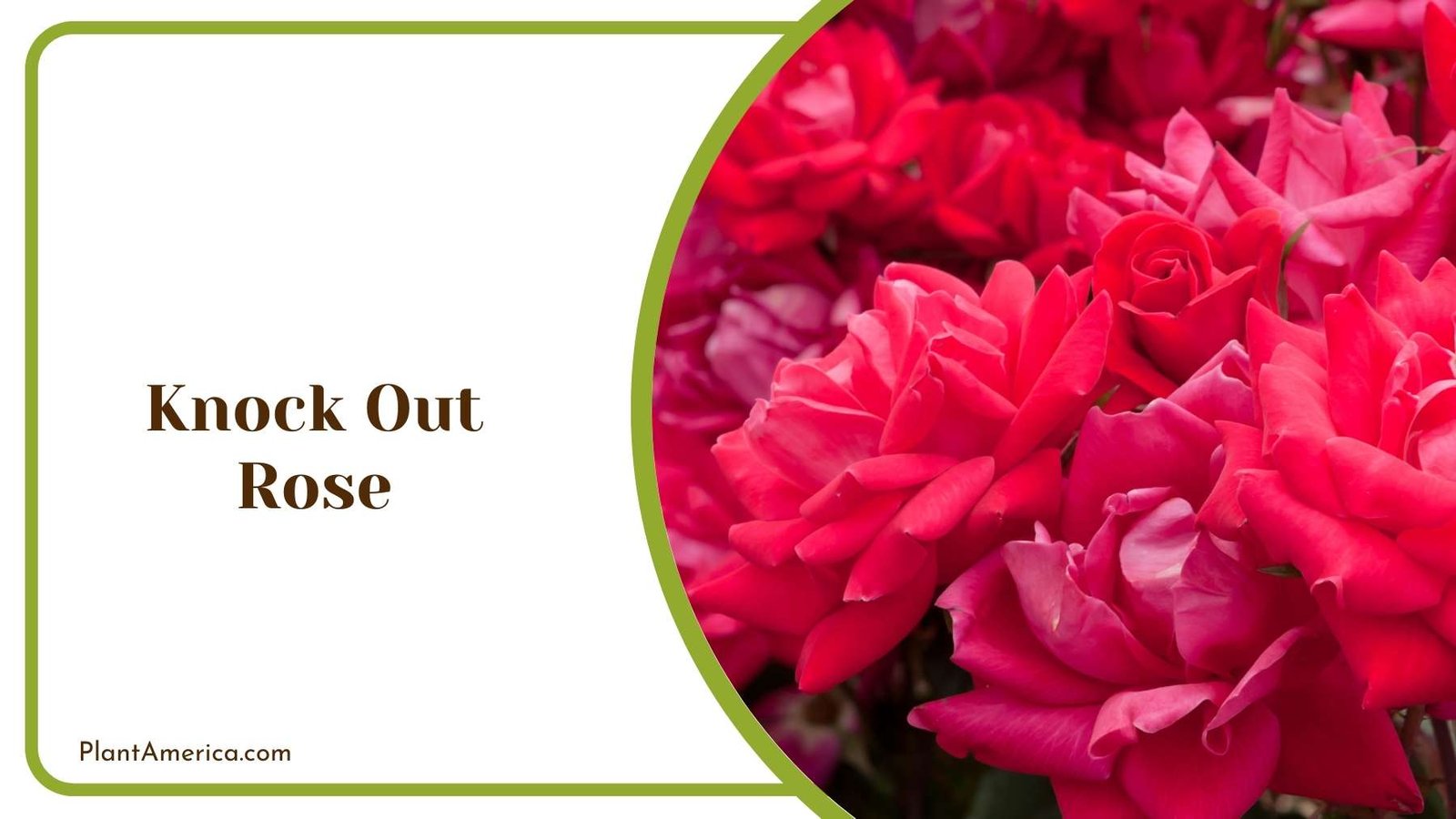
Knock Out rose hedges are deciduous shrubs with compound leaves that demand well-draining soil conditions. Common issues include blackspot fungus, which disfigures foliage under humid conditions, and Japanese beetle infestations defoliating leaves.
Knock-out rose hedges make beautiful living fences due to their dense, thorny growth, ability to form impenetrable barriers when pruned regularly, and abundant flowering. Knock Out rose hedges are prized for their vibrant, nearly nonstop displays of red flowers across many seasons.
Their rounded, spreading forms frame pathways and foundation beds. To keep Knock Out roses thriving as living fences, prune immediately after spring flowering ends. More frequent trimming encourages denser growth habits and longer flowering.
Fertilizing three times annually in spring, summer, and fall using organic, balanced plant food improves hardiness, insect/disease resistance, and bloom production.
Regular monitoring and control measures ensure Knock Out roses remain stunning living fence options for many years.
Conclusion
Living fences provide numerous benefits for improving outdoor spaces in a natural, sustainable manner.
- Trumpet vine is a deciduous climber with palmate leaves demanding well-draining, rich soil conditions.
- Knock Out rose hedges are deciduous shrubs with compound leaves that demand well-draining soil conditions.
- Leyland cypress hedges are evergreen shrubs with flattened, scale-like leaves demanding well-draining soil conditions.
With a little effort and patience during the establishment phase, you can enjoy the benefits of a living fence for many years with minimal work. Focus on selecting the right plant varieties for your conditions, providing adequate water and nutrition, and monitoring for potential issues proactively.